

„With summer flying through the tournament world,“I wrote in my summer contribution last year. If I had to write a similar one after the end of holidays and vacations and honestly summarise all the interesting things, the work would last me for several more months! From all the victories and failures, I have therefore selected mainly two summer pearls, but for the white king surely thunderbolts! You surely know the saying „never say never“, but I will risk it anyway: it might very well be the game and also the combination of the year.
Today we will open a theoretical window towards the fashionable anti-Grünfeld system with 3.f3.
„Oh my God,“ Carlsen exclaimed in Stavanger after resigning the game to the world champion. Even before that, he hit the table so hard that the clocks were startled and jumped ten seconds. The same was reportedly said by Gukesh himself after one of the dramatic games of the tournament in Saint Louis. Unfortunately, the world champion is gradually becoming a mere shadow of „Gukesh 2024“.
Let us get acquainted
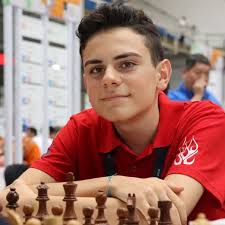
Turkish grandmaster Ediz Gurel, born on 5 December 2008, already has many successes behind him. Together with the 14-year-old Yagiz Kaan Erdogmus, they have occupied the first two places on the Turkish FIDE rating list for more than a year (!). Now with a considerable lead over players aged 30+. Of course, I couldn't resist, so after some time I looked at the American wonder and the youngest grandmaster of all time, about the same age, Abhimanyu Mishra. Although he managed to publish a book at the age of 12 and gave hundreds and hundreds of interviews with his – let's say – enterprising father, he has more or less stagnated in performance for more than a year and a half.
„Not even a chess genius in Turkey has any relief – Ediz says in a short video that his school is pretty tough. I would be quite interested in a comparison with our "inclusive" primary schools: history, maths and... how many children stare at their mobiles during breaks.“
Anti-combination of the year
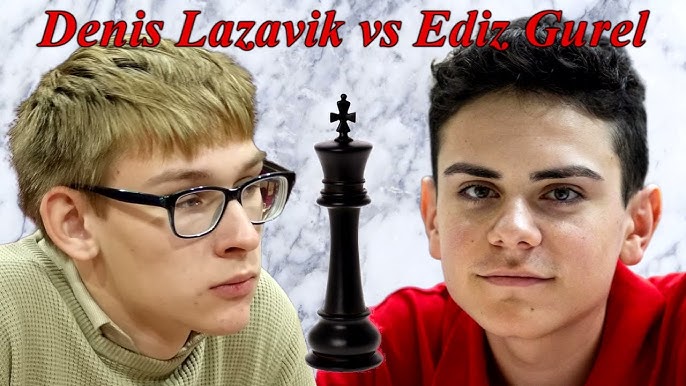
Although it is often said that the natural time horizon of human interest and memory stretches only about a week to ten days back and forward, I believe that the fragment of the game Denis Lazavik vs. Ediz Gurel, played in the Turkish top team league, will remain in the memory of chess fans much longer. I am even almost certain that when the overview of the most beautiful chess moments is compiled at the end of the year, Gurel's combination will appear very high.
After Black's 35th move, the position of the diagram arose.
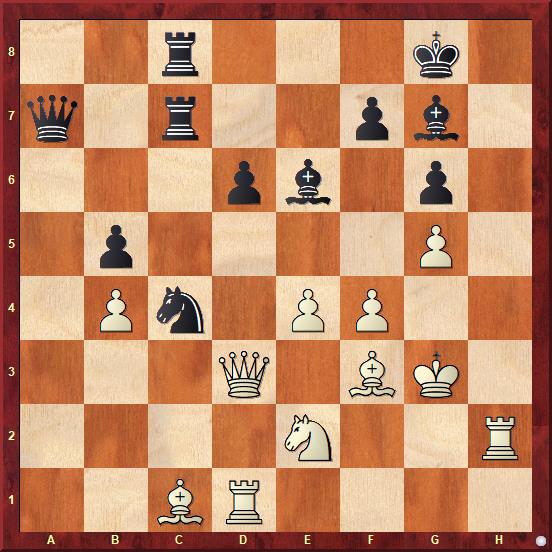
There is approximate objective balance on the board, although in the pre-computer era commentators would probably have judged the position as better for Black. After all, he has not only the powerful outpost N c4 but also the Horwitz bishops, while White's chances to launch an action along the open ‚h‘ file look illusory. Be that as it may, the Belarusian youngster continued logically after less than 3 minutes... and incorrectly 36.Rdh1?
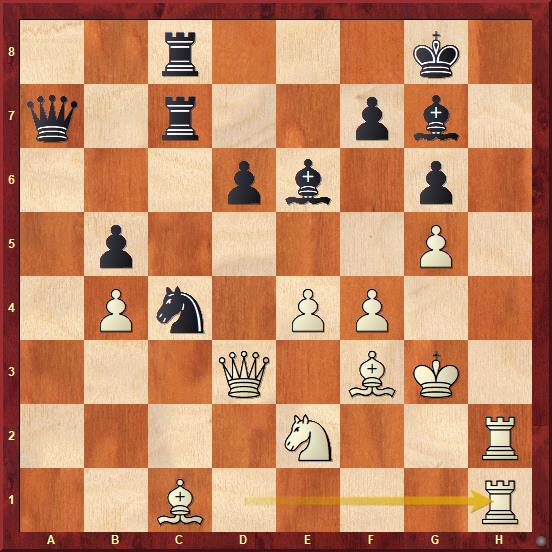
, after which the first – so far only blinding – grenade exploded! 36…Ne5!!.
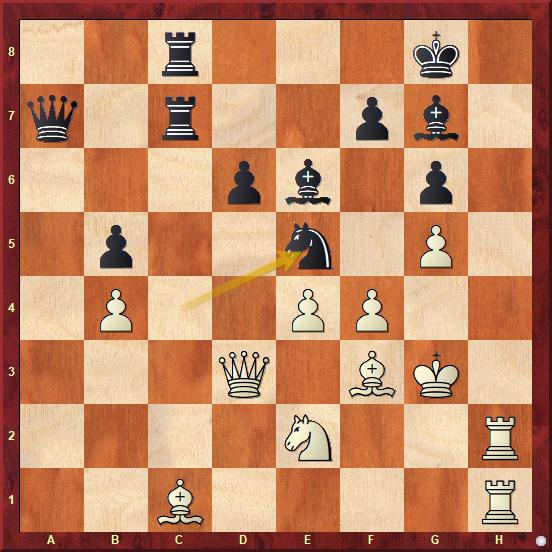
More experienced readers and stronger players can calculate what would follow after 37.fxe5.
But believe it or not, years of blitzing and solving tactics on various platforms meant that the first combination strike was no surprise to Denis. In 8 seconds he replied with a prepared combination 37.Bb2… and we especially thank him for this decision! 🙂
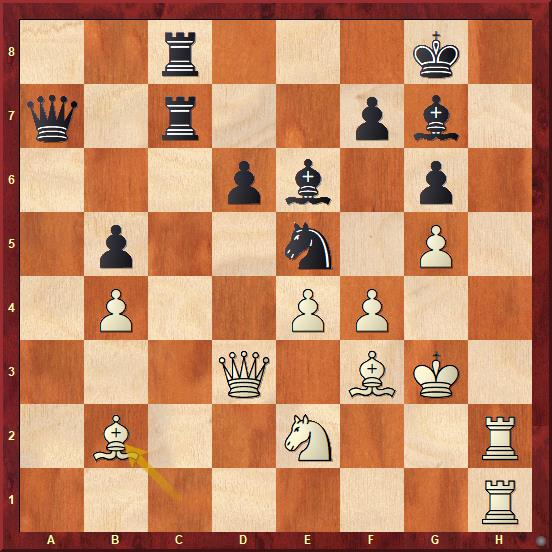
Task: How did Black continue?
Below I have added two relatively concise video analyses of the game. As you dear readers are already used to, in Russian and English.
The second thunderclap! Game of the year?
The UzChess Cup 2025 took place in Tashkent from 19 to 27 June and I briefly mentioned it in the article „Is this all coincidence, or are we living in a simulation?“. The victory was eventually taken by Praggnanandhaa in a dramatic tiebreak. However, it was precisely his king that succumbed in a brilliant game against Richard Rapport to that terrible thunderclap…
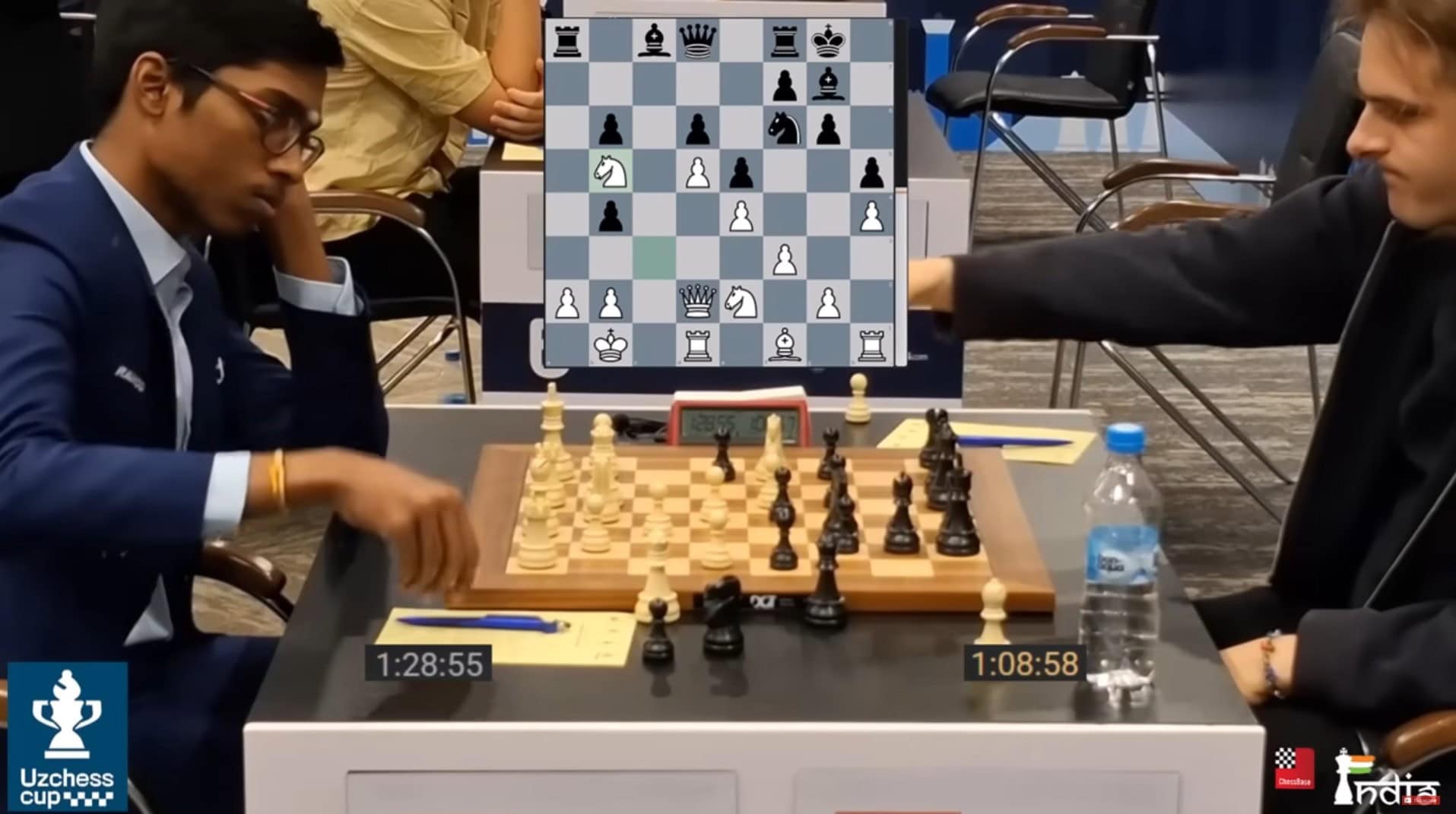
Before Praggnanandhaa could pick up his pen to record his last move 15.Nb5, on the board appeared…
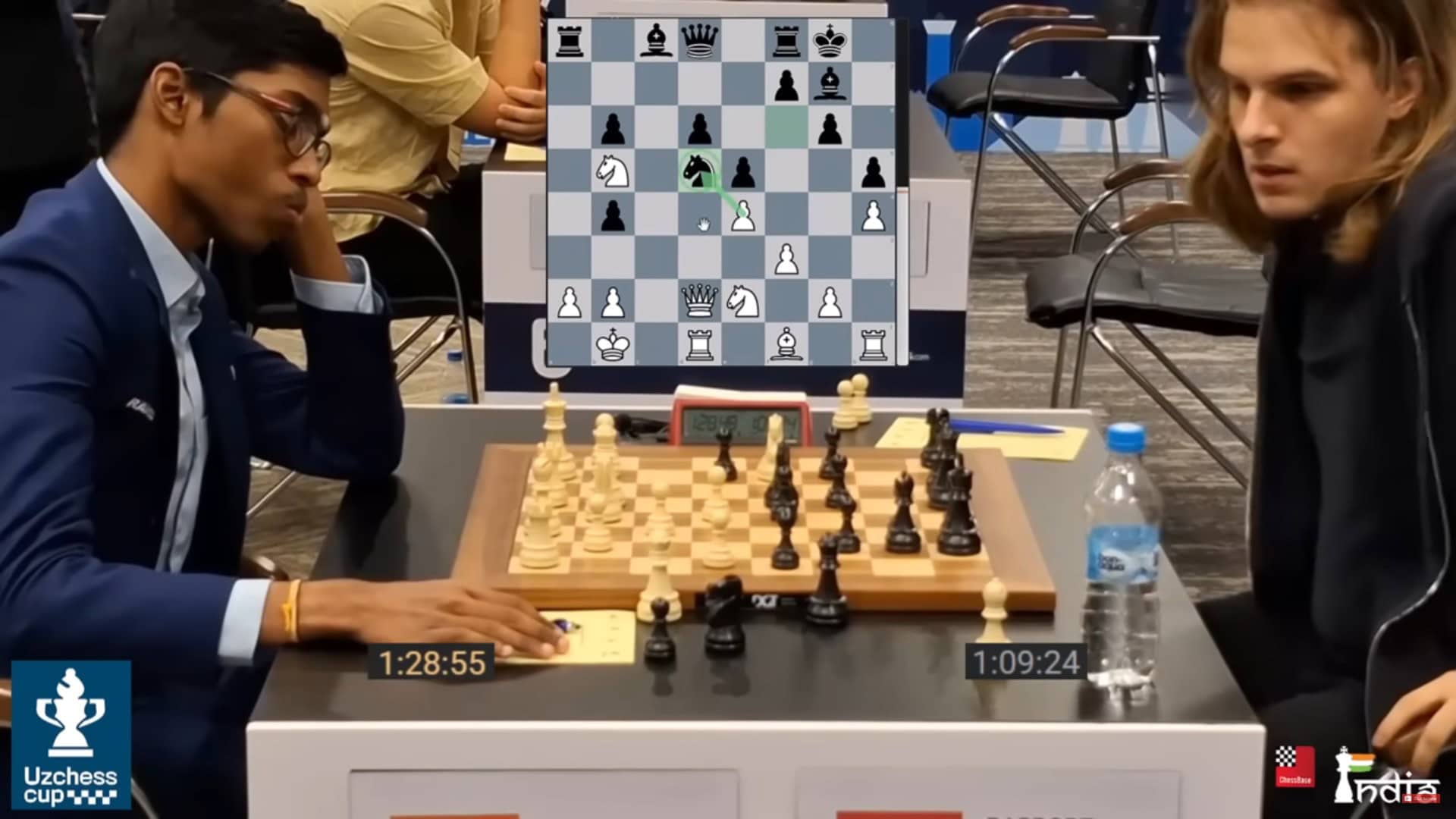
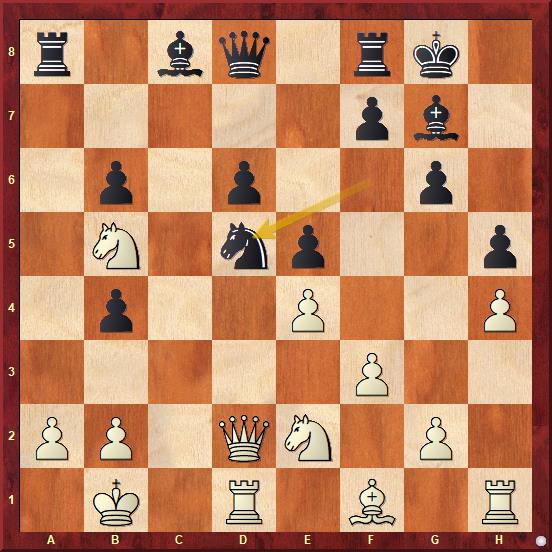
… a piece sacrifice 15…Nxd5!!, which at first only engines understand!
The critical position of the game arose after 20…e4!
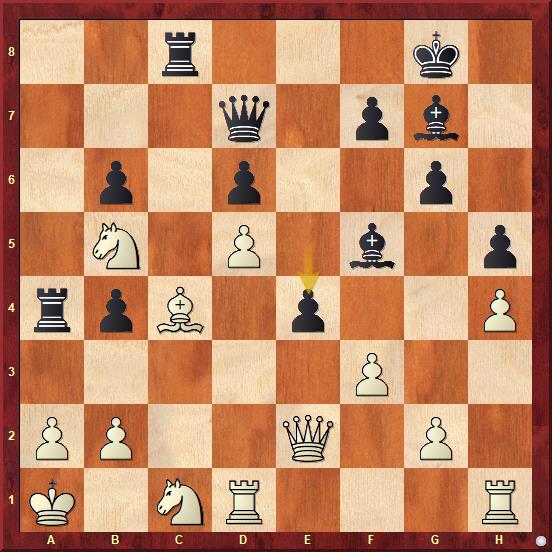
For the sacrificed piece, Black staged a crushing attack against the enemy king. As the timing shows, Praggnanandhaa pondered here for nearly half an hour, yet he failed to find a way to maintain dynamic balance.
The following two tasks are quite difficult, intended for more advanced chess players. But still, why not try to solve the problem?!
First of all, we should consider why White could not accept another sacrifice, this time just a pawn 21.fxe4??.
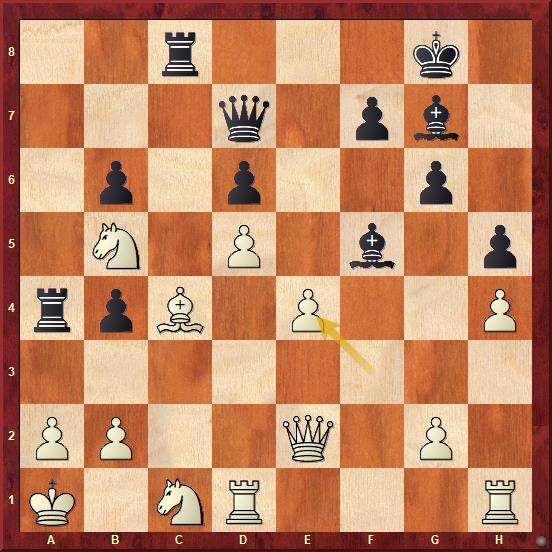
What do you think, how did Black plan to continue the attack? Can you calculate from the diagram position all the way to Black's win?
Tired from long defence - and probably also from some overlooked moves in calculation - Praggnanandhaa made the move 23.Bc4? a decisive mistake.
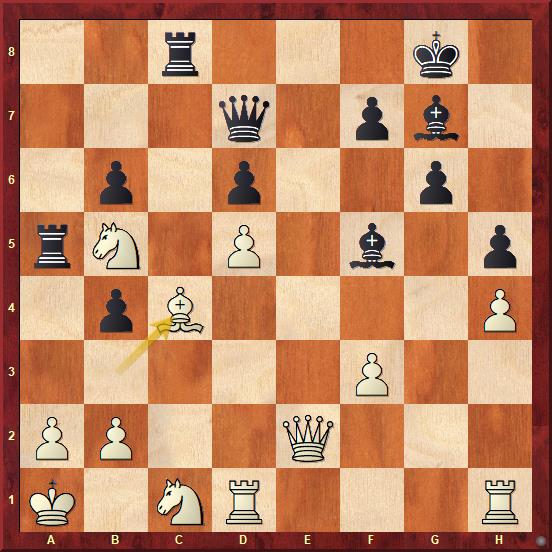
After 5 minutes, Richard Rapport managed to find a clear path to victory. Will you manage it too, dear readers?
The most fascinating one at the end!
And for the third time! We could analyse the game with its enchanting tactical twists, most of which naturally remained behind the scenes, for hours and hours even with the engine running. The engine will of course evaluate every position for us, but it will no longer find the most delightful forced manoeuvres!
So that I do not deprive readers of what I consider the most beautiful variation, I borrowed one line from the analysis by Jevgenij Glejzerov. It was published in issue 8 of the magazine Shakhmatnoe Obozrenie 64. (The full analysis is available by clicking the file below the Praggnanandhaa-Rapport_64 game player.)
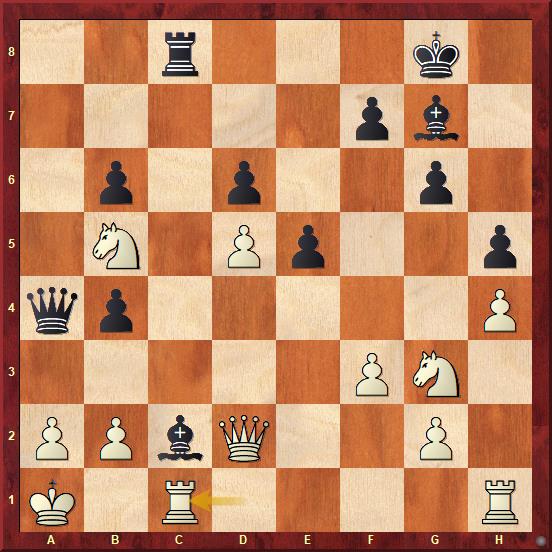
Can you find the fastest route to victory?
Let us first look at the traditional Sagar’s record of this amazing game. At the end of the video, the author also demonstrates some interesting possibilities.
The solution to tasks 3 and also possibly the most beautiful variation can be found in the game player at White’s 18th move branch (18.Ng3 and 22.Rc1).
Troubles with the Grünfeld
Dear readers, did you notice the opening moves of the game? Some of you may have wondered what kind of novelty was invented already on move 3 by one of the strongest players in the world and the current clear world number four by rating: 1.d4 Nf6 2.c4 g6 3.f3.
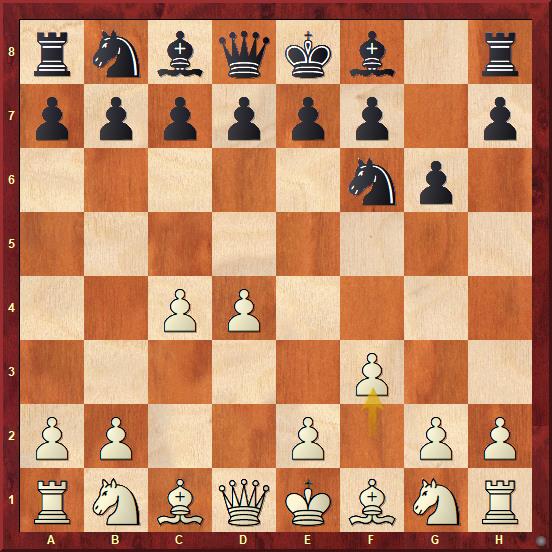
„What is that supposed to be? Can't White play better or more natural moves?“ a less experienced reader or even a seasoned chess player might ask, who however does not closely follow recent history or is not a regular consumer of tournaments in recent years.
I thought about how to introduce the theoretical section and connect it to the game we have just been able to replay and watch.
I will start like this: One of my first pupils, the prematurely and unexpectedly deceased Grandmaster Petr Neuman, used to jokingly say some decade ago: „The Queen flows, and the Grünfeld is a draw!“
The abbreviation and exaggeration contain a rational and true core! Computers gradually pushed the King's Indian Defence into the background and the vacated place was then taken by the Grünfeld Indian Defence. In this opening, White had (and still has) the problem of emerging from the opening with at least a small plus. And this is exactly what Petr was able to succinctly summarise in one sentence, even though at that time he meant other King's Indian variations, because of which the defence was getting into trouble.
Continuation 3.f3 can, with some simplification, actually be called a contemporary practical Anti-Grünfeld.. I am not claiming that the continuation 3...d5 4.cxd5 Nxd5 5.e4 Nb6
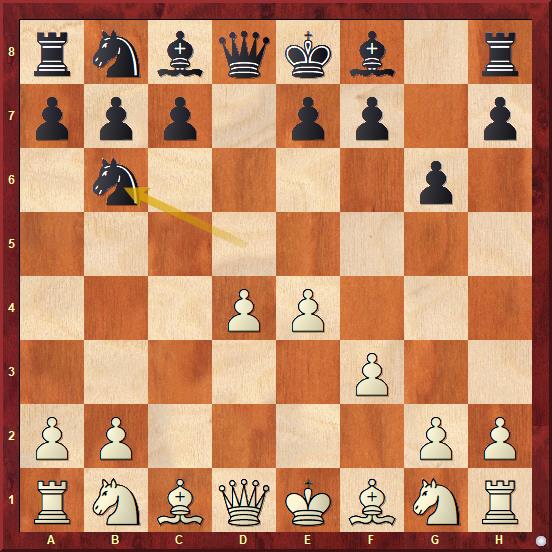
is clearly inferior for Black. For example, in the 2012 World Championship match, in the 3rd game, the then champion Viswanathan Anand adopted this approach and the challenger Boris Gelfand picked up the gauntlet!
I will say straight away that there can be no talk of gaining developmental tempo (after 5.e4 Nb6)! White's 3rd move itself cannot be considered developmental. So the loss of tempo 3.f3 a 5...Nb6 is therefore neutralised.
Primarily, however, it is about something else:
- how to objectively evaluate the position
- and how comfortably or uncomfortably Black plays in practice.
Online databases reveal, for example, that one of the greatest experts on the Grünfeld Defence Maxime Vachier-Lagrave chose 3...d5
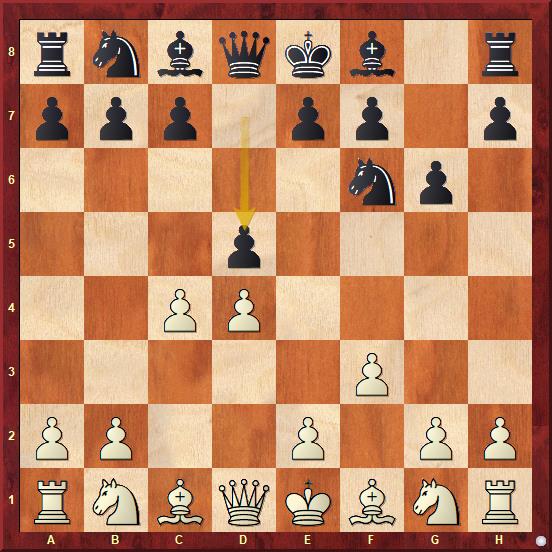
rather exceptionally, and mostly in rapid games. From his reactions in move 3, it can be judged that he is not entirely satisfied with 3...d5, so to speak.
Other supporters of the Grünfeld gradually switched to the wings of the Sämisch system of the King's Indian (as in our game with Richard Rapport) or the modern Benoni (as we will see later in the analyses).
More about the systems 3.f3 d5 can be learned from a shorter analysis by the player, but also from a didactically precise reflection on the opening in the video analysis of the game Anand,V vs. Gelfand,B (Wch) m/3 Moscow 2012.
"Sämischi, they want you on stage!"
calls the director, or rather Theory. Because if the King's Indian Defence really flows somewhere, it flows,, against the Sämisch system it is bravely supported even by today's engines. I loved the King's Indian Defence almost my entire chess life, but in practice I was happiest when opponents chose the Sämisch against me. Of course... it was a different time. For example, league players were certainly no pushovers, but preparation for games or searching the opponent's repertoire was still in its infancy. Quite often I therefore encountered a misunderstanding of the strategic principles of that system, but actually of the whole King's Indian Defence.
White must pay extraordinary attention to the d4 square. For example, I played (not only me, but also some of my club colleagues) dozens of games that started like this: 1.d4 Nf6 2.c4 g6 3.Nc3 Bg7 4.e4 d6 5.f3 0–0 6.Be3 Nc6 7.Bd3?! [Problems for Black arise with 7.Nge2 or 7.Qd2 followed by Nge2 and covering the d4 square.]
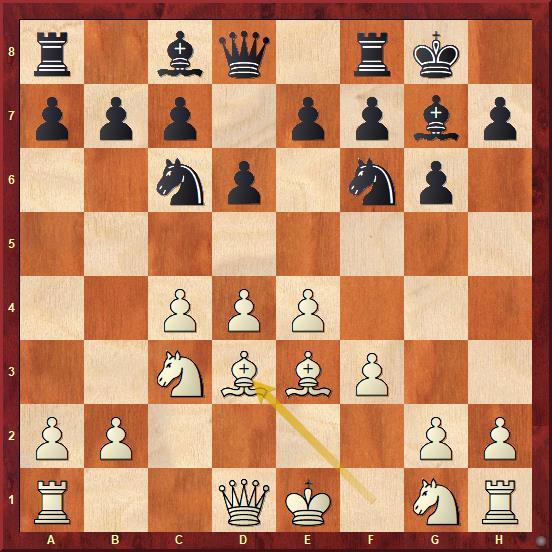
7...e5 8.d5 [8.Nge2?! Ng4!] 8...Nd4! 9.Nge2 Nh5
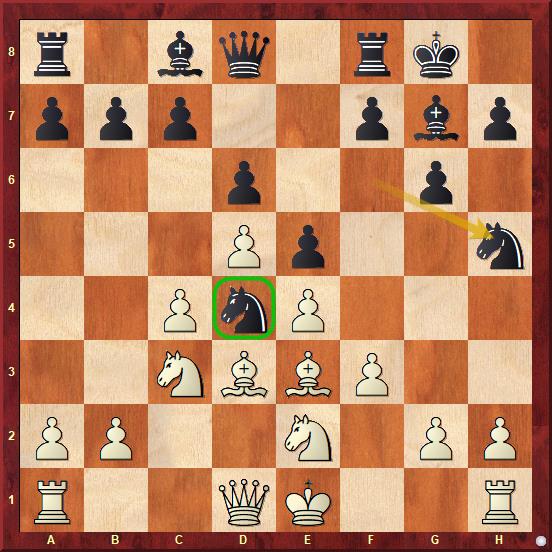
still with objective equality, but in practice already with Black's initiative. The possibilities for both sides and the importance of prophylactic defence of the d4 square, which runs through the entire King's Indian like a red thread, are well illustrated by the following miniature.
The most natural continuation
I was thrilled by Eduard Gufeld's handling of systems with piece-pawn pressure against the d4 square - 6…Nc6. However, when I had to fight stronger and titled players, I admit I did not trust the main lines with 7.Nge2, Qd2, 0-0-0 and h4-h5 very much. In such cases I resorted to more classical replies and took a model rather from Kasparov. He often continued 6…e5.
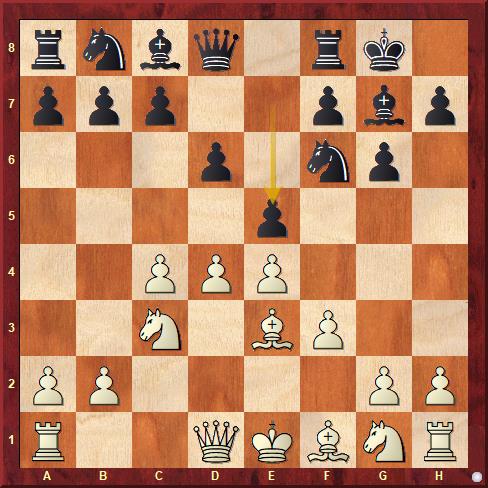
His games from the late 80s and early 90s... well, they were simply beautiful! But statistics and later engines became merciless judges...
The mystery of the sixth move
Decades passed and a mystery appeared!
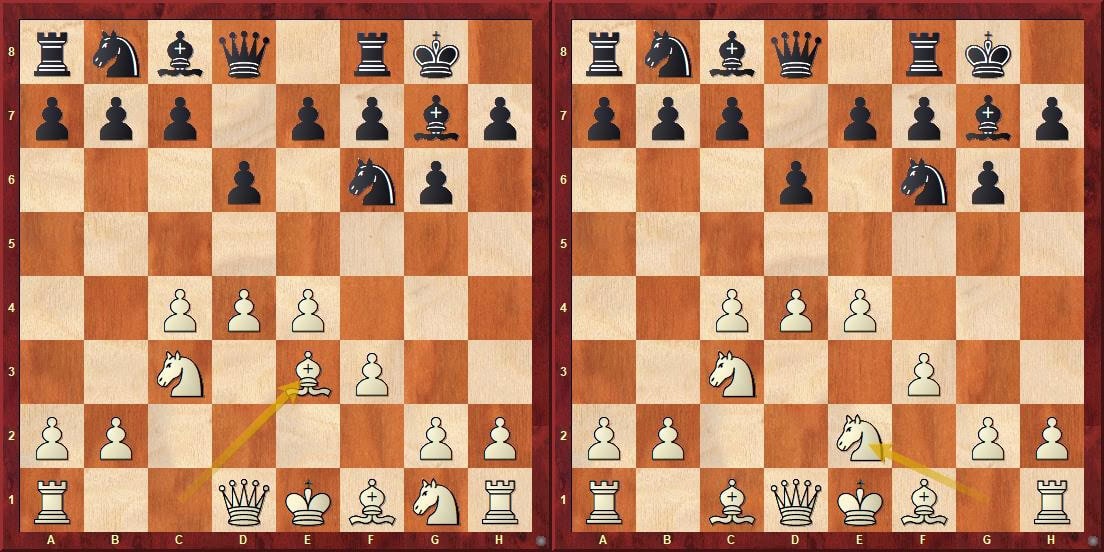
More and more strong players began to prefer at move 6 in the Sämisch system instead of the natural 6.Be3 continuation 6.Nge2. What is this about? At least according to previous analysis White could have been satisfied with the development of the position?
Well, the computer approves the new choice, but it certainly won't tell us why! If we want to understand the problem, let's move from the thirteenth world champion to his predecessor To Anatoly Karpov.
Less than two months after the coronation of the 12th World Champion in 1975, a game was played at the Portorož tournament Karpov vs. Barle.
1.d4 Nf6 2.c4 g6 3.Nc3 Bg7 4.e4 d6 5.f3 O-O 6.Be3, after which the Yugoslav master sacrificed a pawn with the move 6…c5.
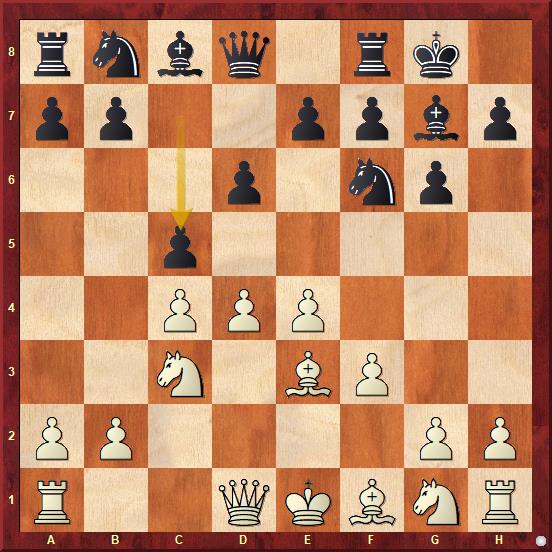
However, Karpov was prepared against this then quite fashionable gambit. The following moves ensued 7.dxc5 dxc5 8.Qxd8 Rxd8 9.Bxc5 Nc6, after which he returned the pawn with a then new continuation 10.Nd5!
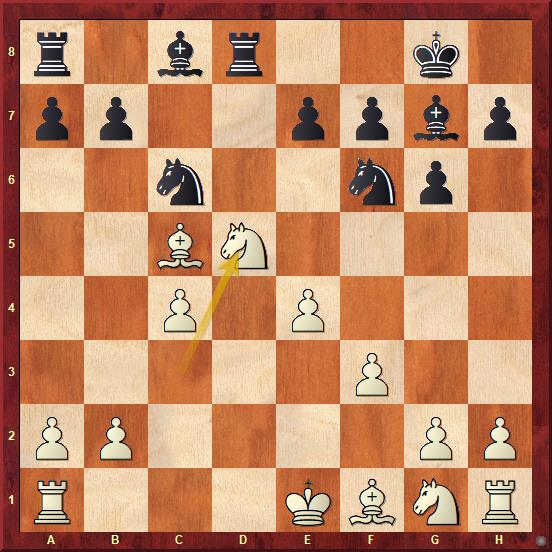
A quick look into databases and books reveals that this game, or rather Karpov's novelty, caused black headaches for about the next 20 years!
The historical development, current theoretical status, and especially why the seemingly dull continuation 6.Nge2 is more promising than the naturally appearing 6.Be3, are revealed by the following three analyses.
Firstly, it turned out that the gambit move 6…c5! is probably the best response after 6.Be3. The second example 6.Ne2 c5 finally explains to us, why should play in the Sämisch system dark-squared bishop a little longer to sleep on c1.
The third and most detailed analysis of the system 6.Ne2 c5 belongs to the Bulgarian grandmaster and former 2700+ player Ivan Cheparinov.
Cloudless sky thanks to Benoni? It depends
Black may therefore eventually conquer even after 6.Nge2 c5 7.d5 (let us not forget the alternatives to White's 7th move) favourable positions, but on the other hand not every Black player, not only followers of the Grünfeld, fancies type of positions often with a damaged pawn structure.
The dangers lurking for Black, and the quite characteristic type of arising positions, are excellently demonstrated by the following game — unfortunately, apparently only by the former fourth Indian musketeer (see the article „The Fourth Musketeer“ from 23 March 2025 and the short video below).
At the same time, I have summarised the acquired knowledge in the notes. As the saying goes: „Repetition is the mother of wisdom.“
Revelation
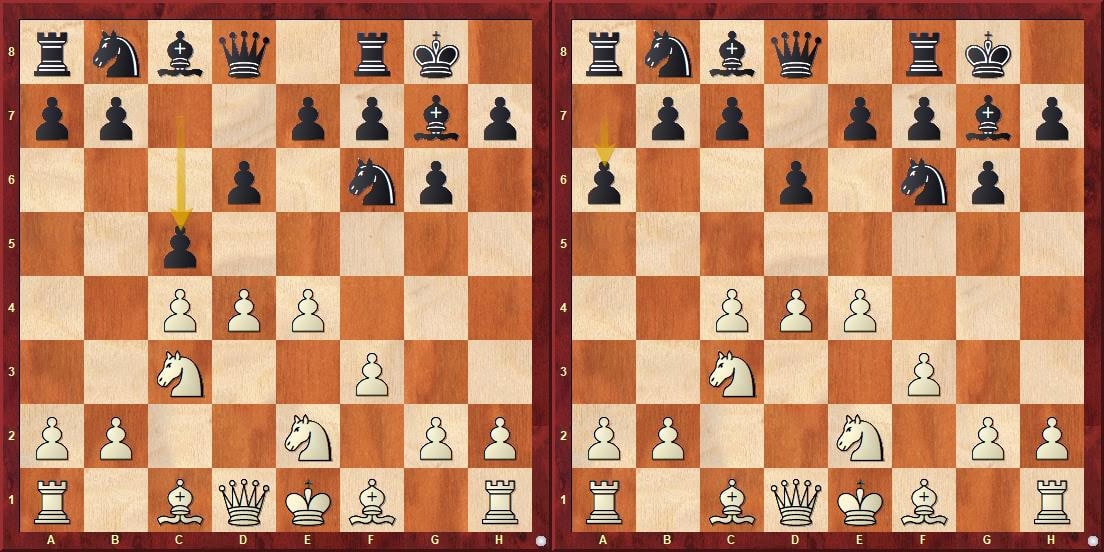
Rapport's reaction in the game against Praggnanandhaa, that is the move 6...a6, is of course not a computer discovery of the 21st century. A quick look into larger databases reveals that it was already played in the 1950s. Later, John Nunn, former women's world champion Chiburdanidze, and former world number nine Kiril Georgiev also responded this way. The concept with an early gambit b5 actually exploits the drawbacks of the early development of the king's knight. After all, in the variations 6.Ne3 a6 White can logically continue, for example, 7.Qd2…
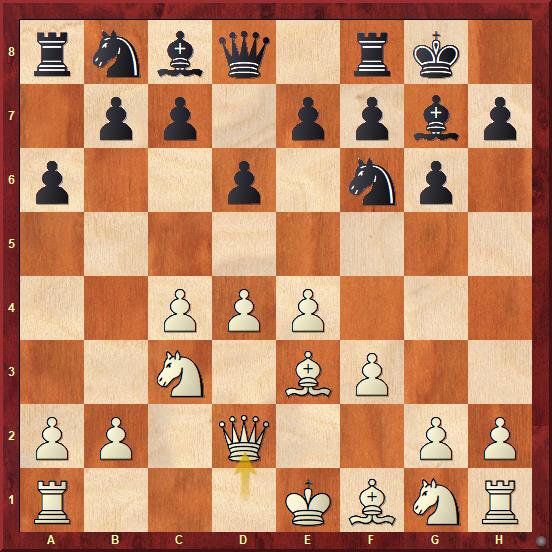
To conclude the theoretical considerations, I will present readers with a high-quality and comprehensive analysis by Grandmaster Sergei Makarychev.
"Oh my God!"
exhaled Gukesh after his game against Levon Aronian. It was impossible not to recall Magnus's famous slam on the table
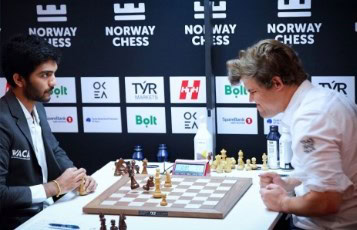
and the identical exclamation after a lost game precisely against the world champion in this year's Stavanger tournament!
I nostalgically remember his excellent performance in the Candidates Tournament, but especially at last year's Chess Olympiad. Gukesh undoubtedly belongs to the greatest talents in chess history and before any criticism, it must be remembered that even today he is only at the beginning of his chess career. His effort to calculate literally everything – a kind of total induction – is something I have never encountered to such an extent before, not even when looking into history! Gukesh's games, his style, and his results from the first eight months of this year deserve a separate article. Probably only as a summary of his first year of reigning, that is, at the very end of this year.
The world champion did not do well even at the last August tournament in Saint Louis. The final table of the classical time control tournament then looked like this:
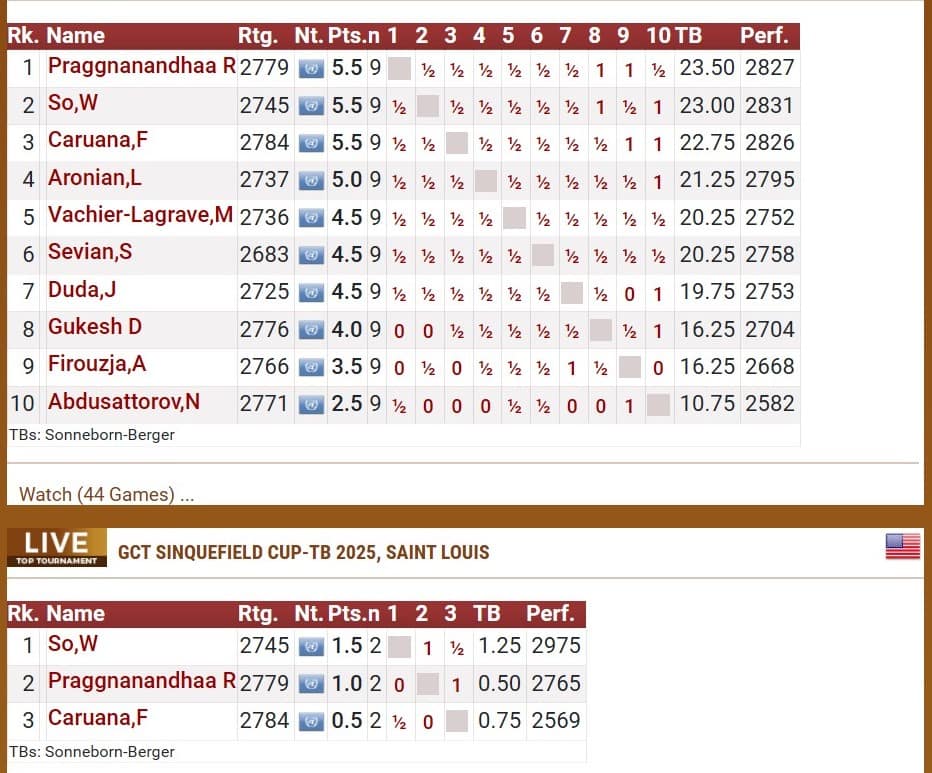
While I cannot recall, apart from the March Prague festival, where Rameshbabu Praggnanandhaa did not take or at least share first place, for Gukesh this is the second tournament in which he did not score even 5.0 points. What is more, in Saint Louis he lost two games but overall was in a losing position in five!
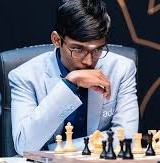
For interest, I present an overview of Praggnanandhaa's fabulous results this year: From January to August 2025 he played six classical tournaments. In five of them he won or shared first place: Tata Steel, Superbet Chess Classic Romania, Stepan Avagyan Memorial, UzChess Cup, Sinquefield Cup.
If the Chess Oscar were still awarded at the end of each year, I think its owner for 2025 would already be known today!

The world champion after a gross blunder in the endgame in the game against Levon Aronian. This time it went unpunished...
The world champion's performance at the Saint Louis tournament is excellently demonstrated by the penultimate round game. In the game Gukesh vs. Aronian a position of the diagram arose after Black's 46th move.
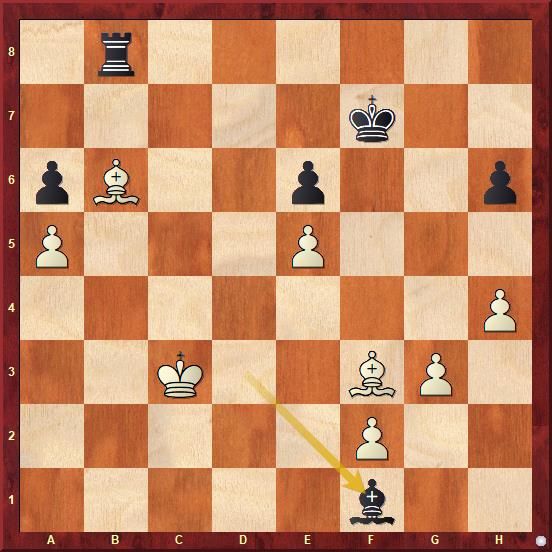
How would you assess the prospects of the sides?
All examples are again summarised in the CB viewer.