

Category: For coaches
About coaches
How to recognise a quality coach from an average, below-average or even downright poor one? You might think it's no big deal. A coach simply ‚explains something‘, demonstrates, analyses. However, if you care about improving performance (whether your own or your child's) and are searching for a quality coach without experience and without wanting to throw money away, it is certainly good to know how such a quality coach works... Continue reading
Wijk aan Zee 2019: a triad of horrors in endgames, a delightful combination, a genuine study and Carlsen's triumph
No, Caissa's beauty has not faded! The goddess just raises her eyes in disbelief... more and more often. Personally, I have long since lost any illusions about the level of play of today's players as such, especially the super-elite rated over 2700, when comparing their performances, for example, with those from 40 to 60 years ago. The recently concluded supertournament in the Netherlands provides sceptics of the same kind – that is, history was better – with ideal and explosive material... Let us first look at the true triad of horrors in endgames that the super grandmasters created in Wijk... but not only that... Continue reading
Saint Louis 2018 – question marks over Nakamura's fortress
In the lesson Analyse, we will take a close look at the mysterious endgame from the last round of the Saint Louis supertournament, Carlsen vs. Nakamura. What was the cause of the American's hopeless play in the rook ending (RE)? Faith in a fortress, which he actually did not have to build on the board at all? Today, Carlsen has no equal in endgames (he saw the winning fortress-breaking scheme 25-30 moves ahead!), but the patent for its destruction is held by... Polish grandmaster Gajewski!... The iron (computer) in fortresses certainly does not ‚fail‘ and does not wander... Why does the world champion arrive at tournaments rested, while the competition travels frantically from place to place?
In the lesson, we will also get acquainted with techniques for playing rook endings with pawns in a 4 to 3 ratio, explain the concept of the Achilles‚ heel of pawn structures, and there will also be a ‘nourishing' calculation test! Continue reading
Children love them, adults (at worst) tolerate them
What is it about? Well, chess quizzes, problems, humorous tasks. Younger children love them even more when a king is involved in the task and, of course, in the solution, and the task relates to chess; older ones like to ponder other types, including often more difficult retrograde analyses. And adults? I think most of them also enjoy a good puzzle... Continue reading
For coaches – another way to diagnose the talent of pupils
Dear colleagues, do you sometimes wonder how else to be sure whether something will grow out of your pupil? We offer an original, fresh possibility to try to get to the truth. Let us find out whether our pupil ‚knows‘ how to think deeply about problems, how to tackle tricky puzzles. The presented logical task awaits anyone who wants to think differently and more deeply than they have to every single day... Continue reading
Madam Dynamics and Statics in an eternal duel!
This is also one way to understand chess! It is said that in chess there are only three basic components, which are either in conflict or „prefer“ to unite against the third power (any similarity to Orwell's 1984 or some current situations on battlefields is purely coincidental...). These are Material, Time and Quality of position. The cards are dealt as follows: Material = Madam Statics, Time = Madam Dynamics; the Quality of position is characterised by a certain treachery and is then the privilege of either one or the other lady. Which of these two powerful madams do you prefer? This is also answered by a test primarily intended for coaches to survey the knowledge of their more advanced pupils... Well, you wouldn't be on the right page if we didn't include a few „cultural questions“ in the test... Continue reading
Obituary of a coaching genius
We bring a remembrance of one of the best coaches and didacticians in the world, writer and my coaching guru Mark Dvoretsky, who passed away unexpectedly on 26 September 2016. On our pages, the remembrance is also understood as teaching material for readers, but we also include Dvoretsky's game examples. After all, despite the prevailing opinion, Dvoretsky was not always just an excellent coach! From the vast literature, we focused on the author's favourite – prophylaxis and its most successful proponents Petrosian and Karpov. Deep, hard-to-surpass reflections on the performance growth of a chess player can then be found at the end of the remembrance; Dvoretsky seemed ahead of his time when he predicted the arrival of a new messiah who would try to dethrone... the opening theory and thus change the shape not only of top-level chess, Magnus Carlsen. Let us read what he wrote in 2007... Continue reading
For coaches (2) - Openings, Endgames, Humour
Today I have prepared for you a series of interesting positions and materials for the month of September. Download the materials from the Openings, Endgames and Humour sections in the attachment. Included is also a special guide on how to work with the materials in the For Coaches section. Continue reading
Lights and shadows (Chess for Schools - chess school) - complete course
Here, esteemed reader-coaches can download for free a series of popular articles that were published between 2002-2005, first on the pages of the then magazine Mat-64 (under the editorship of Mr Štefan Gross), later also on ŠachInfo (under the title Chess for Schools – chess school) under the leadership of Mr Ing. Břetislav Modr. Although this work primarily dealt with the selection of suitable (and of course also unsuitable) openings for [...] Continue reading
For coaches - introduction
We bring a section dedicated primarily to coaches of aspirants of our beautiful game. We would like to publish here mainly materials that could be useful to you in working with your pupils. This includes both individual training (personal or via Skype) and group training – in clubs, at training camps, chess camps, as well as, for example, so-called webinars and similar. Continue reading
Chess quote
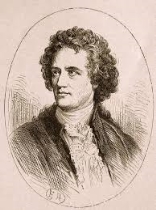
Chess is the touchstone of intellect.
Johann Wolfgang von Goethe
Johann Wolfgang von Goethe
Chess quote
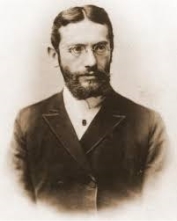
Chess, like music and love, has the power to make a person happy.
Siegbert Tarrasch
Siegbert Tarrasch