





CHESS SCHOOL
Jana Bílek

HA charming mental type?
Many coaches have often asked themselves in their work or hobby: „How can I recognise among children the real talents?? And more, how to gain in a relatively short time at least relativeí certainty that z my pupil might grow into something?“ Surely, most experienced coaches graduallyover time develop a feel and can already after the first steps of their pupils to find out, whether it makes sense to is continue to try vto raiseto keep s the aim to create z of them chess playery, v whose strengths eithere to attack hightargets.
Without wanting to elaborate here on which system or their combination will answer for us the presented problem with considerable certainty, I will suggest one more method to coaches.
I myself only started playing competitive chess at twelve years, and so we, together with peers (in Pilsen, or rather the West Bohemian region operated at that time a huge and very successful centre) soon fought our way into puberty. I no longer remember why, other than calf léties he this probably not even explain possible , but we laughed likeo madmen, when we wereš leader at onename from summer camps said roughly this: „An excellent chess player must be a thoughtful mental type!“

Thoughtfulé mental typey . We further abbreviate TMT.
Today I am convinced, and throughout my approximately 25years coaching professionalcareer I have often been confirmed, mostein the truth of this necessary condition, but perhaps even of its almost one hundred percent reliability in determining a young talent. To the same level can be perhaps truly should be placed only intuition very experienced, gifted a empathiccoach or psychologist. Even a lightning-fast shower of great successes of our little protégé can be just a false shell which, however,, experienced coaches certainly veryí well know... vědí...
Note: For this ‚phenomenon‘ the Czech coaching legend Mr Ing. Evžen Gonsior has a perfectly fitting a all-explaining term ‚aaccelerated talent‘!
How to reveal the decisive feature of ATD?
I have always liked logical puzzles, which for example, as is well known, directly brimealbert einsstein. Pif uwith his thought experiments did not trouble the staunch, yet his favourite adherent of Niels Bohr's quantum theory, he also devised amusing logical puzzles intended for a wider audience. Just a little surfing on the internet...
If we therefore accept the assertion that only HDT (as an intrinsic propertyt of a person) has the power to make z child's mindpof a serious chess player with master ambitions, frombthere is already only one! To find out whether our protégé topossesses this qualityí has!?

The following logical puzzle, which at one of our training camps (in Kunkovice near Klatovy; z placeand the event's name is derived from záeducational training value logical puzzles, but also of the story below) entered a little to older children by the coach ing. Karel Nováček, was dormant for several years in my computer. My colleague could no longer say to what extent he was its (co-)author or simply adapted it to local conditions, while the main framework of the story remained intact. With a little effort it is possible after all even it v modified similarly find on the internet, but the trick of the puzzle below lies i v in the fact that the pupil must filter out a considerable amount of unnecessary (although educational ) information. Because today children generally have a lower ability to understand text, it is this already textual padding by itself an indicator i of the presence or ab senceeof HDT!
In my opinion, it is possible to give the puzzle to children from about 12 years old. If we are šlucky and are raising a genius, then age certainly does not maálie .
I might add that the coach will certainly be able to adapt the logic puzzle to their own needsm...
Kunkovičtí pruminants – logic puzzle
V picturesque Šumava surroundings live ruminants known since time immemorial, who in the vicinity of the Ostružná stream graze juicy green grass.
The ruminants reside on the left side of the stream and every day they have to cross a bridge to the right side, where the aforementioned tasty green grass is located. It is not otherwise comparable conditions o a trouble-free crossing, because the footbridge is is very oldá, dilapidatedá and can carry a maximum of 2 ruminants at once.
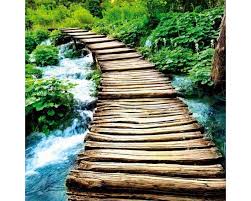
As if that were not enough, in the sky-blue stream there live other creatures besides only frogs, fish and crabs, and even the terrifying knightskOvičtí alligators

, who wait for hours and days until some ruminant falls from the bridge and thus becomes a welcome treat for these predators.
The group of ruminants consists of a total of 4 members, and even Béďu, Méďu, Péďu a Lenocha, who can cross the bridge at varying speeds.
Béďa is a very talented ruminant who spends most of his time improving his skills. He trains diligently, always completes his homework perfectly, and even sometimes adds something extra. He can literally run across the bridge in a record 1 minute.
Equally diligent is Méďa. Unlike Bédi, however, his talent is not at such a high level; nevertheless but with persistent training he can manage to cross the bridge already in 2 minutes.
On the other hand Péďa cannot fully utilise his innate talent! Tbecause he does not train, he is mainly interested in grass containing alcohol, rude programmes on television and stupid computer games or even ‚ruminants‘, ’, he cannotget below the threshold of 5 minutes to cross the bridge.
The fourth and also the last ruminant is Lenoch, which is an absolute ‚tragedy‘! Not only was he born without any talent, but he refuses to i fulfil the required tasks. Training is a foreign language to him. Nand on the contrary he is ‚an expert‘ on in alcohol a smoking, and for example he sees sport only on television, because he is so extremely lazy, , if he cannot switch to another, more popular channel...The only thingé v he is not even a little lgreedy is however food - v in thatfield is, on the contrary, an absoluteworld champion, and because he does not even have time to chew, his weight constantly increases and increases. This results in a sad fact, that he can cross the bridge only literally at a snail's pace - in 10 minutes.
Main characters again (for this purpose for a moment let's forget about the gender of ruminants or simply understand any warning of some pupil as his an additional bonus ).

 One-minute Béďa
 Two-uminute Méďa
 Five-minutetovdear Péďa
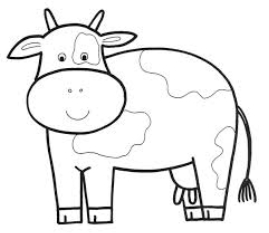 Ten-minute tragic Lenoch
Considering that on the meadow with green grass every evening after dark more dangerous animals, lions, appear
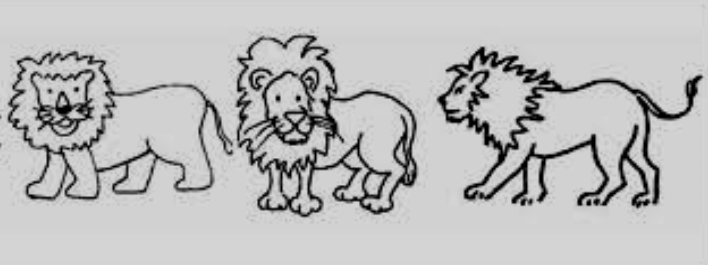
, they must already be ruminants in safety on the other side of the stream. However, ruminants are - as is well known - bad at mathematics and cannot calculate how long they are able to footbridge what fastest to cross when they can go over the bridge at most two, a at the same time, because already it is dark, with them they must constantly carry torch


Hold yes, throw no!
, which is however only one a cannot be over footbridge throw over; at the same time must reckon with the fact that each ruminant takes a different time for the journey. Kwhen they thus over the bridge together the slower ruminant with the faster one, will cross the bridge of course in the same time aswould the slower one crossed the bridge from them.
The ruminants, however, learned that not far from their pasture there is a chess camp, and because they know that chess players have excellent logical thinking, they decided to go to the camp and ask the children for advice:
„Jhow towe move as quickly as possible from one side of the bridge to the other, and how many minutes will it take us at least? Advise will it children!“
How to evaluate a logical puzzle?

Source: www.sportvital.cz
So a little unconventionally now let'sgo performance ranking of the pupils v riddles from worst to best:
Negative results tasks = protégé do not belong to the group of deep thinkers HDT
- the pupil shows no interest in the riddle, tries to avoid the obligation to deal with it at all
- the pupil cannot understand the text or the whole of it fails to manage to read
- protégé starts to solve the task, but after a while realises that it requires mobilisation of too much mental effort or takes too much time (analogy of solving more complex chess diagrams, which the pupil puts aside after the first unsuccessful attempt to solve)
- the pupil tries honestly to solve the task, but his mentalcapacity is insufficient
- the pupil diligently tries to solve the task repeatedly, but their mental capacity is insufficient.
Positive result of the task = protégé belongs to the group of deep thinkers HDT
- protégé helps themselves with a sketch for the solutionr(bridge, time transitions, directional arrows and similar) and tries various variations, yet still does not solve the puzzle correctly (most often inápawn incorrect solution = 19 minutes)
- the pupil helps himself with the solution with a sketch (bridge, time transitions, directional arrows and similar) and tries various variations; solves the puzzle
- For a talented pupil, it is no problem to solve the problem within a few hours or even minutes
- pupilerepeatedly (even for several days) tries various solution variants until reaching does not lead to the goal.
Conclusion
The author did not aim here to present all the variations that may arise when solving the puzzle arise.
For a closer explanation, it may be worth noting that the last anddlast successful solvers were compiled precisely in this way. Experienced coaches may certainly have a different opinion, butelet us forget that the parameter of the task is to find out whether our pupil haseall the prerequisites to ponder over some problem for several hours continuously or to return to it repeatedly again and again. Children with superior intelligence or even those who compare to the boundary of genius do not necessarily succeed in life... and therefore not in our beautiful game either...
Will you try dear colleagues the experiment described above on your pupils?
DOther tests - apart from assessment HDT
V In individual training, I have found it useful to uset also other tests:
On the extent of eidetic (visual, photographic) memory, which every chess player needs when calculating variations, we can easily recognise by the game, which it is possible can be found on the interneteat the address
http://flashfabrica.com/f_learning/brain/brain.html
A suitable IQ test, in which it is possible after its completion set the age of the pupil (unfortunately only from 10 years, but it can be easily calculated and the quotient increased, iftan excellent result is achieved for example only a nine-year-old boy) can be found not only by coaches and club leaders on the website http://iq-test.stylove.com
The so-called Raven's progressive matrices, which the coach will find in the attachments, are intended to explain briefly and simply, at the author's request to the viewers, how the situation with the strange queen development stands: directly for children from the last year before starting school. Theyare used to measure the IQ of gifted individuals.
Here you can download article in pdf.
Attachments for download:
Inteligence_detí_tezsi_reseni.pdf
Source: cz.deposhiphotos.com