


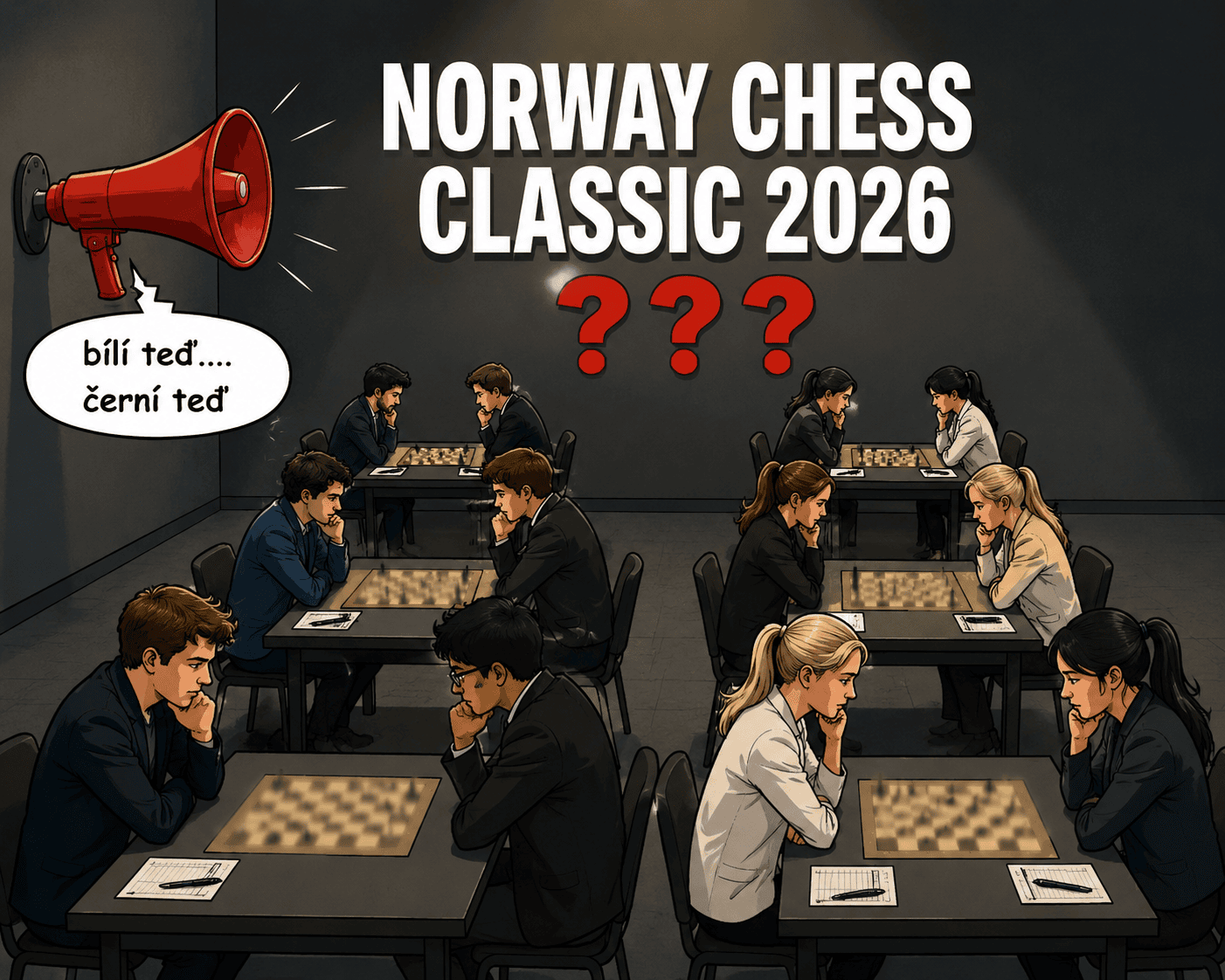
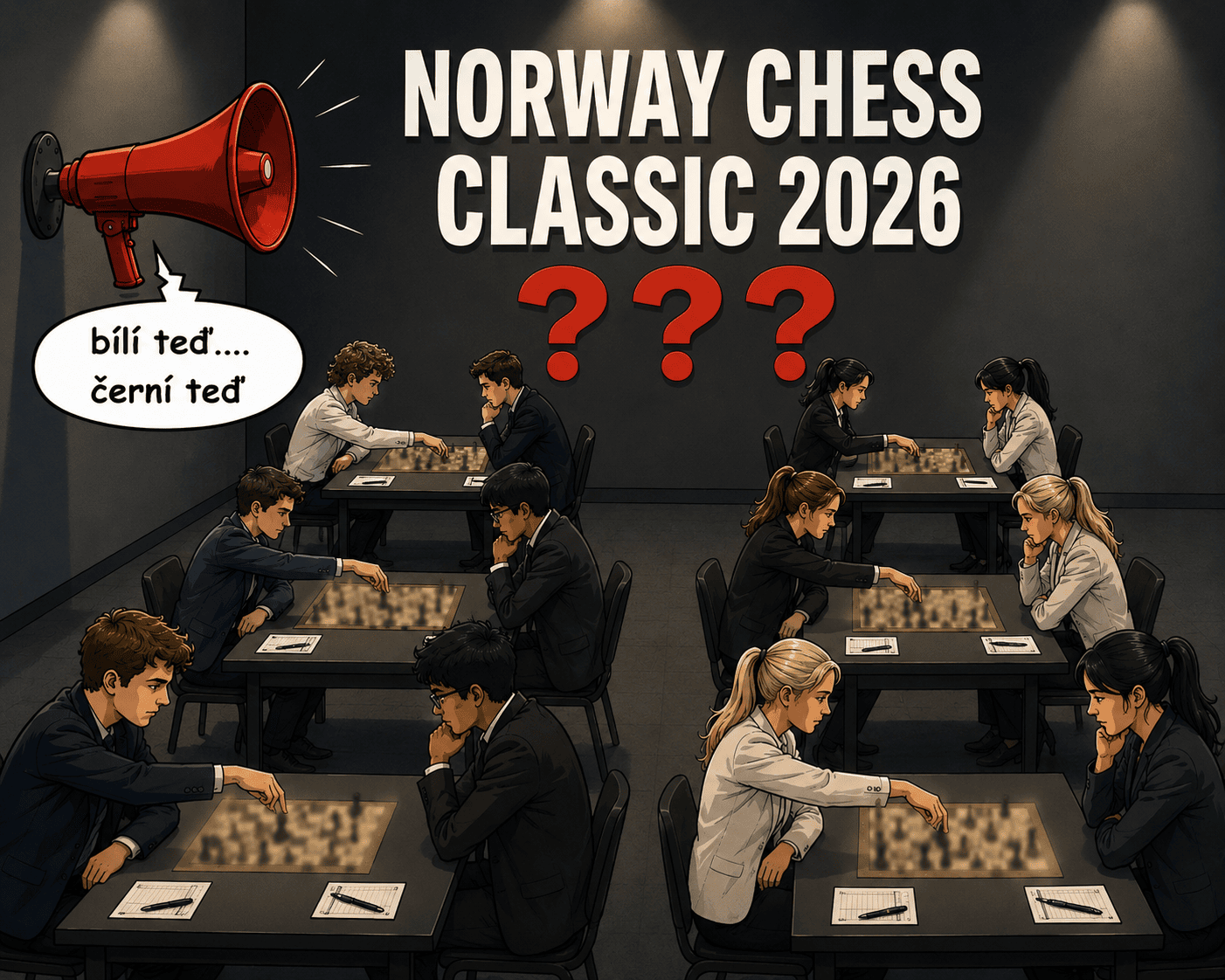
After the fortieth move, it was as if the Norwegian supertournament had travelled back half a century. Instead of classic finishes, spectators watched a modern version of old dictated blitz games, in which the arbiter called out every few seconds: „White now! Black now!“ But this time it was not a club pastime, but points that decided the standings of one of the strongest tournaments in the world – a Category XXI event.
As a little boy, I once saw a chess tournament of dictated blitz games with my own eyes. Today I only remember fragments of it, but I know that I watched the whole spectacle with my mouth open. Younger readers may need an explanation of what it actually involved, although I have heard that this form of blitz is experiencing a certain renaissance recently.
At a time when there were no digital clocks and not even mechanical clocks were a given in every club, a peculiar type of blitz chess was born. The players sat normally opposite each other at the board, but the pace of the game was not determined by clocks. Instead, an arbiter stood in the hall and at regular intervals called out: „White now! Black now! White now! Black now!“ Each player had to make their move immediately upon the call. The intervals were usually five or ten seconds. It sounds almost unbelievable today, but back then entire tournaments were often played this way!
As you might guess, it was not so much about the pinnacle of chess skill 🙂 as about entertainment. Indeed, many amusing stories have survived from books and magazines of the time. In one, after several dozen moves, the players got used to responding only to the word „now“. When one of them once missed his move, the rhythm of the game shifted. On the call „White now“ the black moved, and on „Black now“ the white moved. And because both only perceived the magical „now“, they continued like this for a long time without noticing anything.
Incidentally, just as I was preparing this article, friends pointed out to me that dictated blitz is not entirely a thing of the past. In Brno, a similar event is either being planned or has already taken place. Only the arbiter’s vocal cords, which sixty or seventy years ago had to endure endless repetition of „white now, black now“, are probably now replaced by electronics. It is actually a pleasant discovery that this remarkable relic of old clubrooms and chess halls has not completely disappeared. And it is good that with it, a piece of chess nostalgia has not vanished either.
Why do I recall this old curiosity? Because – as I have already mentioned – while watching this year’s supertournament in Norway, I sometimes felt as if I had returned to the times of dictated blitz. At least after the fortieth move.
The first part of the game was played completely normally. The players had two hours for forty moves, a time control familiar from World Championship matches and Candidates tournaments. Then, however, an unusual turning point came. Instead of the traditional extra half hour, the players received only a ten-second increment per move. Suddenly it was as if someone had placed an invisible arbiter next to the boards, calling every ten seconds: „White now! Black now!“
And accordingly, many – if not most – of the finishes looked like that.
It was not just one or two games. In the endgames, mistakes began to appear that we would not normally see at the world elite level. Some positions resembled a fight against the clock rather than a fight against the opponent.
The king is naked! Really?
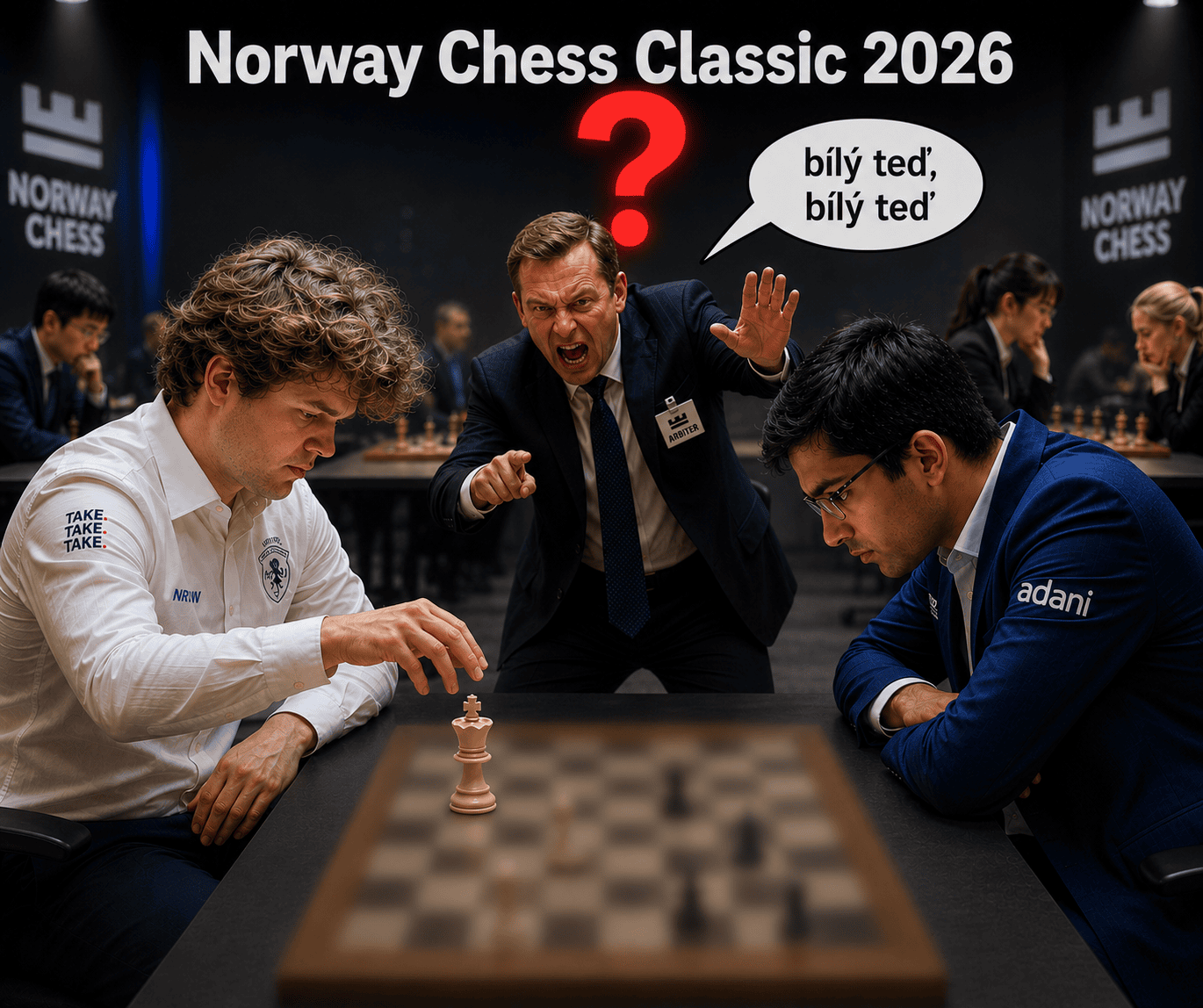
Even Magnus Carlsen got tangled in a mating net in one of the finishes and lost in a way that just a few moves earlier would have seemed almost unthinkable.
In the diagram we see the position from round 8 of the game Carlsen vs. Praggnanandhaa. Black has just played 47…Qc3+.
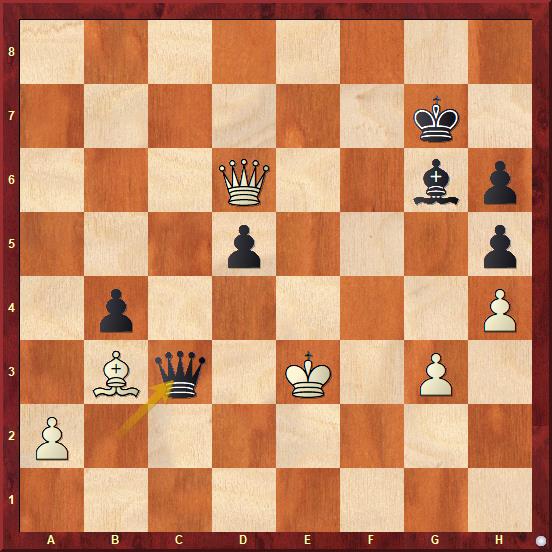
Given the sensitivity of both kings, the position before us is objectively balanced. If the players had been given an extra half hour or at least 30 seconds after move 40, it would be extremely unlikely that the game would end anything other than a draw – in Norway, that means points shared. But the „dictated blitz“ came into play! The ex-world champion with 23 seconds on the clock literally walked into a mating net after 48.Kf4??
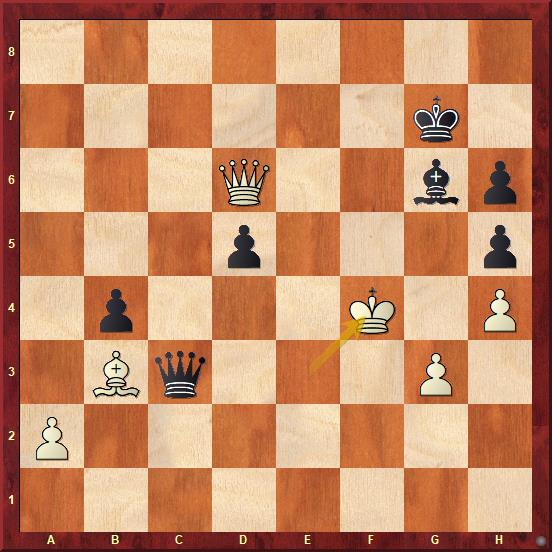
Here we can of course speculate. With less than half a minute on the clock, the super-grandmaster should find the only saving retreat. Those who do not like Magnus can now triumphantly shout Andersen’s: „The king is naked!“ But chess is not a solving contest. Nobody is without nerves. And if we recall the previous course of the game and the huge amount of energy Carlsen put into defending his position, even the loudest critics might soften their judgement a little.
Well, and here I simply cannot resist the first test for readers.
Can you calculate the forced mate? And above all: Where should White have retreated his king in the position of the first diagram?
Mostly light-heartedly about Norway
Several rounds before this tragic game for Magnus, I realised that the famous Stavanger cannot be considered a classical chess tournament in the true sense of the word. At most, it is some kind of hybrid of classical and blitz. Or perhaps a harbinger of the future? Some kind of preparation for the increasingly mentioned „new world championship“, which should once and for all determine the absolute world champion regardless of the time control?
An informed reader might object that the same time control has been used in Norway for many years. That is of course true, and the table below proves it.
time_formats_norway_chess_2018_2026
But what we saw this year, in my opinion, is unprecedented. It may also be due to the exceptionally combative composition and „rejuvenation“ of the tournament – Magnus Carlsen is getting used to being not only a veteran (in the sense of vast experience) but also the oldest participant at tournaments! When Carlsen, the reigning world champion, Praggnanandhaa and Alireza Firouzja meet at the boards – players who often play for a win regardless of the colour of the pieces or the opponent's strength – positions arise that are richer, more complex and sharper than usual. And it is precisely in these that the mere ten-second increment after the fortieth move revealed itself in all its nakedness.
That is also why my report this time will be somewhat different from usual. Less space will be given to novelties and strategic plans. Instead, we will focus more on the moments when one of the strongest tournaments in the world – a Category XXI tournament – began to strikingly resemble those long-forgotten dictated blitz games.
In my opinion, this is where the tournament split into two completely different halves. Until the fortieth move, spectators followed classical chess of the highest world level. After the fortieth move, a different discipline often began. And because many decisive points fell in these finishes, this time control affected not only the quality of play. Ultimately, it also significantly influenced the final standings of the entire tournament.
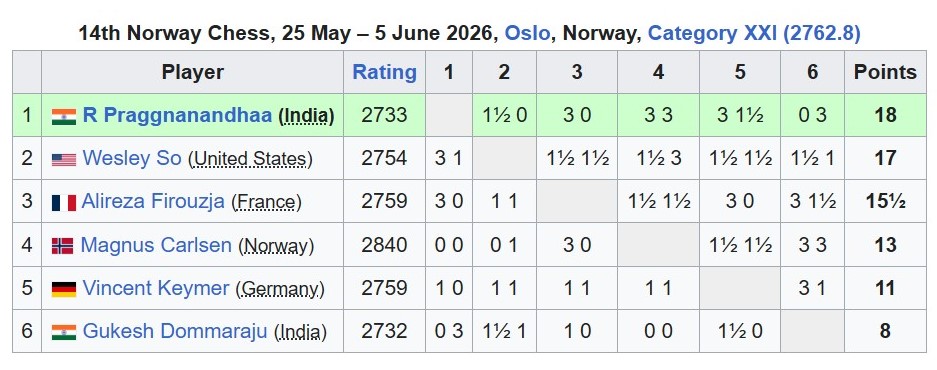
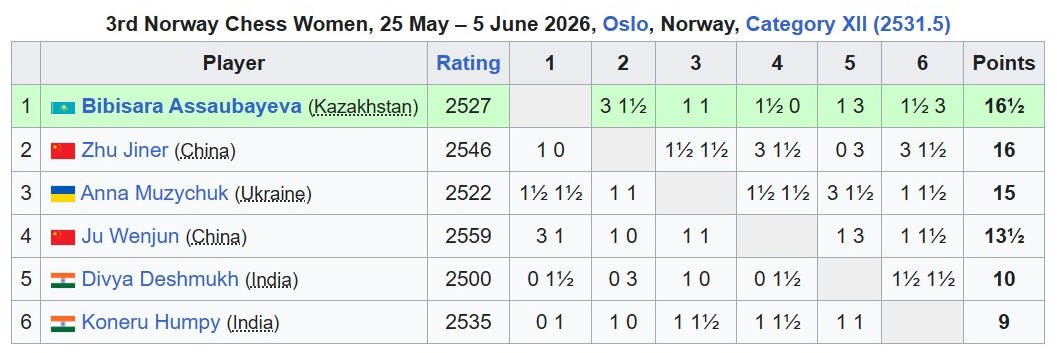
To make matters worse, let us recall that in Norway games „never end in a draw“. If a classical game ends in a draw, after a twenty-minute break an armageddon blitz follows. White gets ten minutes, Black only seven with a one-second increment... from move 61 (sic). To confirm his „serious draw“, White must win; Black, on the other hand, only needs a draw to succeed.
Because the creators of the system apparently found fractional points unsuitable, the following points are awarded for the result: 3 points for a win in a classical game, 1.5 points for a draw confirmed by a win in armageddon, and the loser in armageddon receives at least the consolation of one point.
Here, however, we encounter another interference with the simple logic of chess. The total points in the tournament no longer correspond to the number of games played. I will not even mention that Black in armageddon practically does not care whether he draws or wins, and that White sometimes resigned even objectively drawn positions...
Perhaps the most telling example of dictated blitz is the conclusion of the penultimate 9th round game Keymer vs. Firouzja. Here I simply could not help laughing. No, I was not laughing at Vincent or the brilliant Firouzja. It was rather some kind of hysterical laughter at what the time control managed to do to the game of two top grandmasters. Keymer repeatedly missed winning chances in the finish. Firouzja, on the other hand, fought for a long time in an objectively lost position until he finally even had a chance to win the game. „Where on earth has chess got to?!“ I said to myself looking at this finish.
Only later did I find out that the game had produced or could have produced truly study-like positions, and that a truly unusually beautiful combination was on offer. If only the players had enough time... but, no use talking!
White has just played 48.a4.
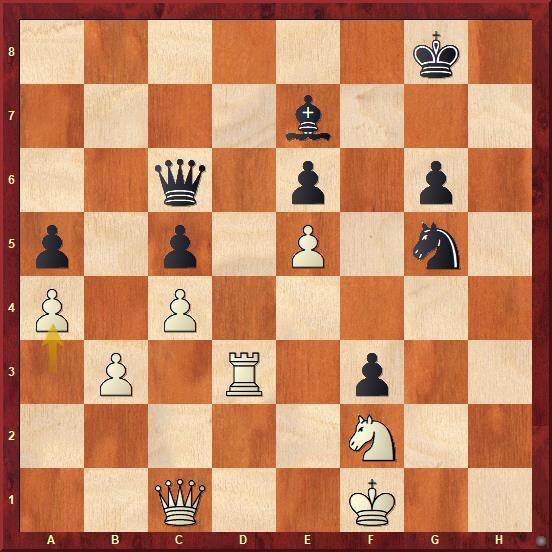
Let us pause here for a moment! It can be said that Keymer outplayed his opponent positionally in the previous course of the game. He reached a winning position and under normal circumstances, where players would receive the usual extra half hour and a 30-second increment after move 40, he would have deservedly won the game with more than 95% probability.
At this moment, however, Firouzja – a true blitz ace – was practically playing only on those ten seconds of increment, while Keymer had about two to two and a half minutes available.
I will add that the computer evaluation soon climbs to around +6. If we let the engines work longer, it would probably increase further.
However, the practical chances of both opponents begin to equalise due to the „dictated blitz“. On one side stands the winning position, on the other Firouzja’s genius abilities – lightning-fast calculation, a feel for piece coordination, in Kasparov’s words, so-called specific intuition!
When I watched the end of round 9 on Lichess and looked at the deployment of Black’s forces and the somewhat insecure position of the White king, I could no longer tear myself away from the game.
Mutual blitz on the seconds continues: after 54.exf6+ Alireza played instantly 54…Kg6.
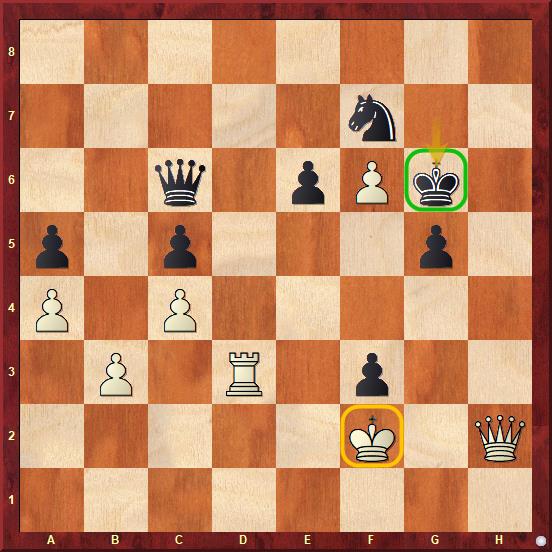
Objectively, White still stands to win. However, I am showing the diagram with several intentions. In blitz, very important factors come into play – one might even say at least as important, if not more so, than the objective evaluation of the position – king safety and… possession of the knight!
Unlike Vincent, we have plenty of time to find the winning continuation. White’s position already shows certain flaws, so White wins only in one way. Rather than focusing on the move itself, we find the solution through a more general consideration. Above all, let us engage prophylactic thinking: „What does Black want?“
Namely: how do you think White should continue?
After another twelve moves, Alireza understandably gained a decisive advantage. (I don’t know if he even knows that something like dictated blitz ever existed, but that he belongs to the absolute elite is indisputable; after all, these finishes are not so different from bullet!) An incredible position stood on the board after 66.Qe4+ Kf6-+⊙.
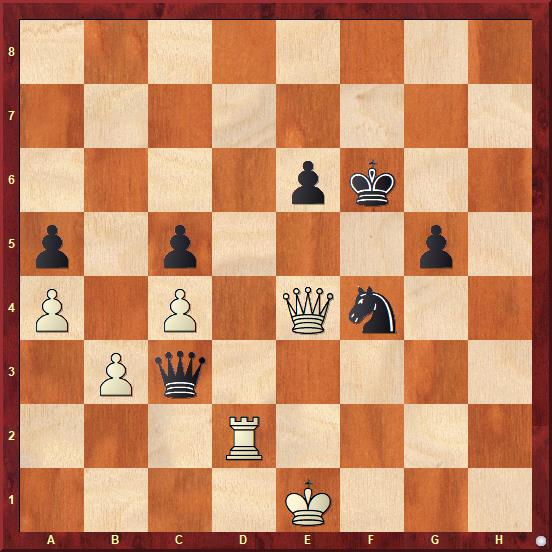
It may seem unbelievable, but White is precisely in zugzwang!! If he (theoretically, of course) did not have to move and could hand this courtesy to Black, Black would not be able to win the position!
In other words, we have reached a mutual disadvantage of the move! White to move is losing, but Black to move would not win, only draw! And now, dear readers and other true connoisseurs, imagine that the players did not have to blitz on the seconds, but had at their disposal – just as it was in the normal reasonable times of the true reign of Caissa – about an hour each! And you would also have the time and mood to ponder the position! What an experience we would have if we discovered the essence of this incredibly beautiful position! And that is not nearly all!
We are now moving into the realm of „what if“. But believe me, dear readers, even this „what if“ is worth it!
Alireza, however, also erred in a winning position. He eventually exchanged queens and hoped that an active king, knight and two passed pawns on „e“ and „g“ could guarantee him a win without the risk to which his king would be exposed if he left the queens on the board. After 72.Ke4 the position of the diagram could arise.
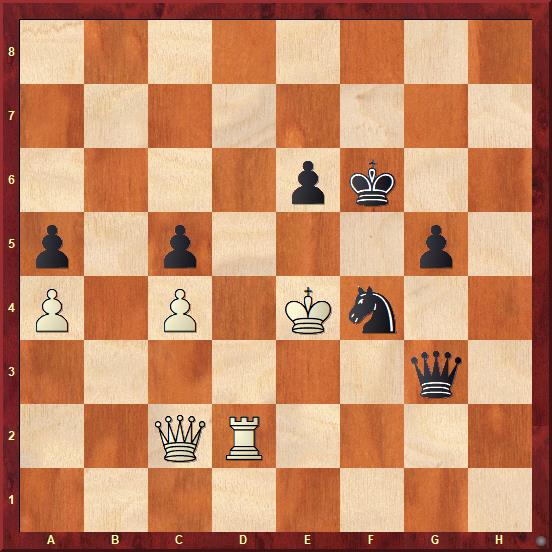
Black was winning after an incredible 72...Ne2!!
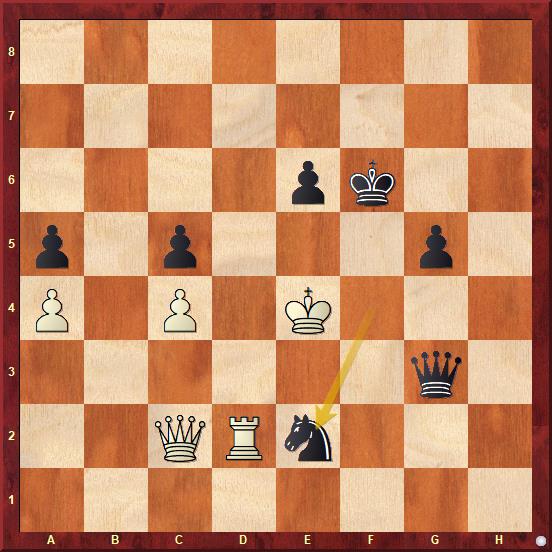
A combination with the idea of freeing a square, occupying a square and also a blockade!
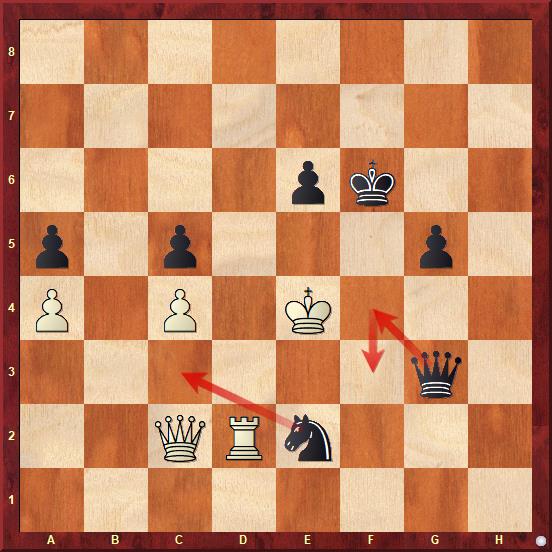
Once again using mnemonic aids! We will of course be able to enjoy the variations in the viewer!
The conclusion of the „serious game“ is set out in the video:
In the viewer below, all the critical moments of that „dictated blitz“ are captured, of course including the combination that remained behind the scenes, and the analysis of an almost study-like endgame. We can then replay the whole game in Nakamura's video analysis below.
A dramatic game Keymer vs. Firouzja thus ended in a draw after an even more dramatic finish. After such a course, I certainly could not miss the subsequent „real blitz“ and I was surely not alone!
If the organisers' goal of this otherwise quite crazy project is only to entertain the viewers or teach them tactics and how to play blitz games, then they are succeeding... 🙂
The opening of the blitz game Keymer vs. Firouzja did not go very well for White (after all, Keymer's performances in this discipline... well, sometimes caused doubts). In the position after 18...Rd2
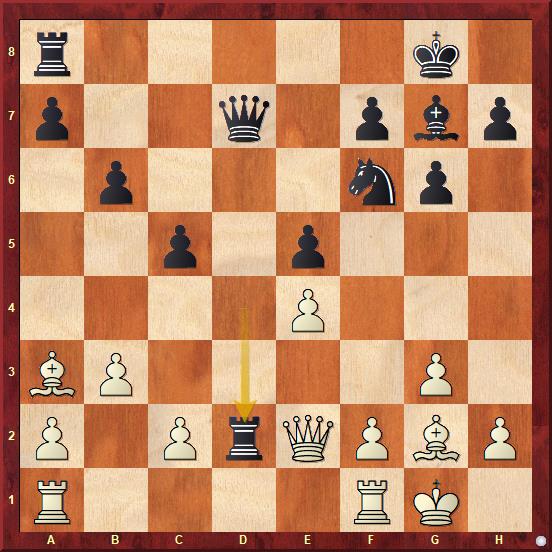
Black stands quite uncomfortably, but White certainly has not yet fired all his gunpowder. However, what followed was a mechanical 19.Qc4??
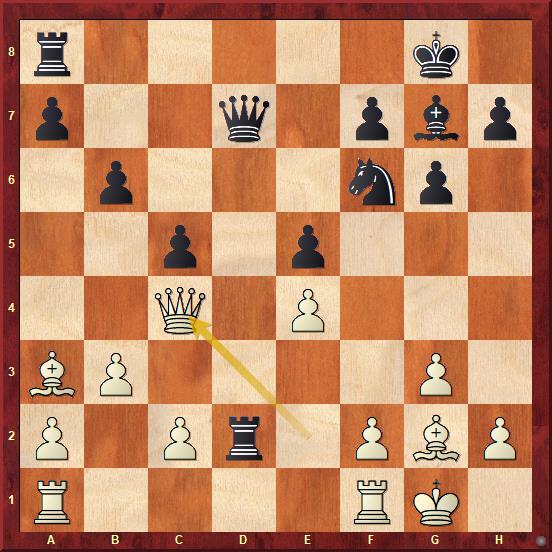
How would you punish White? Can you find the winning continuation?
Let us add that finding the winning continuation is not that difficult after all. But what shocked me, or at least thoroughly surprised me? Firouzja literally blitzed it out on the board in just one second!
Here is a video recording of the armageddon game:
Praggnanandha's crushing finish
Despite justified objections and the statement that the tournament in Norway was simply not a classical chess event, we cannot help but pause at the second half of the tournament and Praggnanandha's crushing finish, which ultimately brought him a well-deserved victory.
If the tournament had been played „normally“, Pragg would have shared first place with a score of +5, -3, =2. (Wesley So would have scored the same points, but he played a completely different tournament: +2, -0, =8. With equal points and using the most logical tiebreak – head-to-head results – the American grandmaster would have won the tournament.)
What is interesting, however, is that even after round 6 Praggnanandhaa was „staggering“ with a score of -2. What does this imply besides the repeated statement about that terrible „Norwegian“ time control? Pragg's final surge may remind one of Sindarov's run in the first half of the Candidates Tournament in Cyprus, where the Uzbek grandmaster started the competition by scoring 4.5 points from the first five games.
I do not want to diminish Praggnanandha's wins in any way. It is an amazing finish, but personally his games did not interest me much. So I will present readers only some shortened records and video analyses.
Harvest on the other side of the hall
When I watch or later replay examples from tournaments, the beauty and the learning itself are of course my primary concerns, but my subconscious somehow constantly urges me to seek model examples for my databases, which have grown voluminous over many years. An even better situation arises when I come across a truly multifunctional game.
And such a game I managed to find this year rather in the women's section of the tournament!
By the way, despite all their negatives, the tournaments in Norway do bring one quite significant plus! Perhaps it is the only world competition where women are rewarded with the same amount as men. The winners of both tournaments took home 700,000 Norwegian kroner, approximately 65,000 euros. Second places were awarded 350,000 kroner (32,000 euros) and third 200,000 (18,000 euros).
Winner of the tournament Bibisara Assaubayeva in the blitz game of round 6 against Humpy Koneru probably pleased not only me with a cute, although not complicated, combination that I could immediately add to my collection of combinations!
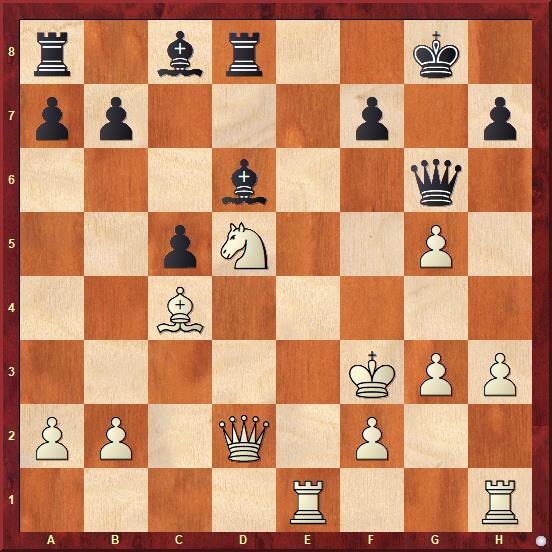
Followed by 23.Nf6+, after which 23...Kf8?
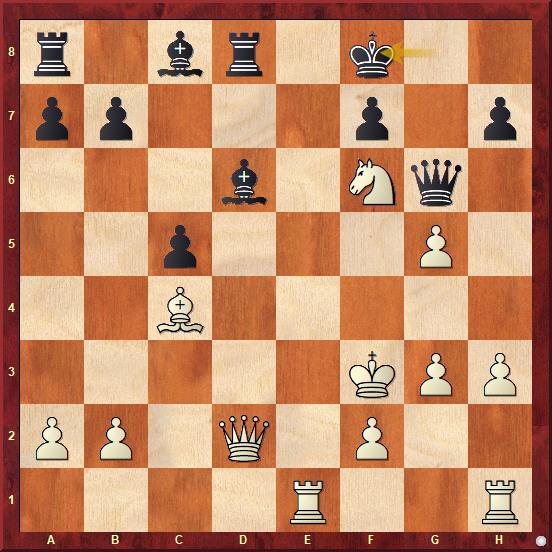
followed...
The solution to the combination is available here:

Bibisaru came to Norway to support and challenge the world champion Javokhir Sindarov...
Divya's king, abandoned by its own
No, this time it will not be a story about the charisma of a beautiful young Indian chess player...
However, I had to wait until the last round for the most didactically valuable game, which also fits perfectly into the opening repertoire of my former pupils!
In the game Muzyčuk,A vs. Deshmukh,D the Ukrainian grandmaster in the Alapin Variation of the Sicilian after 1.e4 c5 2.c3 Nf6 3.e5 Nd5 4.d4 cxd4 5.Nf3 e6 6.cxd4 d6 7.Bc4 Nc6 8.0–0 Be7 (in my works I called this position, which underwent the first practical tests by Yevgeny Ellinovich Sveshnikov in the late 1970s, the first main variation)
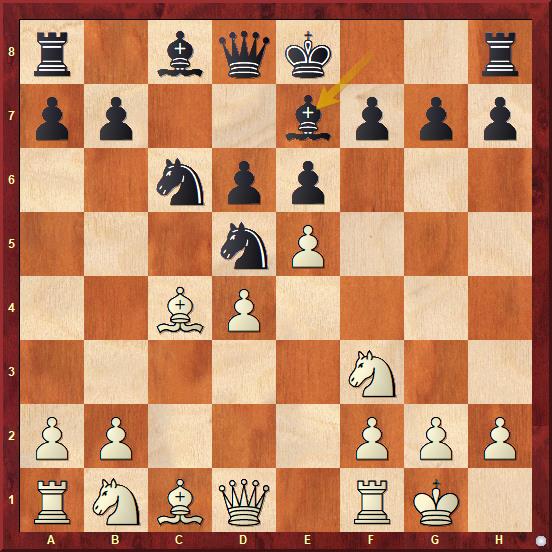
prepared my old „backup recipe“ 9.exd6!?
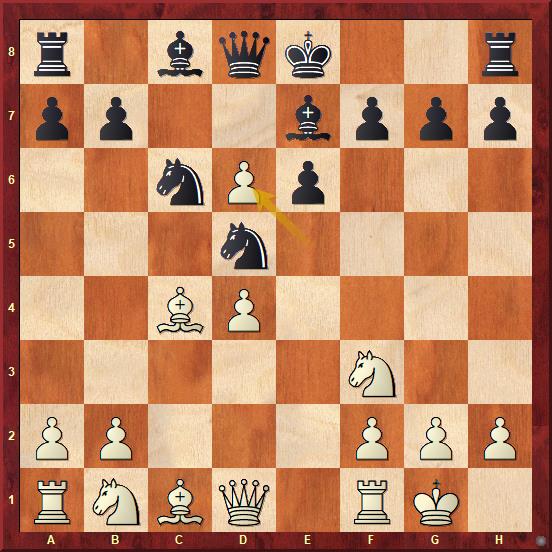
Already soon after move 10 Divya probably found herself in unknown territory. Well, that can happen. Much more important, however, is how a player behaves in such a situation. And here the problems began to accumulate. What was going on? Let's move a few moves further. After 14.Bxg5
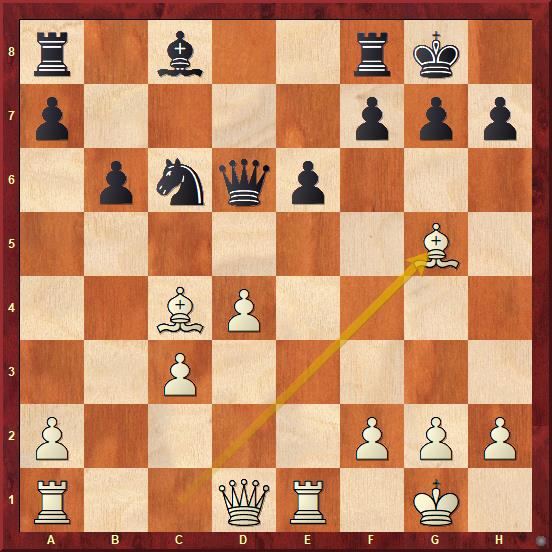
Black made the first serious mistake by neglecting prophylaxis and continuing 14...Bb7? (14...h6). Logical followed 15.Qg4!
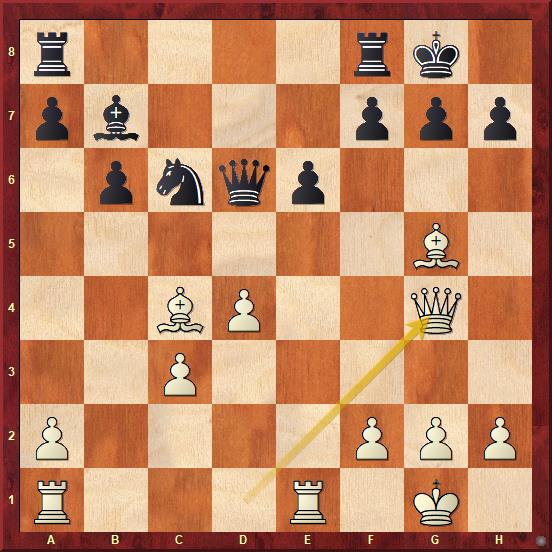
with a considerable advantage for White. At least now Black should have started to worry about the health of his king. It was absolutely necessary to 15...Ne7, which can hardly be called prophylaxis any more (Black neglected that in the previous move), but rather a preparation for a tough defence!
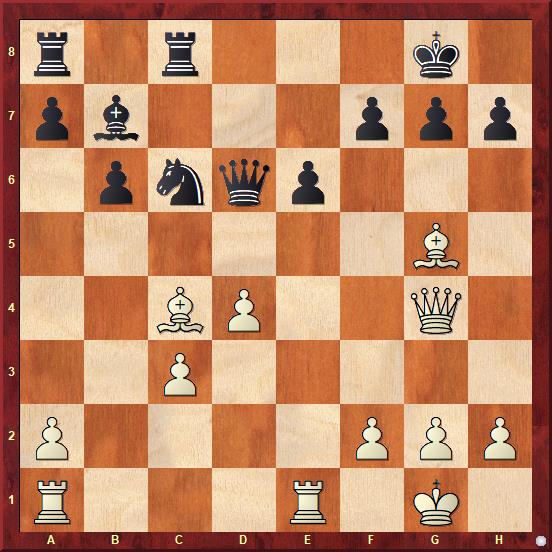
Divya's next move shocked me so much that if I had been sitting not in an armchair at an old computer but on a chair at a new one, I probably would not have stayed on it! After at least 20 minutes of thinking, the following followed 15...Rfc8??
The carefreeness of youth! Or – perhaps paradoxically – Divya opened the book of the first world champion The Modern Chess Instructor and found in it Steinitz's famous idea: „The king is a strong piece that can often defend itself!“ 🙂
I know I have repeated myself a lot in recent years, but I cannot help adding: „For such a move in a game, I would have scolded even my ten-year-old pupils sometimes in the 1990s!“
And the well-known sharp critic Franz Gutmayer (1857–1937) would have added to the comments, besides his usual complaints about „how badly everyone plays,“ just one word: „Optic!!“
Or, as surprisingly aptly advised me this time by the AI: „Black's pieces keep away from their own king as if it were suffering from the plague. But a chess king usually does not need social distance, but a personal guard.“
Already when I first saw that terrible 15...Rfc8 by Divya, I was seized by a kind of chess „déjà vu“. In the game Rubinstein,A vs. Janowski,D (Mariánské Lázně 1925), which Luděk Pachman brilliantly commented on in the book Strategy of Modern Chess II (1958), the following position arose after 18.Rf3 the following position.
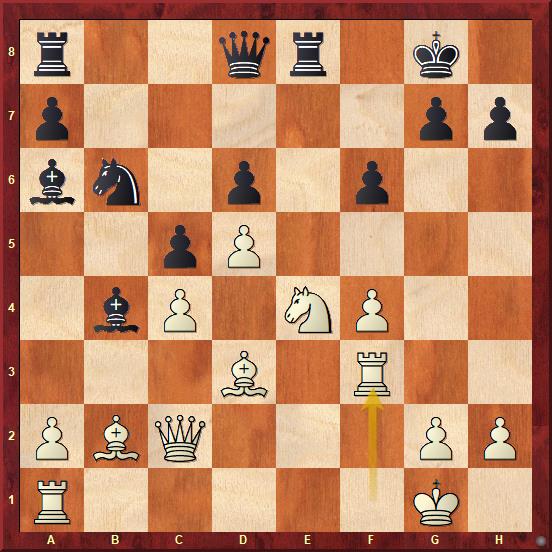
I will never forget the didactically precise analogy the author used at the end of the game – after White's 25th move:
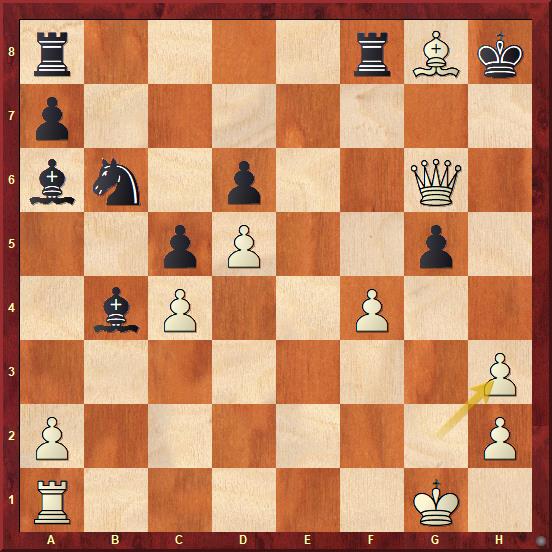
„Black resigned. His pieces on the queenside resemble a warehouse of unnecessary furniture.“
I have inserted the whole nearly 100-year-old game, along with some Pachman comments and analyses, into the viewer after the game Muzychuk,A vs. Deshmukh,D.
I know chess players who do not exactly like such didactic monstrosities (like the diagram below) – as one of them once told me – to put it mildly. I apologise to them, but here I cannot do otherwise!
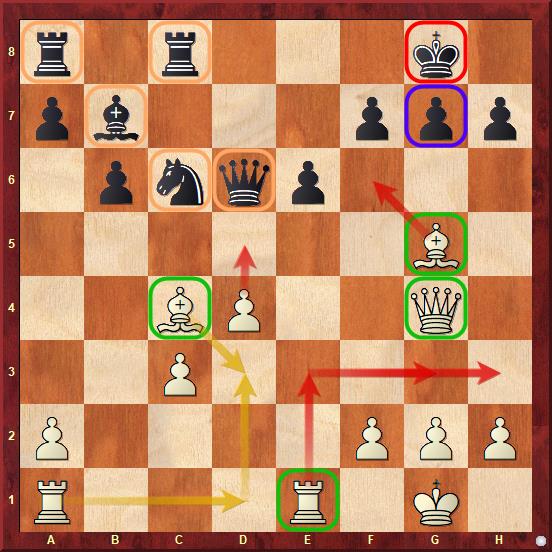
When I was training a generation that mostly adored Kasparov (yes, the pupils back then knew the names of great chess players and sometimes even the history), I made use of that.
I often illustrated the situation of a developing attack after castling, besides terms like numerical superiority of attacking forces, with the expression „Kasparov's axis“. I read most of Kasparov's works, and so I noted his remarks that repeated in several places. Kasparov wrote roughly this: „When I didn't know how to continue, it helped me to add up the number of attacking pieces and the pieces capable of joining the king's defence. If the number of attackers significantly exceeded the number of defenders, it was possible to start considering attacking projects.“
I probably supplemented more over the years. Let's mentally divide the chessboard into two parts by an imaginary axis running between the files „d“ and „e“.
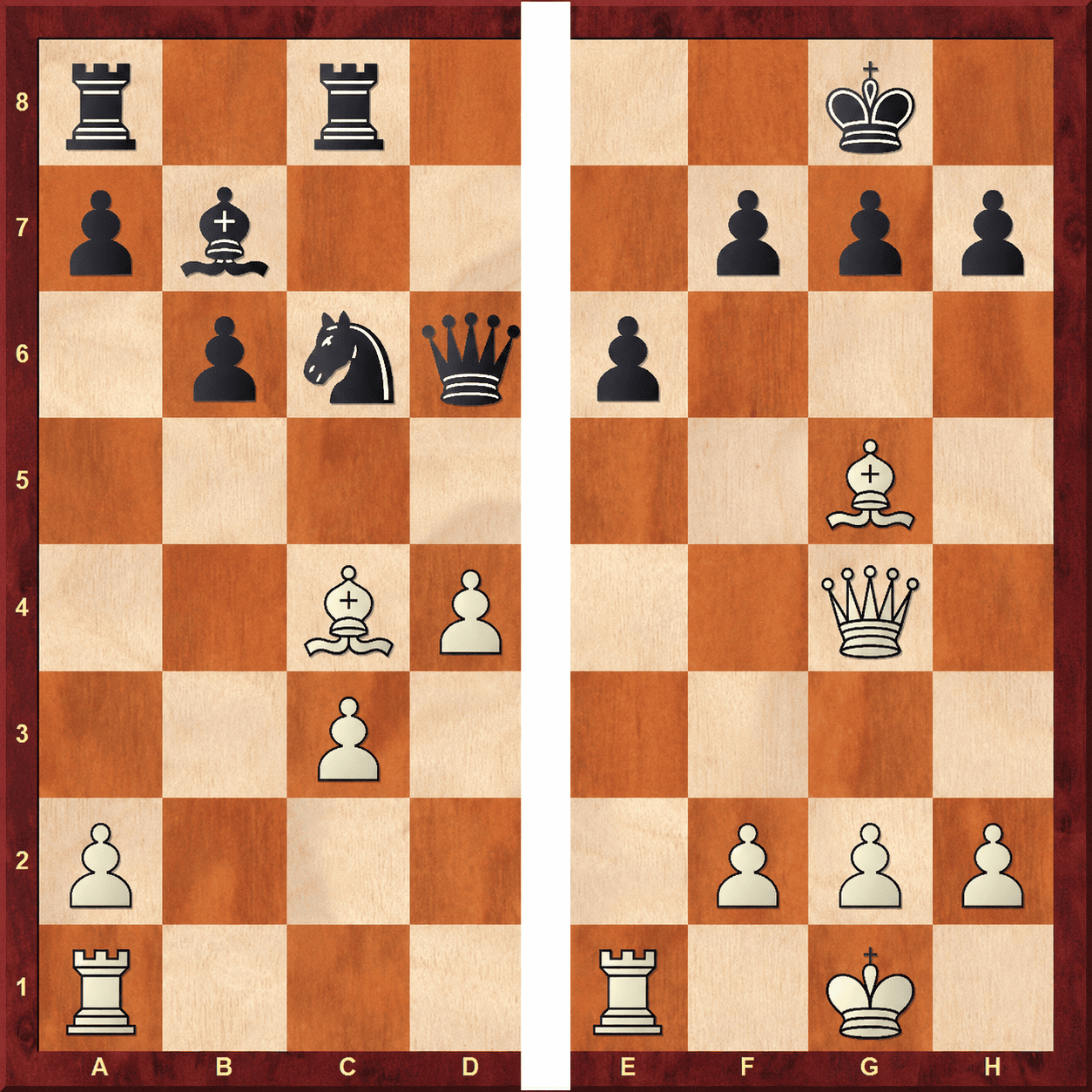
When applying this rule, we count as defensive pieces only those standing in the right section and, of course, on their own half of the board. On the other side, pieces can attack the king practically across the entire board. Typically here a light-squared bishop.
According to the „Kasparov's axis“ rule, the numerical superiority in the diagram position is 4-0! (If we teach boys, nothing is easier than comparing the numerical superiority of pieces to a situation from football or hockey...) To avoid just criticising Divya – her intention was obviously to „strengthen“ the defence with the queen from f8 in the next moves. This indeed reduces the ratio of numerical superiority but does not fundamentally improve the situation. And certainly not because the strongest piece would not surely catch the plague or, if you will, measles from the king!
If the move 15...Rfc8?? can be played by a player with a rating of „exactly grandmaster“, that is 2,500, then one inevitably asks: for heaven's sake, where have we ended up?
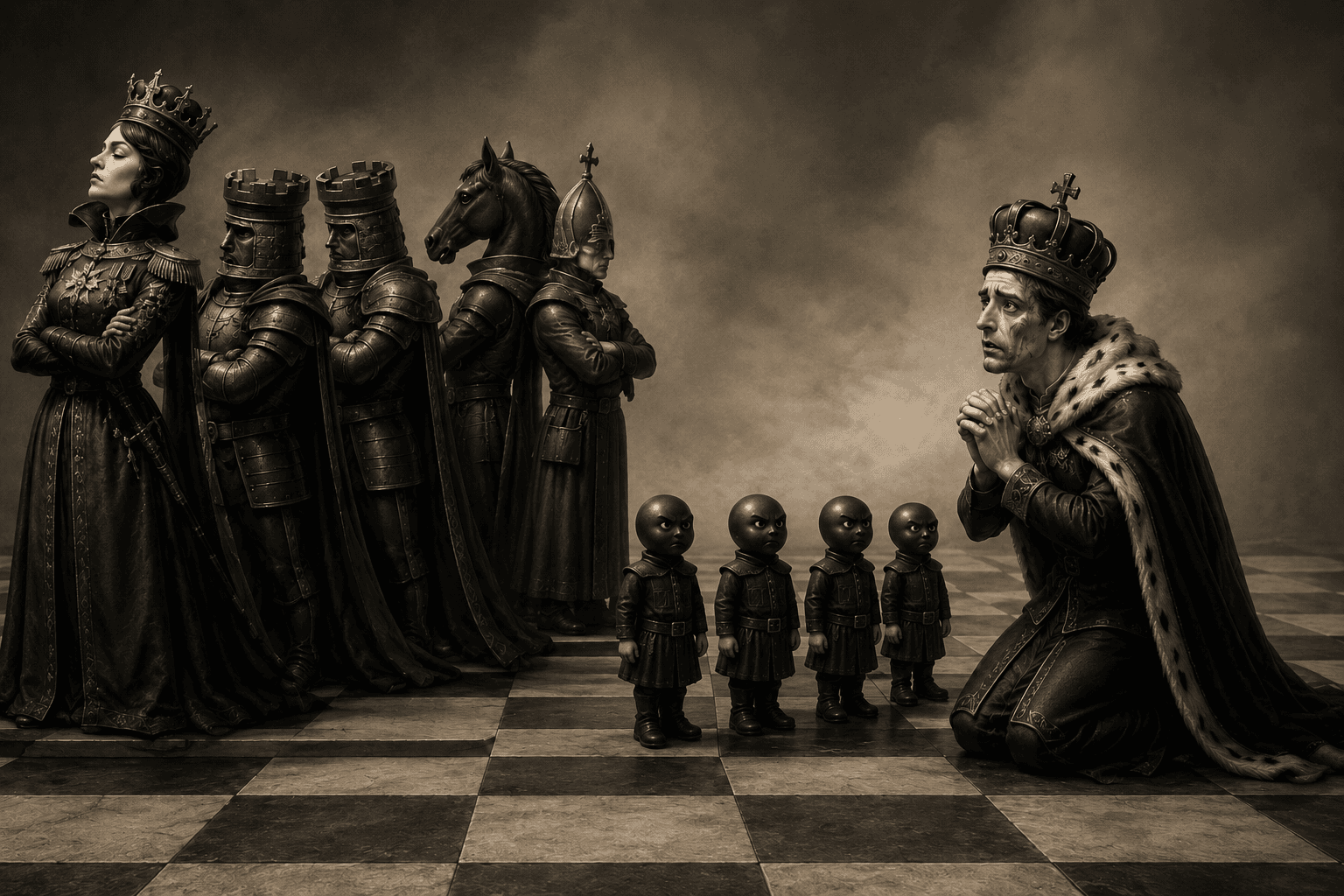
Maybe if I caught a goldfish and had three wishes, one of them would be: „I want to be transported to the moment when the coach is analysing the situation with Divya just before and after move 15!“...
If the Indian star did not manage the game strategically at all, then Anna Muzychuk showed a precise and mature performance in every respect. It can be said that it was even professional. She realised her decisive advantage with ease and gave her opponent no chance to calculate anything or set traps.
„With youth into the endgame!“ I think she almost certainly had this brilliant work by Mikhail Izrailevich Shereshevsky in her hands. Even if not, she certainly did not test the truth of this famous saying for the first time in practice. 🙂
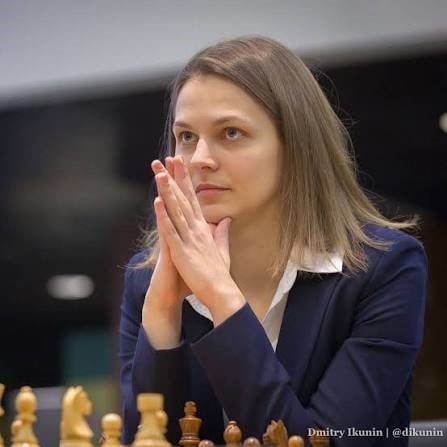
Anna Muzychuk, a stalwart of world chess and one of only four women in history to have crossed the 2,600 Elo threshold, that is the level of a strong grandmaster! And one more interesting fact: Anna repeatedly emphasises that she acquired the basics of chess education at home. No wonder – both her parents were professional chess coaches. From early childhood, they led her (together with her sister Maria) to classical chess education: game analysis, study of endgames and rich tournament practice. This may partly explain why both sisters are still considered exceptionally versatile chess players with excellent positional sense.
Four stories of one tournament
Let's sum it up: While Magnus Carlsen attracted the attention of fans and media rather because – unusually – he lost four games right away, world champion Gukesh practically could not cope with the clock time at all and Wesley So led the standings for a long time.
Praggnanandhaa was quietly making his way through the tournament. His start was unsuccessful. He did not avoid defeats, fell below fifty percent and certainly did not give the impression of a player who would intervene in the fight for first place.
When he suffered a classic defeat in round 6, it seemed that others would decide the tournament winner. Moreover, Wesley So remained the only undefeated player and gradually built up the position of favourite. When the tournament entered the final phase, most observers expected the experienced American to hold his lead.
But at this very moment, a turnaround came.
Such finishes are rare in top-level chess. Even rarer are they when they come in competition with Carlsen, Firouzja, So, Gukesh and Keymer. That is precisely why Pragg's finish deserves special attention. He did not win the tournament thanks to one lucky result or tiebreaks. He won it with a crushing attack at the decisive moment.
Praggnanandhaa gives the impression of a player who prefers to „attack from behind“; it is precisely then that he becomes extraordinarily dangerous. If he could show a similar form in the Candidates Tournament, everything might have been different...
What would probably happen if this very Praggnanandhaa came to Cyprus?
Let's leave chess to Time!
Despite an extraordinarily exciting finish, I cannot resist one, or perhaps even two, „buts“.
Firstly: the tournament in Norway, held for many years in Stavanger, in my opinion simply cannot be classified among classical chess tournaments in the true sense of the word. At best, it is among „classical“ tournaments. This time, we cannot avoid the quotation marks.
Secondly: those of you, dear readers, who believe in luck or misfortune (and thus do not have a deterministic view of the world like the author of these lines), will probably find it hard to deny the following statement: if all participants sat down tomorrow for the same tournament again, perhaps even with the same pairing order, the final standings would with high probability look completely different.
And this is perhaps the biggest difference between classical chess and its Norwegian hybrid. The more a ten-second forced blitz decides, the less role objective strength plays and the greater influence immediate form, psychological resilience, blitz skills – and if you like, that famous chess luck – have.
But classical chess, as we knew it and hopefully will know it for some time yet, is really not about blitz skills!
As for the forced tournament, I even organised one around 1985. I recorded 100 moves on a tape recorder: White now, Black now. It was in Habartov. Delay of 5 seconds and you could skip a move three times, the fourth time meant loss. An incredible experience. The tournament was won by Nováček from Sokolov, I was third. But I wouldn’t play it again!