


Let us return once more to the arguably strongest tournament on paper in recent years (or perhaps of all time? 🙂 ) held in Stavanger, Norway. There we witnessed not only a truly sad historical record, but also unusual serious blunders in the endgames by many participants, which at least deserve some reflection. Two other strong pre-summer tournaments can then be seen as a duel between the older generation and juniors, or even as a kind of distant tug-of-war between two of them for the rating lead as we step into the second half of the year. The winner emerging from this was the relatively lesser-known 20-year-old Arjun Erigaisi, who on 1 July will occupy 4th place in the world rating list.
Readers who follow chess events more closely might have literally stumbled upon a different event instead of the two strong closed tournaments in Tashkent and Armenian Jermuk!
Match of the Century?
Blitz match Kramnik vs. José Martinez Alcantara (known on online platforms as Jospe) caused such passion and division among chess fans, supporters, the Chess.com platform, and of course streamers who instinctively sensed earning opportunities, that it was immediately dubbed the Match of the Century. Without expressing my opinion here on the dispute Kramnik vs. Chess.com, which apparently will end up in court, and although I am closely following the problems around cheating in the world of online chess and the activities of Vladimir Borisovich and the management of the giant online platforms… what saddens me most is precisely this title.
Note: a two-hour interview of Jan Nepomniachtchi, the 14th World Champion, mainly concerning cheating in online chess and of course that blitz match, can be found by interested readers at https://youtu.be/NDgviFSMRDo?si=4N7RRFioSqZ83dpR
Why? In my opinion, the bombastic title of the match best testifies to the fact that even the chess world has really gone completely off the rails!

Those who remember know when and where the real Match of the Century. was played. It took place in 1970 in Belgrade and the more official title was: „USSR versus the Rest of the World“. If memory serves me right, not a single top player of the time was missing, including the reigning World Champion and four (sic) former World Champions! The fifth, then 68-year-old Max Euwe, participated in the true event of the century as captain of the World team.
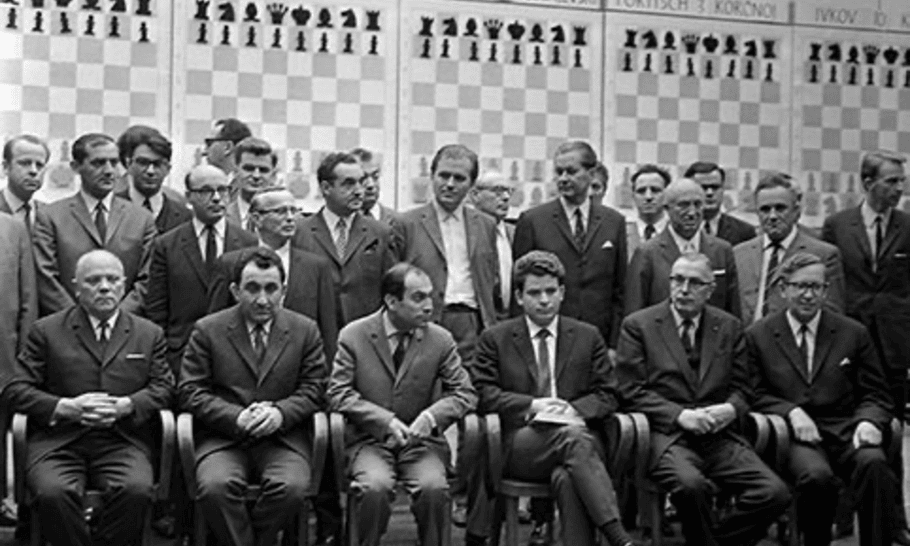
Belgrade 1970: I have probably never seen such a concentration of World Champions and the very best chess players on the planet in any other photograph. Older readers will surely easily recognise many faces; for younger ones, a hint: in the front row sit five (!) World Champions. The future World Champion Robert James Fischer, and at that time probably the world number one, unfortunately did not participate in the photo session…
Stavanger 2024
I devoted the previous article to the tournament with the star-studded line-up. As for its result, I more or less expected it, including the narrow victory of the former World Champion Carlsen. That is, a win according to the tournament rules by so-called replaying of draws.
Had I known what would happen in Stavanger in the second half of the tournament, I probably would have waited a few days before publishing the article for Dommaraju Gukesh’s eighteenth birthday and supplemented it, but so be it.
Tragedy of the World Champion
It seemed that World Champion Ding Liren had been struggling with poor form since the beginning of the year. In interviews, he admitted to having mental problems, suffering from depression, and currently undergoing treatment. Even as a layman, I know that depression is a serious and insidious illness that should not be underestimated or confused with a bad mood or trivialised. However, to explain the collapse that Ding Liren suffered in the game against Carlsen by depression is, in my opinion… well, let’s say hardly possible. For many readers, the notoriously known diagram and terrible blunder must be included here anyway.
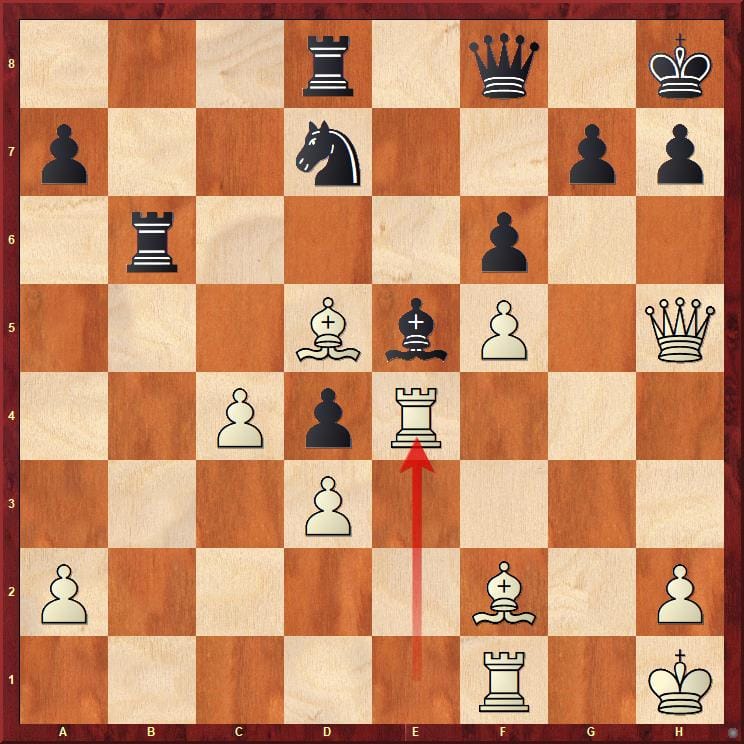
"What am I threatened with?" Such a banal question should have been asked and answered by the world champion after the move was made 29.Re4. Instead, with thirty-five minutes on the clock and after three (sic!) minutes of thinking, he makes a blunder at the level of beginners. What followed was 29...Rb2??.
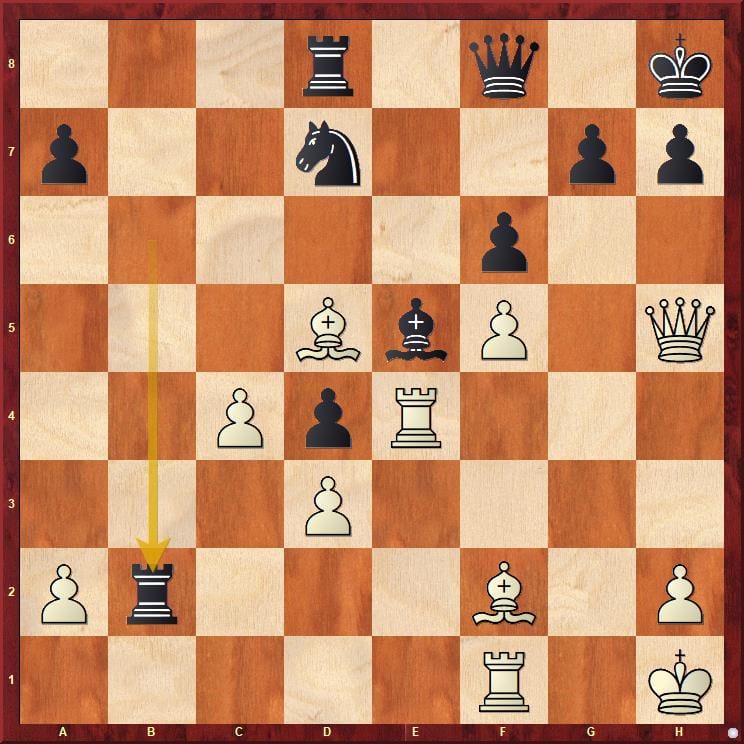
Never in my life, in more than 50 years of playing chess, have I seen a world champion overlook (fail to cover) a two-move checkmate in a serious game! I might add that after the forced 29...h6 the game remained dynamically balanced even after the loss of the d4 pawn: 30.Bxd4 Bxd4 31.Rxd4 N e5! with excellent compensation.
However, I will share with the reader a similar tragic event. I mentioned it in the introduction to a work I wrote many years ago. I was delighted to start writing a book about the life and work of the founder of the Russian chess school. The prologue of my work dealt precisely with a similar mishap…
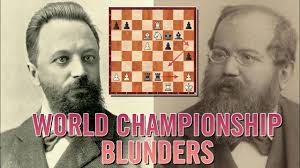
„Havana, 28 February 1892. In the Cuban capital, the World Chess Championship match between the defending champion Wilhelm Steinitz and the challenger, Russia’s best player Mikhail Ivanovich Chigorin, is reaching its climax. The current score is 9 to 8 in favour of the world champion (the match is played to 10 wins, with the match continuing to three further wins if the score reaches 9-9), but it can be said that the initiative in the match swings back and forth. The 23rd game of the match is underway, and it is very tense and dramatic. The world champion makes an unsound piece sacrifice and after White’s 30th move the following position arises on the board
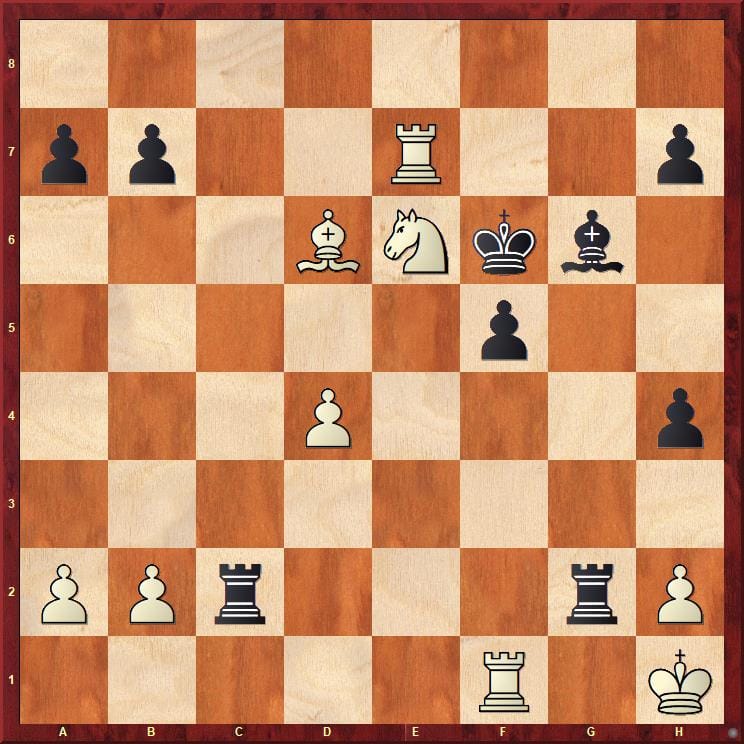
Black continues with a checking move 30...Re2, but Chigorin decides not to adjourn the game (the time control at that time was usual – 30 moves in two hours, adjournment and resumption at 15 moves per hour) and continues playing. Presumably he and more than 1000 spectators in the hall expect Black to resign immediately or within a few moves! What follows is 31.d5 Rcd2.
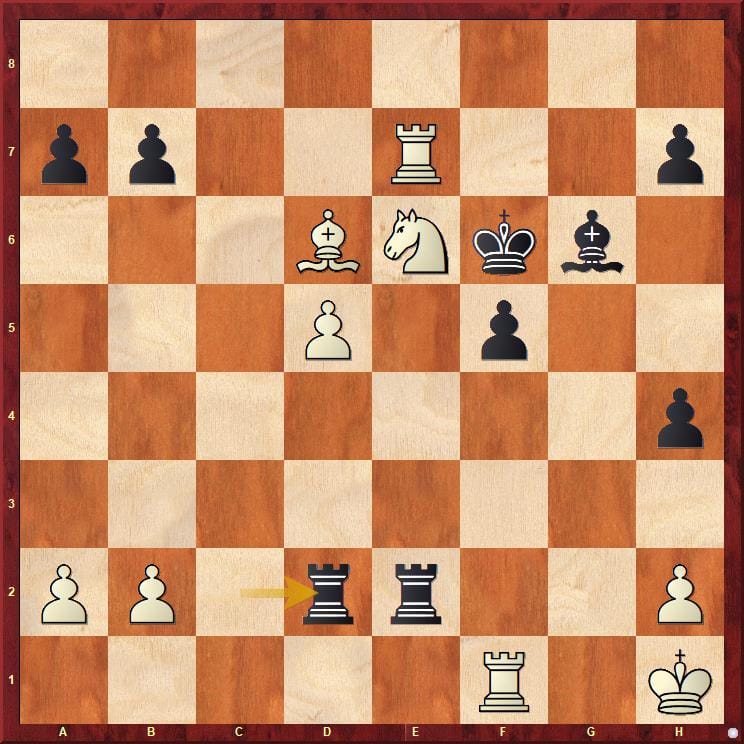
What is happening? Suddenly an indescribable murmur, noise and confusion breaks out in the hall. The Russian master holds his head in his hands! Without any necessity, quite thoughtlessly he plays 32.Bb4??
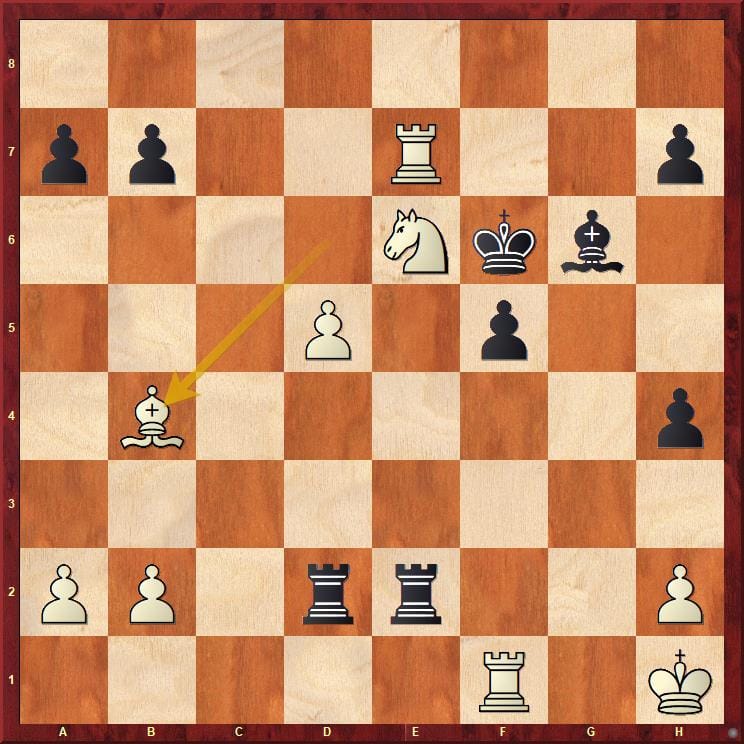
(32.Rxb7 easily won, and if 32...Rxd5 then 33.Nf4) and after 32...Rxh2+ he resigns, because the next move delivers checkmate.
An unbelievable blunder - moreover at the moment when Chigorin could have interrupted the game, which would have almost certainly led the world champion to automatically resign - ends this truly titanic battle! Chigorin will never be so close to the world championship title again, he will never have another chance to fight for the highest title…“
Well, true. Chigorin did not make the blunder that also leads to a two-move mate in the rank of world champion title. And it is probably appropriate to mention one difference. With my pupils, I divide blunders into so-called active and passive. Chigorin made himself, so he made an active blunder, whereas Ding Liren did not cover the threat! Even more terrifying about Ding Liren's mistake is that the manoeuvre Qxh7 and Rh4 should normally have been seen long before Bb5+…
The world champion lost four games in a row in Stavanger! It can be said that even in the other lost games he was unable to orient himself in the complications. In such a situation, I thought he would not finish the tournament and I was worried whether he would be able to start defending his title at the end of the year at all. On the other hand, roughly a million dollars can be a sufficient stimulus (and that is the minimum, we have no idea yet how far the Indians might push up the prize fund)…
More about Ding Liren's career, current health problems and his statements in interviews can be seen by readers in the video https://youtu.be/G63K-_96V4Q?si=rwr-4taHg5XHwhxS
The newly crowned world champion in bullet 🙂 shocked in Norway no less
I have already written so much about Firouzja that it would be pointless to repeat myself. Do you remember his incredible blunder in the endgame in the game against Nakamura in Toronto? The video shows how he literally fired into the g7-g5 position, and he was not even in time trouble. So I thought I would never see anything worse from him in the endgame. Wrong!
By the way: Recently Alireza became the world champion (so far unofficial, but that will probably change, the times are favourable) in bullet. Enthusiasts from all over the world were eagerly watching especially the final of the online one-minute games, where Firouzja faced… who else but Nakamura. One cannot help but be amazed when streamers analyse online hyperblitz games. These are of course played in at most a few minutes, but their analysis then takes ten…
Let us now turn to Stavanger. The tournament is entering the halfway point, round five is next and the central game becomes the clash Carlsen vs. Firouzja.
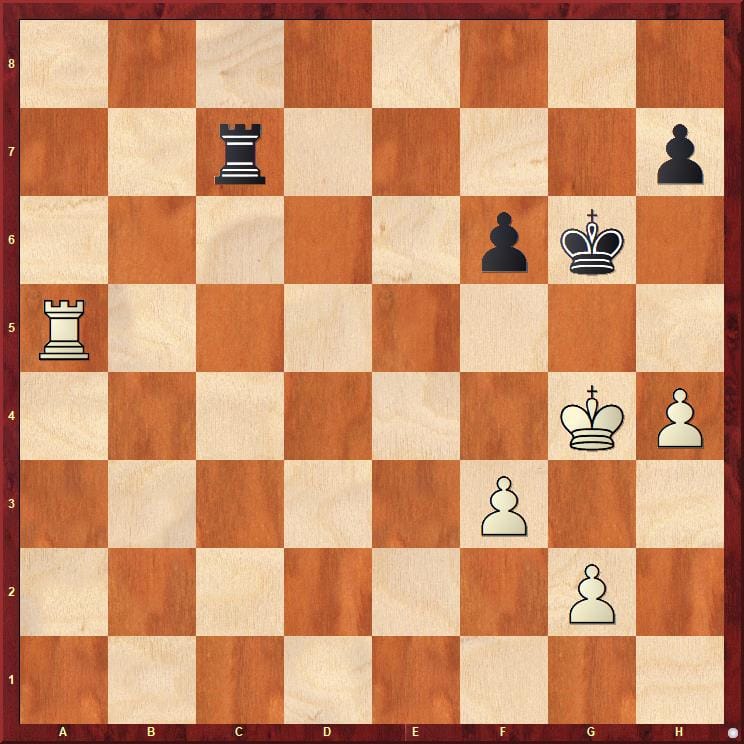
We might still somehow understand that nowadays even a super grandmaster with a personal best of 2804 may not have to play this once 🙂 evidently saving a drawn endgame, especially when various organisers can really work wonders with time controls (in Stavanger they played with 120 minutes for 40 moves plus a 30-second increment from move 41, so no further time control). Well, besides, the most qualified player has the white pieces. But what do you say to this, dear readers?!...
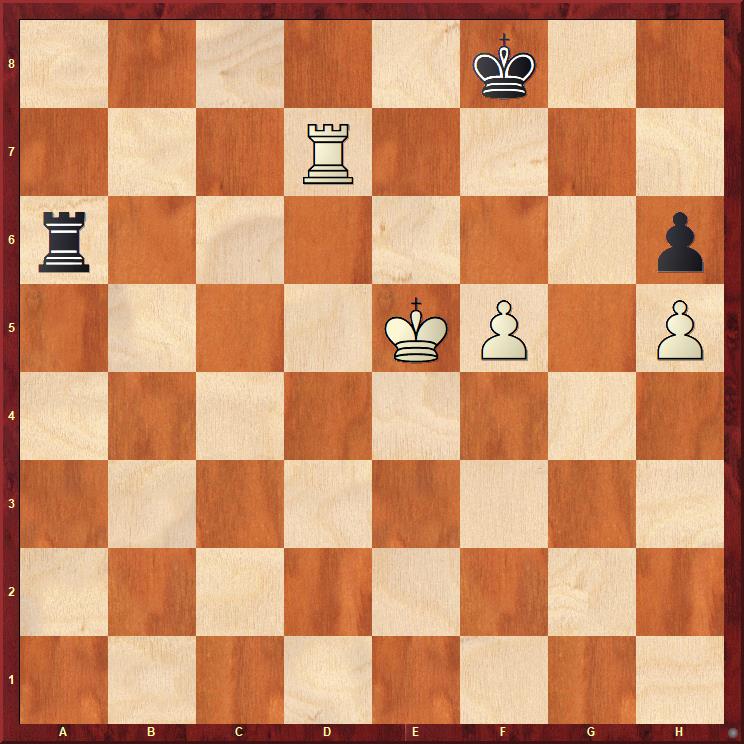
The position on the board is still objectively drawn and Black played correctly 76...Rb6. Unaware Magnus (I really believe the adjective is fully justified here) responded with the logical 77.Rd6
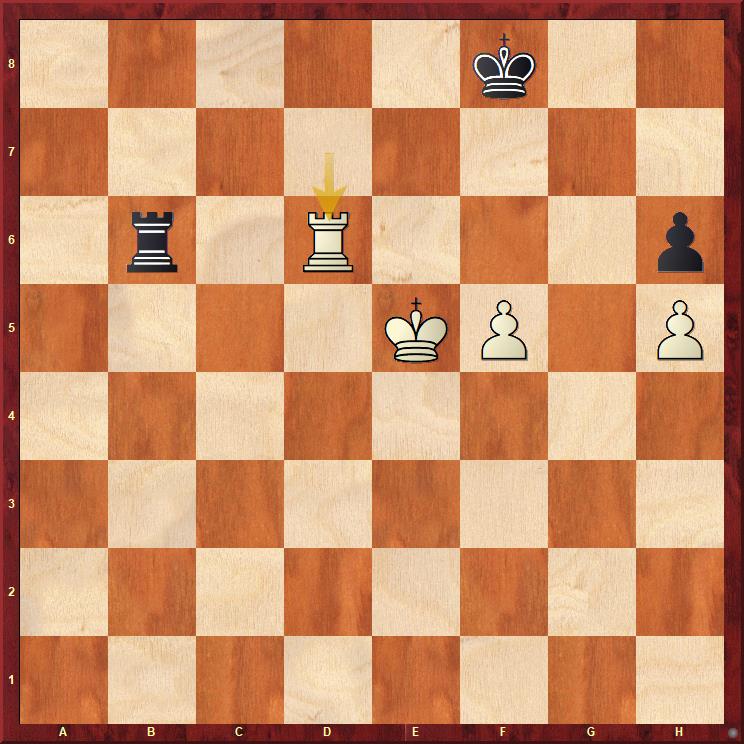
and surely looked forward to his favourite cat-and-mouse game in the sense of „in a drawn endgame I will try to outwit Alireza to exhaustion“! However, he (whether in time trouble or not) interpreted the last move in his own way. Such a shock might be too much for a fan who still believes in the lucky star of the Iranian-French genius! Well, and what followed? Even readers who missed this next Stavanger shock probably guess correctly!
Neglected endgame study or time trouble?
Who or what is mainly to blame for the fact that the extremely poor endgame play had the greatest impact on the tournament result (not only) in Stavanger? Specifically, the long-time world number two Fabiano Caruana lost both his lost games in drawn endgames! These cannot exactly be called theoretical draws (Mark Dvoretsky used the term precise), i.e. described long ago in the literature, but they certainly approached them. In general, I noticed the trend of fundamental endgame ignorance (without exception among supergrandmasters) many years ago, of course not only myself.
In the case of one of the strongest players in the world, it is not entirely clear whether time trouble, nerves, or the experimental pace of play played a decisive role, but the blame naturally falls on the player anyway. Well, what kind of report from the upcoming summer and holiday tournaments would it be if I did not present to readers a few more supergrandmaster blunders in endgames (but also one reliable defensive performance)!
Reliable Pragg
Satisfied with his final result was today the third of the trio of Indian prodigies. Besides being schooled by a former world champion in a strategically beautifully conducted game, which we find in the previous article, he showed that his fundamental ignorance almost they definitely do not concern theoretical endgames. On the contrary!
Carlsen's sweet revenge? Certainly yes! Fully convincing? Certainly not!
After the strategic schooling from Praggnanandha in the third round of the Stavanger event, Carlsen did cool down a bit in the replayed draw of the eighth round (see the rook endgame above). I originally did not intend to publish draws replayed by blitz games, but I must make an exception here! Carlsen's technique from the more familiar battle of Bishop versus Knight in the endgame could be published and inscribed in golden letters into lessons and books. He won a theoretically drawn endgame practically without thinking. This is his forte! He probably saw the final winning scheme dozens of moves ahead!
How much time the former world champion spent demonstrating the superiority of the knight over the bishop, and when approximately he saw (felt!) the winning manoeuvre, the reader can judge for themselves in the video below. It is also instructive to watch Carlsen's expression of concentration. Much can be traced in it as well.
The final tables of the tournaments in Stavanger looked like this:
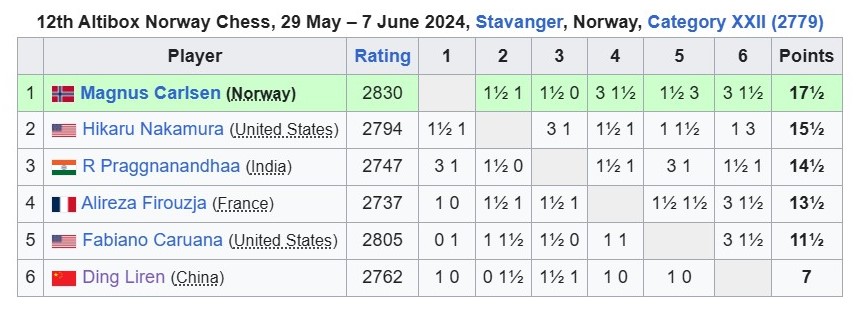
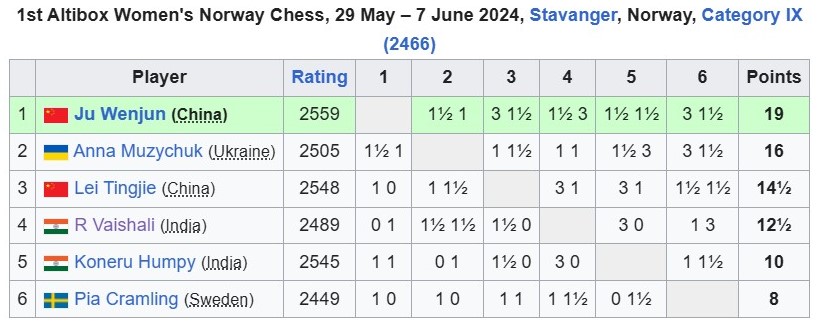
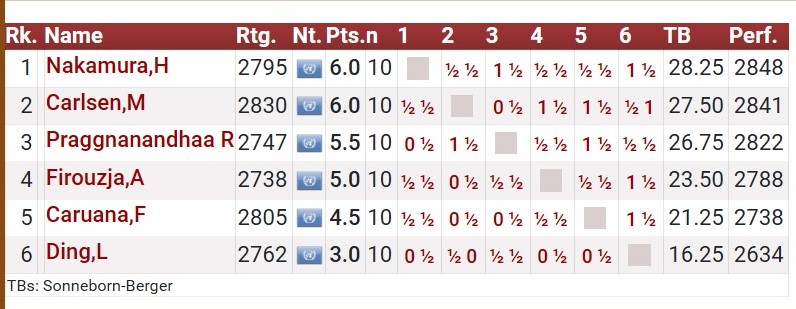
Under normal circumstances, the final table would look like this, however. The question of decisiveness and whether the system of replaying draws, which I mentioned in the previous post, proved effective, the reader can certainly decide for themselves. For example, by comparing this table with the results of the January tournament in Wijk aan Zee or…
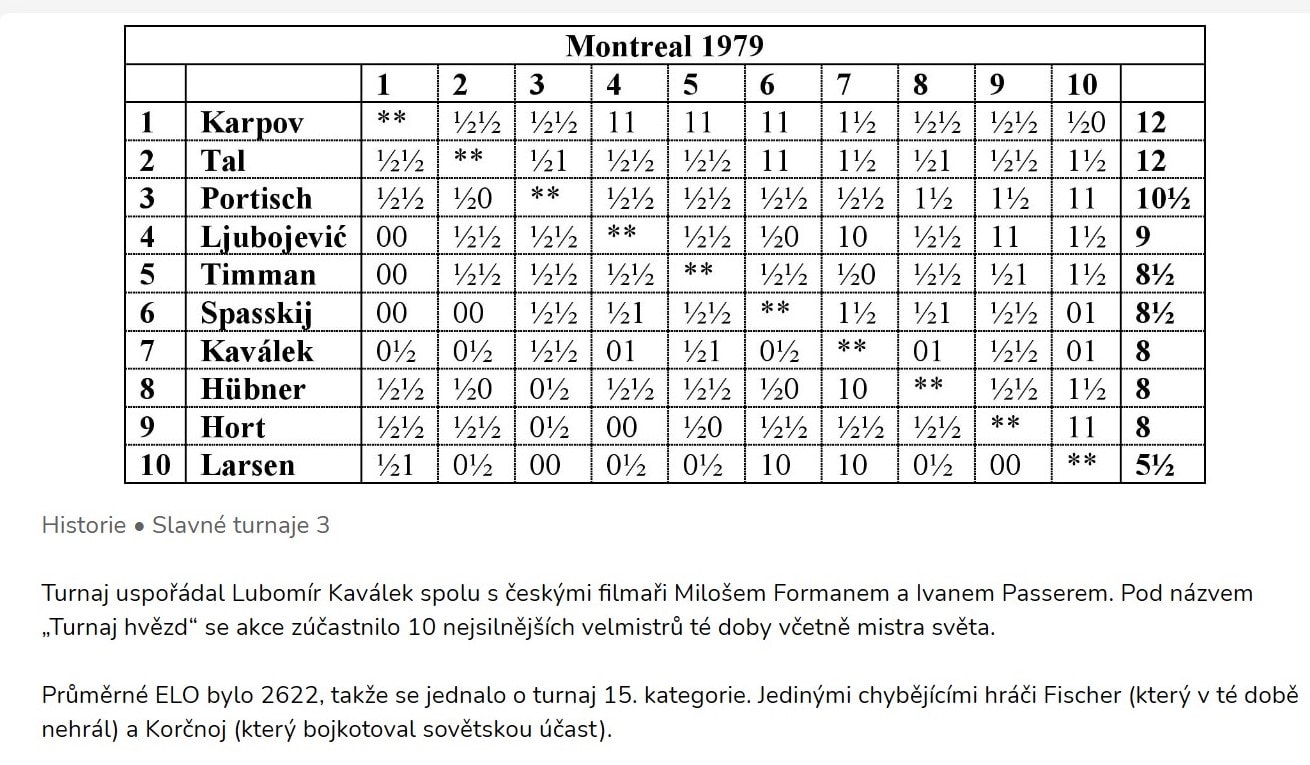
… „Hmm,“ a less informed reader might say when looking not only at the results but also at the decisiveness of tournaments separated by 45 years. „Today, really significantly higher quality chess is played! Category XXII! Yet back then, few of the world stars had a rating over 2,700!“ In reality, however, the ratings then and now can be compared at best… to the value of the dollar.
Many years ago, I told one of my young pupils, who was interested in history, about the Steinitz vs. Chigorin match (Havana 1892). „The prize fund, as we would say today, was 10,000 $.“ „So little? The prize fund of the last World Championship matches was about 2,000,000 $!“ „Yes, but what about inflation?“

One of the nicest mementoes of the Stavanger 2024 tournament may finally be this successful photograph of the winners; if I exclude the sympathetic initiative of the organisers to hold a parallel women's tournament this time, led by the world champion Ju Wenjun!
 UZChess Cup solved the riddle: the second chess superpower in the top ten? Uzbekistan!
As many as eight super grandmasters (2,700+) participated in the closed tournament in the capital of the currently second the most chess-loving country in the world – Uzbekistan. It took place from 6 to 14 June 2024 and became a triumph for the home players.
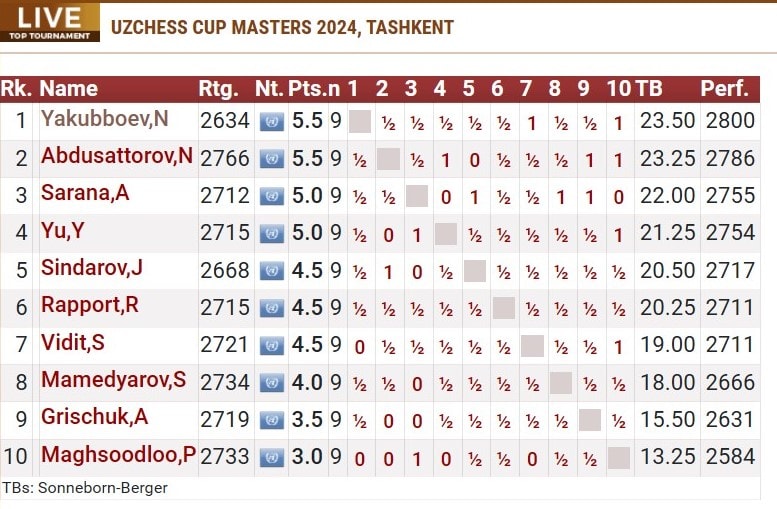
A look at the final table – and now I dare to express a heretical thought for many – can also be a kind of path to the future. Why? The older generation of chess players, by which I mean those in their thirties, almost-thirties or conversely almost-forties, almost unanimously placed in the lower half of the table! Their declining form – the level of their play is also evidenced by their slowly falling rating. Let us wait a few more years and the top three places on the rating list will no longer be occupied by the current stars…
As for the Iranian number one: this is something different. Parham Maghsoodloo is certainly capable of beating practically anyone in a single game, but his fluctuations in individual games are notorious.
Of course, I followed the performance of my favourite young player most attentively Nodirbek Abdusattorov, the current junior world number one. The second Nodirbek – Jakuboev seems to be Abdusattorov's nightmare. It was he who quite unexpectedly defeated him in the tie-break of a major and important tournament in Qatar last year. They also shared first place there!
Nodirbek's results this year are, however, astonishing! In all four elite tournaments he has participated in since January, he either won or shared first place!
From his games at the tournament, I have this time selected the least successful game against my rival, but at the same time also a „fellow countryman“. I have already introduced Javokhira Sindarov to readers in an article This is how the small centre is broken down! A sensational miniature by the 17-year-old Javokhir Sindarov in the catacombs of the accelerated King's Indian in November 2023.
This was Nodirbek's only slip! Of course, all his (won) games are worth watching, but one of them really thrilled me, as only games with multifunctional strategic content can today. Such games are then suitable as excellent teaching material for more advanced pupils, but also for the works I publish.
Well, what kind of contribution would it be if I did not set a small test for the reader at this point...
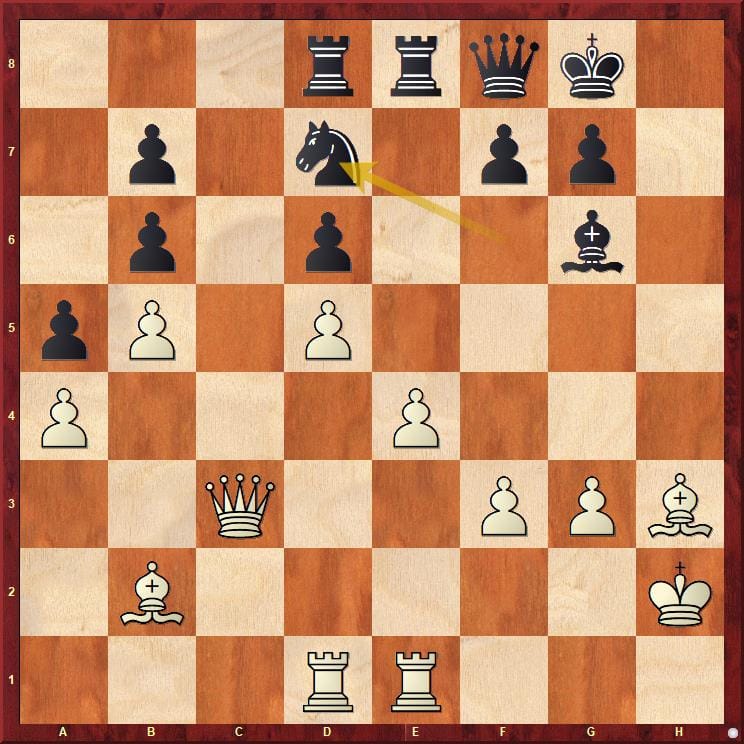
Round five of the tournament, the game Abdusattorov vs. Grischuk. How would you dear readers continued after the just played 28...Nd7?
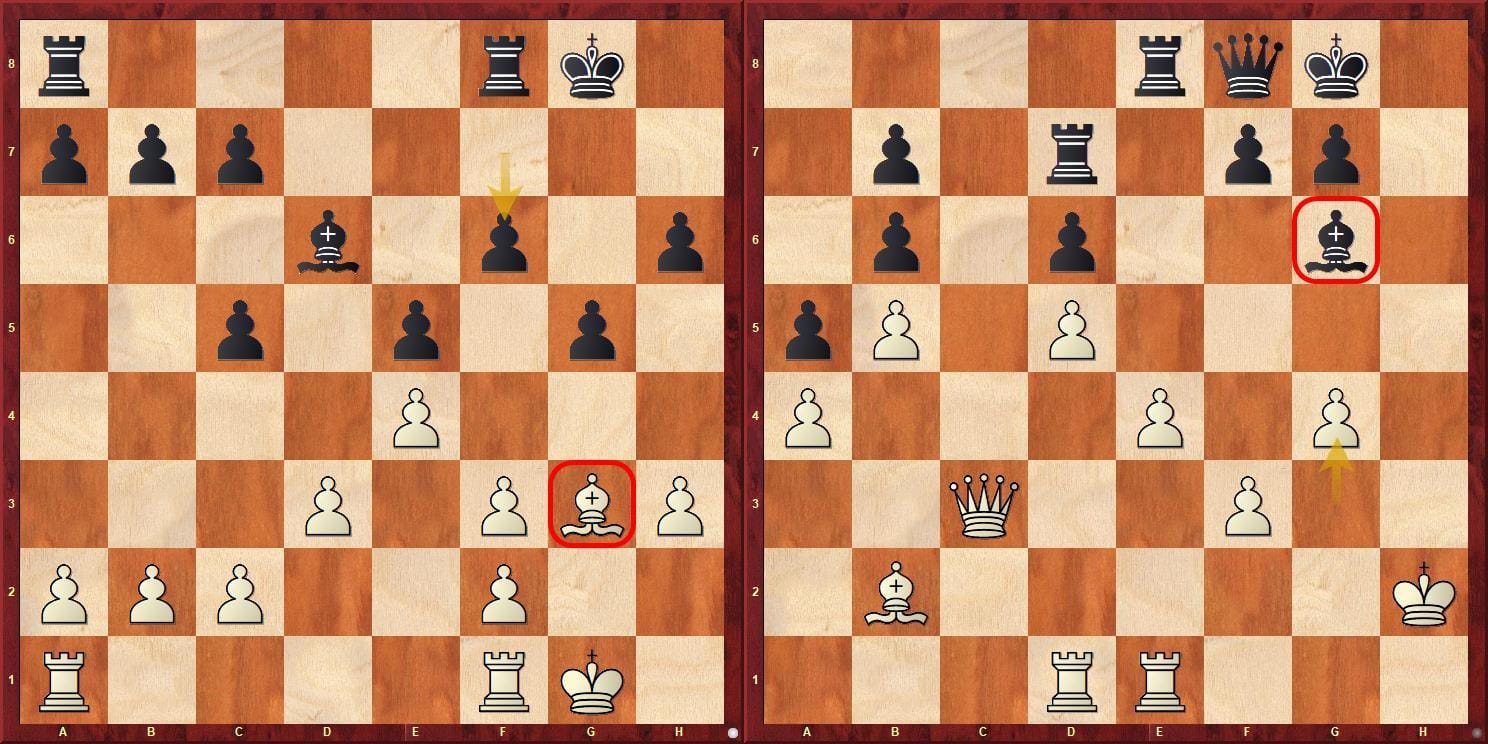
White continued in the game 29.Bxd7! Rxd7 30.g4!!+- (diagram on the right). The unfortunate, permanently removed from the game, mere piece of wood Bg6 cannot fail to remind us of the position from the famous historical game Winter vs. Capablanca, Hastings 1919!
However, the whole game is worth studying. Apart from White's absolute dominance right from the opening, it is worth noting the control of the play in the position with opposite-coloured bishops in the middlegame, the clearing of the longest diagonal and Black's utter helplessness. Without computer assistance, it is a problem for the student to find the point where Black made mistakes, which is, among other things, a sign of the great strength of the winner's play... confirmed by history!
 Jermuk 2024 - the second Fischer on the horizon?
... that was the first spontaneous comparison that came to my mind when looking at Arjun Erigaisi's June results. Readers who remember, or those who are still interested in history today, know what I mean. The 11th world champion made a chess leap into the 21st century in 1970–1971, which, unlike Beamon's long jump at the 1968 Mexico Olympiad (890 cm), was not even remotely imitated by anyone, let alone erased from the top of the world rankings, as happened to the American athlete after a long twenty-three years. Fischer won an incredible 19 classical games in a row (that is, without a single draw).
The truth is, as we see below in the table, Arjun is quite far from a phenomenal performance of the chess Bobby but on the other hand… he still has time 🙂
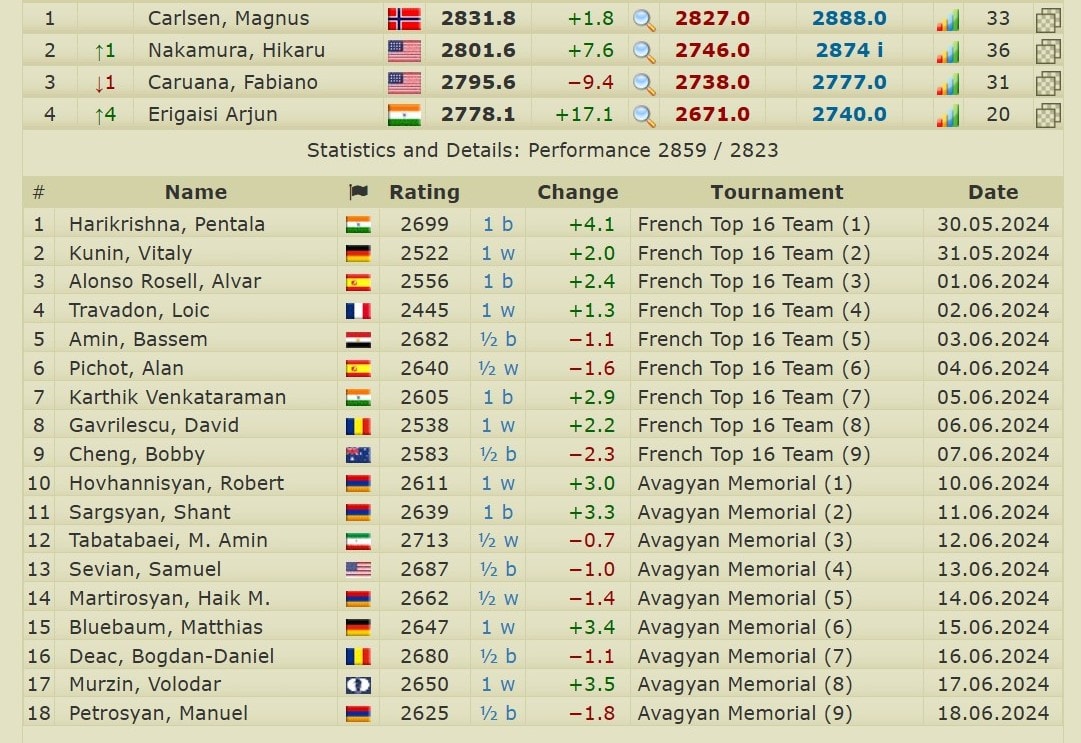
Erigaisi's performance in Armenian Jermuk suggests that the organisers of the highest-level closed tournaments will finally notice him and at least rotate him in. What do I mean? We all know Praggnanandhu very well and of course the challenger to the world champion Gukesh. Abdusattorov has won or shared first place in 4 tournaments since the beginning of the year, but why not finally challenge another until recently much less known youngster to pass the maturity test in a supertournament!?
Arjun himself recently stated that precisely because he does not receive invitations to round-robin supertournaments he has to play various opens and team leagues. It must be said that winning all open tournaments or consistently placing at the top is definitely not easier than scoring, for example, +2 in very strong closed tournaments.
By the way, I mentioned Erigaisi on my pages in connection with the sporting tragedy that happened to him in the last round of a big open in Qatar in a game against Abdusattorov. Well, we can look again at how Magnus Carlsen exploded in this tournament, the current rating number two Nakamura also failed, and so on. Life in opens is in many respects harder and requires a different approach to games. It is necessary to take more risks, choose various different openings, win perhaps on demand with black, and so forth.
One of Arjun's first higher-quality closed tournaments already knew the winner several rounds before the end. The final table then looked like this:
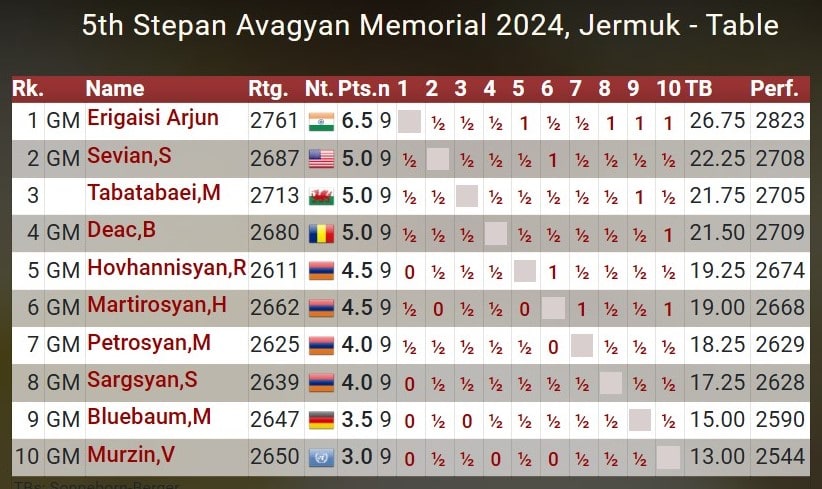
The performance suggests that Erigaisi's performance in the tournament is approaching Carlsen's current rating!
In one of the winning games, to my great joy, the current Indian number one played, and from July most probably the world's number four by rating, with black my lifelong favourite Jänisch Gambit, which I have taught my pupils and advised to include in their repertoire since the 1990s! While browsing Arjun's games also from the French league, I came across another winning game in which the sharp gambit also appeared. I could not help but include it alongside the one from Jermuk!
The game reveals much both about Erigaisi's style and, in my opinion, directly conveys the pressure that great personalities can radiate around themselves. Casually or perhaps in the world of Hollywood we call it charisma; in chess I think there is not even a single precise word. However, the atmosphere that players like Alekhine, Tal, Fischer, Karpov or Kasparov spread around themselves during the game is probably known, heard of, and read about by every experienced chess player!
After all, it was no different in the following game of the penultimate round!
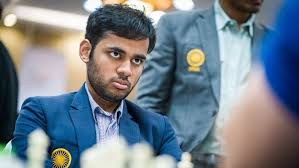
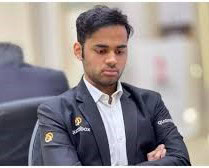
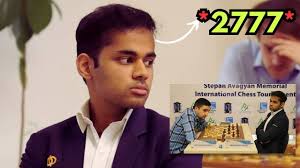
Arjun Kumar Erigaisi (*3 September 2003, Telangana, India) in Jermuk 2024. To confirm the above words, I really did not have to search long for a suitable photograph! It caught my eye so quickly that one must ‚praise‘ the Matrix we live in for such a lightning-fast response 🙂
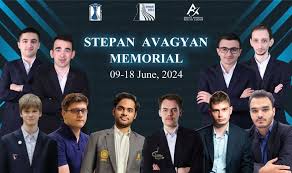
Postscript
Only after I finished the article did a nice interview with Erigaisi appear on ChessBase India. By coincidence, it mentions and analyses fragments of both games, but readers will also find much instructive material in other respects. Particularly interesting is the insight into Arjun's new psychological preparation and his changed view on the importance of ratings. According to him, both led to a rapid improvement in results and thus that almost Fischer-like streak…
Arjun's results since the beginning of the year have been truly phenomenal: +41, =27, -2!
Below are again all the examples available in the CB player... and something extra:
Dear readers, at the end of the article I can only wish you a pleasant summer break and, of course, much success at the chessboard if you decide to devote at least part of your free time to our beautiful game.

Very instructive reading. I appreciate all the tables, games and videos.
Thank you.