

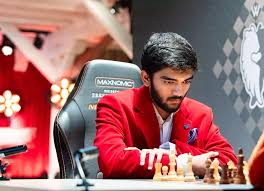
On 29 May 2024, Dommaraju Gukesh celebrated his eighteenth birthday. Of course, at least in the new chess superpower India, no one forgot: a queue of congratulators, a nice video summary of his career so far, lots of gifts. Perhaps the most tasteful, because symbolic, gift was given to the youngest challenger in chess history by his comrade-in-arms (well, also opponent) Praggnanandha! He dealt a model lesson in strategy and tactics to the „strongest chess player of all time,“ as many still proudly proclaim to the world. The famous cherry on the birthday cake was also a splendid Caruana lesson to the reigning world champion.
The following brief summary of the young challenger’s career so far, now eighteen years old, is certainly worth watching.
Stavanger 2024
The traditional tournament with an unusual scoring system has this year attracted a truly magnificent line-up.
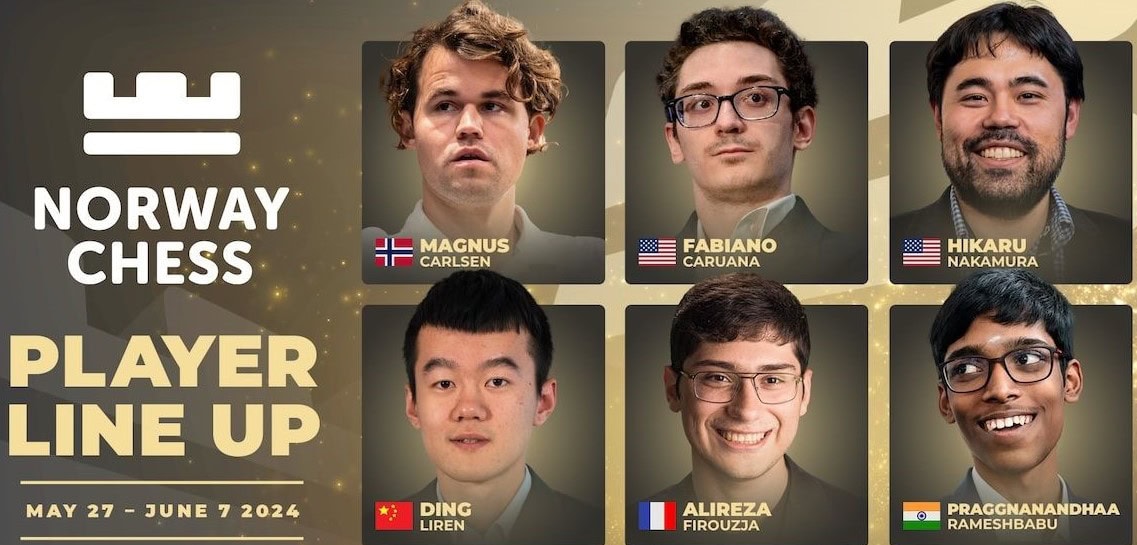
Six participants play a double round-robin tournament. Even this year, the organisers did not abandon their tradition of replaying draws with armageddon clashes. In the event of a draw in the classical game, a blitz game follows, where White gets 10 minutes, Black 7. White must win to succeed (confirm the draw), and the loser of this tiebreak then loses a third of that original draw. Probably so the audience of the educated West can better orient themselves in the situation (fractions are tricky, aren’t they 🙂 ), for a win the player receives 3 points, in case of a draw the winner of the tiebreak is rewarded with 1.5 points, the loser receives a consolation prize in the form of one point. No one worries that the total points in the final table can theoretically be up to 1/6 lower.
If the main goal, that the system creators had was to increase decisiveness, then they are somewhat successful, but we should not look for a connection here. An incredible number of blunders in endgames has a much greater share! So huge that it deserves a separate analysis – an article.
Only in the third round did we see two decisive games, but not just any! The sixteenth and seventeenth world champions had to drink the cup of bitterness to the dregs. Not only did they lose the games, strength jejich odporu v partiích he almost blíží miniaturám. Fabiano Caruana a Ramesbabu Praggnanandhaa předvedli excelentní výkony!
Bezzubý terminátor
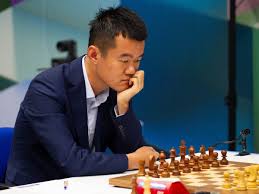
Dejme přednost partii úřadujícího mistra světa Ding Lirena a podívejme se, jak relativně snadno Caruana, dlouholetá světová ratingová dvojka, jeho pozici rozbil.
Co se to s mistrem světa děje? Takovou otázku si mnozí kladou už od začátku roku. Abych alespoň trochu vyvážil přídavek Carlsenových schopností v ukázce níže, vybral jsem pro čtenáře ochutnávku z dob, kdy se o Ding Lirenovi skutečně dalo hovořit v superlativech. Prostě a jednoduše: zlý čínský terminátor ala Arnold Schwarzenegger z roku 1984, sto partií po sobě bez porážky…
Následující armageddonová bitva, jež se odehrála na závěr tradičního Sinquefield Cupu v roce 2019, zůstane snad v mé paměti navždy!
The phenomenon of the phenomenon Carlsen
Tak jsem před lety pojmenoval jednu z prací na svých webových stránkách. Jednoho z největších šachových géniů jsem zde přirovnával k J. R. Capablancovi a pojal za svou kacířskou domněnku, zda v osobě Magnuse Carlsena skutečně nejde o reinkarnaci pravděpodobně přírodou nejobdarovanějšího šachisty všech dob.
V době před vypuknutím covidového šílenství a světového sociologického experimentu jsem se domníval, že by se Carlsenovi mohl už brzy do cesty postavit opravdu důstojný protivník (sázel jsem například na Wei Yiho). Nestalo se, a tak během přibližně čtyř až pěti let musela dospět generace mladých šachistů východu. Jen slepý by neviděl, jak rychle se dere vpřed! Pravda, k tomu aby mohli mladíci úspěšně bojovat a celkem stabilně starší generaci porážet, predikuji ještě maximálně dva roky, potom ale onen zlom již nastat logicky musí. Musí, pokud zůstane šach jak jej známe, v nezměněné podobě, a tedy se Magnusovy snahy učinit z klasické časové kontroly rapidy nebo povýšit tzv. Fischerovy šachy nesetkají s úspěchem.
S pohledem a názory 16. mistra světa se neztotožňuju téměř v ničem (viz video níže), genialitu mu však neupře nikdo.
Než se vrhneme do rozboru partie Praggnanandhaa vs. Carlsen, dovolím si vás, milí čtenáři, vyzvat k následujícímu, snad mohu napsat, myšlenkovému experimentu.
Pohleďme na diagram níže. Zadání zní: bílý matí ve dvou tazích.
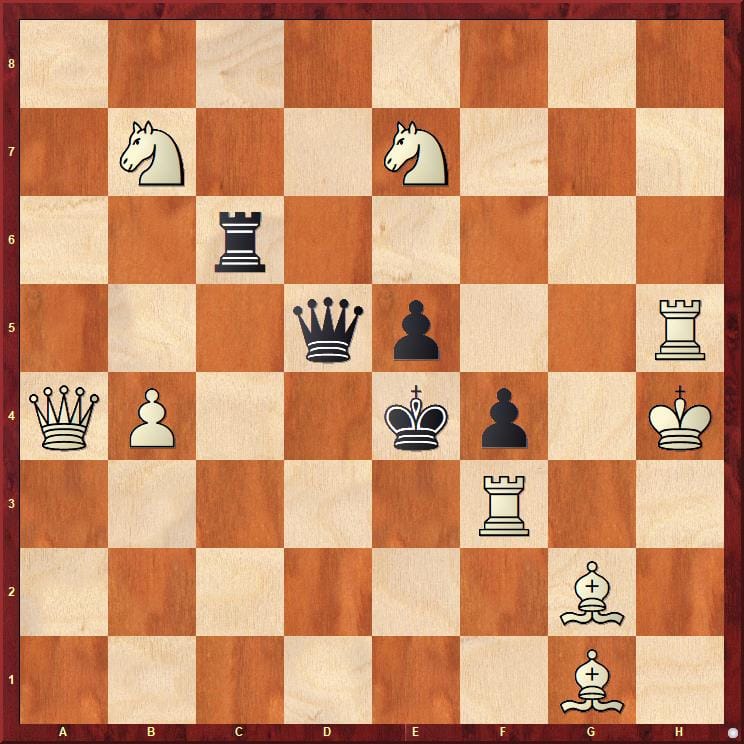
Věřím, že zdatnější šachisté, ač třeba nepatří zrovna mezi specialisty či přímo milovníky úloh, řešení nakonec najdou. Ptejme se však také za jak dlouho úvodník objevíte…
Nyní shlédněme, jak si s úlohou poradil exmistr světa. Možná budete jeho úvahami uchváceni stejně jako autor!
There is nothing more to add here!
Debacle
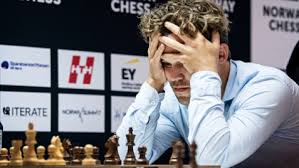
The third round of the tournament, played on Gukesh's 18th birthday, also brought the following game, which I believe is characteristic for the future development of chess.
Chess needs fanatics
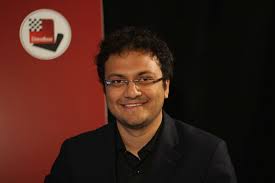
It always has been so, and hopefully always will be! The Indian enthusiast, journalist, and strong chess player with the fitting name Sagar Shah is truly a remarkable figure not only in Indian chess. Only when I matured and stopped focusing solely on the 64 squares did I begin to realise how invaluable these people are (at various levels)! They love chess and everything around it so much that they would sell their souls for it. Sagar loves chess, but naturally, he is above all a true patriot. His enthusiasm for the results and meteoric rise of Gukesh, Praggnanandhaa, Erigaisi, and many others sometimes seems almost comical to us Europeans. I was greatly amused when I watched Sagar's video and commentary on this game on ChessBase India (with 1.64 million subscribers!) and I believe this will also please the readers. Comments like 15.Rad1: „Fantastic move!“ 🙂 🙂 are truly unforgettable…
I still hope that the number of chess players who would like to ponder some situations or analyse a game more thoroughly, which a video simply cannot manage, has not yet dropped to zero. Below, I have therefore subjected the game to a detailed analysis.
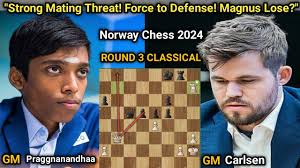
Well, yes, the former world champion has for more than a decade successfully showcased his strengths, which I have written about many times before. The most striking are his brilliant general intuition, which in technical positions works almost instinctively, colossal memory, lightning-fast associations, classical chess education, but especially physical fitness and unsurpassable mental endurance and will to win. That is why Carlsen's thrilling tournament finishes are so typical; it will likely be no different in Stavanger 2024!
The superlatives about his play go so far that many analysts are perhaps neither able nor willing (?) to see the obvious flaws in his play: calculation of concrete variations (in recent years there has also been laziness in dealing with complex thickets in the game, just like in Capablanca's later years), but especially uncertain handling of dynamics in positions with his own weakened king…
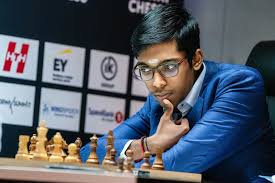
If classical chess survives the coming years and the world championship title does not fall to the value of a laurel wreath that FIDE hangs on a chosen lucky player every year or even half a year, as some dream today again (many may recall Iljumzhinov’s era as FIDE president, specifically the turn of the millennium) a considerable part of influential personalities, we truly have something to look forward to!
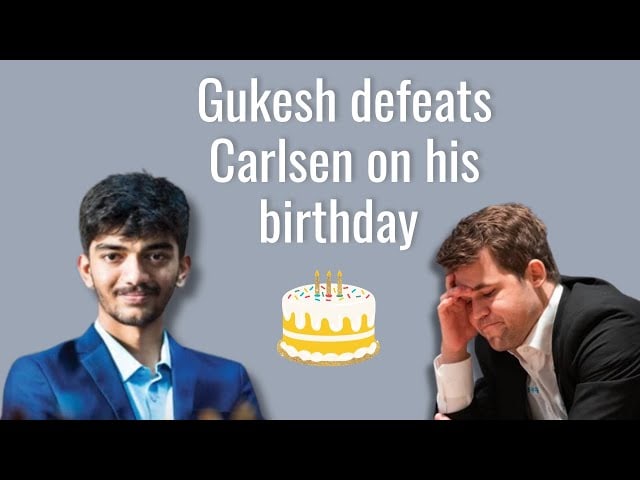
Let us hope that classical chess does not die yet, and will develop rather like this...
Below the reader will find all the examples also in the ChessBase viewer.
I managed the diagram in 5 minutes. Of course, first you try the direct solution, then you think and see that the king is stalemated. This flashed through Magnus’s mind immediately, that the first move will not be a check. And then it is actually simple. It will be a queen move, first to a1, to take away the d4 square. That doesn’t work, so let black take the square himself, a zugzwang motif. And finally, as in these similar studies, it is a move to the least expected square. Magnus is right, basically these tasks are the same. In the Red Law around moves 76-77 there are mates in two moves in every section. Exactly the same picture, the opponent’s king is stalemated, the first move is quiet, and the disadvantage of the move is the solution.