

Training
„Perhaps a rather general and dry title in the menu,“ you might say. The aim of the articles here will be to acquaint readers not only with chess classics but also with modern trends in openings, strategy, tactics and psychology. If you are perhaps already saturated with thousands and thousands of videos running on various platforms and therefore do not want to just skim the surface of strategic and tactical problems, do not want to watch streamers who in live broadcasts of games explain everything, only for you to forget it all the next day, but on the contrary want to think more deeply, then you are in the right place!
This will be about not only entertainment but also learning. You will gain information and skills that should really take you further.
Have you ever considered how super-elite grandmasters think through and calculate possibilities in a game? What role does calculation itself play (a book could be written about that alone) and what role intuition? Did you know that chess players today hardly manage to choose a move without heuristic analysis? We will gradually address these issues. After all, a bit of science never hurts.
Of course, there will also be chess gems of the year here, but I would not want to avoid the most tragic blunders in high-category tournaments either. And why do even elite players blunder so badly?...
The diagrams you see every day on the page (near the cat, who fundamentally dislikes 1.e2-e4) are certainly too simple for many of you. For this reason, you will also see diagrams here – let’s say – of a higher category.
Well, to start with, let us choose a golden middle way. Dear readers, can you handle the following position? White to move.
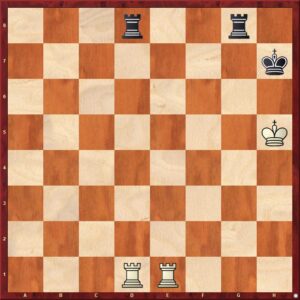
The solution to the study is not difficult: 1.Re7+ Kh8 2.Kh6! Re8 and now follows the spectacular 3.Rd7!
A slightly more complex example (calculation of variations of the main line type according to A. Kotov) can be seen in the following diagram.
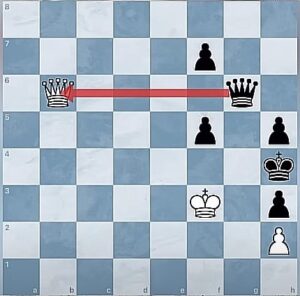
With the last move Qg6, Black offered a queen exchange. „After all, I have three pawns more, it would be strange if I did not win the pawn endgame!“ Black might have thought.
But he made a serious blunder in his considerations! He did not bother because it is calculated and recalculated variants to the end. (The principle of recalculating variants, a key pillar of correct calculation, will be discussed in further examples.)
TEST: How would you continue with White and which variants would you calculate?
Solution is not complicated. It is really just a bare line, that is a forced variation without any deviations. True, we cannot deny the beauty of the variation: 1.Qxg6! fxg6 2.Kf4 g5+ 3.Kxf5 g4 4.Kf4! literally forces 4...g3, after which follows 5.hxg3.
Recalculation of variants
When should we end the calculation of variants in a game? For my pupils, I once formulated (or rather reformulated) a rule which we called The principle of recalculating variants.
It goes as follows: „Never end the calculation if there are so-called noisy moves in the position. These mean moves such as check a captures, but also – unlike in everyday life, where a noisy person can hardly be quiet at the same time – strong threats, their coverage and so on. Thus, in situations where the position on the board is unclear, it is possible to calculate further and the pieces are in close mutual contact.
As we will learn later, it is about the first pillar of the imaginary bridge. If the pillar is damaged, blasted away, the structure collapses and with it our entire game, because it is we who happen to be on the bridge 🙂. .
Every rule, however, has its exceptions! „Exceptio regulum probat,“ that is, the exception tests the rule. The third pillar of that bridge is the correct evaluation of the position at the end of the variation. The former world champion Carlsen spoke very often and gladly about this phenomenon. „The most precise calculation of variations is useless to us if we incorrectly evaluate the final position!“ To prevent this, there are various helpers for position evaluation; we can imagine them as diligent nanobots who help us correctly assess the position at the end of the calculation, that is, not to make a mistake or to seal small cracks in the third pillar.
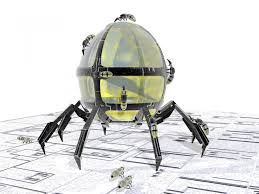
The nanobot seals and refines our evaluation of the position at the end of the calculation; they will serve us better the more time we spend on diligent study of our beautiful game...
Let us list some: experience, intuition, positional knowledge, but also – and now pay attention – knowledge of theoretical (precise) endgames. And here at the same time that exception also works.
The exception tests the rule
If during calculation we reach an endgame position that we know – for example, from books – then it makes no sense to continue calculating!
Let us look at the following endgame position:
Vitiugov,Nikita (2712) - Gukesh,D (2746) London Chess Classic 2023; 02.12.2023
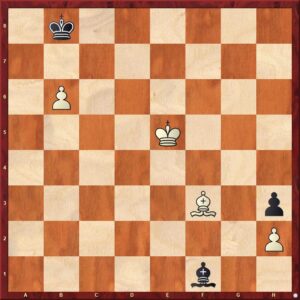
How did the game continue after 66.Kf4 Bg2 67.Kg3 ?
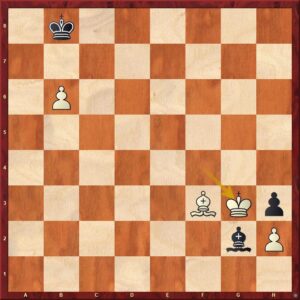
TEST task: Try to calculate the necessary variations! At what moment do you stop calculating and evaluate the position with absolute certainty? Perhaps you will activate nanobots, so here is your knowledge of theoretical (precise, as Mark Dvoretsky used to write) endgames?!
Solution: In the diagram position Black has literally survived death and saved himself in the pawn ending thanks to a single tempo! The calculation should be, at least for a more knowledgeable player, very simple. At its end we should reach a position we know, for example from literature (the so-called theoretical or precise endgames).
67...Bxf3! Not the only way, but by far the simplest path to the dreamed-of draw. 68.Kxf3 Kb7 69.Kg4 Kxb6
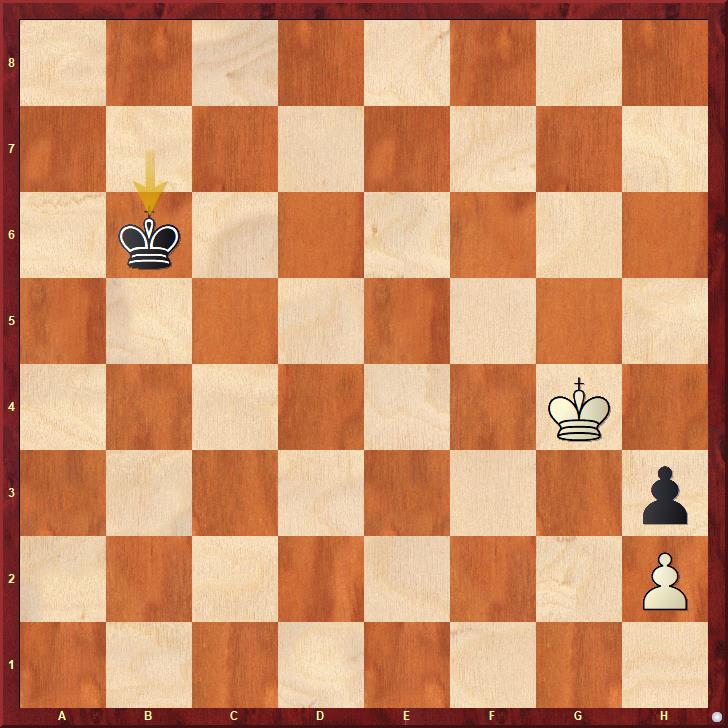
70.Kxh3 Kc7 71.Kg4 Kd7 72.Kg5 Ke7 73.Kg6
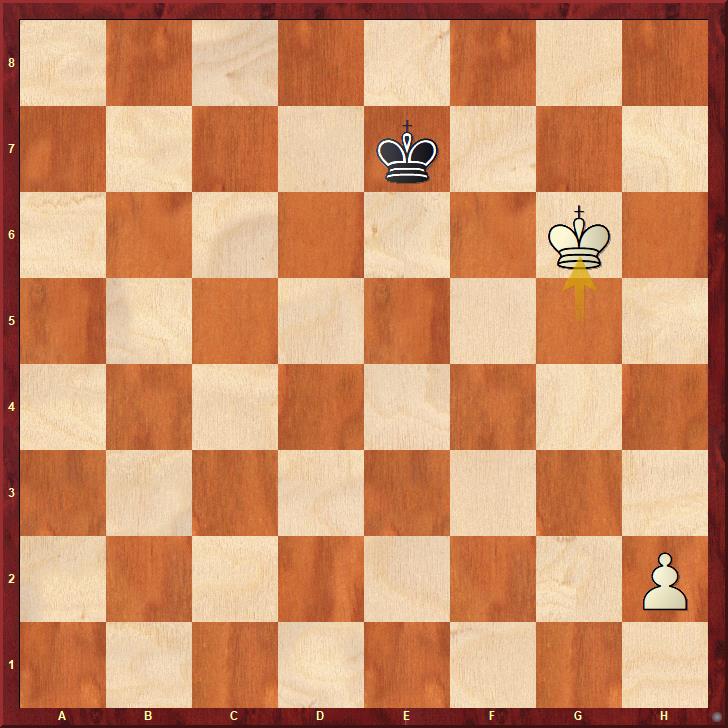
73...Kf8=
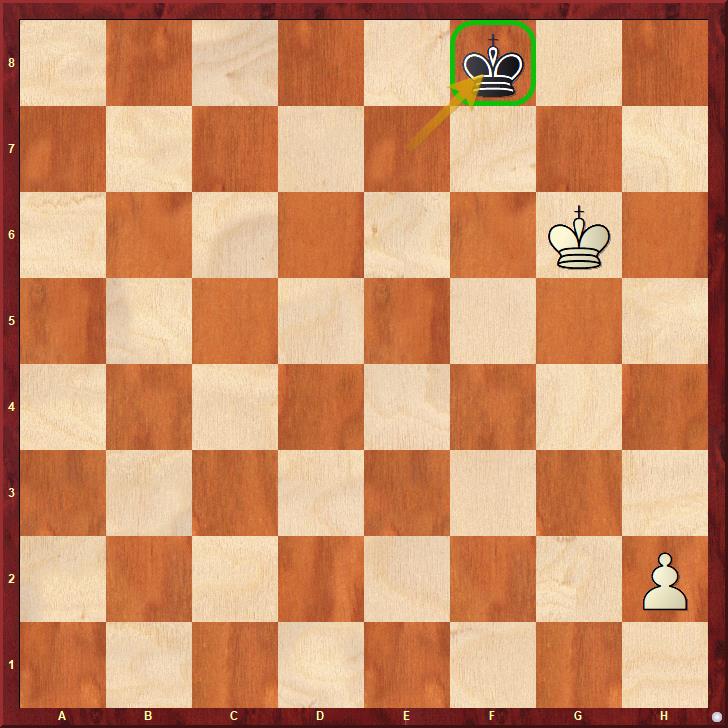
Top tip, all exactly on time! Here the calculation should end for the more experienced player! The king on f8 guarantees a draw. 74.h4. As is almost customary nowadays (or players are simply agreed with organisers), the game is played out to stalemate! When in 1978 the World Championship match between Karpov and Korchnoi was played in Baguio and the challenger set up stalemate on the board (perhaps to avoid shaking hands with the opponent), it was called an insult, immorality and the like. Well, times change: years ago when I asked my then about 14-year-old pupil Karolína why she plays the king and queen versus bare king ending, she briskly replied: „Because I enjoy it!“... 🙂 74...Kg8 75.h5 Kh8
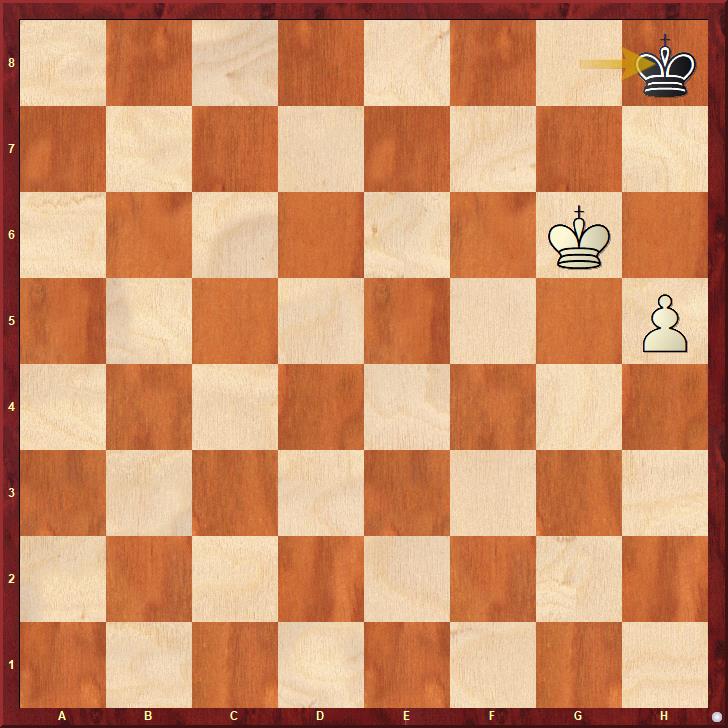
76.h6 Kg8 77.h7+ Kh8 78.Kh6 1/2-1/2
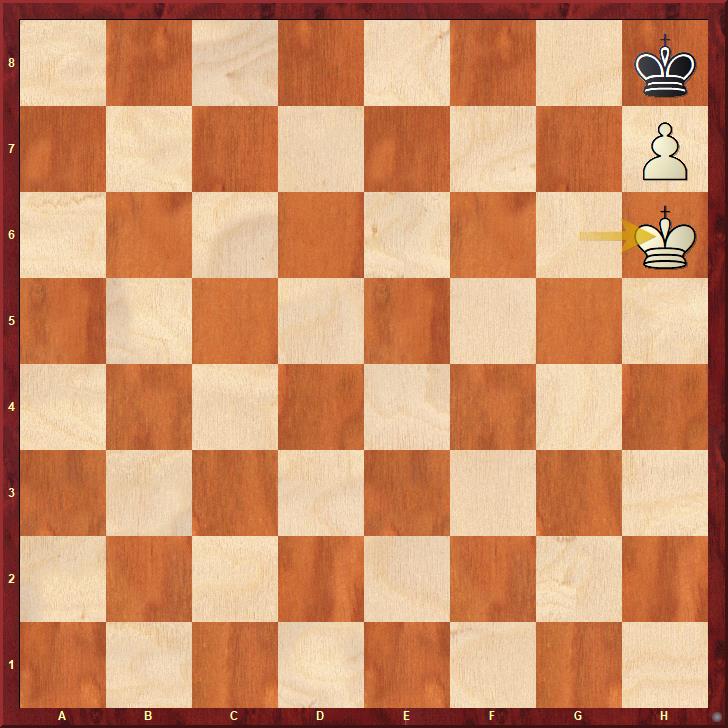
The following example is from the same category. Giri,A (2793) - Aronian,L (2786) Moscow 2016
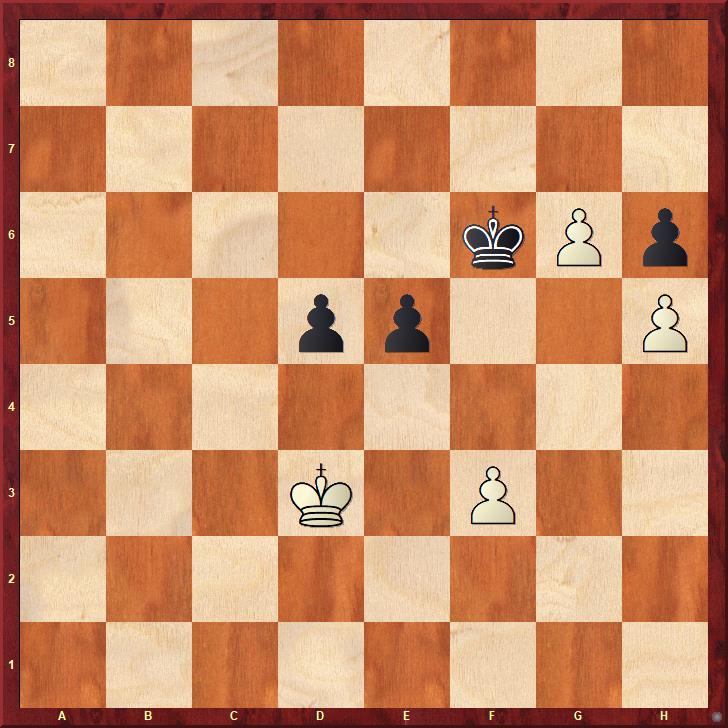
Black could have drawn here in several ways, but played a move certainly unexpected for many spectators 61...e4+.
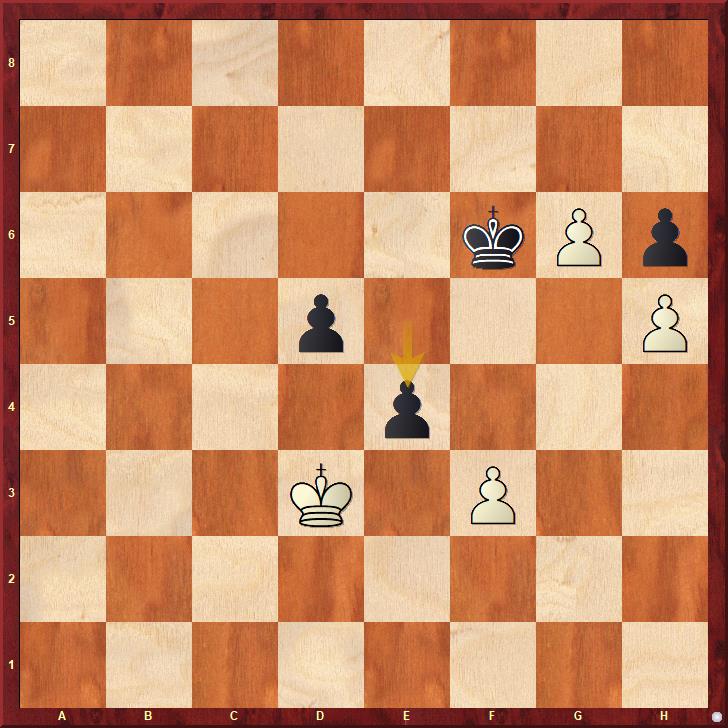
Task: what consequences does this candidate move lead to and why?
Chess quote
Johann Wolfgang von Goethe
Chess quote
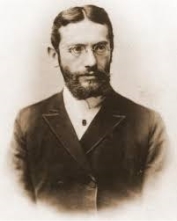
Siegbert Tarrasch