


„Gukesh, make sure you become world champion or we won't be friends,“ we joked with my long-time friend after he told me about the tournament in Prague this March. He ‚met‘ Gukesh in the restroom, who then held the door open for him as he re-entered the hall, and after a casual „thank you“ gave a slight nod. Visiting that room thus created a kind of bond, we mused. Readers of my pages know that I had noticed Gukesh long ago. After all, he appeared on the cover of New in Chess back in 2019. Ten months ago, we already ‚had some inkling‘, but that our joke „make sure you become world champion or we won't be friends“ would take such a turn?? The following post and celebration of the new world champion I approached unconventionally, just as the nearly three-week fierce battle including the incredible finale was unusual...
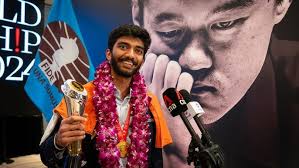
The coronation of the 18th world champion
Let's begin... with the last game
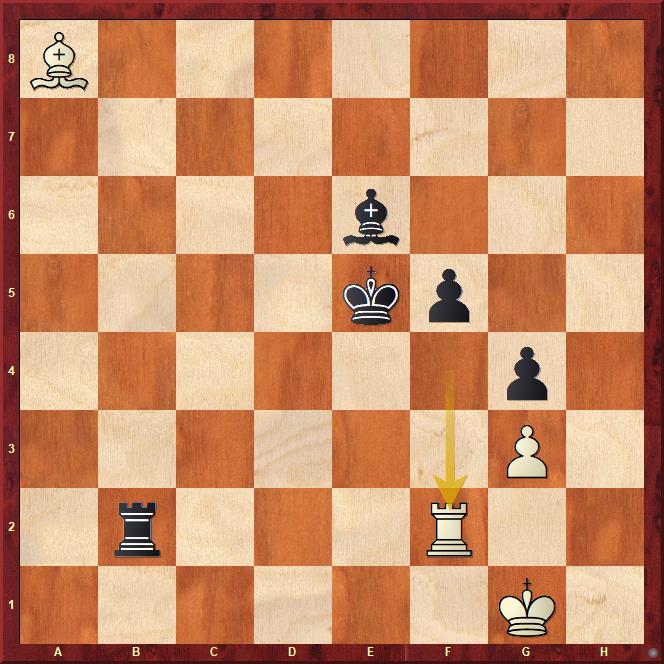
Diagram and videos capturing the moment after 55.Rf2?? went viral! The terrible blunder became the subject and platform for analysis, and even calls for review, which however make no sense to reproduce. The fact is only one. In chess history, it probably happened only once that the very end of a match for the highest title ended for one of the participants with such a catastrophe. The previous occurrence was 132 years ago in the game Chigorin vs. Steinitz, Havana, 1892. (Readers need not search long or dig deep on my pages. Not only Chigorin's tragedy but many other serious mistakes I recall in the article „With the summer, the tournament world flies and the gallant ride of Arjun Erigaisi“ from 26 June 2024.)
In my opinion, Ding Liren, and of course his team, founded his entire match strategy extremely sophisticatedly! An analysis of this claim of mine would fill an entire scientific treatise, in which psychology, health condition and form of the 17th world champion would play the main role. So it was, one might say, the art of the possible! Today, moreover, a detailed analysis of Ding's approach to the match would probably interest few, and such an analysis would be more suitable for a doctoral thesis – I am really not exaggerating!
I believe that the final blunder and signature under the whole strange match (as if Caissa took a well-deserved holiday but forgot that everything ends eventually... even rest) was a logical full stop, and I would rather dwell more closely on another moment of the last game. Here, dear readers, you will not only learn but certainly above all be entertained.
The Chinese chess school nurtured by engines
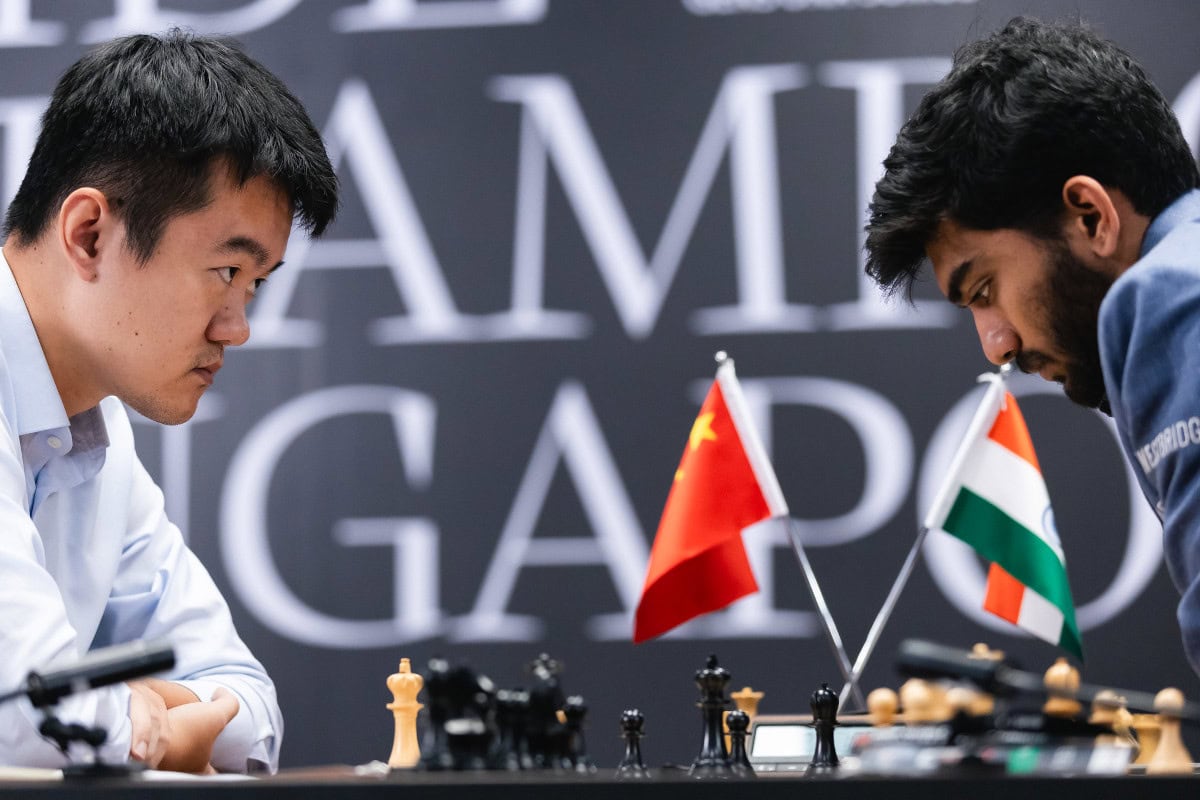
In the final game, Ding Liren deployed the Grünfeld Indian Defence first-hand. Gukesh's coaches this time chose the right recipe (I may later dedicate a separate article with more detailed analyses to their lapses, especially in game 12, and of course also other games), the challenger easily equalised the game, and after 25...b4 the following position appeared on the board.
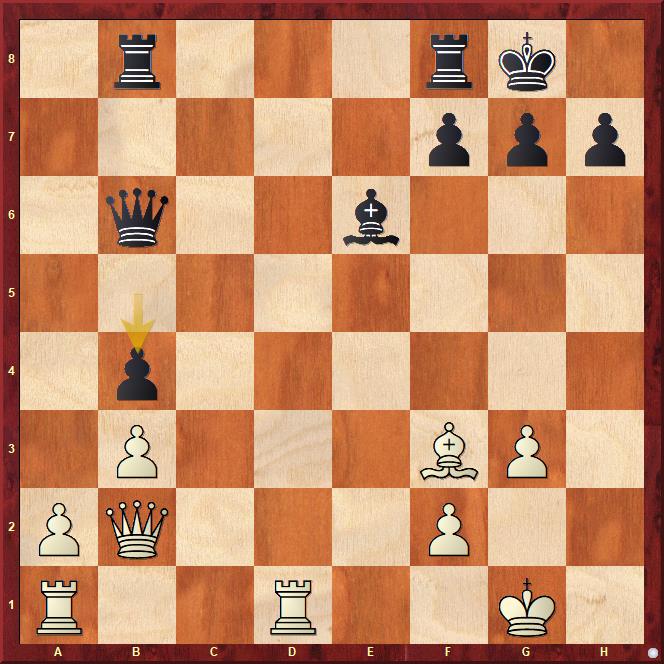
The chances of the sides are in absolute balance and the position is also completely sufficiently dried out. So much so that sometime in the fifties, perhaps even the eighties, in matches for the world championship either it would no longer be played or the opponents would make a few moves and sign a draw. The pawn on a2 is exchanged for b4, simultaneously pieces are exchanged and, for example, a rook endgame with 3 pawns against 3 pawns with a passed ‚b‘ pawn arises. Black ensures to place his rook Tarrasch-style behind the pawn, even though the opposite rook positions are not sufficient for a win.
Ding Liren (well, the Chinese chess school), however, acted completely differently! After 6 minutes of thinking, he played 25.a4.
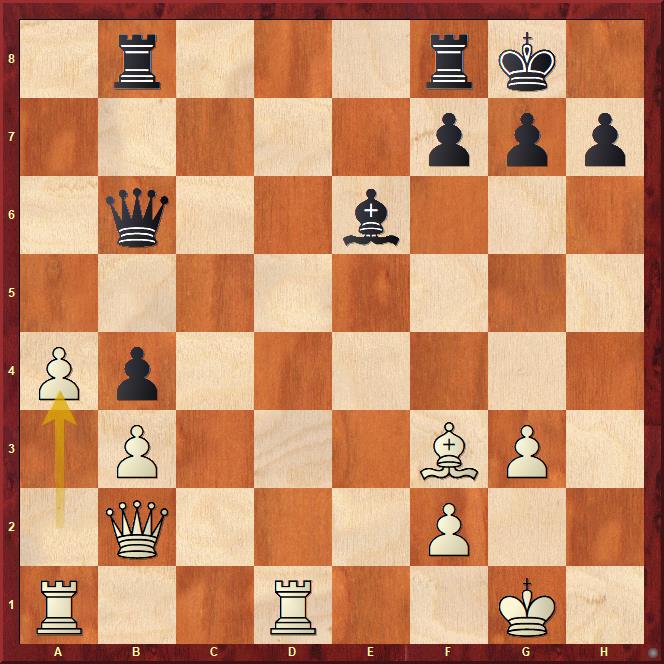
After 25...bxa3 26.bxa3

although the new free pawn b3, albeit severely undernourished, is indirectly protected for now (26...Bxb3?? 27.Rb1+-), but even a less skilled player can clearly see that it will not survive long on the board.
I would now like to present a question to esteemed readers in the form of a completely non-standard test! So: Why did White play 25.a4?
Why did the world champion get rid of the burden of all the pawns on the queenside (we might say he exchanged yuans for rupees at an extremely unfavourable rate 🙂 ) and where he was heading is, for experienced and stronger players, in a way, clear! Finally, his reasoning and effort proved to be highly realistic after a few moves. After White's 32nd move, this endgame appeared on the board:
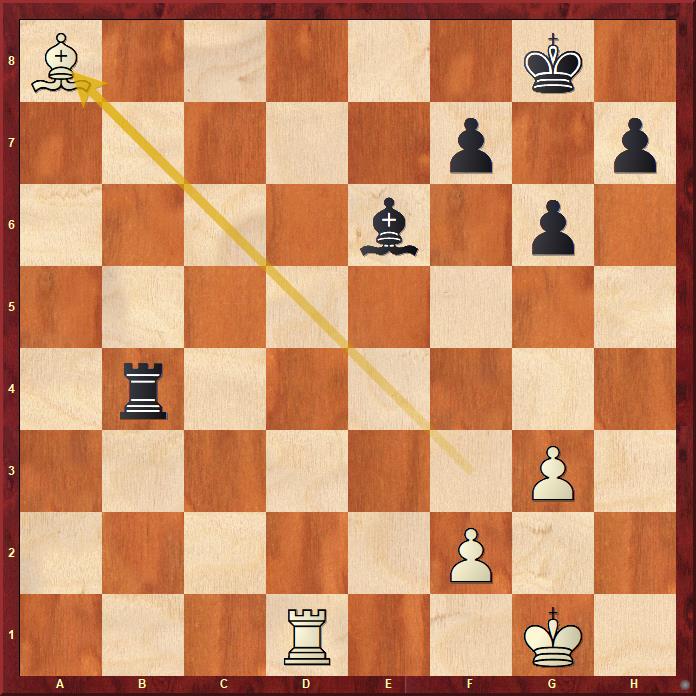
Nothing is further away than to a theoretical one a the practical aspect of evaluating the position! Theoretically, we are facing a completely balanced endgame and, in my opinion, this is exactly how he thinks whole Chinese chess school nurtured by engines! They of course draw zeros here! But practice speaks a completely different language! While before 25.a4 the position is played, as we are used to saying, for three results, the resulting endgame allows consideration of only two. The endgame will end either in a draw or a win for Black! And to make matters worse, in neither possible scenario can Ding's attempt to quickly draw the game, wash away fatigue until the next day and start relatively fresh for the tiebreak be fulfilled!
Hikaru is honestly surprised

Diametrically different views on the approach 25.a4 are best captured by the following short video. I truly recommend readers watch it immediately! Of course, it is also instructive and clarifies the situation for us. I would almost guarantee that any, even the funniest, moments of famous comedies do not reach such a level! 🙂
Yes, I fully agree and completely understand why Hikaru is honestly surprised and asks about 10 times within a few minutes „Why?!“ None of Ding's predecessors on the throne would voluntarily enter such an endgame.
Note: Searching my memory, I did come across one exception! Paradoxically, it is possible that the better readers are acquainted with history, the more they might be surprised. It was none other than A. A. Alekhine himself, in the early 1920s, when he not only thought but also publicly declared several times (of course paraphrasing): „So far I have not reached Capablanca's strength and therefore it makes no sense to send him a challenge for a match!“ As part of his long-term preparations, it was not uncommon for Alexander Alexandrovich to play... deliberately weaker moves at some less important tournaments! Why? He was transitioning into endgames and simply wanted to practise them, as it was generally known what a colossus warming himself on the chess throne awaited him in a few years. Of course, our situation is different in the importance of the encounter itself. So we can boldly say that no strong chess player who underwent classical chess education would have signed off on Ding's approach in his particular situation!
So we can boldly designate the root cause of the crash in the last game as that Chinese computer approach 25.a4!!
Back to the decisive blunder
Now let's enjoy the whole game in the traditional Sagar abbreviated notation!
I analysed and commented on the game immediately after its conclusion, and later saw no reason to change anything significantly. My opinion on the critical moment also underwent some development.
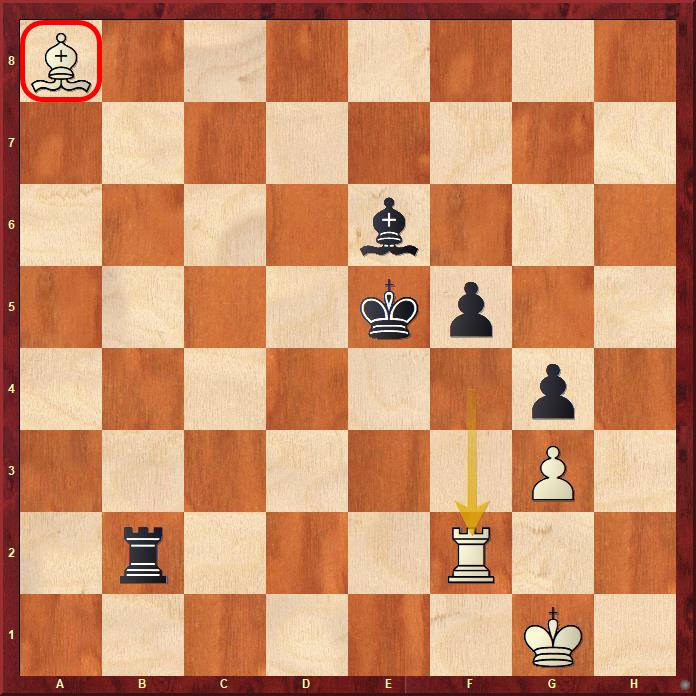
A truly brilliant insight was expressed and a beautiful metaphor for the position in the diagram was used by Fabiano Caruana. It concerns the unfortunate bishop and one of the culprits of the collapse of White's position. He compares the white bishop in the corner of the board to a character from a Hollywood film. This character appears on screen throughout with a cigarette in his mouth and – let's say – even a less astute viewer understands where the creator is leading the character. Of course, to lung cancer!

Fans of the cult sci-fi series The X-Files will naturally recall the world-famous Smoking Man 🙂
If only engines didn’t exist…
The reactions of various streamers around the world to Ding’s blunder are certainly worth watching. For example, we can notice that without the engine running and the evaluation bar, many of them would not have known what was actually happening for tens of seconds or even a whole minute! I would single out the reaction of Jan Nepomnjaščij in the studio of the Levitov chess channel!
Pre-match predictions
In the history of World Chess Championship matches, it is often not the case that the challenger is considered the clear favourite (in the Lasker vs. Capablanca match, Havana 1921, the Cuban was actually defending the world champion title; the fact that this is unknown even to some artificial intelligences today does not change the reality). I have read a lot about various matches for the chess crown, but I do not recall a time when the challenger was almost unanimously and clearly favoured as happened this time. The predictions were of course based on obvious facts and seemed highly logical. On one side, the poor play and results of the world champion (almost everyone has forgotten the overlooked two-move mate in a serious game in Carlsen vs. Ding Liren from Stavanger in June 2024, but there were many more disasters), on the other side Gukesh’s Olympic performance, where he overshadowed all other participants except his teammate Erigaisi! As if everyone forgot (also, such is the time) that the challenger for the crown is a very young, barely adult, and completely inexperienced player in matches!
Specialists could also not fail to notice Gukesh’s drop in form in the last test before the Singapore match. Despite all this, I myself quite highly favoured my favourite, even though I did not share, for example, Nakamura’s assumptions expressed in an 80 to 20 ratio.
Caissa on the road
This is roughly how the match struck me from the first minute, right up to the moment of that terrible Ding blunder in the last game! „Why,“ you ask? An astonishing number of missed opportunities on the part of the challenger! Analyses point to many situations in which the game could have been decided. Three or four times Gukesh found himself on the verge or already beyond the boundary of winning positions, while the world champion missed perhaps a single real chance to reach an objectively winning position.
In my opinion, Caissa only at the last moment returned from holiday, to somehow add up.
Game six and sharp disputes: the level of a school championship? A blunder by the ex-world champion, Gukesh or perhaps even the engines?

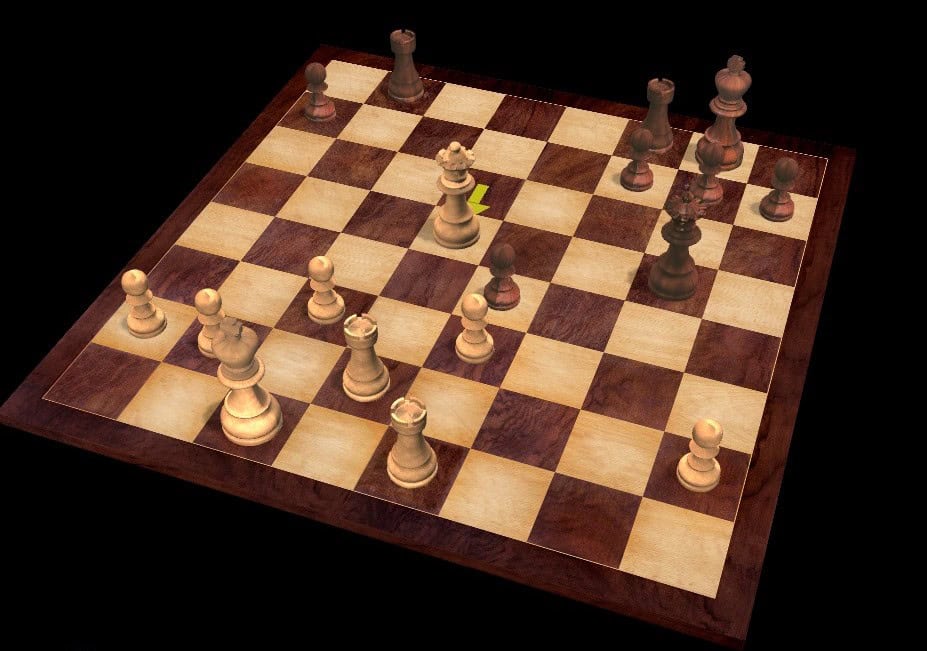
In the pre-Christmas period, I would for now present readers with just one exceptionally interesting example, or rather moments. It concerns the evaluation of positions in a six-piece difficult-to-figure endgame in the sixth game of the match.
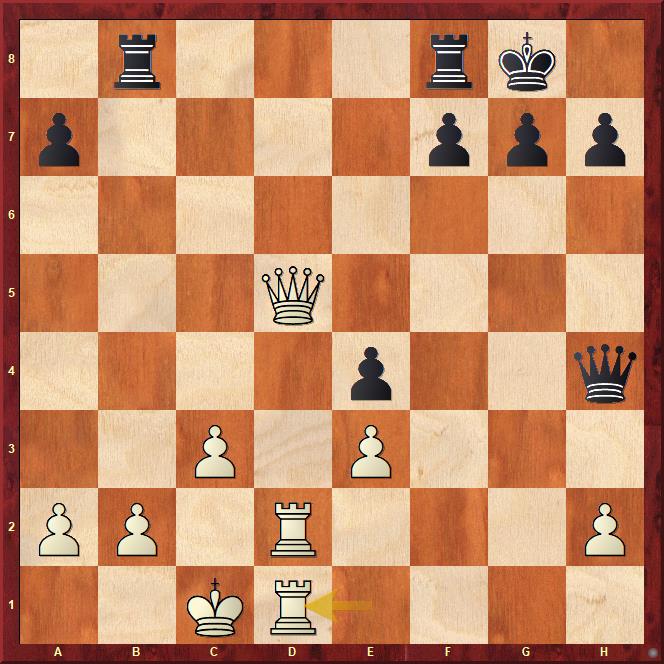
Gukesh (as almost became customary in the match) has just played the move 26...Qg5-h4 he avoided the possibility of a threefold repetition of moves (which would have been achieved after 26...Qg5-e7) and the world champion therefore continued logically 27.Rd1.
I understand that the following question may be extremely difficult for many readers, but others may answer immediately. So: How would you evaluate the prospects of the sides in the position of the diagram?
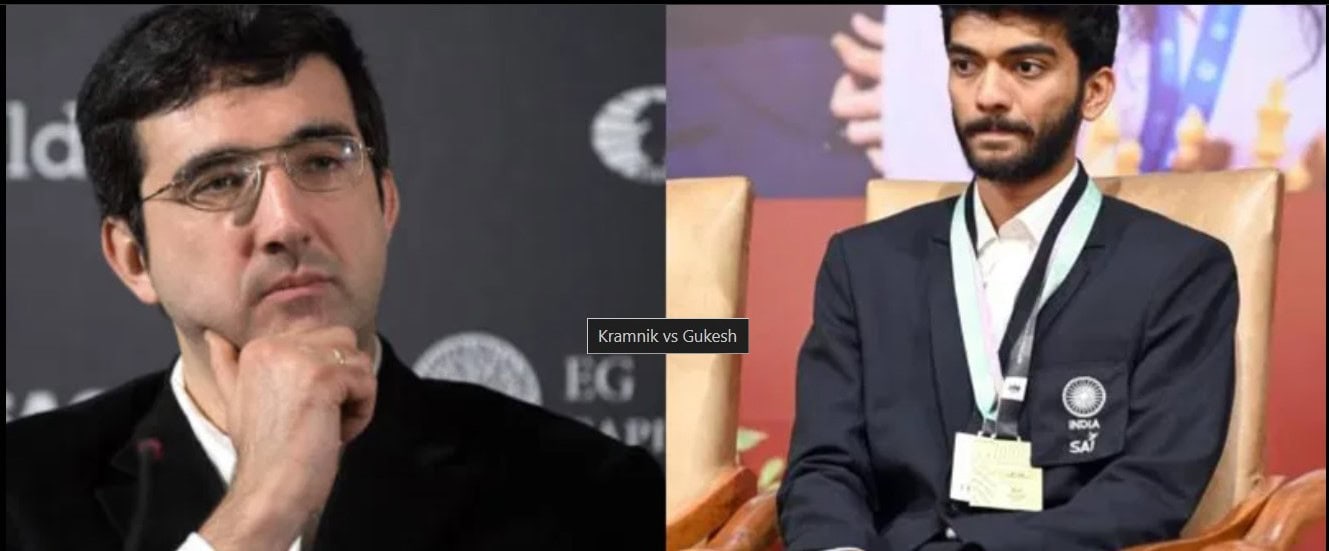
Solution: Let us first watch two video fragments in which two world champions now express their evaluation of the position. Along with this, let us listen to the reasons that led both to their opinion on the quality of the position. Let us give preference to Vladimir Borisovich.
The opinion on the situation and at the same time the answer to the question why Gukesh did not silently accept the offered draw can be seen in the following segment of the post-game video conference.
(Videos from YouTube, where readers can watch them in full, possibly with subtitles, are available below.)
So we see a fundamental disagreement of opinion! Kramnik speaks of a great advantage for White, while Gukesh speaks of counterplay. Where does the objective truth lie? Deep computer analysis confirms both in the position of the diagram and in the entire further course of the game a dynamic balance of the position!
Summary: Vladimir Borisovich literally downgraded the game to the level of a children's school game. In his analysis, he emphasises in various positions of difficult six-piece endgames the importance of centralisation of White's forces and thus White's advantage! Unlike him, Gukesh mentions open lines against the White king and thus its more sensitive position.
The former world champion criticised both players, however, without (according to his words) being convinced of the probable objective evaluation of the position... We have a clear example before us! White's advantage, who fully controls the central 'd' file, is in my opinion fully compensated by the dynamic factor, i.e. the weaker White king! And I really do not mean the practical chances of the opponents in the game now, but the objective state of affairs. If the strongest pieces are exchanged, then of course there can be no talk of any harassment of the White monarch, but on the other hand the centralisation also loses at least part of its significance! (As we know, the concept of centralisation applies to the rook in a different sense of the word, which is given by the geometry of its movement.) In the case of transition to the real Endgames will start to play a more significant role, even the weak white pawns on e3 and h2, the pawn structure as a whole, and then Black's only free pawn on c3. on the contrary This is compensated by the relatively quick possibility of advancing his pawn majority on the kingside with f5, g5, f4...
I certainly do not need to emphasise again that the computer here is evaluating the position as a draw, and we do not even need to go into extreme depths, as I have done myself just to be sure!
Kramnik's opinion was challenged, and I believe one of the spectators hit the nail on the head with his comment under the video. It went something like this: „If White centralises his pieces, how can he at the same time occupy the open files on the kingside and attack the enemy king?“ 🙂
To conclude the comment, I will return to the evaluation of this situation and partly repeat: in my opinion, we can understand this position as a form of struggle between static and dynamic factors – centralisation vs. a sensitive white king.
The entire game with detailed analysis, especially of those positions with the heavy pieces, can be studied by the dear reader in the viewer!
Below I offer Kramnik's non-computer analysis of the whole game and, as a counterbalance, the entire press conference after the end of the 6th game of the match. We can also listen to Ding Liren's comments!
Low level of the match?
Not only the 14th world champion Vladimir Kramnik, but also many other prominent grandmasters did not leave a dry thread on the quality of the match and individual games, as the saying goes. A significant critic became – who else – the 16th world champion Magnus Carlsen. He is already positioning himself as something of a rebel, which logically was not necessary during Ding Liren's rather formal reign. Of course, the terrible blunder by Ding in the last game only added fuel to the fire of criticism.
However, how sarcastic Caissa can be we could see already a week after the end of the world championship match!
Perhaps so that rapid or blitz chess would not be left behind and the strongest chess player of all time 🙂 was apparently not forgotten, as happened for example at the September Olympiad, on 17 December the final of the Champions Chess Tour 2024 began in the Norwegian capital. The time control was adjusted this time to a mix of rapid and blitz, namely 10 minutes + 2 seconds increment per move. Well, let us see what happened to the great critic of the world championship match in one of the semifinal games.
Carlsen,M (2838) vs. Vachier-Lagrave,M (2763) rapid Oslo 20 December 2024

In an equal position Black blundered badly. He just played (which is also incredible, after one minute and 42 seconds of thinking!) 27...Qxc4??... can you dear readers, within three minutes, which the former world champion roughly had on his clock at this moment, find the winning continuation for White? Judging by the tactical skills of many of my pupils, I believe some readers can do this even within three seconds!
Well yes, this is simply almost the easiest kind of puzzle!
One of the final games of this show between Carlsen and Nepomniachtchi then reminded me of simultaneous exhibitions I witnessed as a boy. Well, judge for yourselves, dear readers.
Carlsen,M (2838) vs. Nepomniachtchi,J (2758) CCT Finals, rapid Oslo 21. 12. 2024
Former world champion against today's particularly fashionable French move order 1.d4 e6 2. e4 d5 3.Nc3 Nf6 4.e5 Nfd7 used by Gukesh twice in the match 5.Nce2.
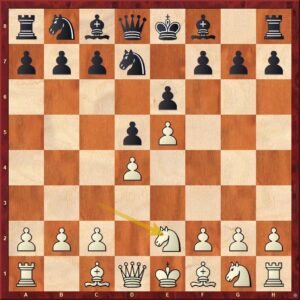
Jan later deviated from Ding Liren's continuation in game 13 of the match on move 7, and after 12.Be3 the position of the diagram arose on the board.
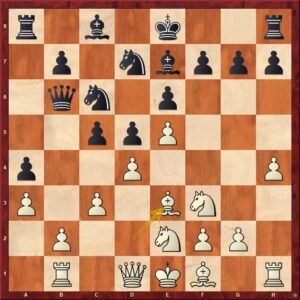
According to the timing, Black took 42 seconds before... in his conviction he brought the king to safety. Then followed 12...O-O??.
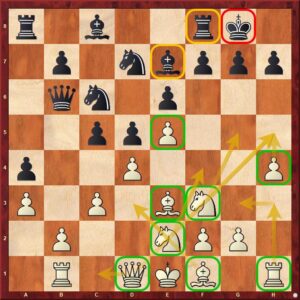
Only in seemingly similar positions do we sometimes hear: „Out of the frying pan into the fire!“ However, for the suicidal two zeros different metaphors would have to be used here. The following comparison comes to mind: As if Magnus's fellow citizen 🙂 Roald Amundsen set out from the warmth of his home to conquer the South Pole… in his underwear! The closed centre guaranteed relative safety for the black king. Castling towards the overwhelming numerical superiority of White's attacking forces might be seen in some simultaneous exhibition in a Swiss village (because this country is not exactly a chess powerhouse). But for a two-time contender for the highest title??
Classical chess is saved for now, India will take care of it!
Videos capturing Gukesh's emotions immediately after the game must have had millions and millions of views worldwide. Those unmoved by them must be cynics or must hate this boy. I was quite moved!
Press conference after game 14 on 12.12.2024:
Well, but I simply cannot resist this: without comments and for comparison!
Well, different a model of today's children and young chess players…
Chess at a crossroads
I have been involved in chess long enough to sense that even into our beautiful game, which is also a science and an art, there is penetrating noise from the street. It is a clear reflection of today's world: its domination by a flood of unnecessary information, superficiality, self-centredness, impudence, arrogance, lack of empathy, and a decline in the average intelligence and education of the population of the so-called collective West.
What do I mean specifically? The attempt to belittle classical chess at first, claiming that today no one is interested in multi-hour games, spectators turn away from them, and so it is time for fundamental changes! Such voices mostly come from the West, but many officials, for example from the Russian Chess Federation, are no exception.
However, the World Championship in Singapore, in my opinion, revealed the true state of affairs: a hunger for serious chess!
As two opposites stand against each other, lovers of Magnus's rapids, blitz, bullets and Fischer Random Chess on one side, and a unified East led by India, China (let us not forget women's chess), Russia (but only after the change of federation leadership and the departure of the clique around Andrey Filatov), and the states of the former USSR.
Dommaraju Gukesh will become a huge role model for millions of young chess players, whose lifelong dream will be to emulate his path to the title. Magnus Carlsen has never been and could never be such a perfect role model. He simply lacks the moral qualities for that… so regardless of who is currently the true world number one in classical chess, let us not forget that the world champion is only 18 years old!
Many children and young people will also be influenced Arjun Erigaisi, Nodirbek Abdusattorov and many others! It will be very interesting to watch and predict the winner of the next Candidates Tournament in 2026. Here I would dare to predict: it will be a tough generational battle!
Below readers can watch an interview with the new world champion. At the beginning we see an amazing memory: eleven-year-old Gukesh talking about his dream to become (the youngest) world champion! Only 7 years have passed!
Thank God
Beautiful article. I think Ding fought bravely and Gukesh won deservedly. I am very curious to see what the next match will look like.