


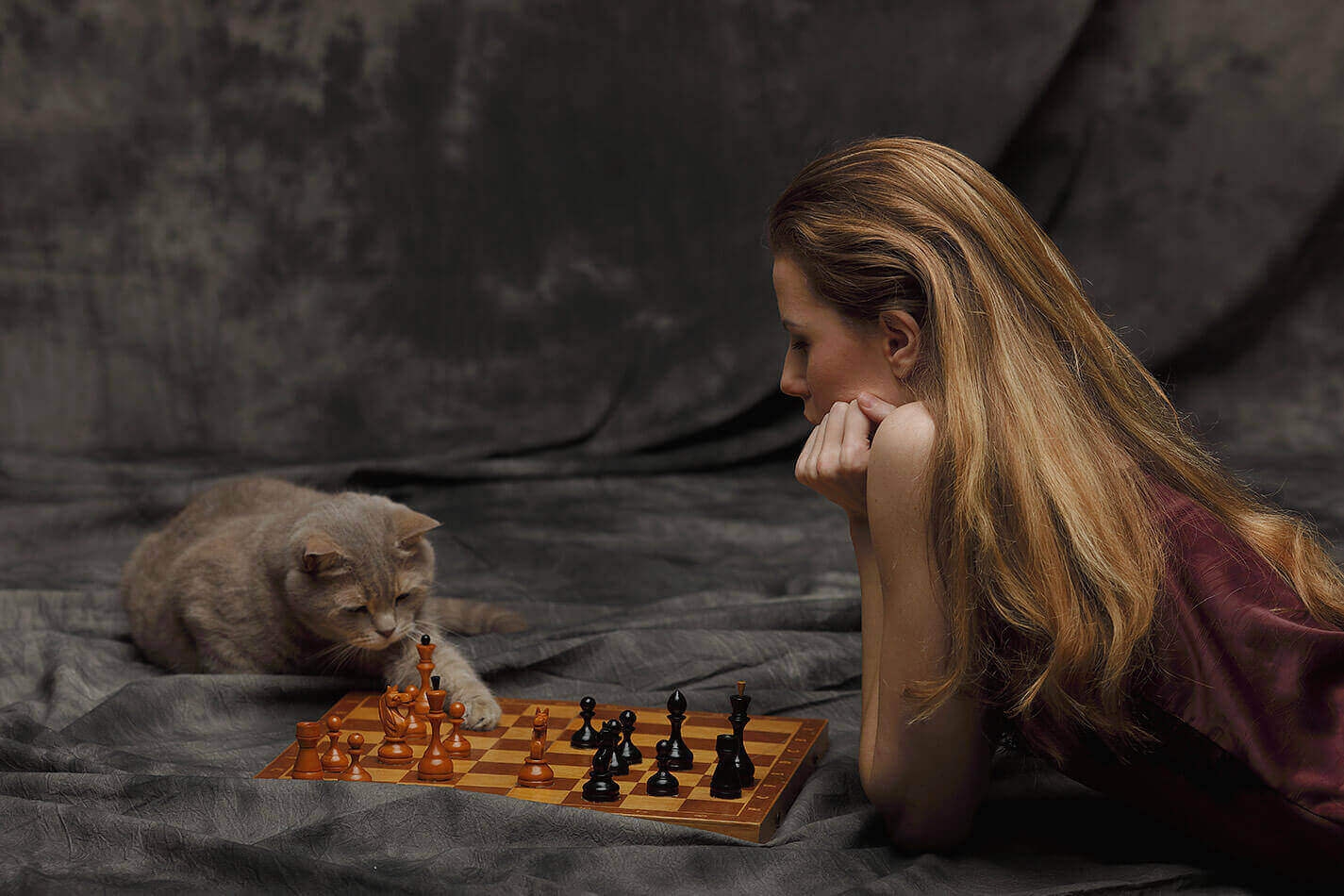
Wijk aan Zee: Black wins, cognitive radiation and another Nodirbek triumph

There are countless titles one could invent for what happened this year at the Wijk aan Zee tournament, yet none can encompass everything we witnessed. I admit I have never seen anything like it in all my years of following elite tournaments. Where to start? The incredibly low average age? The incomprehensible statistical data? The fact that almost every one of the 14 participants in both tournaments suffered several collapses? Or the record number of blunders outside time trouble, including one-move blunders? I often respect Occam's razor principle, that the simplest explanation is usually the most likely. Alright, let's try this: „Due to computers and engines, players are forgetting how to calculate variations!“ Or: „Tests of mind-influencing weapons were taking place at the venue.“ Or is there a more down-to-earth explanation? Only one suggests itself: chance, fluctuation. Still, we have two certainties. First: Nodirbek Abdusattorov won another tournament with dominance. Second: more interesting and exciting battles are hard to find. Continue reading
The twilight of chess art: beauty yields to speed

A quick glance at chess YouTube makes it clear: eight-minute blitz analyses gather tens of thousands of views, while videos devoted to deep chess studies attract only a handful of enthusiasts. Speed triumphs over depth, instant entertainment over patient search for beauty. Is this the price of a rushed era? Laziness to think? Or just a change of taste? Yet there are works proving that chess can be true art. One of them is the magnificent study by Leonid Ivanovich Kubbel – a gem that inspired this article in the first place… Continue reading
Carlsen's speed monopoly continues!
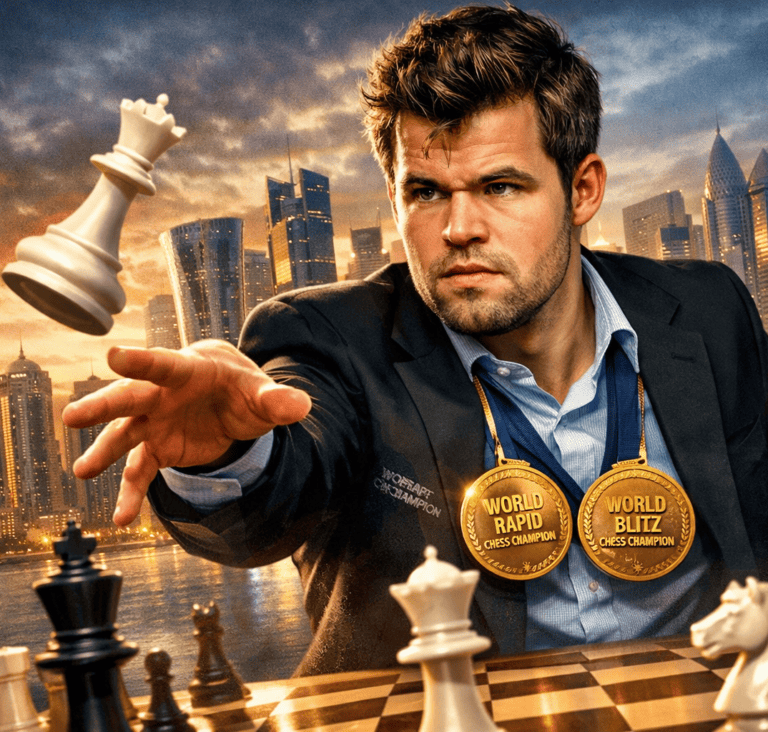
In Qatar's capital, the world elite gathered again after nine years to compete in rapid and blitz. More than 250 players took part! After a year’s „New York denim break,“ Magnus Carlsen won both titles again. We may have many reservations about his behaviour, or admire him boundlessly, but two of his main qualities that made him a legend cannot be denied: the character of an exemplary Alekhine-style fighter and a genius, almost Capablanca-like intuition. The only other two-time world championship medallist, Arjun Erigaisi, declared a few years ago: „It is clear that today chess is played better than in the past.“ I, on the contrary, think that the quality of the game itself – especially in blitz – is gradually declining. Rapid and especially blitz are primarily spectator entertainment. And this year there was certainly no shortage of that… Continue reading
Loyd's cat in the box: a quantum paradox on the chessboard

Schrödinger's world-famous cat in the box, which the brilliant physicist wanted in 1935 to highlight the absurdity of the then interpretation of quantum mechanics, only to achieve the exact opposite, is known to almost every somewhat educated person. Well, let's not play with cats! However, almost no one knows that the king of humorous chess puzzles and problems, Samuel Loyd, created several decades earlier his own demonstration of quantum paradoxes for chess players in the form of a three-mover. Of course, this is an exaggeration, although I am not alone in sensing a clear analogy in his task. And moreover… it is New Year's Eve, so why not, right? And for those who do not like quantum mechanics, the second task by Alexey Troitsky offers a return to the world of simple logic… Continue reading
Like a dog unleashed

Looking at the table and Nodirbek Abdusattorov's games from the London Classic tournament, this idiom comes to mind. After weaker results and missed chances to qualify for the Candidates Tournament, Nodirbek appeared in London in full armour. Not only did he win the closed nine-round tournament with a two-point lead over Firouzja, but he also recorded another astonishing feat: six wins in a row!... Continue reading
Deserved winners… but in which discipline?
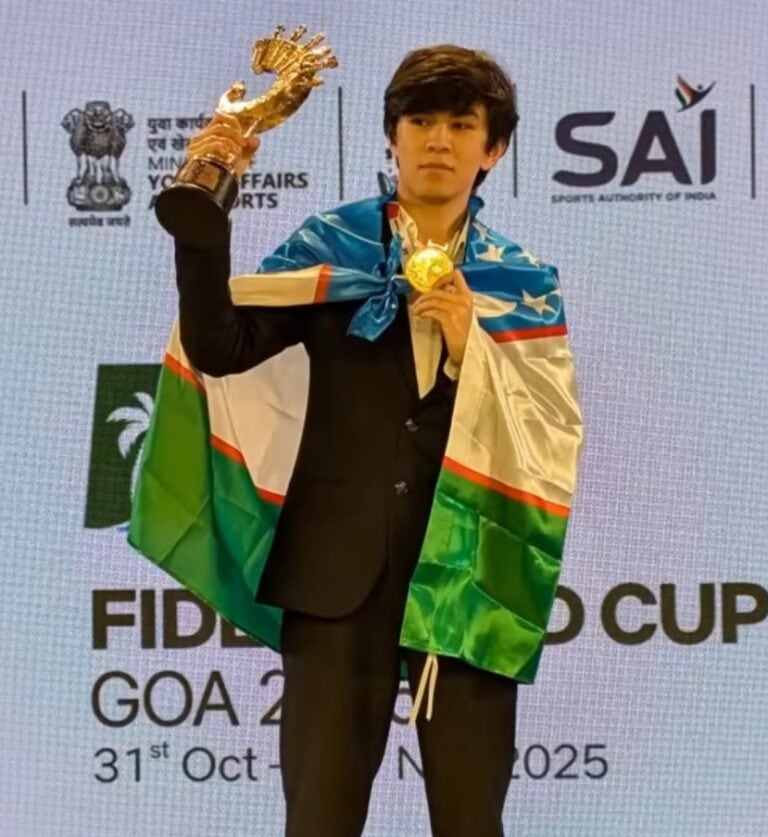
For almost a month we could follow the gigantic clash of 208 participants in the knockout World Cup tournament in Indian Goa. The closer the end approached, the less clear – at least to me – it was in which discipline the competition was actually held. In chess? Yes. But in classical chess, the „real“ chess as history knows it? Hardly. And since for all three winners, Javokhir Sindarov, Wei Yi and Andrey Jesipenko, success means automatic qualification for the Candidates Tournament for the classical world championship title, it makes little sense why the qualifiers were decided in the vast majority of cases by rapid games 15+10 or 10+10, including the final time troubles… Continue reading
Goa so far reports a harvest of blunders and the fall of many favourites

The World Cup tournament has just passed its halfway point, but already offers an unexpectedly rich harvest of blunders and drama. Many favourites bowed out earlier than anyone expected – and it seems that in Indian Goa this year, the one closest to victory is the player who does not make the last blunder. Thus, before and during the fourth round I compiled a slim, coherent mosaic according to my most interesting moments of the battles so far… Continue reading
Absolute world champion: a new crown in the era of time trouble, blunders, threats and quarrels
Events are rushing at such a pace and the flood of information is so massive that even daily – perhaps even hourly – news coverage would hardly cover it. Sometimes I wonder what my favourite writer and philosopher Zdeněk Mahler would say about it, with whom I published an interview in 2002 titled „The flood of information proves that the world has gone out of joint.“
Two prestigious tournaments have ended. The US Championship this time brought many beautiful experiences – and for me personally a definitive conviction that a new, only fifteen-year-old supertalent is emerging. And the European Club Team Championship? Especially on the first board, it was a first-class treat! It is not excluded that „Gukesh25“ is indeed gradually returning to his form from last year.
In the article I cannot omit the tragic death of the popular American grandmaster and streamer Daniel Naroditsky…
Continue reading
Samarkand belonged to Giri and experience – but the youngsters pressed hard
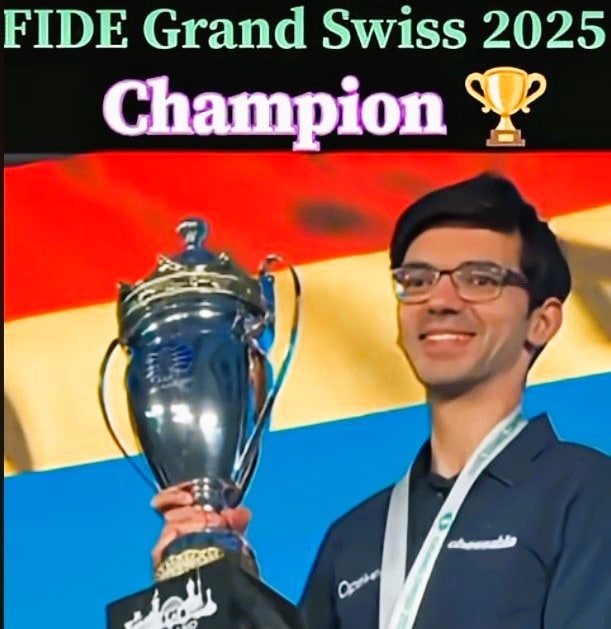
A battle to the last bullet and nerves stretched to breaking point – such were the final rounds of the Samarkand Grand Swiss. Steady nerves, cold-bloodedness in critical moments and the ability to overcome fatigue decided the outcome. The tournament's lead was extremely balanced, without a clear favourite. The winners deserve recognition, but so do those who failed – because if the cards were dealt again, the order on the winners' podium would certainly be different. Selected examples are again arranged thematically, but we will focus across the board on both the lucky and the unlucky. So we can start… right from the end… Continue reading
Grand Swiss: a generational duel at the halfway point
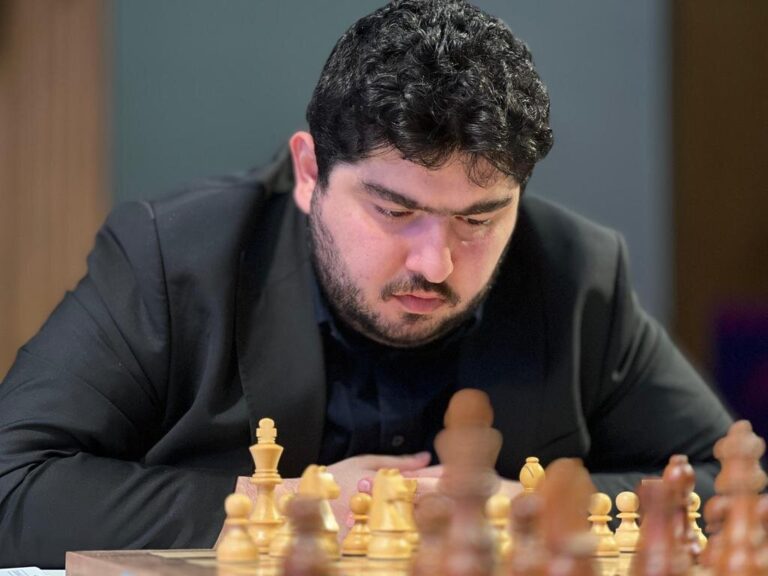
The Samarkand Grand Swiss at halfway turns into a general test of courage. Youth is pushing forward, great legends have already fallen – and leading is the „veteran among youngsters,“ the twenty-five-year-old Iranian Parham Maghsoodloo…
Continue reading
Chess under the sun: two thunderbolts, two gems and one shadow
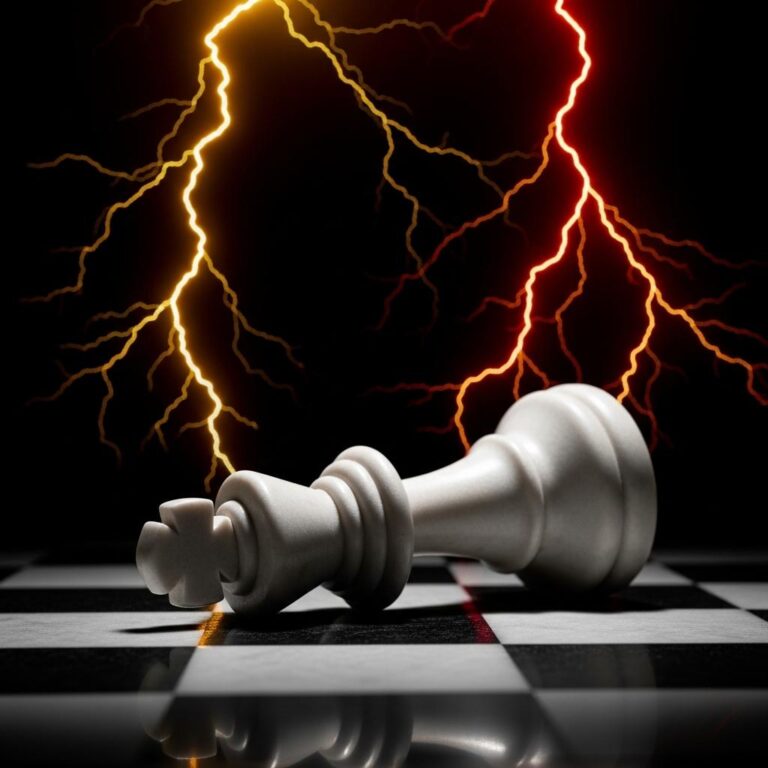
„With summer, I fly through the tournament world,“ I wrote in my summer contribution last year. If I were to write a similar piece after the end of the holidays and vacations and honestly summarise all the interesting events, the work would last me for several more months! From all the victories and collapses, I have therefore selected primarily two summer gems, but for the white king certainly thunderbolts! You surely know the saying „never say never,“ but I will risk it anyway: this could very well be the game and combination of the year.
Today we will open the theoretical window towards the fashionable Anti-Grünfeld system with 3.f3.
„Oh my God,“ Carlsen exclaimed in Stavanger after resigning the game to the world champion. Before that, he struck the table so hard that the clock was startled and jumped ten seconds ahead. The same was reportedly said by Gukesh himself after one of the dramatic games at the Saint Louis tournament. Unfortunately, the world champion is gradually becoming just a shadow of „Gukesh 2024“…
Continue reading
Endgames on repeat? Divya's series and another story of an anomaly
„I must study endgames!“ – these were Divya Deshmukh's first words after winning the World Cup final. She spoke generally, but at least three rook endgames she played in Batumi were strikingly similar. No, in this case I certainly would not speak of a „promised“ anomaly, although I will of course introduce it to readers – this time it even reaches into history.
In the second part of the article on the Women's World Cup, we will focus on a certain type of rook endgames: with the material advantage of a distant passed pawn. These certainly do not appear rarely in practice. Experienced readers also know that many universal rules can be applied to the most frequently occurring endgames…
Continue reading
Chess quote
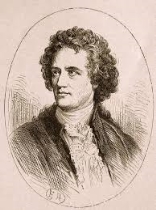
Chess is the touchstone of intellect.
Johann Wolfgang von Goethe
Johann Wolfgang von Goethe
Chess quote
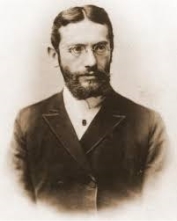
Chess, like music and love, has the power to make a person happy.
Siegbert Tarrasch
Siegbert Tarrasch