

I know I am repeating myself and I shouldn't. Not because many games are „decorated“ (not only tactically) with blunders that literally follow one another, but because the situation is constantly getting worse! I ask myself: how much further can it still go? How low can the playing level of some, even elite, chess players still fall?! True, the knockout system with two games is itself set up so that the number of surprises never falls below a level that can, among other things, be called „highly entertaining.“ But for example to resign a drawn endgame in the second game of the match (Wesley So)? Or to play in a „it will somehow work out“ style!? (Nepomniachtchi, Abdusattorov)?
True, the spectators will certainly enjoy themselves again. After all, from what else but visible mistakes should we entertain and learn? And so before and during the fourth round I put together a slim, harmonious mosaic according to my most interesting moments of the fights so far.
Currently the progress bracket looks like this:
A shock not only for fans
, which perhaps best characterises the course of the World Cup so far, happened at the end of the second game of the second round Stremavicius,T (2531) vs. So,W (2764)
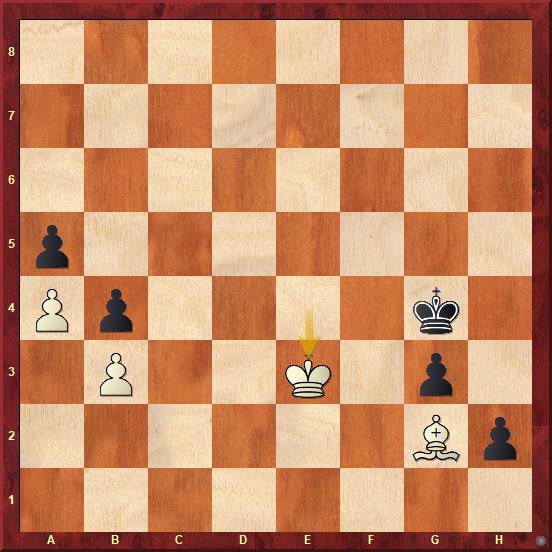
White has just played 73.Ke3. Wesley thought for a minute and - as we can see in the opening video - then offered his opponent his hand as a sign of resignation! True, Black had been losing in the endgame for quite a long time, which also psychologically explains his action, but still! The position of the diagram is in absolute balance and Black therefore had a draw within reach. It was enough to think, even though in the diagram position Wesley no longer had time to spare. The expression on his face says it all!
The situation on the chessboard is not as simple as it was years ago, when Samuel Shankland also resigned to Giri in a drawn endgame (a fortress), but here with much more tragic consequences. And if that wasn’t enough, the video clearly shows that Wesley’s opponent accepted the resignation with such calm... well, he thought the same.
Of course, we will look at where the problem lies, but I especially challenge stronger players who have not seen this sporting tragedy: can you calculate the draw?
The following video analysis by Grandmaster Sergei Makarychev deals with the endgame itself around the 21st minute.
Like a knife through butter, but...
Vincent Keymer and Arjun Erigaisi are currently cutting through the tournament like a knife through butter with identical scores +3 =1 and are currently battling for fourth place in the world rating list. Under normal circumstances, I would tip them as the main favourites of the tournament, but in Goa, almost anything can happen.
However, I did not want to focus on either favourite in this article (yet?). Let’s rather look at how Erigaisi defeated one of his opponents.
In the game Petrov vs. Erigaisi White made a serious blunder (in fact several), which we might have paused to consider and reflect on in the past. How can something like this happen in a serious game?
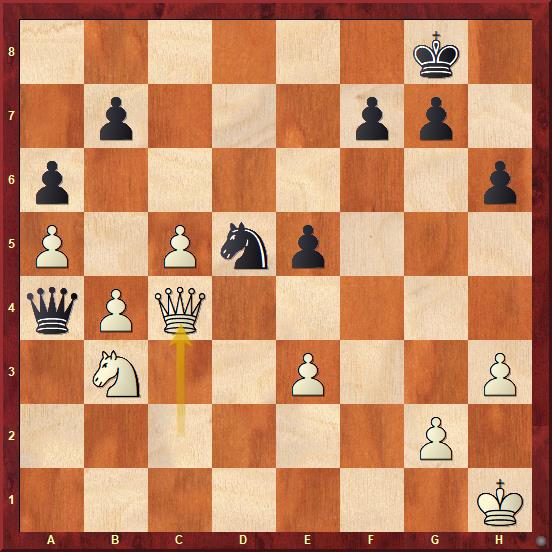
White has just played 36.Qc4?, when after 36...Nxb4 he planned 37.Qg4??.
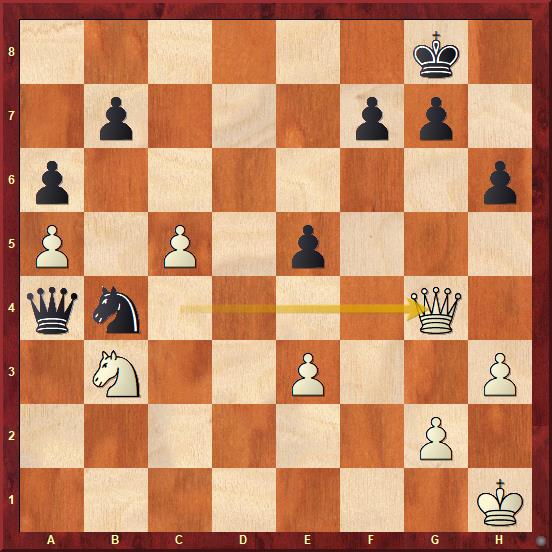
White’s desire for a perpetual check clearly overwhelmed him so much that he stopped noticing the new circumstances of the position. How would you continue as Black?
My database, in which I collect and sort serious blunders, will therefore grow significantly — but it is not worth dwelling on them too much for their own sake. There will always be enough blunders because humans are fallible. The question remains: how many is actually enough?
Disaster for the favourites
Let's rather shed some light on the „collapse“ of the favourites. How could it happen that so many very strong grandmasters — just like Wesley So — left the tournament already after the 2nd or 3rd round and most likely travelled away?
I don't even know which one to start with, that is, which one to prioritise in a short article.
Hot-headed Nodirbek
The grave of the likeable — and sometimes I think maybe even „always too combatively inclined“ — Nodirbek Abdusattorov this time became the „famous“ online blitz player, the Peruvian-Mexican grandmaster Martínez Alcantara.
In the first game of the mini-match, in which Nodirbek had White, the following position arose after White's 16th move:
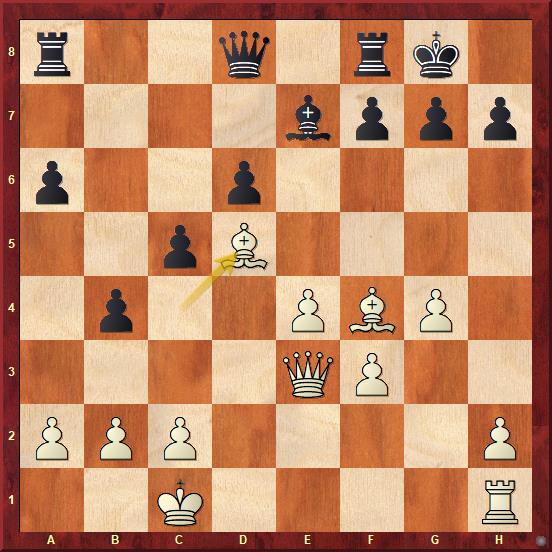
Allow me to pose — from a certain point of view — perhaps one of the hardest questions I have ever asked you, dear readers: How would you evaluate the prospects of the sides?
You can study the solution and the entire game in the viewer and also watch a shortened version in the Russian-language video.
I warmly recommend readers, after studying or replaying this immensely rich game, to also find time to watch Alcantara's post-game analysis in the studio. Honestly – if the masters and grandmasters or grandmistresses I trained decades ago had such poor knowledge and faulty evaluations as the Mexican grandmaster shows, I would seriously doubt their abilities and talent back then. Has this young man ever opened a book written before his birth? Because he mostly did not understand the arising positions at all…
It's time for the rematches. But… you can't win on demand with Black…
Svan's saints at the very last second
How did the world champion feel in the second game of the third round against the German grandmaster? The game Gukesh vs. Svane,F was based (at least that's my impression) by Black on the idea to avoid unnecessary complications and reach the tiebreak with a second draw. Gukesh set up his favourite Italian pianissimo formation — needless to say about the time on the clock in the opening. However, the German grandmaster seemed to pull the best, or at least very good, moves out of a hat. But also otherwise: how often does it happen that before the time control the opponent plays his 37th move in the last few tenths of a second??
Surely it has happened to you as well. Whatever your opponent touches that day just works for them — calculation, variations, subtle traps — and you like the position less and less…
Moreover, Frederik Svan managed to obtain a type of position, and later an endgame, that the young Gukesh (so far?) simply does not understand. The most treacherous endgames are said to be knight endgames — especially those with all four pieces. This game confirmed that one hundred percent.
Here is the full edited game score available.
The highest quality shorter analysis I found after several days on the Russian-language Ukrainian website of Alexey Pugachev. (You can play the English AI dubbing for it.)
A collapsed position in the opening?
This is how Nepomniachtchi’s unsuccessful game might look after a first quick replay — again with the white pieces. Jan’s blunders occur more often than just here and there; however, here I have the impression he chose them at least months, if not years, in advance. I no longer have the strength to analyse this game.
Readers might be interested in how Jan Alexandrovich himself coped with the analysis, what computer technology he uses, and also his account of the conditions under which the tournament in Goa takes place.
It is certainly interesting to compare his views with the statement of our long-time number one - Grandmaster David Navara. This can, I think, be found for example on the website sachy.cz.
The analysis of the unfortunate game begins at about 1 hour and 11 minutes.
Dubov’s strategy
Watching Daniil Dubov’s performances — let’s say — over the past year, those involved have the impression that he goes to most tournaments rather on holiday. A draw here, a draw there — but occasionally a win worth noting.
Already after the third round I almost became convinced that draws in serious games and the subsequent focus on tiebreaks are not accidental, but that it is a strategy developed by Daniil, to get as far as possible through the tournament. After all, Dubov does not hide the fact that he does not play serious games with the same enthusiasm as rapid or blitz.
But the tournament bracket is merciless and in the fourth round he was paired with Praggnanandhu. I watched some recordings from the New York blitz event last December carefully, and so I also remember well how their mutual blitz game ended then.
If I were in Pragg’s place, I would not have liked the opponent’s behaviour one bit — after winning the game he didn’t even set up the pieces, quickly ran off — and I would have had some payback for him. (It must be added that at that time, after the last round of the main event, he was simply curious whether he had qualified for the final.)
Among the gems of the tournament we will certainly include the rapid game with a spectacular sacrifice and an attack on the king in the centre Dubov vs. Meier. As if we had returned to the 19th century!
However, I cannot resist a remark: the ignorance of the basic lines of the Vienna Game on the part of the German grandmaster is — even today — shocking to me!
Readers will find details inside the analysis in the viewer.
Rapport's sacrifices and combinations
„Richard Rapport is never missing from the most beautiful moments!“ Not only would he probably win the prize for the most beautiful sacrifice of the year again — in the game against Praggnanandha — but he brings joy to spectators in almost every tournament. At the end of this brief excursus, I cannot omit the spectacular finish of the second game of the second round Rapport vs. Supi.
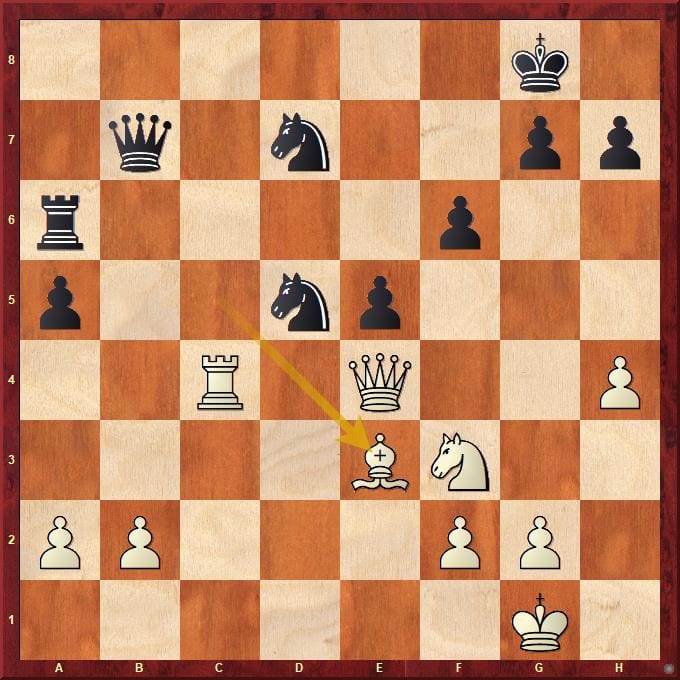
Black stands worse, but who would have thought that he would resign the game on the next move?! It was followed by 26...Ra8?? (another addition to the collection of tactical blunders).
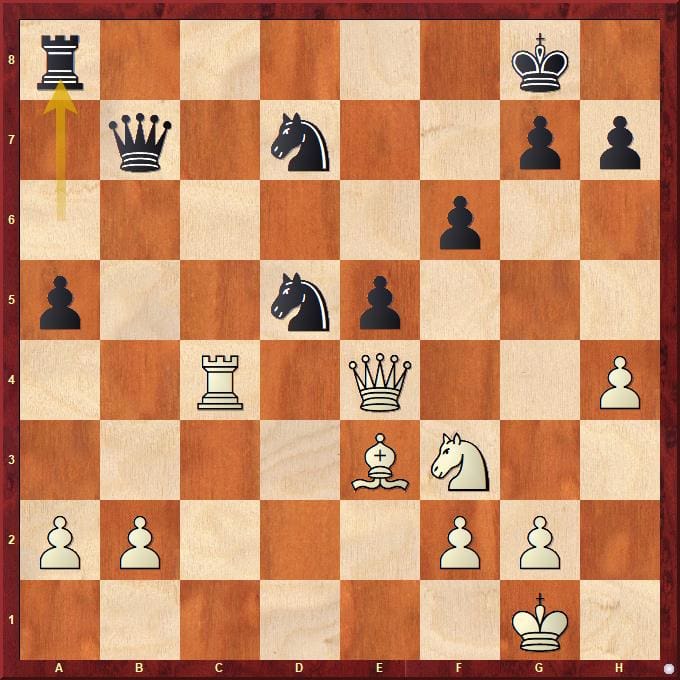
How did White finish the game?
Lovers of the Alapin system in the Sicilian will surely welcome a short analysis of the whole game!
So far we know, who we will no longer see in next year's Candidates Tournament. However, Goa does not yet give us a complete answer to the question, who on the contrary we will see — after all, how could it — but it also promises a number of surprises.
Or will everything return to the expected course and the remaining favourites stay in the Indian resort until the end of November?