

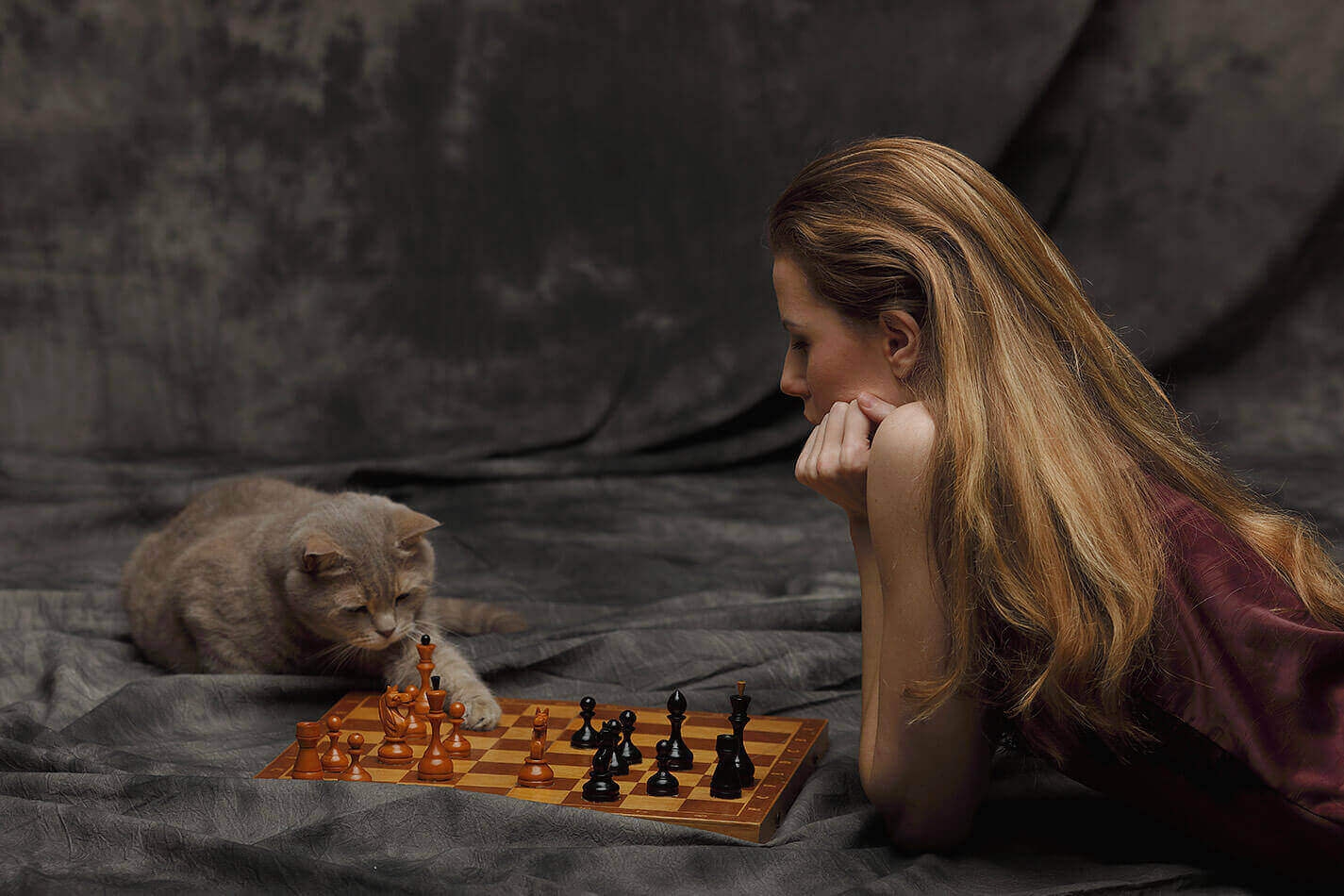
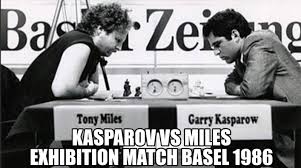
May 1986, Basel. An exhibition match Garry Kasparov – Anthony Miles ends with a crushing victory for the world champion 5.5 : 0.5. Kasparov perhaps took it as a light-hearted stop on the way to the rematch for the chess crown against Anatoly Karpov.
Crushed but sincere, Miles declared a memorable sentence after the game: „I thought I was playing the world champion. In reality, I faced a monster with a thousand eyes that sees absolutely everything.“
Decades have passed and chess fans felt that they saw another such „monster“ in the person of Magnus Carlsen. However, he seems to be slowly closing his chapter in classical chess. Fortunately, he has a more than worthy successor.
After another triumph of the Uzbek number one in Prague, I dare say that the new „monster“ is already in sight. Nodirbek Abdusattorov, at twenty-one years old, possesses practical strength which is – without exaggeration – truly terrifying!

The Prague festival was surely followed by many not only Czech spectators, more than even some stronger or longer tournaments. (In this context, I might just add that the Prague Masters tournament also climbed to category XIX. The same as this year's Wijk aan Zee!)
Those who wanted could follow the tournament nicely round by round, choose the form of videos or self-study, and cheer for their favourites.
Of course, here I join the large number of viewers or readers who wished success and cheered for our legendary number one David Navara. What he showed us in at least three games I cannot leave unnoticed, although I guess for many readers it will not be anything new for the most part. Still, I will try to select moments and adjust notes in a way that no one has yet presented to readers! So I dedicate a separate chapter to David, but… that must wait.
This time I primarily divided my „tournament report“ according to individual players! Readers of my articles know that there are at least two other ways. The thematic division suits my chess school website better, while in magazines it is not uncommon to find reports by individual rounds.
However, we cannot start any other way than traditionally: with the overall results – after all, the Challengers tournament was also played –, examples of gross mistakes, but also brilliant calculations and other interesting things.
The results shout again: death to draw death!
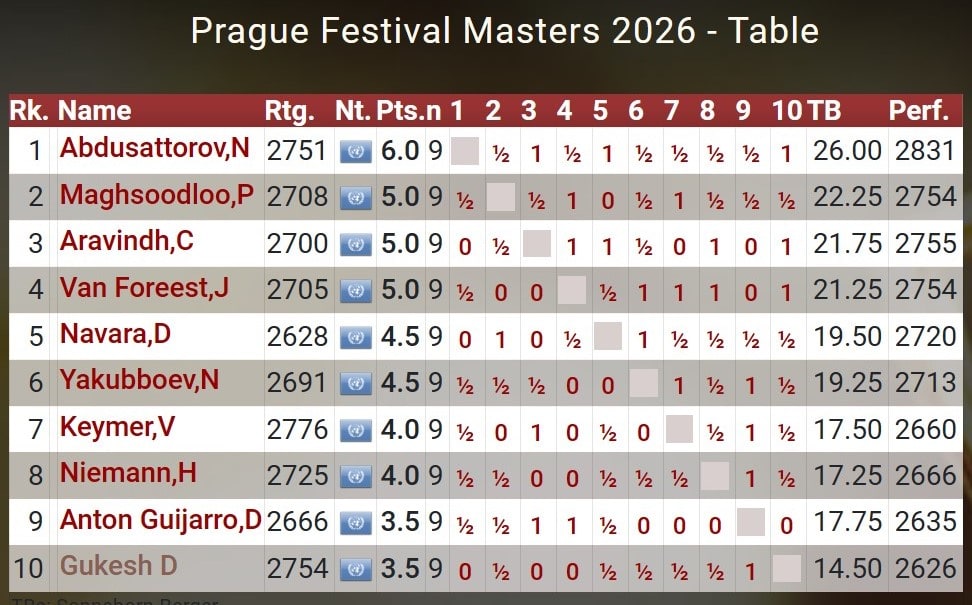
The final round of the main tournament with four decisive results (!) changed the table almost beyond recognition! Well, and for +1 to be enough for second place? That is not seen every day either, although it must be added that in Prague it is slowly becoming a habit 🙂. .
According to the rules, in case of equal points the first tiebreak was the head-to-head game, so the world champion finally pulled away from last place with a win in the last round. But for the Prague festival 2026 nevertheless he will certainly not remember it fondly. In the article, of course, we dedicate a whole chapter to him as always.
The high scoring of the tournament – and who is surprised by that today, right? – was ensured by the fourth Indian musketeer Aravindh and the Dutchman Jorden Van Foreest.
- decided games: 23
- draws: 22
scoring rate = 51.1 %!
I admit that the main reason I followed the Challengers tournament with greater interest this time was the participation of the charismatic Divya Deshmukh. On the one hand, it is more pleasant to watch video recordings of the games, on the other hand, I was professionally curious about the strength of her play before the upcoming Candidates tournament. The final table looked as follows:
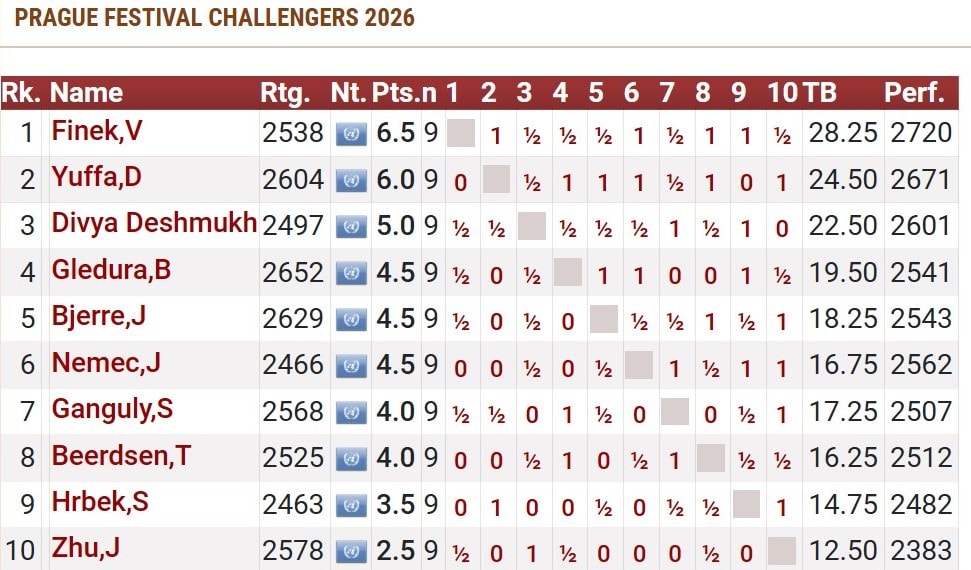
Looking at the starting list of this year's Challengers tournament almost made me laugh. The organisers really did everything… to help our youngsters succeed. Whether their gloomy results in previous editions led them to this action, or they finally want to extract higher international titles from our hopefuls? I leave that to the consideration of esteemed readers.
What is it about? Grandmasters Daniil Yuffa (*1997) and Surya Ganguly (*1983) have been… well, in poor form for some time. And how did Benjamin Gledura get such a high rating? That is not clear to me. Danish grandmaster Jonas Bjerre has been – to put it mildly – stagnating for some years now. The world’s second highest rated woman, Chinese player Zhu Jiner (*2002), and actually also Divya Deshmukh (*2005), who were supposed to bring some points to our youngsters, directed their performances towards training and preparation before the Candidates tournament, with the Chinese player apparently in a slump.
Well, except for Václav Fiňek (*2010), who in my opinion simply could not fail to win this tournament, things did not go well. Watching especially the games of Štěpán Hrbek (*2006) is true suffering for a coach, when you compare his „abilities“ for example with the twenty-year-old Divya Deshmukh.
When I read through our websites: „Could someone please explain to me why I should support our representative in the following example??“…
The necessary colour of gross mistakes
Let’s start with the last round 🙂. In the game Hrbek,S vs. Divya Deshmukh Black, after – how to say – an experimentally played variation in the Ufimcev Defence, just played 27…Rd7!
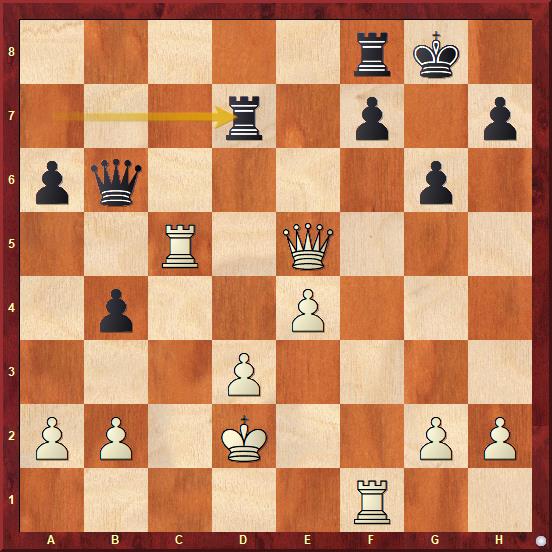
With the previous move White lost all his advantage and the position is now in dynamic equilibrium.
How would you continue now if you were in his place??
The answer is provided by the following video. Let me say straight away: I am not and never have been a spiteful or envious person – my brain simply doesn't work that way. Nevertheless, I would like to see a knowledgeable chess player who, while watching it, wouldn't either laugh heartily or at least shake their head in disbelief. I recommend occasionally taking your eyes off Divya 🙂 – by the way, her name in Sanskrit means „divine“, which quite fittingly matches her chess talent and personal charisma – and watch our very likely future grandmaster...
I could not deprive readers of the conclusion of the last round game between the hopes of world chess 🙂. Especially since thanks to it Divya entered the TOP 10 of the women's rating list for the first time in her life!
As a „teenage junior“ I also in similar situations devoted most of my brain cells' capacity to whether I looked good enough. But how much of them to devote to the problems of the position, at least some 20[%TP3T]? The video, in my opinion, rather shows that Štěpán Hrbek had no idea at all what he actually committed after 28.h4??! Or at such a young age he can keep a poker face like Magnus himself? 🙂
I used the following brilliant ending of the game as homework for my less experienced pupils so far. I see no reason not to present it in its original form.
In the game of the Prague „B“ tournament“ Gledura,B (2652) vs. Němec,J (2466) White stormed with the rook to the seventh rank 36.Rf7!
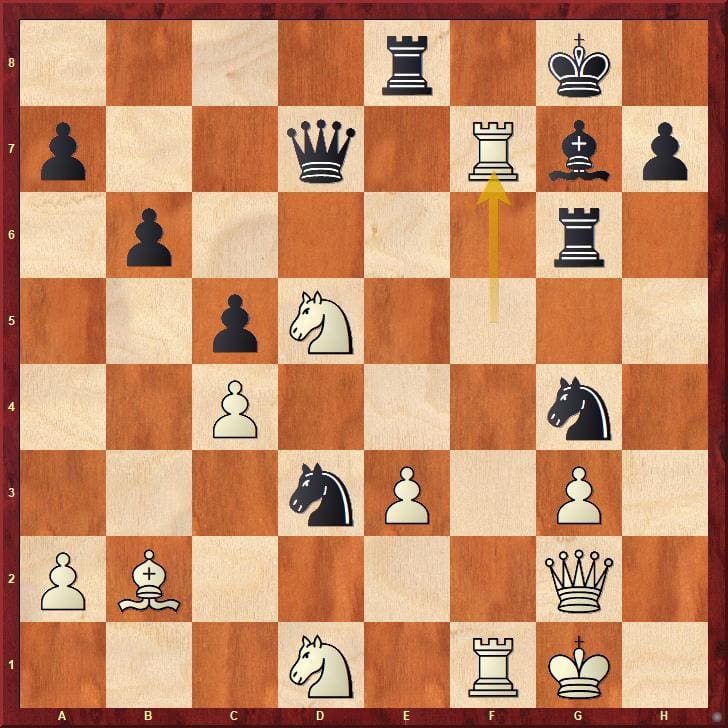
Before we look at what happened next, let's notice one interesting thing. In similar positions, you can often tell how tired a chess player is – that is, how much they can still endure – but also how great their talent is.
Everything on the chessboard changes quickly. New threats, new possibilities, and sometimes surprising reversals appear. Talented players can quickly orient themselves in such a situation and catch all the important changes.
And that is exactly what happened in this position. Black continued 36...Qd6??.
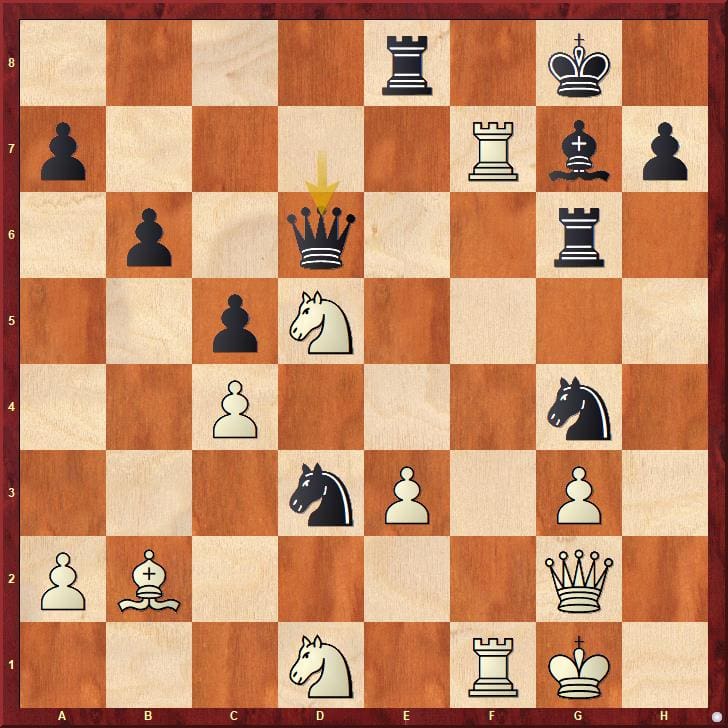
With which move did White finish the game? What variations was he probably calculating?
How not to prepare for a game
Originally, after this „school example“ I wanted to move immediately to our most promising young representative. Only a meeting with my friends – and my long-time protégés IM Honza Michálek and Vašek Pech – prompted me to add this note. I was alerted to the game.
The last round of the Prague tournament is being played, the game Němec,J (2466) vs. Yuffa,D (2604). Against the experienced twenty-nine-year-old Russian-Spanish grandmaster, it was certainly necessary to prepare very carefully. A possible win with the white pieces would have been a huge success (see below). Well, what came of it? Probably one of the worst game preparations I have seen in all these years!
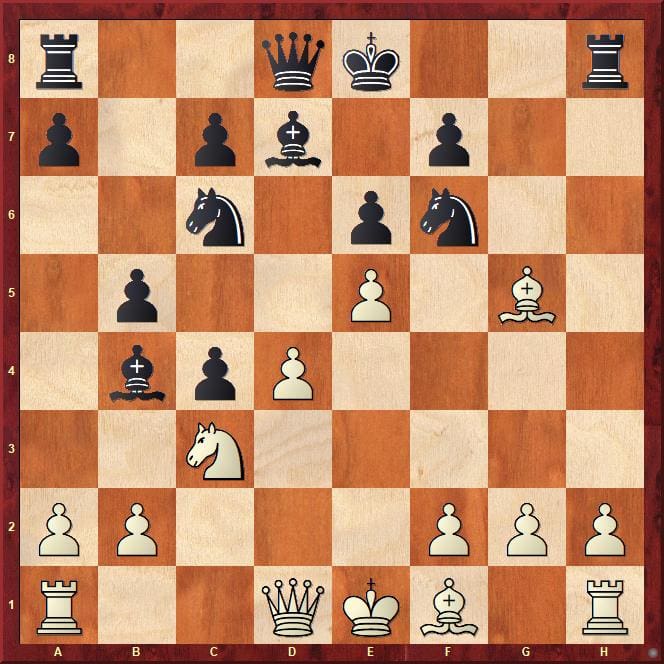
How would you continue if you were Black?
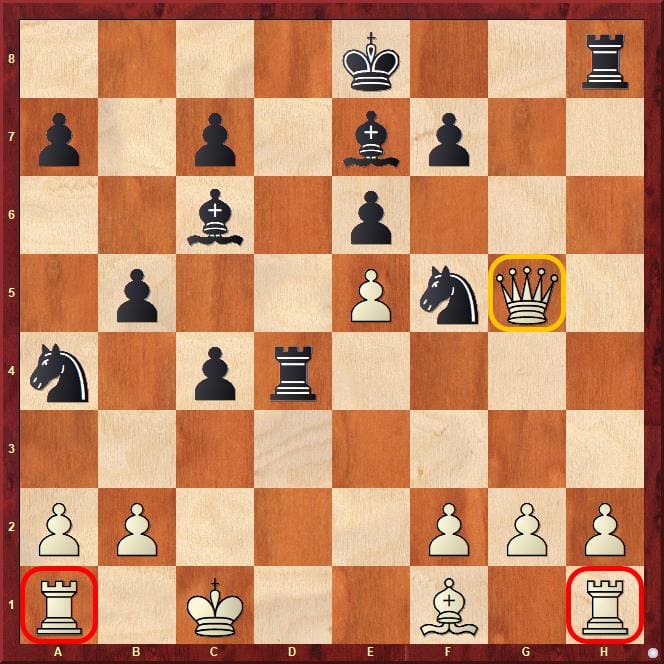
Final position from the game after the move 20...Bb4-e7.
Jáchym Němec needed to win with White in the last round especially to reach the required 5.5 points and achieve the grandmaster norm! But the game ended after 20 moves, and already after move 11 (sic!) White was objectively completely lost. For heaven's sake, who prepared Jáchym for this game? Or who consulted with him on the preparation?
The final position reminded me of an old chess story I once read in one – and perhaps more – chess books. I cannot guarantee the exact wording, so kind readers may forgive me a certain authorial licence.
It is told that a certain renowned master came to play a simultaneous exhibition in a remote village, probably somewhere in the Soviet „backwoods“. The result, however, turned out somewhat unexpectedly for him – to put it diplomatically. The villagers outplayed him on the chessboards in a way that would hardly be recommended „in simultaneous exhibition textbooks.“.
However, the master noticed one peculiar thing when looking at the played games. He therefore turned to the head of the whole event – probably the chairman of the local collective farm – and said:
„Do you know what is really remarkable? Not a single one of your players moved a rook even once in any of the games.“
The chairman thought for a moment, nodded, and replied:
„Ah... you probably mean those pieces in the corner with the railing on top? Well, you see, no one in our village really knows exactly how to move them. So we decided it would be best not to play with them at all – and manage with the other pieces.“
Which, by the way, is a method that – as you can see – can sometimes be surprisingly effective against masters. And judging by this game, in which White resigned already on move 20 without having moved his rooks at all, this old village chess school apparently still has its quiet supporters today.

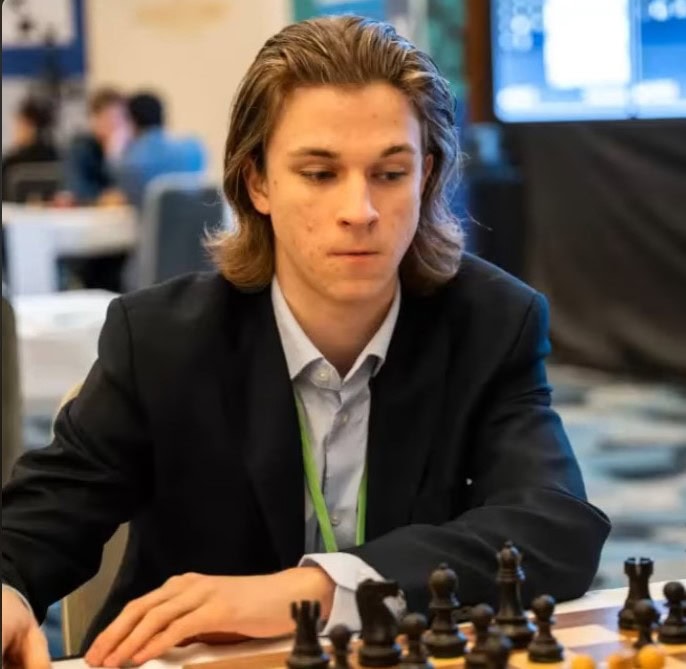
All that can be wished to Jáchym Němec – besides the early fulfilment of grandmaster norms – is just one thing: somewhat better game preparation!
In the end, I managed to find an analysis of a miniature. Although it is quite a weak product, certain information can be drawn from it.
The greatest Czech hope
Václav Finěk is certainly finally our true Czech hope for decades! If he had been cared for from his very first steps not only by qualified but also – let’s say – empathetic coaches who think more about their work than about earnings, and if today he had reached or remained in the hands of experts who have really achieved something, then in a few years we would probably finally have another super grandmaster 2,700+.
Unlike many enthusiasts, some of whom even already see Finěk at least as a participant in the Candidates Tournament for the World Championship, I am more sceptical. What reasons do I have for this?
For example: Festival Prague 2024. Václav Finěk is 14 years old and finishes last in the Challengers tournament with 2.5 points. And now let us compare his result with this year’s premium performance by the also fourteen-year-old Turkish grandmaster Erdogmus (see the previous article Radiance in Wijk…). At the very least, we see that… everything is relative!
Our stalwart David Navara has become the world’s number thirteen by rating, his historical rating peak (in another period) was 2,751. Do you think, dear readers, that after a quarter of a century this will be achieved by the only true Czech hope?
I have noticed several of Finěk’s games, but the following position from a game has stuck in my memory the most Finěk,J (2538) vs. Bjerre,J (2629). The Danish grandmaster has just played 24…Rd5.
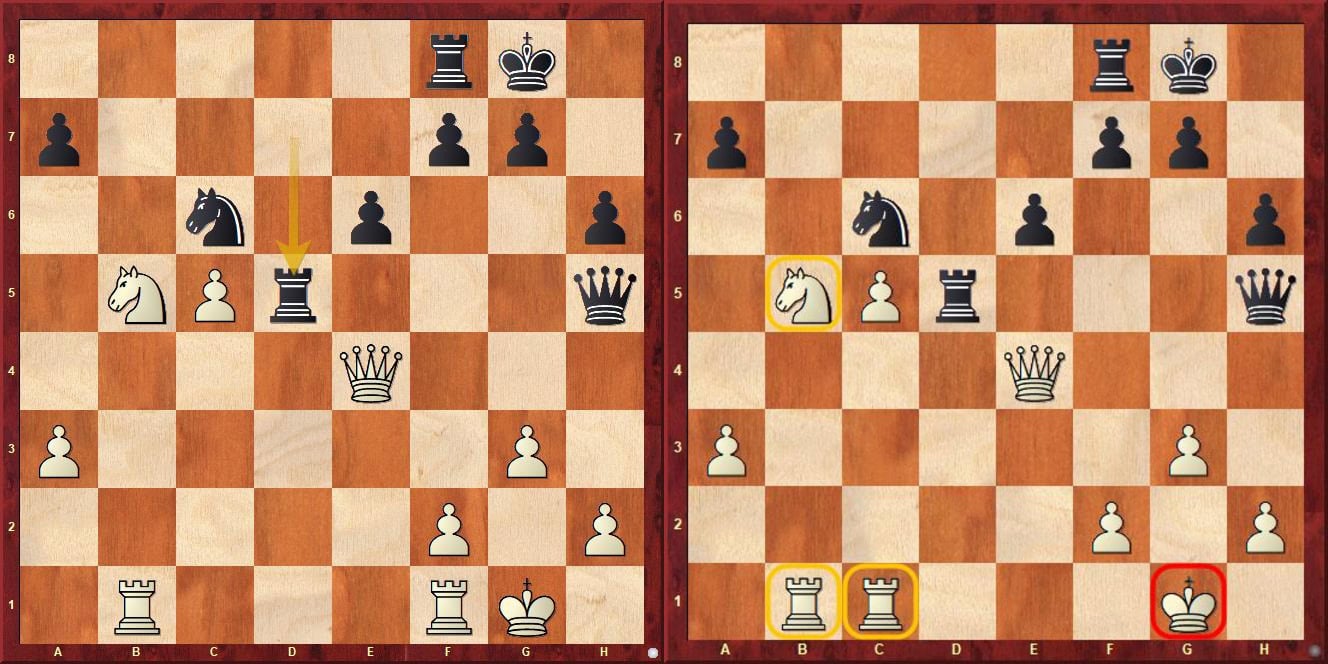
Black not only has a pleasant position but also quite good chances to bring the game to a winning conclusion. However, I am not able to understand what happened next. It was followed by 25.Rfc1??.
After almost nine minutes of thinking, Black chose a reply according to the saying „A bird in the hand is worth two in the bush.“ You surely guess what move it was. But… his position was completely winning! Why? How is that possible? This is partly answered by the mnemonic aids – the colours used in the diagram.
How would you continue in the position of the right diagram? I am convinced, dear readers, that after ten minutes of pondering you will be more successful than Black in the game!
Blunders haunting the Masters
Let us now move on to the main Masters tournament. I usually ignore gross mistakes made in time trouble, or simply classify them in other chapters. But here I will make an exception, although I will of course always emphasise the context of its origin. The solutions to all tests and often the entire examples are again available at the end of the chapter.
In the game of round 5 Van Foreest (2705) vs. Niemann,H (2725) things happened… after 18.0-0-0+
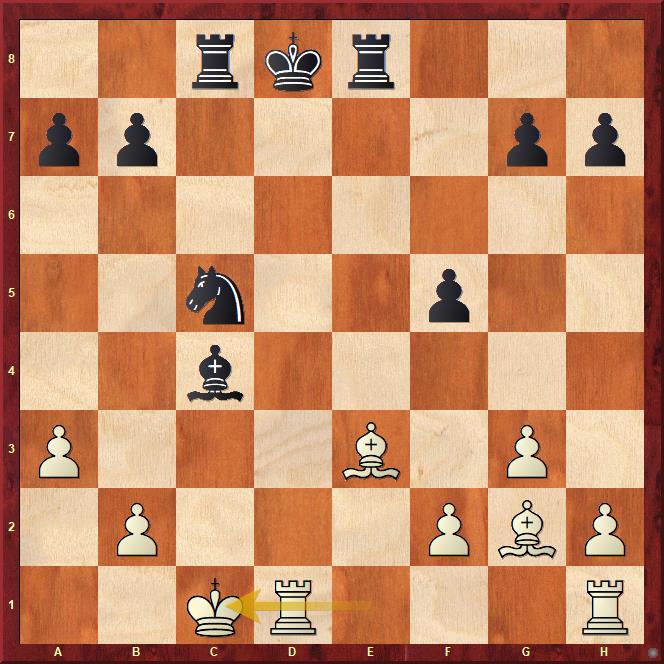
we face a fairly typical position of the deferred Tarrasch Defence of the Queen's Gambit (honestly, I don't know why this variation is sometimes called „improved“ instead :-)). The American grandmaster, who uses this variation, pondered here for more than 16 minutes. And things started to move…
How would you continue, dear readers?
Also in the second example from the Masters tournament, the main role is played by Hans Niemann. However, I must point out that this is a rather more complicated situation, especially as both opponents were in rising time trouble at that moment. The example itself is really worth it!
So: the second round of the tournament is being played, the game Niemann vs. Aravindh. In the tangled piece complications of the position in the diagram, Aravindh captured White's bishop with the move 30…Nxg3.
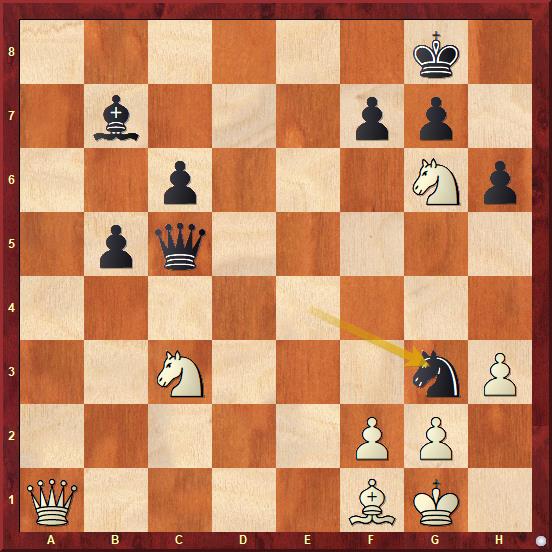
Both opponents certainly saw the possibility 31.Ne7+ with the continuation 31…Qxe7 32.fxg3 (here everything is clear and the realisation of the material advantage is a matter of technique), but Black was clearly planning 31…Kf8.
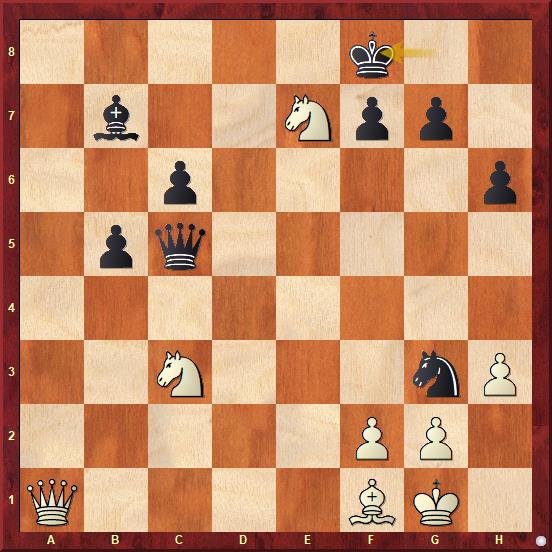
White to move was winning, it was just necessary to find a hard-to-see long-range plan. However, here we have a simpler task at the diagram 🙂 . So, how would you continue with White?
The full record of the dramatic game by Sagar Shah is available here. I will also add that we will study the Philidor Defence used by Aravindh in a separate chapter!
And here we can listen to Aravindh's insight into the whole battle in a post-game interview.
Not to just criticise Hans Niemann. His original positional piece sacrifice in the game Gukesh vs. Niemann, which he made right in the first round, testifies either to a deep understanding of the core of the position or to the enormous diligence and determination of the American grandmaster.
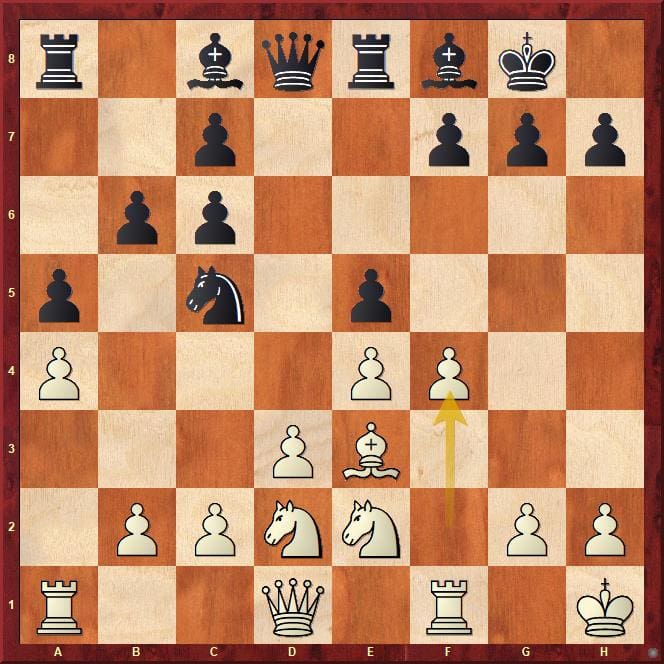
In the Spanish Anti-Berlin 1.e4 e5 2.Nf3 Nc6 3.Bb5 Nf6 4.d3 Bc5 the world champion chose the now popular early exchange on c6 – 5.Bxc6. The last move 13.f4, on which he spent 6 minutes, suggests more his usual optimism than that he overlooked Niemann's reply (as was often written before – underestimated it). What followed was 13...Nxd3!! 14.cxd3 Qxd3.
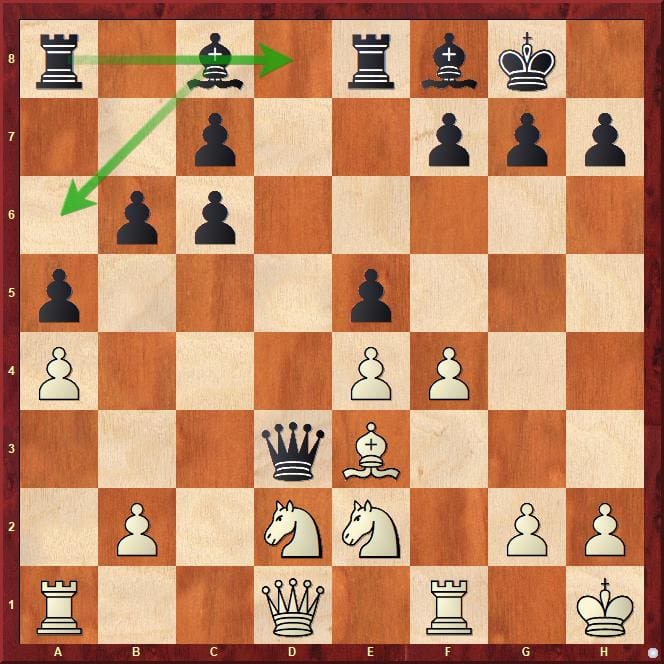
Black gained not only compensation for the sacrificed piece but also a very pleasant game and a clear practical initiative. According to engines, the position on the board is balanced, but on the other hand, it is no wonder that Gukesh soon found himself in trouble. In the end, he was glad not to suffer a defeat with the white pieces in the first round.
Ah, those treacherous opposite-colour bishops
Round five of the tournament. On the agenda is one of the key games Abdusattorov vs. Gukesh. The World Champion truly has something to repay Nodirbek! Some readers may still vividly remember the biggest blunder of the World Champion in his career, which he made a month ago in Wijk aan Zee. For interest, I will mention that the score of their encounters in classical games was at that moment 5-6 from the World Champion's perspective.
Abdusattorov did not open the opening well, was gradually outplayed and even reached a theoretically hopeless position. However, Gukesh lost too much time to be able to untangle the extremely complicated position before the first time control with only seconds left. White took the initiative, once missed a win himself (this moment could serve well for studying the psychology of move choice in a game), and after 67.Kh4 the last critical position of the game arose!
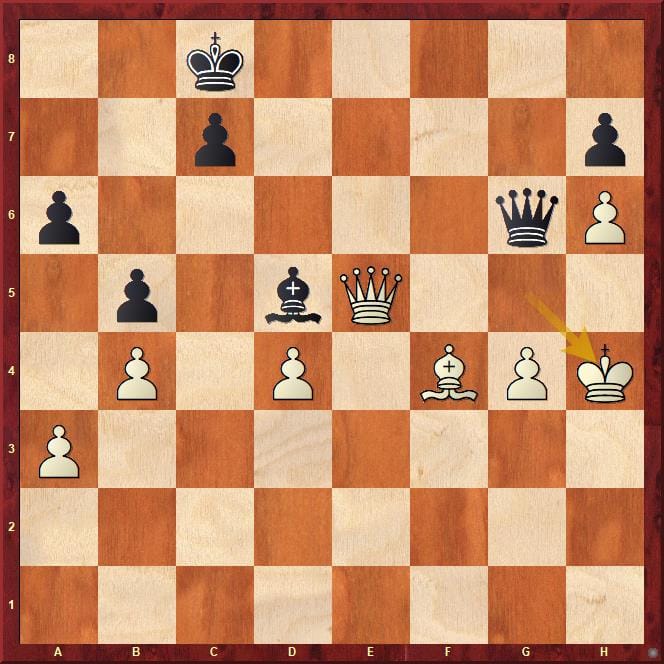
Black had the only way to save the game, but it simply cannot be found on seconds in the second time trouble!
Can you handle the black position, dear readers? After all, „we are not on seconds“! So I present the task: Black to move draws.
The end of the game is commented live by IM Lukáš Vlasák and IM Richard Mládek.
We cannot close the parade of gross mistakes without the tragic end of the game Navara vs. Abdusattorov from the penultimate eighth round. Nodirbek's +2 might not be enough to win the tournament, everyone knew that, and so a battle broke out into which both grandmasters put all their strength.
In the diagram position, White has just played 52.Bc2=.
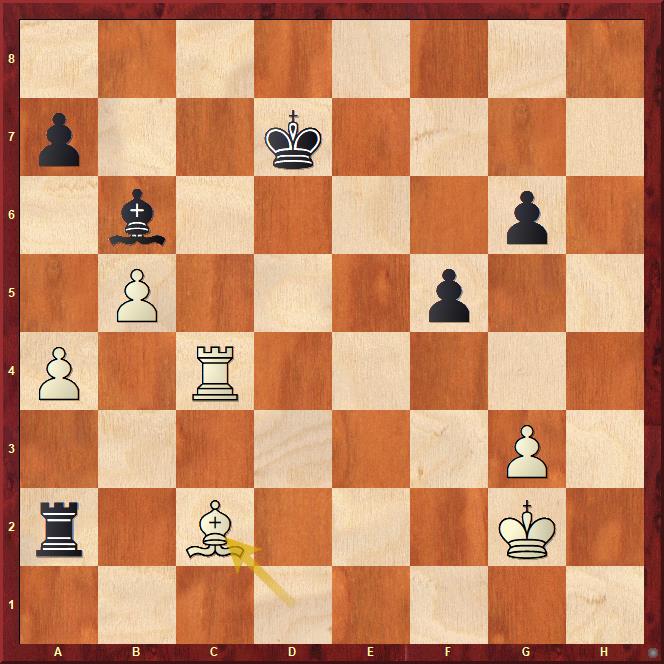
Before us stands a position of theoretical draw, which is primarily taken care of by variously coloured bishops in the endgame!
If we look at all endgames by the parameter of „drawishness“, and plot on the other axis the endgames according to the classical division – that is, by the remaining pieces on the board – we get this distribution of the winners' podium:
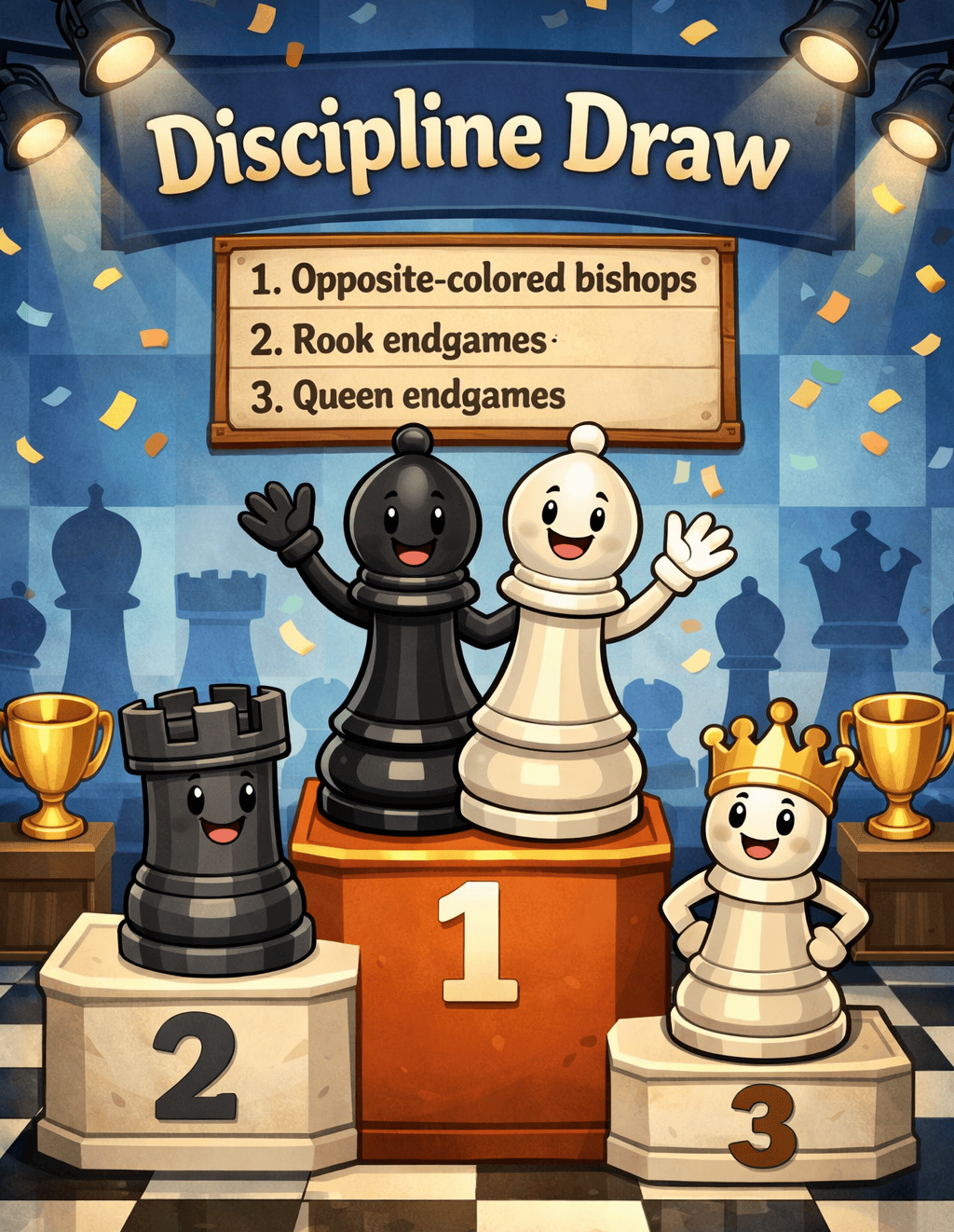
Mnemonic aids have their charm, but I believe this image will also stick in the memory 🙂
I have long known that David belongs, thanks to his classical chess education – regarding endgames that approach theoretical ones – among the best players in the world! I think he studied almost everything in his youth, not just the most famous classical works of Averbakh or Fine!
My prediction that he would not lose the game was also based on excellent defence in the previous course. It was no coincidence that I titled the article as I did and accompanied it with an image. Nodirbek, at his „already“ twenty-one years old, can, as they say, squeeze water from a stone!
This was followed by an inconspicuous, seemingly harmless (that is its greatest strength), but in fact extraordinarily tricky 52...Ke6!!
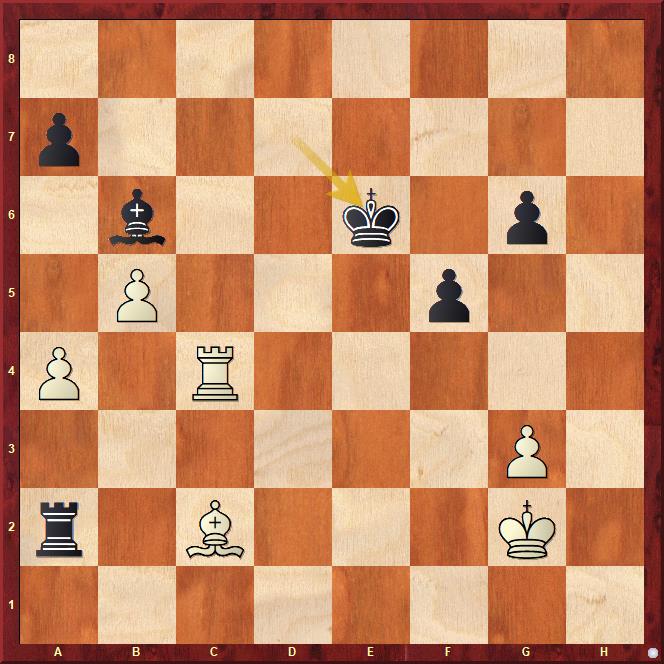
„What does the opponent want? What threatens me?“ Such questions should be asked by chess players after every opponent's move from early childhood. Gradually the question becomes automatic and passes into the subconscious with the same certainty as a child never touching hot stoves twice! Yet there is no chess player in the world who always fully adheres to this. And so passive blunders are born, which I have called „passive“. Threatens 53...Kd5 -+!
On the verge of time trouble, David continued 53.g4??
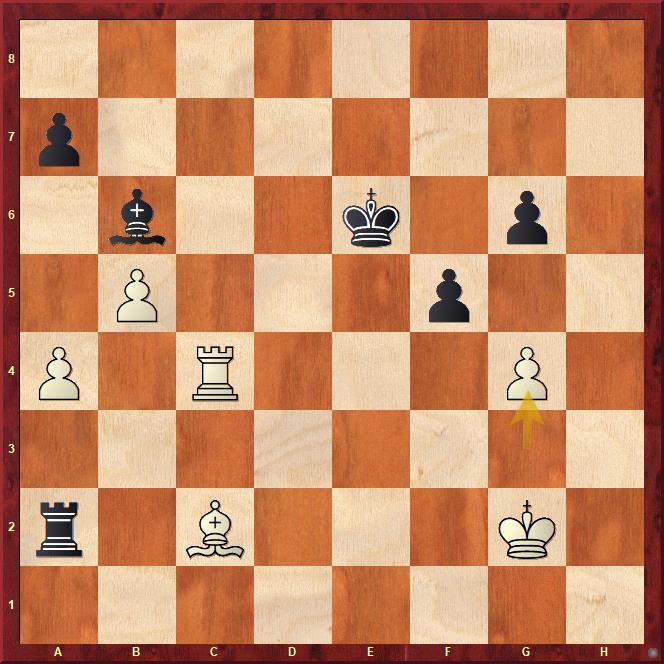
According to my classification of blunders, this is a so-called passive blunder. White does not respond to the newly created threat. Much can be written about the psychological aspects around this move. Readers will find my opinion in the viewer, but it certainly won't hurt to watch a short post-game video in which Nodirbek Abdusattorov himself talks about the critical moment of the entire tournament.
The game continued 53...Kd5 54.Rc3 Kd4 55.Rc6 Bb5!.
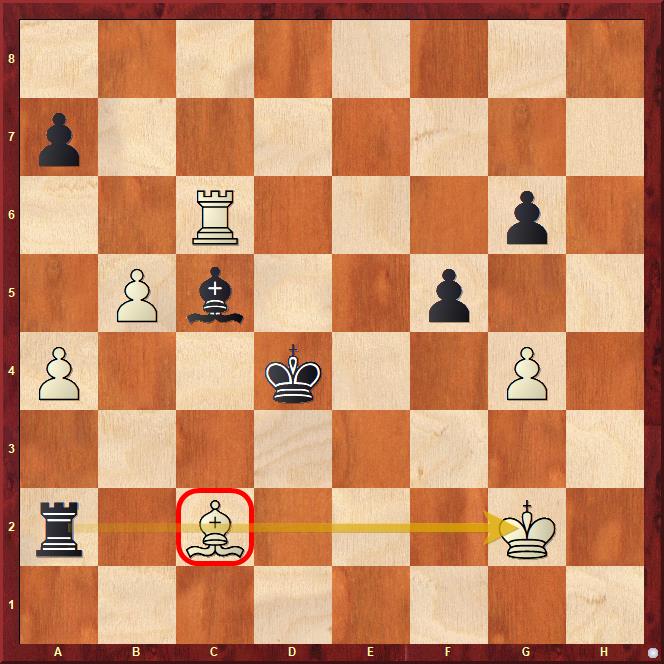
White loses a piece and is not saved even by the minimum of pawns on the board.
In the video, Nodirbek comments on the critical moment from about 3:05.
David Navara below explains why the blunder occurred. I borrowed his text from the sachy.cz website, where he responds to rather harsh comments from „experts“. The full text including my introduction is available here.
Sometimes one cannot help but be amazed at what commentators are capable of „producing“. I have already mentioned the somewhat peculiar website sachy.cz. The author explains this blunder by David with an incredible mental construction (I add that Mr Luboš Zimniok once even had a FIDE rating over 2,200):
"The game reached a drawn rook and opposite-coloured bishops endgame. Drawn, but…! Objectively it was a draw, but Black had a slight initiative, so he kept trying for a long time. Eventually he succeeded. David made a blunder on move 53, after which it was practically over immediately. The question is what David overlooked in his calculation of the move. Of course, he might not have seen the threat Ke6-d5, but that is unlikely. I will speculate and try to guess how David thought; he will surely correct me in time (after the tournament).
The threat Kd5 (after 52…Ke6) is obvious, the king can try to escape the pin, but whether the king retreats to f1 or h3, Black will still have an unpleasant initiative in the form of advancing one of the pawns on the kingside, or he can also operate with mating threats (if he manages to disrupt the coordination of White's pieces). The idea of having to repel the opponent's threats for another hour is not very attractive. In such moments one looks for a „hack“, a shortcut leading to a quicker, of course drawn, conclusion. David spent about two minutes calculating the move. What did he overlook? It could have been the move 55…Rc5? Possibly, but that was part of the threat of the king advancing to d5. So most likely it seems to me that David did not even consider that Black would take on b6 with 60…Bxb6. It does not have to be so, this is just speculation based on my personal experience. In such moments it is easy to forget that the opponent has other options, that capturing the pawn is not forced…
We will see what David says (writes) about it."
Well, and now to complement this, let us give the floor to David Navara himself, when Abdusattorov's hypothesis about why the mistake occurred – which points not only to the high intelligence but also the experience and empathy of the twenty-one-year-old chess genius – can be found in the video above.
David Navara on the website sachy.cz (8 March 2026):
„The thing about endgames or conclusions was probably meant generally. I quite agree, but I will allow myself to comment on it. I can play endgames, but when one prepares for games about four hours daily, then plays a long game and also feels physically unwell for several days due to stress (and gum pain), it is very easy to make a mistake. I played the knowledge part of the unpleasant endgame well with Nodirbek (38.f4, 43.Rc8 etc.), but then on the threshold of the second time trouble I overlooked that after 53.g4? Kd5 54.Rc6 I would get Rc5..."
In conclusion, I cannot fail to add the well-known ironic saying: „Why do it simply when it can be done complicatedly!“
David's concerts and (perhaps) games of the year
I believe that at forty years old David Navara has definitely not spoken his last word. I would not rule out that he will return to the 2,700+ elite. It all mainly depends on mental and physical well-being. Well, watching his first, second and of course fifth game of the tournament – the latter, as was written, went around the world – was simply an amazing experience! Especially since each of them was completely different!
The very first game Navara,D (2628) vs. Maghsoodloo,P (2708) would stand out not only in books on strategy or piece isolation. Finally, it won a special prize for the most beautiful game of the first round of the festival. In the diagram position White has just captured the knight on e4.
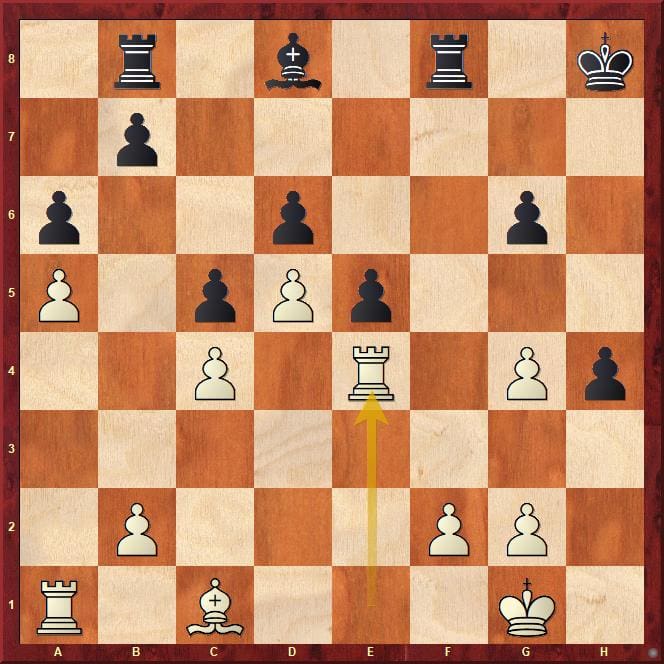
The following question is aimed at advanced players. Black could have maintained equality, but only by a move which paradoxically advanced players would really not want to make.
How could Black have maintained equality in the position?
Let us move to critical position number 2. Precisely because of this moment I call the game a positional gem! Black has just played 32…Rf5
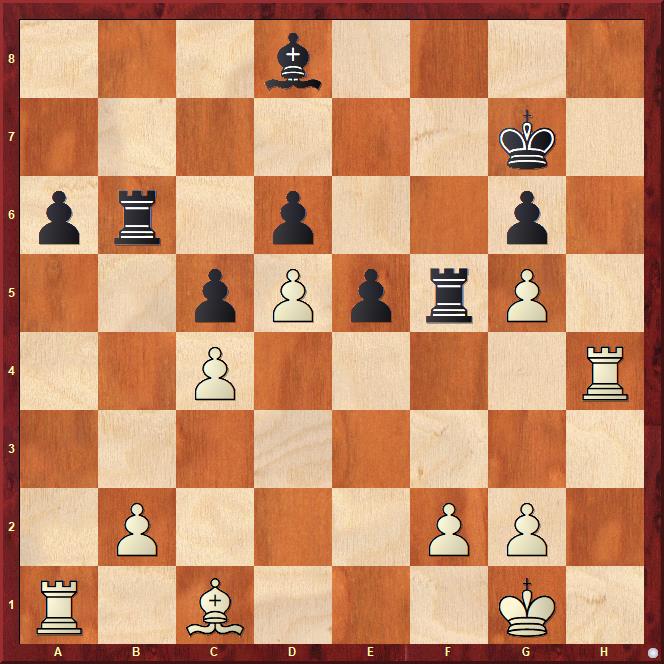
and I would almost bet that he did not evaluate his prospects as so bad. However, David saw further, calculated the variation, but above all accurately assessed the final position. Finally, not only in classical works can we find many analogous examples!
As Carlsen has expressed more than once (paraphrase): „Correct evaluation of the position at the end of calculation is often more difficult than the calculation process itself!“
The following text is primarily intended for chess players at the 2000+ level, if not higher. How would you continue and which variation would you rely on?
Not showing you, dear readers, the final position of the game could perhaps be called a didactic sacrilege! 🙂
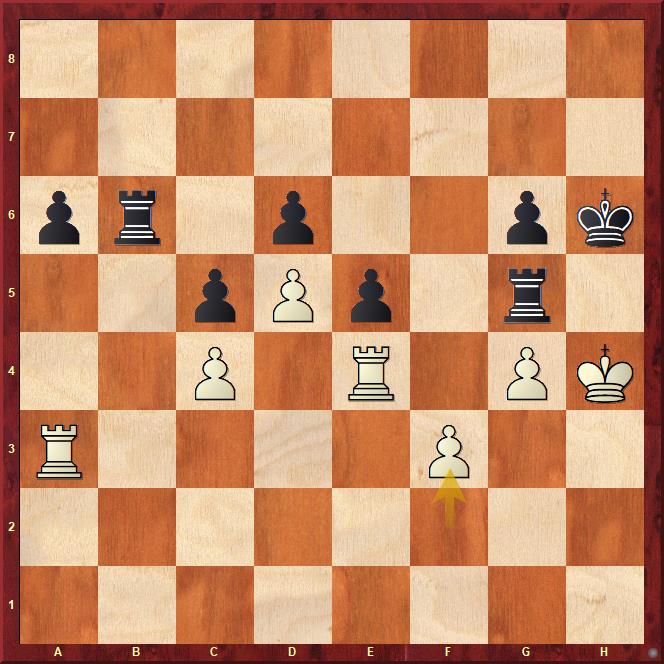
David played a controlling move 40.f3 and before us appeared a position of the disadvantage of the move – zugzwang!
„Like from a textbook!“ where the use of the conjunction seems superfluous! For David himself is a book of strategy! At least that was the impression I got from the opening of the second round game Keymer,V (2776) vs. Navara,D (2628).
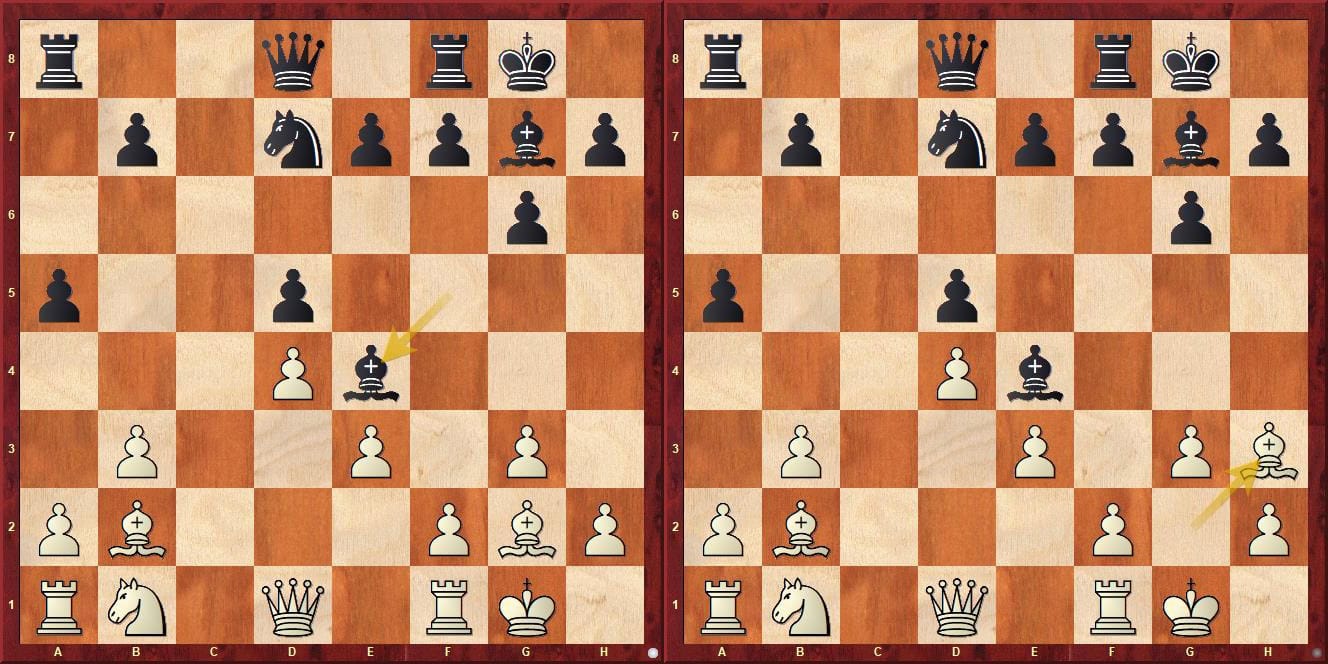
In the position of the left diagram Black captured on e4, after which the world number four at the time played after 5 minutes of thought 13.Bh3. I will not give you a test, dear readers. Let us look straight away at how positionally precise Black dealt with the problems of the position and even gained, albeit only a minimal, advantage for his side!
Followed by 13...Bxb1!! 14.Rxb1 e6!
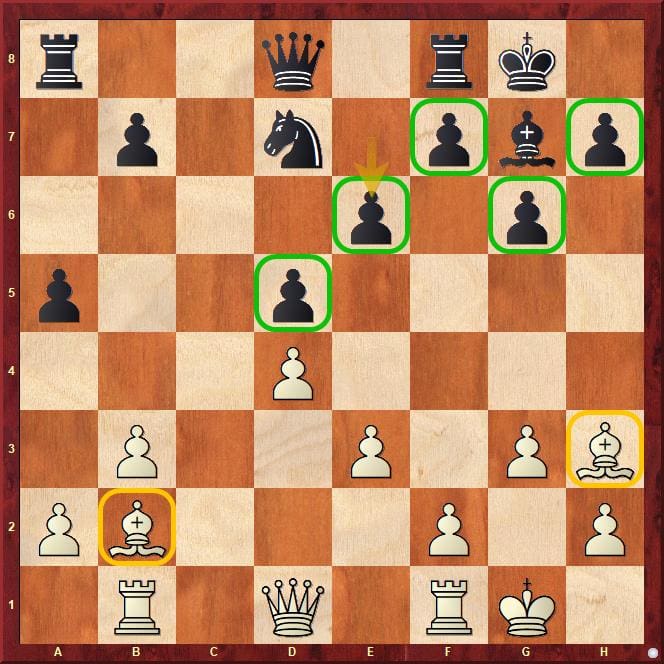
Before us we see a rather rare case where the structurally better White bishop – that is the light-squared one – is actually less effective than the formally weaker „queen's colleague“. The point is that the latter can operate along the a3-f8 diagonal, whereas the royal hero bites into granite!
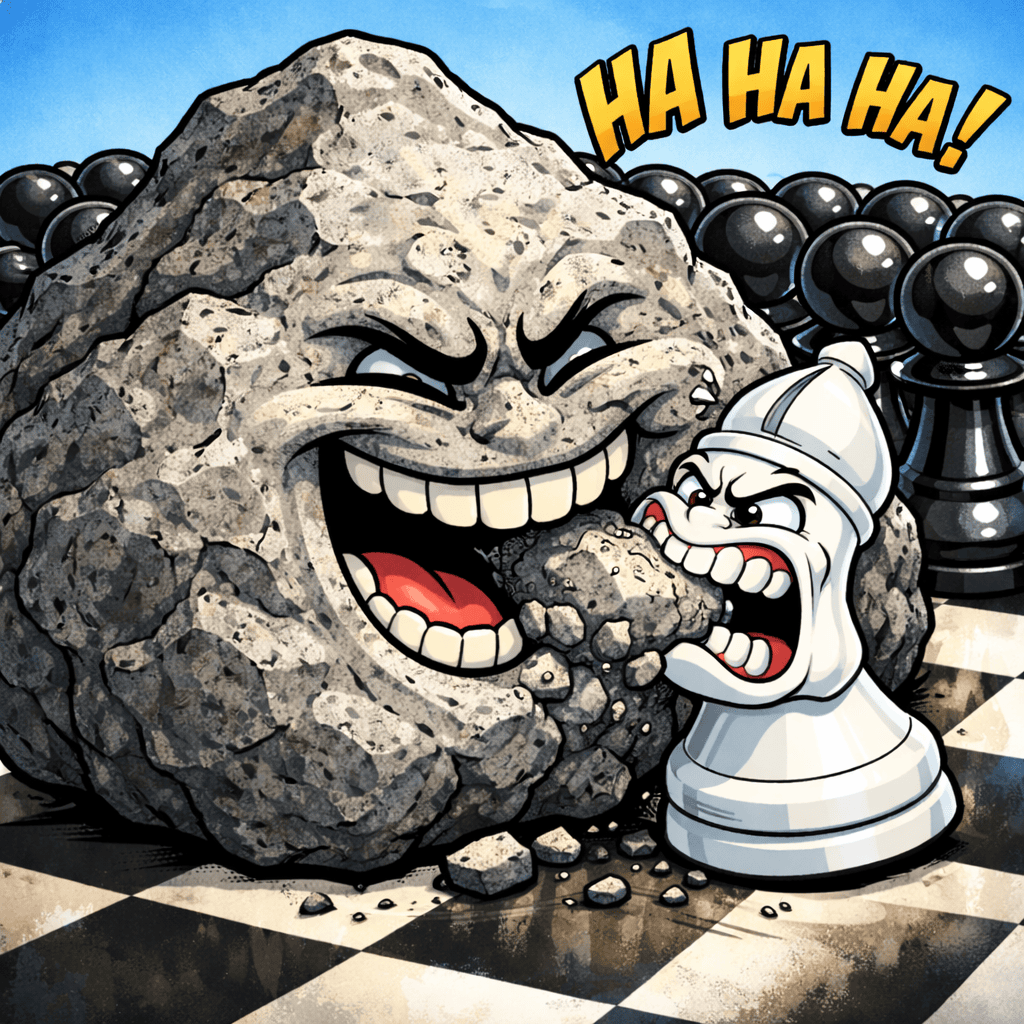
The reader might certainly object that Black the caretaker It is no better than that. But... Black still has a knight, which is often an „experienced fighter“ in closed positions! 🙂
I will probably never forget the brilliant work of Artur Jusupov and Vladimir Kramnik. The work concerned the Stonewall system in the Dutch Defence.
In the game Belyavsky,A vs. Jusupov,A (54th USSR Championship, Minsk 1987) which Artur Majakovič comments on in detail, without relying on the ballast of unnecessary variations, arose after 9...Bb7 10.Ne5 Be8! the position on the right diagram.
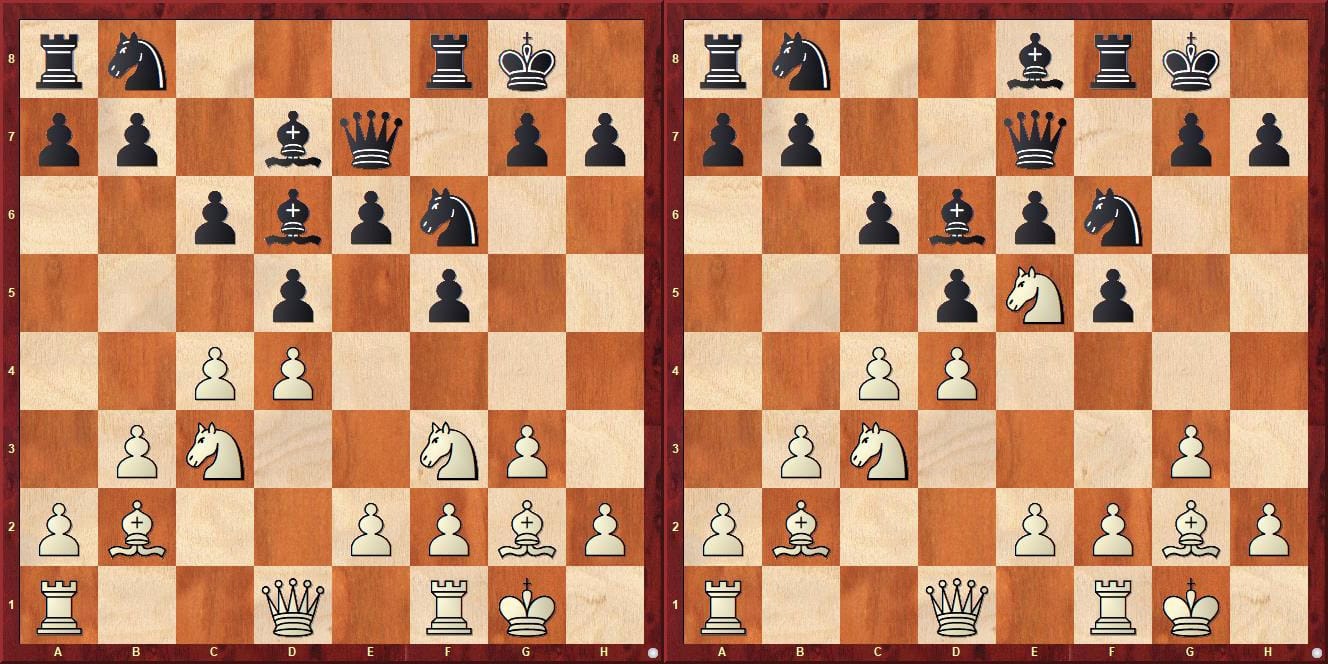
Besides the fact that Black was already slightly better in the game, let us answer the question: „Which of the bishops is actually the so-called good one and which the bad one? The white king's bishop – a naive one trying to break through the granite – or the purely formally structurally bad black queen's bishop?
David's masterpiece
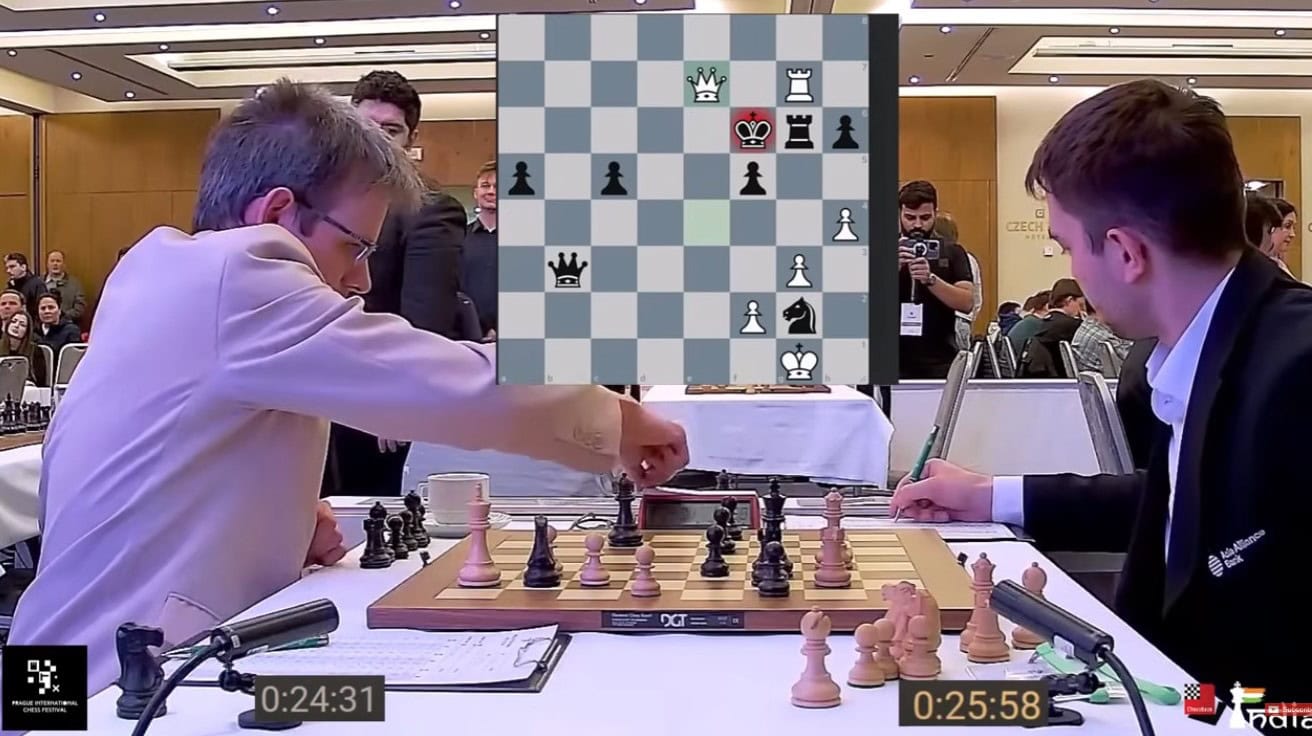
Checkmate right on the board is not seen every day in classical chess!
Probably the greatest gem of this year's Prague festival has already been shown in so many clips and described on so many pages that I decided to go back in time before David's queen sacrifices and focus on another moment of the game. After all, readers who do not know what I am talking about can enjoy the whole game either in the shortened record, video analysis, or of course the viewer at the end of the chapter with my notes and analyses.
So it is the fifth round, the game Navara,D vs. Jakubbojev,N. White after 28.Ne3
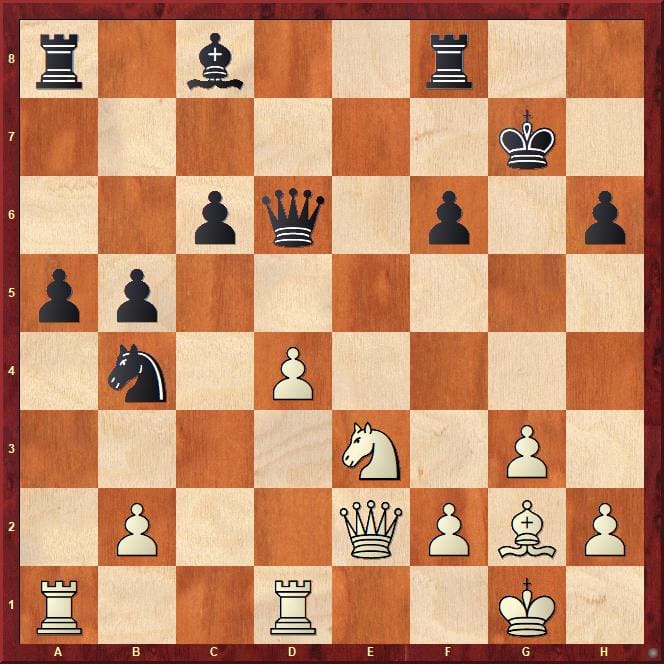
has objectively probably already gained a decisive advantage. But not only experienced players know that in practice things are often quite different.
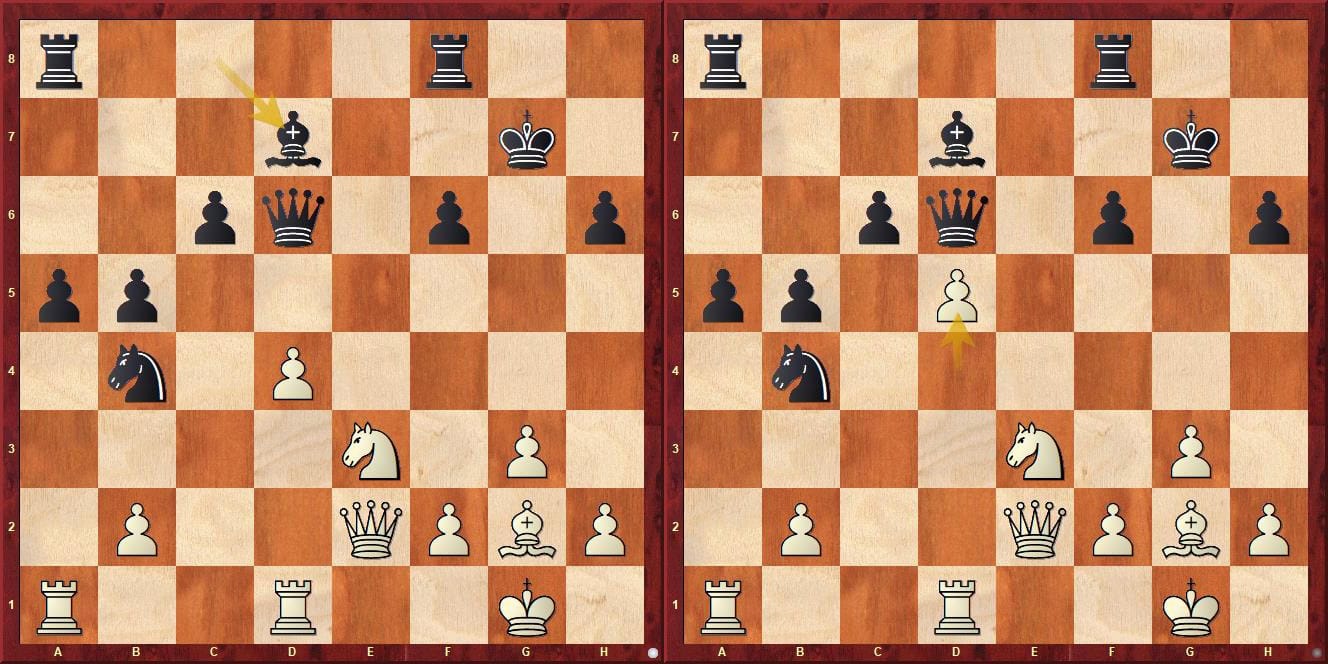
After 28...Bb7 came the moment of the second – this time decisive – assault! It was followed by a methodical „opening of the springs“ 29.d5!.
„There is nothing to it, any literate player would play that!“ a critically minded reader dissatisfied with the fact that these days exclamation marks are given for almost nothing, like university diplomas. I agree with the second, but… „This is far from all! On the contrary, we are actually at the beginning!“ readers who already know their stuff might reply.
Nodirbek Jakubbojev logically declined to open the centre after less than a minute of thought and continued 29...c5.
To distinguish this splendid example, dear readers, I will now test you on the art of calculation! Specifically, it concerns visual imagination in calculating a long variation. I call this myself visual fixation and embody it as the second pillar of an imaginary bridge. This bridge is meant to represent the entire process of calculating variations.
Let us digress from the game and imagine that Black continued 29...Nxd5.
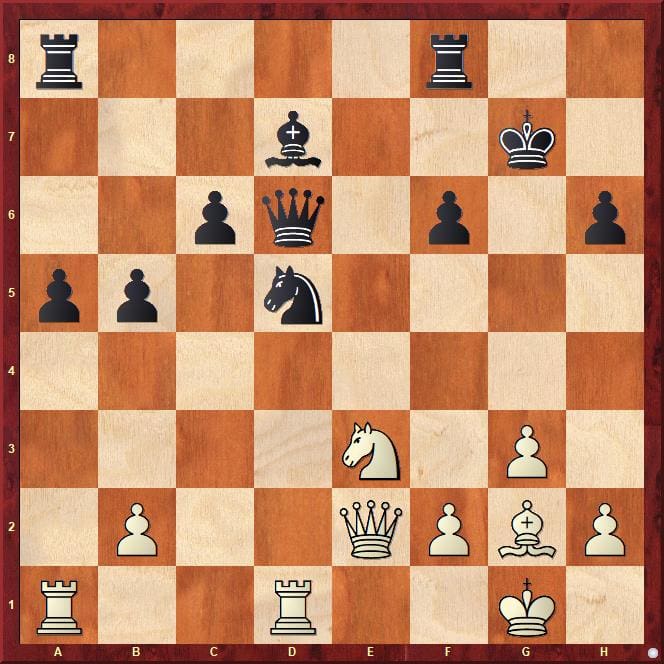
Let us try to recall the following sequence in our minds: 30.Nxd5 cxd5 31.Rxd5 Qe6 32.Qxe6 Bxe6 33.Rd6 Rae8 34.Bc6 Re7 35.Re1 Kf7
How would you continue at the end of the variation? Give not only the next move but the continuation of the variation. In other words: try to calculate to a definite result!
Below, first let us watch the traditional shortened game record by Sagar, officially ChessBase India.
From the many analyses, I preferred my favourite streamer, Ukrainian CM Alexey Pugachev. And (not only) younger players, I remind you again of the possibility to start English AI dubbing.
without commentary
In the following chapters, we will analyse the creation, form and possible future of four other participants in the Masters tournament: Jorden van Foreest, last year’s winner and the fourth Indian musketeer Aravindh, World Champion Gukesh and of course the „monster“ Nodirbek Abdusattorov.
My attention was primarily focused on new or revived ideas in the opening, playing technique and on the necessary and ubiquitous blunders.
Jorden van Foreest
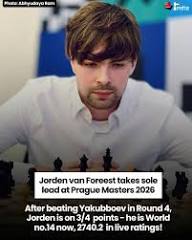
At the start of the tournament, luck smiled on the Dutchman like the sun…
After the success of sharing third place in Wijk aan Zee, it looked for quite a while that the Dutch number two by rating might even win in Prague! Although I quite like van Foreest's uncompromising style of play – his opening repertoire and a certain disregard for material – I couldn't help but notice… well, that Caissa kept a protective hand over him for quite a long time. Whatever he touched, it worked out for him.
Only the end of the tournament put everything back in its place, when in the cruel last round it was as if the engagement with our goddess was cancelled. „What did van Foreest do to anger Caissa so much? Did he perhaps overuse her favour?“ we might ask ourselves. 🙂
The first round game could be called a comedy of errors Van Foreest,J (2705) vs. Keymer,V (2776). After 26.Bxd5 (position of the left diagram) in the end White won a considerable advantage. But what would have happened if Black had not made a blunder of epic proportions? Hard to predict.
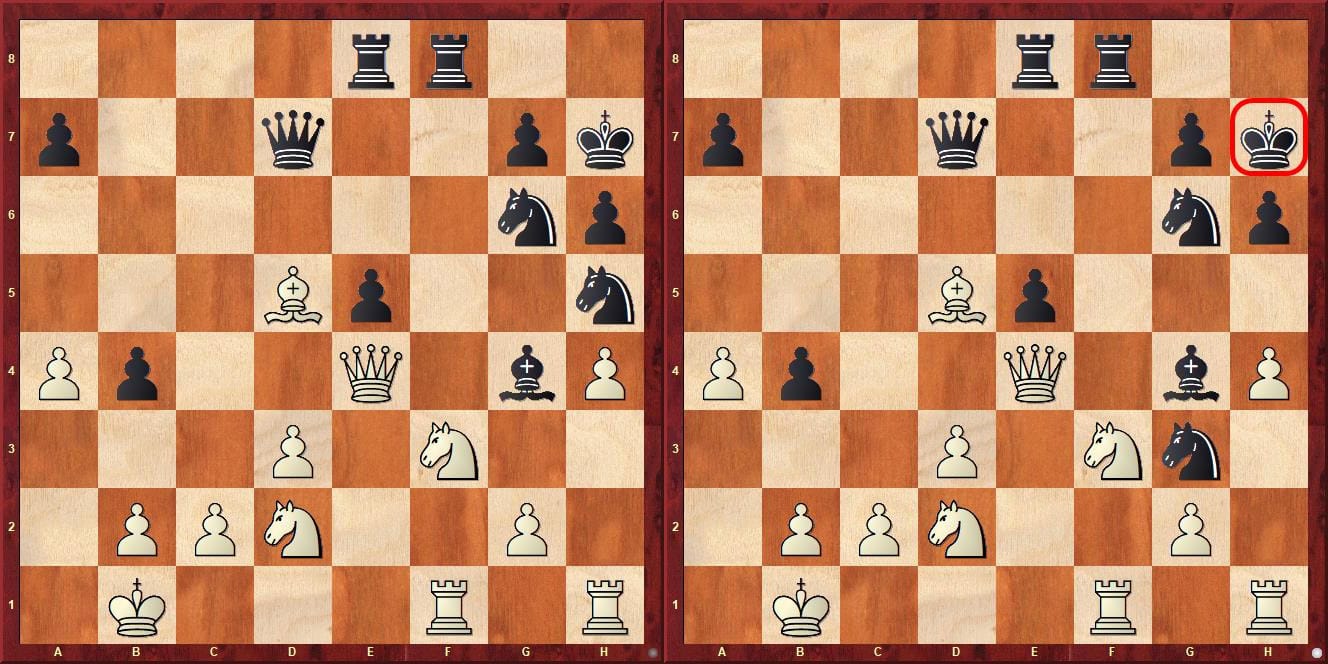
After three minutes of thinking followed 26...Nxg3??. A blunder on the level of medium-hard chess.com puzzles. I can imagine a similar diagram appearing around the third minute of popular five-minute games!
Dear readers, can you calculate the winning line? Jorden van Foreest replied in 3 seconds, but we certainly have considerably more time...
Below I offer a short post-game interview with the winner. All of Van Foreest's examples are then available at the end of the chapter.
Van Foreest also found himself on the brink of defeat in round 4 in a game against the other Nodirbek. A comedy of blunders, as I like to say and write, took place in the game Jakubbojev vs. Van Foreest which certainly did not fall short of the previous example! Black, after six and a half minutes of thinking, just played 33...Qh4??.
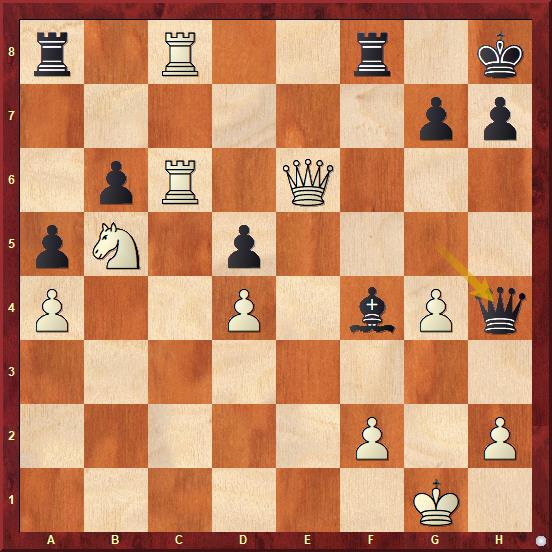
Here we can no longer play with words and say that Jorden underestimated the opponent's possibility .. Both simply overlooked the winning continuation.
Can you find White's strongest and objectively winning reply? How would you continue after careful consideration, and which variations would you calculate?
The Dragon Gambit back on the scene!
I am impressed by Van Foreest's opening repertoire! Partly because he is not afraid to play my beloved King's Indian Defence, which today is... well, a heavily tested opening, yet he plays it somewhat more soundly and with greater feeling than, for example, Alireza Firouzja. Jorden's almost ultra-dynamic playing style is unmistakable. In my eyes, however, he soared to the heavens when I saw shortly after the start of round 7...
So the key game of round 7 is being played Abdusattorov vs. Van Foreest. It is clear that Jorden, who leads the tournament, would have no objection if the game ended in a draw. However, on the board after 8...a5 the following position appeared!
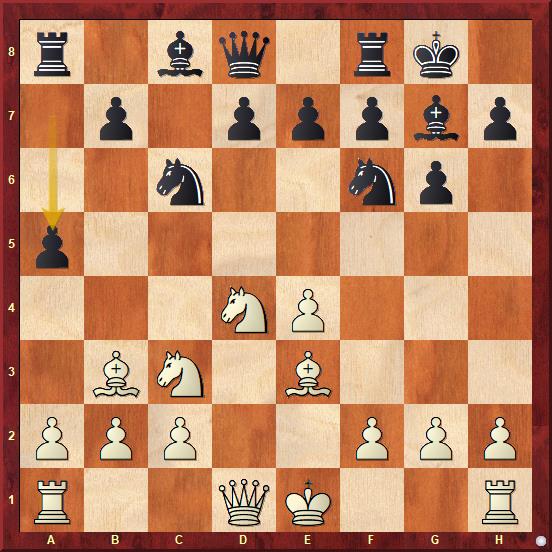
Before us is the basic position of the Accelerated Dragon variation from the 1990s! At the turn of the millennium, I gradually incorporated the Accelerated Dragon into the repertoire of many of my pupils. If they were not lazy and learned the relevant variations – that is, understood them – this position rarely appeared before the younger ones. There are plenty of various „tricks“ in the Accelerated Dragon or Anti-Rauzer – as I renamed the variation.
Why did MM Honza Michálek and I call the main line of the system the Dragon Gambit? I will instruct less experienced readers, but also „coaches“ who have never in their practice played the pawn to 'e' on the first move 🙂.
1.e4 c5 2.Nf3 Nc6 3.d4 cxd4 4.Nxd4 g6 5.Nc3 Bg7 6.Be3 Nf6 7.Bc4 O-O 8.Bb3 a5
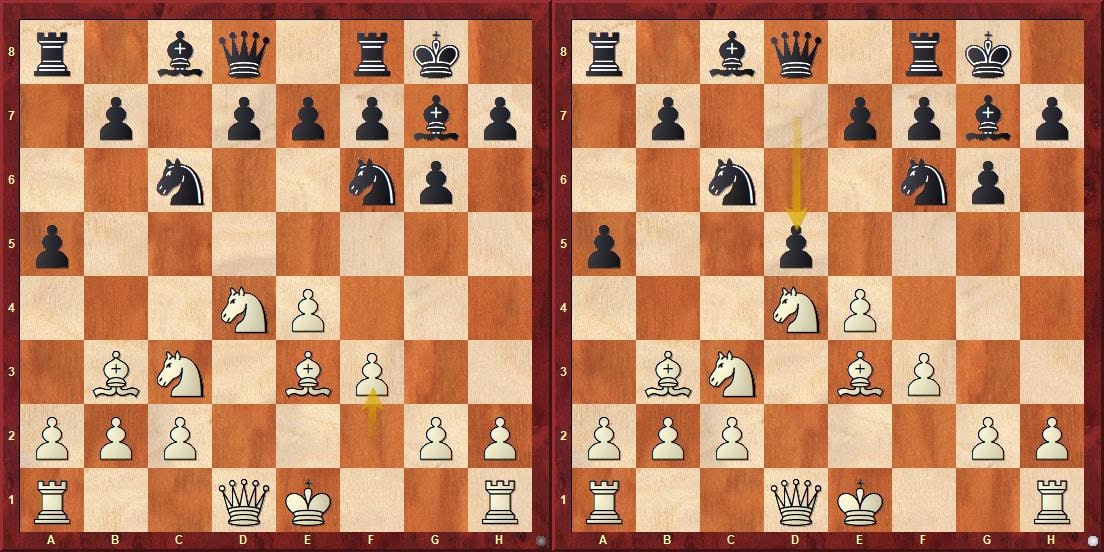
The point is that after the previously almost obligatory 9.f3 Black replies 9...d5!. The 'a' pawn then proves to be a genuine fighter for the centre, especially in the variations 10.Nxd5?! Nxd5 11.exd5 Nb4 or one of the main branches after 10.exd5 Nb4.
But then came onto the scene 9.0-0!.
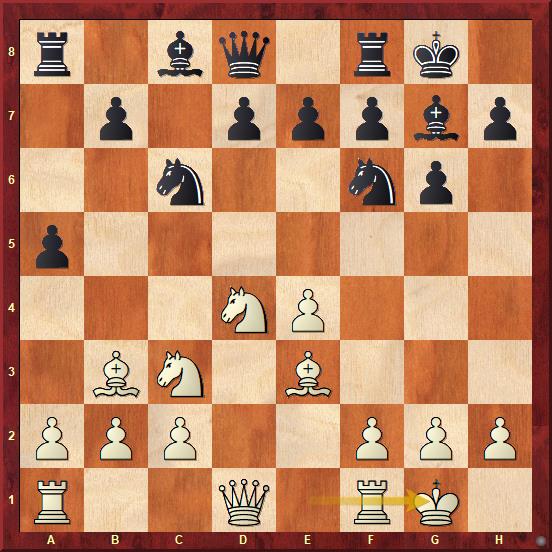
White is not afraid to exchange his central pawn for the ‚a‘ pawn after 9…a4
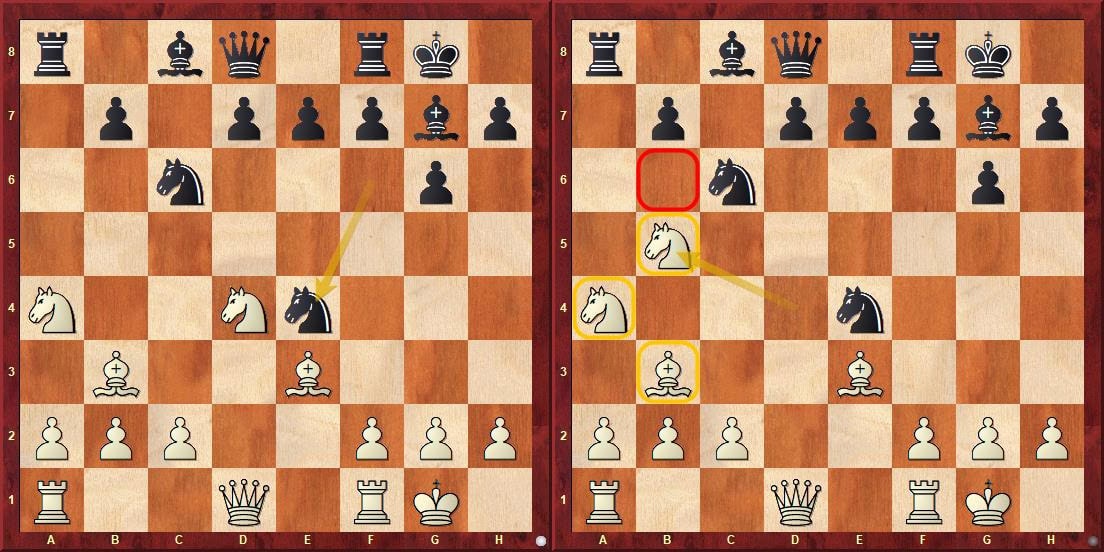
10.Nxa4 Nxe4 plays 11.Nb5.
That was the reason why the Dragon Gambit in this form disappeared from the scene for about two decades, to be replaced by experiments with 8...d5 (Dubov, Gelfand) or 8...Re8 (inspired by the plans of Leonid Zakharovich Stein and for a time considered the best thanks to the engines of that era). „Everything“ was later pushed out by the return under the wings of the true Yugoslav Dragon after 8...d6 (Anish Giri 2022).
I note that all of the above is just a summary. More can be learned in the game viewer.
Jorden van Foreest, however, follows in the footsteps of my original old analyses in the game! After 11…d5!
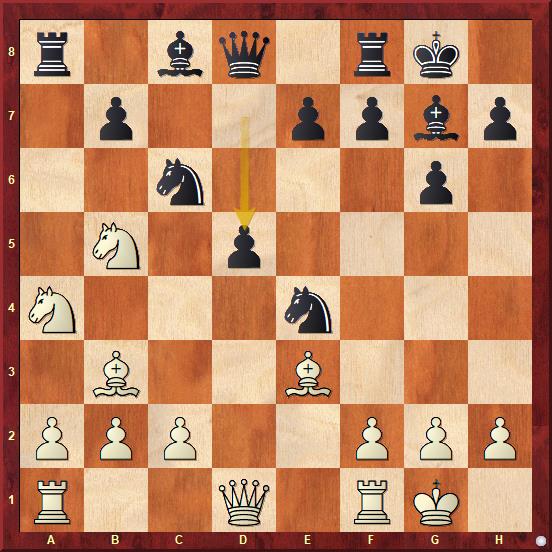
12.Bb6 Qd7
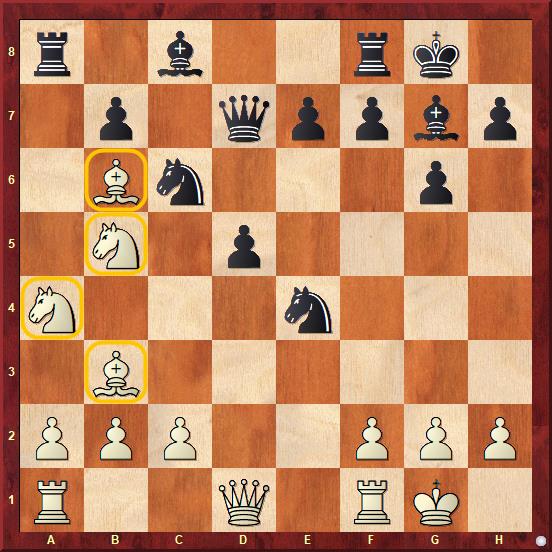
an exceptionally interesting and unusual situation arises. I think an experienced coach cannot help but wonder: „How should I respond to a possible question regarding the accumulation of White's light pieces on the queenside? Is such a gathering legal? Necessary? Or is it rather some kind of rebellion against His Majesty?“ 🙂
The drama on the chessboard continues! The next closest course contains not only question marks for individual moves of both opponents but also demands an explanation of what Black's preparation really looked like! I truly recommend readers and lovers of the accelerated Dragon to study the game in the viewer.
Below I first offer a brief analysis by my favourite streamer and then also a short statement from Nodirbek.
Caissa's favour has its limits
I do not exclude that I – even as a determinist of Gödel's world – somewhat exaggerated Jorden's outrageous luck, but I was almost convinced that a turning point had to come. The end of the tournament was unfortunate not only for David Navara; Van Foreest also suffered two defeats.
The next chapter of the article is dedicated to the winner of the game. So, I think it is appropriate to watch a short post-game video with Aravindh.
Van Foreest's conclusion to the tournament was further emphasised by the game of the last round!
And what did the tournament winner think about this game?
The fourth musketeer or the dynamics of the Philidor Defence
After last year's – for many unexpected – triumph in Prague, Aravindh experienced quite a harsh fall in the second half of the year. I thought that my „renaming“ of this modest and likeable young man as the fourth Indian musketeer was... well, somewhat premature.
(It must be added that considering the overall performance decline of all three Indian musketeers, Aravindh's nickname „Aramis“ can now be „re“accepted with some reservations...)
When he suffered three defeats in the first five rounds, I was convinced he would fight at best at the bottom of the table. However, Aravindh seemed to return to his form from last year in the last four rounds! Piece play, calculation, imagination – that is his forte!
Nevertheless, what interested me most was his new concept quite often dismissed by many, not only top players, of the Philidor Defence!
Aravindh drew the worst possible starting number, so he had to fight with Black in the first two rounds against the „wolves“ Abdusattorov and Niemann.
When he played the Philidor against Nodirbek and moreover lost the game, I thought it was just a specific preparation – a surprise for one game (I note that the opening itself had absolutely nothing to do with the defeat). But how surprised I was when he used the same opening not only in the second round but also in the fourth!
Both Nodirbek and, a day later, Niemann chose the classical line with 5.Bc4. After 5...Be7 6.O-O O-O 7.Re1
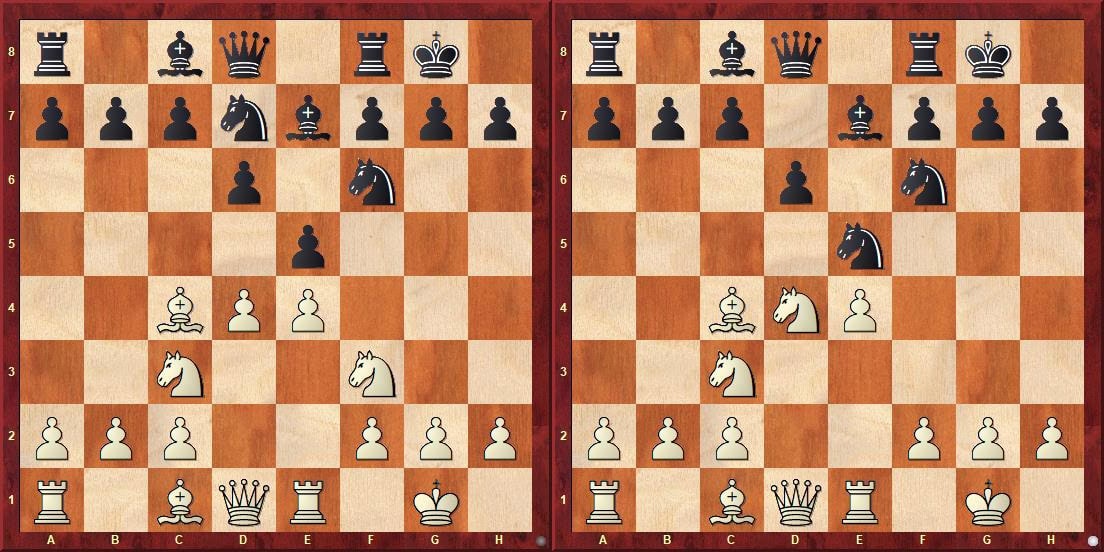
Aravindh prepared what, in my opinion, perfectly suits his style 7…exd4 8.Nxd4 Rxe5!
Certainly, in the first game the element of surprise played its part. However, Niemann himself was unable to achieve an advantage the next day. The „compressed spring“ method – better known from hedgehog systems – worked here almost perfectly.
If Hans Niemann could still doubt Aravindh's repeated choice of the Philidor Defence, then in round 4 Vincent Keymer had to reckon with it.
Therefore, I followed the opening of the round with great interest. And lo and behold! The German super-grandmaster came perfectly prepared. After all, it was to be expected that he would enter sharper clashes and try to refute the defence with more modern means!
The setup with an early h3 and g4 is among the most principled and most dangerous for Black. Nevertheless, after 9.Qd2
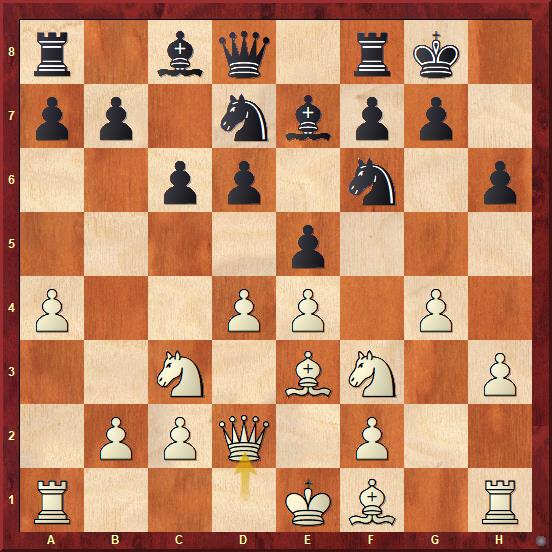
we do not have a position with White's advantage, but rather a position sharp as a razor. For readers who have gone through classical chess education, answering the following question will be considerably easier.
How would you continue if you were Black?
The solution can already be found in the following shortened game record at 3:50 minutes. I should note straight away that the analyser also examines another viable line.
The monster Abdusattorov: how to squeeze water from a stone
Above we have already become acquainted with several examples that could convince us that the twenty-one-year-old Uzbek is truly becoming a monster.
In my opinion, his play strengthened further at the end of November last year. As I have already written in some previous articles, Abdusattorov began to be somewhat more realistic in his „tournament demands“, but added to this practicality and patience, the art of „waiting it out“. Nodirbek himself reflected this in his post-game interviews in Prague.
After unsuccessful performances in the middle of last year, he ended his cooperation with his previous coach, former FIDE World Champion Rustam Kasimdzhanov. At the same time, he stated that he now works with two coaches, whose names he did not want to disclose yet. Nevertheless, there is speculation in chess circles that one of them could be Vladimir Kramnik, who previously also worked as a coach of the Uzbek national team.
I tasked AI with processing statistics of results exclusively from classical games in 2025. Upon opening, a drop in Nodirbek's performance at the Sinquefield Cup 2025 is evident, as well as several other weaker results. However, it seems that since the November tournament in London his form has improved significantly and since then he has delivered one brilliant performance after another. (Let us not forget that he also did well at the World Blitz Championship in December 2025.)
abdusattorov_classical_tournaments_2025
Let us look at two more examples of Nodirbek's games.
End of the game Navara vs. Abdusattorov, concluded by David's gross blunder, we have already had the chance to see. But how exactly did such a situation arise? This is precisely the famous „squeezing water from a stone“ à la Magnus Carlsen!
In the diagram position Black played 30…Bb6.
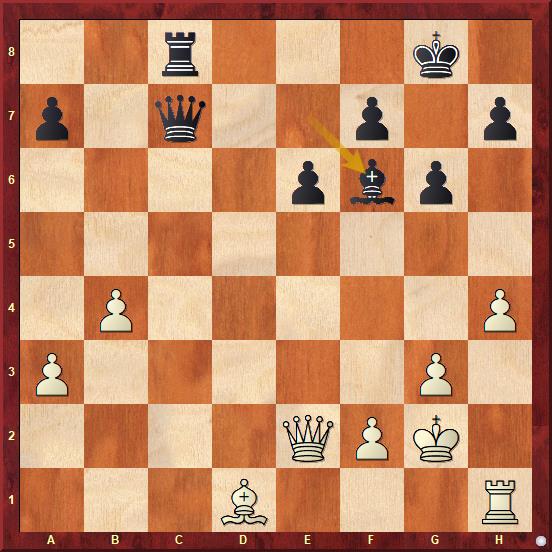
Before us is a position which grandmasters of the highest calibre would have considered a draw about fifty years ago, but actually even much later.
Formally Black has some initiative. This is because we do not yet have a pure endgame, and if the position has the character of a middlegame, the activity of the pieces influences the players' feelings. After all, White's king is somewhat weaker and Black's bishop more active.
If we watch the analysis on the Agadmator channel, the author reminds us of White's pawn majority on the queenside. He therefore talks about static factors of the game. I, on the other hand, rather about dynamic ones, although of course we agree on objectively completely balanced chances for both sides.
Further (in videos or the player), however, I would recommend readers to significantly slow down playback and any study! We will witness a true concert by a representative and almost certainly also the upcoming chess monster!
I admit that when I started watching the live broadcast – only from the position where Black could win the a4 pawn in an endgame with rooks and bishops – and saw the clock times, I might have laid my head on the chopping block thinking that David simply does not lose such endgames! Unlike almost all Czech players (with small exceptions like GM Jirka Štoček and a few others), he has gone through a tough school of studying theoretical endgames. He knows them better than 99.9% of other grandmasters and therefore also masters practical endgames. Well, but still...
For those who prefer study in the form of videos, I offer two to watch here. Nodirbek's brief video analysis itself is available above in the subchapter „Ah, those treacherous opposite-coloured bishops“.
On the other hand, Nodirbek missed a huge chance right in the third round. In the game Abdusattorov vs. Keymer the German super-grandmaster played a well-known variation of the delayed Tarrasch Defence of the Queen's Gambit, quite incomprehensibly to many. Sharp discussions were caused by the move 11...Qb6N,
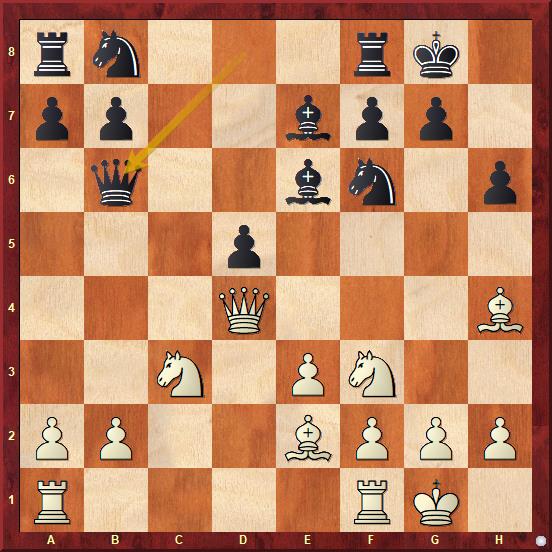
which appeared on the board after 7 minutes of thinking. This was followed by the logical 12.Qxb6 axb6 13.Rfd1.
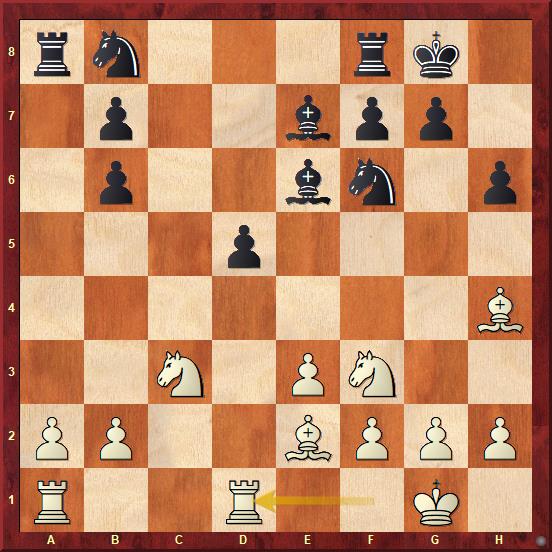
Black with an isolated pawn „achieved the exchange“ of the strongest pieces, and moreover at the cost of further worsening his pawn structure. When he then shamelessly pushed the kingside pawns g7-g5-g4, his pawn structure began to remind me of an unforgettable remark I once found in the book "The Black Series" by Akiba Rubinstein by Yuri Razuvaev: „Black's pawns resemble the finest semi-finished products from a delicatessen – all are doomed to be eaten.“
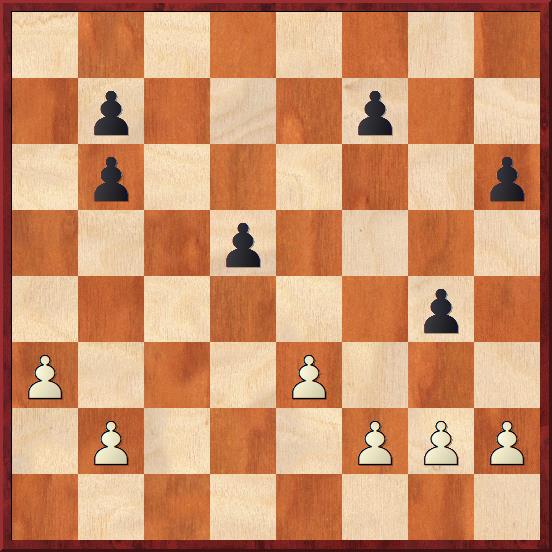
If I may judge, not even one of the best theoreticians and coaches I have heard comment on Keymer's choice – namely super-grandmaster Sergei Movsesian – understood the matter in its depth.
In my opinion, (11...Qb6N) was a computer product with a simple conclusion: Black equalises at great depths. In practice, however, he must play extraordinarily precisely.
So I ask: „Well then, what else but precision and difficulty in defence should a young world-class chess player with the highest ambitions strive for, if not exactly this? Especially in games against the best opponents; in a tournament where there is no promotion at stake?!“
Naturally, I was looking forward to entering the position into my engine and testing how various engines evaluate it.
I have no illusions about any particularly deep knowledge of most of today's streamers 🙂, including those who even have million-strong subscriber bases (as an example, I mention the Agadmator channel). Yet I was surprised that apparently no one has yet found anyone who would comment on Keymer's new idea involving the queen exchange not found in opening theory analogies!
Heuristic analysis and analogies
When in a classic Czech western comedy Lemonade Joe the main hero in the local pub did not get his favourite drink, kolaloka, he declared: „Allow me then to help myself from my own supplies.“ 🙂
Let us behave the same way 🙂 . The aim of our endeavour will not only be to understand why Keymer chose such a difficult variation – which I have already tried to explain above – but regardless of engine opinions even at considerable depths, to get to the truth. To answer the question: „What is the quality of the move 13...Qb6?“ So, let's get to it!
After the usual moves of the Alapin system in the Sicilian Defence (one of the best defensive systems against the d7-d5 variation, which the 13th world champion Garry Kasparov liked to use): 1.e4 c5 2.c3 d5 3.exd5 Qxd5 4.d4 Nf6 5.Nf3 Bg4 6.Be2 e6 7.O-O Be7 8.h3 Bh5 9.Be3 cxd4 10.cxd4 Nc6 11.Nc3 Qd6 and now 12.Qb3 Qb4 13.Rfc1 Qxb3 14.axb3 O-O
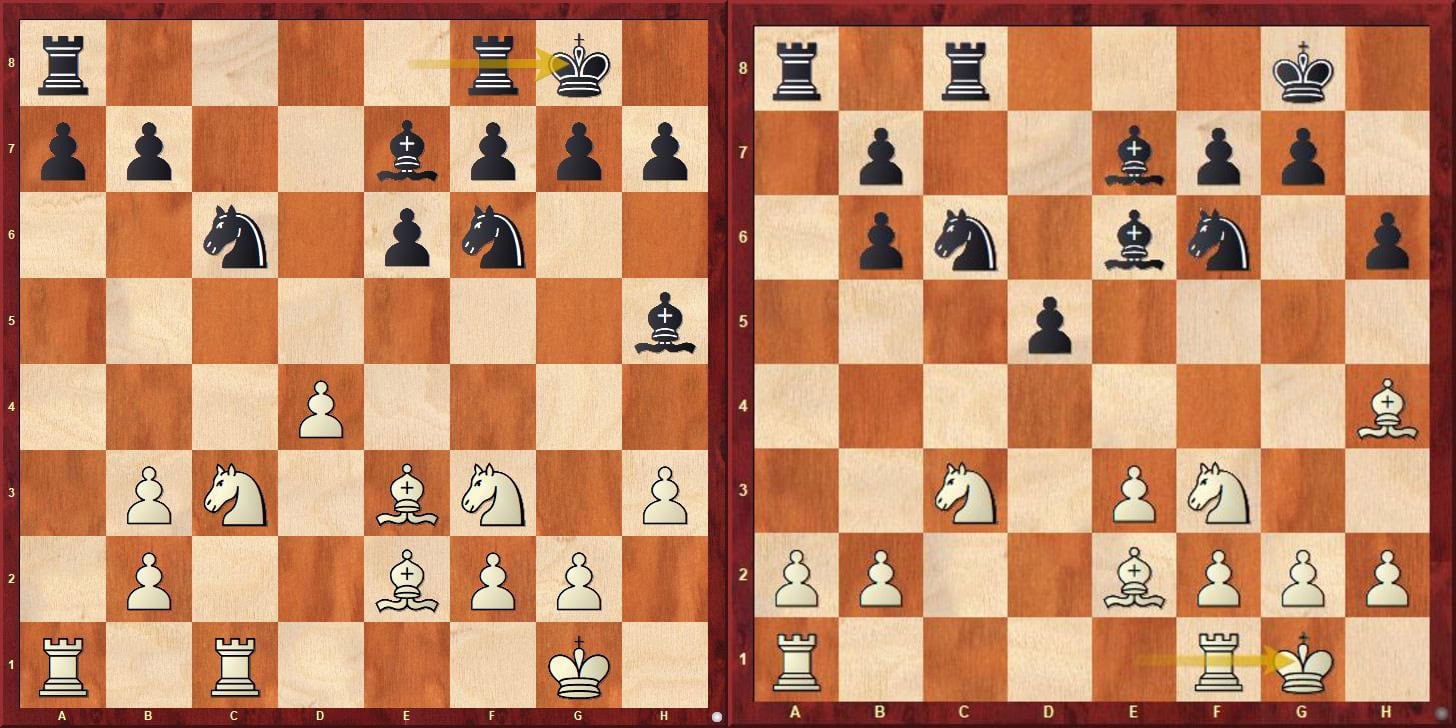
we face the position on the left diagram. I add that after 15.g4 Bg6 16.Ne5 White has some initiative on his side. For didactic reasons, I reversed the colours on the right diagram. So I prefer to emphasise that the position remained identical. We continue working with the diagram on the right!
Now let us start comparing the positions from the Alapin system (reversed colours) with those that either arose in the game or could have arisen if Keymer had played somewhat more precisely.
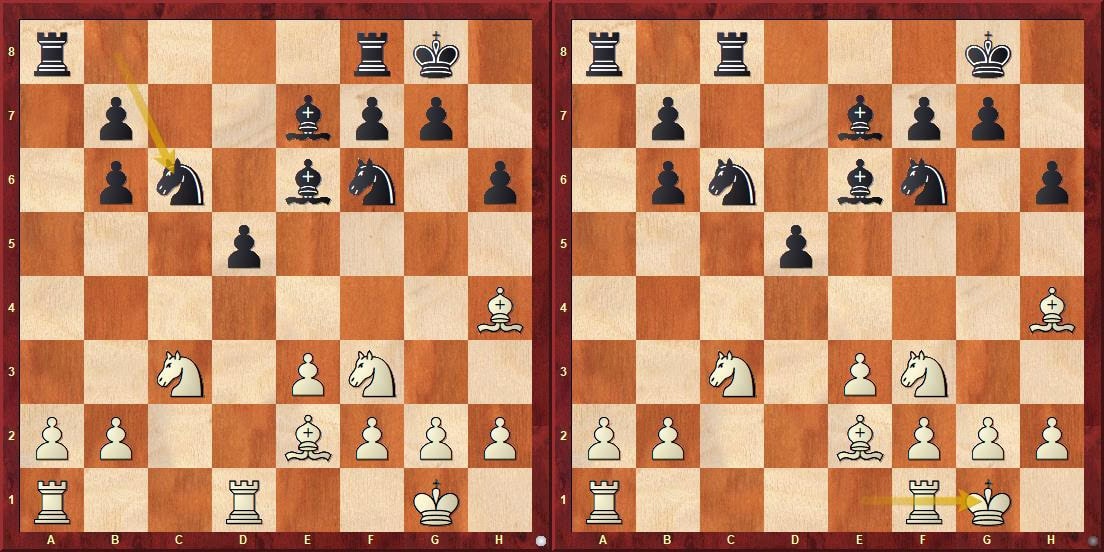
The right diagram shows the identical position as above. Black with an isolated pawn (further IZP) thus has some initiative in his hands and the opponent fights for equality. On the diagram on the left, however, we see the real picture Keymer's played variations.
On closer inspection, we conclude that in the Alapin system in the right diagram the active side with the IQP has a full three (sic!) tempi more.
A bit of „pleasant dogmatism“ might not hurt 🙂. Let's play with where those three extra tempi in the Alapin system (for the side with the IQP) actually came from! The first tempo naturally belongs to White as such. The second and third tempi were gained by the Alapin side because Black moved the queen four times before exchanging it! Let's return to the notation above. Black's queen travelled over d5, d6 and b4, and only on the fourth move was the strongest piece exchanged! In our game Abdusattorov vs. Keymer, however, the exchange occurred after just two moves, Qd4xb6.
The last two comparative diagrams already show the actual situation from the game.
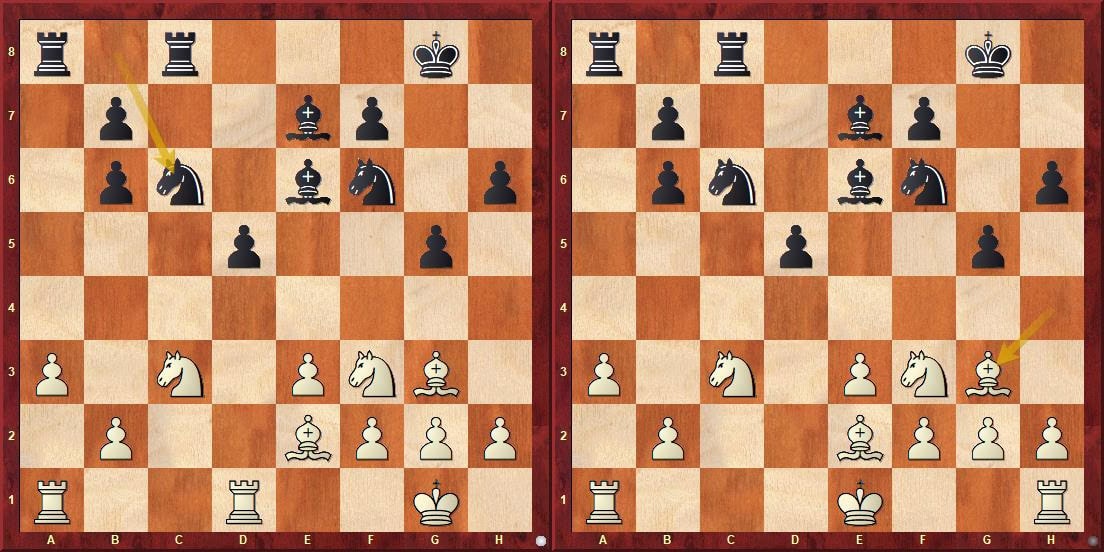
In the left diagram, it was Keymer who played 15...Nc6, finally completing the development of his pieces. But look again to the right, how the position from the Alapin system might look. The side with the IQP not only has a lead in development again, but it is also to move! By playing 16...Ne4 or even the methodical 16...d4!? Black could successfully fight for the initiative.
Three developmental tempi are really a lot! So if under normal „Alapin circumstances“ the active side has a certain advantage, without one or two tempi it could be equalising. With three tempi less, the side fighting against the IQP certainly has the advantage. The question is, how big is this advantage...
Personally, I think no one will repeat Keymer's experiment at a higher level, even though Black's position from the draw corridor clearly does not deviate.
An excellent analysis – without unnecessary long thoughts and variations – is demonstrated in the video below by the Ukrainian streamer Alexey Pugach. But those who want to delve deeper into the problems of the position should choose the detailed analysis in the viewer.
World champion in restructuring?
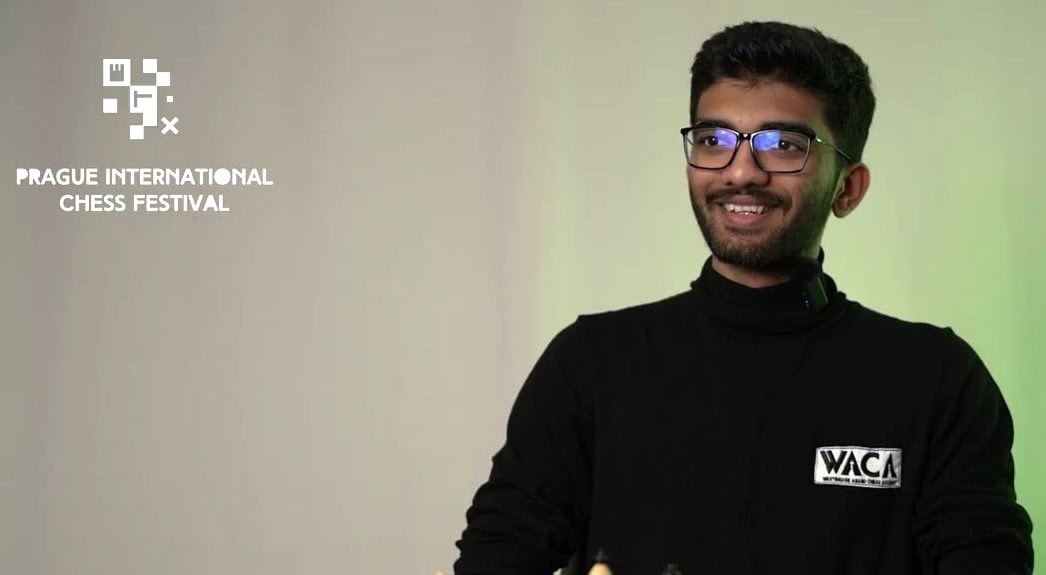
The following lines about the reconstruction of Gukesh's playing style are, of course, my assumption. Admittedly, I base it on my experience not only from training practice and consultations with strong chess players but also on a wealth of information from books and magazines that I have gathered over many years. Therefore, I kindly ask dear readers to take it with some reservation…
There is no doubt that the world champion is working hard on himself. The period of celebrating the return of the highest title to India is long over, and I am convinced that Gukesh has gradually stopped accepting invitations to various shows or giving interviews „about nothing.“.
One of the most important things he must quickly adjust or change is certainly the completely uncritical preference for inductive thinking – and I would not hesitate to say, on the contrary, the „ignorance of everything else“! Simply put: to understand and take into account that „not everything can simply be calculated over the chessboard.“ This is surely also realised by his head coach Grzegorz Gajewski.
Gukesh must necessarily strengthen deductive (intuitive) thinking during the game at least to the bare minimum. When selecting candidate moves, he should make much greater use of selection, heuristic analysis, and of course other methods offered by the intuitive playing style. At least to approach universality. The sooner the world champion modifies his style, the better… although naturally with regard to the upcoming match for the chess crown!
Such cardinal changes, however, can – and unfortunately do – bring a decline in performance and paradoxically probably even greater problems with time management.
In Prague, this manifested fully, and in my opinion, the „enemy Time“ was the main reason for his poor result!
I would add: to critical readers who might want to compare Gukesh with other world champions or very strong players, not only from the past, I would remind you: the world champion is only nineteen years old. Or put differently: would you be less critical of Gukesh if he were carrying out his „reconstruction“ as a junior world champion? Yes, theoretically, he could also participate in such a competition!
Results of 2025
I naturally follow the results of my favourite very closely. That is why I quite sharply distance myself from various critics and ignoramuses; I would say „typical commentator products“ not only in chess. They often do not remember what happened a month ago, let alone a year ago…
The truth, however, is that last year the world champion recorded a fairly sharp decline in results. He achieved very good results only at the beginning of 2025 in Wijk aan Zee (sharing first place with a score of +4) and then in October in the club team cup held in Greece (4/5 on board 1).
More detailed results in classical time control tournaments can again be viewed here.
gukesh_classical_tournaments_2025
In the footsteps of a mysterious game
„The possibilities of chess are inexhaustible.“ I constantly keep this quote from the 12th world champion A. Karpov, along with several others, in mind. Unfortunately, it can also be understood somewhat differently than Anatoly Evgenievich intended in the mid-1970s. They are inexhaustible also from a psychological perspective.
For decades, I have prepared my pupils for games – at various levels, witnessing all kinds of sophisticated preparations. But what has never ceased to surprise me? The following typical situation: opponents quickly play out a prepared variation. Then one of them – we can call him the „affected“ – thinks and… his first own move in the game turns out to be blunder or even losing mistake!
„Well then,“ I occasionally reassured myself if the „affected“ player happened to be my pupil. „It happens! After all, he still has his whole chess life ahead of him!“
But I never imagined I would witness such an „affected“ world champion!
Round 3 is being played, game Van Foreest vs. Gukesh. In the Spanish Game, closed variation, the world champion chose a kind of accelerated version of the Chigorin Variation with Na5 and c5.
After 16...Nd4 17.Qg3 the position in the diagram arose.
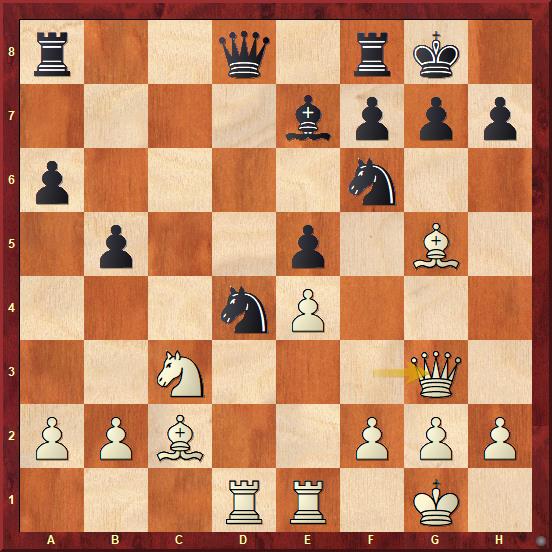
According to the time consumption, it seems that the world champion must have been not only familiar with the position but knew it more intimately. At this moment, he had several minutes more on the clock than at the start of the game! Given the further course, it looks as if it were a glitch in the Matrix!
One possible explanation of what happened – and will happen – I provide in the viewer below. The question of preparation of the variation (for the game?) may nevertheless remain unanswered.
After 15 minutes of thinking, there followed 17...Qb8??.
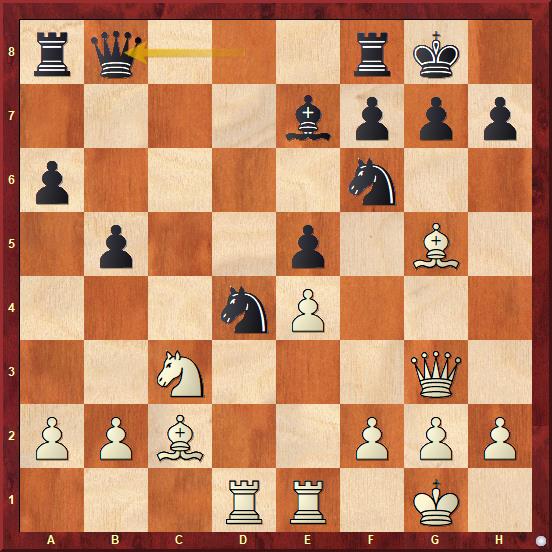
Can you punish Black? How would you continue and what variations did you manage to discover?
Regarding the game itself, I add that it was one of the weakest performances not only by the world champion but also by Jorden van Foreest! Black could even have equalised chances in the endgame, and inaccuracies on both sides piled up one after another...
And what did the winner say about the game itself? I think Jorden's modesty, or rather sobriety in assessing his performance, should be appreciated...
Gukesh's nightmare?
 Source ChessBase India
Fifth round of the tournament. The world champion faces Nodirbek Abdusattorov. As in Wijk, again with Black. Another tragedy unfolds with a blunder in an equal position. But this time, the world champion cannot blame fate! Thanks to long-term initiative in the queen and opposite-coloured bishops endgame, Nodirbek forced Gukesh into a second time trouble, compelling him to find the only – not always obvious – moves, and this time, in my opinion, he deservedly brought the game to a victorious conclusion!
The final result „takes all“! For now, it is not important that from the point of view of understanding the position, the world champion outplayed him again at a certain moment. Or in other words: „The clock is not there for show at the chessboard.“
It would be a mistake not to pause at a few moments. Abdusattorov played the opening overly ambitiously and in a certainly nerve-wracking battle was gradually outplayed by the world champion. One of the important positions arose after 17. Bb2.
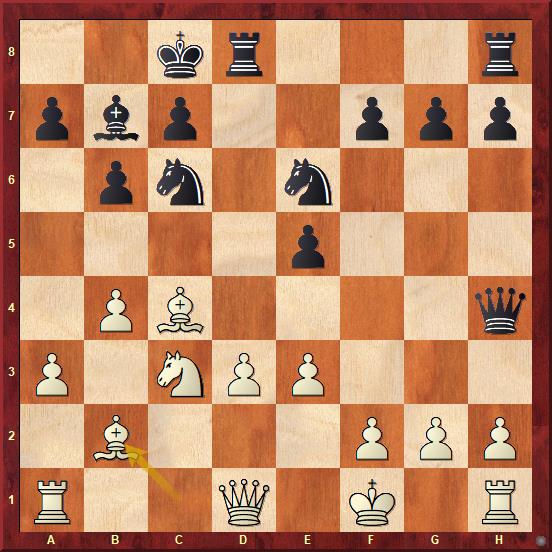
Behind White stands Madam Statics with all her might – the Sicilian pawn structure and the pair of bishops represent timeless factors here. „But what about the white king!?“ correctly argues many a reader. Well, yes. Objectively, overall, Black's chances are higher.
How would you continue in Black's place after mature consideration?
As they say, the bread began to break after the move 26. Qf2.
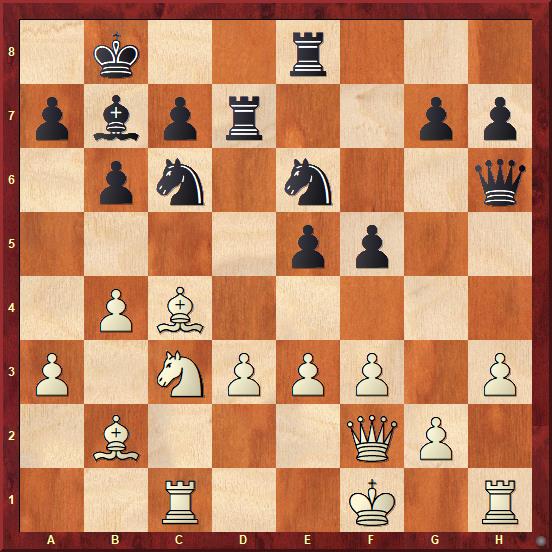
At this moment, Madam Dynamics ruled the chessboard with a firm hand. But we know her somewhat volatile nature!
Black has quite a few decent candidate moves available, but… the whole tournament would have looked different if Gukesh had continued methodically – and at greater depths even on the first line of engines – 26... e4!.
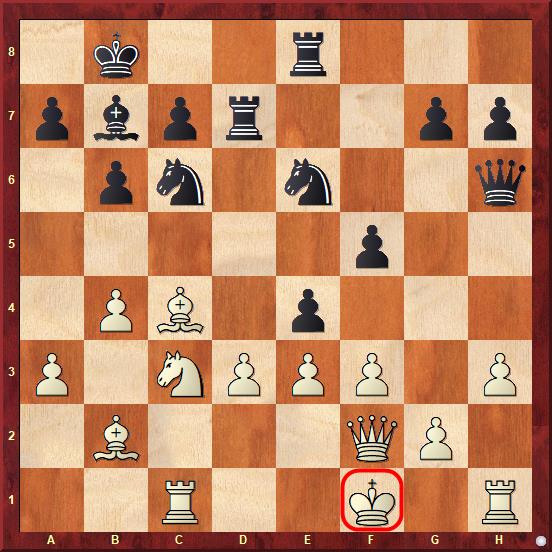
V in the limited time of the game, not everything can be calculated as we would like. The world champion may have been aware of this, hard to say. Gradually he began to run into time trouble, coordination of forces was disrupted, and Dynamics started to have problems with her rule.
We have already seen the end of the live broadcast of the game with Lukáš Vlasák's amazing remark „the computer has gone mad“ in the chapter dedicated to blunders, so now let's look at the entire immensely rich game.
A brief video analysis of the game can then be watched here.
The only successful game
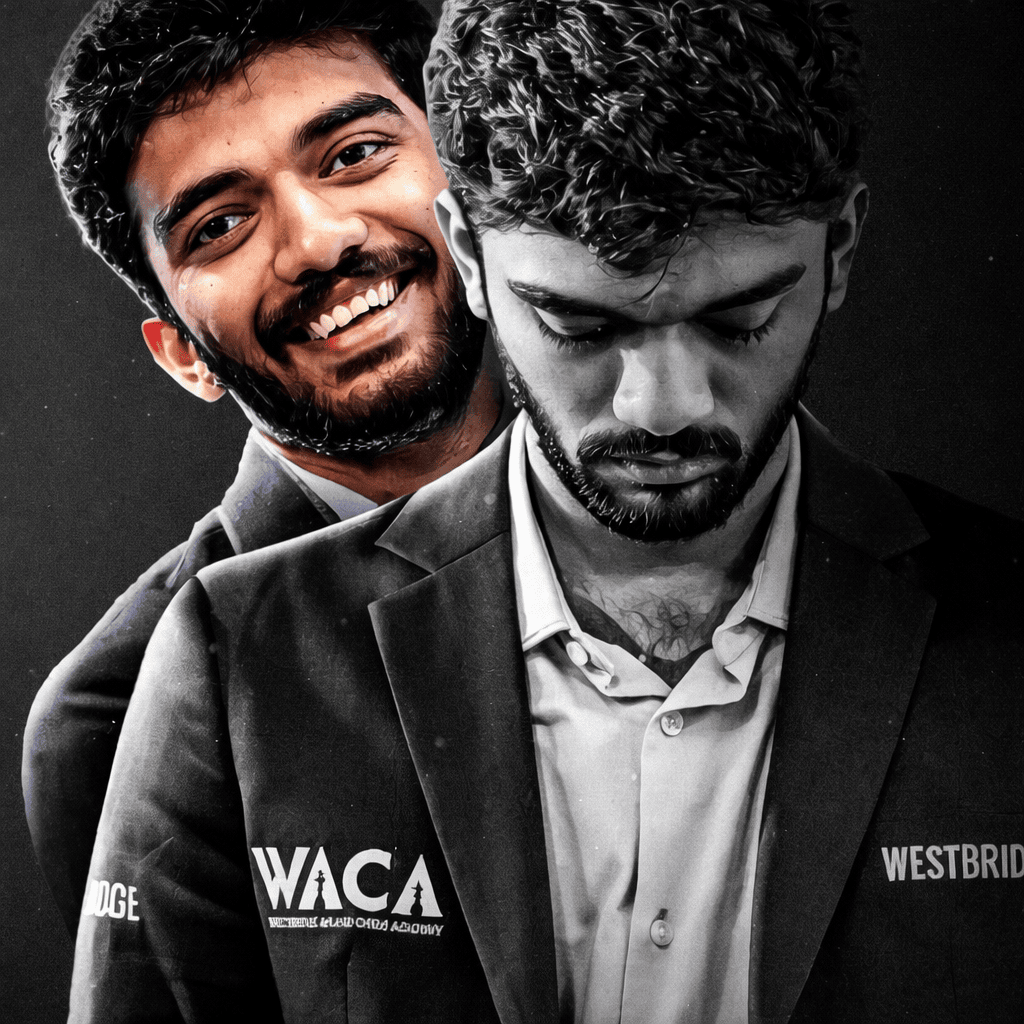
And so in the end we witnessed in Prague the only complete, successful game of the world champion. In the last round with Black, in the game against David Anton Guijarro, the world champion played calmly and, I would say, in the form we were used to in 2024.
A nice and instructive game – a demonstration of the fight of two knights against Gukesh's two bishops would under other circumstances not have escaped the attention of spectators, commentators and certainly not mine. I admit, however, that I was somewhat tired of Gukesh's performances.
Therefore, I present the game to readers only in the usual shortened record with Sagar's brief but apt commentary.
Here is a short post-game video analysis by Gukesh, an evaluation of his Prague performance, and also his views on the upcoming Candidates Tournament.
Looking Back at Prague
At the end of our journey through the Prague Festival 2026, I would like to refer you to two videos worth watching. The first captures the ceremonial closing of the tournament and the awarding of prizes to the top three – Abdusattorov, Maghsoodloo and Aravindh.
However, I especially recommend the second video: an almost ten-minute interview with Nodirbek Abdusattorov on Lichess.org, which offers many interesting insights. Here, among other things, he mentions a change of coach, specifically ending his collaboration with Rustam Kasimdzhanov.
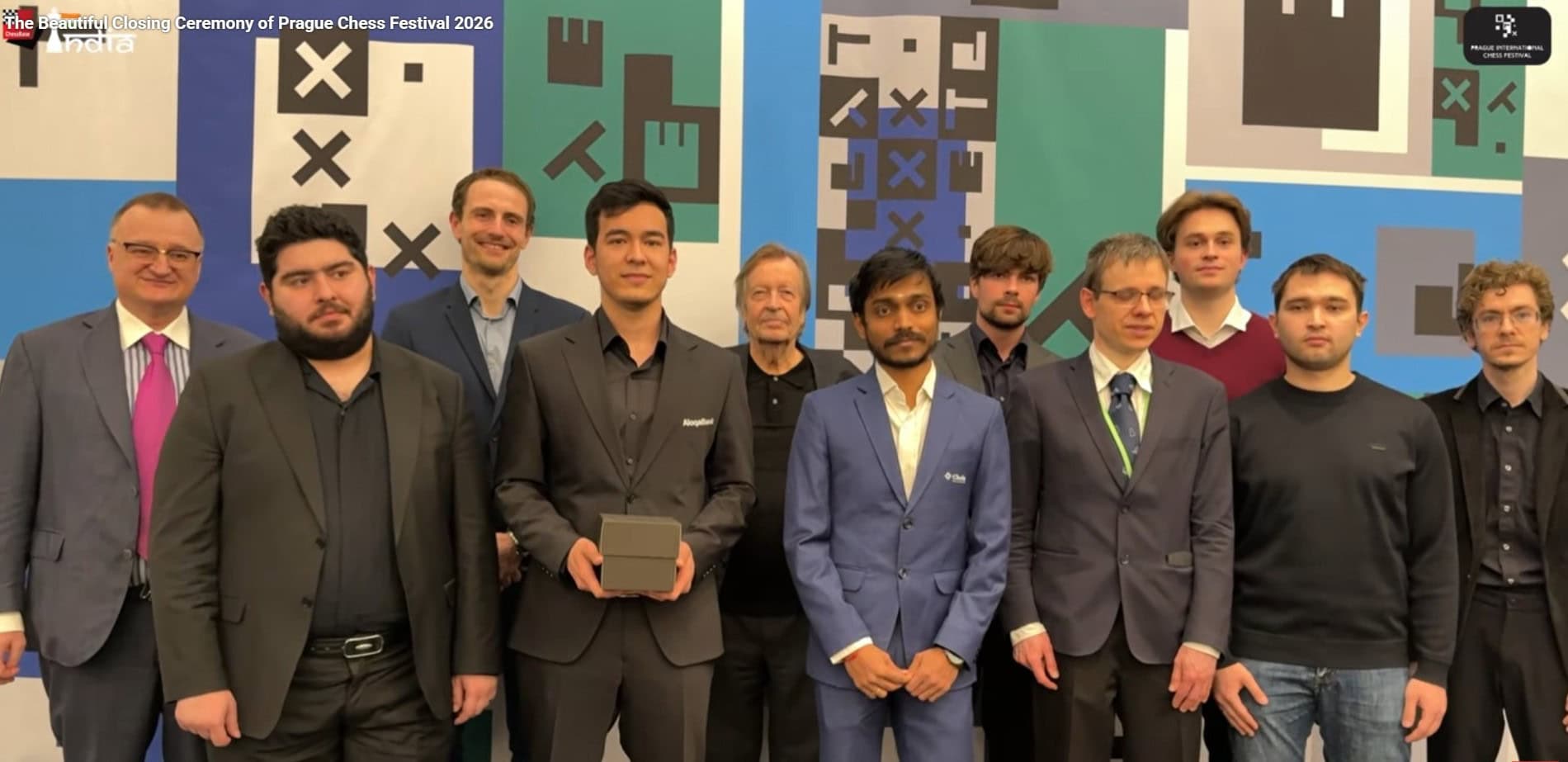
The final photograph once again shows not only the trio of winners, but also, for example, Jorden van Foreest, Vincent Keymer, Nodirbek Yakubboev and of course David Navara. With some of his games… well, he will cement his position as a creator of beautiful strategic and tactical moments that will adorn textbooks!
That brings us to the end of our journey through the Prague Festival. This time, not a single grandmaster participating in the Candidates Tournament appeared in Prague, so the „Monster from Prague“ Abdusattorov will have to wait another two years for his chance due to the selection system. However, the chess carousel does not stop – the Candidates Tournament is approaching and we will of course focus on it.
Here again are all the examples – this time nicely together.