

„In a moment, I will present you with a position from an actual game. You will play as the side to move, and your task is to think through and make a move as if this were a position from your own tournament game.“
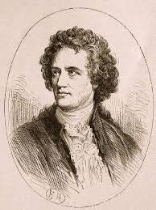
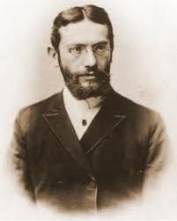
Such instructions were given by the Dutch chess master and psychologist Adriaan de Groot to participants in his experiments, in which he studied the thought processes of chess players when choosing a move. He gained a unique opportunity to do this in the autumn of 1938, when the famous AVRO tournament was held in the Netherlands, featuring the world's top players of the time.
One of those tested was the reigning world champion Alexander Alekhine, but the test was also taken by both future winners, Paul Keres and Reuben Fine. On 28 November 1938, Alexander Alexandrovich sat down in front of an unfamiliar position, over which he was to think aloud. De Groot carefully recorded his thoughts, so something exceptionally valuable has been preserved for us: the chance to look directly into the thought processes of one of the greatest chess players in history.
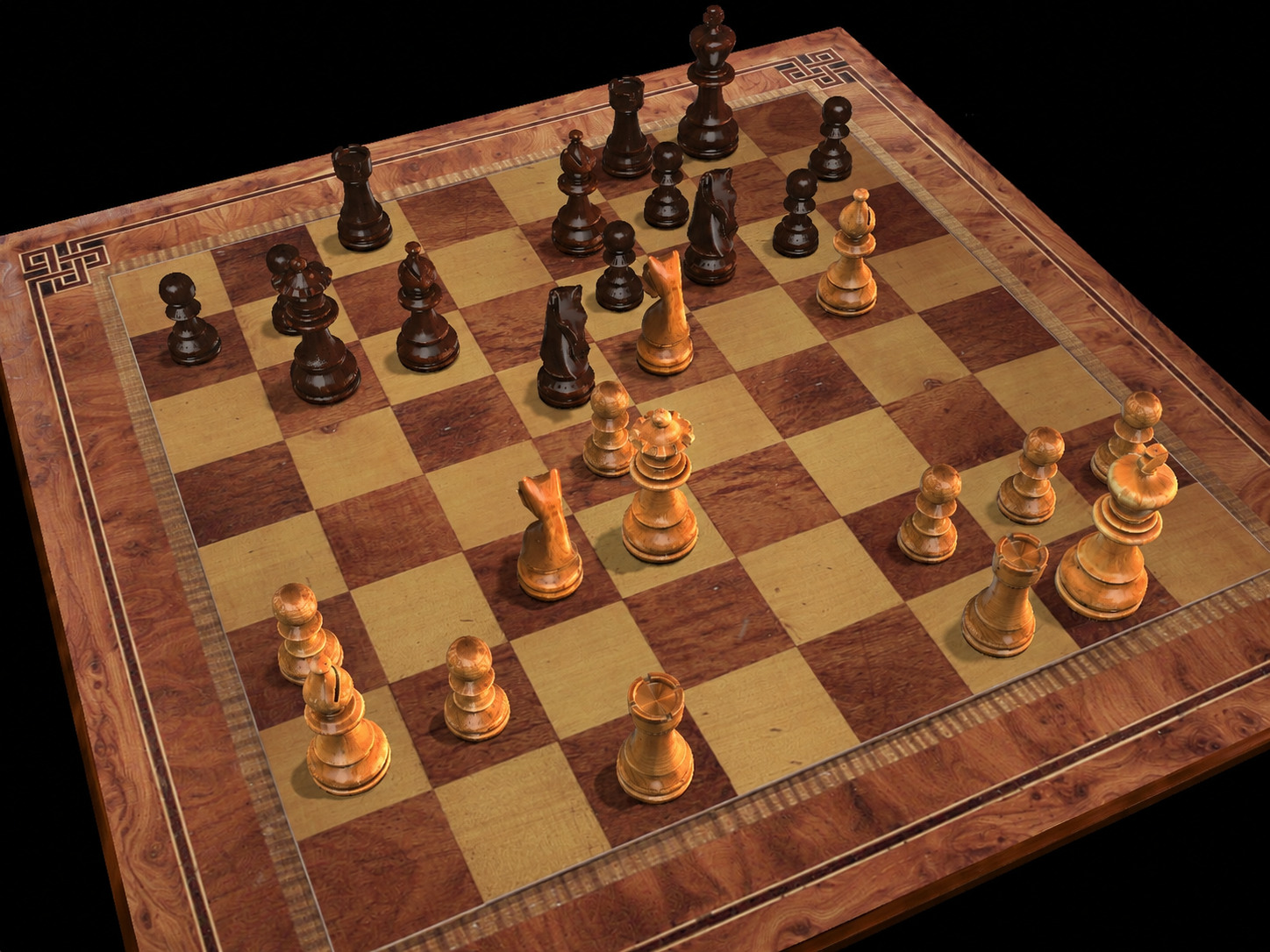
We now present you with the same position. Before you discover Alekhine's solution, try sitting in his place for a moment. How would you continue?
In Alekhine's chair
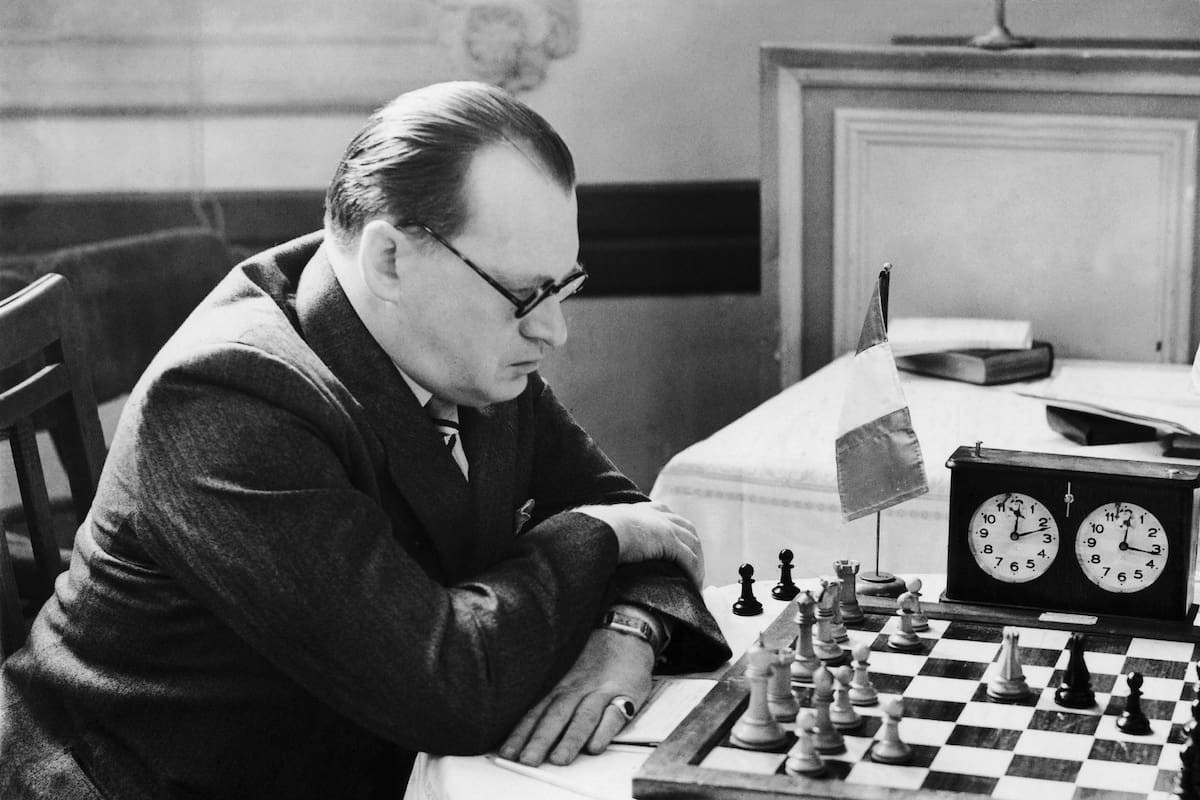
De Groot, however, continued with his instructions: „I would also like you, if possible, to think aloud as you do this, so that I can follow and record how you arrived at your decision.
This is a study of the thought process, not about producing some extraordinary result. Therefore, say everything that comes to mind, regardless of whether it is entirely correct. I want to follow the whole course of your reasoning. That is why your unsuccessful attempts and lines that later turn out to be mistaken are also important to me.“
So Alekhine is faced with a chessboard and an unfamiliar position. And, dear readers, you now have the same in front of you!
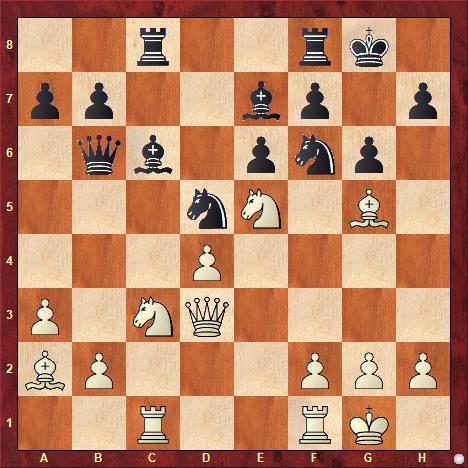
How would you tackle the test? How would you continue as White, and which lines would you calculate?
Most readers will probably be curious first and foremost about how they themselves fared in the test. The player below contains the full game, a diagram, and then the solution. In the second player you can find a more detailed solution. The players are set up so that the correct sequence is not visible at a glance.
Alekhine's thinking under the magnifying glass
The test itself was conducted so as to resemble as closely as possible the conditions a player faces during a tournament game, but, as I have already mentioned, with one crucial exception: the subject had to think aloud.
And how did the world champion himself do? Now we have the opportunity to become acquainted with his thought process and to compare Alekhine's solution with both our own and with computer-verified analysis of the position. A record of his thoughts during the nine-minute test has survived. I present it here first in an edited form, with translations into individual languages and the moves converted to algebraic notation.
Test Protocol – Alekhine_CZ Test Protocol – Alekhine_RU Test Protocol – Alekhine_EN
For those interested, I am also attaching the preserved English typewritten transcript, in which the moves are recorded in the now obsolete descriptive notation. This is not the original record from 1938, but a later processing of the experiment.
Test Protocol – Alekhine_original
In the viewer below you will find only Alekhine's thoughts and the variations he calculated, nothing more. It is, in fact, a kind of „transfer from paper to viewer“.
In the branches of calculation
Here, for example, the first interesting point arises. How do you actually think during a game? When you calculate a variation, do you recite the moves in notation? Does it appear in your calculation? Or do you not need it, and only the process of visual changes in your mind is relevant to you?...
There are indeed many interesting aspects concerning the process of calculating variations and the individual habits of chess players. I will mention just one remarkable gapbetween the actual thinking of Alexander Alexandrovich and the methodological recommendations of another famous Soviet grandmaster, Alexander Kotov. This is all the more interesting because Kotov was one of the greatest admirers of Alekhine's chess work, devoting a substantial part of his literary activity to his life and achievements. As far as I know, he wrote three separate books about Alekhine (a total of four volumes), including an extensive biographical novel!
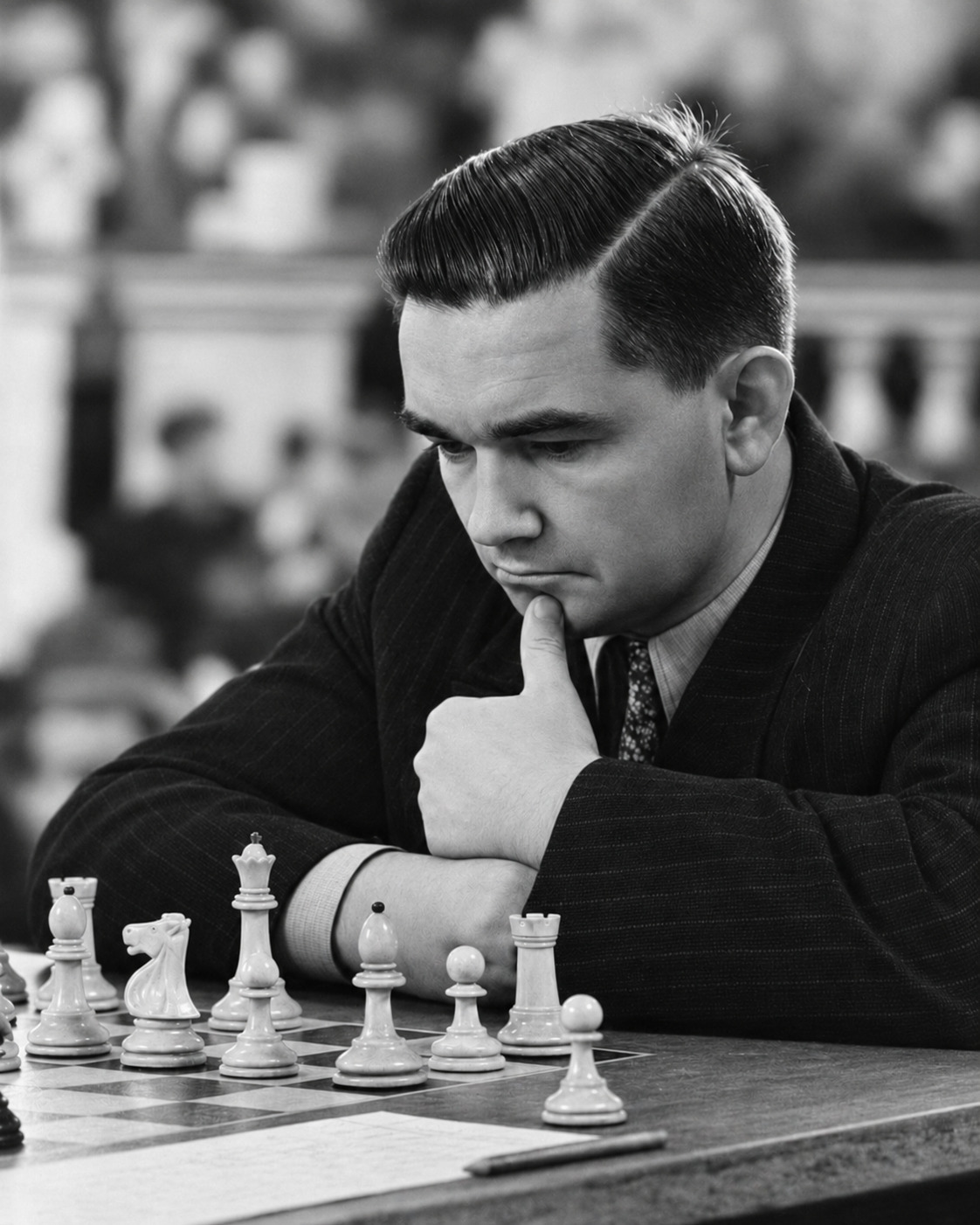
But Kotov was also among the first authors to attempt to create a comprehensive methodology for calculating variations. In his books, he popularised the concepts of the candidate moves a calculation tree, which are still commonly used in chess terminology today. His basic recommendation was simple (I still remember the first sentence): „After a brief and cursory consideration, select candidate moves in the position.“ Then systematically calculate each branch of the tree… but do not reopen those you have already examined. Calculate each branch only once! Kotov attributed repeated returns mainly to unnecessary loss of time and a lack of confidence in one's own calculation.
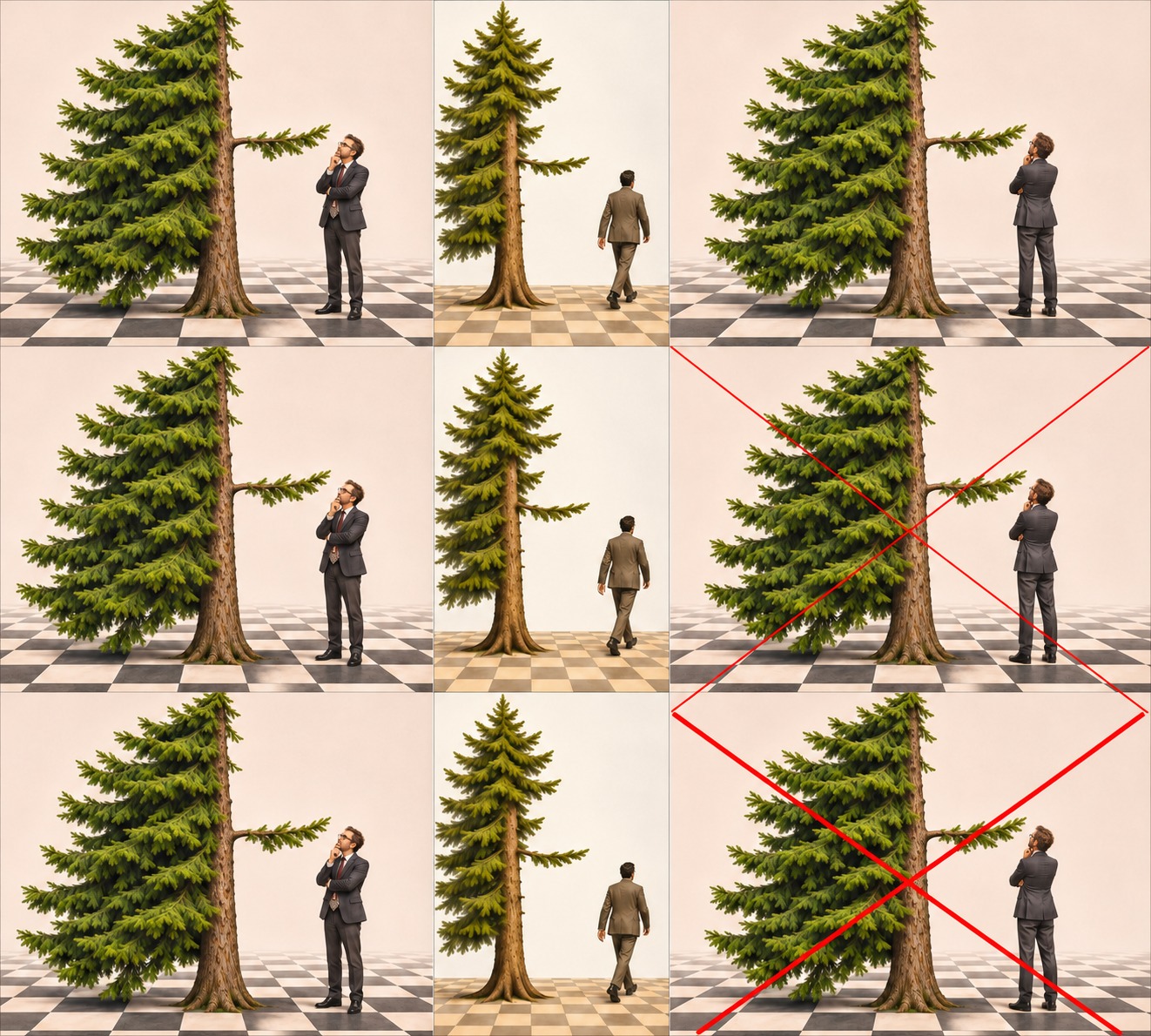
There is nothing like the didactic method of demonstration! 🙂 Since Kotov compared the calculation of variations to a tree, let us look at its branches literally. It was precisely such repeated returns to already examined branches that Kotov strongly criticised! His principle was clear: „Do not return to a branch once calculated!“ 🙂
And now let us return to Alekhine. During the nine-minute test, he found the correct move 1.Bxd5, considered other possibilities, and then returned to evaluate them again. His protocol literally states: „Check the other possibilities once more.“ So Alekhine proceeded much more freely than would later correspond to Kotov's ideal rules. Strictly speaking, this sentence does not yet imply that he repeatedly calculated the exact same variation move by move. What is certain, however, is that he returned to options he had already considered and re-examined his conclusions.

…But what if, on the second or third inspection of the same branch of calculation, we discover something we missed before?…
Alekhine was by no means the only one. For example, the brilliant „combinator and calculator“ Rashid Gibiatovich Nezhmetdinov explicitly mentions in commentary to at least one of his games that, after a long think, he returned again to variations he had already calculated and checked them once more.
It was Kotov's categorical ban on repeated calculation that became one of the most criticised points of his methodology. Later research into chess thinking has shown that even grandmasters repeatedly return to individual branches. No wonder! A new insight in one variation can fundamentally change the evaluation of another, which we „put aside“ a few minutes ago. There are simply too many exceptions for Kotov's advice to be taken seriously at all!
Of course, this does not mean that Kotov's books have lost their value. His demand for disciplined and systematic calculation remains useful. However, an ideal training method is one thing, and the actual thought process of a chess player during a game is quite another.
I plan to return in more detail to the questions of theory and practice of calculating variations in a separate article.
Same position, different paths
As I have already mentioned, it was not only the world champion who took part in the test. Specifically, it was also undertaken by Paul Keres a Reuben Fine, who shared first place at the AVRO 1938 tournament. Another major figure from the absolute world elite joined them, Salo Flohr. (Let me remind you that Alekhine and Flohr even signed an agreement in 1938 for a world championship match, which was to take place in Czechoslovakia in the autumn of the following year. However, political events and later the Second World War intervened in these plans.)
You can open the surviving English typewritten transcripts of the protocols via the following links. On the reverse side of each document you will find an edited version with the moves converted to algebraic notation and the relevant translation. Not only specialists, professional coaches or analysts can find truly interesting insights here!
Keres – De Groot Test 1938_original+CZ Keres – De Groot Test 1938_original+RU Keres – De Groot Test 1938_original+EN
Fine – De Groot Test 1938_original+CZ Fine – De Groot Test 1938_original+RU Fine – De Groot Test 1938_original+EN
Flohr – De Groot Test 1938_original+CZ Flohr – De Groot Test 1938_original+RU Flohr – De Groot Test 1938_original+EN
Notice that both Keres and Fine successfully solved the test, but their way of thinking differed quite markedly from Alekhine's! In particular, the order in which Reuben Fine examined the candidate moves would probably surprise even many grandmasters today…
De Groot's experiment eighty years on
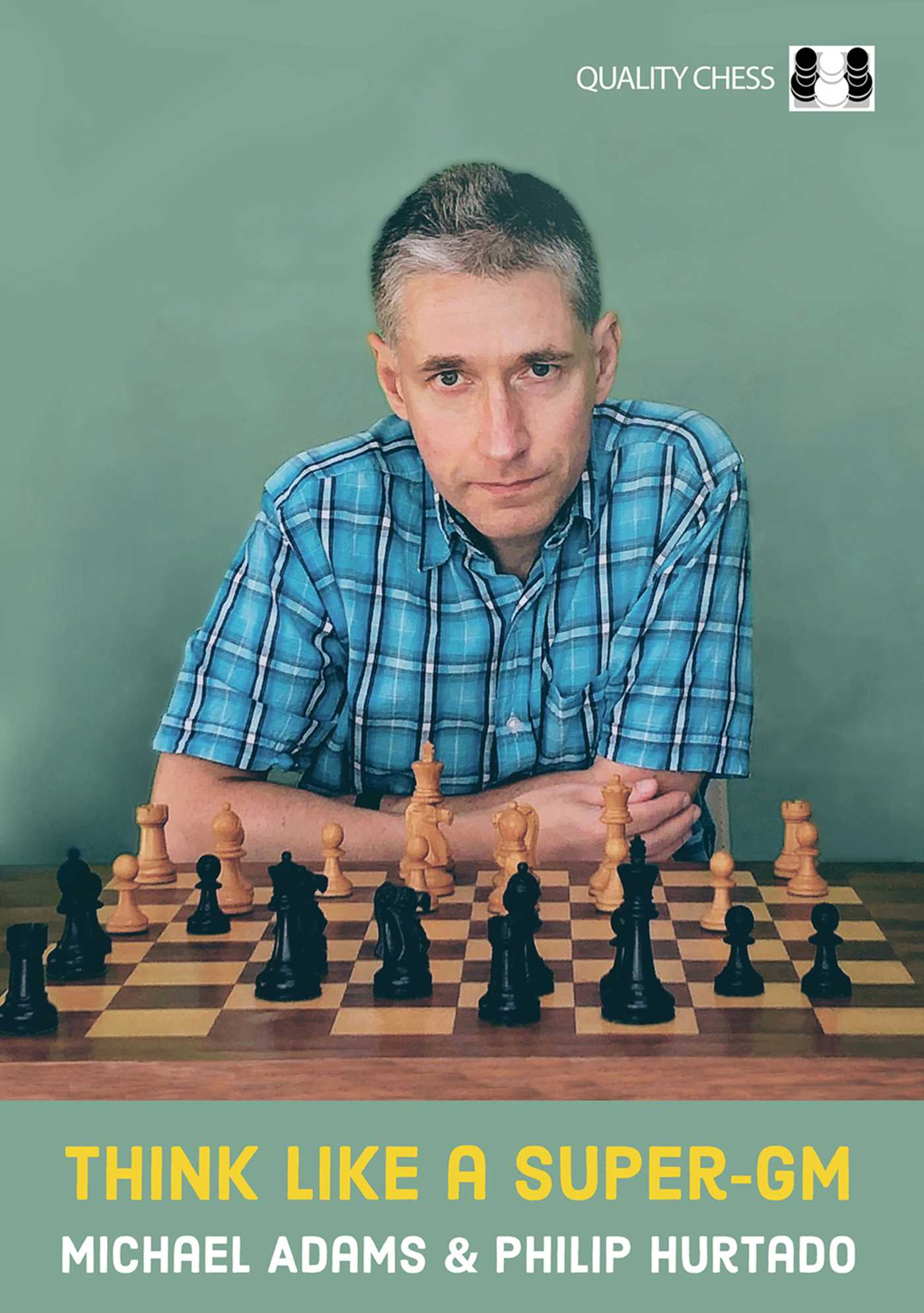
As we follow in the footsteps of De Groot's experiment, I would like to draw attention to another exceptionally interesting book. In 2022, the publisher Quality Chess released Think Like a Super-GM, authored by the British super-grandmaster Michael Adams and Philip Hurtado. Allow me a personal assessment: it is one of the best and most thoroughly prepared chess test books I have encountered in my coaching and chess career. Every part of it shows how much time, thought and truly meticulous work both authors devoted to its preparation. No wonder the book received the English Chess Federation's award for Book of the Year 2022.
The foundation of the book is forty test positions of varying difficulty and character. The same tasks were solved by chess players of all levels, from amateurs to top grandmasters. The authors did not only monitor the correctness of the solutions, but also the time needed to find the moves, the evaluation of the positions, and the very way of thinking. The results were then subjected to statistical analysis and complemented by exceptionally careful chess commentary. Michael Adams also allows the reader to glimpse how a player from the absolute world elite assesses individual positions.
And why am I mentioning this book here? Because its creation was directly inspired by De Groot's research, and in the introduction we also find our Alekhine test from 1938! The authors return to it, describe the circumstances of the experiment and add an analysis. I have also prepared the relevant pages for those interested.
Adams – Hurtado, Alekhine Test_CZ Adams – Hurtado, Alekhine Test_RU Adams – Hurtado, Alekhine Test_EN
I would recommend the book not only to coaches and advanced chess players, but to anyone interested in, how players of different strengths think and how their decision-making processes differ.
Would Alekhine have solved this one too?
If, knowing the assignment and difficulty of De Groot's test, I had to bet on whether one of the greatest chess players in history would be able to handle it, I would probably stake my entire fortune! And yet – for reasons I can't quite explain – a famous short story by Edgar Allan Poe came to mind Never bet your head against the devil! 🙂, I would still take that bet!
But I would be far less certain if, back in 1938, De Groot had set before the world champion this:
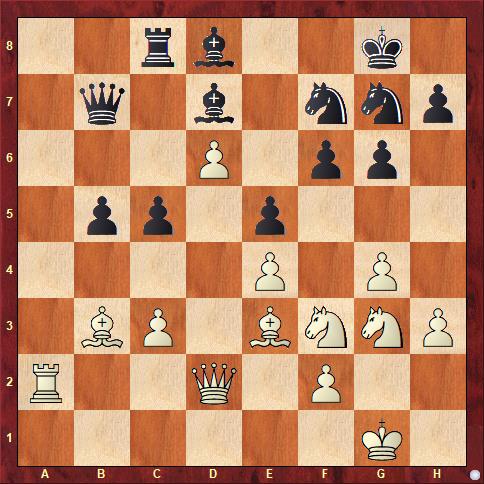
Before us we see a position from the game Aagaard vs. Rowson, Great Yarmouth 2007. I will venture a bold guess straight away: if this position had arisen in a tournament game, the truly extraordinary sequence of moves would probably have remained beyond the reach of 99.99% of „chess-educated players“, regardless of their strength, rating, experience or historical era.
And yet it is just two consecutive moves by White. However, one does not work without the other! No further words are needed, everything is shown in the viewer!
And now, let us say something about the history of this remarkable combination. Above all, it is interesting that its first discoverer was not a human, but a computer. And that it was the very chess player who had the chance to play it in the game who later ensured its remarkable popularisation.
After the game, Aagaard returned to the caravan he was sharing with two friends during the tournament and set about computer analysis. And then came the surprise. The engine suggested to him the continuation we already know: 28.Bxf7+!! Kxf7 29.Qd5+!!,
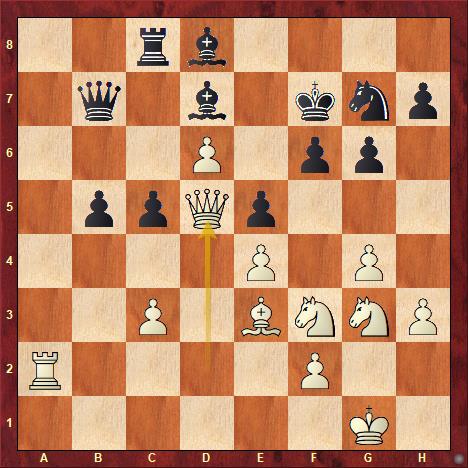
which at first glance seemed utterly nonsensical to him. Only when he set up the position on the board and began to examine it thoroughly did he realise the tremendous power hidden in this seemingly absurd operation.
Apparently even Rowson, to whom Aagaard revealed his discovery a few days later, at first did not believe that White could gain a decisive advantage in such a way. However, after a more detailed study, he had to admit that the exchange of White's most active piece, the activation of the opponent's king, the exchange of queens and the creation of isolated doubled pawns really do lead to a paradoxical result: White is winning.
Allow me a brief digression. Jacob Aagaard is not only a grandmaster, but above all one of the most prominent contemporary chess trainers and authors. He was a pupil of the famous Mark Izrailevich Dvoretsky, later his friend and a continuer of his training methods. In 2004 he co-founded the publishing house Quality Chess, which has published a number of valuable chess books. Since 2024 he has also headed the publishing group New In Chess Group. His book Thinking Inside the Box (2017), dedicated to the memory of Mark Dvoretsky, contains in its very first chapter an extensive discussion of our position.
And it was Aagaard who turned it into a remarkable test, which he subsequently presented to others.
Gelfand's Struggle
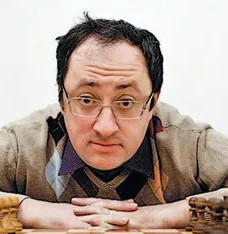
In 2009 To Boris Gelfand. Let us recall who this player is: Gelfand had already climbed to third place in the world rating list at the age of 22 (together with Vassily Ivanchuk) and for a quarter of a century belonged to the world elite. Around 2009, he was experiencing one of the most successful periods of his career. Three years later, he even faced Anand for the world championship title!
Boris Abramovich thought for about half an hour. Yet he could not find the solution! In the end, Aagaard and other friends led him away from the chessboard to a restaurant. But even there, he simply could not get the problem out of his head. Finally, he asked Aagaard to reveal the solution to him.
And here something extremely instructive happened! No sooner had Aagaard announced the first move, 28.Bxf7+, than Gelfand immediately saw the continuation 29.Qd5+ and understood the whole point of the manoeuvre!
Notice: one of the strongest chess players on the planet was unable to find the first move during a long think. Yet as soon as it was revealed to him, he grasped the rest of the operation almost instantly. Clearly, the obstacle was not a lack of sufficiently deep calculation. The problem lay in the very selection of candidate moves!
Ganguly knew something more…
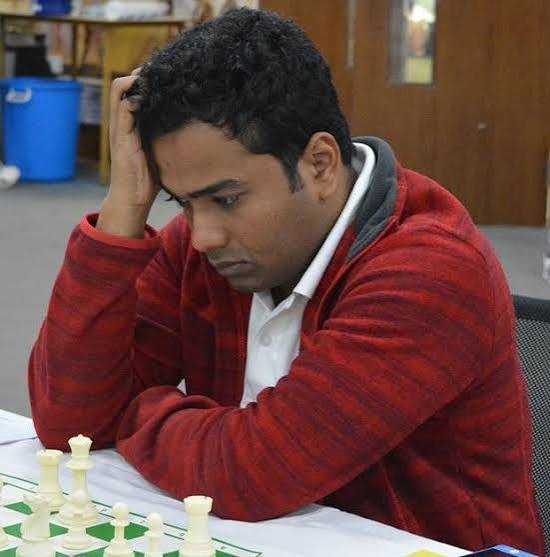
And one more story: Sam Shankland later showed the same position to the Indian grandmaster Surya Ganguly, six-time Indian champion with a peak FIDE rating of 2676. Moreover, Ganguly served as Anand's second in three world championship matches, including the one against Boris Gelfand in 2012!
But beware: Ganguly had learned in advance one seemingly innocent piece of information: even Boris Gelfand was unable to solve the problem before him!
That is why Ganguly began to „search“ right from the start among seemingly illogical and improbable moves. And lo and behold, he really did find the solution!
I can't help feeling that this very „psychological hint“ is perhaps just as interesting as the winning manoeuvre itself. For Ganguly did not have to be a better calculator than Gelfand at that moment. It was enough that he knew what kind of unusual solution he was looking for.
This, after all, brings us to the very heart of the problem. A strong chess player has thousands of games behind him, countless calculated variations and a vast amount of experience. Thanks to this, he can often dismiss moves in a matter of moments that a less experienced player would ponder over for a long time. But what if the brilliant solution lies precisely among those possibilities that have been ruled out in this way?
So what if our experience, knowledge and chess intuition, which usually help us so much, can in exceptional situations also become an obstacle? What if a certain move never even gets past the imaginary sieve of initial selection?
And now let's return to the question with which we opened this chapter.
Would Alekhine have solved this position as well?
Of course, we do not know the answer. We only know that he faces a task that not even one of the best chess players of the modern era managed to solve. Alekhine was a genius, possessed extraordinary imagination, a colossal memory, and was not afraid of even the boldest continuations. Yet this very position shows us that there can be a vast difference between the ability to calculate an extraordinarily complex variation and the ability to even discover its first move.
And perhaps that is why I would be so interested to know what would have happened on 28 November 1938 if De Groot had placed our very position, instead of the famous test position, before the world champion.
What might Alexander Alexandrovich have said aloud during his nine minutes?…
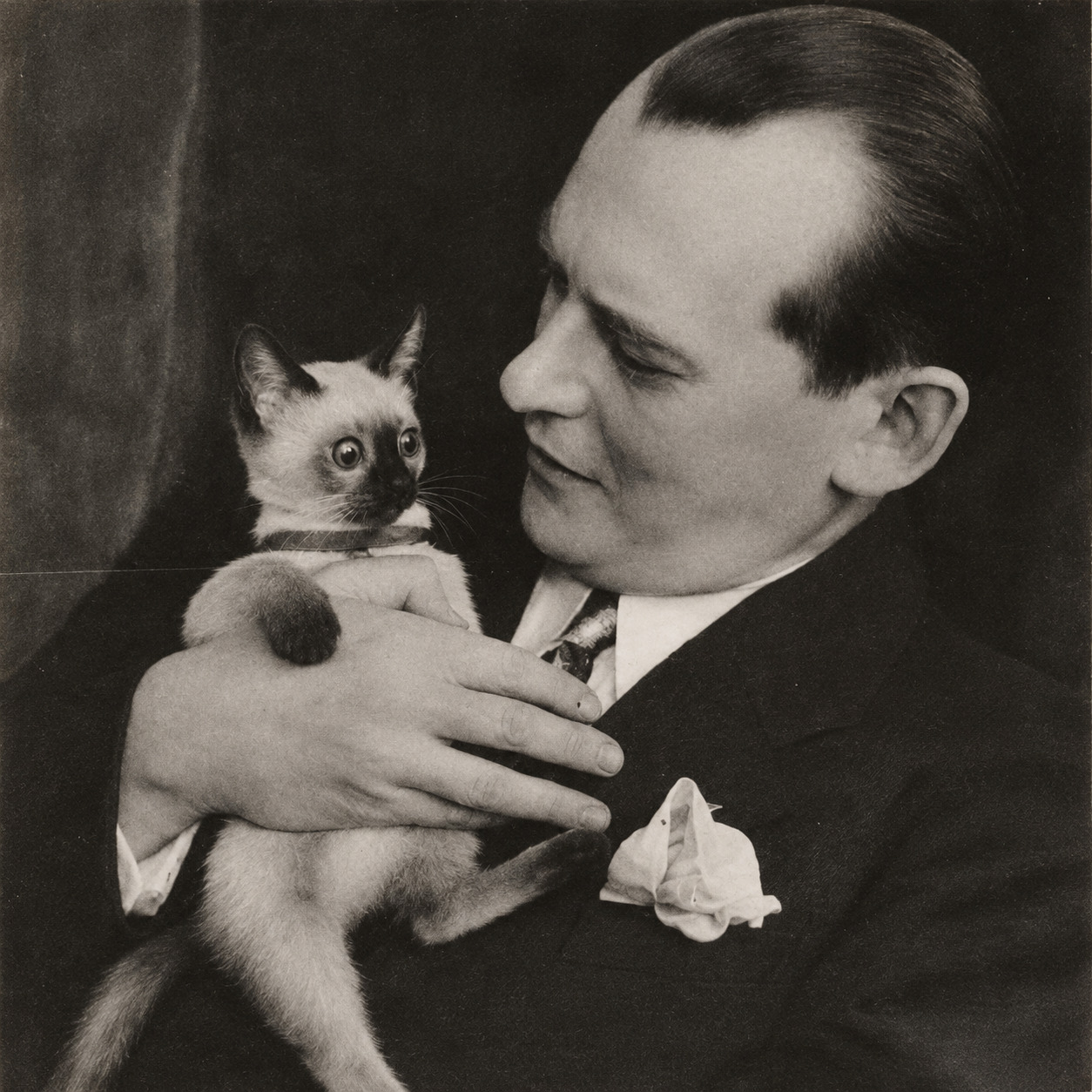
What do you think, dear readers? Seeing Aagaard's position with the devilishly surprising pair of moves 28.Bxf7+!! and 29.Qd5+!!, would Alekhine – whether he solved it or not – have marvelled more at its beauty or difficulty than at this little „creature“ in his arms? 🙂
And for anyone who, after this little journey into chess history, would like to return once more to Alekhine's thoughts and the other examples, you can as usual download them in PGN format (CZ, RU, EN):
9 Minutes with Alekhine_CZ 9 Minutes with Alekhine_RU 9 Minutes with Alekhine_EN