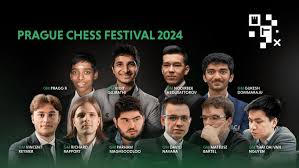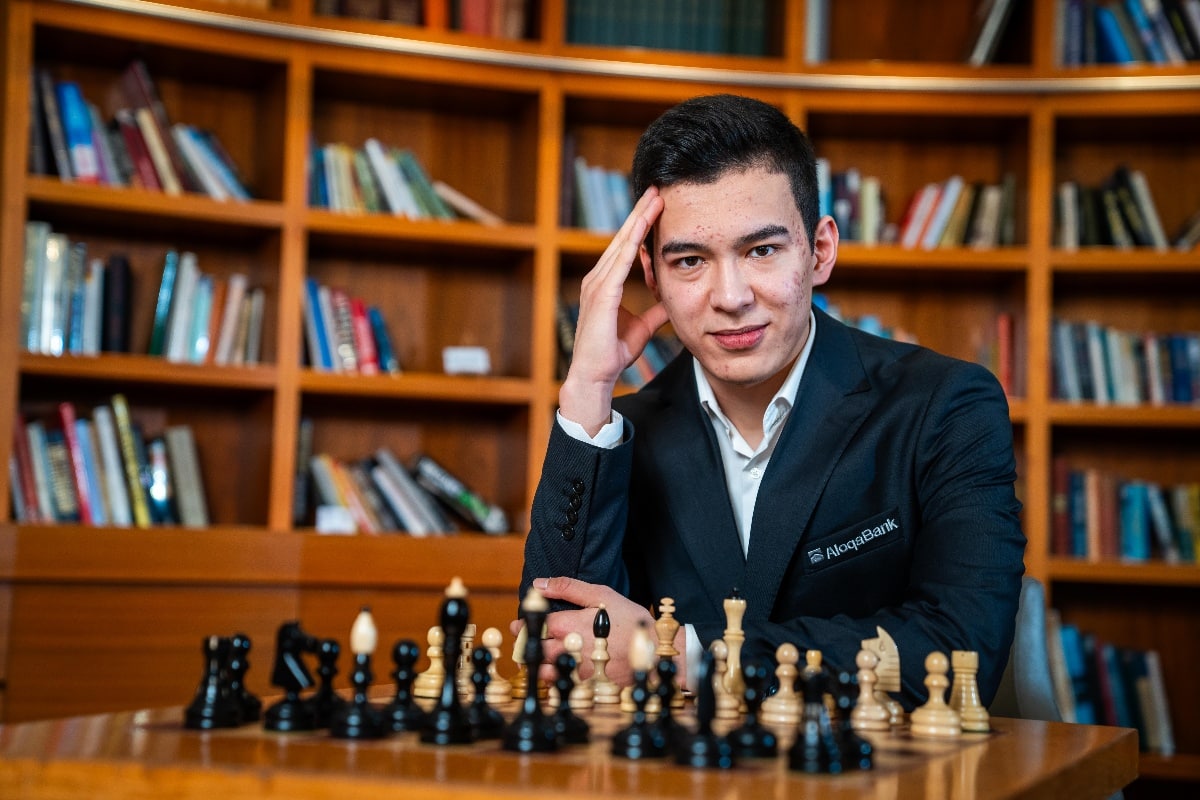


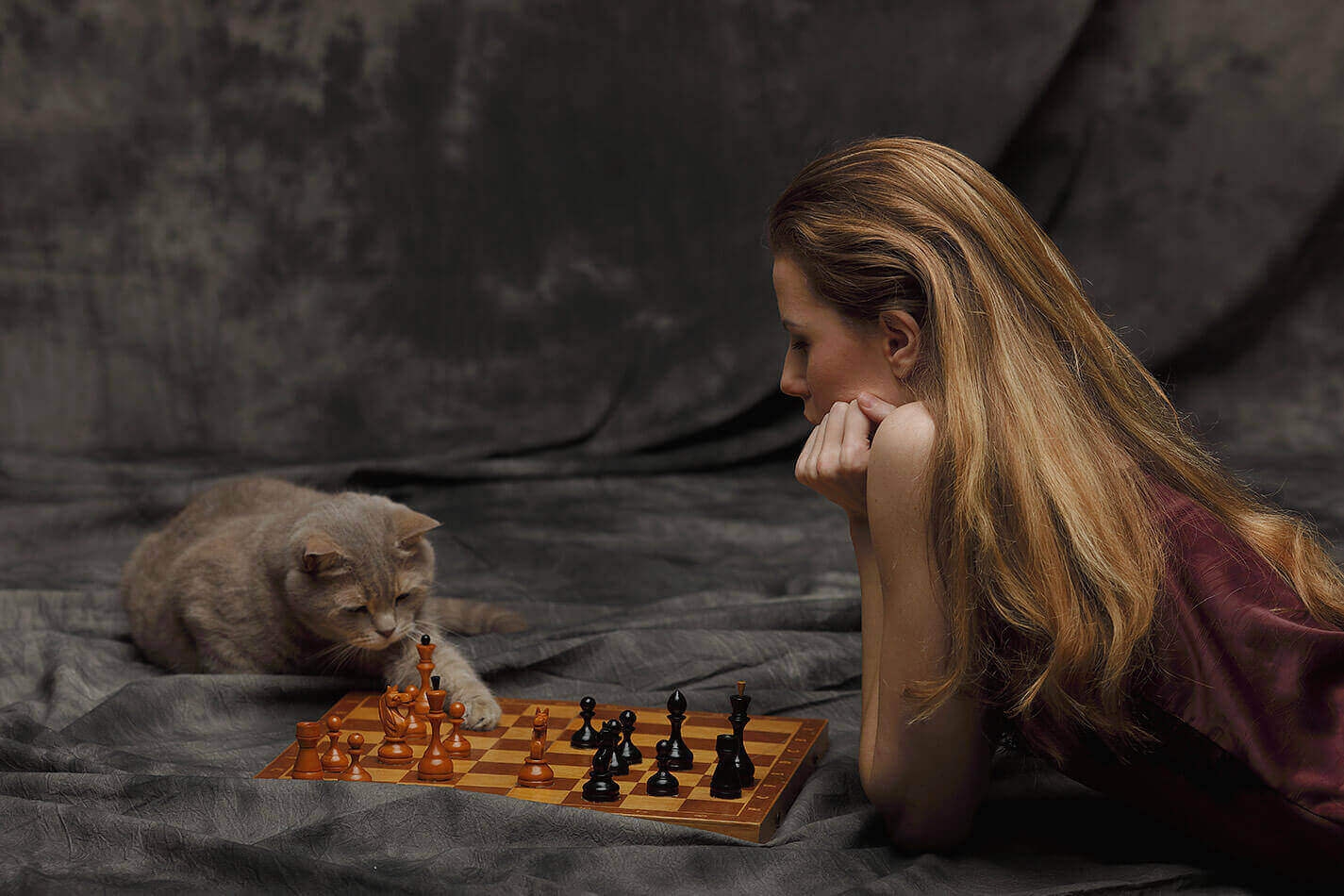
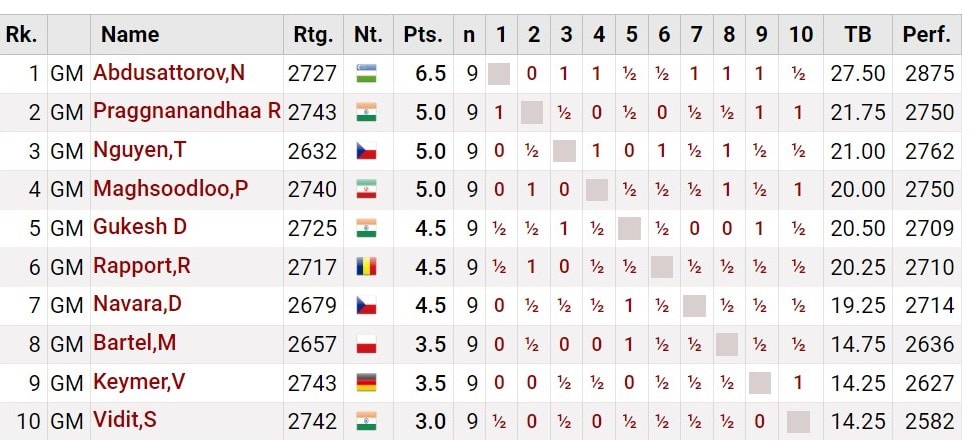
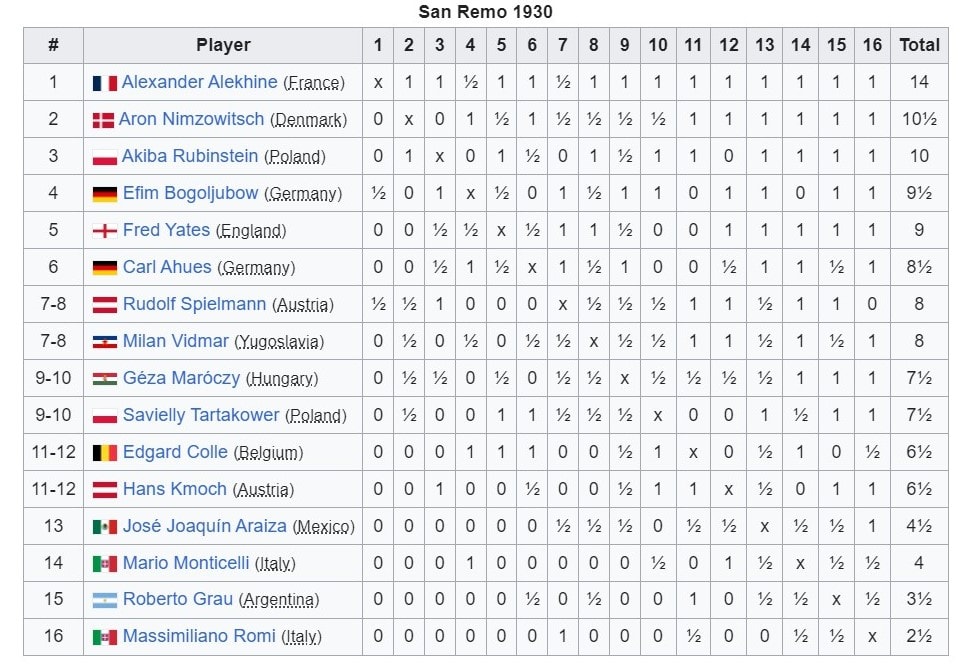
, that was the impression made on me by the performance of the young Uzbek super-grandmaster in the closed nine-round tournament. Nodirbek Abdusattorov, by the way the 2021 World Rapid Chess Champion, won it with a lead of 1.5 points! „But surely the author is exaggerating a bit?“ a historian might say: „After all, Alekhine won the 14-round tournament in San Remo with a lead of 3.5 points!“ „Yes, but at that time he was also twice as old as today’s fresh world number four!“ 🙂 I will venture my argument. So let us first look at his performance in Prague…
… and right at the start let us examine both tables
Prague 2024
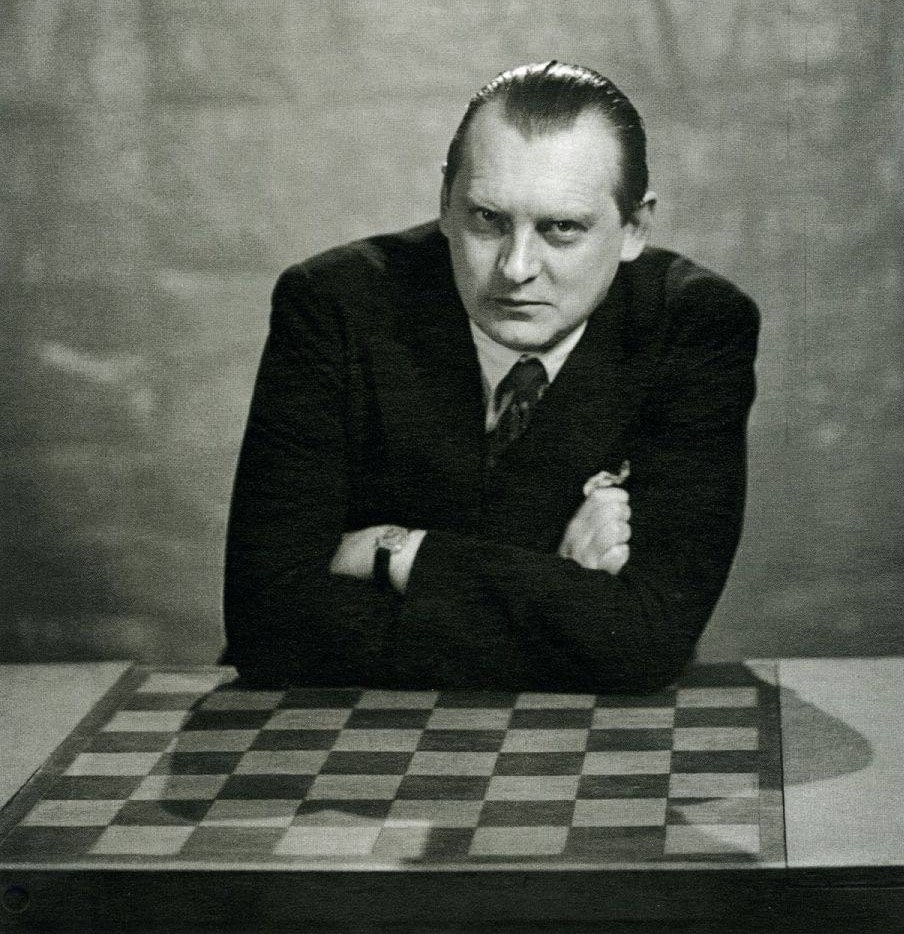
the strict examiner Alexander Alexandrovich Alekhine
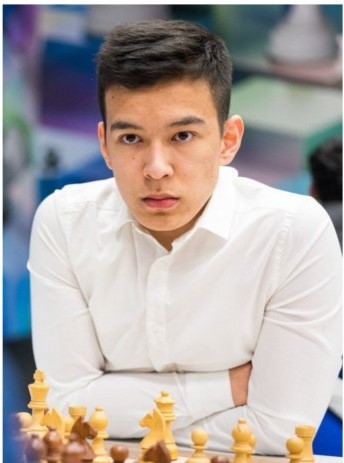
Playing against Nodirbek Abdusattorov, many players may already feel today the opponent’s strong psychological pressure. Well, just wait a few more years, it will get even worse!
The universally recognised World Champion Alexander Alexandrovich Alekhine (1892-1946) allowed his opponents only two draws here, only to win the tournament in Yugoslav Bled a year later with an even bigger lead of 5.5 points! It was probably there that Nimzowitsch uttered the famous phrase: „He plays with us like with unfledged birds!“
Although the complete world elite was far from assembled in Prague, all three Indian super-grandmasters certainly took the tournament as a rehearsal before the rapidly approaching Candidates Tournament, Nodirbek’s lead of 1.5 points after nine rounds speaks for itself. What is the secret of the Uzbek youngster’s performance edge? After all, he broke into the 2700+ super-grandmaster group only in September 2022 and for quite a long time remained somewhat in the shadow of both the Indian prodigies and, of course, Alireza Firouzja.
Nodirbek is a universally equipped chess player who certainly works many hours daily. Only relatively recently have I noticed a trait that probably distinguishes him not only from the group of other potential future world champions but also from the older generation… except for Magnus Carlsen!
Cold-bloodedness
The videos that the esteemed reader can watch below show not only a maximally focused chess player but also the inner calm that radiates from Abdusattorov most of the time. Of course, today even very young but already experienced players can skilfully hide their emotions in critical moments of the game, but what can very few really do? Maintain calm within oneself!
I generally do not follow Fischer’s chess, but the recently concluded tournament in Germany confirmed my suspicion. The pedantic Germans some time ago introduced a brilliant move (true, copied from former psychological studies in the USSR). During the game, players’ pulse is measured! The results of this measurement are more than remarkable. While, for example, Firouzja’s pulse soared above 200 beats per minute in critical moments, Carlsen’s and Abdusattorov’s never exceeded 100! Such a gift is directly connected with one of the four fundamental pillars that, for example, Botvinnik considered key to reaching the highest chess goals. What are these qualities and requirements? In a somewhat, let us say, modernised version I will state:
- talent
- character
- special preparation
- mental and physical resilience
The last mentioned point is, however, just as important a prerequisite for success. For more than 10 years, we have been able to observe this clearly in Magnus Carlsen! The number of games he has won thanks to colossal mental endurance, relentless overwhelming psychological pressure on the opponent, and of course incredible physical fitness, could be counted in the thousands, if not significantly more!
Mikhail Moiseyevich primarily directed his assumption of four key qualities towards the third world champion Capablanca. He wanted to use a formula to prove that Capa was by nature the most gifted chess player in history. While his school grades in character, special preparation and physical fitness ranged from average to catastrophic, he logically had to overwhelmingly surpass others in talent.
Applying the same measure, for example, to Firouzja – readers of my contributions know that I consider him the most talented chess player of the current century – we get a similar result! Nodirbek Abdusattorov, however, would receive all very high marks, which in my opinion places him among the clear future candidates for the highest title!
„This is not my cycle“
This sentence of the then future 12th world champion Anatoly Karpov is deeply etched in my memory. He said it several times, but I first read it when the quarterfinals of the Candidates Matches for the World Championship were starting in 1974. As we know, Anatoly Yevgenyevich underestimated himself at that time; a year later he was crowned world champion!
Many specialists, including the 14th world champion Vladimir Borisovich Kramnik, expressed some disappointment after Abdusattorov's Prague triumph that we would not see him in the Candidates Tournament. I believe that if Nodirbek were to participate in the Candidates Tournament now, he could say the same sentence and... be just as wrong. Today, however, matches are no longer played, but a closed double round-robin tournament, so I would rather predict a different winner. I will try to predict different: „In a possible next Candidates Tournament, not only will we see him, but he will become its winner!“

A universally equipped chess player pursues his goal relentlessly
In my opinion, Nodirbek's strength is evenly distributed and there are no outright weak spots in his play, unlike in the games of Firouzja, Gukesh, Erigaisi or Keymer. His enormous diligence is directed in all directions, as we will be able to assess in the examples below. Fourth place in the world rating list is of course not final, although a slight decline in position might be expected, among other things depending on the development of the Candidates Tournament. The current situation at the top of the world rating list looks like this:
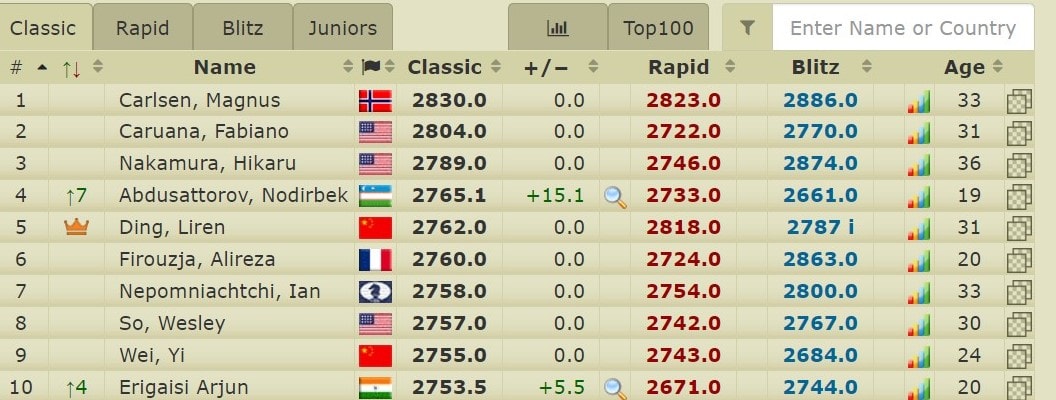
So let us now go through some moments of the tournament in order, focusing on examples of our hero. But what kind of journey would it be if I did not also introduce the reader to topics they might not yet know much about...
Delicate technique, thinking in patterns and the principle of two weaknesses
Many readers probably know from their own experience that the most inquisitive and frequent question from laypeople to us – chess players – is: „How far ahead, how many moves ahead, does a chess player see?“ When journalists once asked Capablanca, they were shocked by his answer: „It varies, but sometimes I have to know what happens after thirty or forty moves.“ „What nonsense,“ the reader will surely say. „That can never happen, even exceptionally!“ And yet Capa said this and... he was not bluffing! In my opinion, he meant not concrete calculation of variations, but future development situation. This can be predicted if the situation on the chessboard lacks (or is severely limited in) the Time component!
I will now present two diagrams to the reader. The first position comes from the work of the aforementioned 12th world champion, the second from the first round of a Prague tournament.
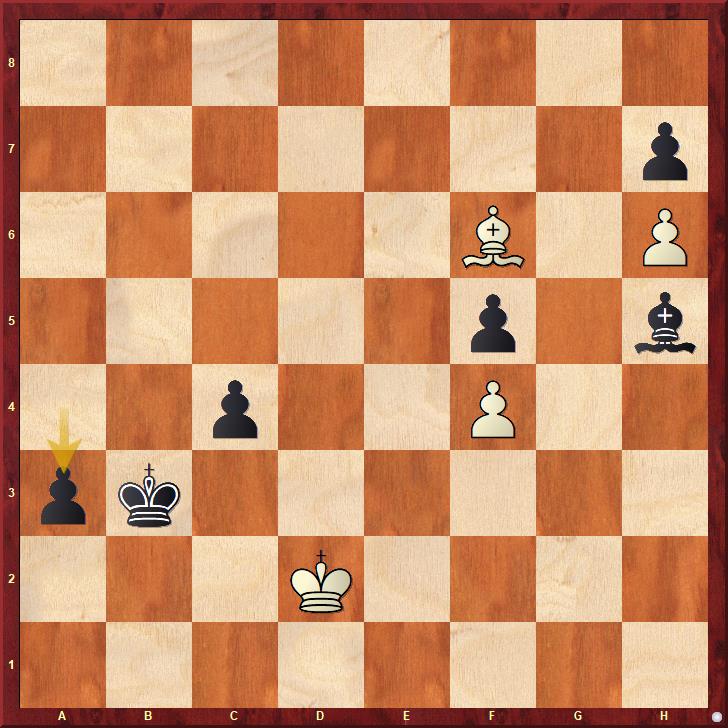
In the game Ljubojević – Karpov (Milan 1975) played by the fresh world champion 46…a3. Using so-called schematic thinking and based on the strategic method called the principle of two weaknesses, one can calculate to Black's win! Could you describe the plan for winning the game?
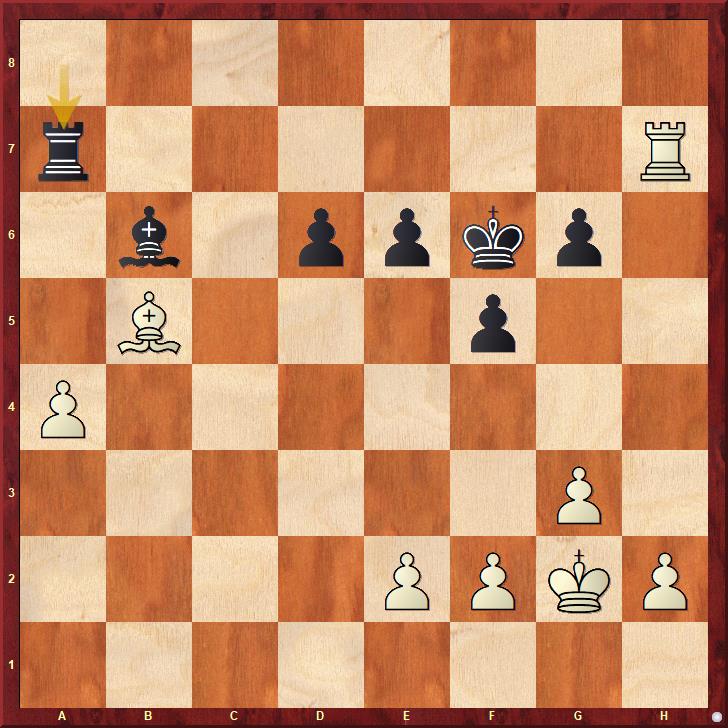
In the game Abdusattorov – Nguyen Thai Dai Van the Czech grandmaster adhered to the general rule about the huge drawing potential of endgames with opposite-coloured bishops; after 19 seconds of thinking he played 36…Ra7. Was his decision correct? Yes or no, and most importantly why?
For more comfortable and higher-quality study, I recommend readers to download the examples from the viewer in .pgn format even in this entire article!
Fortune favours the strong… and the cold-blooded
Who knows how the whole Prague tournament would have developed for Abdusattorov if he had not succeeded in the heart-stopping game of round 3. Brilliant preparation had already brought him to a winning position before move 20, but… we know David Navara! If I now remain silent about his terrible practical strength and classical chess education, thanks to which he almost always has an excellently functioning strategic compass, his tactical abilities are still on the edge of genius! In the middlegame shootouts of the following game we can only orient ourselves thanks to computers…
The classic Dragon is dying out
On the other hand, round 5 can be considered Nodirbek's brilliant ride! In the game against the experienced Polish trio Mateusz Bartel (2,660) with the black pieces (!) really did not struggle much, but White experienced the true nightmare of every competitive, especially top-level or professional, chess player: losing a game without knowing exactly where the mistakes were made!
Moreover, I myself have repeatedly been convinced that against the Dragon Sicilian it is now possible to fight effectively either with the Rauzer Attack or (in the accelerated version with 4…g6 or 2…g6) the Maróczy Bind. The disregard for classical schemes in fighting the Dragon threat goes so far that some super-grandmasters with Black, for example in the fight against anti-Cheljabin systems 1.e4 c5 2.Nf3 Nc6 3.Nc3 prefer to switch after 3…g6 to the accelerated Dragon rather than play 3…e5. This is, after all, also the example of our next illustration!
Will Pragg become Nodirbekov's black nightmare?
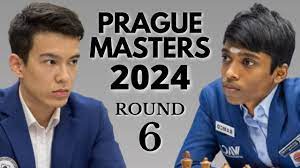
Of course, after Abdusattorov's triumph in Prague and his rise to 4th place in the world rating list, I had to dedicate a post on my pages to him, even if I did not feel the sympathy for this young man that I actually do (because of his love for chess and enormous diligence). However, there is another young man who definitely matches Nodirbekov's qualities. Rameshbabu Praggnanandhaa He is truly an exceptional figure even among the huge number of young super-talents. In Prague, he finished at +1, but we must take into account that the event was a warm-up for him before the Candidates Tournament. Respect, but also fear, may be inspired by the fact that in the recent period he has played more than 40 serious games without a loss… at 18 years old! Praggnanandhaa commands an admirable technique reminiscent, at least to me, of the young Anatoly Karpov.
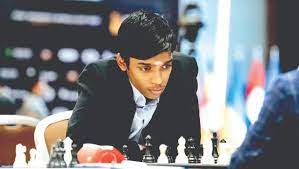
As we will see below, and it is now quite a common phenomenon, decisive games even at the highest level often end with serious mistakes that would have been considered rather curiosities 20 years ago and would have been discussed at length 50 years ago… Pragg made his blunder in Prague at the start of the tournament, Nodirbek played for a win in their mutual encounter for so long that he overlooked perhaps the most spectacular combination of the tournament, although it cannot really be called extremely complicated. The reader may have seen the combination, but I will still present it as another test. at the start of the tournament, Nodirbek played for a win in the mutual encounter for so long that he overlooked perhaps the most spectacular combination of the tournament, although it cannot really be called extremely complicated. The reader may well have seen the combination, but I will still set it as another test.
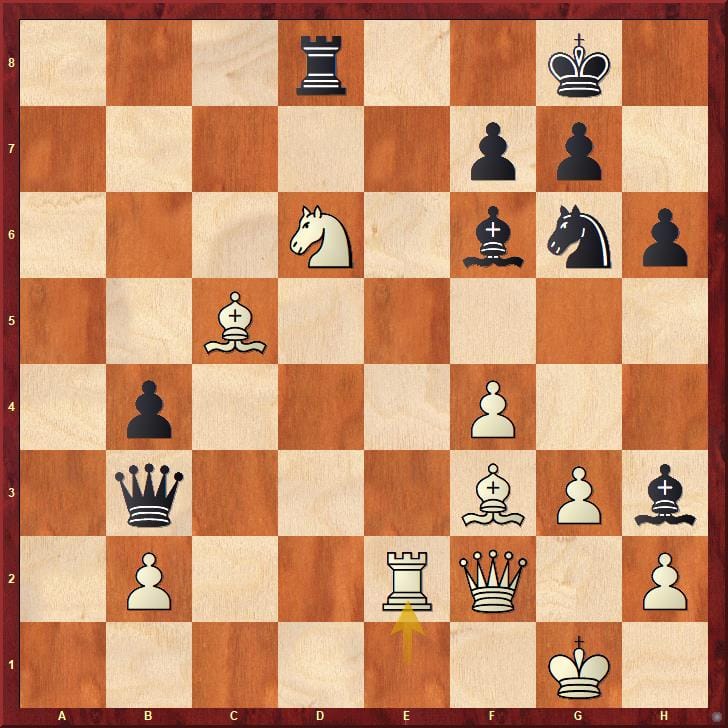
36.Re2 Like a cat with a mouse?
Like cat and mouse
„The East owns the entire group of young chess geniuses, the West has its Keymer and Mishra!“ This could be a simplified description of the impression of some involved persons. Many were certainly curious how the youngest grandmaster in the world, now 15 years old, the American Abhimanyu Mishra, would fare in the Prague Challengers tournament, but especially the only current young hope of the West Vincent Keymer. The result, but mainly the level of play, I would summarise from my point of view in one word: tragedy! 2 700+ The reader will find more in the notes to this last
game. single-goal a game of an amazing performance, hopefully a future world champion, who will one day restore the proper dignity to the chess crown!