

Motto: if we treat children like gods from an early age, they tend to behave like devils in adulthood (P. D. James in the dystopian novel The Children of Men)
Alas, precisely by disjunction, the text behind or, this year the most interesting and strongest domestic tournament of the chess superpower for many years impressed me. „But everything is in order and in its place,“ another reader who followed the tournament might claim. „Fabiano Caruana won again with a clear lead. Wesley So, the 2021 US Champion, became the draw king once more, and Levon Aronian and another former winner Samuel Shankland could certainly have performed better.“ Yes, but what was demonstrated by the American youth, former prodigies, but rather self-centred aggressive brats, is worth more reflection. The unusually high number of outright lapses and logically inexplicable gross blunders is also striking.
In my contributions I usually present the final tournament table to readers right at the start. I am a person who loves order, and so I think the final standings should contain no errors. However the error is in the very nature of the matter. Despite several hours of effort, I was unable to find a correct final table of the 2024 US Championship on the internet!
On every other page you do find that prizes ranged from $55,000 $ plus bonuses in the open competition and $40,000 $ for first place in the women's tournament. You are flooded with photos of happy winners, but the essential information is missing. In the greatest democracy in the world they fundamentally and in all respects celebrate only and exclusively the winners. Take a look at what the American chess.results list looks like. You will fundamentally not find the essential data there.
Well, it is no wonder that, for example, on the live.chessbase.com pages so far they did not understand that if someone drops out of a closed tournament without having played half the games, their results are annulled!
The final results (not a correct table) looked like this:
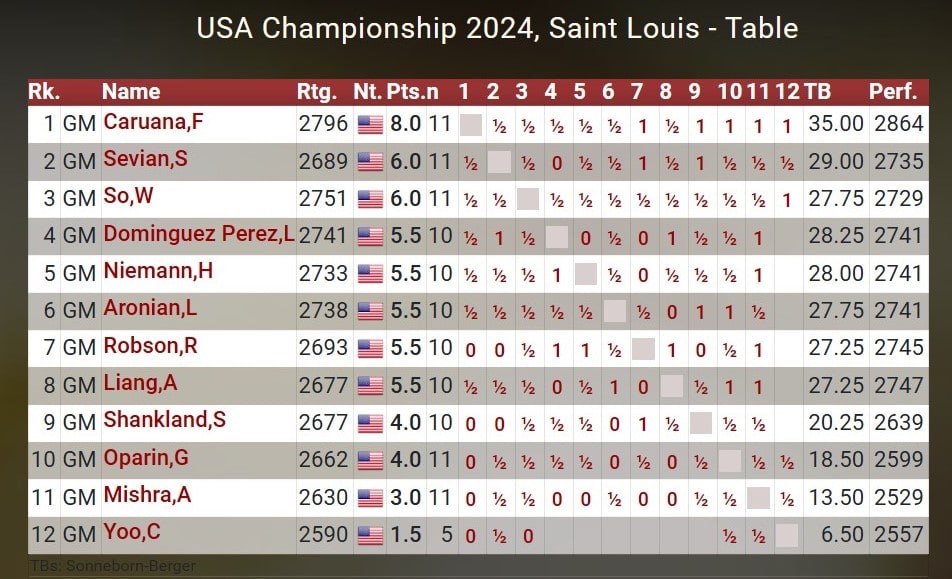
Sufficiently strange final standings of the 2024 US Championship can nevertheless be found:
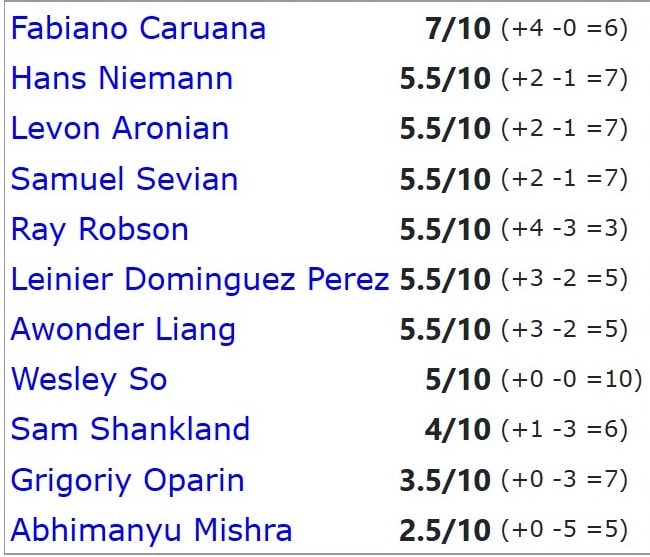
Readers surely noticed that one of the participants did not finish the tournament. We will deal with this and the psychopathic behaviour of some young players in the second part of the article.
Lapses, illogicalities and terrifying blunders…
This is how I would characterise this year's US Championship. „Even the strongest players make gross blunders!“ many might object. Certainly, but it is a trend – the number of such, in chess slang, plunders.
To start with, one example for all. Let's look at the position from the game Shankland vs. Aronian played in round 5.
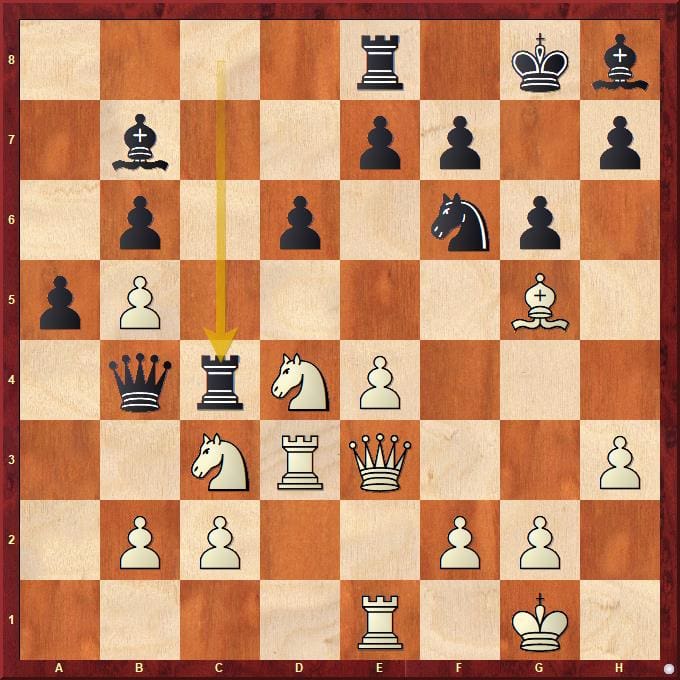
As has been the case for some decades in the Dragon Variation of the Sicilian, without the Rauzer attack White cannot make a move.. Black has obtained excellent play and with the last move 21...Rc4 created two threats typical of Dragon strikes: 22...Ng4 and 22...Nxe4.
After less than 4 minutes of thinking, Levon Grigorievich literally ambushed the black position. What followed was 22.Nf5!!
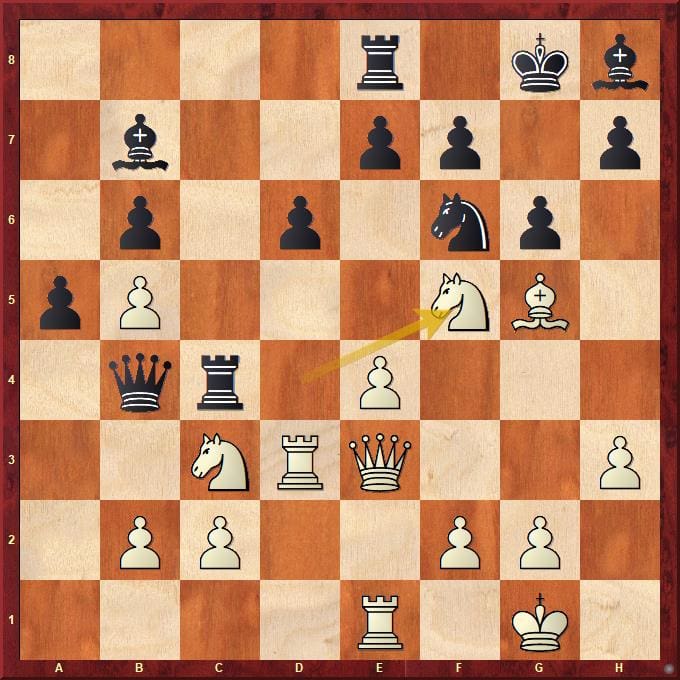
Indeed, threatening 23.Qxb6 and there is truly something to consider. The clock shows that Shankland pondered for more than 9 minutes and continued with a bold but... completely losing 22...gxf5??.
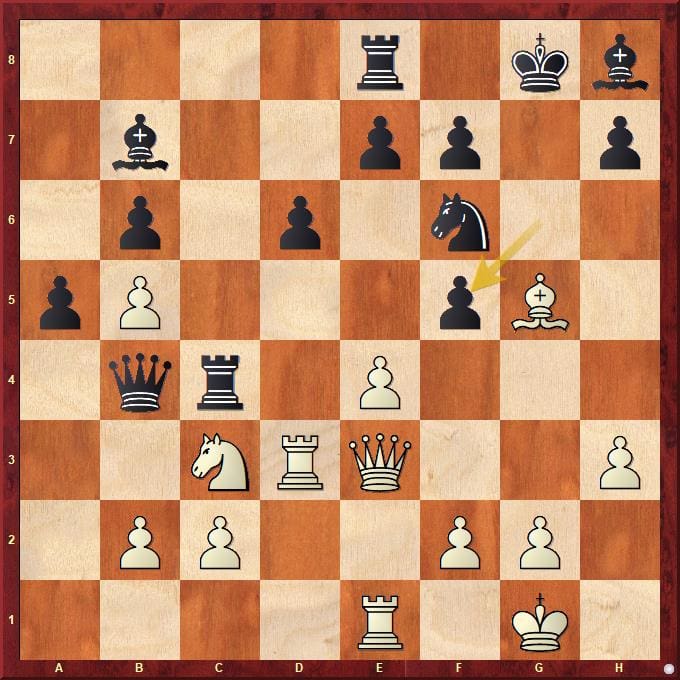
„He simply miscalculated somewhere. After all, the position is complicated, so what,“ perhaps many a reader will say.
But how do you explain this: what followed was 23.Bh6 (let's admit it was not the only move, but certainly the most obvious; threatening a double-move mate)
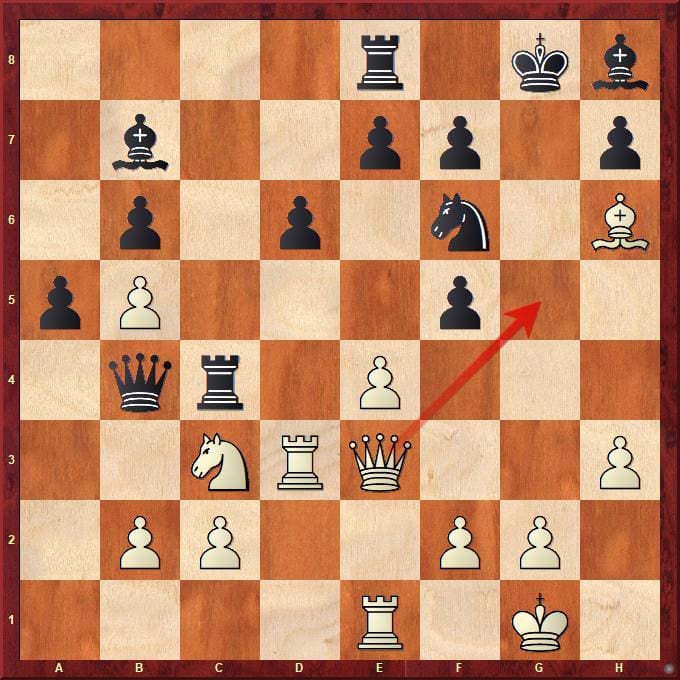
and Black plunged into an even longer, this time more than 10-minute, thinking! After 23...Nxe4 24.Nxe4 Bxe5

(see diagram on the left) followed a brilliant combination 25.Nxd6!! with spectacular final variations that the reader will surely enjoy discovering and calculating for themselves. „So what is the problem? Shankland simply completely overlooked this nice tactical blow, and when he noticed it, it was already too late!“ the reader might argue this time. Yes, I thought the same myself, watching the live broadcast from Saint Louis at night live transmission of round 5.
However, there is one but. thing. If we look once again carefully at the position in the left diagram after 24...Bxe5, we rather find a quite simple alternative winning path, which a top grandmaster and former super-grandmaster should not have missed in calculation! True, it is also a combination (a forced manoeuvre with a sacrifice – let us stick to Botvinnik's simplest definition of a combination), but believe me dear readers, even any of my 10–12-year-old pupils would be able to solve it (it is an easier form of puzzle). Here is a hint: „What do we calculate first in complicated positions?“ „Checks, captures and strong threats,“ have been the answer of my pupils for decades!
The whole game did not escape the attention of streamers. Despite the inglorious ending, it has theoretical value (Sam Shankland is famous for precise preparation), so I chose a video analysis by Sergei Makarychev. Former second to both the twelfth and thirteenth world champions.
Blunders come in pairs!
Who does not know this chess proverb! In the game of round 9 Sevian vs. Dominguez Perez White experienced the truth of this saying firsthand. Apart from two really ugly blunders, the game also contained one exceptionally interesting moment. I would primarily like to present this to the reader in the form of a test. Depending on the choice of a particular continuation, your taste and style of play can be assessed. So let's get started.
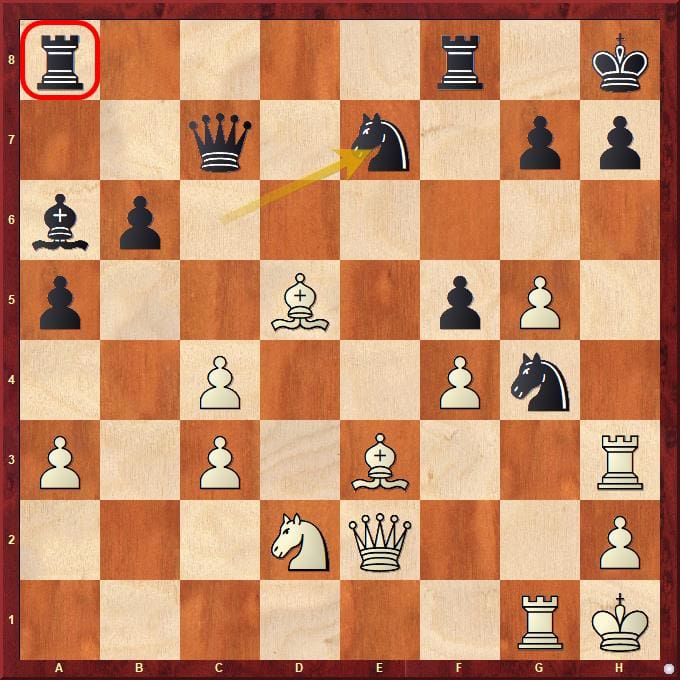
I will say straight away that the experienced American super-grandmaster of Cuban origin probably understood very well that the first part of the game had – to put it mildly – not gone very well for him. He may even have known that he was completely losing, and that is why with the move 25...Ne7! he offered the opponent a rook.
Question: How would you continue here as White?
You can find the complete solution in the viewer below. But now let us see that mistakes really often come in pairs!
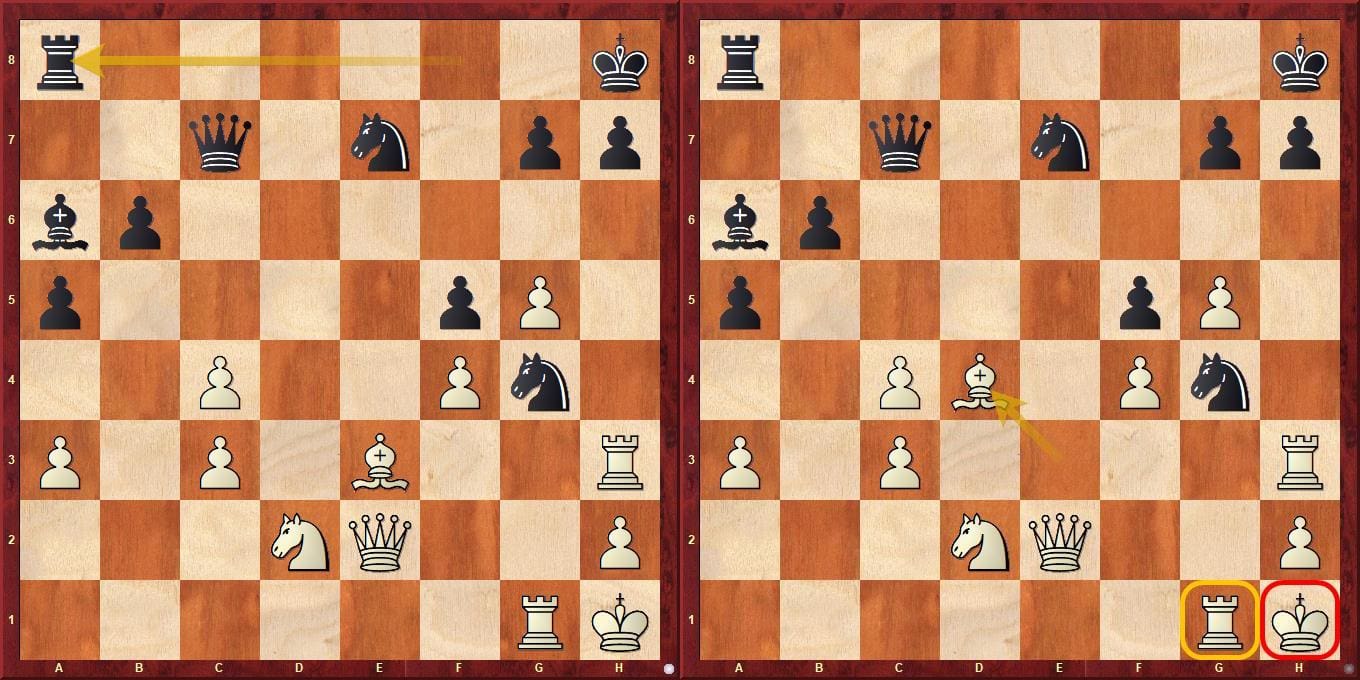
We see that White decided to accept the rook sacrifice! In the position of the left diagram, White is still completely winning, but positions with opposite-coloured bishops in the middlegame require particular precision. White continues with the superficial 27.Bd4?? Sevian first lost his decisive advantage. Of course, the bishop should have been advanced to a strong outpost and centralised, but White did not penetrate into the heart of the position! Why did I mark the White king and rook in the right diagram? Instead of 27.Bd4, the move should have been first 27.Re1!
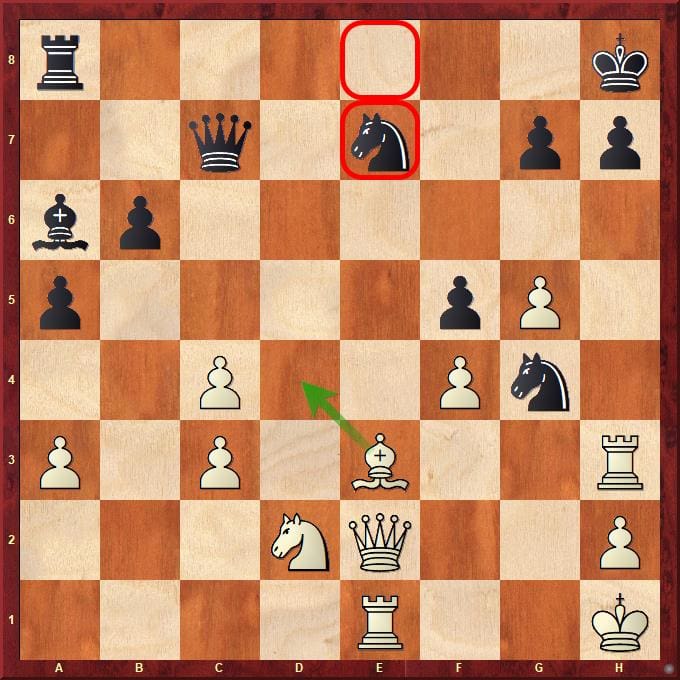
and only after the planned A/ 27...Ng6 28.Bd4. After B\/ 27...Bb7+ do we have for the king a new square 28.Kg1 Ng6 29.Bd4!+-.
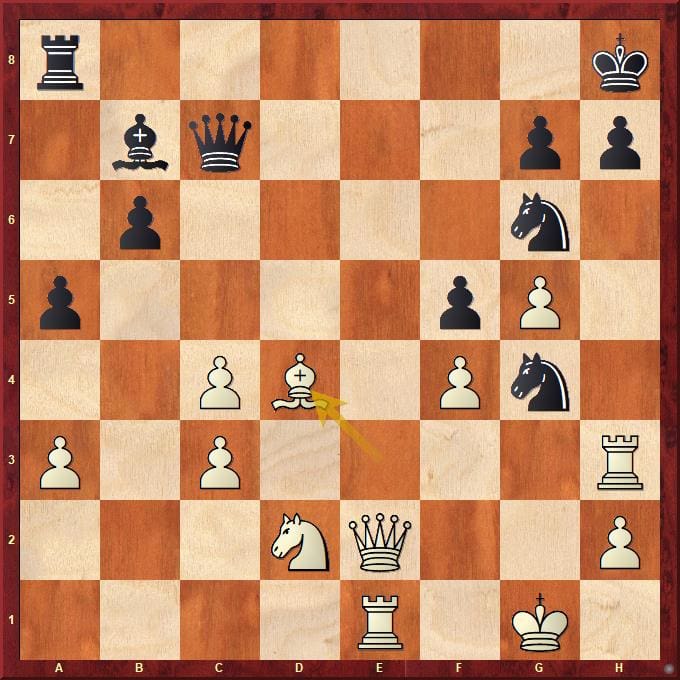
This indirectly protected the pawn on f4: 29...Nxf4?? 30.Qe8+! with mate!
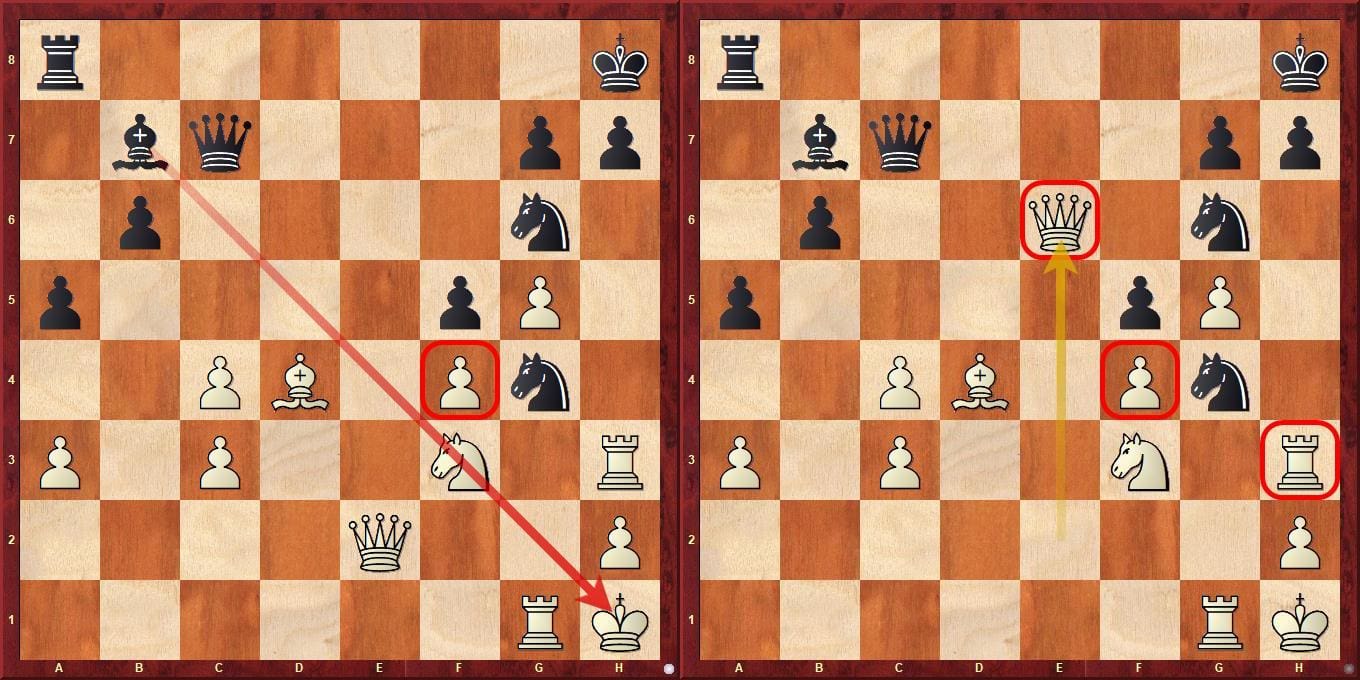
Well, the fight goes on. In the position of the left diagram, Black created after 28...Ng6 a direct threat of Nxf4. I believe that quite clearly again we see a simple tactic 29.Re1, thanks to which the pawn on f4 is indirectly protected. In practice, an unclear situation arose, theoretically the chances of the sides were in complete balance.
I had to hold on to something when on the computer screen appeared 29.Qe6?? (right diagram). After - already I really don't know, surprisingly for White - 29...Nxf4 which is also proven by the computer evaluation of over -5, that resistance is futile. What did the likeable American grandmaster have prepared against the two obvious following moves Nxf4 and Nxh3? So let's emphasise - only material gain still with a crushing attack?
Perhaps even small children here would be able to come up with 29.Re1
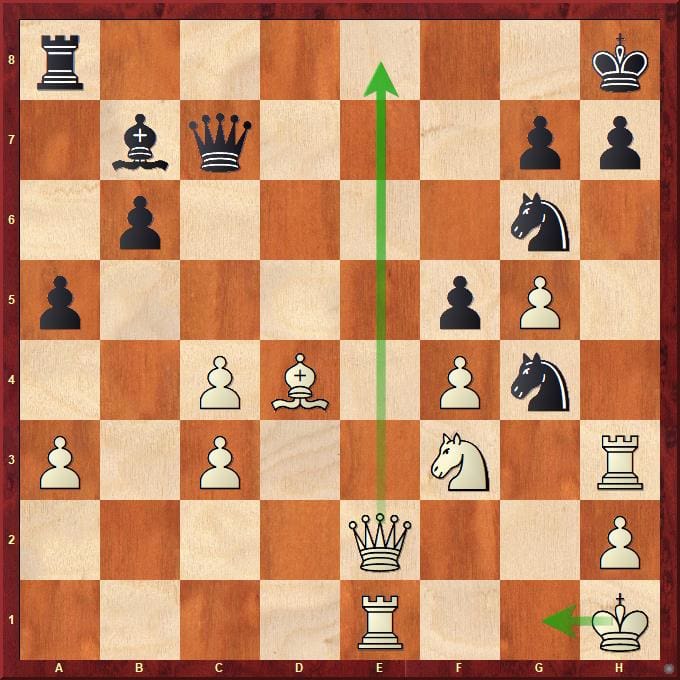
again with possible combinations featuring the theme of a weak eighth rank. These are simply puzzles! I can vividly imagine the position as one of the initial tasks in three- or five-minute games on Chess.com: Black plays Nxf4 and after Qe8+ Rx e8 Rxe8 # the system jumps to the next position...
Of course, no less important here is the freeing of the g1 square for the king! If Sam Sevian feared 29…Be4, then I add that White has at least four (sic) options available to maintain balance on the board!
Only at the final editing stage of the article did I come across a really nice and methodical analysis on YouTube, and thus also of the critical moment of the game (around the 18th minute of the video). This time in German.
I will return stronger!

New York Magazine: Hans Niemann one year after the cheating scandal in chess.
This is how, or similarly, a rather controversial personality speaks quite regularly, one might say, Hans Moke Niemann, if the adjective had not long ago lost its original meaning and was not abused daily. The world chess community is undoubtedly divided in its assessment of this strange young man mainly according to the pattern is cheater – not a cheater.
However, interesting tensions of opinion could be observed in connection with the question of whether the whole affair (which began precisely in Saint Louis on 4 September 2022 after his victory over then world champion Carlsen, who then withdrew from the tournament and left) harmed or helped Niemann. Hans still complains about many cancelled tournaments and matches that he could otherwise have played. According to his words, this ordeal continues to this day.
On the other hand, just the publicity of a current grandmaster rated around 2,730, and also an unknown but certainly very decent amount he received in an out-of-court settlement with Carlsen, may in fact far outweigh his harm.
Niemann said in his post-tournament stream that he is not satisfied with his result at this year’s US Championship. After all, who would be with a meagre +1 and only two wins, right?
A gross blunder he made in the game against Ray Robson, has an unusual psychological subtext.
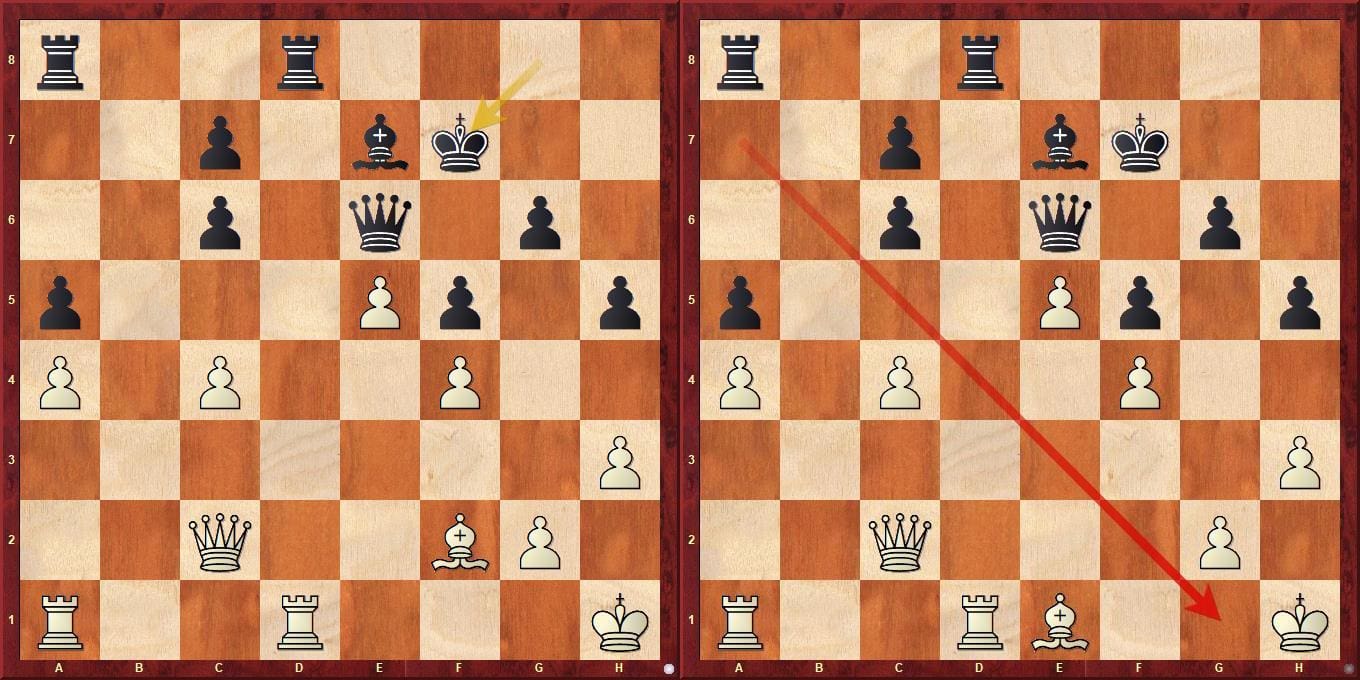
In the position of the left diagram, White sacrificed about half of his remaining six minutes and played 33.Be1(!!).
This could very well have been a truly brilliant psychological trap! Notice that the queen’s bishop ceases to control the now visibly important a7-g1 diagonal. Especially striking is the relinquishing of control over the c5 square. But that is not all. Moreover, it somehow retreats and suggests that his interest will be directed to the queenside against the pawn on a5, or possibly he can also guard Black’s outpost square b4 against the manoeuvre Rb8-b4.
However, this will prove to be brilliant body feint!
Niemann, whose style, that is his strengths and weaknesses, can be quite easily identified even from not very deep analyses, now finds himself in a dynamically tense situation and the new circumstances of the position completely escape him! (Whether this is caused by superficial play in the game – at this moment he still had more than an hour left to think – we will leave aside for now.)
After about two minutes followed the expected but grossly mistaken 33...Bb5??.
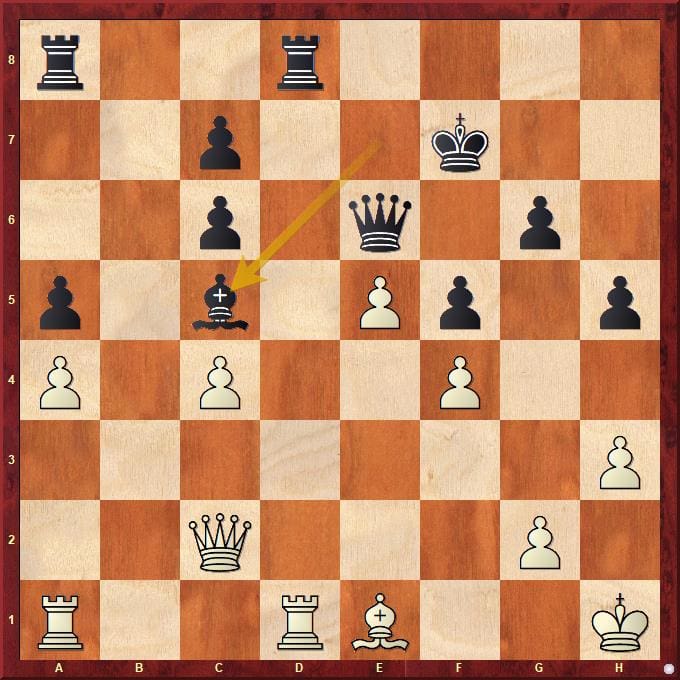
In the analyses we can see how quickly the position, which was almost equal just two moves earlier, collapses at great speed. Moreover, in the final (sic) execution, control of the key central file by White will of course play a significant role.
How do you think White continued?
Towards the end of the game Niemann could still have set a trap. It is not entirely excluded that on the seconds White could have caught him with the controlling 40th move...
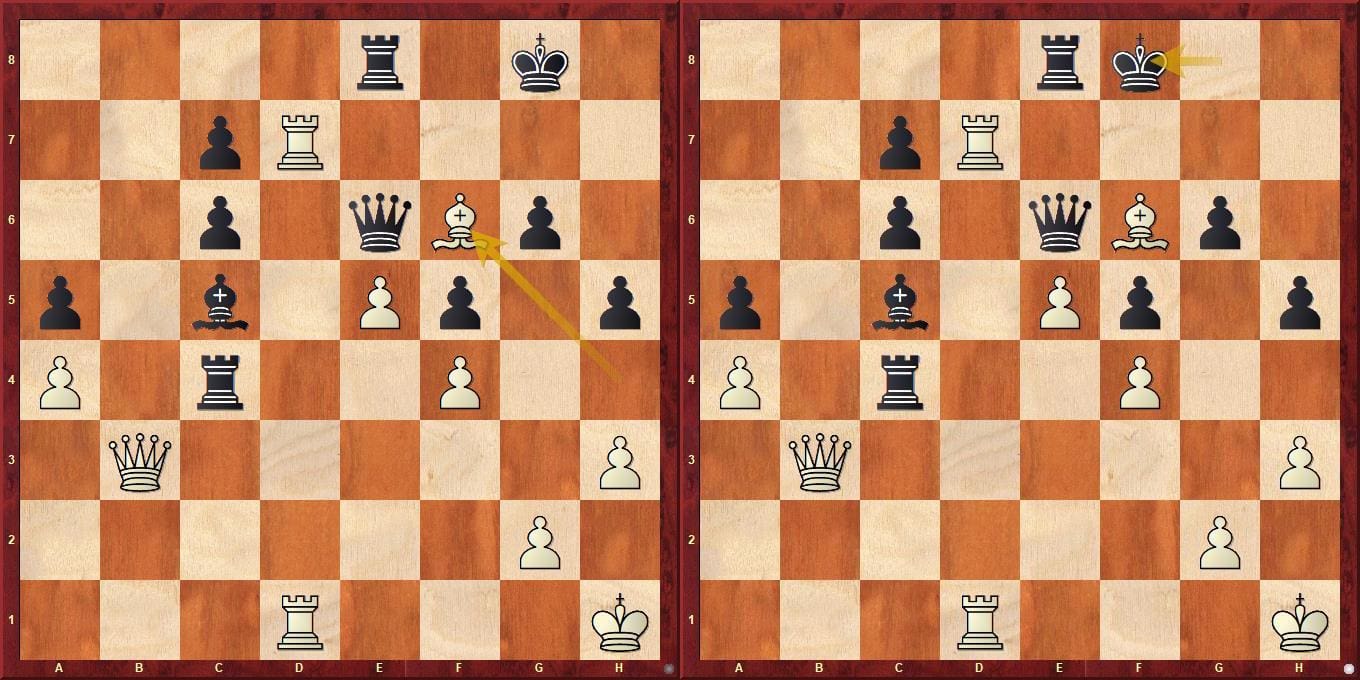
After 39.Bf6 Niemann could have replied 39...Kf8 (!). How would you have responded with White?
Readers who were, for example, interested in the variation chosen by Robson can again enjoy Sergei Yurievich’s analysis below.
Curiosities of the last round
The last round of the championship. If Fabiano Caruana were to slip up, the twenty-one-year-old could become the US champion today of course the former American chess prodigy Liang Awonder. We follow the game Liang Awonder vs. Dominguez Perez.
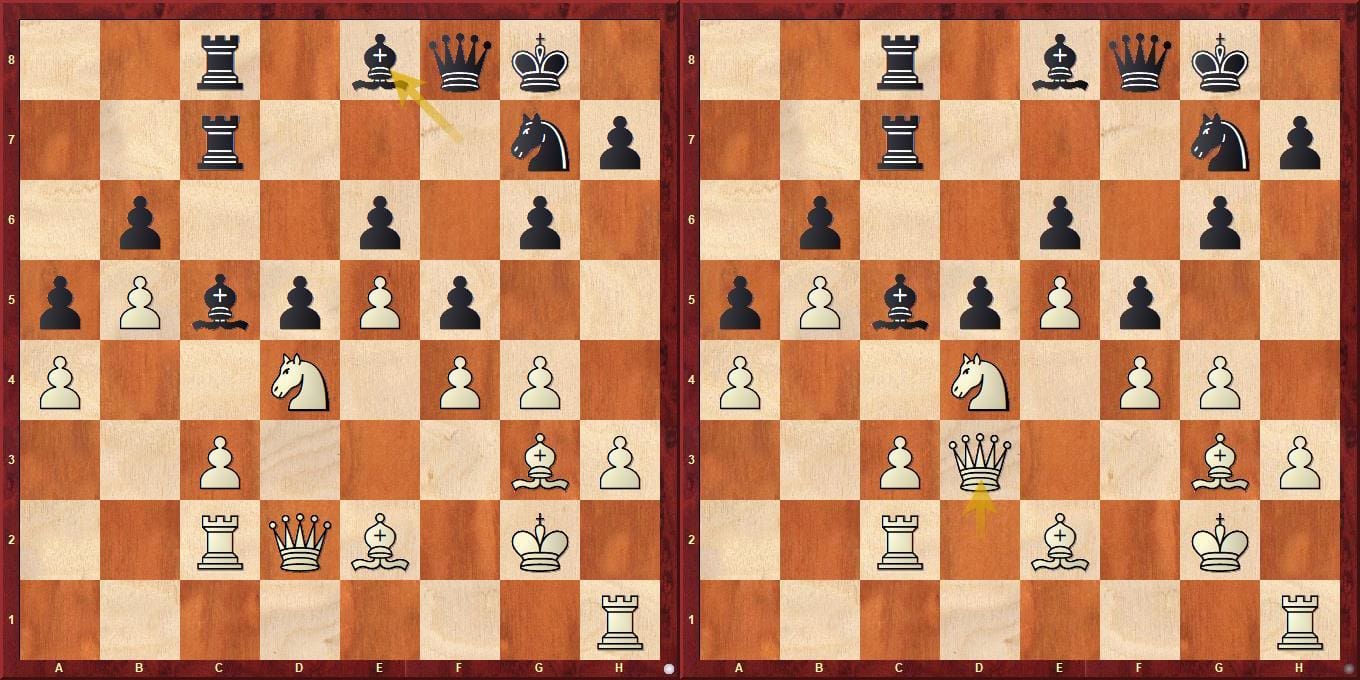
With his last move 40...Be8? Black also passed the time control and Liang Awonder therefore had plenty of time to consider how to proceed. Objectively, White's side shows a greater advantage (once again). The video recording shows that the following losing blunder was made rather in seconds than minutes!
Followed by 41.Qd3?? (diagram on the right)
If we see the position for the first time, it is not exactly easy to find Black's winning continuation! But still, will you try, to do so, dear readers?
Miraculous young talents or self-centred aggressive brats?
A sentence from P. D. James's dystopian novel The Children of Men has stayed with me forever: „If we treat children like gods from an early age, they are prone to behave like devils in adulthood.“ One sentence that sums it all up, and whose deep truth I have been able to verify many times during my decades-long coaching practice!
Permissive or anti-authoritarian child-rearing: We cannot place too demanding requirements on them! We create schools where pupils can rest during the lesson if they feel tired. So we install mats or even beds in classrooms (this is not a joke). No memorising formulas or dates, but only an attempt to instil connections. If the child deems it appropriate, it will transform like a dog or a cat. For example, in a maths lesson, when asked what 5+4 is, simply barking nine times (I'm not making this up, this really happens).
Chess players, however, represent the imaginary pinnacle of the intelligence pyramid and naturally they crave knowledge. Highly addictive and often deliberately as stupid as possible computer games generally do not interest them at all. What interests them is the essence of problems! They feel euphoria from the very process of discovery, and that is how it should be!
Such children, and thus also young gifted chess players, can be found everywhere: mostly among Jews, in the countries of the former USSR, China and India, but also in Latin America and of course in the USA.
And since this article concerns the recent US Championship, I will naturally focus on young American players. I will also omit the racial question, although a look at the composition of the US team at the Olympiad, as well as at the US Championships, cannot fail to arouse surprise in many, and in the better informed at best a necessary smile.
I do not have exact information whether there is a fixed qualification system in the USA. Nevertheless, for several years I have been surprised by the selection of some chess players.
Five grandmasters born in the 21st century took part in this year's US Championship (for clarity, aware of the inaccuracy, I include the year 2000 in this).
Samuel Sevian *2000
Hans Moke Niemann *2003
Liang Awonder *2003
Christopher Yoo *2006
Abhimanyu Mishra *2009
O Hansi Nieman has already been said and written so much that with further reflections I would only repeat what is long known. I will add that Hans's psychopathic tendencies manifested themselves at last year's championship. After one of the lost games he damaged the hotel room equipment and had to pay a fine.
I admit that only a poor imitation of what Nieman can do is the following video. Some will disagree with me, but such victorious gestures of joy (at the very end of the video) belong… well, to other sports…
What would probably happen if Hans lost the decisive online game?!
Samuel Sevian He is a chess player who makes a very solid impression. If he was considered a prodigy in the USA, he did not quite live up to many people's expectations. His personal peak rating is 2,703. There is basically nothing more to write about him.
The Mishra Miracle


He gained huge publicity in mid-2021 when he managed to break Sergei Karjakin's nearly 20-year-old record as the youngest grandmaster in chess history for several months.
Abhimanyu Mishra published his first book at the age of 12, and his father naturally did not hesitate to assure the American chess community that he had invested $100,000 in his son and… expects a return…
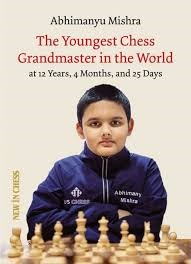
On Chessbase.com we can read this: 27 September 2022. This book contains a revealing self-portrait of Abhimanyu Mishra. The youngest grandmaster in chess history tells the story of a very ambitious family project. With the support of his father, mother and sister, Abhi sets out to break a nineteen-year-old world record. In June 2022, at the height of the Covid pandemic, he succeeded against all odds: "I should have been jumping for joy, but I was so moved that I ended up with tears in my eyes in my father's arms.“
no comment…
American chess naturally longs to follow in the footsteps of a true prodigy and a genuine chess genius Robert James Fischer. When the project failed with Josh Waitzkin (about the prodigy who in fact never really was one there is even a film; see the article About coaches from 9/2023), hopes were pinned on Mishra.
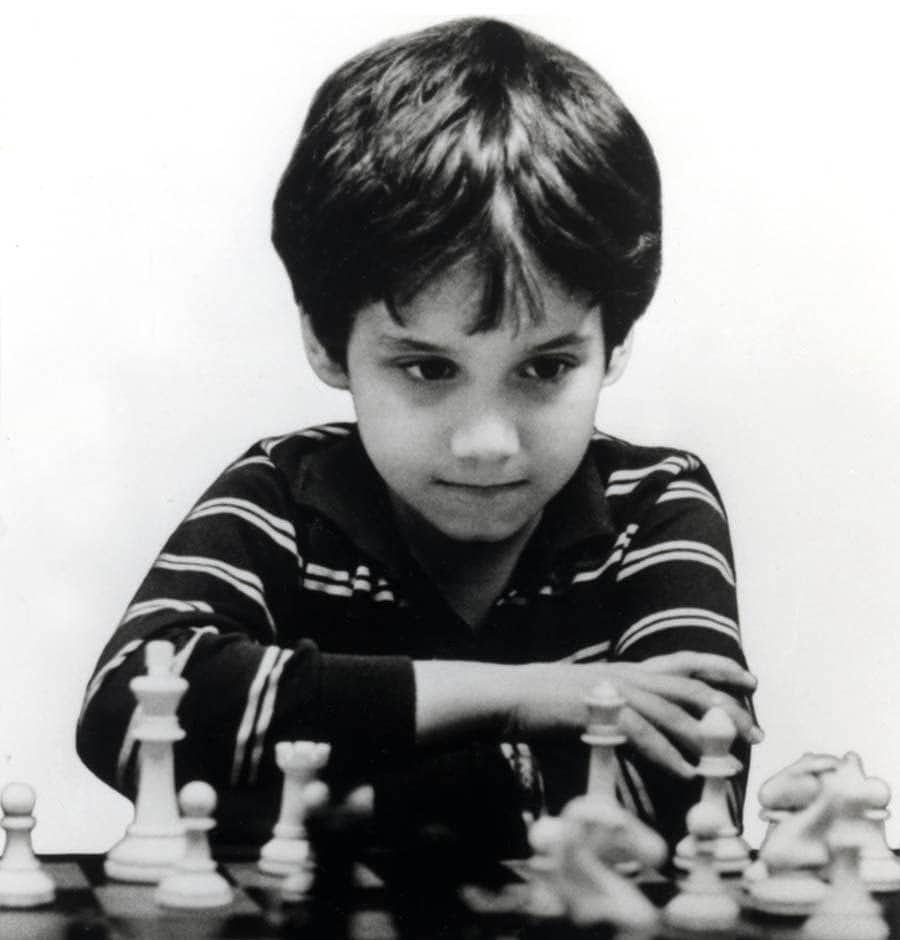
Joshua Waitzkin (born 4 December 1976) is a former American chess player, world champion in martial arts and author. He was considered a prodigy… but which number?
For interest, let us look at last year's championship table:
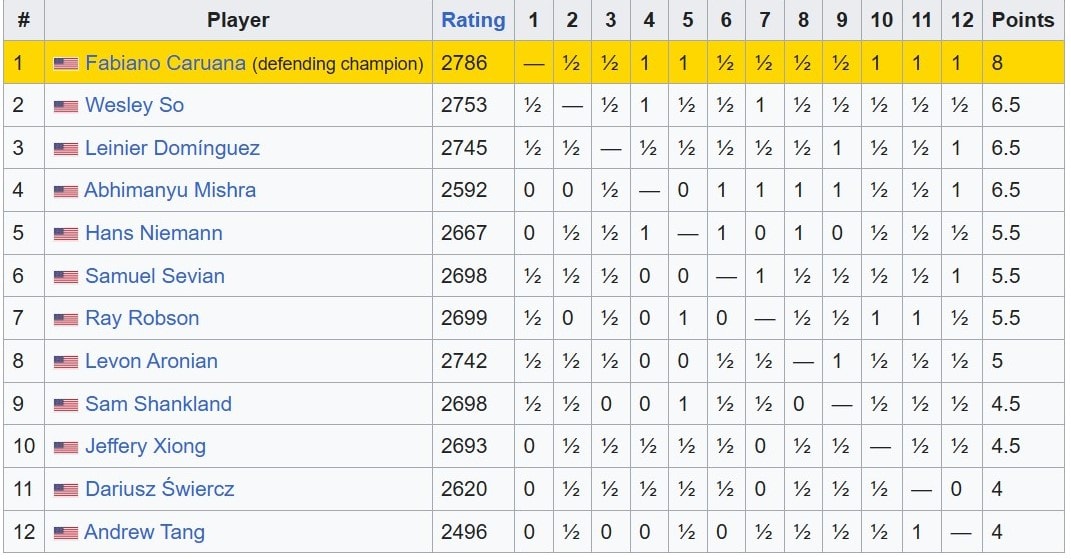
October 2023: Abhimanyu Mishra finished at +2, won five games and shared second place! At that time he was talked about as Magnus Carlsen's successor, an almost certain future world champion, and interviews followed one after another. How to compare such a result with this year's -5, five losses and last place?
However, at least I have the feeling that the Indian-American boy is still on the trajectory of a relatively (that is, in America) normally raised child…
Mishra lost most of his unsuccessful games in technical endgames and definitely has work to do…
Liang Awonder
I remembered the name of this recently junior player (and of course also a former American prodigy, as usual) after one of his nice attacking games against Levon Aronian in a gambit that I paid attention to at the time. Liang Awonder also became a medallist of the United States Championship… in 2022:
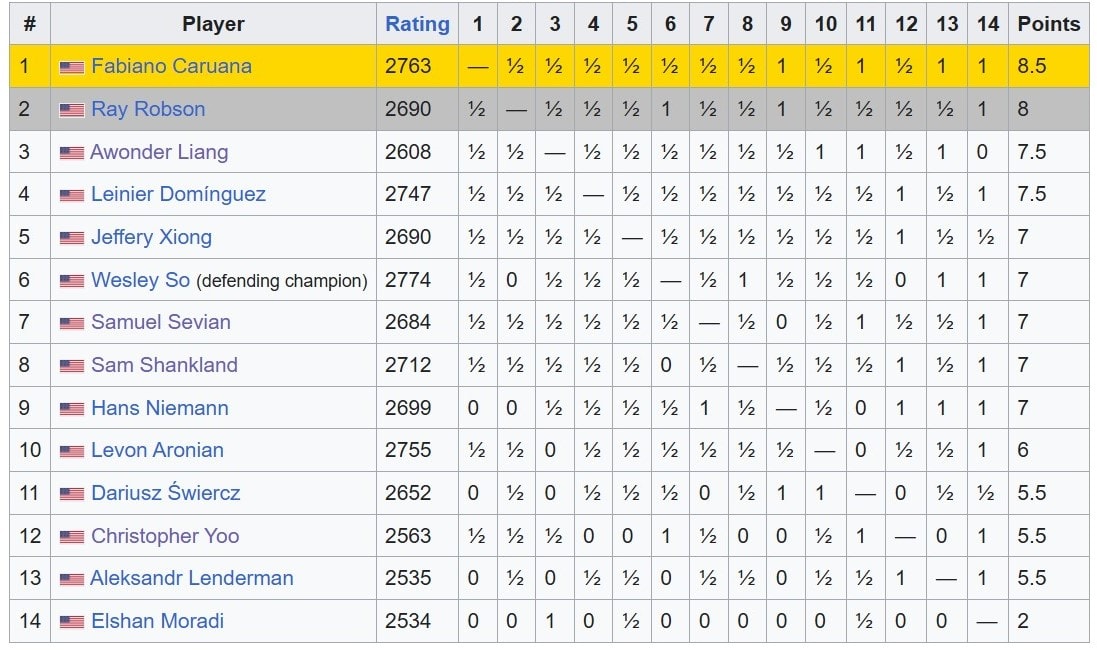
Let us be critical. Let us watch the following short video and decide, whether this boy is mentally completely sound.
The final struggle and the title of United States Champion 2024. Ling Awonder begins the game with Anderssen's Opening 1.a3…
The Christopher Yoo Incident

While last year's championship in Saint Louis was marred by an unpleasant incident involving Hans Niemann and damaged hotel room equipment (he demolished the equipment after another lost game, specifically against Ray Robson), this year something far more serious occurred.
Although the most interesting thing, at least for me, was the game itself Yoo vs. Caruana (which we will analyse in detail), I cannot fail to convey to readers the psychopathic and subsequent criminal behaviour of the 17-year-old young man (also a former prodigy 🙂).
Let us first watch a video of the very end of the game.
The seventeen-year-old grandmaster, whose rating currently does not even reach 2,600, apparently believes he was completely winning the game. Poor Fabiano hastily leaves the game to avoid the obviously enraged and self-control-lacking youngster getting away with it..
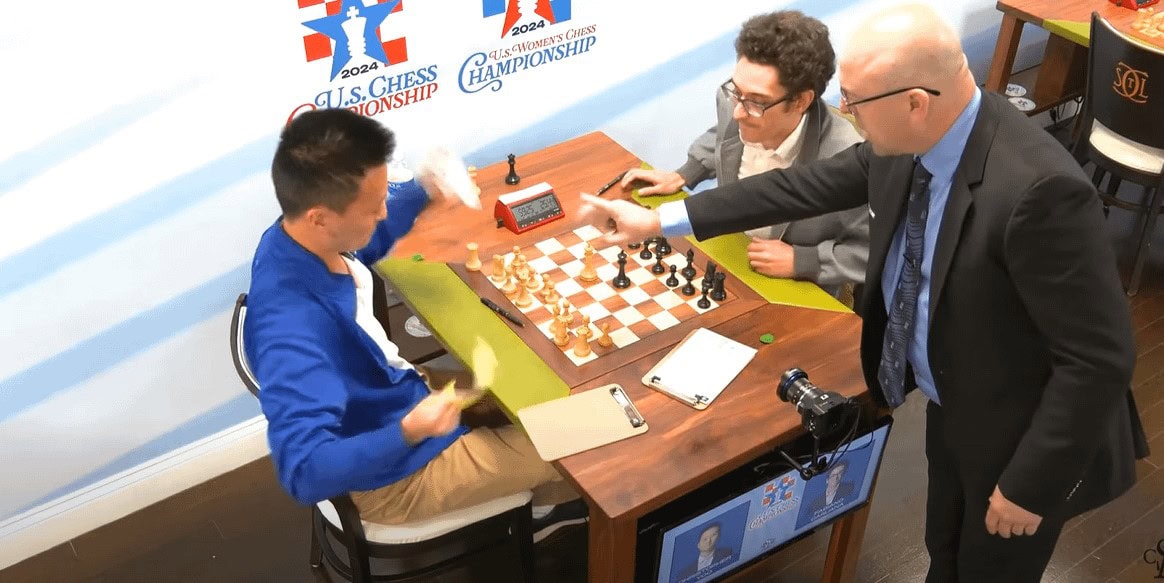
Times are changing. If we had handed over a game score in this condition to the arbiter in ‚my time‘ (the score sheet is still legally considered the property of the organiser), we would risk at least a reprimand, at most disqualification from the tournament and disciplinary proceedings. I even remember that in the regional men's championship of the West Bohemian region, one of the then greatest Czechoslovak youth talents wrote so terribly that the arbiter made him rewrite the score sheet. When he was not satisfied with the legibility even the second time (it really was impossible to identify the moves; for example, writing the abbreviation N across three lines of the score sheet is already too much 🙂 ), my then chess role model took the score sheet home and… retyped the game record on a typewriter 🙂
„But this is nothing today,“ younger readers might argue again. And they are right. The main and criminal incident happened only upon leaving – Christopher running out of the playing hall.
An attack on a journalist turned away (to use the old term), i.e. a blow to the back with probable fall of the victim, was subsequently classified by the summoned police as a criminal offence. Of course, this video is probably not available on the internet and has been removed. The police report was then formulated as follows:
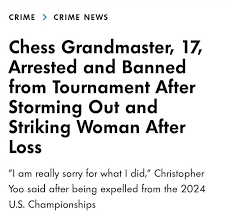
In a statement to PEOPLE, the Metropolitan Police Department of St. Louis said, „At around 5:00 pm on October 16, officers were called to the Chess Club following a report of a 17-year-old male who struck a 24-year-old woman from behind with a fist. The young man was charged with fourth-degree assault and was subsequently handed over to his parents on the order of the juvenile court judge."
It was all caused by a positional sacrifice of the exchange 🙂

By coincidence, the game Yoo vs. Caruana became the most interesting and comprehensive game of the entire championship! Of course, there is a performance gap between the two grandmasters, and we see that Fabiano has a rating more than 200 points higher. It is therefore clear that he will try to play for a win with the black pieces, especially since the tournament has not yet even reached its second half. Caruana was evidently willing to accept a certain degree of risk, also relying on his opponent's relative inexperience. We must understand the game from this perspective as well, as I allowed myself to consider and speculate a little more about the risk in the commentary itself.
This exceptionally rich game touches on many otherwise isolated themes: positional exchange sacrifice, the battle with a pair of bishops, the absolute value of pieces (a view on it from various chess schools in history), attack on the king, defence, and last but not least psychological aspects: trap or bluff, a tolerable or already intolerable degree of risk...
If we want to deal with such a difficult topic as positional exchange sacrifice, we should so to speak first go back to the roots. This strategic method has of course been known for a long time, but it was given its proper stamp by the 9th world champion Tigran Vartanovich Petrosian. The whole topic of positional exchange sacrifice would of course fill a voluminous book, certainly not just the few-minute videos commonly found on the internet today. Even here, however, there is no room for truly deep research, so we must be content with presenting you, dear readers, with only one comparative example besides the game itself.
Let us start with a fairly simple test.
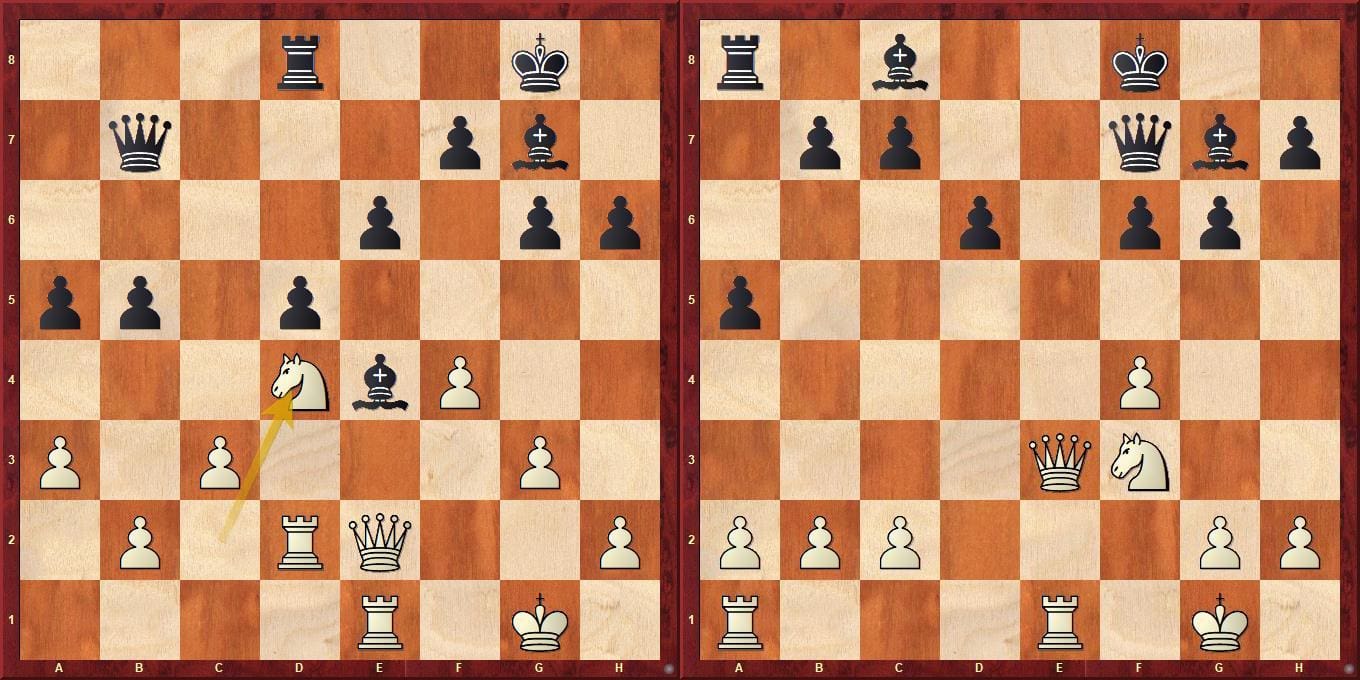
One of the positions arose in an old Petrosian game, the other then 'resembles' the example we analyse below.
In both cases Black sacrificed the exchange and it is Black to move. Questions:
Which of the diagram positions is more favourable for Black?
How would you evaluate the prospects of the sides?
Absolute piece value and past disputes
I will briefly comment generally on the material balance (not yet on the qualities of the positions in the diagrams): The problem of various chess schools of the past revolves around the absolute value of the rook. In our regions а in times it is customary to express the absolute value of the rook in pawn units quite consistently by the number 5. This was probably primarily influenced by the German school led by Tarrasch. However, the Russian – Soviet chess school approached the problem differently!
I remember how many years ago I was surprised by a rewritten Petrosian lesson, in which at the beginning he gave the absolute value of the rook only 4! „How is this possible? What nonsense is this?“ younger readers will probably say, arguing that on the internet they write…


The secret this may be due, among other things, to rounding to whole numbers. In Soviet literature, we can read that the absolute value of the rook is 4.5.
Well, and now dear readers please dive into your memory! How and where were you taught to round decimal numbers ending with five at primary school? I remember that upwards, but my father claimed the exact opposite! Of course, those for whom – let’s say – mathematics became a lifelong companion know about the so-called. rounding to even. But that would be going too far.
A very interesting article on this problem, among other things, was published at the end of 2023 in the Russian monthly "Šachmatnoje obozrenije 64". The excellent analyst Grandmaster Alexey Kuzmin here describes his 'Coaching struggles in chess-developing Qatar.
Absolute value of the rook - Kuzmin
The problem of the absolute value of pieces on the diagrams above is further influenced by the specific material balance.
- in both cases Black gained a pawn in addition to the exchange
- In the article Bishop or Knight?... I deal with Steinitz's view on the value of the bishop and knight. The bottom line is that it is debatable whether White has a material advantage in the positions of both diagrams, and whether the balance of forces rook + knight vs. two bishops + pawn gives White a material advantage. In any case, we will talk o sacrifices, and the debate whether in both cases it was rather a so-called non-equivalent exchange, let us leave aside for now.
Do not be afraid to sacrifice the exchange
A positional exchange sacrifice was among two particularly favourites of the ninth world champion Tigran Vartanovich Petrosian (1929-1984). The limited space of the article forced me to look for an example that on one hand contained many interesting points, and on the other resembled as much as possible the main game Yoo vs. Caruana.
The game Troianescu vs. Petrosian, Bucharest 1953 came to my mind immediately. It is one – let’s say – of the five most famous Petrosian games with an exchange sacrifice. I was also looking forward to and very curious about how the engines would comment on the old analyses. So, what came out of all this? The reader can judge for themselves!
The example with Petrosian's comments and notes was part of the lesson „Positional Exchange Sacrifice“ which Tigran Vartanovich gave at the Tbilisi University of Chess Culture in 1982. Some of his conclusions and the variations given must therefore be understood in this context!
Now we can finally move on to the final and main example. It would be interesting to find out whether during the game Fabiano recalled some connections either directly from Tigran Vartanovich's old games or generally from his work on this topic. I add that Caruana, unlike many other super grandmasters of roughly the same age, certainly does not lack classical chess education. After all, in his childhood he was under the care of the excellent former Soviet, later Russian and Spanish coach Boris Anatolyevich Zlotnik!
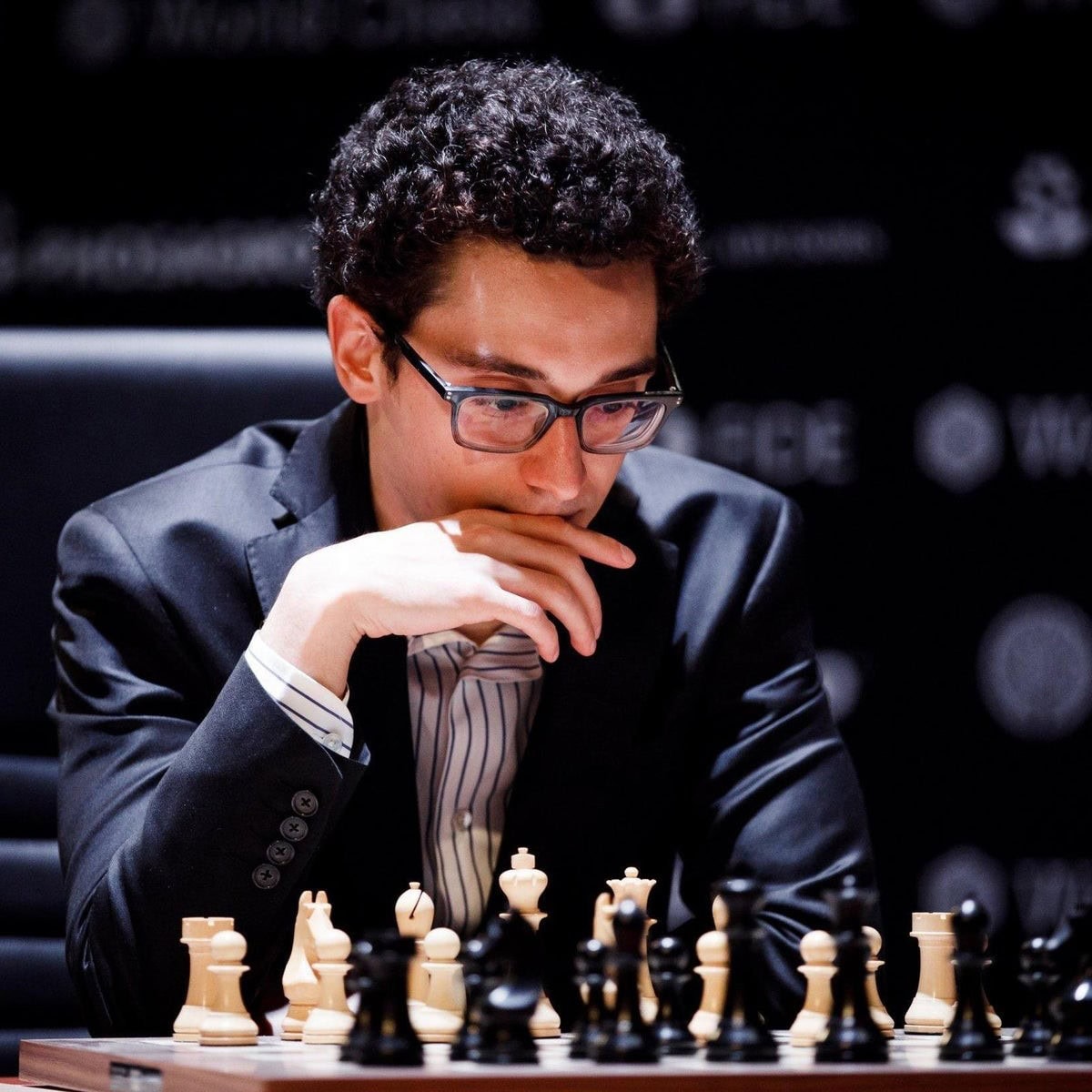
London 2018: Caruana lost to Carlsen in the World Championship match only in the tiebreak. I sincerely wish the very likeable, serious and hardworking Fabi – as many call him – to still win the chess crown! Why still? Well, overcoming the „attacks“ of much younger Eastern players will become increasingly difficult… and Caruana, who reminds me not only of Botvinnik including his maximalist approach to finding the best moves, unfortunately sometimes suffers from psychological issues…
The inglorious US Championship has, in my opinion, become a clear reflection of the decline of American society in many respects this year! If violence and aggression are already seeping even into the intellectual elite, which certainly includes highly intelligent grandmasters, then it is five to twelve… if not five past twelve.
What do the former American chess prodigies probably think about the returning champion Fabiano Caruana right now?...