

The second part of the article about the Candidates Tournament will focus mainly on Sindarov's „black maturities“. It was precisely the game against Caruana that showed the Uzbek youngster is no longer just a talented attacker, but a player capable of standing firm even in the toughest positional and psychological tests. The duel with Caruana struck me almost as a symbolic rite of passage – the moment when talent definitively transforms into a contender for the world title.
However, Sindarov also made a serious mistake in Cyprus. We will talk about his biggest blunder in the entire tournament, but also about the people behind his extraordinary rise. Who is coach Roman Vidoniak, whose name is increasingly resonating in the chess world? And who is the „mysterious“ young man who regularly accompanies Sindarov before his games?
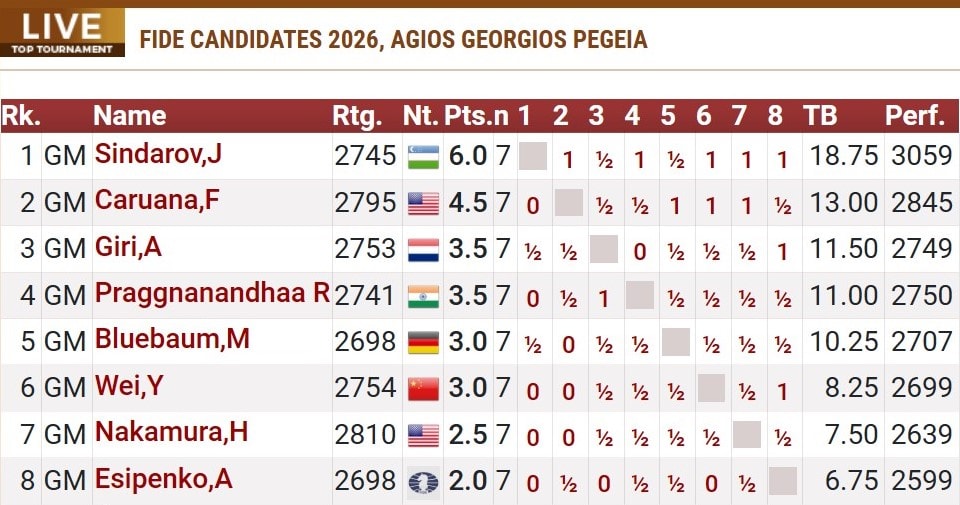
We left the Candidates Tournament after the first half. Sindarov led the pack with a fairly solid lead, but considering he still had the black pieces in the return games against Caruana and Giri, nothing was really certain! Fabiano remained the same favourite as before the tournament, but he would have to:
- take revenge in the game against Sindarov
- not falter against the other opponents
- deal with the formidable Hikaru Nakamura
The mutual duel between Caruana and Sindarov was scheduled for round 11. Until then, things could – and did – happen! Everything came to light fully already in the following round!
Caruana's dream fades in round 8
Caruana failed to handle a four-rook endgame in the game against Nakamura and his series of failures against this particularly unpleasant opponent for him thus – despite the anomaly in the first round – actually continued.
Let us now look at a shortened record of the game, the post-game press conference, and Nakamura's analysis of his only (!) win in the entire tournament.
The table after round 8 is certainly worth recalling.
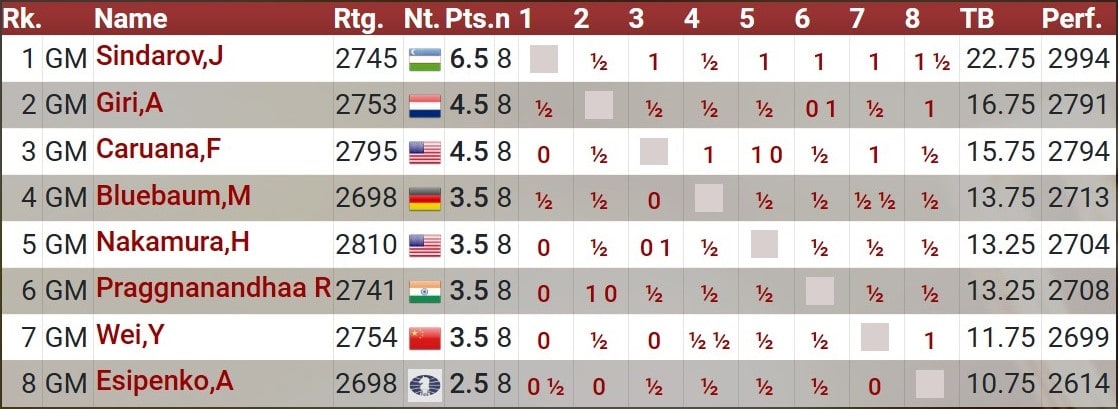
Because Giri defeated Praggnanandhaa, two hounds with +1 set off after Sindarov. The chance that they would catch the hare was not great, but it still existed. After all, in the case of a win in their mutual game, the lead would shrink to a more bearable margin. And the hounds – or rather greyhounds 😊 – still had six attempts...
The moment when it could have been decided
Javokhir's biggest mistake of the tournament was in the round 9 game with the black pieces against Blübaum. In the game Blübaum vs. Sindarov White has just captured a knight with the move 24.bxa4
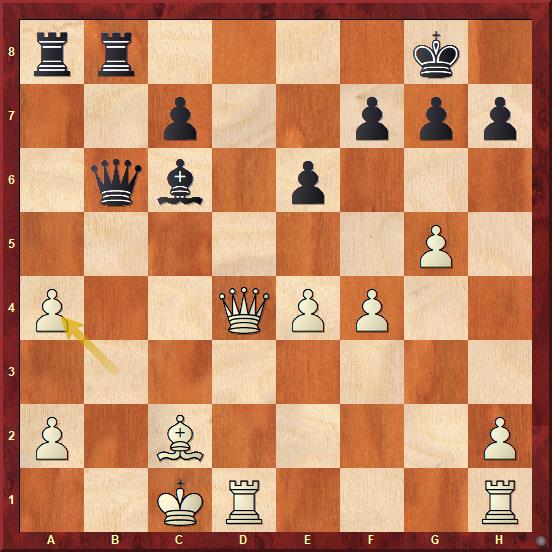
and not only an experienced chess player will sense that… well, White's (king) is not in a good mood. „“How and why would you continue if you were Black?" I asked at the end of the first part of the article.
On the night after the game – still full of impressions – I wrote in the comments of the game analysis here: „After a subtle, but for a human difficult to find 24...Qb7!!
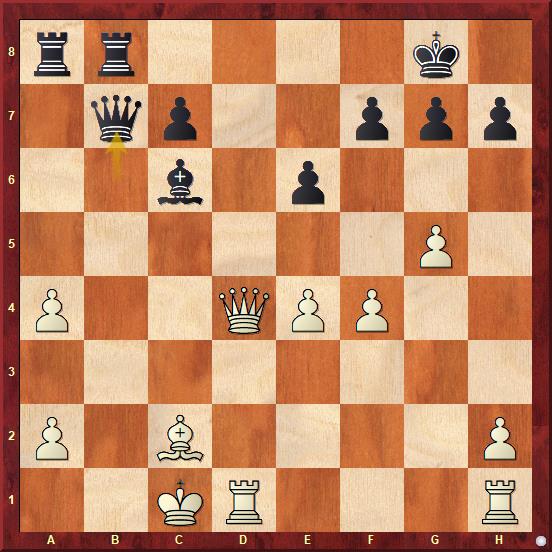
the position is decided! Let's see why the chief of the general staff's queen is best kept on the b-file…“ With hindsight, I wondered how I could have written such nonsense about a „hard to find move“. Well, on one hand 24...Qb7 is indeed a difficult move to find, on the other hand not at all! How is that possible? It depends on how you approach the position, how you are used to thinking or rather which type of chess player you belong to…
Inductively thinking chess players – „logicians“ or rather „calculators“, who immediately start calculating variations, can indeed hit a barrier of variations here. However, in my opinion the position primarily requires a deductive approach! Intuition!
The initial thought of intuitively minded players might look like this (or rather they would feel the situation like this): „White's king is severely weakened and a direct attack should decide! But for that I must keep the queen! The middlegame must remain on the board!“
Only then would the necessary calculation follow, which should convince us that the general initial thought is correct – the proofs in the form of variations lie on the table!
It is also appropriate to add that Black was winning even after 24...Qa5,
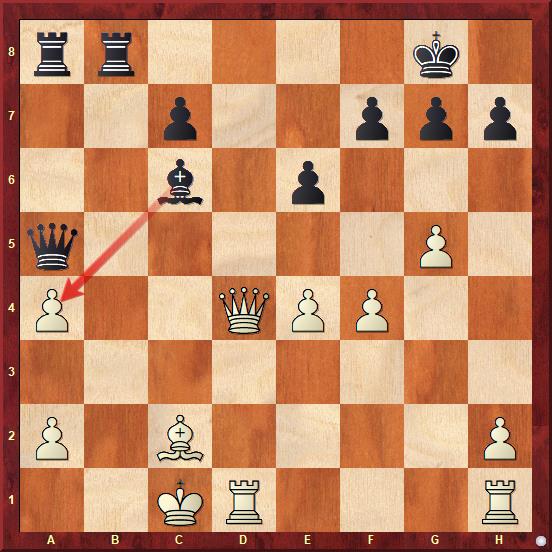
as we will see in the viewer.
Sindarov, however, after 11 seconds (sic) of thinking allowed White to exchange queens and enter the endgame after 24...Bxa4?? 25.Qxb6 cxb6 26.Bb3!=
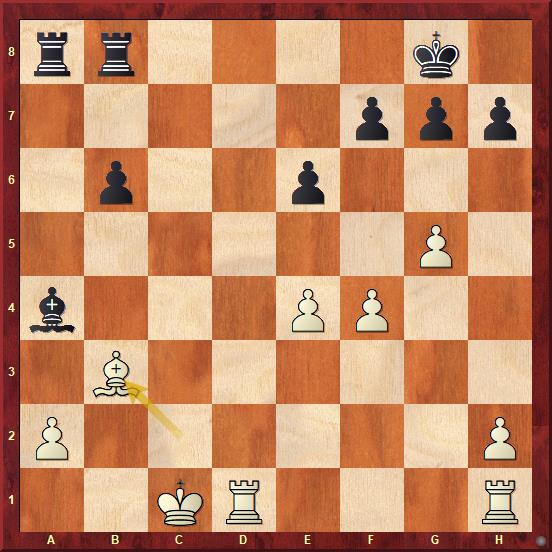
At night I wrote in the comments: „This blunder, which hopefully will not cost Javokhir the victory in the Candidates Tournament (although he still leads by a full 1.5 points), is psychologically explainable for several reasons:
- Sindarov believed that even transitioning to a four-rook endgame gave him a certain win.
- His subconscious urges him to ‚play it safe‘.
- If he saw a chance to win by a calmer route, he probably rejected the line he had also considered before by a method of selection.
I add that it was probably the move 24...Qa5.“
The main variations are presented in the viewer and actually also in the videos. Nevertheless, I cannot shake a certain aftertaste... of the present day. Although it is good to remember that this year's Candidates Tournament was won by a player who, just a few decades ago, would have been competing in the World Junior Championship. What is it really about?
If you open, for example, Kasparov's book of games „My Chess Career“, Volume 1 (1973-1985) and leaf through the first examples... Garry Kimovich simply never exchanged queens! Neither as a teenager, nor as a junior, nor even as a child! And what about Alekhine??...
Below, as usual, let us first look at the shortened game score.
The following video recording from the post-game press conference is set exactly at the moment when Sindarov is asked about the critical moment of the game!
Well, but because – as we already know from the previous part of the article – Caruana lost the second game in a row after a poor performance, this time with White against Giri, only one of the two pursuers remained!
Four rounds before the end of the tournament, Sindarov still maintains a lead of 1.5 points. If Anish were to defeat Javokhir with the White pieces in their mutual game, the fight would go down to the wire and the spectators might even look forward to a tiebreak.
However, in the next round, Sindarov quite literally perfected his revenge!
A slip of the quick hand offered an attractive game
In round 10, the game that attracted the most attention – indeed a certain commotion – was Sindarov vs. Praggnanandhaa.
Black chose a fairly popular variation today – a kind of hybrid of the orthodox defence of the Queen's Gambit and the Ragozin Defence. The first interesting moment (which only became clear later, as we are still in „deep theory“) occurred after 8...g5.
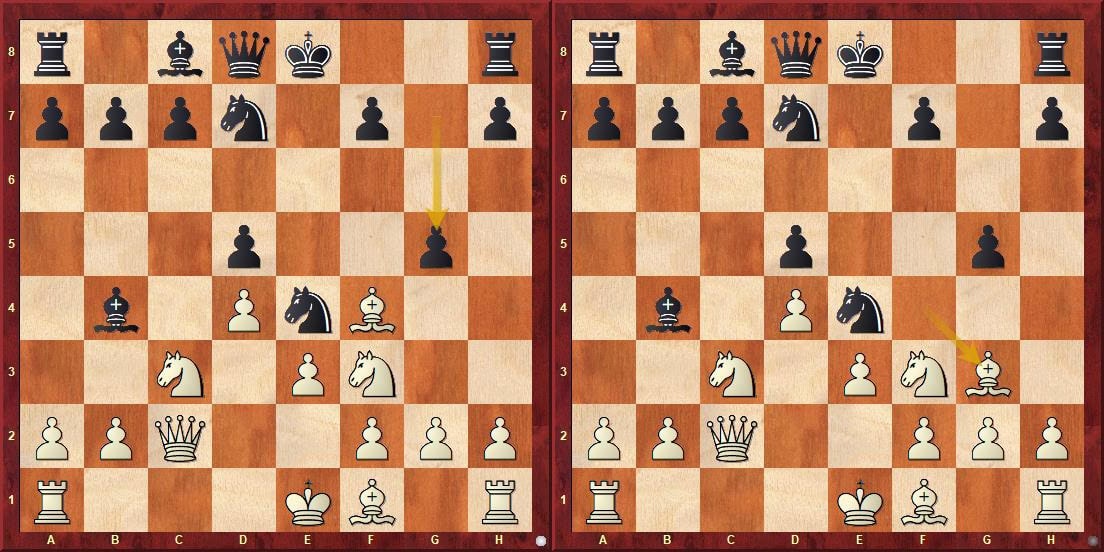
Sindarov responded after only 11 seconds with 9.Bg3, although his preparation continued with the main theoretical move 9.Be5!
„My team might hate me for this, but I forgot...“ he later replied to a question about the opening – loosely paraphrased...
However, nothing dramatic actually happened with the position itself. Statistically (at least according to the online CB database), it 9.Bg3 appears in approximately every fourth game. What is important, however, is that objectively the retreat to g3 is probably no worse. As is often the case, from this moment on not only Javokhir had to start thinking independently and recalling. Praggnanandhaa was not much better off.
And so from this moment on we could, in a way, compare the true practical strength of both young players... and we found that Javokhir indeed has an extraordinary feel for dynamics. This was further confirmed by the press conference, which apparently took place immediately after the game ended. Sindarov therefore had no opportunity to check his thoughts with engines or consult databases.
But first, let us look at the shortened score again, this time with nice concise comments by Sagarov. I also recommend watching the players' consumed time.
And here we can watch the press conference that „revealed everything“ 🙂. .
However, readers who want to learn more about the opening of the game should carefully watch the following video by Sergei Makarychev!
Matura!
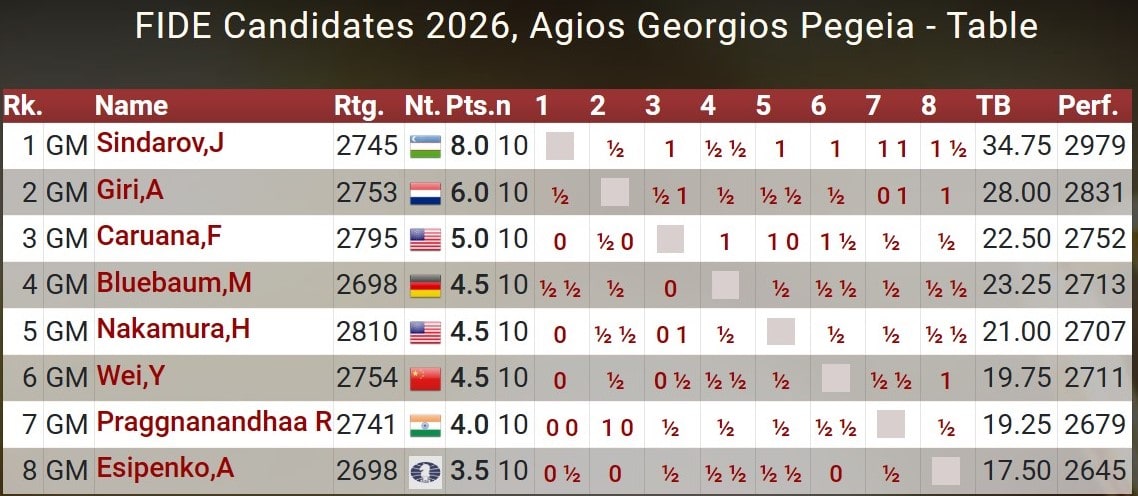
A look at the table after round 10 confirms that from a „reasonably theoretical“ point of view, only Anish Giri could still try to fight for victory as second. Sindarov faced two tough tests with the black pieces not only in the mutual game against Anish in the penultimate round but also against Caruana – and the Dutch grandmaster could also hope for that!
Note: Some more thorough readers (or perhaps students of MATFYZ 🙂 ) may have noticed that the individual rounds were not „arranged“ exactly according to Schurig's (more commonly known in the West as Berger's) tables.
The reason is a small but common practical adjustment: the organisers swapped rounds 6 and 7 to avoid a situation where a player would have the same colour three times in a row. Without this adjustment, the player with starting number 8 – Hikaru Nakamura – would have played three games in a row with the white pieces (specifically in rounds 7, 8 and 9). This is a standard intervention in an otherwise „textbook“ schedule, which does not change the pairings, only the order of rounds and thus the sequence of colours.
True, Fabiano was certainly demoralised by two losses in rounds 8 and 9, but not only super grandmasters who have devoted their lives to chess – and Fabiano certainly belongs among them – simply want to rehabilitate themselves somehow! So it was clear that Caruana would put everything into the game against the leading player. True, you can't break your head against a wall, but a „quiet pressure“ with the white pieces can be created, and Fabi executed it damn well!
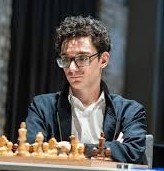
As I have expressed several times: I like Caruana both as a chess player and as a person – for example, I was quite disappointed when he failed to dethrone Carlsen in 2018 – and as Gukesh's challenger I would consider him the most dangerous opponent of my favourite. But Sindarov is simply a bigger „dynamic player“, he is young and willing to take more risks, so I wished him to carry the tournament to a victorious end.
And that is exactly why I was worried about this game. I considered it a kind of maturity test that the future young challenger must pass.
Javokhir passed the maturity test fantastically! He really came under pressure, the defence required extraordinary precision, but how did he cope with all the pitfalls? Such a game should definitely not be forgotten!
So we are in round 11, the most important game Caruana,F (2795) vs. Sindarov,J (2745). Fabiano chooses – according to me, not only expected by Javokhir – the Catalan Queen's Gambit. Sindarov's dynamic style of play then – also quite naturally – suits sharper variations of open systems with dxc4. After 10…Qxe7 the following position, quite deeply analysed by theory, arose.
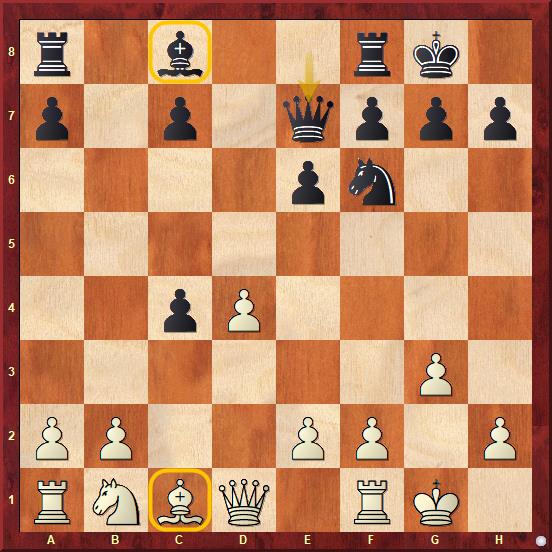
Before us stands one of the basic positions of the so-called open Catalan. It often leads to a traditional sharp battle of two chess forces.
Madam Static stands firmly on White's side. Her form is shaped by a perfect pawn structure, moreover with the prospect of material gain.
In contrast, madam called Dynamic stands with all her weight behind Black. Her black dress is represented by differently coloured bishops and especially the white king, which may already begin to show the first signs of a chronic illness.
As is known, even with chronic diseases one can live to an old age, but with improper „lifestyle“ one can end prematurely – even with a miniature… 🙂

Candidate for… a heart attack! Madam Statics (matter, mass) takes excellent care of the white king, but still: in the opening His Majesty should „take a little“ more care of his health. 😊 .
Let us continue, however.
In the diagram position White has just captured the rook on b1. Caruana's preparation landed on very fertile ground! At least from a practical point of view, Black did not respond most accurately.
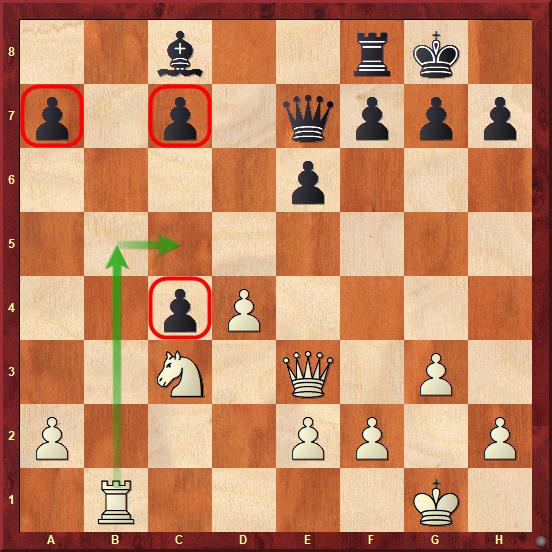
It is becoming clearer what White is striving for. The lead in development can be converted into the initiative (who knows, perhaps even a central breakthrough d5), or simply to capture the c4 pawn and thus win over Statics' favour again. In that case, the queenside pawns c7 and a7 could rightfully panic.
Formally, the position is still balanced, but in practical play it is significantly more natural and easier to find plans and concrete moves for White. In my opinion, Fabiano chose an exceptionally convincing strategy in the game against the tournament leader.
When replaying and studying contemporary games – not only of elite grandmasters – I increasingly get the impression that we will have to gradually say goodbye to the evaluation symbols as formulated more than half a century ago by Yugoslav masters and grandmasters in their traditional form. One cannot overlook the obvious duality.
What do I mean by this? Above all, it is necessary to continue respecting objective evaluation criteria (in our position a full balance has indeed arisen). At the same time, it is becoming increasingly clear that psychological – human – factors play a decisive role. This position is simply easier for White to play.
To illustrate, let us give a simpler example: an objectively balanced rook endgame „four against three“. Or – to not go far – the endgame from the Sindarov vs. Giri game from round 7. How should one actually mark a theoretical draw in such a position? It can be assigned a correct objective symbol of balance, but in practical play it is often fought over with two possible results.
This dichotomy could certainly be eliminated, but I fear that the present times do not favour it much. In fact, many chess players are not very interested in it anyway.
Gradually, a group of specialists is growing who – in the words of Mark Dvoretsky – „support their families“ by seeking positions that are formally equal but extremely unpleasant for the opponent. In practice, these are difficult and often even unpleasant – poetically speaking, „pregnant with imminent mistakes“.
After Caruana's sweeping 31.g4
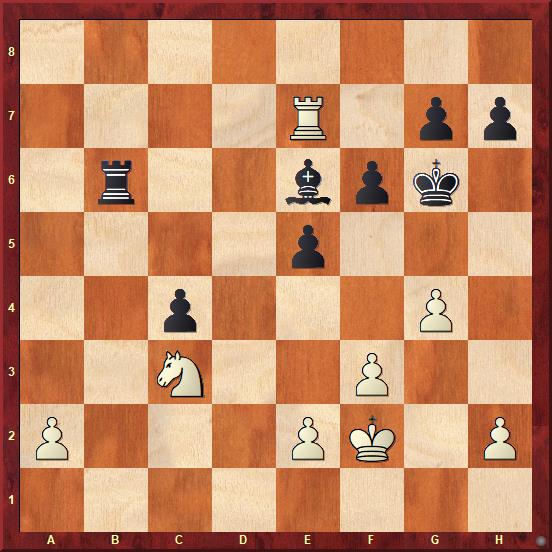
many thought he might be able to extract something from the endgame. From this moment on, however, Javokhir's defence (counterplay) resembled a perfect concert! Perhaps many of the present super grandmasters did not show it, but I am convinced that deep down they had to – at the very least – admit that the way Black handled the position probably would never have occurred to them!
Followed by
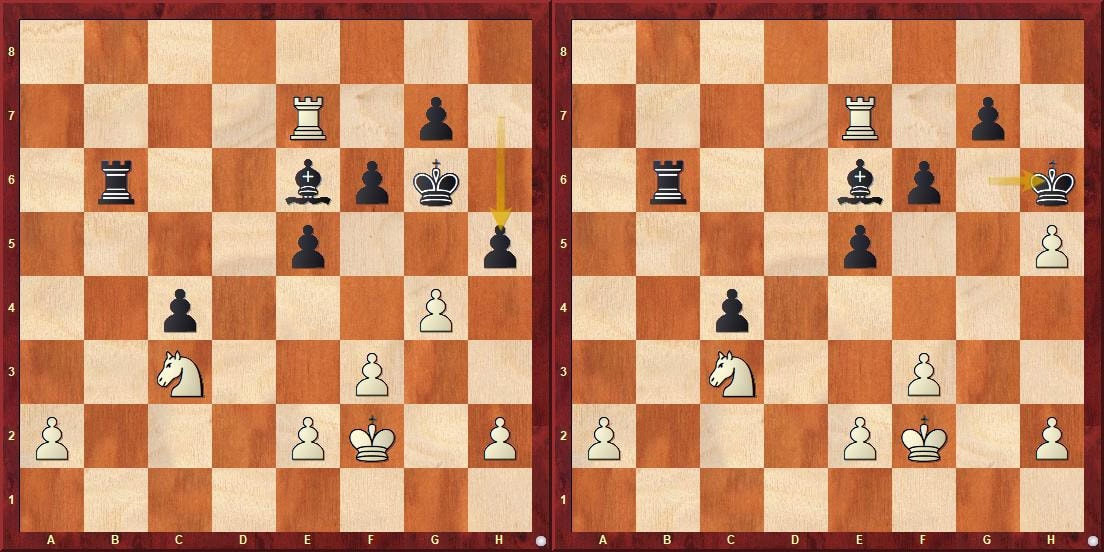
31…h5!! 32.gxh5+ Kh6.
From the impenetrable wall of pawns on the kingside and of course the pawn on e2, a kind of sieve suddenly emerged. At the right moment, Black's king is ready to venture onto the weakened squares among the frightened pawns and start consuming them one by one.
If White wanted to prevent such a course, he would have to instruct his strongest piece to remain on the seventh rank, casting a greedy eye on the g7 pawn. Against such an order, however, the rook might protest: „Then just clone me! How am I supposed to look after the heroic a2 pawn, promote it to a piece and bring it to the eighth rank, when I have to stick alone on the seventh?“ 🙂 .
Let us move even further. After the single 38…Ra7
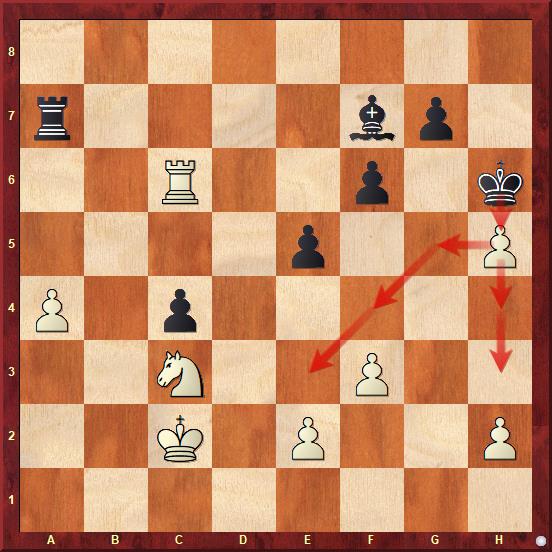
Sindarov gained the desired counterplay and with precise play eventually secured a draw! He really reminded me of a school-leaver who encountered a cruel and cunning examiner at the maturity exam. Even he had to admit in the end that the pupil must… well, „this time be released from his clutches“!
As is perhaps a good habit of my articles – and if possible – I first present readers with a shortened game record.
Well, Sindarov's analysis of the game in the FIDE Chess studio is certainly worth watching too!
Since it was a key game, it was certainly interesting to compare the opinions of both players on what actually happened in the game!
To conclude the game examples: for those readers who would like to learn something from the theory of the Open Catalan Queen's Gambit, I warmly recommend watching Sergei Makarychev's video!
The secret of Roman Vidoniak

With the tournament nearing its end, when it became clear that no great drama would occur, the second most important person in Cyprus became Sindarov's coach Roman Vidoniak.
The first short interview took place immediately after Javokhir's victory became „mathematically indisputable“.
Not only for many readers, but even for many professionals, coaches or analysts – among whom I count myself – this name did not mean much. I had heard that he works in Germany, has trained several local grandmasters, and I also recalled information that at the beginning of last year he took Sindarov under his guidance.
I knew nothing not only about his „revolutionary methods“ 😊, but also that anything significantly distinguished him from the working methods of other coaches.
Well, strictly speaking, these methods do not differ that much. At least I hope not compared to the most successful ones. I myself grew up on the books of Mark Dvoretsky and according to his models I tried to work – of course with some necessary modification.
The first foundation is a card index of thematically arranged positions. Today, of course, this is replaced by databases. I do not know a quality coach who does not have their own databases of positions on various topics.
Another basic rule is the division of pupils into categories. I personally have always worked with three levels. The division itself is naturally up to each coach, but in the Czech Republic I believe that children's and youth groups are most often divided into three categories (it is not just that the Chess Federation's Candidate Master title follows a similar approach).
My „improvement“ consisted at most in this: to be able to correctly classify a newcomer, I used the so-called standard method. The standard represented a typical representative of the given performance group. Usually, it was a player who was average in all respects and not particularly hardworking. So they stayed relatively long in the same group...
So when Roman Vidoniak confides in the interview below that these two rules are fundamental for him, he is not reinventing the wheel! Professionals can at most smile at such an emphasis.
And now comes the greatest gem of the interview: „We work strictly without computers!“ claims Vidoniak. So, I would like to see with my own eyes a qualified coach who with his pupils trains with engines switched on 🙂
As my coach Štefan Gross jokingly said (in a different context): „They should revoke his coaching licence!“
Today, almost anything is probably possible, but perhaps even the most limited coach in the world – with all due respect, dear readers – might think that training in the form of asking questions to the pupil must simulate a situation in a game. Unless we are directly leading the pupil to cheat 🙂, then during training he must think without engines.
Perhaps I am overestimating some young coaches or pseudo-coaches of all generations?!
One of my first pupils – the grandmaster Petr Neuman, who tragically died prematurely last year and who in his forties took up coaching – described to me the work of a chess coach: the first opening this „coach“ started teaching his roughly ten-year-old pupils as Black was 1.e4 Nf6 2.e5 Ng8…
Or is it really „all different now?“ Films sometimes offer alternative versions, so I will allow myself something similar here:
We are learning to think again!
Without exaggeration, the situation to which, alas, we seem to be rapidly approaching is brilliantly captured by Isaac Asimov's short story The Feeling of Power. In the Czech Republic, and previously in Czechoslovakia, it was published under the titles Pocit moci or Pocit síly. The people in this story had degraded to such a level that they „forgot“ not only multiplication tables but could not take a single step without a calculator.
The secret of Vidoniak's success therefore does not lie in the training system itself: six evaluation levels, seventeen test areas, mutual cooperation of super-grandmasters... The key is working without a computer!
So let's make some kind of summary: Are we learning to think again? Or is Vidoniak's remark just a truism, because „everyone knows that“?
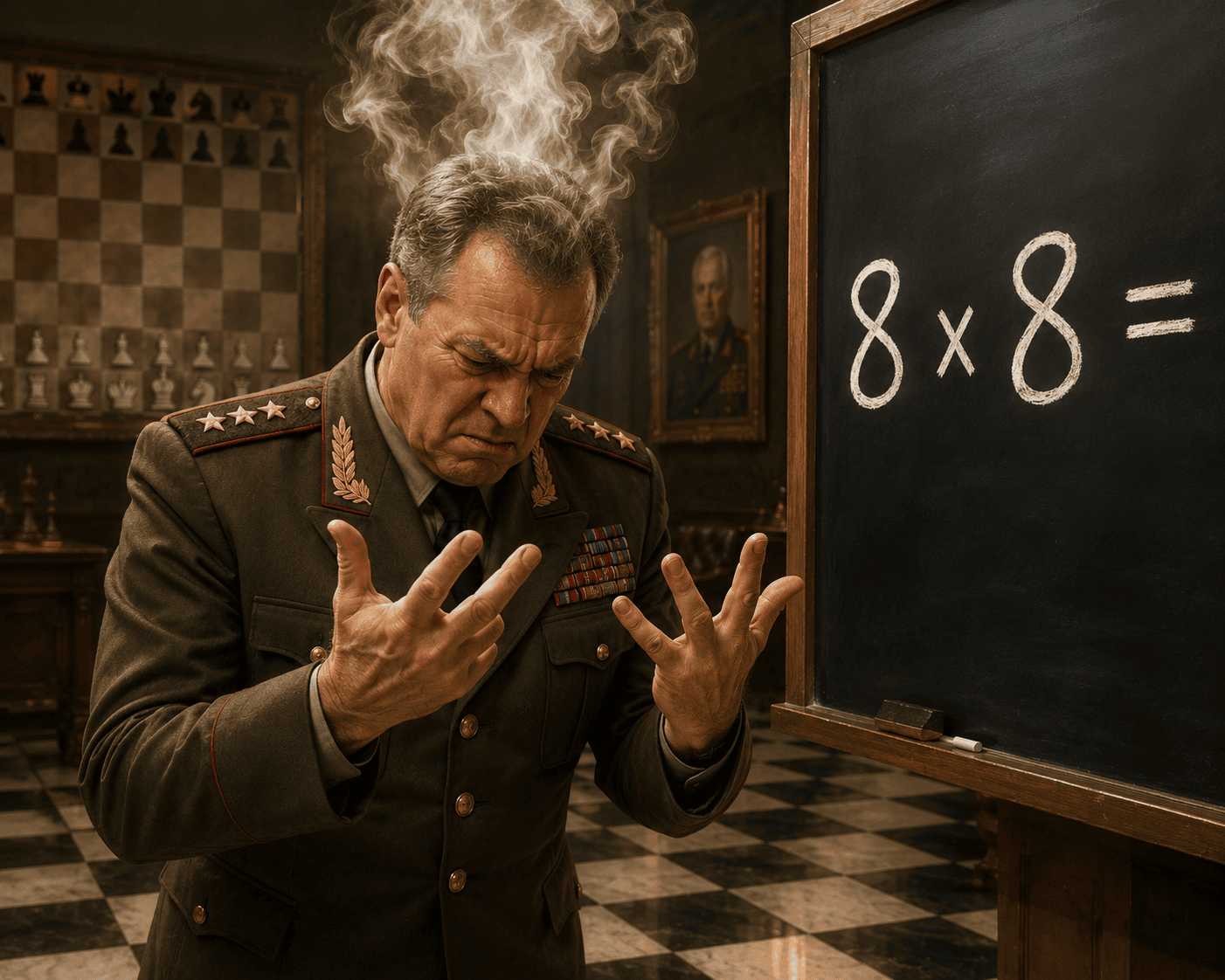
Another fundamental problem lies in when exactly to switch on the engine. If Vidoniak claims that during the entire approximately 14-day training camp no computer is used, then either he is not telling the whole truth, or for example they do not deal at all with the final preparation of the opening repertoire. It is not only obvious but absolutely clear that at the latest by the end of the entire analysis of variations there must be a computer check…
Note: Despite all respect for coach Vidoniak, I do not think he could be considered a specialist in any particular opening or system. That is, an expert who knows the latest research, nuances and trends of a given system. Nowadays, top players hire specialists for that. As an example, I mention the Carlsen vs. Nepomniachtchi match (Dubai 2021). Carlsen then hired Daniil Dubov as a specialist on the Catalan Queen's Gambit…
Below I offer the entire approximately forty-minute interview to watch, in which the now famous coach is interviewed by none other than the main face of ChessBase India – Sagar Shah.
40,000 positions and one question

a personified database of 40,000 examples; the database is feminine gender not only in Czech 🙂
And now we come to the main point. I mentioned this already at the end of the previous part of the article: Dear colleagues, do you think it is possible to create over approximately fifteen years a test database containing 40,000 (sic!) correct, verified and thus flawless examples in solutions? They should relate to various strategic and tactical themes and of course also to calculation technique…
He literally says that in his training system he divides grandmaster skills into approximately seventeen areas. For each of them he has thousands of specially selected or created test positions; overall he talks about roughly 40,000 tasks and positions which he uses for diagnosis and development of specific chess skills.
Roman Vidoniak began working as a professional coach around 2011 (see the above AI-processed CV; this fact is also confirmed by the coach himself in his interviews). However, the figure of 40,000 processed test positions seems somewhat exaggerated to me — at least assuming these are flawlessly prepared tests that have undergone repeated checking and revision using ever stronger analytical capabilities of modern engines.
A small mathematical exercise reveals that over the last fifteen years he would have had to create, process or significantly modify more than seven positions daily from materials taken over. Theoretically, this is not impossible, of course, but a professional coach knows well how much work it takes not only to create such databases but especially to maintain them in a truly functional and up-to-date state over the long term.
Personally, I proceeded so that even before assigning a specific test to my more advanced pupils (FM, IM) I verified and checked it again myself. However, I am not quite sure whether something like this is possible in a system of short fourteen-day training camps.
In other words: interviews with the now very well-known coach are rather intended for a wider audience. The very fact that in almost every one he does not fail to mention the upcoming publication of his first book suggests that it is not only a presentation of training methods but also a natural effort to prepare the ground for its future release and the greatest possible reader interest.
And here the current popularity of his name can play a significant role. Javokhir Sindarov's success at top tournaments, as well as interviews and videos published for example on the ChessBase India platform, have brought Roman Vidoniak into the spotlight of the chess public. So if his book really comes out, it may reach a significantly wider audience than is usual for similarly specialised chess publications thanks to this media wave.
But well: moments of fame have been enjoyed, for example, by G. Gajewski after Gukesh's triumph or Mikhail Kobalia after Volodar Murzin's success at the 2024 Rapid World Championship. So now let's wish success and similar attention to the excellent Roman Vidoniak.

Apart from the players themselves, Sindarov's coach Roman Vidoniak became the main attraction at the end of the tournament. The forthcoming book, whose creation the coach did not forget to mention in every interview, may – who knows – have a print run of one hundred thousand copies. In the photo he is still with his other pupil Bibisara Assaubayeva, who – although she failed in a dramatic finish – nevertheless achieved a great result.
Gukesh has Paddy, Sindarov has Madaminov
Those readers who at least occasionally follow live broadcasts or recordings of games from Cyprus could not miss one more person: Sindarov's close friend, a young grandmaster Mukhiddin Madaminov. He is precisely the young man who helped Sindarov win the World Cup and now accompanied him again to the games.
I do not think it is only psychological support, „creating“ a good mood or making a relaxed atmosphere. Madaminov is also a strong grandmaster, so perhaps he may be a specialist in some systems that Sindarov played in the tournament and also participate in perfect preparation (not forgetting that super-grandmasters have whole teams… and some specialists of course do not even have to be physically present).
To omit Madaminov in the article would therefore be the same mistake as leaving out the interview with this likeable and smiling young man!
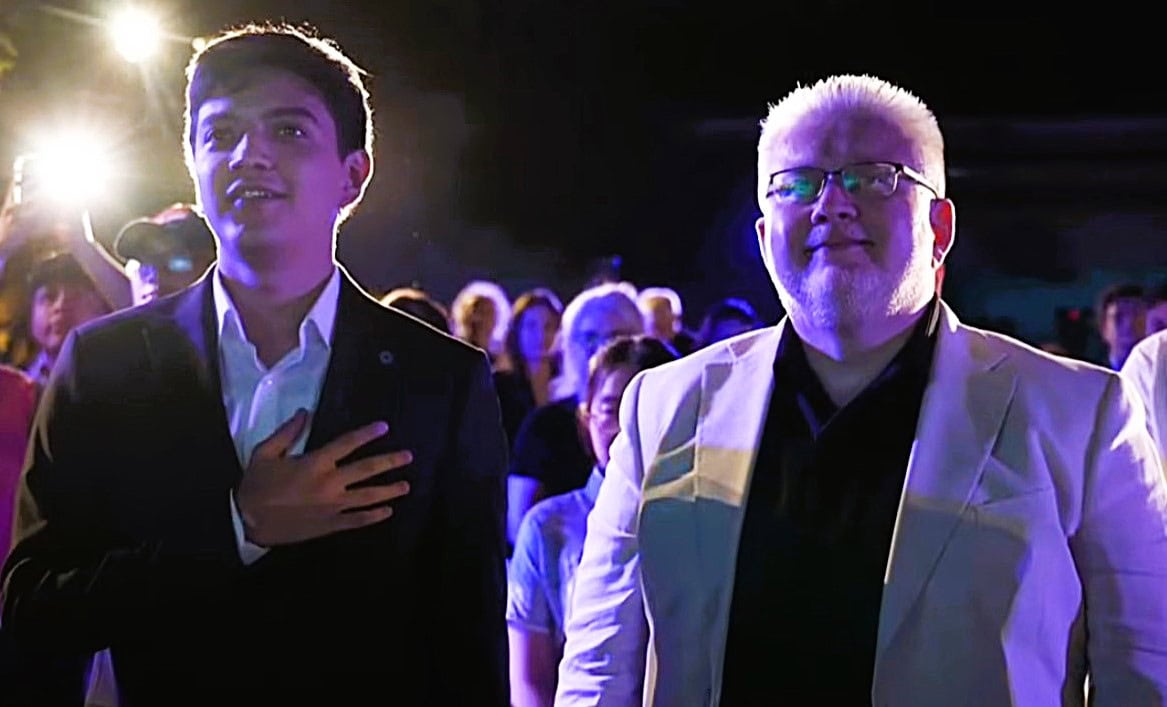
Sindarov's second and close-in-age friend, Grandmaster Mukhiddin Madaminov, and coach Roman Vidoniak during the Uzbek national anthem. There is no greater feeling than seeing your friend and protégé on the top podium!
Did Gukesh heed my advice?
At the time of writing this article, the rapid and blitz in Poland have finished, where both future opponents in the chess crown match also faced each other.
I believe that Gukesh was ultimately glad to face Sindarov in the match rather than Caruana. (However, I really dare not judge the „glad–not glad“ ratio for Anish Giri.)
A much more important piece of news flashed through a few weeks ago. „Finally!“ I said to myself when I read it – and then a video confirmed it to me. Gukesh has abandoned the idea of participating in this year's Grand Chess Tour series. In the approximately seven months remaining until the most important match of the year, he will limit his tournament appearances and train intensively.
So what I considered necessary and mentioned more than once in my articles has finally become reality. There are still many weak spots in Gukesh's play, so in my opinion, tournament activity must be significantly reduced. If it were up to me, I would play perhaps only one tournament before the September Olympiad, then – as players of this type often do – one purely training event after the Olympiad battle, and then fully concentrate on defending the title.
Is the Matrix making mistakes or deliberately loosening up?
As a little boy and budding competitive chess player, I literally devoured the approaching world championship match in 1972 between World Champion Boris Spassky and Robert Fischer. And to this day – word for word – I remember a snippet from a commentary published in the general press: „Boris Spassky is at the peak of his creative powers at 35.“ However, grandmasters reached that peak around the age of 35 much later! Just look at the results. And today?...
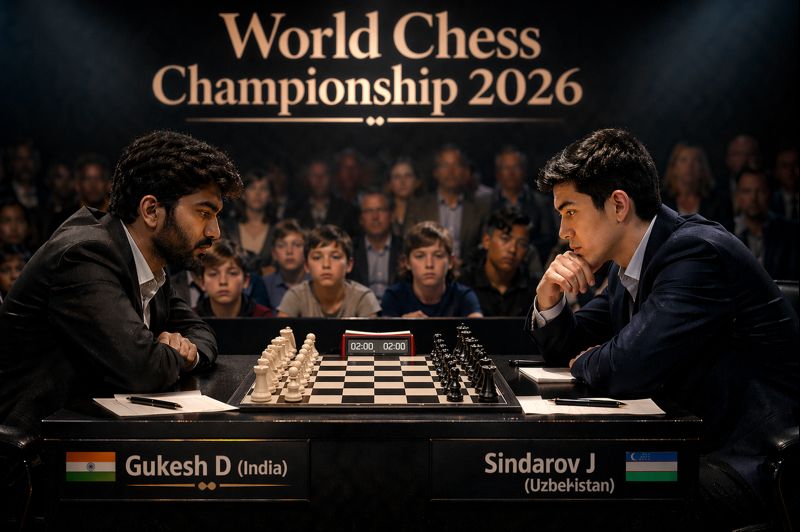
At the end of the year, two twenty-year-old juniors will face each other for the highest title for the first time in a long history.
Junior World Championships 1951-2025
Clicking through, we see that junior championships once had enormous prestige and were even won by four future world champions: Spassky, Karpov, Kasparov and Anand. At the same time, we see how the importance of this tournament has gradually declined in recent years.
In a normal, undamaged Matrix, our two youngsters should (almost) meet at such a tournament...
But the fact that something strange is happening not only in chess can be observed repeatedly – practically every day. And if we are not completely absorbed by everyday worries and the Fates have granted us at least a little of the necessary IQ (after all, why else read these pages), we probably think about it.
Nevertheless, I hope that the match Gukesh vs. Sindarov will take place, that we will witness an amazing duel, and that the world will not have gone completely mad by then!
All examples are available as usual in the CB player below.