

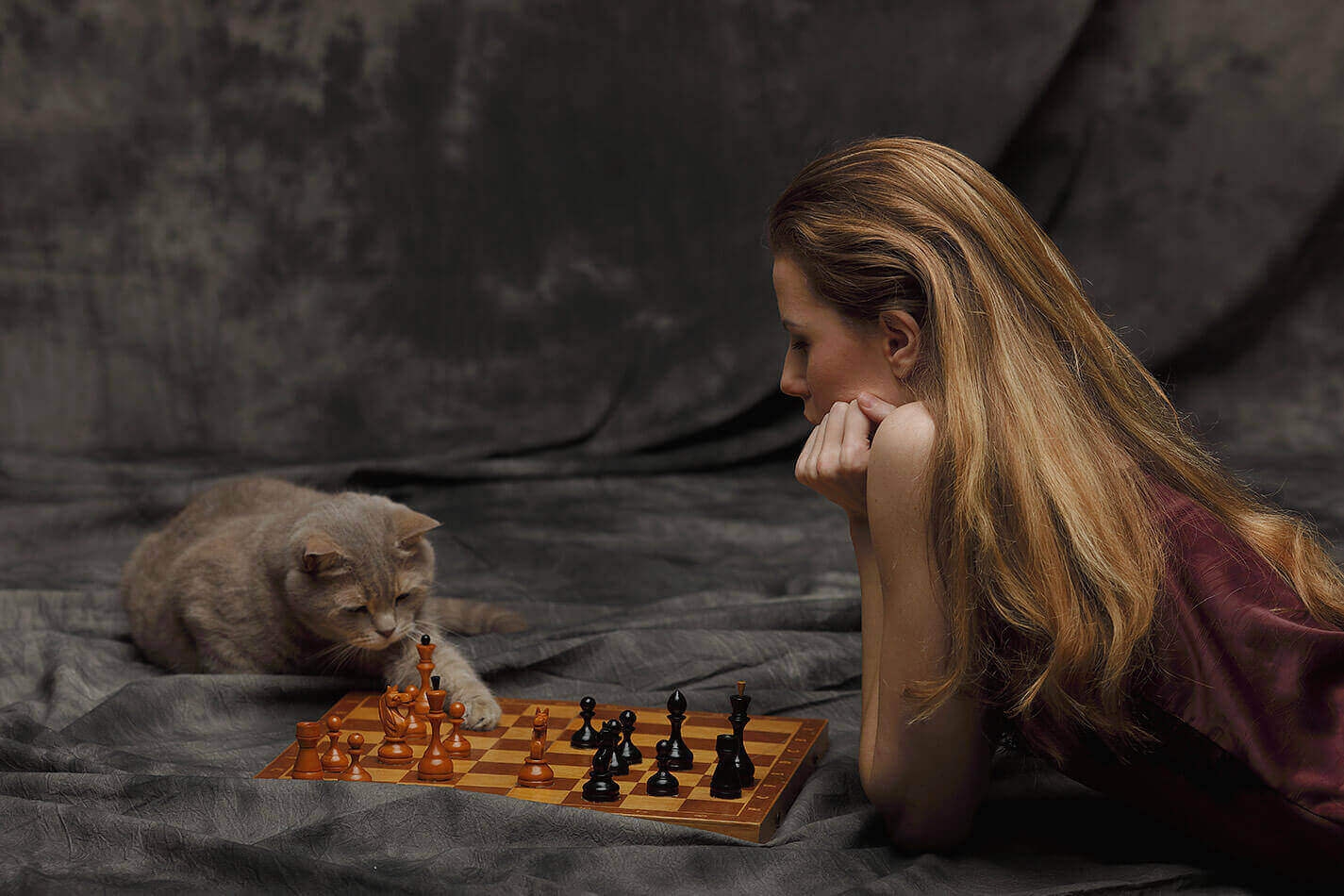

Between the Chessboard and the Mirror!
After years of working with girls at the chessboard, I noticed one quiet, though unwritten rule: the more natural charm and charisma, the less chess obsession, systematic hard work – and often even pure talent. And then comes Divya Deshmukh.
A nineteen-year-old girl who seems to know nothing of this rule. Beauty, indescribable charisma

and on top of that huge talent and hard work, which I see only exceptionally among girls. At the recently concluded Women's World Cup in Batumi, the Indian star shone in a way that can perhaps only be compared to the miracle of „Gukesh 2024“. So naturally, I devoted most space to the winner, and this time I did not divide the material chronologically, but thematically.
Women's World Cup, Batumi 5–29 July 2025, results
A monstrous event was attended by 107 players from 46 federations, with Divya Deshmukh nominated thanks to her victory at the 2024 Junior World Championship!
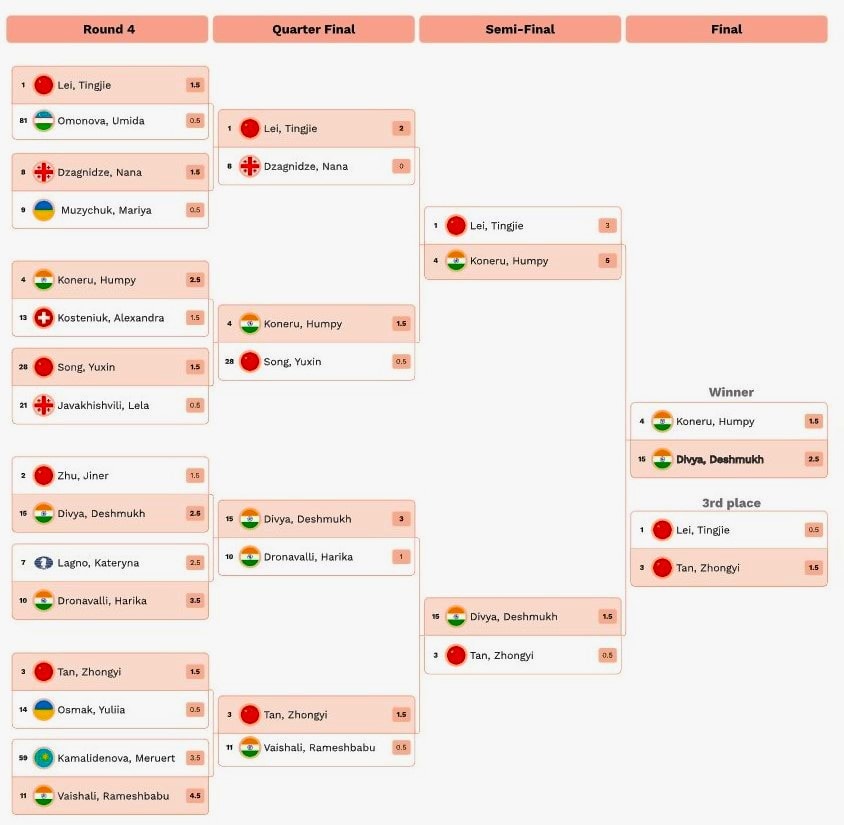
It is impossible to reproduce the entire huge bracket on these pages, so I limited the results to the round of 16…

No state delegation arrives, nor do the golden boys from Nagano land 🙂. Instead, on 30 July 2025, fans at the airport in Nagpur, India, await the winner of the World Cup! They welcome and love the beautiful girl and successful sportswoman who… thinks intensely about her work!
I have to study endgames!
I admit that for two or three years I doubted that Divya could reach the highest peaks. I mention the reasons above anyway 🙂. .
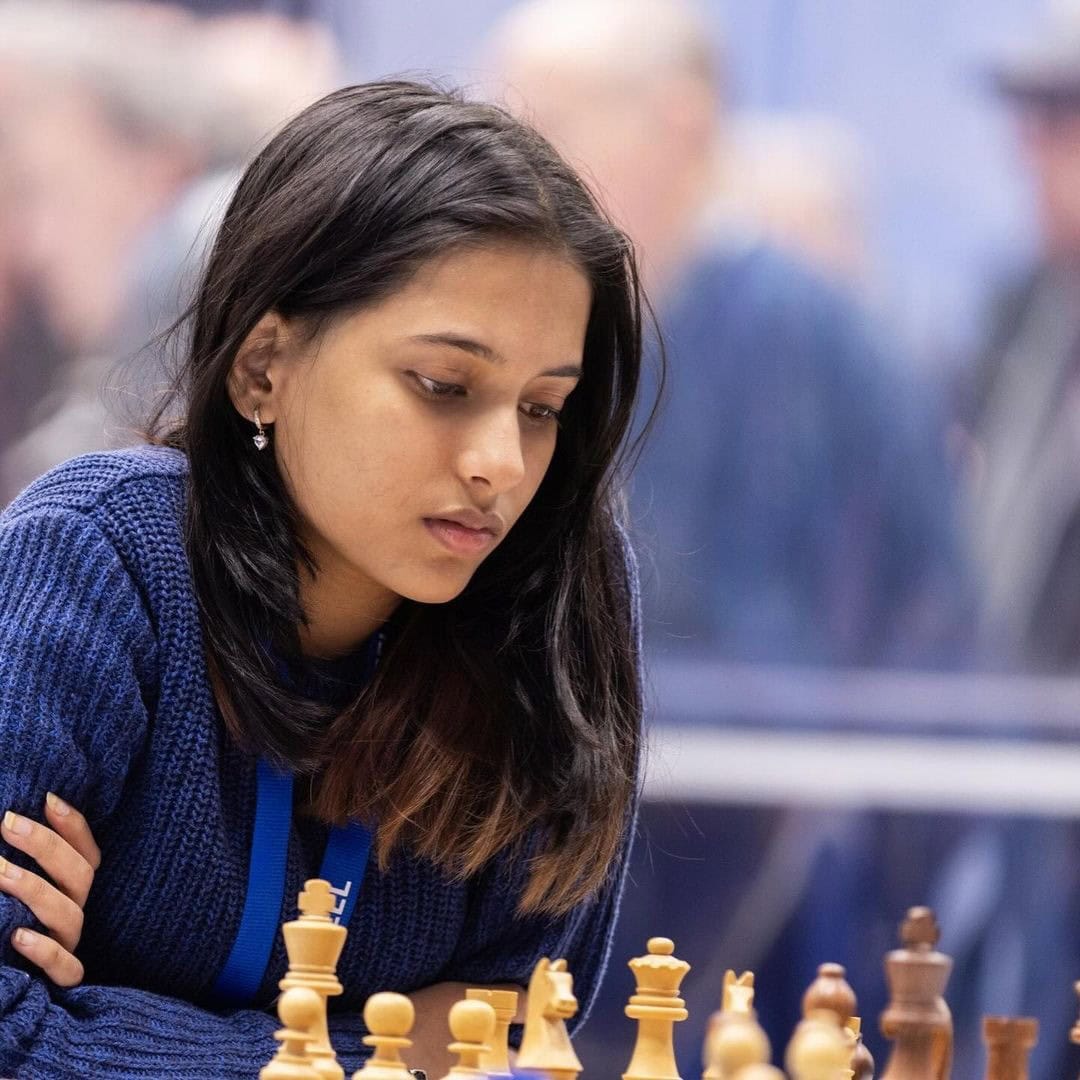
Chess player or model?
The second reason: I have been following women's chess long-term, so I can of course compare.
What do you think, dear readers: at what youngest age did a female player achieve the grandmaster title? (I emphasise that I am not talking about the women's title, which objectively ranks below the fulfilment of international master norms.) Hou Yifan succeeded at just 14 years old! Koneru Humpy, finalist of this year's World Cup, and the now legendary Judit Polgár both earned the grandmaster title at 15!
Indeed, at the tournament in Wijk aan Zee and later in Prague, Divya did not convince me much with her performance. Undeniable tactical talent, excellent calculation of variations, mental and physical endurance, great memory and outstanding theoretical opening preparation are the positive aspects of her play. On the other hand, there are not only more young female players like this today, but even many.
But… now came a convincing victory at – as they say – the World Championship!
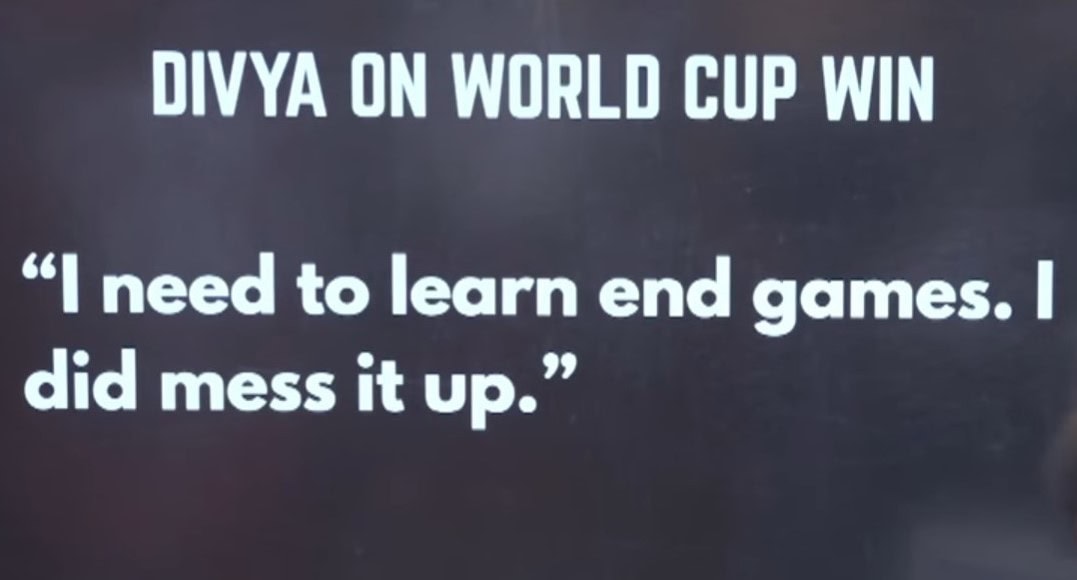
It is said that opinions are changed even by seemingly small things. I was definitively convinced only by her statement in this video. Divya's impressions immediately after the victory were as follows:
No comment!
We will analyse in detail the final rapid tiebreak game, in which a rook endgame, arose, in the second part (continuation) of the article. This will be entirely devoted to one type of rook endgames…
You can get acquainted with the chess biography of 19-year-old Divya Deshmukh by clicking the link. Biography of Divya Deshmukh
The following short video aptly summarises Divya's career so far.
I cannot resist adding a few words about children and youth: joy of deep thinking, courage, diligence, intelligence and discipline! Perhaps the most important qualities that live and develop in the East. In the so-called West, however, they rather wither away. The „replacement“? We have it: superficiality, cowardice, laziness, stupidity and indifference. On the other hand, self-centredness, narcissism, arrogance and selfishness literally flourish. After decades of training thousands of children and personal contact with hundreds of parents, I could not help but notice the gradual relaxation and decline! I am not alone…
Division by topics
This time I have divided the contribution into four main thematic sections:
- Attack on the king with mutual short castling
- Attack on the king in the centre
- Attack on the king in the deferred Alapin system
- Rook endgames with a material advantage of a distant passed pawn
After a brief theoretical introduction (theoretical minimum), suitable diagrams are inserted into the text to clarify basic concepts as well as questions or tests for the reader. In the game or analytical section, I then naturally focus mainly on examples from the World Cup and Divya's game. Some examples are supplemented by nowadays indispensable videos.
Attack on the king with double 0-0
Term attack is understood differently in chess than it was defined by the first world champion Wilhelm Steinitz. In his seminal work "The Modern Chess Instructor" (1889), he assumed that the side attacking must have an objective advantage. His famous postulates were as follows:
„We can attack only if we have the advantage.“
„We can attack if we have an advantage in the centre or at least a solid centre.“
Let us perhaps add Steinitz's thoroughly logical (paraphrase): „The active side must attack – it must not cease attacking under threat of losing the advantage!“
However, Steinitz's definition of attack was never fully accepted. After all, each of us has read, for example, the note: „White attacks on the kingside, Black on the queenside…“
I asked AI to summarise the historical debate on the definition of attack. The reader can find it by clicking the link Attack according to Steinitz's definition and debate
On the other hand, it is clear that certain conditions must be met to start an attack. One of the most fundamental is a situation, which I have always called in my training overload.
We will illustrate this with a diagram from a second round World Cup game Kamalidenov,M vs. Gorjačkin,A.
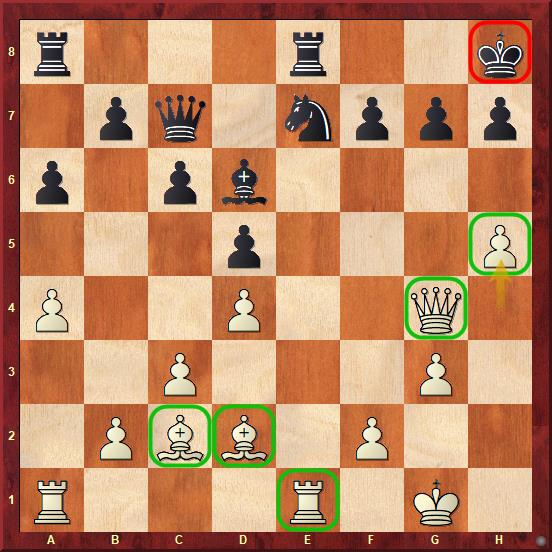
If the royal pawn palisade is not yet damaged or broken (also recall Steinitz: pawns stand best in their original position 🙂), an attack can be successful and correct only if the number of attackers (marked in green) exceeds the number of defending pieces.
While hardly anyone would argue that white bishops cannot be considered attackers because they stand far away 🙂, the situation is different for defensive pieces. Opinions vary, but personally I have adopted (and admittedly somewhat didactically adapted) the so-called Kasparov axis. (A similar definition was proposed by the Soviet grandmaster, coach and theoretician Igor Zakharovich Bondarevsky, who was also the coach and second of the 10th world champion Boris Spassky.)
What is the Kasparov axis? Rule! Only those pieces that stand on the right side of the board according to the axis between the ‚d‘ and ‚e‘ files are counted as defenders of the king.
In our case, white therefore had a ratio of 5 to 2 and full right to attack. Essentially, the principles analogous to military science apply here. We cannot take a fortress by storm unless the number of our soldiers several times exceeds the number of defenders!
„Outnumbering leads to weakening!“ This means that during the attack the defender will be forced by threats to weaken their pawn cover. This necessarily creates weak squares in the immediate vicinity of the attacked sovereign!
The positions in the following diagrams arose or could have arisen in the above-mentioned game. The solution to the first standalone diagram should not be difficult for you, but cracking the next two is certainly not that simple…
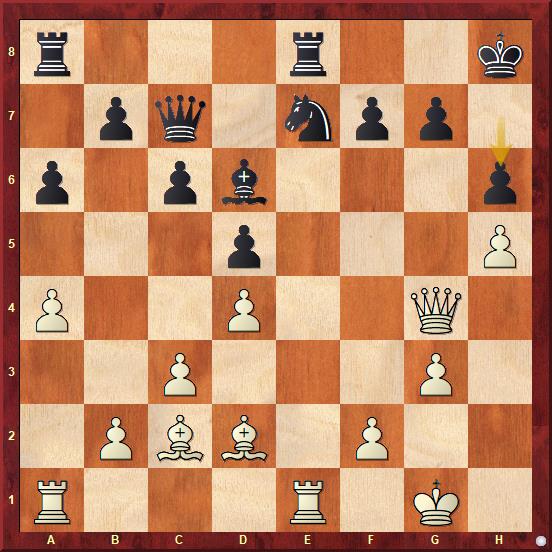
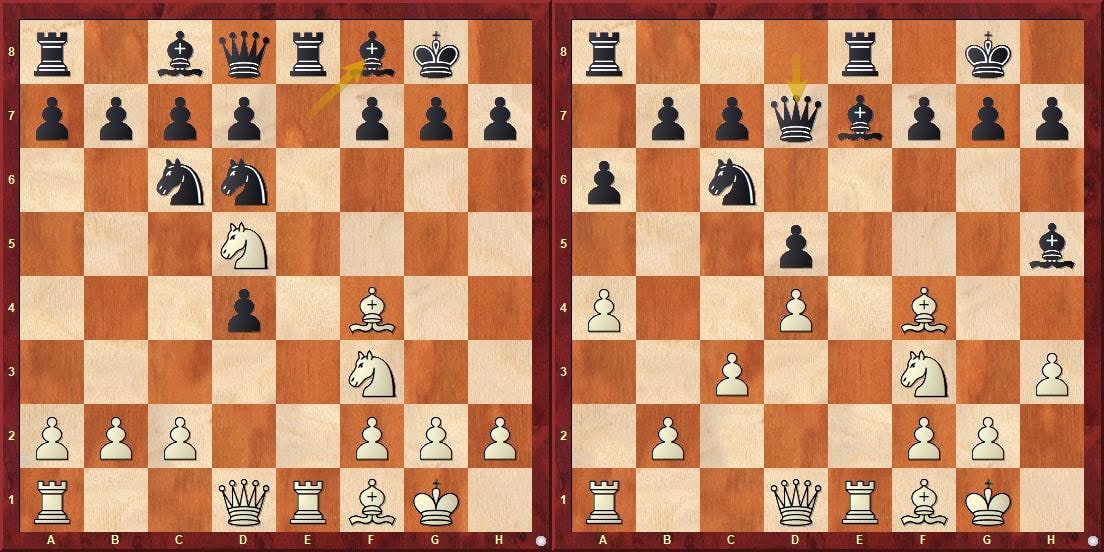
The same task three times: How and why would you continue with White?
Gathering information or everything is connected with everything
So far, no one has invented a better way of absorbing knowledge than by first dividing it into various groups (sets). That is why there are many fields of human activity for which we are prepared – specialisations. Even within the fields themselves, subsets arise (to use the language of mathematics and logic). Typical examples are medicine, physics and mathematics itself. However, excessive specialisation can be harmful on the other hand. (Educated readers surely know, for example, what holistic medicine is.)
A similar learning process happens in chess. We primarily learn individual topics, with the basic division known to almost everyone: opening, middlegame, endgame. In this chapter we deal with the topic Attack on the king with the same castling.
The real rise in playing strength, however, comes only after, we start to assemble the acquired knowledge! Fitting together like a puzzle. After all, this is also the reason why the performance of not only very young chess players almost never rises linearly.
I think the first game suitably demonstrated the methods of conducting an attack, but that is far from all! Not only more advanced players surely noticed that White had the advantage of the pair of bishops! Where am I heading? Let us look at the diagrams below.
With the last move White played 28.Kg2, after which followed 28...Qd7.
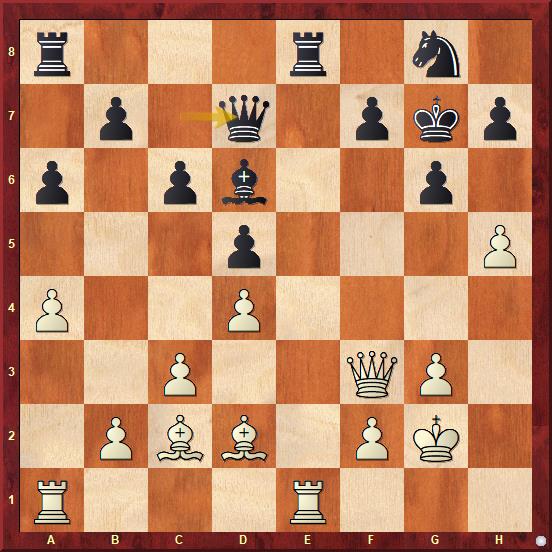
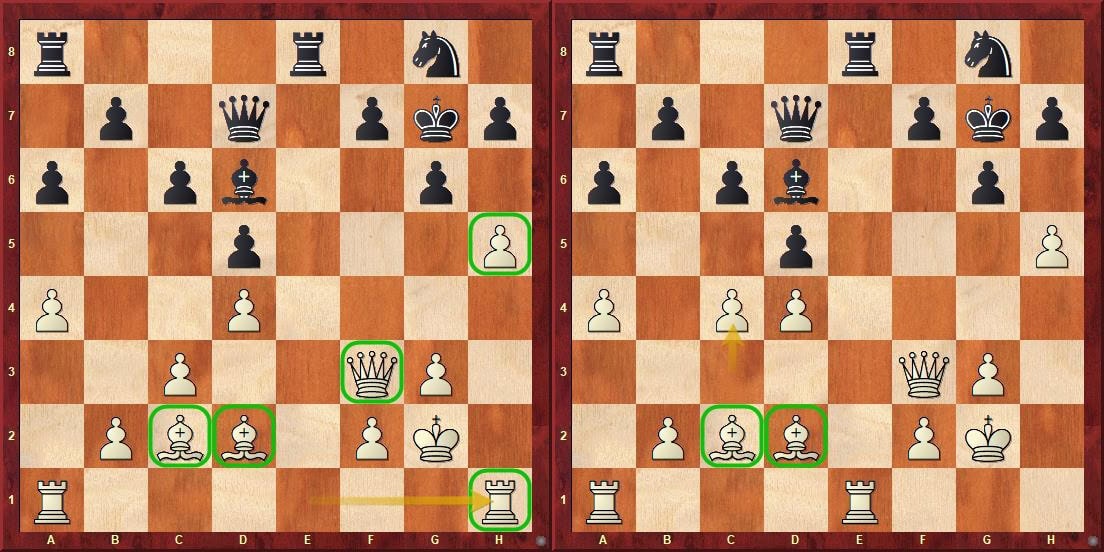
While the strong, purposeful and in the game played 28.Kg2 everyone agrees, the connected diagrams also demonstrate something else! In my opinion, at least 90% literate players would continue without much thought 29.Rh1 (increasing the overload), just like Meruert on the left diagram! Engines, however, stubbornly draw their 29.c4!!.
„What is this supposed to be?“ many readers will probably ask. However, everything is easily explained because... everything is connected!
Let us imagine that instead of the theme of attacking the king, we followed the theme of a pair of bishops in the middlegame. We would arrive at a basic strategic postulate: Bishops need open diagonals! Personally, I call the method that leads to this goal clearing the diagonals! Bishops resembling tanks in city streets need a free passage! To get rid of the burden of pawns (not only) in the centre, while the opponent, on the contrary, builds barricades in their way! 29.c4 therefore is nothing other than the beginning of the strategy of clearing the diagonals!
For us here, it can be a recurring theme... after all, why couldn't a pair of bishops attack the king, right? 🙂 A detailed analysis 29.c4 can be found by the reader in the viewer below!
For the second example on the topic, I have chosen one from a dramatic semi-final. It featured a clash between an experienced Indian grandmaster and the Chinese vice world champion.
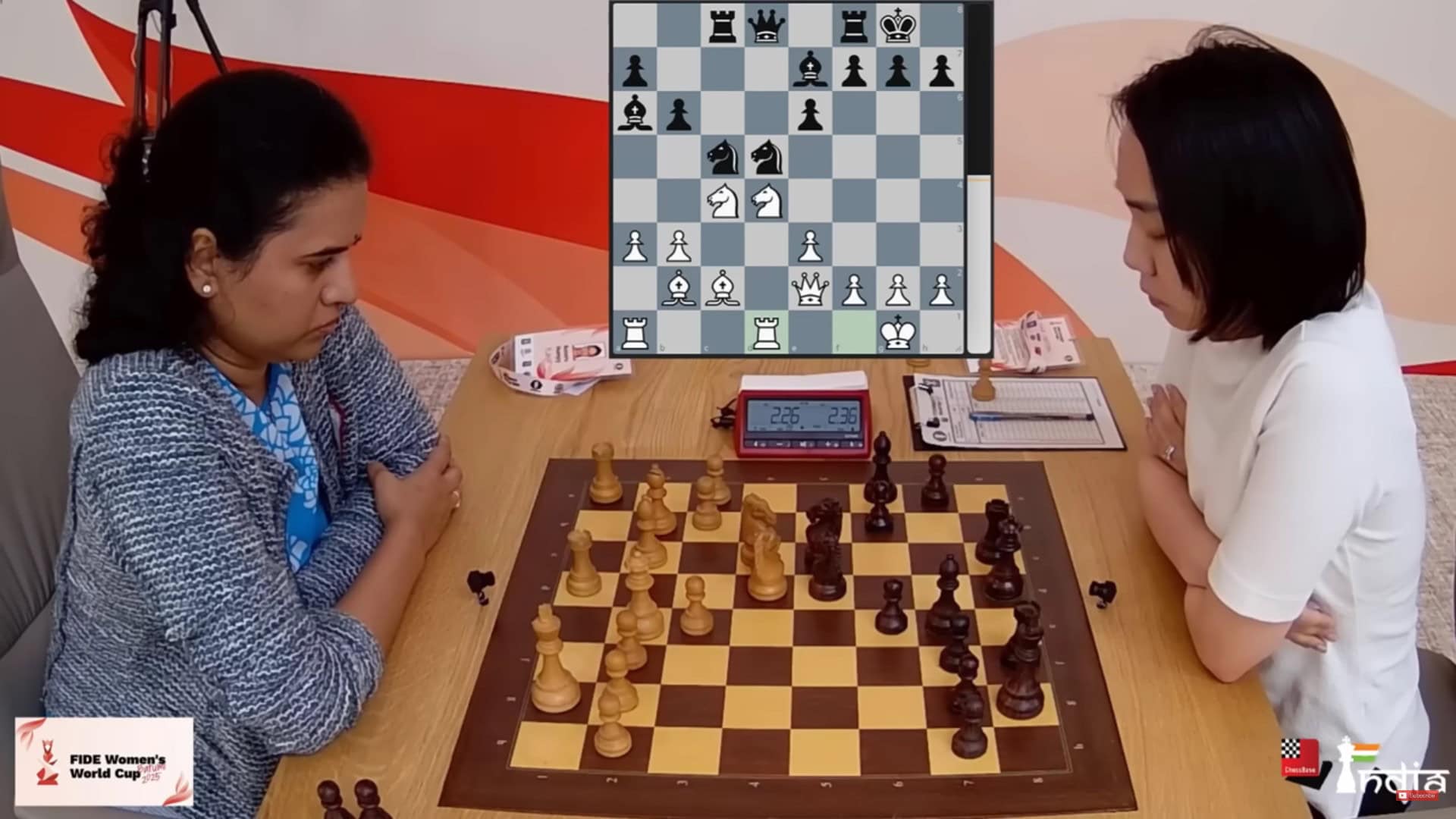
In the fifth game of the tiebreak (blitz 5+3), that is the seventh game overall, Koneru Humpy vs. Lei Tingjie arose after 16.Rfd1 the position in the diagram.
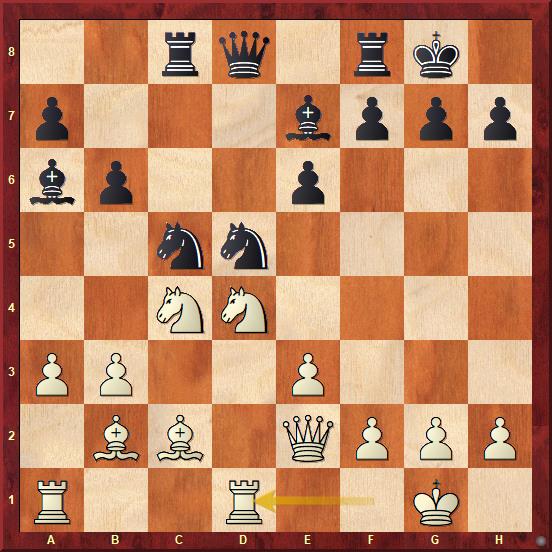
Here I will dare to ask a completely unusual question: „Remember well the first thought that came to your mind when you looked at the diagram!“
Which type of chess player do you belong to?
The diagram above actually demonstrates one of the positions that is very suitable for determining your playing style!
And it really suffices to ask a simple question: "Look at the position in the diagram and say aloud the first thought that came to your mind!"
A necessary bit of theory: The division of players into tactical and positional, which was probably practised and appeared even 50 years ago, is not entirely wrong or meaningless, but it is probably only suitable for beginners or recreational players. A significant shift occurred in the works of Mark Izrailevich Dvoretsky, who as a parameter of division (also into two basic groups) of chess players chose a way of thinking (inductive or deductive thinking). Perhaps from him comes the division into logical (induction) and on the other hand intuitive (deduction).
Dvoretsky himself probably understood, however, that even this division is not all-encompassing. There appeared Tal problem …
Most of you, dear readers, will now wonder: „Tal?? Everything here is clear! He could calculate everything, he was full of sacrifices, giving away pieces left and right without looking back.“ However, Mikhail Nechemievich was not actually among pure logicians, who first calculate and then evaluate. Proof of this are his tragic results against the true calculator and logician Viktor Korchnoi or Lev Polugaevsky. The first of them was even sometimes nicknamed AntiTal 🙂 .
Garri Kasparov made the whole issue clearer in his works. According to him, Tal belonged to players with so-called. specific intuition. It works in sharp, dynamically charged positions. Just like in his own case! Unanswered questions Tal problem still remain. Just read the memoirs of Mikhail Nechemievich himself…
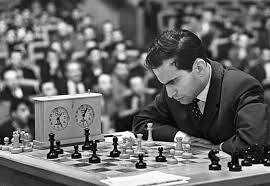
Regarding Mikhail Nechemievich's playing style: Bronstein's famous remark is known: „How does Tal win? He places pieces in the centre of the board and then sacrifices them somewhere.“ 🙂 … The fact is, however, that many of Tal's sacrifices had an intuitive character!
I would also emphasise that an intuitively thinking chess player does not mean that he did not engage in calculation or necessarily had to be worse at this activity than a logician. It is only about a way of thinking in specific positions.
Do you remember, dear readers, your very first thought when looking at the diagram? So let's have a little stylish test evaluate!
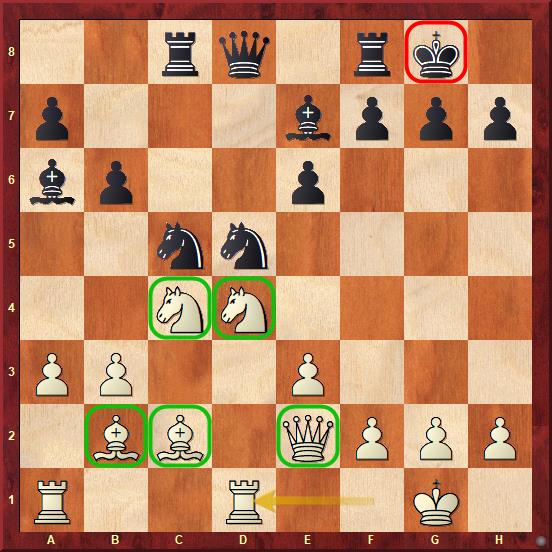
1/ If you first notice, that the black king somehow does not get enough defenders and only then you start to consider how to exploit this, that is by calculation, you belong to today's obvious minority of so-called. deductively thinking chess players, intuitives (from general to specific).
2/ If, however, you immediately shoot out variations 🙂 or specific attacking patterns come to your mind: Qg4 and the knight retreat from d4, or of course Qh5 with a direct mate threat: "Ah, he plays Nf6 on me, but I will stay with the queen on the kingside, I will move to Qh4 or Qh3," you belong to the opposite pole of inductively thinking players, logicians (from specific to general).
Let us name current representatives of both camps from the absolute world elite: Deductive, by the first method, would certainly consider 16th world champion Magnus Carlsen. His so-called general intuition, which he masters, makes him one of the strongest chess players of all time.
The same, in other words, is said in a short video by Daniil Dubov!
On the other hand inductively the current champion would immediately start pouring out variations (or threats by White) Dommaraju Gukesh!
Let us return to the main topic: the numerical superiority of White's forces on the kingside can quickly become deadly, but Black had at this moment completely sufficient defensive resources. If Black had responded 16...Nf6 there was a chance to defend successfully. However, nerves stretched to breaking point prompted Black to switch to tactics. In the blitz game, the following occurred 16...Na4??.
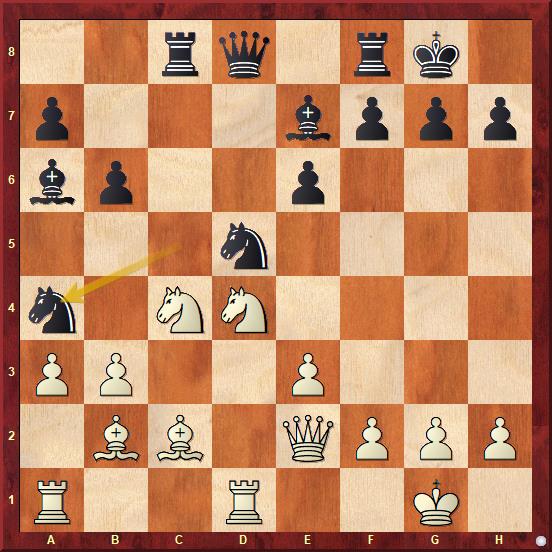
White could have decided the game immediately! Here, dear readers, awaits another task for you. How would you continue as White? Unlike the Indian grandmaster, we do not have to answer in 16 seconds, but can properly immerse ourselves in the position!
The solution can also be found in the record of the blitz game below, specifically at the 9th minute of the traditional Sagar video, with a more detailed analysis of course in the viewer.
Attack on the king in the centre
is one of the main teaching topics that coaches should pass on to their less experienced pupils! „Why exactly this topic?“ you ask. I will answer with a famous Réti quote: „First we must learn to combine, so that later we can also play positionally.“
Where else will we learn to attack, calculate variations, and actually realise that the goal of the game is to checkmate the enemy king?! 🙂
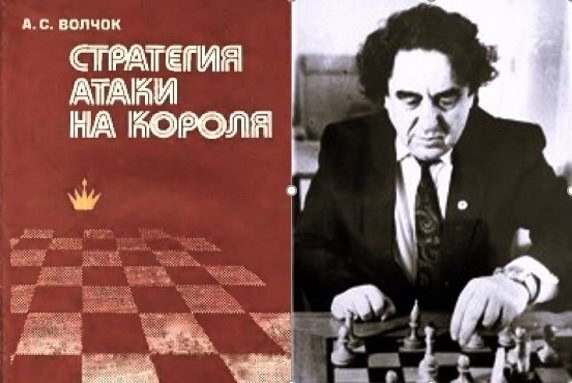
I will never forget one of the most didactically valuable books I have ever held in my hands. It was a booklet titled "Strategy of the Attack on the King", authored by the Soviet correspondence chess player, coach and educator, USSR Master of Sport Alexandr Sergejevič Volčok (1935-2013).
Theoretical minimum
Attack step by step, that is, what must we do to successfully topple the head of the enemy king? Years ago, when I was writing a book and creating a database on the topic of attack against the king in the centre, I added this fictional story to the introduction:
Attack step by step
Please follow this action story, which, despite its apparent detachment, will tell us a lot about the correct strategy – and the individual steps of this strategy – when attacking the opponent's king in the centre!
Let us imagine that our hated arch-enemy suddenly fell ill. With symptoms, indications, including high temperatures among others. So he is really quite weakened. What shall we do?
- We will prevent him from visiting a doctor, imprison him and to be sure immobilise him, that is, tie him to the bed!
- Meanwhile, the room is at a pleasant temperature; that must change! Outside it is freezing cold... We will open all the windows and doors. The icy air will properly purify!
- It freezes most at night; that is our reserve in case the enemy's weakness has not yet definitely overcome him.
- In case the bound enemy nevertheless gets out of the bonds, he would not yet have enough and was preparing to phone for help, for reinforcements, we prevent him from this intention preemptively. No mobile phone can withstand a few hammer blows! Reinforcements will not come!
Despite the certain harshness and even primitiveness of this story, the analogy with chess, in my opinion, is very apt. After all, chess is a battle game!
The individual steps we must therefore take are as follows:
- detaining the king in the centre
- maximal opening of the position
- all reserves into the attack
- preventing coordination of defensive forces (prophylaxis).
Here Volčok notices an interesting phenomenon. If the defending side manages to connect their rooks, usually their chances of successful defence increase. Nevertheless, his observation seems to me too specific, so I have allowed myself to generalise point 4 in my works or explanations.
Let us now move on to concrete examples. These will, with certain thematic exceptions, from this moment on belong only to our heroine – the winner of the World Cup!
In the first final game of the match Divya Deshmukh vs. Humpy Koneru a sharp variation of the accepted Queen's Gambit was played, reminiscent of open games.
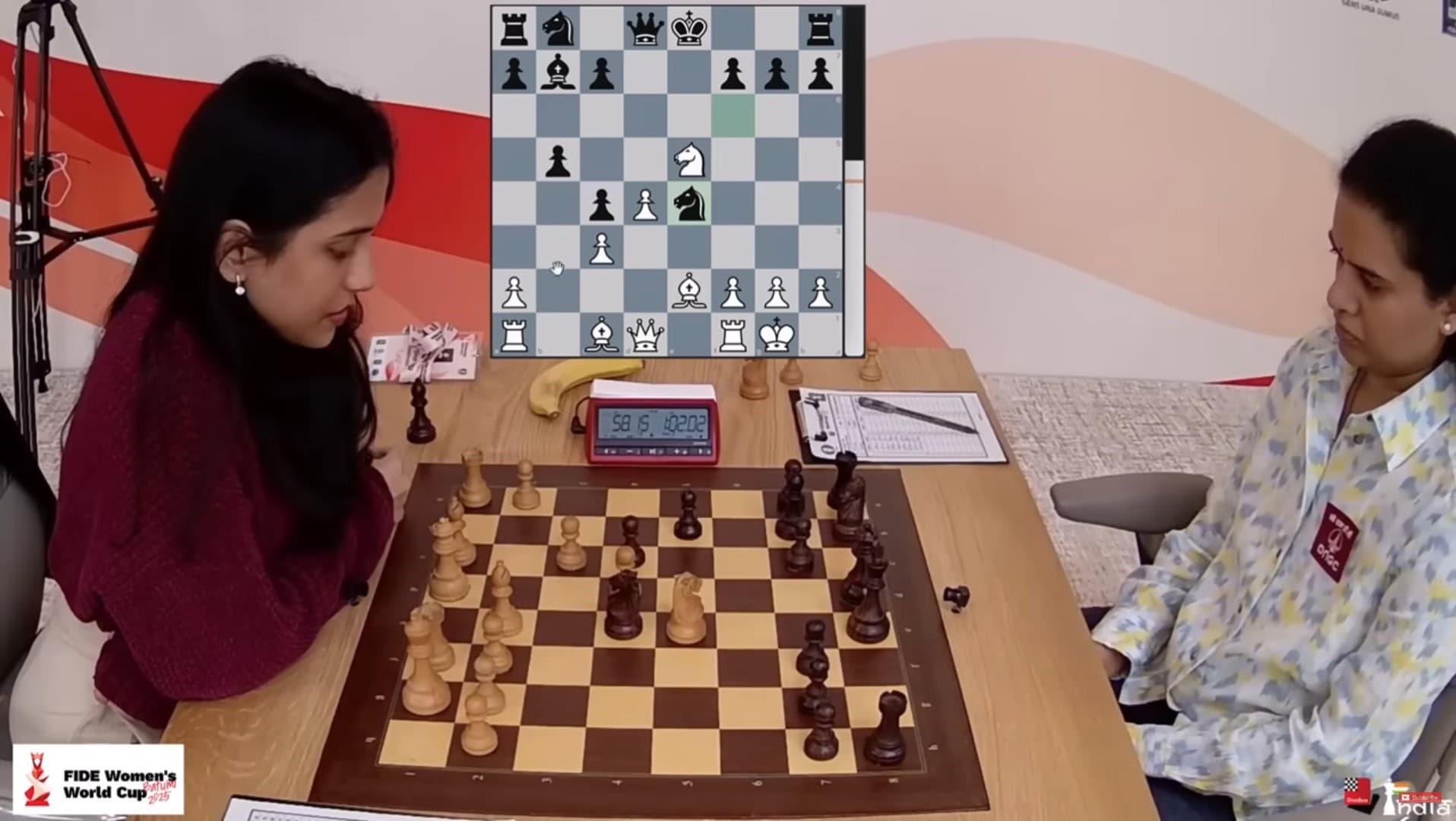
The first final game! After nearly half an hour of thinking, Divya finally offers her opponent a second pawn just to detain the black king in the centre!
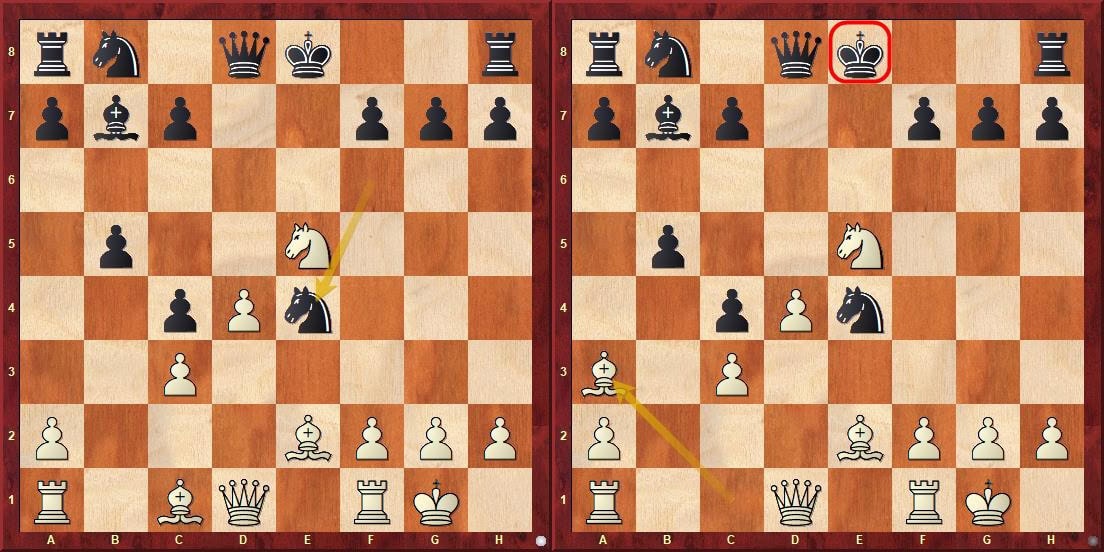
In the left diagram we see that Black has just accepted the sacrifice of the central pawn with the move 9...Nxe4. (This is the so-called real sacrifice to prevent castling.) Divya, after 27 minutes of thinking (sic!), responded 10.Ba3!. The right diagram shows that precisely fulfilled the first step correct strategies for attacking the king in the centre! It held him in the middle of the board.
Not only the more experienced or advanced reader can of course see that the matter is far from simple, because Black can respond (and did so in the game) 10...Nd6; but that is not important for us at this moment. The diagonal a3-f8 itself belongs among classic aids for conducting an attack against the king in the centre. In our game, another truly royal aid soon joined and activated alongside it… to lead the attack against the king in the centre. In our game, another truly royal aid soon joined and activated it…
13.Re1+.
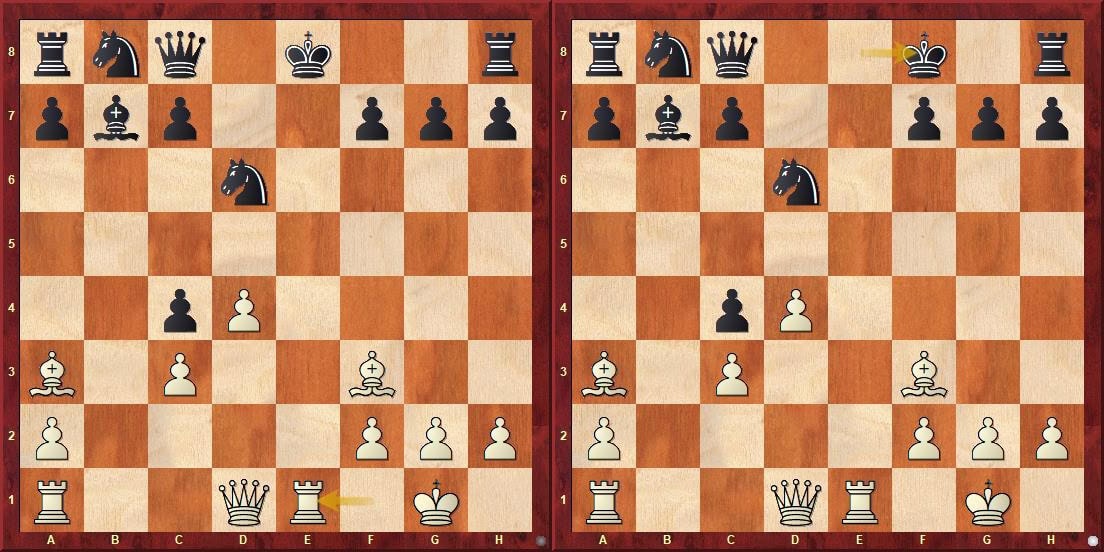
After White definitively prevented Black's king from castling, thus as if confirming the success of the first step. At the same time, White also brings a new reserve into the attack (step 3), since the maximum opening of the position (step 2) actually occurred already by accepting the sacrifice of the gambit pawn on e4. The royal White definitively prevented Black's king from castling, thus as if confirming the success of the first step. At the same time, it also shifts a new reserve into the attack (step 3), since the maximum opening of the position (step 2) actually already occurred by accepting the sacrifice of the gambit pawn e4. The royal of the attack is called the open e-file Now I will dare to set a test for stronger chess-playing readers. The right diagram shows that Koneru, after two and a half minutes of thinking, chose to retreat to f8. She did not want to leave the king in the centre, since in this way there is at least the possibility not only to soon get rid of the annoying pin of the knight on d6, but also prospectively to evacuate the king. It is however clear that here we will not succeed with general proclamations. Everything is decided by concrete variations, in the game therefore by precise calculation! We also cannot (for example in tests)‚.
Now I dare to set a test for stronger chess-playing readers. The right diagram shows that Koneru, after two and a half minutes of thinking, chose to retreat to f8. She did not want to leave the king in the centre, since this way there is at least the possibility not only to soon get rid of the annoying knight pin on d6, but also to prospectively evacuate the king. It is, however, clear that here general proclamations will not succeed. Everything is decided by concrete variations, in the game by precise calculation! We also cannot have an equation with a unique solution (for example in tests) 🙂 . The variations prove that 13...Kf8?? was a decisive mistake! was a decisive mistake!
How would you continue as White? I can also set a more demanding test: DCan you calculate your way to a winning position for White?
Readers who regularly play closed games with 1.d4 and in the accepted Queen's Gambit choose or have taken a liking to 3.e4 will certainly appreciate a more detailed analysis of the variation by the excellent theoretician Grandmaster Sergei Makarychev. However, in the middlegame analysis itself, Sergei Yuryevich makes some inaccuracies.
A detailed analysis of the game is available in the viewer. (I again recommend readers to download the game in PGN format for greater comfort and clarity.)
Attack on the king in the deferred Alapin system
If we can be sure of anything about Divya Deshmukh, it is her excellently prepared opening repertoire. It fully fits her aggressive playing style. I was pleased when in the decisive second game of the semifinal she played my old favourite variation of the (delayed) Alapin system of the Sicilian Defence. Years ago, I wrote a PDF book and compiled a database on it, but I myself enjoyed using it.
After moves such as 1.e4 c5 2.Nf3 e6 White continues 3.c3.
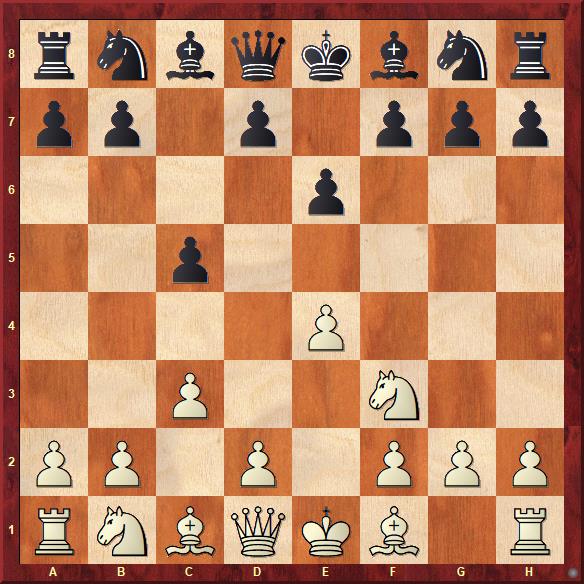
Unlike the usual Alapin system with 2.c3 or the declined Morra Gambit, here White has avoided a number of rather unpleasant defensive systems. Many knowledgeable theoreticians claim that the Alapin system carries drawish tendencies, leading to calmer positions, and that Black can equalise without much effort. I cannot agree with that opinion.
Of course, it depends on what kind of approach the opponent is tuned to! After all, you can always get a hint from their next move choice. Systems with 3...Nf6 usually lead to positions where White builds chances for an attack on the kingside after mutual short castling. These are typical positions with a White pawn on e5. This can be considered a fully-fledged attacker. It helps create an overload of White's attacking forces.
The greatest credit for the revival of the Alapin system in the 1970s goes to Evgeny Ellinovich Sveshnikov! The following example is therefore also a tribute to one of the most distinguished theoreticians!
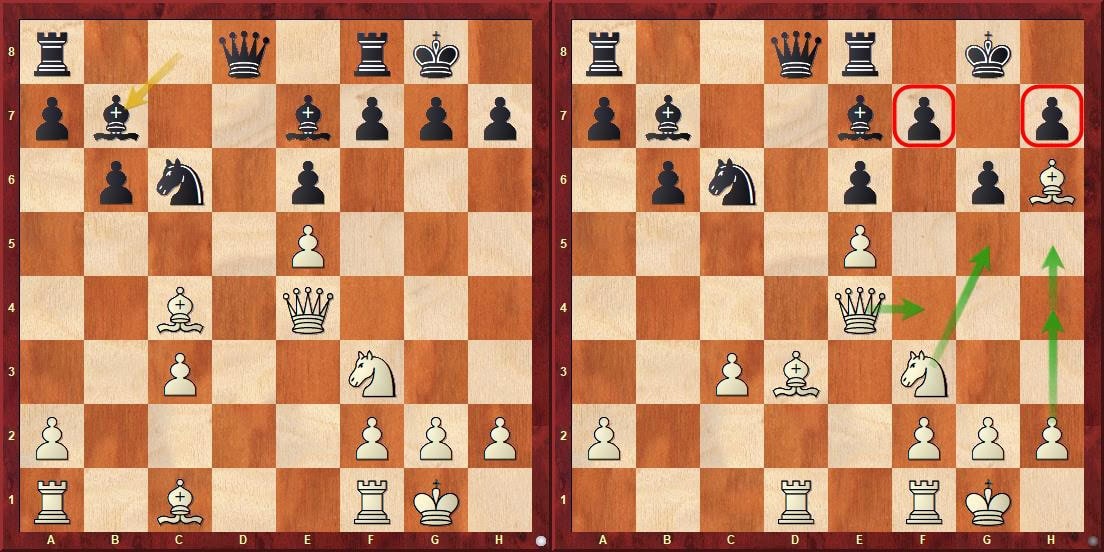
Diagrams from today's classic game Sveshnikov vs. Rodriguez Cienfuegos, Cuba 1979 demonstrate the splendid attacking possibilities for White: 13...Bb7 14.Bd3 g6 15.Bh6 Re8 16.Rad1.
The following examples, however, are not primarily aimed at applying the theme of attacking the king after double castling in the Alapin system, but rather at our current theme, namely Attack on the king in the centre!
In semi-closed games, there are situations where the king does not evacuate from the centre less often than in open games. However, our main focus is on Divya's creation...
After the moves 1.e4 c5 2.Nf3 e6 3.c3 Nf6 4.e5 Nd5 5.d4 cxd4 6.cxd4 d6 followed in the 2nd game of the semifinal Divya Deshmukh vs. Tan Zhongyi 7.a3!?
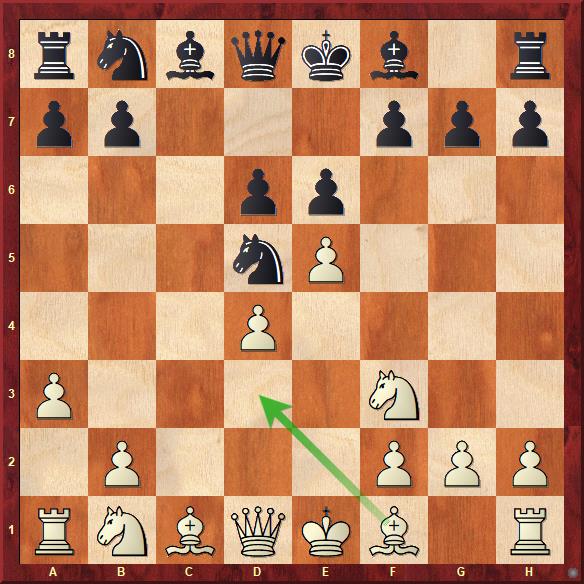
With the slowed development of Black's forces (e7-e6 forever prevents the development of the queen's bishop along the c8-h3 diagonal), Black loses time – tempo of their unique privileged position. (If Black had played 2...Nc6 instead of 2...e6, the loss of time would immediately lead to a certain advantage or initiative for Black.) White can therefore afford to lose development tempo on a prophylactic waiting move. Only this ensures peace for White's king's bishop in the first-class reserve d3! In this fixed pawn structure, it even seems as if the d3 square is made for the royal officer by Caissa herself!
Now let us briefly digress from our game: 7...Nc6 8.Bd3 dxe5 9.dxe5 Qc7
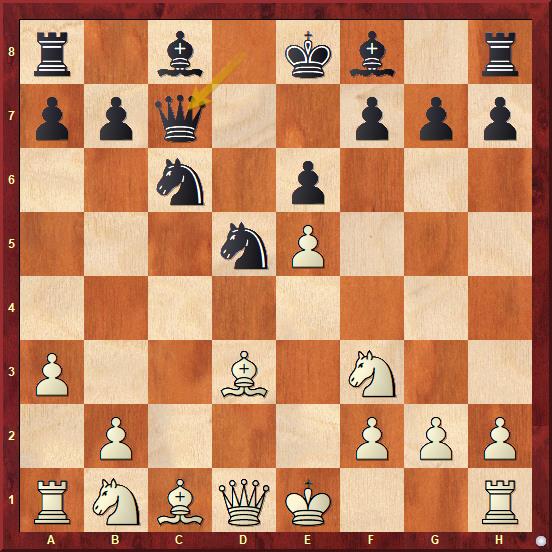
When White came up with this sophisticated way of developing, they had to consider first of all how to react in case of a straightforward attack on the pride of their position, the pawn on e5.
I will therefore allow myself to pose a question – to set a test: How would you continue now with White? Moreover, the correct solution to the problem will be guided by the question, dear readers: „How would you not continue?“ 🙂 …
Now let us return to our semifinal game.
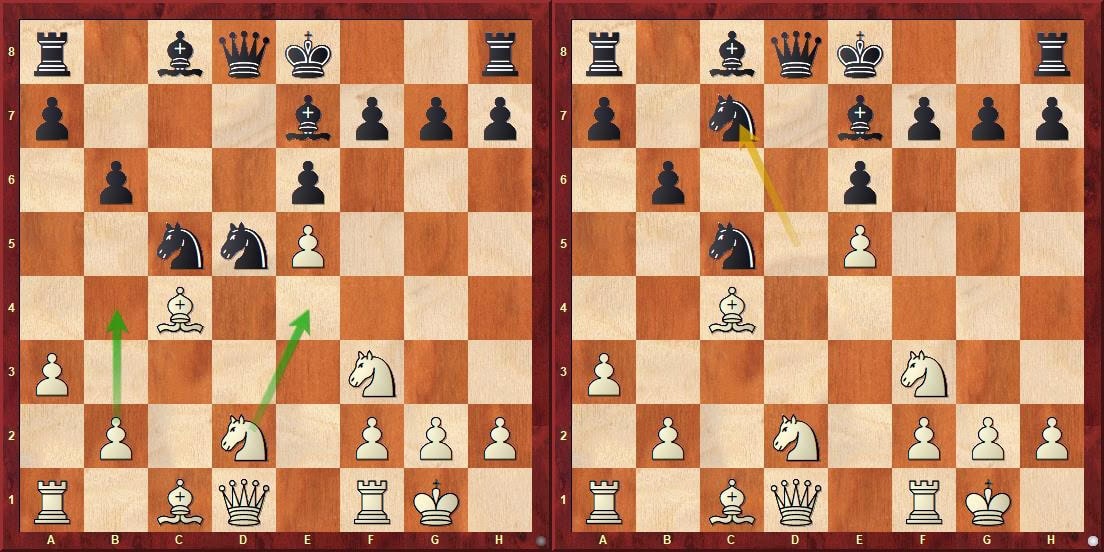
White just after 11...Nc5 retreated on the left diagram with her most valuable minor piece 12.Bc4. Black's centralised knight outposts look magnificent, but one cannot help but wonder whether they will hold. In any case, at this moment Tan Zhongyi took a positionally completely unjustified action. Instead of developing her remaining forces, she embarked on some kind of chase after the white bishops! After 12...Nc7?! (diagram on the right) she planned the strike Nd3 and Nxc1. This was followed by 13.b4 Nd3
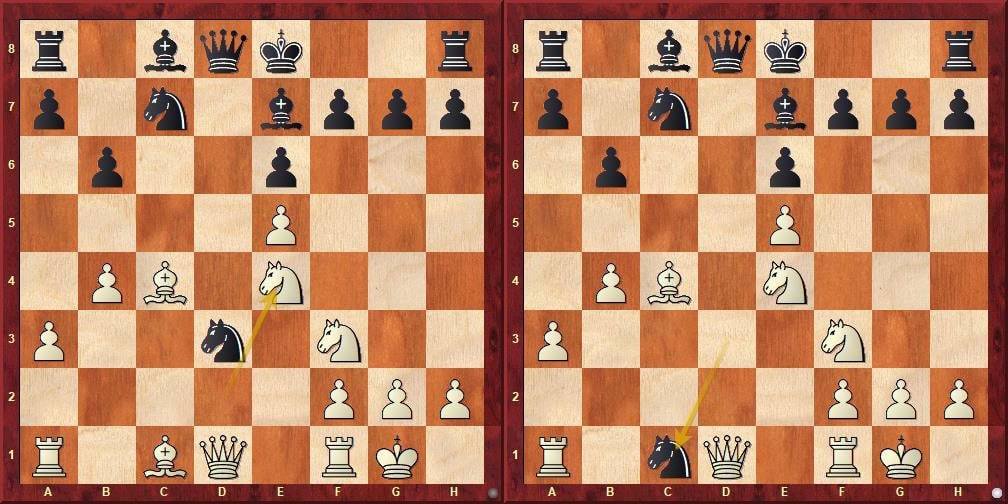
14.Ne4 Nxc1. Here I dare to ask the final question! Between moves 13 and 14 Black made a much more serious mistake this time, and Divya could have gained a completely winning position.
How would you continue in the position of the right diagram and which variations would you consider?
First, let us again watch the shortened record of this game.
Will Divya follow in Gukesh's footsteps?
The article is of course primarily dedicated to the heroine of the World Cup. I am not alone in having fallen in love with this girl - a young woman - not only because of her appearance and charisma. Therefore, I think many readers will also appreciate the following videos.
At the end of the first part of the article, readers can watch an interview by Sagar Shah with the fresh grandmaster and participant in the 2026 Candidates Tournament Divya Deshmukh, which appeared on the ChessBase India channel on 3 August 2025.
Another anomaly?
In the third part of the article, which will deal with rook endgames with a distant passed pawn (similar to what we saw in the last example), readers can look forward to the continuation.
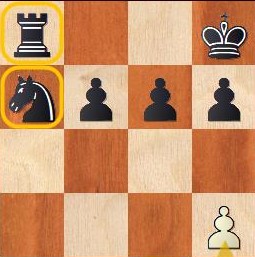
I'm already nor does not surprise another Matrix plan! Or rather, as the AI claimed in my post „Is all this just coincidence, or do we live in a simulation?“, anomaly, which also appeared during the preparation of the material for this work...
In conclusion, allow me to offer a small taste in the form of a knowledge test and a deductive puzzle.
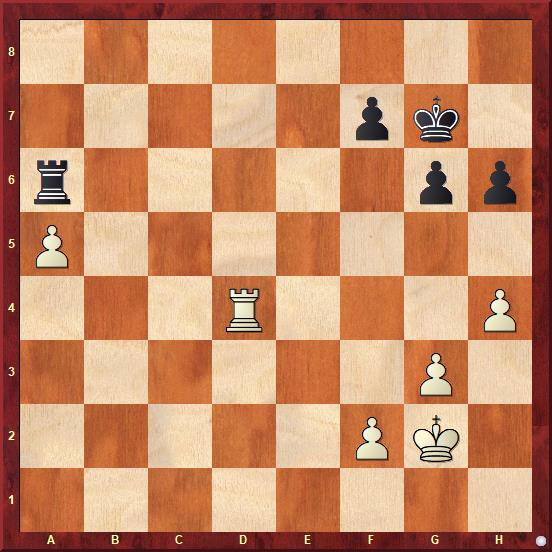
- How would you continue if you were White?
- Evaluate the position after the move you suggest.
- Who played the game in which this position arose, and when?
Well, and finally I cannot resist a true logical brainteaser for connoisseurs 🙂

What is this drawing doing here?...
All examples from the first part of the article are also available in the CB player below.