



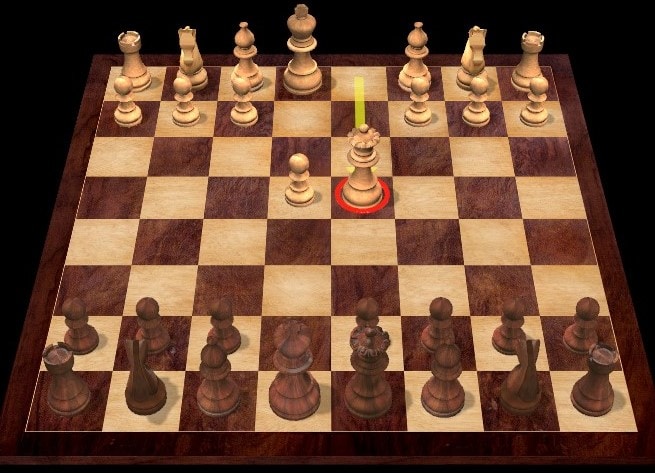
Performance-level, let alone top-level chess players, of course cannot ignore modern trends in the opening. Today, however, the author does not want to focus on entirely new ideas and variations that appear in practice at various levels and tempos of play, but on attempts to revive entire old openings. True, if it is possible to bring new ideas or concrete improvements into them, then all is well. But even this is not quite our case today. The developmental tendencies of our time are transferring into chess, and so in our beloved game it has begun to apply: „Everything new is just well-forgotten old.“
Currently basking in the height of popularity is an opening known for decades to be completely harmless – the middlegame 1.e4 e5 2.d4 exd4 3.Qxd4.
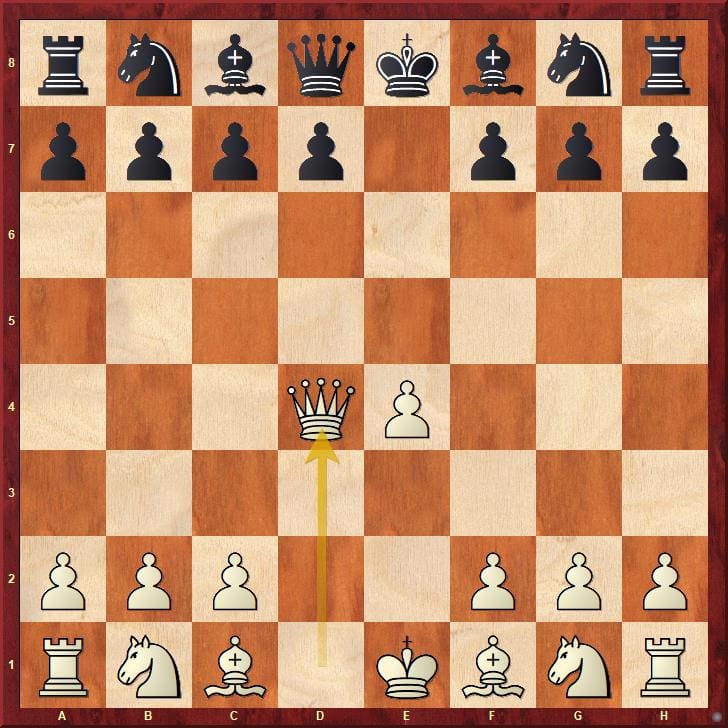
How to fight against it and still strive with Black for more than just equality? Of course, with a Classic with a capital ‚C‘!
Knowing three, four, five moves is not enough
Even as a beginner, I used to replay in the only magazine available to me at the time, the diligently prepared monthly Československý šach, a game starting 1.e4 e5 2.Nf3 Nc6 3.Bc4. I will never forget the comment on the third move (paraphrased): „Sometimes even an innocently looking mushroom can be fiercely poisonous, and so such a bland move can hide a plethora of pitfalls.“ If the reader transfers this witty and instructive remark from the early 1970s into the practice of today's Middlegame, they should conclude that if Black plays open games (1...e5) regularly, they must know how to respond. Their knowledge cannot end at the move 3...Nc6 4.Qe3 or 4...Nf6 5.Nc3. True, such devilish knowledge, which a 12-year-old boy demonstrates in the excerpt from the cult film below, one may not have, but still! 🙂
Giving Black developmental tempo on move 3, which Caissa previously gave to White 🙂 cannot of course be the right thing, and it is quite clear that from a higher perspective this cannot bring anything good to White. True, White can boast a spatial advantage thanks to the small centre, but that in itself requires care of developed and preferably centralised pieces. Besides, it makes little sense to further philosophise without variations, if we can read the words of the most qualified!
The Middlegame was precisely characterised by Alexander Alexandrovich Alekhine. He wrote: „It is clear that such queen moves in the early stage of the opening can hardly give White any advantage. However, Black must respond precisely so that the opponent does not gain chances to attack on the kingside.“
Excited videos with bombastic titles
I call for myself or somewhat provisionally today the hundreds if not thousands of videos that swarm at an incredible pace mainly on the YouTube platform, dealing with some notoriously known opening. Usually, these are guaranteed winning gambits: „This will win you the game, dear viewers and visitors, without you having to think!“ write the authors, if I may exaggerate the statement – but only slightly. 🙂
But let us return. Recently I watched the following videos, of course again with pompous titles, after watching which a less experienced or trusting chess player has the same feeling as laymen sometimes had in Anderssen’s times: „It does not matter what the position is, but that White is a magician.“ Judge for yourself!
True, here a more advanced reader might object that this is a video for players, say, less experienced, and of course he is right. Nevertheless, I would not forgive the author (besides a didactically completely mishandled lesson) the claim that after 1.e4 e5 2.d4 exd4 3.Qxd4 Nc6 4.Qe3 White lost two tempi! The ideological opponents of chess such as Nimzowitsch and Tarrasch would turn in their graves, even though they each counted developmental tempi (and of course their losses) in their own way. 🙂
The following video, once even by grandmaster 2600+ Dmitry Kryakvin, is however intended for a more advanced audience!
… yet it does not fall short of the previous one in any respect. Moreover, here, in my opinion, the author does not deliberately conceal some unpleasant variations for White, he simply does not know them! In other words: for example, the key work of one of the greatest experts on open games with Black, Viorel Bologan, „Bologan’s Black Weapons 1.e4 e5“ (2014, 2016) he apparently never opened!
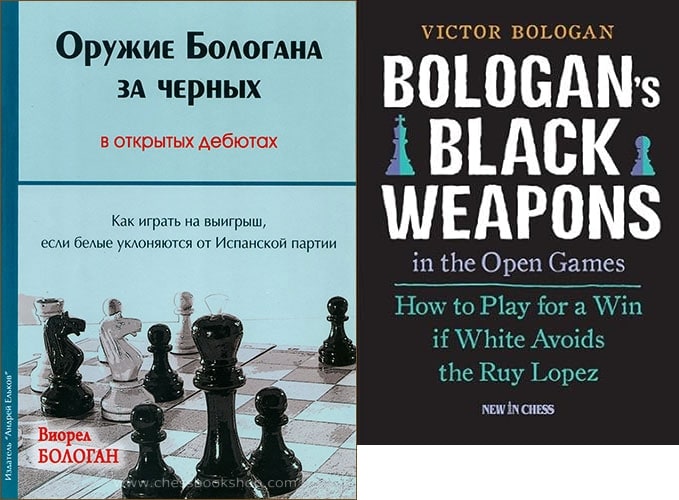
I really liked the contribution of one of the visitors to the Levitov Chess channel, who in response to Kryakvin’s introductory words about the undemanding theory of the Middlegame (that is, that the viewer does not have to learn many variations) replied roughly as follows in translation: „Your introduction ‚so that we don’t burden our heads with some 21st century analyses...‘ was enough for me. In that case, better play dominoes… and the problem is solved. Where will you get with such an approach in chess?"
In the fight against the Middlegame…
we basically manage with two weapons! Firstly we should return to the classics and know how to fight against the so-called small centre in general. I will not publish ways of fighting, diagrams and examples here again. The reader will find the necessary information in the article This is how the small centre is broken down! A sensational miniature by the 17-year-old Javokhir Sindarov in the catacombs of the accelerated King's Indian.
Then only it remains to study the examples and model games given below. In this article, I have naturally focused only on the by far most common queen retreat 4.Qe3 (4...Nf6 5.Nc3)
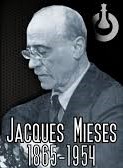
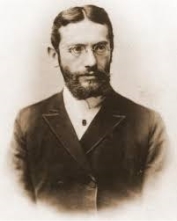
Since my youth, I have recommended using the concept with Bf8-e7 and d7-d5 rather than Bf8-b4. Only later did I learn that, from at least a positional point of view, the more sophisticated development system was first tried by the German-British master and lover of sharp complications Jacques Mieses in a friendly match against Karl Walbrodt as early as 1894 and therefore rightly bears his name.
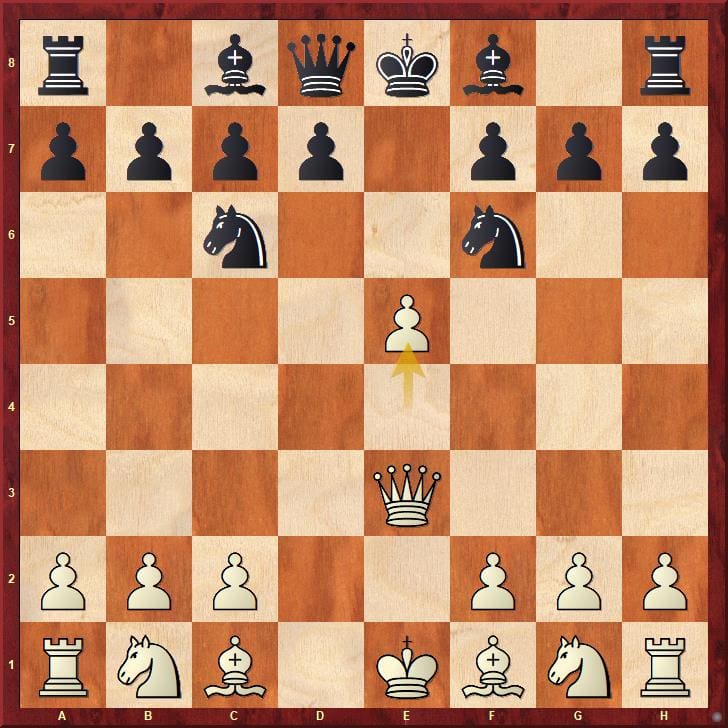
Paulsen Attack
More attention than in the first video should be paid, however, to the objectively incorrect but in practice sufficiently poisonous so-called Paulsen Attack. 1.e4 e5 2.d4 exd4 3.Qxd4 Nc6 4.Qe3 Nf6 5.e5?!
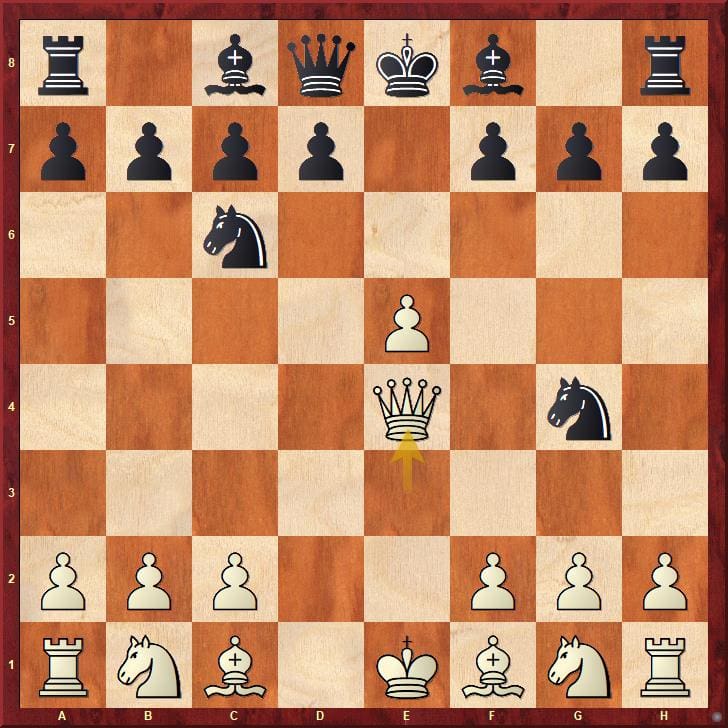
Allow me to pose a cunning question to the reader: How would you continue with Black? After all, after 5...Ng4 White does not have to retreat with 6.Qe2, but can play the at first sight more logical 6.Qe4.
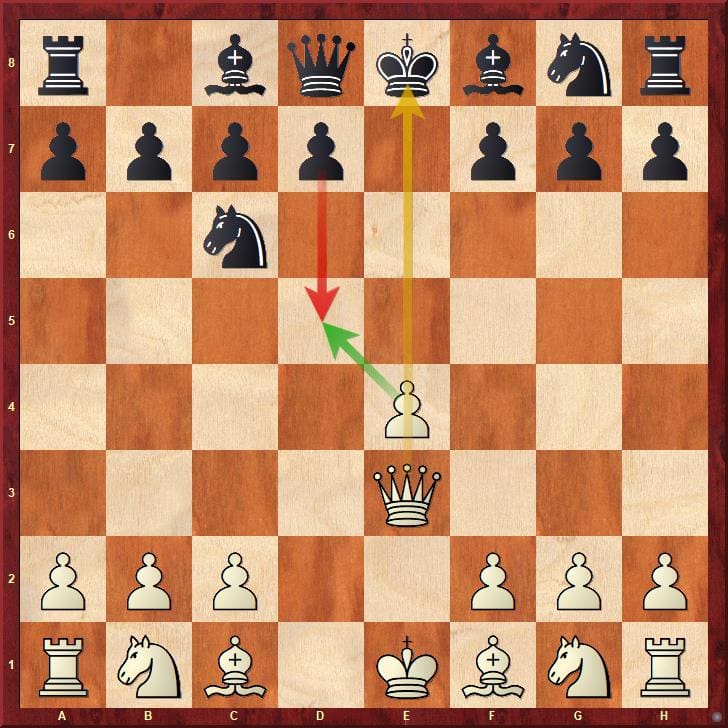
Main line 4.Qe3
Before we delve into a more detailed study of Mieses's concept of counterplay in the main line, I cannot refrain from pausing at the splendid, didactically perfectly modelled reflections that Viorel Bologan presents in the aforementioned book. He pays attention to the distinctive features and weaknesses in White's camp.
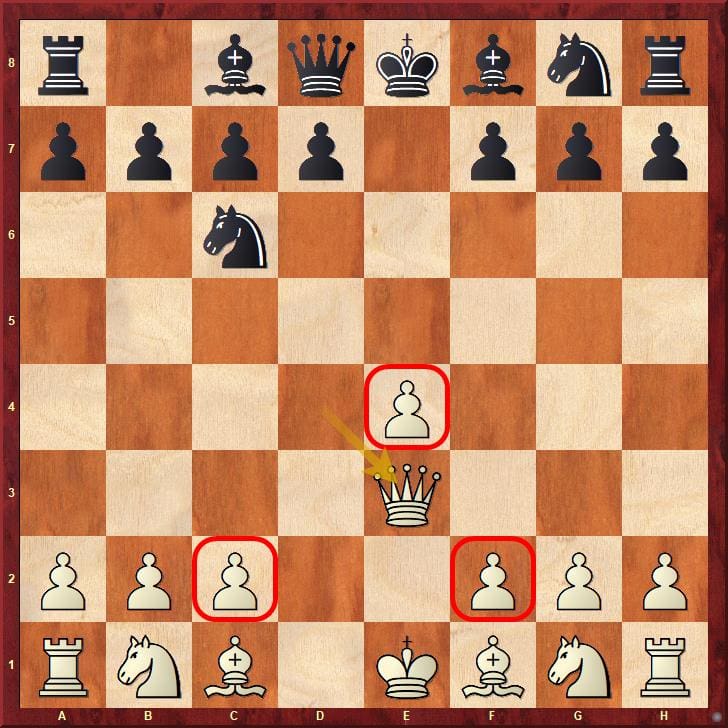
Bologan,V (paraphrase): In connection with the new queen position on e3, White faces several problems.
- orphan on c2 (a tactical weakness)
- after Re8 the pawn on e4 will be pinned
- the battery Qe3+Bd2 lacks a target (it fires somewhere at the square 'i7'); White would certainly welcome it if both pieces swapped places
- problem with the f2 square – a possible attack with tempo using Ng4.
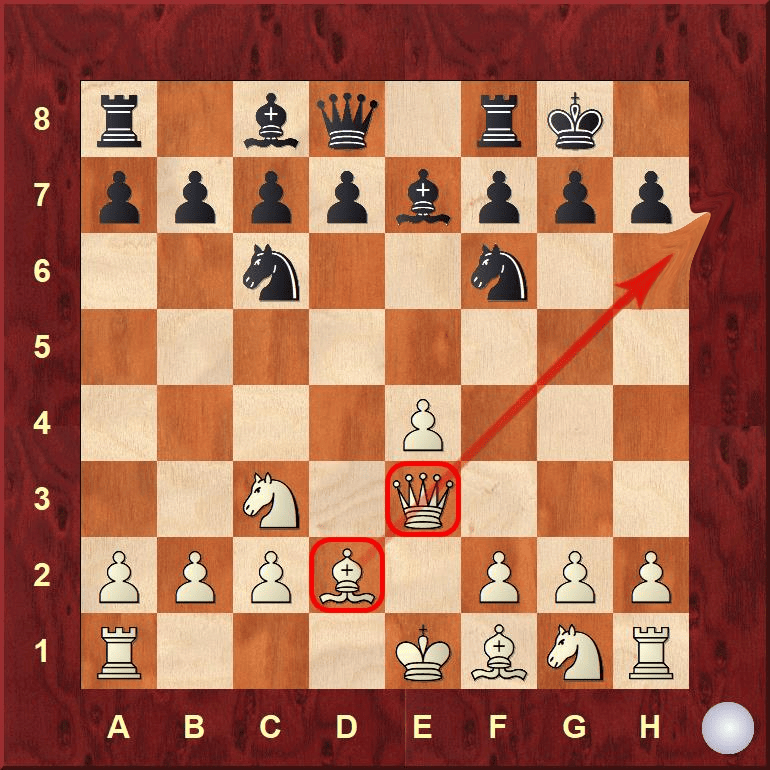

The brilliant remark in point 3 prompted me to experiment with the illustrative diagram and graphics 🙂. The operation of the artillery battery Qe3+Bd2 is eyeing the square i7!
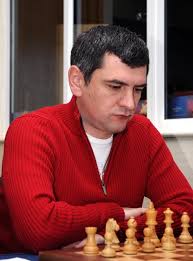
Viorel Bologan
Even in the main line let us first pay attention to older straightforward methods of White, which did not take into account the possibilities of trying to meet the liberating d7-d5. The following diagram for reflection reflects an important game Sultan Khan vs. Marshall, Belgium 1930.
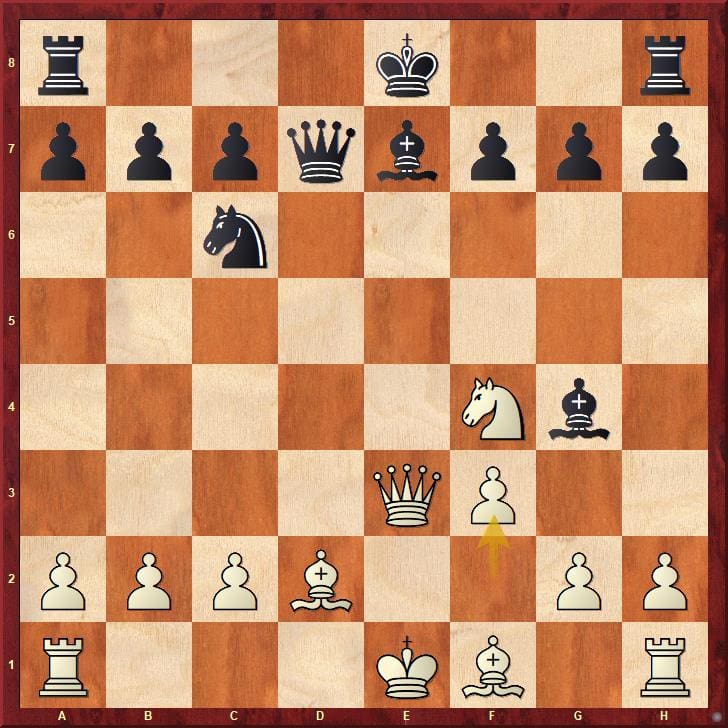
Thanks to Mieses's method of development, Black managed to solve all the opening problems, but after 11.f3 he found himself at a crossroads. How would you continue as Black and on which variations would you rely?
Of course, the most logical method for White is to try to prevent liberating central strike d7-d5. Therefore, the videos above after 1.e4 e5 2.d4 exd4 3.Qxd4 Nc6 4.Qe3 Nf6 5.Nc3 Be7 focus, and recommend to White exclusively the advance 6.Bc4
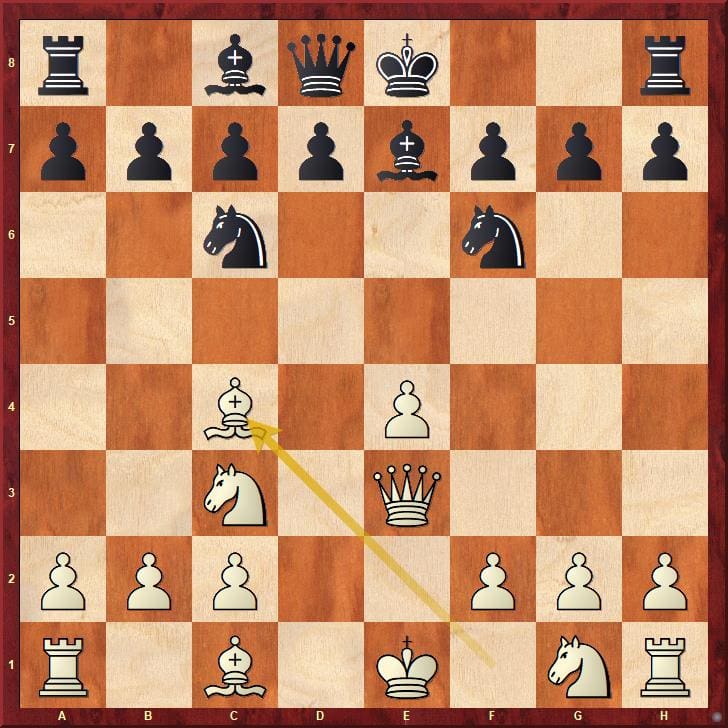
hoping, as we can see in the naive Kryakvin video, that Black will resign or simply fail to achieve a radical liquidation of the small centre. Not a chance!
Before moving on to the correct recipes for Black, I would like to present the reader with one more position to crack. The answer to the posed question can be found in the game Rasmus Skytte vs. Jan Bartoš Pardubice 2008.
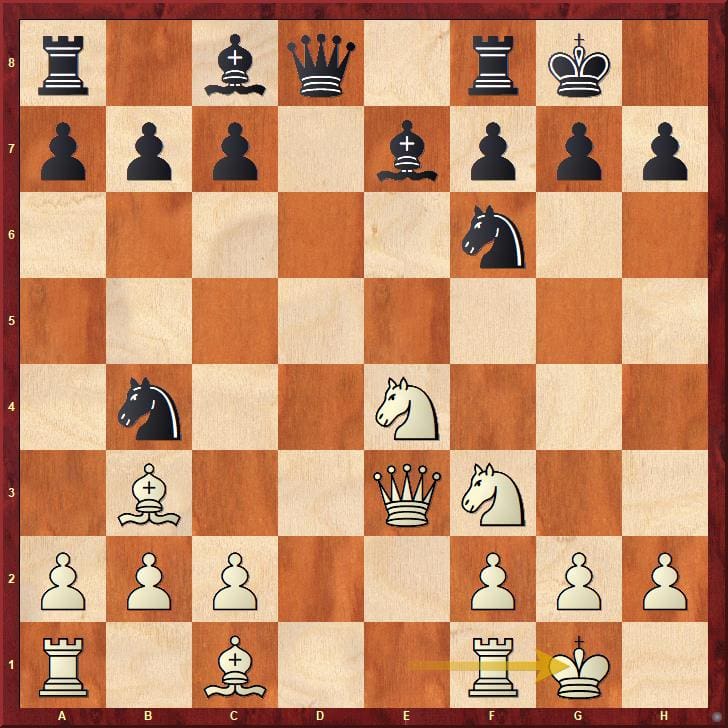
Black played the opening flawlessly, and if anyone were to feel some discomfort in the position, it certainly is not him. What followed was apparently natural 10...Bb5.
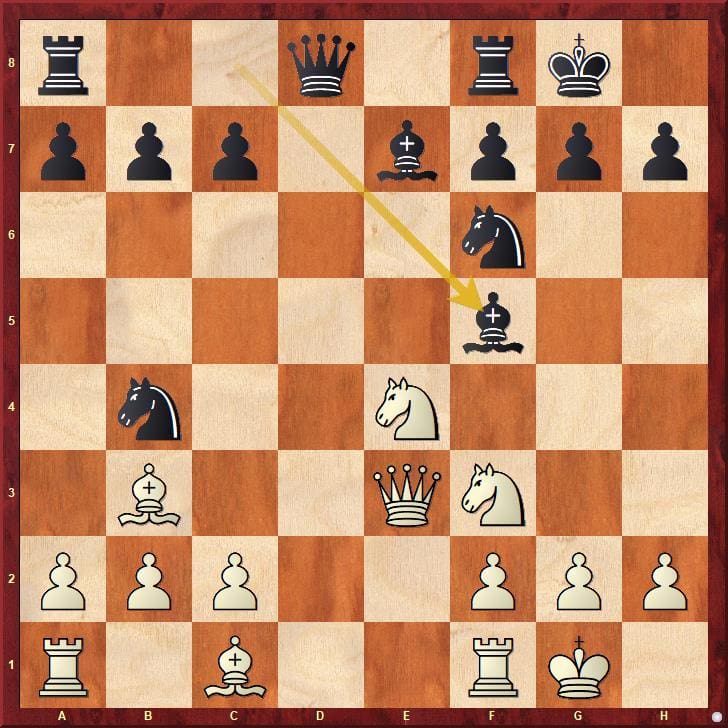
Would you play like this in your game or choose a different approach? If so, which one? Can you say why?
Essential knowledge, databases and the importance of miniatures
Chess players eager for permanent and serious study aiming, for example, to reach master level today face the same problem as all of us. The Czech philosopher, educator and writer Zdeněk Mahler wrote an article many years ago, which I cut out and kept. It was titled „An influx of information proves that the world has gone out of joint“. If he saw what is happening today, he would have trouble even naming his new work!
The art of filtering out unnecessary, superficial or even deliberately false information, which, among other things, is also represented by both videos above, is today becoming almost the main problem of chess study!
If you decide to fight 1.e4 (literally) with an open visor, then I would first recommend getting Bologan's works. True, they have aged somewhat in nearly a decade and (as I found out by analysing the middlegame) some of the author's conclusions need revision, but by studying the book you will gain invaluable overall overview! Bologan has a gift for selecting simple and effective weapons against various gambits, backed by classical chess education. After all, he learned from one of the best - the legendary coach and theoretician Vyacheslav Andreyevich Chebanenko.
https://ruchess.ru/persons_of_day/vyacheslav_chebanenko_pd/
A quality book thus forms a kind of foundation, on which updated, high-quality and didactically balanced databases of analyses and games should build. This should - could be compiled for you by a coach.
Personally, I believe that for club players below master level, it is very suitable to dedicate the introduction of a specific opening database to historical games or miniatures - treats. Two such charming historical miniatures I will present to you, dear readers, only here, that is, conversely at the end of the article about the fight against the Middlegame.
Readers who prefer the chessbas player can find all the examples published here also below.

Interested parties in the complete database of Middlegames with Black in cbv or pgn format can contact the author via the emails listed on the pages below. The price of the entire study material is 1,000 CZK.

Very high-quality work, thank you
It is interesting that my favourite Big Greek does not deal at all with the move 5...Ne7 in his two-year-old video.