
„I am the strongest of the living!“ allegedly said the young Capablanca in response to a curious journalist. However, the most popular question from chess amateurs to chess players is usually different! „How many moves ahead do you calculate variations?“ To this question, Capa answered: „It varies, but sometimes I need to know what will happen after 20 or 30 moves.“ What I once read as a pupil, I now sell! Until my older chess friend explained to me what Capa probably meant. He was talking about the structure, development and tendencies of the position heading into the endgame, which are known to the player in advance, not about forced variations… but still! Something very similar could have been said by Magnus Carlsen after a rapid game against Erigaisi. From a mathematical point of view, his calculation represented a length of 30 (sic!) moves. However, this article will not only focus on this astonishing game and the peculiar record…
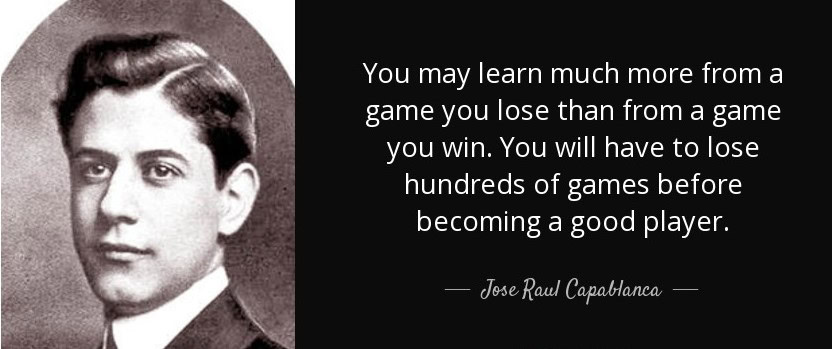
You can learn much more from a game you lose than from one you win. To become a good chess player, you will lose hundreds of games.
World Team Championship in Rapid and Blitz Chess
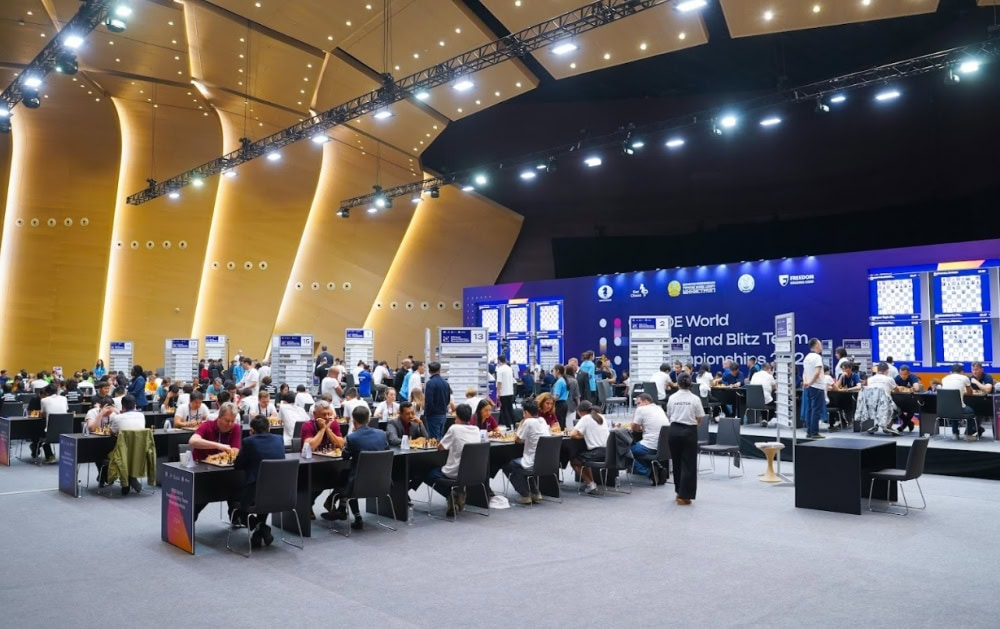
From 1st to 6th August, the World Team Championship in Rapid and Blitz chess took place in the capital of Kazakhstan. Since last year, the competition has been held in an interesting format. The teams are six-member, but firstly, it is not a competition of countries or clubs. The line-ups are more or less free, but they contain two conditions, of which especially the second is definitely unusual. Besides the mandatory participation of a woman, a so-called chess amateur plays on one of the boards. According to my information, this must be a player whose FIDE rating has never exceeded 2200.
The purpose of such an endeavour is probably well thought out… in a good way. Often sponsors and chess enthusiasts in one play on the last board. They then surely often choose which players they would like to see in the team. Although on the other hand it turned out that in balanced teams the performance of these chess enthusiasts decided the final winner in rapid chess, I do not think that in today's times, when almost anyone can play for almost any federation, the primary intention is to take home the winner's trophy.
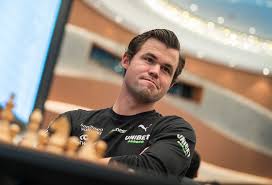
Who has ever seen the eternal rivals Magnus and Jan in such a joyful and friendly gesture… after their team's victory in the blitz tournament!
In the favourite team, we could see grandmasters sitting next to each other who usually face each other on other occasions: Carlsen on the first board, Nepomniachtchi on the second…
I cannot resist showing readers a video treat already here. In round 8, truly strong teams clashed. Carlsen played White against the reigning world champion, Nepomniachtchi then against, as it later turned out, one of the most successful players of the rapid tournament Wei Yi (who scored 10 points out of 12 with a performance of 2873).
On the board appeared the Rubinstein variation of the Ruy Lopez with 4 knights: 1.e4 e5 2.Nf3 Nf6 3.Nc3 Nc6 4.Bb5 Nd4 with a drawish addendum 5.Nxd4 exd4 6.e5 1/2
The sacred, terrifying knowledge of the world champion
When I saw Carlsen's first game in the tournament (in the first two rounds Jan Aleksandrovich stood in for him on the first board), I did not believe my own eyes from the very first moves. The first problem I encountered while watching was like a forgotten demonstration of my recent two-part article about bishop versus knight fights! Well, and the conclusion? That thirty-move calculation à la Capablanca!
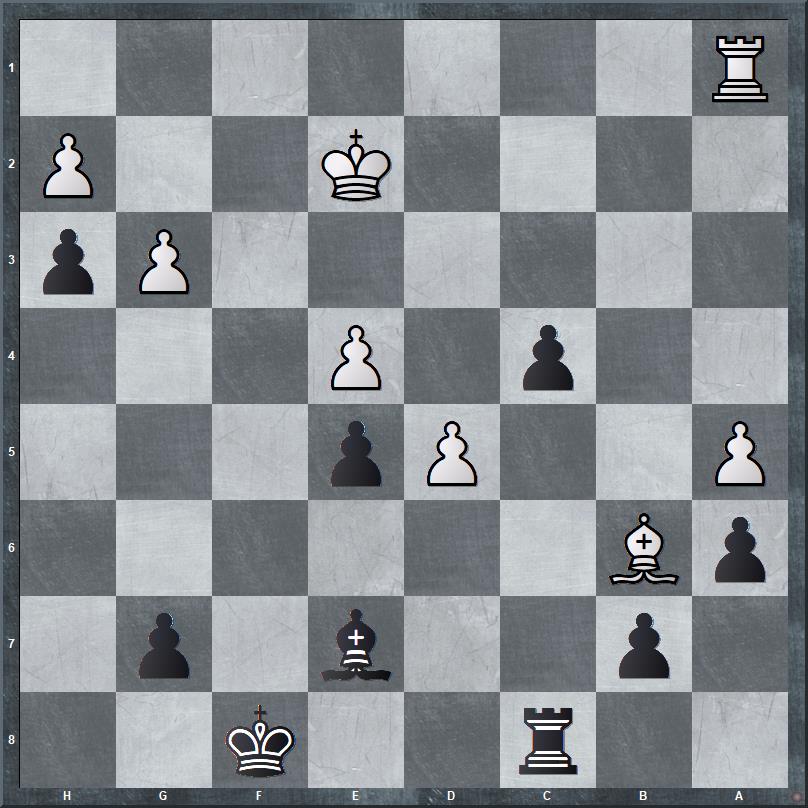
Game Erigaisi vs. Carlsen, Black to move; the 16th world champion was able to calculate from this position all the way to a win!
I will not reveal more yet, because first I would like to ask you, dear readers, a few questions 🙂
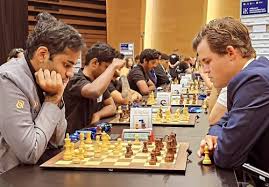
If anyone until now thought that the 16th world champion is first among equals or only has outrageous luck stemming from his bulldog nature and extraordinary fighting spirit, the conclusion of the game against Erigaisi opened his eyes!
The worst bishop is better than the best knight
This is said, of course, with a certain exaggeration. In my work „Bishop or Knight? Computers put the full stop on the „i“ in a number of well-known positions... and coaches have got more wrinkles on their foreheads“ we mentioned not only this idiom, but practically analysed the entire issue of the relationship between these two minor pieces. But I won't reveal more for now!
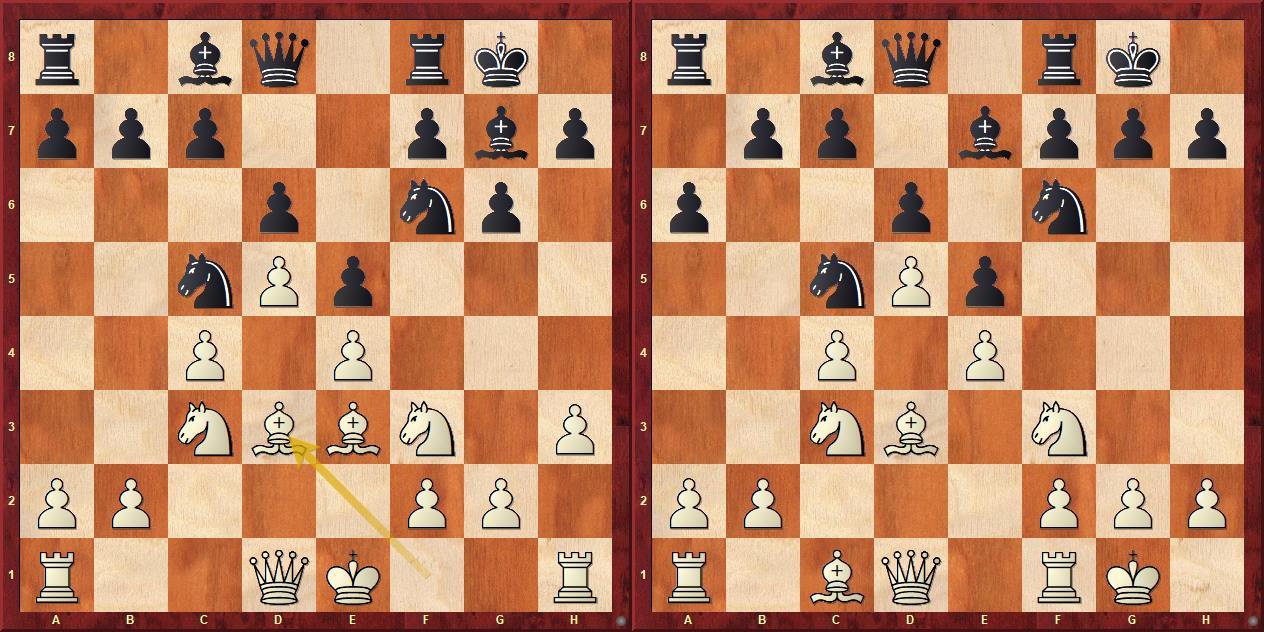
In the diagrams above we see two positions. One of them arose from the very supergame Erigaisi vs. Carlsen, the second diagram then shows a position from my very old game Ciprian vs. Bílek 1977. In both positions Black is to move and your task is to suggest your best continuation and then evaluate the position!
Analogies, associations and templates in the middlegame
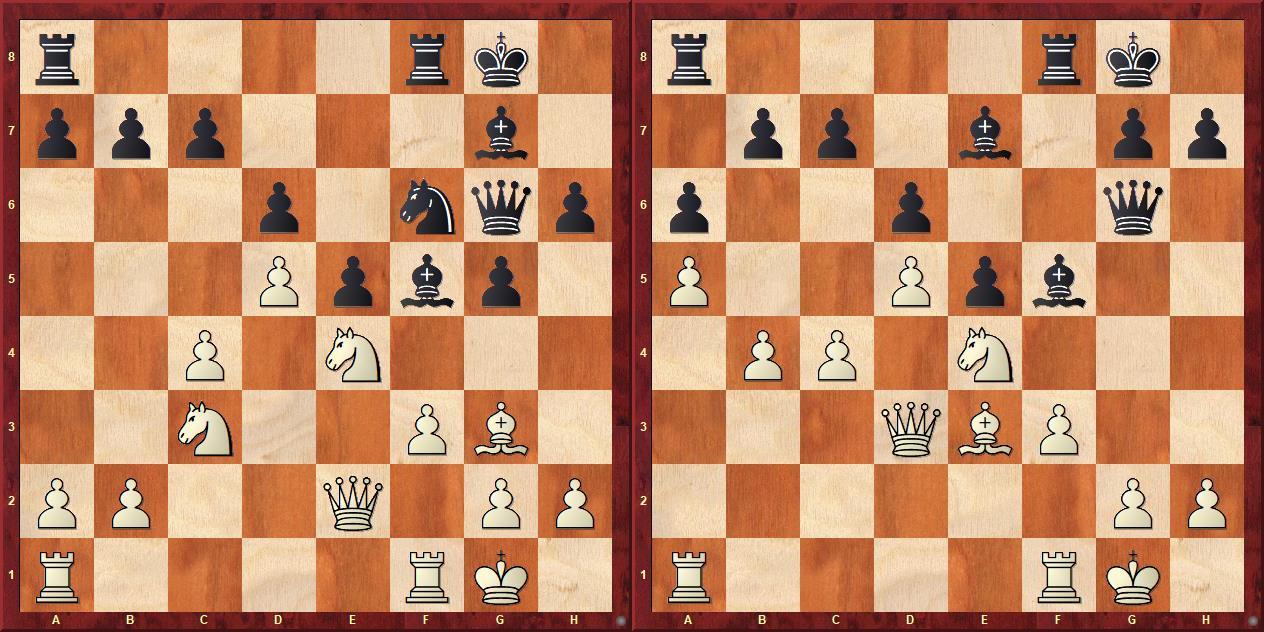
Black is to move again. We see that in both cases the same and, it must be said, in these types of positions standard manoeuvres Bb5 and Qe8-g6 were used.
EX1: Evaluate both positions. Decide which one you would prefer to choose as Black, that is, which one appeals to you more.
EX2: How would you probably continue in the positions of both diagrams?
Even here you will not yet find the key Erigaisi-Carlsen game in the viewer. That will be – of course with a certain intention, namely not to reveal – available later as the highlight of the programme.
Analogies, associations and templates in the endgame
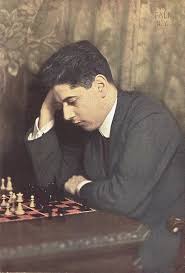
Capablanca: „If you want to improve your play, you must study endgames, because they can be examined and mastered on their own. The middlegame and opening should be studied in relation to the endgame.“ Even some young super-grandmasters 2700+, let alone many aspiring masters, should hang this Capablanca advice in their study, above their computer or preferably above their bed! And decorate the text with a golden frame...
Only now do we reach the climax of Carlsen's presentation of his first appearance in Astana! To the endgame! Again, let us first look at several diagrams, including studies. The solutions to all examples, questions and tests can of course be found by the reader in the viewers below.
But first, perhaps something to warm up: Blumenfeld,B study
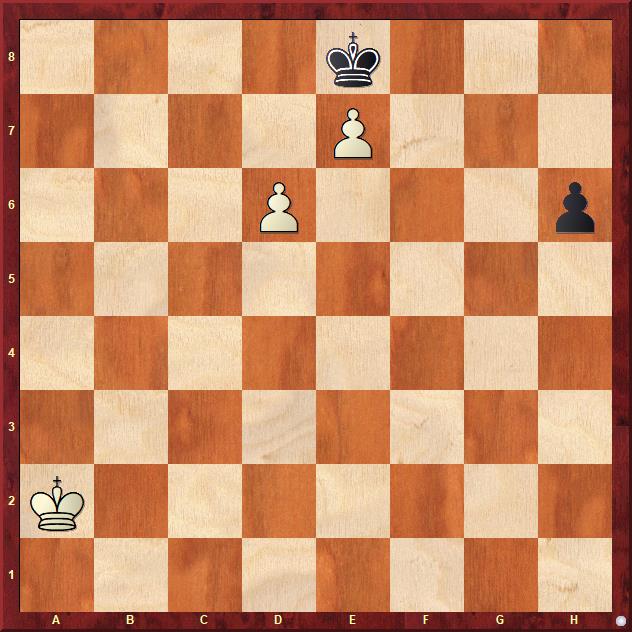
White to move wins
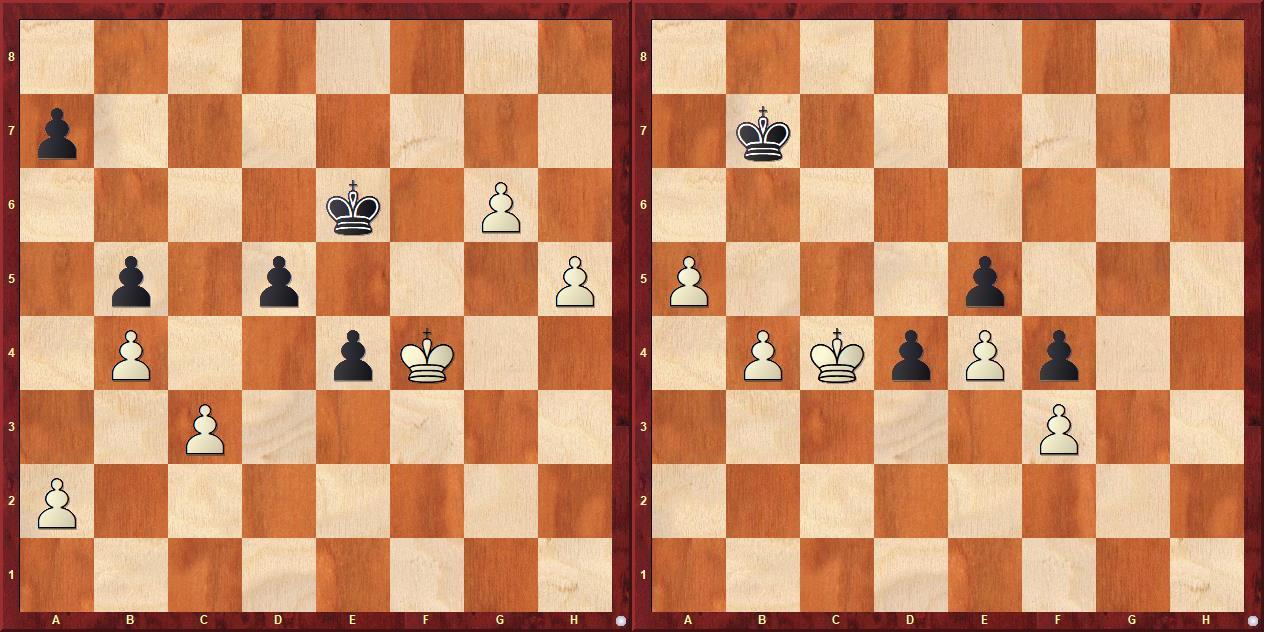
Here too, White moves in both cases. An interesting false hint is presented by the fact that in both cases the games ended in a draw. Whether you manage to solve the tasks on the diagrams or not, in any case, remember well the pawn structure in the right diagram!
If Magnus Carlsen did not know any of the positions shown in the combined diagrams above, then I am one hundred percent convinced that he has the following old but all the more famous study deeply stored in his memory.
Horwitz and Kling 1851, study
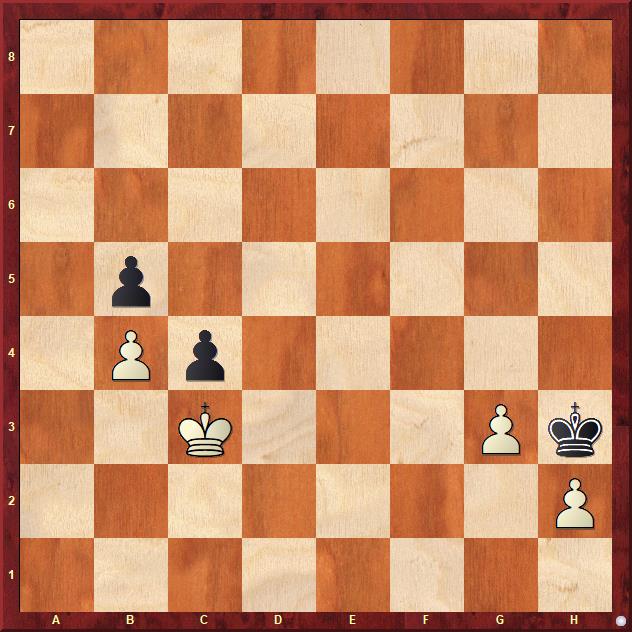
White to move wins
Dvoretsky writes in his endgame manual: On the board is a typical situation with two free connected pawns. It seems that a draw is inevitable because the white king is tied to the square of the free protected pawn on c4. In fact, in such cases it is sometimes possible to leave the square and help your pawns promote to a queen or confuse the opponent.
White's plan usually includes the following elements:
Maximum possible advance of the pawns
Choosing the optimal pawn formation (which one stands in front)
Choosing the right moment for the decisive king march forward (leaving the square)
In the first phase, the king supports the advance of his pawns from f4 without leaving the square…
If you, dear adult readers, had problems solving the diagrams from the practice above, now is the time to return to them as part of the most effective training possible. Such an approach is recommended by andragogy (adult education), unlike pedagogy!
Below you can see the solutions to the above pawn endgame tests!
The following example (test and solution) was included by Dvoretsky in his book Учебник ендшпилья (Endgame Manual).
Magnus's three-minute thought and… done!
Finally, we come to the actual conclusion of the Erigaisi vs. Carlsen game! Arjun, who was already feeling a certain time shortage, moved after 20 seconds of thinking 31.Ke2
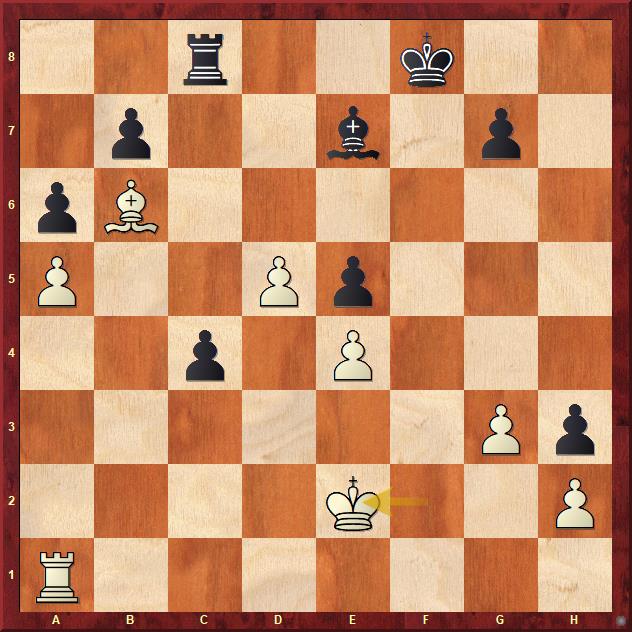
The video more or less proves that the world champion calculated a forced win within the next 3 minutes (he practically blundered the rest of the game). His calculation is 25 moves long (sic), but if we do not consider White's resignation, it reaches a full 30 moves until the checkmate! That is the length he was talking about the strongest of the living in his reply to curious journalists 🙂
So here is the final and hardest question! How would you, dear readers, continue in Magnus's place?

How was it really?
Of course, the whole idea of Carlsen's 30-move calculation is also somewhat exaggerated. Magnus did not calculate that far. He stopped in a position where he was confident about the evaluation. So probably somewhere around 37...Kd6 or 40...Kxb6. Based on his deep knowledge of a huge number of theoretical endgames (he recalled, associated, Kling and Horwitz studies or fragments from games) he simply knows what is probably missing from all other world-class players today.
For example, I would bet that he has Dvoretsky's entire endgame manual at his fingertips! And let us know that the difference in endgame knowledge is in some cases enormous. Why is that?
Many will surely disagree with me, but as a true old-timer I believe that... nothing can replace a book! From my own experience, I know that one of the greatest advantages (not only) of a chess book is that the studied material can be looked up at any time and refreshed, repeated. On the other hand, I would like to see young chess players today who are able to attentively watch, for example, a one-hour video more than twice in a row. And maybe here I am even exaggerating.
The World Champion therefore ended his calculation significantly earlier and evaluated the position.
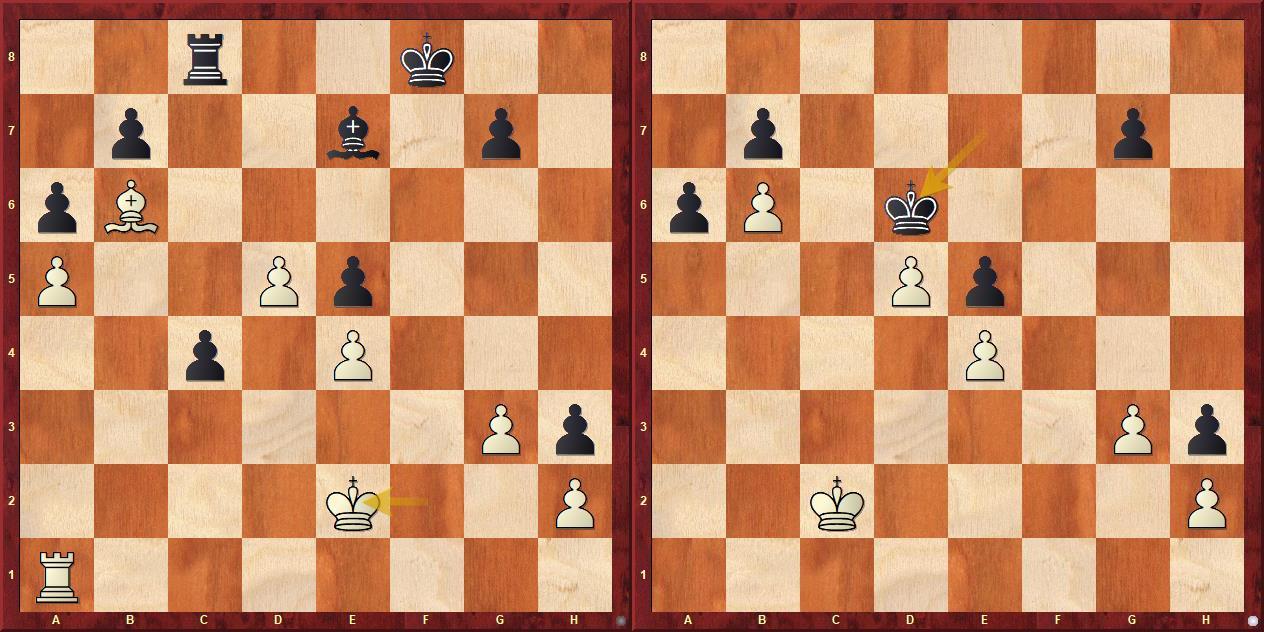
The calculation began after three minutes of thinking about the move 31…Bc5 and was probably ended in his mind after 37...Kd6.
With my pupils, we consider the evaluation of the position as a separate third pillar of calculation of the imaginary bridge, which rests on three main pillars:
- The principle of calculating variations to the end (do not end the calculation if there is a forcing move in the position – check, capture, threat)
- Visual fixation (eidetic memory): see for example my article „Modern diagnostic tests of chess talent not only for coaches“. In my work, I encounter the problem of so-called ghosts in the position.
- Helpers for evaluation at the end of the calculated variation. We stop at the point when it is no longer possible to calculate the variation further or – and this is precisely this case – we are sure that we know the correct evaluation of the position thanks to knowledge of, for example, precise endgames, experience, analogy, association.
A thoughtful reader might object here that the third pillar can be in conflict with the first: „Never end the calculation…!“ Here I usually answer (depending on the education and erudition of the questioner): „Do you know Asimov’s three or four laws of robotics?“…
Well, that is all for now! A careful reader will surely object that such a conclusion to the article completely contradicts the title. The author promises to write about two amazing or shocking records!
Yes! The first game confirmed that Carlsen is still, for at least 10 or 11 years, the leading figure of the entire super-grandmaster peloton. On the same day, however, not only I myself experienced another proper shock; and it is hard to say which of them struck more! But I will acquaint dear readers with it only in the second part.
I will only hint and dare to remind readers what shock actually means. The dictionary of foreign words says: „shocking“
- Amazing
- Strongly disapproving… 🙂 this meaning awaits us in the second part!
Below, the reader can play through or download all the examples in the popular CB format.