

FIDE has officially announced the venue and date for this year's World Chess Championship match Gukesh vs. Sindarov. The final choice was the „neutral“ Geneva, which gives neither player the advantage of home ground or cultural proximity. The match will be played in the same format as two years ago, that is over 14 games, although all details are not yet known. FIDE has previously set in the conditions for bidders to host the match a minimum prize fund of 2.5 million dollars. It is therefore certain that the players will compete for at least the same amount as Gukesh did against Ding two years ago in Singapore. However, the final prize fund amount has not yet been announced.
How will the battle end? Most forecasts clearly favour the challenger, who has gone from success to success over the past year and is currently ranked fourth in the world, while the world champion is struggling more and more. But what are the real prospects for the young players? And why is the average age of chess players fighting for the highest title dropping so significantly? In this article, we will try to analyse both this and the form of both participants several months before the start of the match, even though the main indicator – the September Olympiad – is still ahead of us. In the first part, we will focus on the challenger.
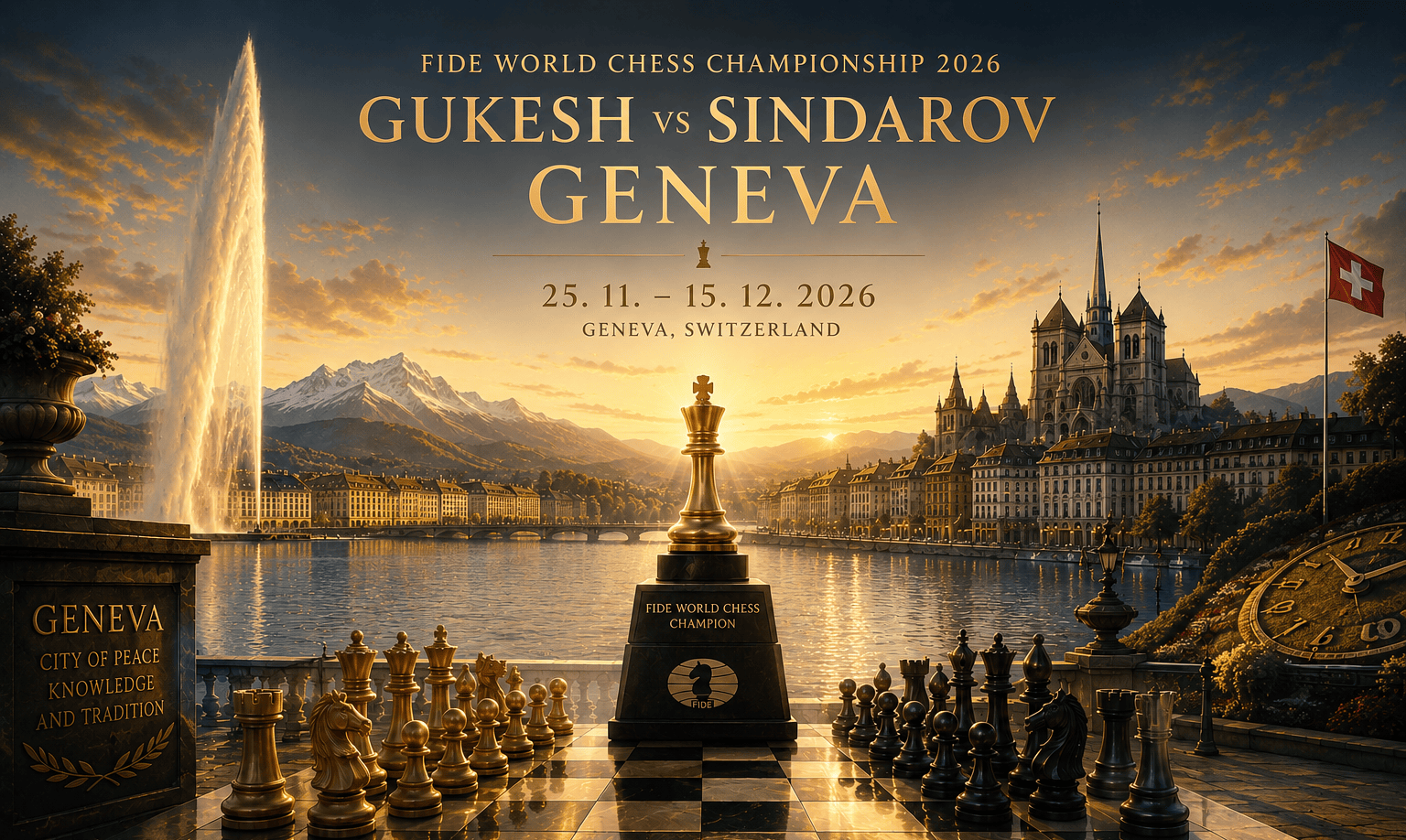
FIDE Acting President Viswanathan Anand welcomed the announcement of Geneva as the venue: „Several countries, including India, the United States and Cyprus, showed great interest in hosting the World Chess Championship match. After careful consideration of all proposals, FIDE decided to hold the match on neutral ground and bring it to Geneva, a city with a historic tradition of bringing nations and cultures together. We look forward to welcoming the world chess community in Switzerland. Local chess fans will have the opportunity to witness world-class chess in person, while millions of fans around the world will be able to follow this contest for the highest chess title online.“
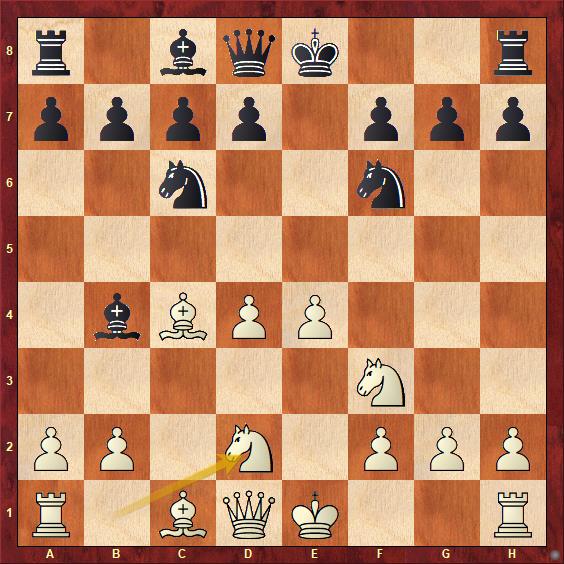
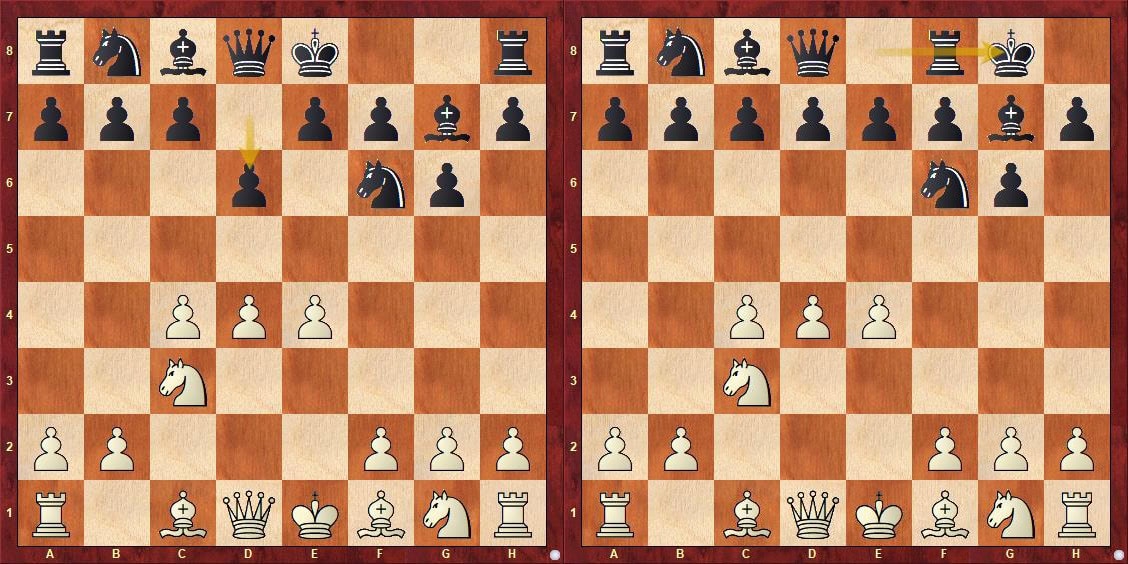
Well, the article would not be complete without some new opening idea. Do you know how the Pomtow Gambit is played? No? Let’s look at one of Sindarov’s weapons: 1.e4 e5 2.Nf3 Nc6 3.Bc4 Bc5 4.c3 Nf6 5.d4 exd4 6.cxd4 Bb4+ 7.Nbd2!?
Why are participants getting younger?
Before we make predictions about how the match might develop and end, some readers who study chess development more deeply may be interested in the answer to the question: „Why is the age of participants in the fight for the chess crown constantly decreasing?“ The usual argument and universal answer, that chess has become „more dynamic“ or „more concrete“, that demands on memory are increasing and so on, are relevant but, in my opinion, cannot fully explain the whole problem.
Personally, I find such reasoning true but insufficient. The difference is simply too great. Generally, players over forty are practically written off today and any victory by a super grandmaster over 40 in a stronger tournament is considered almost a miracle. For example, Aronian’s recent victory in Biel. And if a grandmaster regularly won super tournaments at age 40+, it would no longer be seen as a mere fluctuation; suspicions would surely arise that something is „wrong“…
And yet, for example, less than 12 years ago the World Championship match Carlsen vs. Anand was played in Sochi. At that time, the ex-world champion was approaching a round „forty-five“. Of course, he had previously won the Candidates Tournament and thus earned the right to a sort of rematch.
For those readers who might want to talk about a „fluctuation in this direction“, I will remind you of the average age of another, not exactly historical, World Championship match Viswanathan Anand vs. Boris Gelfand, Moscow 2012: Anand 42 years, Gelfand 43 years!
If we now add the ages of the two juniors who will meet in Geneva in November and December, it does not even reach the age of one of the players who fought for the crown just 14 years ago! It is not a matter of decades or half a century!
How is this possible? The advent of computers? Changes in study technologies? The game becoming more dynamic? Memory demands? Shortening of time controls in progressive competitions? Records are falling one after another!
Well yes, the explanation can indeed be summed up in one sentence: „Chess has changed significantly!“ But such an answer raises more questions than before stating this probably true hypothesis! The answers would deserve an entire scientific treatise, and even a book on the subject would hardly be a pamphlet. The usual explanations related to the „rejuvenation of top players“ are mostly the following:
- mass use of engines from an early age,
- online training,
- huge game databases,
- professional coaches,
- a greater number of strong tournaments,
- specialisation already in childhood,
- rapid spread of new knowledge.
My aim in the article, however, is not to analyse this, but primarily to try to analyse the form of both participants in the upcoming most important event of the year! To express views on the chances of the youngsters and support my opinions with arguments – interesting and instructive games.
Despite everything, I couldn't resist! Since today's AI tools allow it, I thought of creating a list and then a graph that I wanted to see and study long ago, but I have never come across it in literature or magazines. It concerns the age of participants in all World Championship matches – from the first match in 1886 up to this year's.
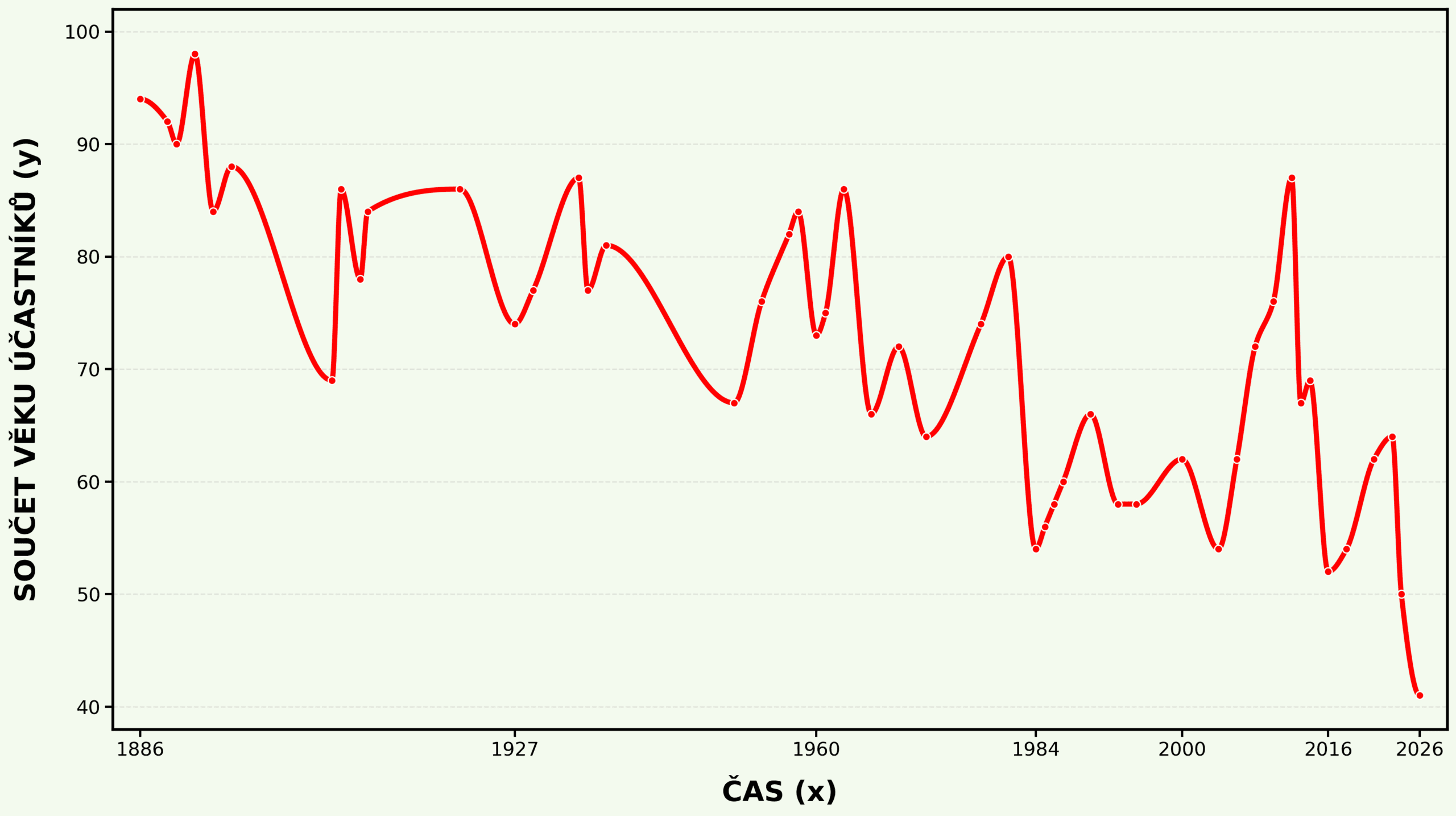
The axis x represents standardly time (from the first match in 1886 up to this year 2026), the axis y then the sum of the ages of both participants in the match. For simplicity, I did not instruct the AI to check for each match whether the world champion and challenger had already celebrated their birthdays at the time of the match. Such rounding to whole years cannot significantly affect the final form of the graph. However, what obviously influences the statistics are the two world wars of the 20th century.
The graph shows a long-term, but not linear, decline in the combined age of the participants in the world championship matches. Its course is formed by a series of significant waves related to the length of reigns of individual world champions, generational change, irregular scheduling of matches, and historical interruptions. While in the period up to the end of the 1950s the combined age of both opponents mostly hovered around 80 years and often exceeded this threshold, from the mid-1980s the focus of the curve shifted noticeably lower.
A significant peak is represented by the match Anand vs. Gelfand 2012 with a combined age of 87 years. In the context of the modern era, this is an extraordinary deviation that visually disrupts the downward trend, but does not negate it. The immediately following matches return to substantially lower values, and since 2016 the combined age has not once exceeded 64 years. The planned match Gukesh vs. Sindarov reaches a historical minimum with a value of 41 years.
Therefore, the graph does not indicate a simple and steady „rejuvenation“, but a long-term structural shift: young players today reach the absolute world elite faster and more often than in the past. Individual fluctuations remain natural, as the age of the pair depends not only on the strength of the emerging generation but also on the age and length of reign of the reigning world champion.
The result of 2026 may thus be partly an extraordinary fluctuation, but at the same time it completes a trend already visible in several previous matches.
Conclusion: The graph does not show only the biological rejuvenation of peak performance, but above all an acceleration of the path of young chess players to the world championship match itself.
The graph was created from data on individual world championship matches listed in the attached list:
Players' age – World Championship matches_list
Predictions favour the challenger
Rating development of both opponents
Looking at the current rating development of both participants in the world championship match, a striking contrast cannot be overlooked. While the reigning world champion Gukesh has experienced a noticeable decline since winning the title, the challenger Javokhir Sindarov has significantly strengthened over the same period. The overview captures the development of their classical FIDE ratings from the first rating list after the world championship match ended (1 January 2025) to the current list on 1 August 2026.
| Player | Rating as of 1.1.2025 | Rating as of 1.8.2026 | Change |
| Gukesh Dommaraju | 2777 | 2703 | −74 |
| Javokhir Sindarov | 2700 | 2777 | +77 |
Statistics reveal one remarkable fact! The World Champion lost 74 rating points during the observed period, while the challenger gained 77. This creates an almost symbolic picture: as if both future opponents exchanged their rating points over the last nineteen months.
By clicking on the documents, we have at our disposal a list of classical time control tournaments played by both players during the observed periods:
Gukesh_classical_tournaments_2025_2026
Sindarov_classical_tournaments_2025_2026
Let us now take a closer look at the current form and prospects of both protagonists of the most important event of the year. I have written so many articles about the World Champion and so much is known about him that we will focus mainly on his truly unfortunate recent performance on home soil in Chennai.
Although I have also analysed quite a few of Sindarov's games in my articles, I think readers do not know so much about his style, attitudes, character and chess education. So let us start with the challenger!
An ease that commands respect… and fear

Looking at Sindarov's games in recent months, one easily gets the impression that his victories come almost suspiciously easily. In reality, however, this is not the cause of his successes, but rather their consequence! The cause is primarily extraordinary accuracy of play, the ability to decide very quickly and correctly even in complex positions and overall chess maturity, thanks to which he can create an advantage seemingly without much effort.
The spectator then often gets the feeling that Sindarov defeats his opponents almost naturally, as if everything works out for him. Whatever he touches, succeeds. However – I repeat – this The impression of effortlessness is a consequence of his extraordinarily strong play, not its cause!
In this respect, Sindarov reminds me of Capablanca! Of course, I do not mean the style – the two players are completely different in this regard – but a similar feeling that their games leave behind. Even Capablanca's victories often seemed to arise almost by themselves. In reality, however, they were the result of extraordinary precision, deep understanding of the position, and the ability to make the right decisions with admirable ease.
Luck… or something more?
And it is precisely this apparent ease that creates that feeling in the viewer. As if almost everything Sindarov touched in the last two years worked out. It then seems that, in addition to extraordinary playing strength, he has also been blessed with a good dose of luck.
But chess players know well the saying that fortune favours the prepared or, if you prefer, the strong. Chance can sometimes decide an individual game, but it hardly explains a long series of extraordinary results.
Nevertheless, one cannot help but state that at least since November 2025 Sindarov has become one of Caissa's greatest favourites.
But whether we attribute it to exceptional talent, admirable form, or the favour of the chess gods, one thing is certain – few players have recently managed to convert opportunities into successes with such regularity.
Style… and the classical school
However, one more extraordinarily important circumstance must be taken into account. In November and December, two very young players will meet in Geneva whose playing styles are surprisingly close. I admit that from the history of World Championship fights, I cannot recall another pair so similar in this respect as Gukesh and Sindarov.
True, Sindarov as a player of an inductive nature definitely does not belong among mere „calculators“. But if someone asked me which of the leading world players most resembles the reigning World Champion in style, after some thought I would find few other names than Sindarov. At least he would be in a very narrow circle of candidates.
Unlike Gukesh, however, Sindarov has one undeniable advantage. He has undergone a complete classical education of the Russian, or rather Soviet, chess school!
More precisely, all his coaches went through this school and instilled its principles in him. This means that even in childhood he had to complete the so-called „classics course“ and during the necessary deductive reasoning in the game he has something to rely on. This circumstance can represent a significant advantage in certain types of positions.
Calmness as a weapon
Of course, we still have to consider Javokhir Sindarov's personality traits! The overall picture includes one more characteristic that cannot be overlooked when assessing his current form. While Gukesh appears to be a more reserved and introverted personality, Sindarov, on the contrary, radiates natural life calmness.
He is certainly not without emotions at the board either – he experiences the decisive moments of games just as intensely as other grandmasters. Nevertheless, optimism and self-confidence shine through his behaviour, interviews and conduct off the board. And it is definitely not some carefully crafted public mask.
Watching his behaviour, one sometimes gets the impression that he is one of those people for whom success is almost destined. Not because difficult situations avoid him, but because even in them he usually manages to maintain perspective and faith in his own abilities. Perhaps this trait explains why he gives the impression to others of someone who enjoys his success.
I am reluctant to give such reflections more importance than they deserve, yet one cannot help but feel that mental resilience will play a role in this year's World Championship match.
Because if, alongside extraordinary talent, accuracy and speed of decision-making, we add optimism and healthy self-confidence, a combination of traits arises that no chess player would wish for as an opponent.
And for this very reason, I believe that the September Olympiad will be much more than just some final serious indicator of the form of both young players!
Let us now finally move on to practical examples.
Readers will hopefully forgive me if this time I choose mainly rapid games, but also blitz, as illustrations of Sindarov's play in recent times. Believe me – I selected carefully and I simply cannot omit the following examples on my pages!
A standard named Hikaru
At least two games against the world stalwart Nakamura very nicely demonstrate that Sindarov has grown into Uzbekistan's number two monster in a relatively short time!
In the first example of a rapid game Sindarov vs. Nakamura White developed what at first glance looked like a sudden sharp attack out of nowhere. The ending even somewhat reminded me of Alekhine's famous so-called sudden attacks. Spectators at the time also felt as if they arose „out of thin air.“ In reality, already after 15…Qc7?? Nakamura was not only in time trouble but primarily in a losing position!
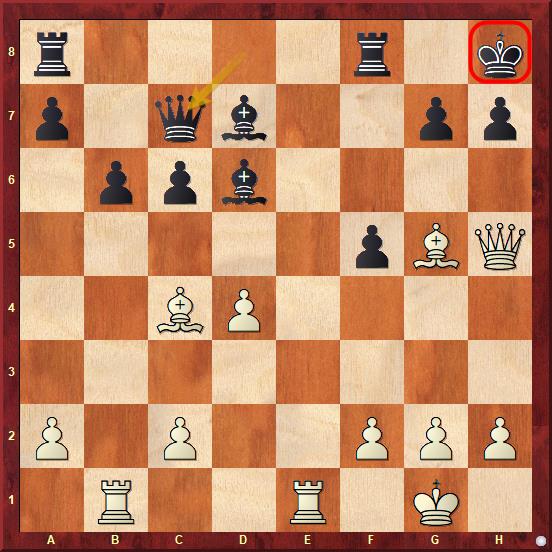
The numerical superiority of attacking forces is truly overwhelming. But who would have said that the game would become a miniature lasting only seven more moves! However, White had to find a series of strong and often the only correct moves. The following sequence can also be described as prophylaxis in attack!
How would you continue in Sindarov's place?
The position in the second diagram of the game is the last in which the challenger thought for more than a minute.
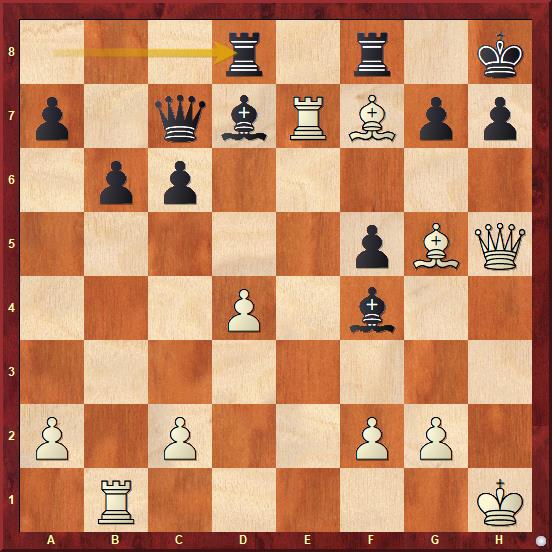
After that, everything happened all at once – within seconds. Of course, we have much more time, but still: Can you find how Sindarov continued, and possibly calculate further?
We will of course first give preference to the traditional Sagar notation of the game. The game itself is perfectly suited for a collection of miniatures, as we will be able to assess in the viewer.
After such a drubbing, Hikaru surely longed for revenge, even though it was only blitz. So when the USA–Uzbekistan match continued the next day with blitz games, he had an ideal opportunity for rehabilitation. All the more so since this time he had White.
What actually happened on the chessboard can hardly be called anything other than a „strategic-dynamic concert“! Let us first look at two moments that could have adorned textbooks in the past and today would embellish many a video.
In a blitz game Nakamura vs. Sindarov Javokhiro's beloved King's Indian Defence soon gave way – unfortunately, as is common today, mostly used only in rapid and especially blitz – to the Maróczy system of the accelerated Dragon variation. As we will see in the video and the viewer, Hikaru almost got lost in the positional problems of this demanding scheme.
The plan with e7-e5, which – if I am not mistaken – still originates from Vladimir Pavlovich Simagin, probably surprised him, while for Sindarov it is clearly one of the basic strategic ways of fighting with Black (more in the viewer). After 25…Qg5 26.Kh1
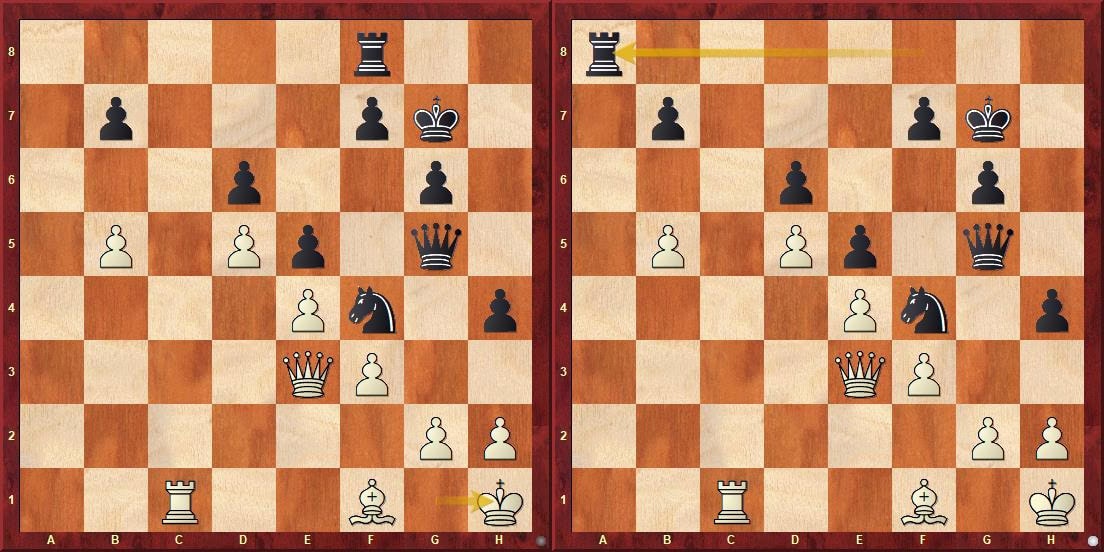
we face the position in the left diagram. The timing and video show that the brilliant 26…Ra8! „was “fired off" by Javokhir in just one second!
But let us continue:
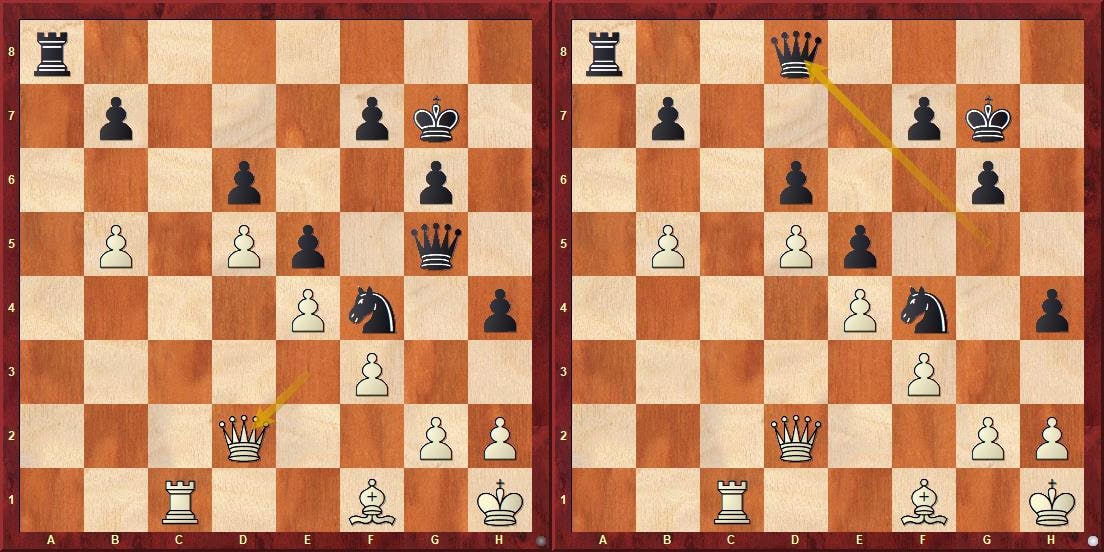
After 27.Qd2 follows after 15 seconds 27...Qd8!–+. White suffers from severe erythropenia (analogy = pathological weakness of the entire complex of dark squares). He was – just as in the rapid game – completely outplayed. There are many possibilities to strengthen the position, depending on White's responses.
More is given in the analyses and reflections in the viewer.
To those of you, dear readers, who like to play not only the King's Indian Defence but in this particular case also the accelerated Dragon Variation, I recommend not only detailed study but also including the game in your private opening databases.
Well, and here I simply cannot refrain from repeating what I felt while studying and analysing the game: When in recent months – more precisely since the Candidates Tournament – I have been following Sindarov's games, I cannot shake off the impression of a kind of almost Capablanca-like ease with which he manages to outplay his opponents. No, I am not evaluating the style now nor whether it is a blitz, rapid or classical game. I mean something more general. Javokhir is extraordinarily sharp, and when we add his precision and a certain calmness that literally radiates from his gestures and overall demeanour, it creates, as they say, a deadly cocktail against which opponents find no defence.
Saint Louis battles with Praggnanandhaa (1)
Currently, the traditional summer tournaments are taking place in the American chess capital Saint Louis. The start of the supertournaments was – also traditionally – rapid and blitz. And because I also came across quite characteristic examples of Javokhir's play and habits while studying, I simply cannot leave them out of the article!
Sindarov narrowly missed victory in the combined rapid and blitz tournament by a hair. True, he finished second in both parts and the tables in total do not suggest that he was literally pressing the winner Pragg, but…
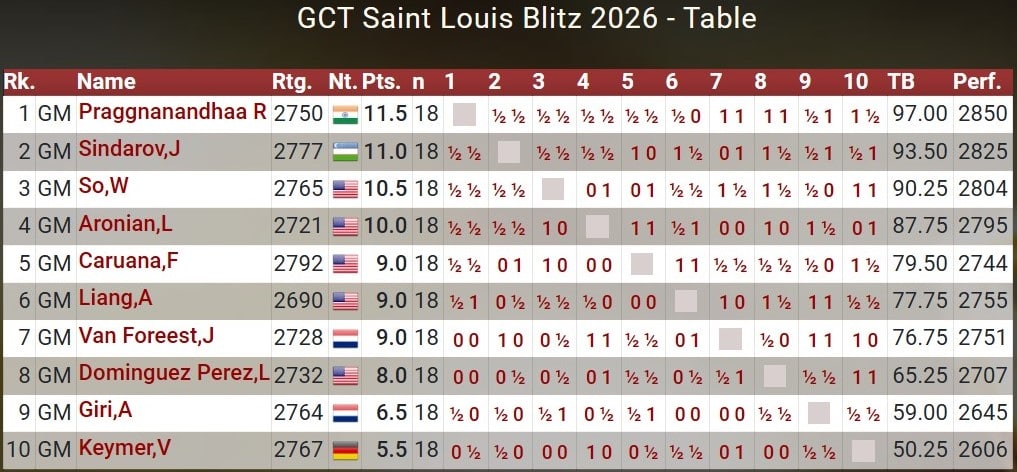
…only until we look at their mutual battles. We will now break the chronology of the tournaments and first look into the blitz section.
So it is the 8th round of the blitz tournament, the first day, game Sindarov vs. Praggnanandhaa. White has just played 26.Rb1.
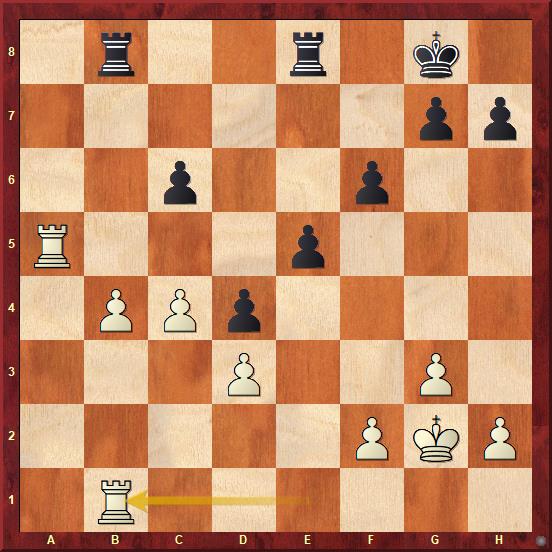
According to the well-known saying „all rook endgames are drawn,“ a four-rook endgame would indeed normally, with perfect play by both sides, end in a draw. Both opponents were already in time trouble of the „blitz“ type. True, not yet severe at this moment.
Not only experienced or strong players see that White has every right to try to play the position for a win. A solid pawn structure, the prospect of creating a distant passed pawn – probably even with a Tarrasch rook behind the pawn – give him full right to do so. And it would be the same even if the game were played at the pace of „correspondence chess of the eighties or nineties.“.
Followed by 26...Rb7 27.Rc5! Rb8 28.b5!
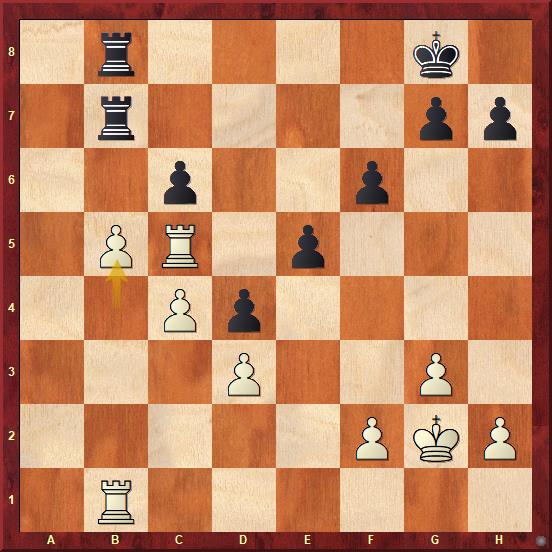
28...Rb6??
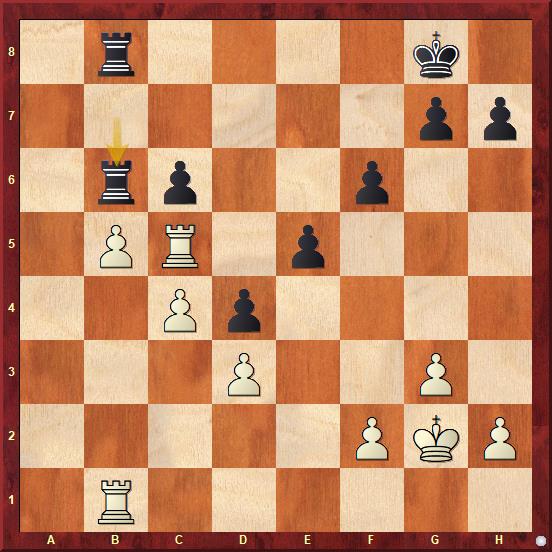
One might be tempted to remark somewhat sharply that Black has just fallen into one of the oldest, centuries-old known traps in rook endgames (the oldest trick in the world?). But chess players know that „this“ has probably happened to everyone, just as everyone has once been checkmated on the back rank!
Not even Commissioner Rex himself could avoid the oldest trick in the world. But he „paid his owner back with interest“. And as we will see below, Praggnanandhaa did not leave Sindarov anything either. 🙂
Well, in the speed of blitz Praggnanandhaa simply did not calculate the variation. But why do I pause here? Not only to ask you, dear readers, how would you continue if you were White? In the video below, we will be able to see the speed with which Sindarov replied!
But first, let us look at what happened next. Both super-grandmasters really found themselves in the final seconds of severe time trouble in the continuation. In the position of the left diagram, it was Sindarov to move 42.c6!
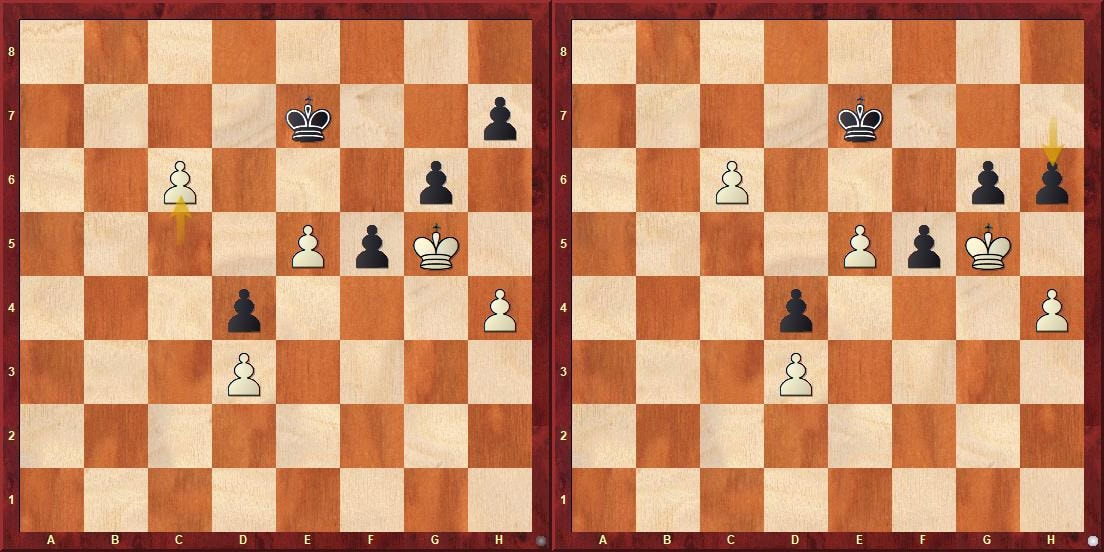
Followed by a tempo move 42...h6+! How would you continue if you were White?
I took the game record unusually from another source – an Indonesian YouTube channel. The video is set to the critical moment of the endgame, but the blitz game can be watched in full. In the second video, Sagar Shah analyses the endgame.
Let us learn (not only) pawn endgames
Perhaps fate itself willed it that a very interesting endgame, again with Javokhirov's advantage and once more transitioning into a pawn ending, arose in the battle of the tournament leaders also on the second day!
The penultimate 17th round of the blitz section of the tournament is being played, the game Praggnanandhaa vs. Sindarov. White is content with a draw and probably for this reason does not want to enter principled clashes in the opening. He chooses a system we call the queen's pawn with a delayed double pawn centre.
An analogous response, chosen by Sindarov, was recommended by the 13th world champion Garry Kasparov. After all, we already know, and will be further convinced, that the challenger – if he is playing King's Indian schemes – prefers advances or undermining with c7-c5. The opening is played by the book and gains the initiative… both in the position and on the clock.
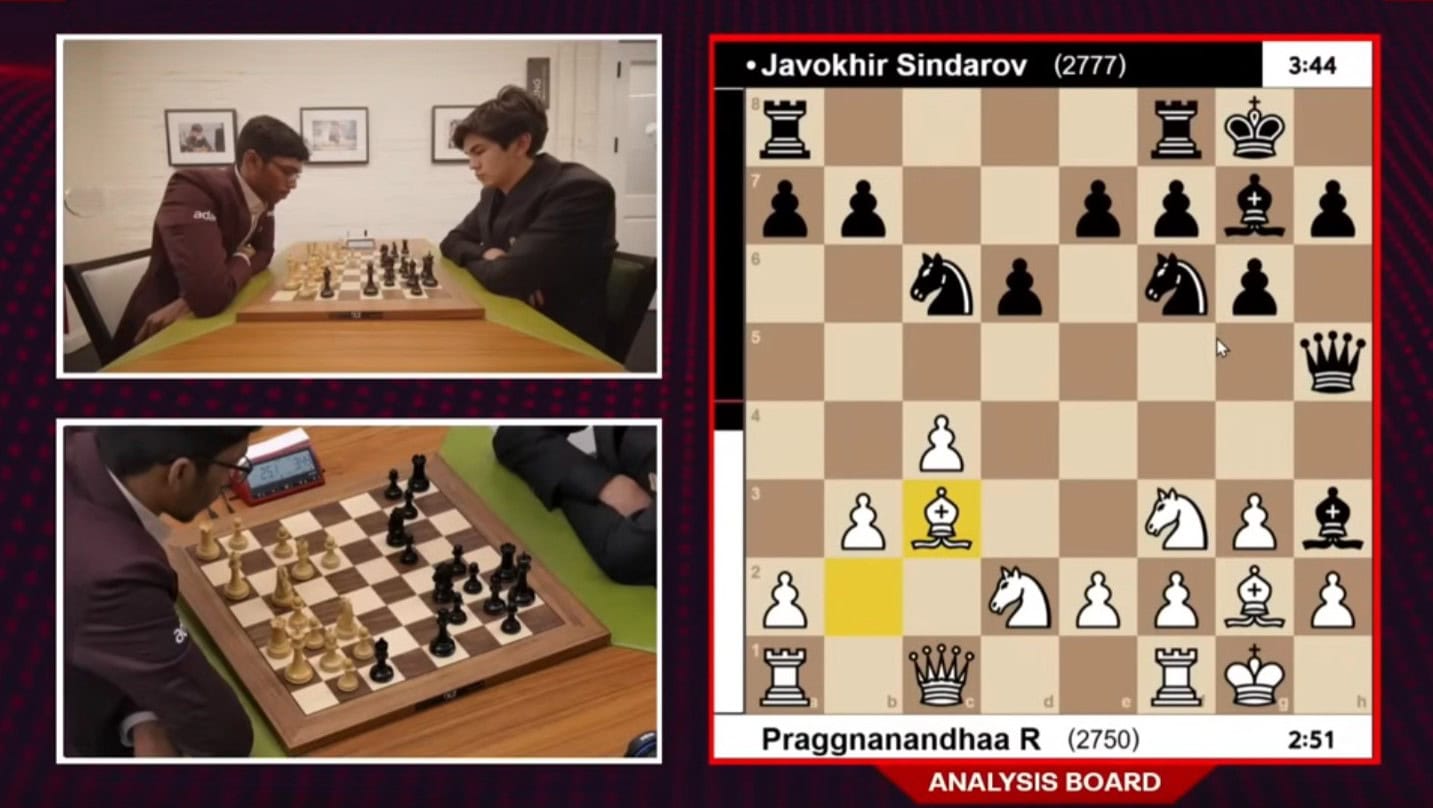
a clip from the live broadcast video of a Saint Louis Chess Club game
In the position in the picture, the typical move for Javokhir followed 12…B×g2 13.K×g2 b5!↑
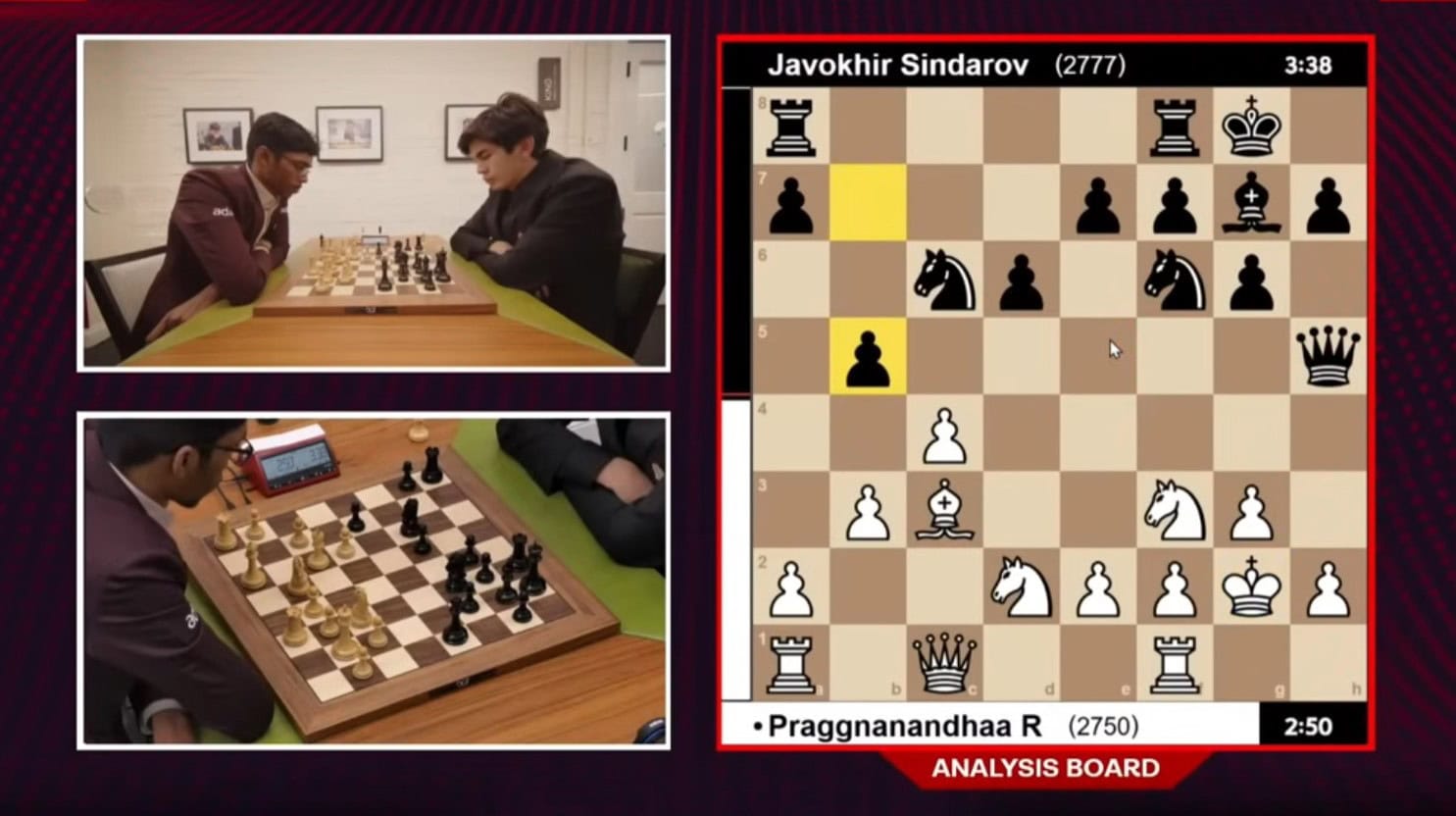
The entire game is extremely instructive, and therefore we will pause at two important positions. Sindarov was very close to victory. Objectively, the position was not winning this time either, but Praggnanandhaa was playing practically the entire endgame on seconds, and at that moment few would have bet on his rescue.
After 32…R×b5
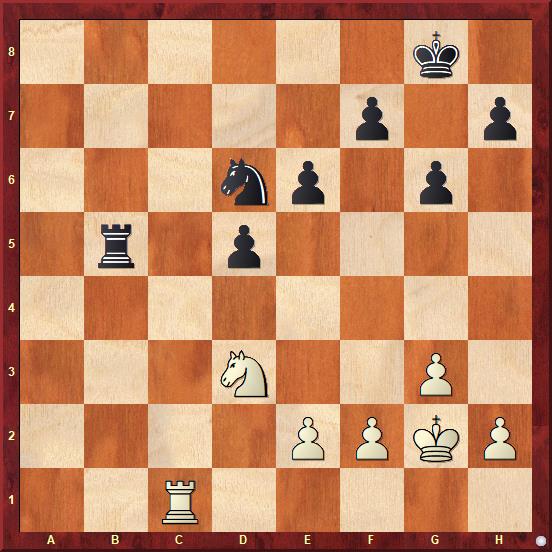
because White was left not only without a pawn but also with only a few seconds on the clock (in the previous course he barely avoided flagging), while Sindarov's clock showed 1 minute and 15 seconds.
However, let us forget for a moment about the time and who is playing the game and under what circumstances. Let us immerse ourselves in the position from a purely theoretical perspective, that is, let us focus on the technical (practical) endgame we see in the diagram above.
How would you, dear readers, evaluate the ending? Of course, this is „not something to calculate“. It is necessary to mobilise your knowledge and experience!
In general – and as Luděk Pachman used to write – under otherwise comparable conditions, rook endgames with connected pawns in the ratio 5 to 4 give the stronger side quite decent chances of success (although engines in recent years have shown that the weaker side's prospects for salvation are more substantial than previously thought). Unlike the pawn ratio of 4 to 3, where defensive methods are well known.
However, knight endgames should give the stronger side a win! More experienced players know that precisely knight endgames constitute in this respect an exception. As one of the few, they can bring a win to the stronger side even with a slightly reduced pawn count of 4 against 3. It is certainly appropriate here to recall the words of the sixth world champion Mikhail Moiseyevich Botvinnik: „Knight endgames most resemble pawn endgames of all.“
We can therefore state that the remaining pieces gave Black quite good winning prospects in the game!
If we run an engine here, however, it will insist on its verdict – complete equality or a minimal advantage for Black! The problem may lie both in the fact that the mass of Black pawns is not very mobile at this moment, and also in the fact that all White's pieces are actually placed – from the point of view of defence and future counterplay – perfectly! The question also arises whether Black is even able to prevent the exchange of at least one pair of pawns in the long run.
Of course, there is a huge difference between the theoretical evaluation of a position and the practical chances of the sides.
Let us look at the problem from another angle: decades ago, strong players and theoreticians were really interested in whether Black could win with hypothetically best play from both sides, or whether White would still manage to draw. Today, when we are (paradoxically!) much closer to knowing the truth, such curiosity has somewhat faded. Undoubtedly!
Practice and concrete play prevail! In the game itself, the answer to this question does not interest us and at that moment it actually makes no sense to dwell on it. We should focus on how best to try to achieve a win, of course knowing that the endgame is played for two results.
I would still be interested, however, whether the theories of the greats of the past (rook endgames five against four with connected pawns give winning chances, knight endgames four against three are won, and the more pawns the better for the stronger side) were true or flawed!
...and so I created two new diagrams. In the first I removed the rooks from the position in the diagram above and thus created a knight endgame, in the second in an analogous way a rook endgame.
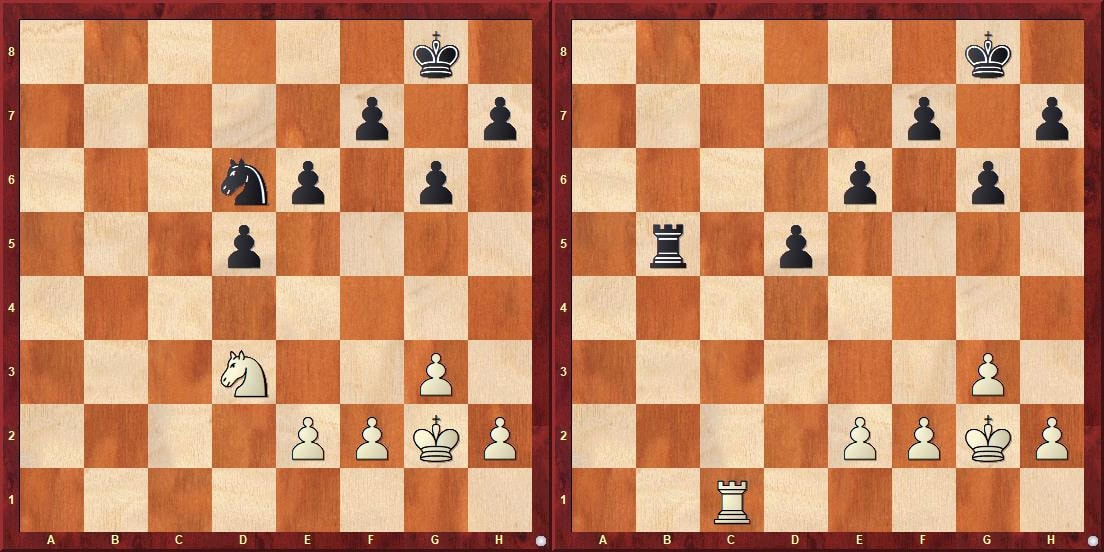
What do the engines say? As expected, the knight endgame is winning.
As for the „five against four“ in the rook endgame, here White can hold. Best with a prophylactic plan involving 1.g4! or 1.Rc8+ Kg7 2.g4!, even though the standard setup is also possible with 1.h4. The problem lies in the fact that the only way Black can try to realise the material advantage is by creating a passed pawn. In the given position, this would probably lead to the creation of a passed pawn on the d-file. However, it is located too close to the weaker side's king (d is not b 🙂 ), so we are indeed left with a position of theoretical equality.
Short analyses of both endgames can be found in the viewer.
Praggnanandha's technique in endgames is truly admirable at such a young age. If I were to be a bit critical, I would say that he surpasses all other Indian supergrandmasters „in this field by a head“. Sindarov, in an attempt to complicate his opponent's defence, first made at least a practical mistake by allowing the exchange of knights, and moreover gradually equalised the time on the clocks!
The most instructive, interesting and for many perhaps the most dramatic moment we could see was after 72.Kf3.
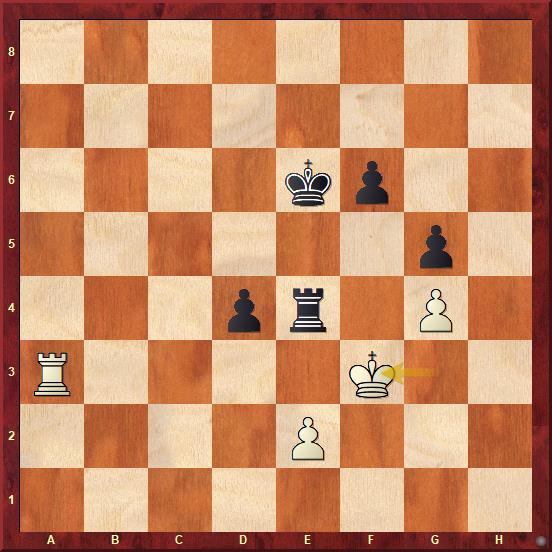
Both players were, of course, already in severe time trouble with only seconds left, while we have more time to think. So let's use it! Black can now enter a pawn endgame with the move 72...Re3+
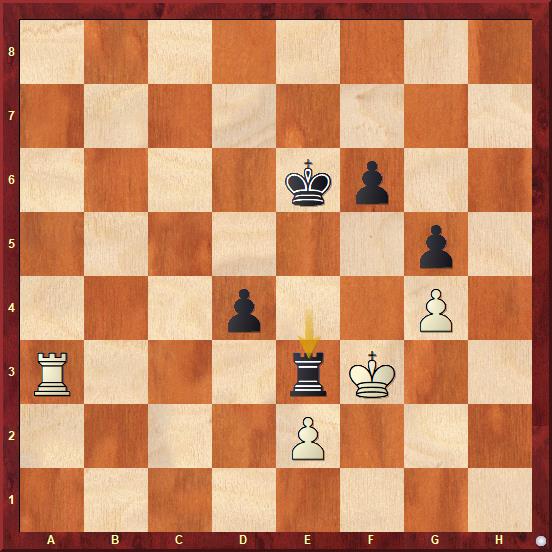
and I dare to give you, dear readers, a test: How will the pawn endgame end? And can you justify your opinion with variations?

Not only for less experienced chess players, I will insert a study more than 130 years old in the note. It is, of course, also a small hint, although I think a little repetition never hurts anyone!
Neustadl, Hermann – study 1890
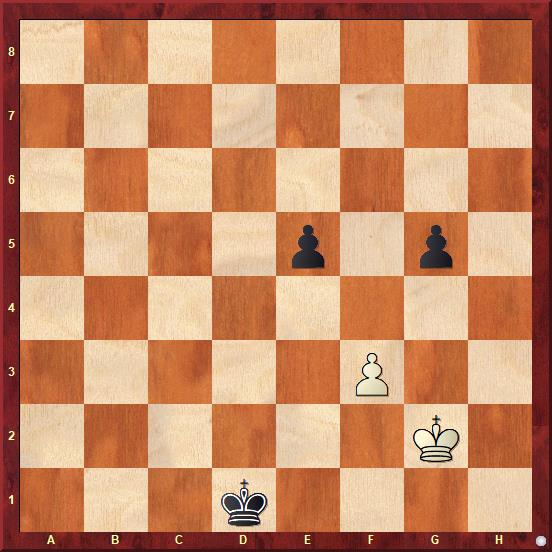
The solution is, of course, also given in the viewer below along with the blitz game Praggnanandhaa vs. Sindarov.
For those who prefer videos, I found a quite nice analysis here: https://www.youtube.com/watch?v=6opQWhd6hw4 (Chess Strategy)
The live broadcast of the decisive blitz game of round 17 directly from the Saint Louis Chess Club is available here:
Those who prefer watching videos without commentators' input can watch the game on the English YouTube channel ChessMoves VIP:
The method of bearable risk, or rather „youth suits courage“?
I have always loved the King's Indian Defence and of course I felt somewhat uneasy about it, when quite soon after engines gained understanding, they started to probe its depths and gradually condemned it to the role of an inferior opening. And when one of my first pupils, the sadly deceased Grandmaster Petr Neuman, began to regularly repeat like a mantra: „The King's Indian is fading, and the Grünfeld is a draw,“ I had no choice but to agree with him at the time.
All the more, Sindarov caught my eye when I noticed – well, it will be three years in a few months – a beautiful miniature thanks to which the then only seventeen-year-old Javokhir defeated the elite American Grandmaster Samuel Sevian at the Grand Swiss in October 2023 on the Isle of Man. I analysed this game in detail in the article This is how the small centre is demolished! A sensational miniature by 17-year-old Javokhir Sindarov in the catacombs of the „accelerated“ King's Indian.
Javokhir has never completely abandoned the King's Indian. He uses it in blitz and rapid games quite regularly, even though he prefers – as we could also see in the game against Nakamura – systems with c7-c5.
The King's Indian Defence has gradually adapted. Even the strongest players still play it. True, at the highest level we can mostly see it in blitz or rapid games, but occasionally it appears in classical games – in specific tournament situations.
I certainly would not bet today that its standing will improve in the coming years, but since almost all intelligent people have probably noticed that nowadays in our reality (the Matrix) almost anything is possible, what if the previously unyielding engines have changed their minds?! 🙂
Among Javokhir's favourite weapons – even a kind of pet line – is the following variation: 1.d4 Nf6 2.c4 g6 3.Nc3 Bg7 4.e4 d6 5.Be2 O-O 6.Be3 c5 7.d5 Qb6!?
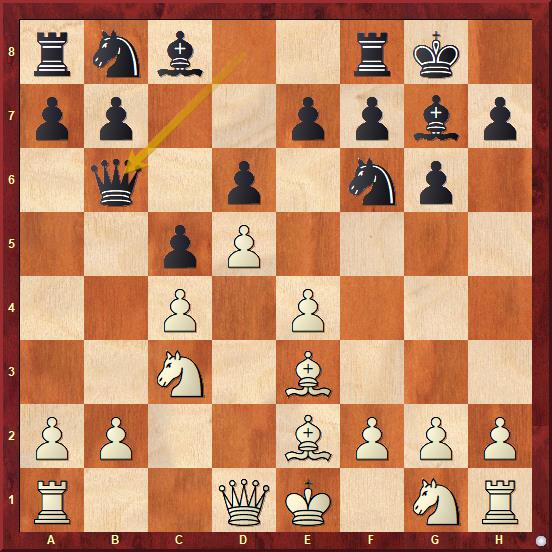
Currently, databases contain 10 games with this move, with a score of +6 -1 =3, but let me add again, that Javokhir mainly uses this thrust in blitz and rapid games.
How dangerous Black's whole setup can be against an unprepared opponent is shown, for example, in the game Chasin vs. Sindarov (Miami 3 July 2026). Because an interesting and instructive endgame of a better knight against a bishop arose in the game, I placed it in the viewer below before the critical game Praggnanandhaa vs. Sindarov.
Nevertheless, I recommend readers watch the following analysis by my favourite streamer and analyst Alexey Pugachev.
In the rapid game Praggnanandhaa vs. Sindarov however, as they say, the sharp edge met the stone. White was excellently prepared and Sindarov's plan – not the only possible one, but logically following the queen's sortie on move 7 – was apparently refuted. After 10...Bb5
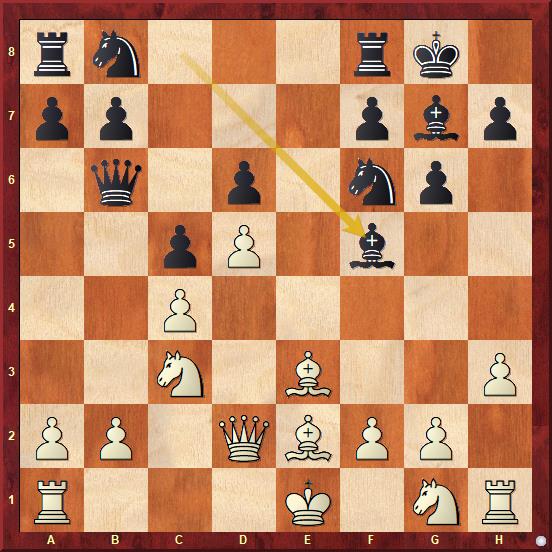
Black naturally plans Nxe4, after which the quartet of Black's pieces would start to wreak havoc on the board like a black hand. But then came 11.g4!
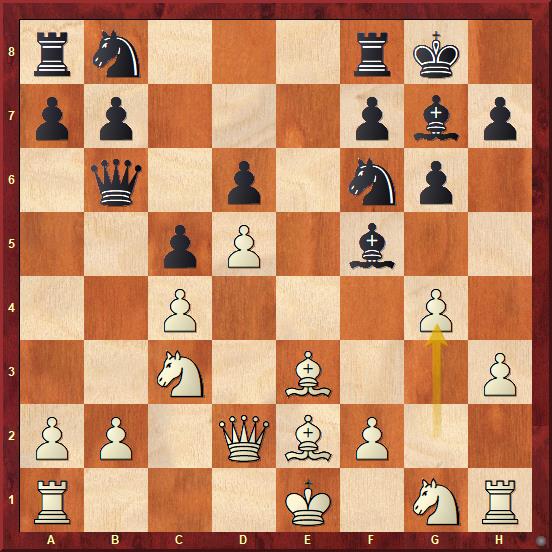
In the notes to the analysis I wrote: Here is the crux of the matter! The manoeuvre Nf6–e4 is indeed still possible, but only at the cost of a positional piece sacrifice. After 11...Ne4 12.Nxe4 Bxe4 13.f3
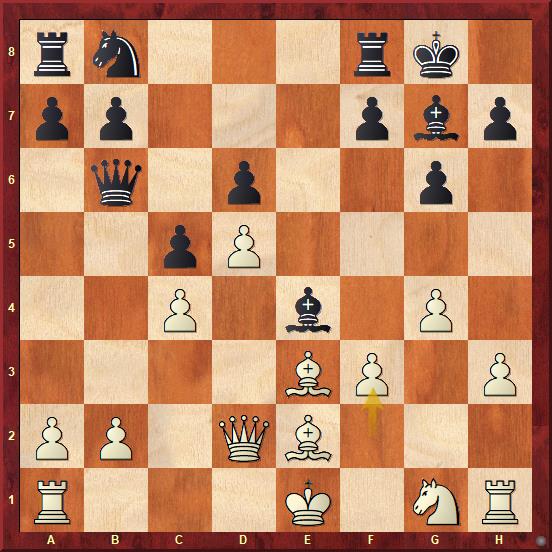
Black must surrender material. My old weakness – excessive to the point of blind trust in authorities and overestimation of dynamic factors, in this case also trust in carefully the sacrifice analysed by Sindarov or his team – went so far that I spent hours examining whether the engines might somehow „come to their senses“ and find some magic that would still give Black sufficient compensation. But there simply isn’t any! And worse: theoretically – analytically the Black position is ripe for being written off.
Perhaps White succumbed to a similar illusion, as he eventually quickly agreed a draw, although he naturally made inaccuracies beforehand. These ultimately truly brought the position back to equilibrium.
Readers can learn more both in the viewer and in the post-game analyses or from Praggnanandha's own comments.
But first, let us look at Sagar Shah's brief analysis on ChessBase India:
I set the video interview with Praggnanandha to the moment when he comments on the critical moment.
Pomtow's gambit – shall we join in?
As I have already mentioned, Javokhir Sindarov’s classical education is unmistakable. A portion of chess players, who fortunately still live in sufficient numbers east of us, naturally sometimes also tend – or have a weakness, take your pick – towards various classical gambits!
I decided to devote the penultimate chapter of the first part of the article about the challenger and world champion to this Javokhir’s „weakness for classical gambits.“.
About ten years ago, a gambit began to attract my attention, which started to appear increasingly often even in championship and grandmaster tournaments. 1.e4 e5 2.Nf3 Nc6 3.Bc4 Bc5 4.c3 Nf6 5.d4 exd4 6.cxd4 Bb4+.
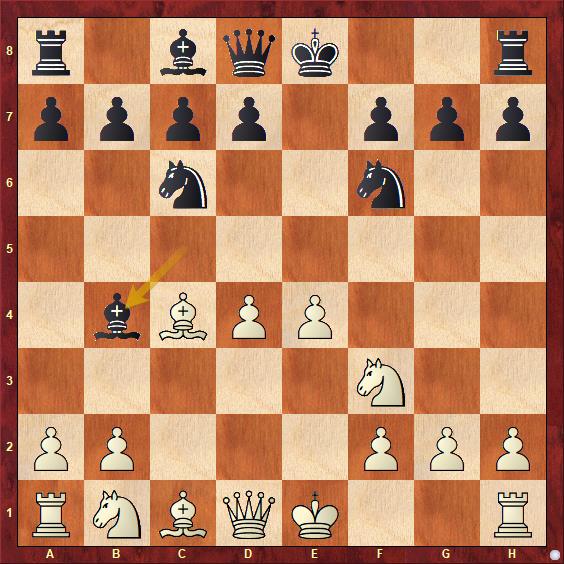
Most readers know that after 7.Nc3 the Greco or Greco–Steinitz Attack arises and 7.Bd2 usually leads to much calmer positions. Those readers who have regularly studied classical works on open games may still recall that after 7.Kf1 the so-called Krakow Variation arises. However, that exhausted most of White's options for many of us.
But the position itself is not yet exhausted by these three moves! White can also continue with the gambit 7.Nbd2!?
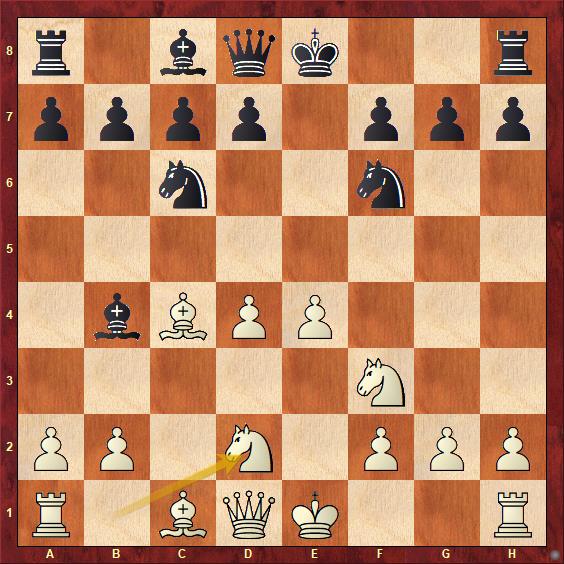
This gambit is referred to in sources as the Pomtow Attack – after Carl Leberecht Pomtow, who probably first used the move in a game against Schallopp in Berlin in 1862! However, let us add immediately that the name is not universally accepted. Many modern theoretical sources list the variation simply as 7.Nbd2 in the Greco–Möller system.
More information about the origin and development of the attack is available by clicking the file here:
Pomtow_Attack_in_the_Italian_Game
I created my own database about ten years ago after including the game Nakamura vs. Giri 2015. in my coaching database "Defence". Anish was apparently prepared against the gambit, returned the sacrificed material, and the game quickly transitioned into a completely balanced endgame.
A few years later, regarding Nakamura's decision to try to surprise Anish, I wrote: This gambit began to reappear regularly, not just sporadically, around 2014. Gigabases show that since 2013 it was played quite regularly by, for example, former world champion Alexandra Kosteniuk. Our research leads us to conclude that the real (albeit relative) boom occurred only after Hikaru Nakamura used it in tournament practice in this very game.
However, Anish found the correct response in the then-critical variation, so although the gambit was introduced to supertournaments, it did not remain long in the spotlight or, say, on the Hollywood Walk of Fame. At least it managed to break into some supporting roles in many dramas. 🙂
Pomtow Gambit in Sindarov's practice
The main reason I included this gambit, which I find quite appealing, in the article is an exceptionally instructive game.
In it, Javokhir completely outplayed a new or occasional member of the 2700+ club, but on the other hand, here we can, in my opinion, see one of Sindarov's greatest weaknesses! Too quick – I would not hesitate to say rash – decisions at key moments of the game!
Fast play with a constantly larger time reserve has its indisputable advantages: it creates pressure on the opponent – and for several reasons, among which the psychological one is by no means negligible. It creates precisely the impression of that ease which Javokhirova's play radiates, but it also tempts to superficiality. A typical example was the game Blübaum vs. Sindarov, which I described in quite some detail in the second article about the Candidates Tournament (9 May 2026).
The penultimate round of the rapid tournament in Saint Louis is being played, the game Sindarov vs. Liang Awonder. In an approximately equal position after 15.Na2
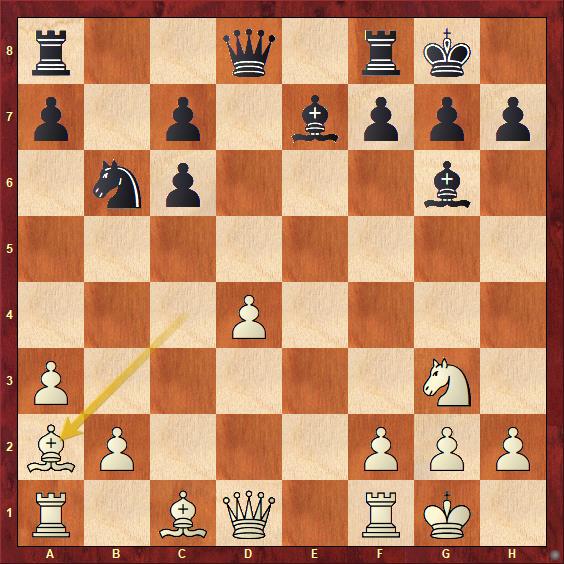
the American grandmaster, however, made a serious positional mistake by playing 15...c5??
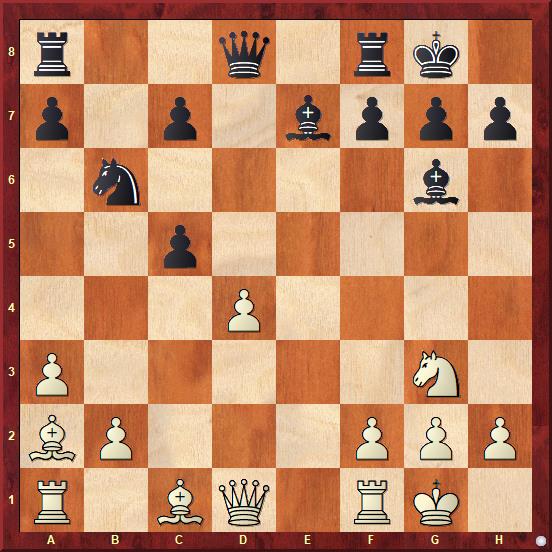
The following question is quite possibly the hardest in the entire first part of the article. It is really intended for advanced chess players. So: How and why would you continue if you were in Sindarov's place?
Sindarov's fate: Gukesh or Praggnanandhaa (2)
For some time now, of course, I have been following Javokhirova's work with great interest. This also involves a bit of statistics. For example, I know that since his triumph in the Candidates Tournament in Cyprus, he has lost only two classical games! And to whom? In both cases, his conqueror was Praggnanandhaa!
At the end of the first part of the article, let us now look at the endgame that arose in the second round, this time of the main tournament in Saint Louis. The game Praggnanandhaa vs. Sindarov reached after 68.Nb4 the position in the diagram.
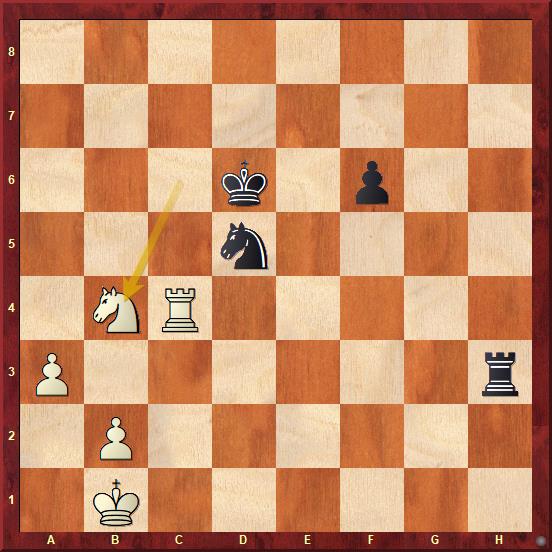
Let us begin our analysis from this endgame position. I will say straight away that both young players continued to play it – I mean in today's times and from Javokhirova's perspective up to a certain point – very strongly. Nevertheless, it is necessary to highlight Praggnanandhaa's performance.
On the other hand, it is hardly surprising. The talent – or if you will, the genius – of the former Indian prodigy lies, unlike the vast majority of his peers, in intuition and a feel for coordination of forces. And in the following course he demonstrated this abundantly. Sindarov, however, long bravely supported him.
We see that White not only has an extra pawn, but his distant connected passed pawns represent a tremendous static force. Black's full compensation then rests on two factors: a more active piece placement and the passed pawn, which all three remaining pieces are actually willing to support.
In this position, Black could decide which of the two plans to choose. By his nature, the challenger chose to invite a more complicated game with the existing material... Dear readers, how would you continue as Black and on which variations and evaluations would you rely?
The endgame of the Praggnanandhaa vs. Sindarov game – this time from the main tournament – is precisely analysed on his YouTube channel by Grandmaster Sergej Makarychev.
The challenger: strengths and weaknesses
Let us now try to briefly characterise Javokhir's play and summarise its main strengths as well as a few shortcomings that, in my opinion, he could or should still work on.
Sindarov is primarily a complex and universal chess player without any significant weakness in any phase of the game. He has excellent classical chess education and an exceptionally well-developed opening repertoire, which he can also adapt to the pace of the game – he uses a different arsenal in blitz and rapid than in classical chess. Added to this is his great practical strength. He does not seek the objectively best move at all costs, but very well senses what the position and the specific opponent require. This is where he differs significantly, for example, from Gukesh, who more often tries to find the best solution even at the cost of considerable time investment.
Another great weapon of Sindarov is healthy self-confidence and a „laid-back“ personality“. However, behind the board this apparent ease can turn into the exact opposite – an extraordinarily strong killer instinct. Once he senses a chance, he is willing to patiently „squeeze“ the opponent practically down to bare kings. In this respect, he sometimes reminds me of Magnus Carlsen.
Every coin has two sides, however. The very ease and confidence with which Sindarov plays sometimes turn into excessive impulsiveness and even superficiality. At certain moments, he plays almost instantly precisely when the position requires a pause and deeper reflection. This is probably related to his so far not entirely perfect ability to recognise the critical moment of the game. The second, closely related problem is his sometimes unnecessarily fast play. (I add – it will be all the more interesting to observe the time management of both opponents when they sit down at the board in Geneva!)
And finally, I would mention the area in which, in my opinion, he still somewhat lags behind the absolute best players in the world – technical practical endgames. Not their theoretical knowledge, but the ability to maintain maximum accuracy over a long period in positions where it is no longer so much about calculating concrete variations as about patience, piece coordination and small decisions.
However, all these are more reserves than fundamental weaknesses in the twenty-two-year-old challenger. And perhaps the answer to how far Javokhir Sindarov can still progress lies precisely in them.
We can currently observe his present form and further development in the main tournament of the informal American chess capital – Saint Louis. Another significant test will be the September Chess Olympiad, after which attention will increasingly turn to the November World Championship match.
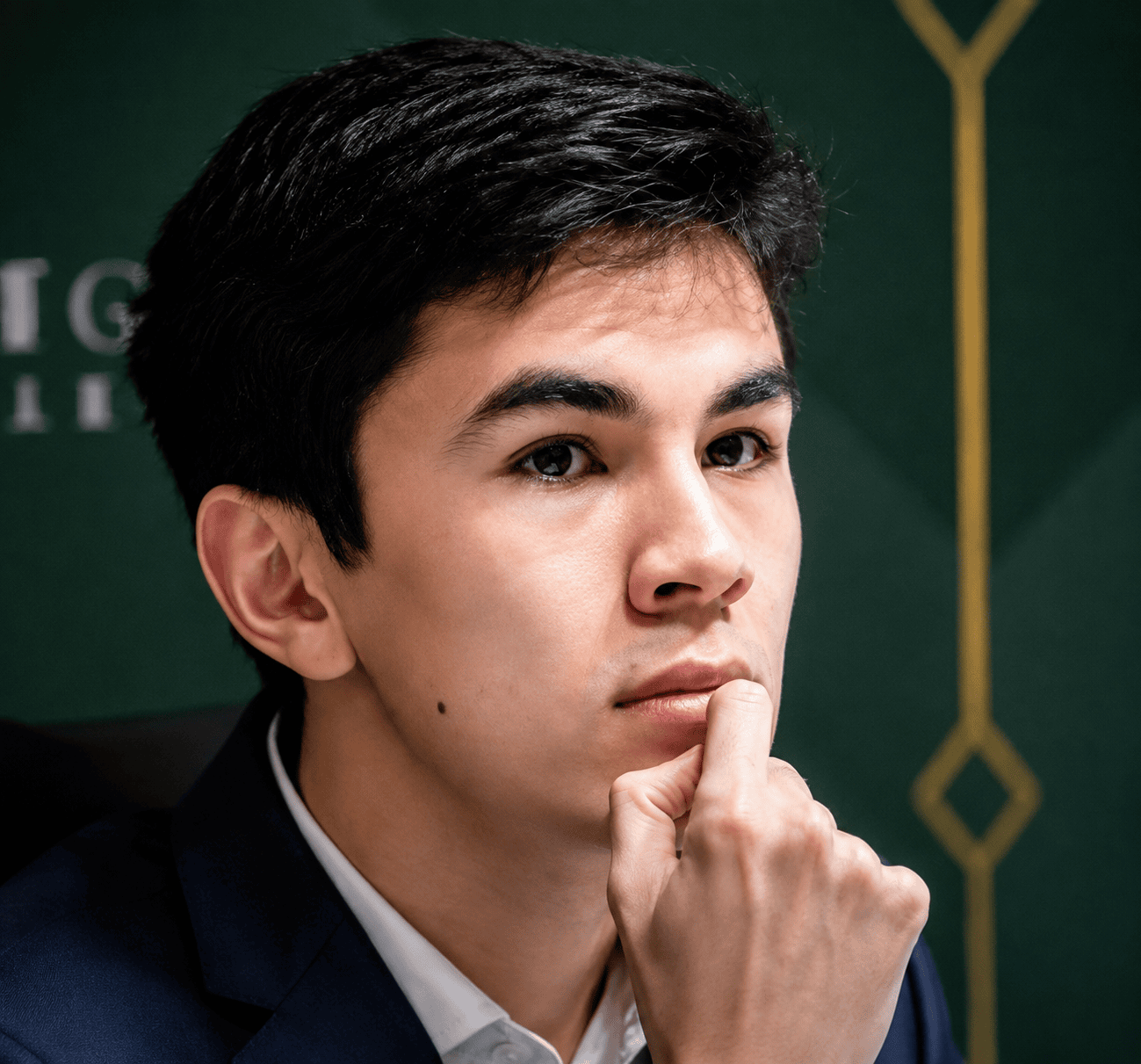
This concludes our journey behind the challenger. In the second part of the article, we will turn our attention to the other side of the chessboard – the World Champion Gukesh. We will look in a similar way at his current form, strengths and reserves, and finally try to answer the question that stands above this entire two-part article: Who will prevail?
All the examples from the first part are again presented in the CB player below.