

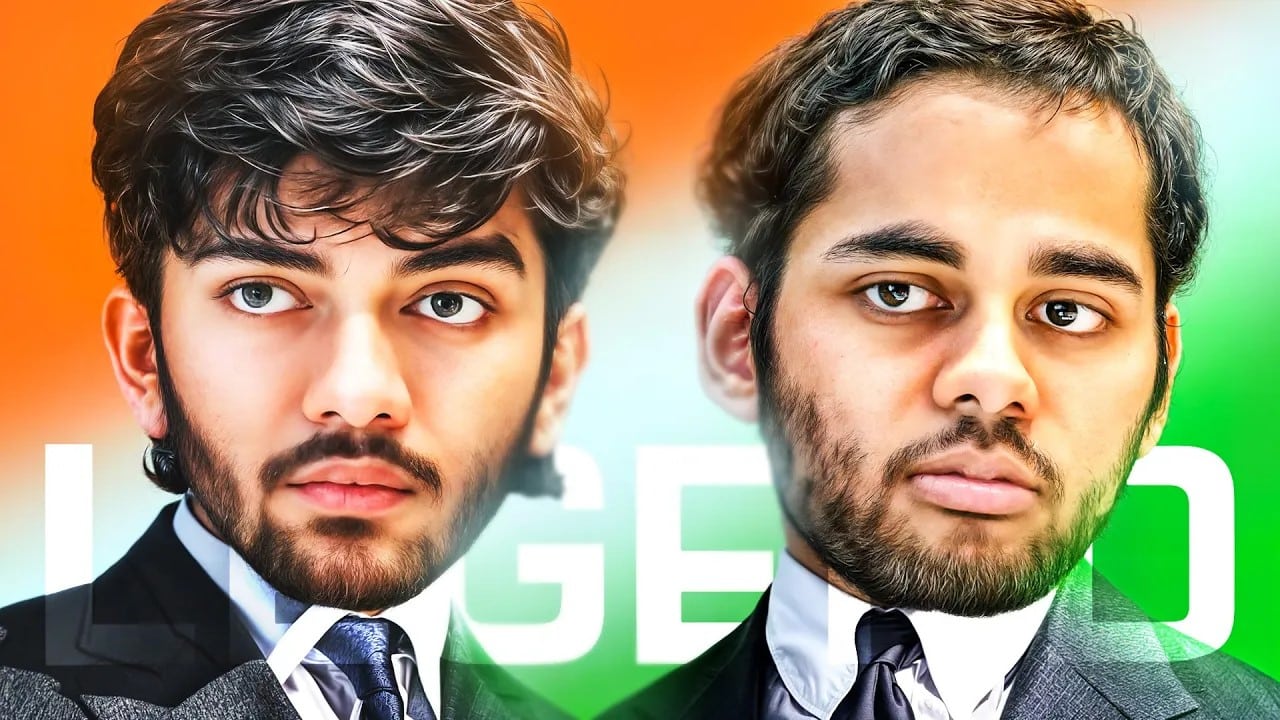
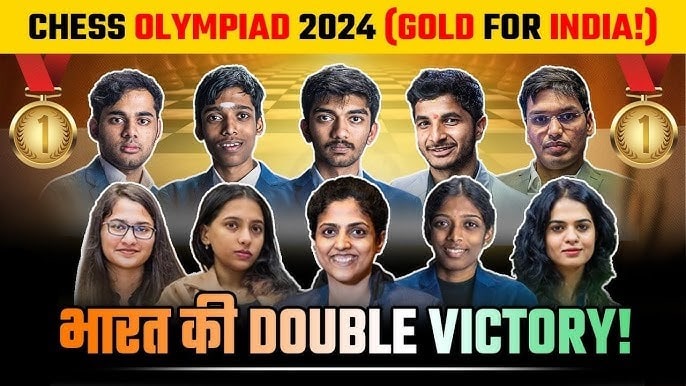
The Chess Olympiad has ended in Budapest – a true celebration of chess. It broke numerous records: the number of participating countries – teams. A clear division into chess superpowers, stalwarts, developing countries and… a single superpower. The number of fans at the venue, as well as those following the event online or via recordings. India confirmed its overwhelming rise not only in the open tournament, where success was expected, but also in the women's category! The decisive contribution to the victory with a 4-point lead came from two truly Olympic terminators, Dommaraju Gukesh and Arjun Erigaisi; and my articles are primarily dedicated to them.
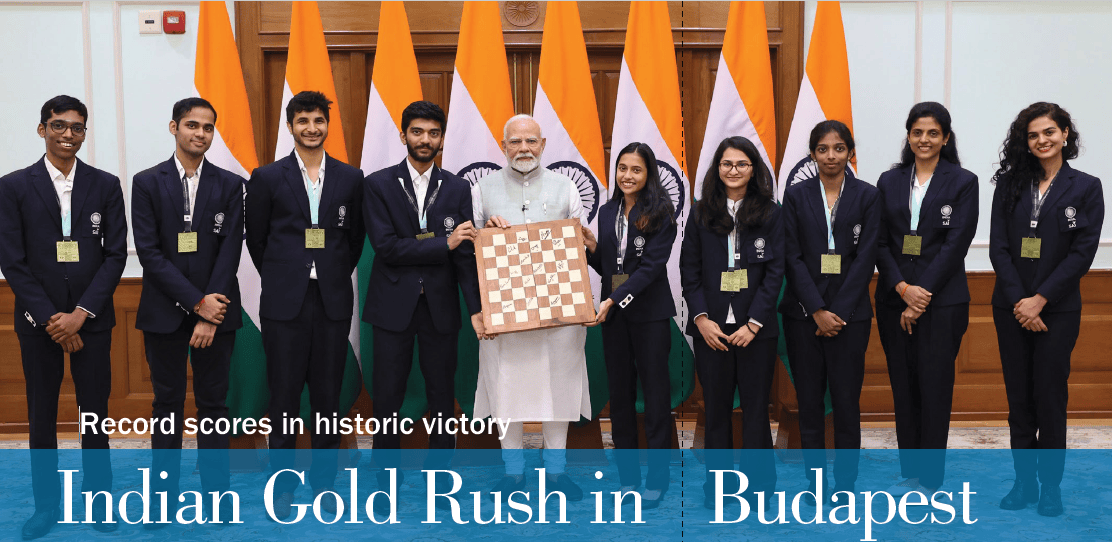
A few days after the Olympiad ended, the winning teams were received by the Indian Prime Minister His Excellency Narendra Modi. (The photograph is taken from the magazine New in Chess 6-7/2024.)
Write about the Czech teams!
Readers who did not follow the Olympiad so closely might wonder why I do not mention the relatively successful performance of the Czech Republic men's team in a similar way.
I will write briefly: In the last round, the Czech Republic faced… the Faroe Islands (the population of this autonomous Danish territory is several times the number of members of the Czech Chess Federation; or in other words: it was as if chess players from the district town of Jihlava participated in the Olympiad 🙂), and won the match by the narrowest margin of 2.5-1.5… This catapulted them to 18th place overall. I add that Slovakia, with the same number of points before the last round was paired however, with England featuring Nikita Vitiugov on the first and Gawain Jones on the fourth board!
I do not want to offend David Navara. He did a great job, as we have been used to from a brilliant chess player and a wonderful person for many years. Nor the brilliantly playing Nguyen Thai Dai Van. With a result of 9 points out of 10 and a performance of 2783 (!) he even became the most successful player on the second board!
I watched many videos, replayed lots of games, and naturally I could not avoid coming across the names of the captains of various teams. Alexander Grischuk took on the role of captain of the Iranian team (which went through truly hellish trials and faced the strongest teams; three from the top six of the final standings) and the 14th world champion Vladimir Kramnik appeared at the Olympiad as a captain, and here I must emphasise that given the age of the players, he was mainly a coach, the winner of the previous Olympiad with Uzbekistan! According to his own words, he barely slept 4 hours a day. He had so much work preparing the players!
„And who led the Czech Republic?“ is the logical question. One would be mistaken to look for a parallel between the captain and coach of our women's team, who was the experienced professional grandmaster coach Tomáš Polák. The captain of the men's team was neither Zbyněk Hráček nor Jiří Štoček or another experienced grandmaster, but a certain Petr Boleslav. I admit, I had to look up and learn who Mr Boleslav actually is…
All Olympiad results can be found on the page https://chess-results.com/tnr967173.aspx?lan=5
Terminator number 1: Gukesh's phenomenal play and result
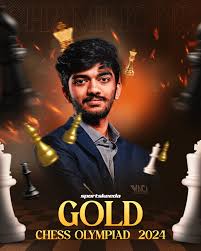
Everyone was eagerly awaiting how the final test of the challenger before the November and December World Championship match would go. Many were also curious about a possible head-to-head on the first board between Ding Liren and Gukesh. After all, the probability that India and China would not meet in the tournament was almost zero…
Although few predicted that the 18-year-old challenger would perform poorly, his phenomenal result exceeded all expectations! Dommaraju simply won and outplayed whoever he could, including world number two or three Fabian Caruana.
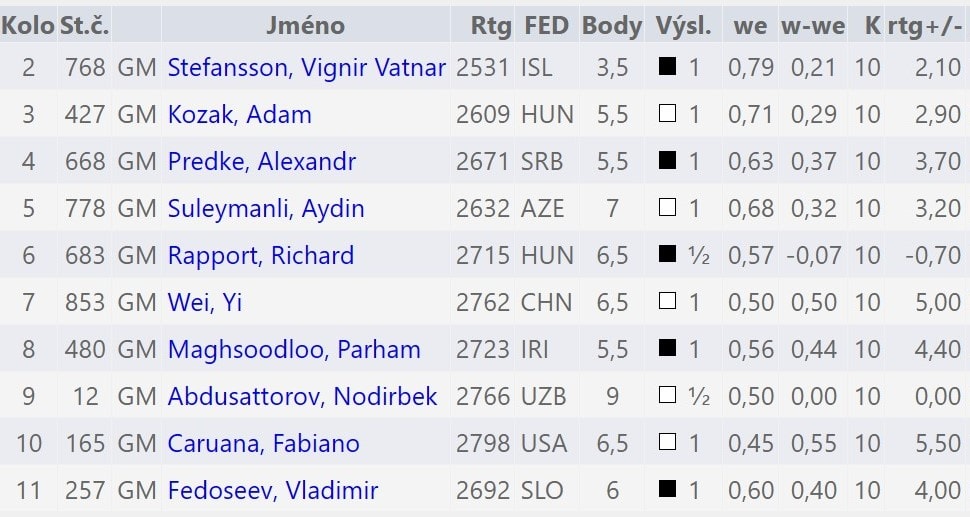
Such a result is probably also a historic record. I do not recall or have read that any chess player, quite often the reigning world champion, has ever achieved such a number of points on the first board. The performance (that is, for less knowledgeable readers, how many ELO points the chess player played at the tournament) was an incredible after winning the last game 3,056 (!) and scored more than 30 points.
After the Olympiad ended, the world top ten rating list looked like this:
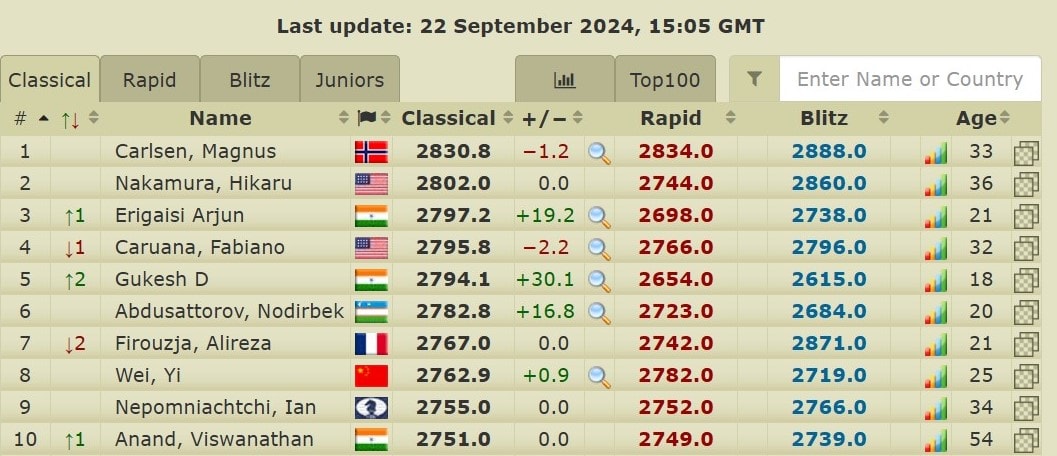
Readers surely noticed not only the overwhelming rise of young stars but also a change in the top three places of the ranking after a long time.
Seventh round of the Olympiad. Finally, the teams of India and China clash, while the match with the top-seeded United States is probably just postponed. (The sensational victory of the Ukrainian team over the USA, largely thanks to none other than the brilliant and ageless Vassily Ivanchuk, forced the Americans to win several more matches to return among the best teams.)
I was almost certain that Ding Liren would avoid a direct clash with Gukesh with the black pieces and let the objectively stronger Wei Yi represent him today. What led me to this near certainty was also the fact that in the previous 6th round the world champion lost a drawn rook endgame. Let's look at the critical moment:
Ding,Liren (2736) - Le,Quang Liem (2741) 16 September 2024
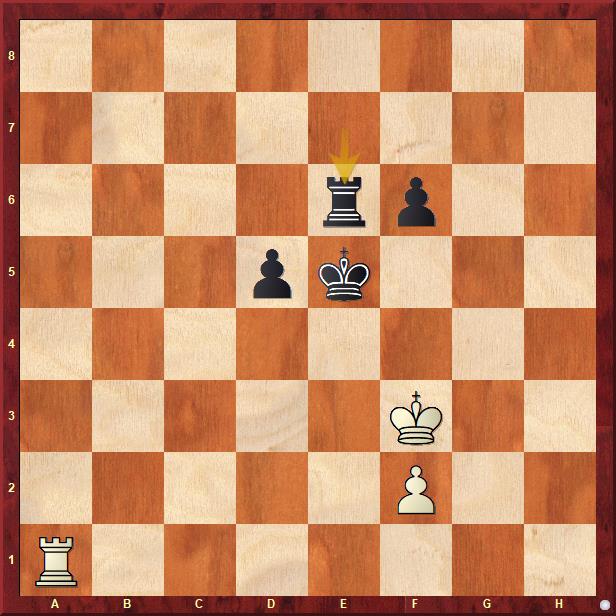
47.Ra4?? Rb6!–+ 0–1 (62). Only a not difficult position was drawn 47.Re1+ Kf5 (or 47...Kd6 48.Ra1 if 48...d4 then 49.Ra6+ Kd5 50.Rxe6 Kxe6 51.Ke4=) 48.Rd1 Rd6 49.Rd4.
I searched for a long time for a video that did not contain analytical errors in the endgame or was not too confusing. There was no choice but to turn to Nakamura; after all, after years I could also revisit the so-called bridge position 🙂 .
A hyper multifunctional game and a battle to the last bullet
An incredible battle, tension and a silence that could be cut with a knife, mutual time trouble on 30 seconds, but also one of the most thematically rich games I have ever seen in my life! The game Gukesh vs. Wei Yi should go down in history! No, let's not expect magic in the opening. That itself was certainly the least interesting part of the game, the effort and emotions both youngsters had to put into the game.
I was thinking about how to approach a report on the recent Olympiad. In the end, I decided on Terminators, but the crucial part will be this very game. Yet it is so complex that, on the one hand, believe me, it could be analysed for days if not weeks even with today's technology (!), and on the other hand, just showing it in a single viewer without prior input would create unimaginable chaos.
So I decided to proceed step by step and first present the reader with various situations that not only actually arose in the game but could quite well have appeared. Besides entertainment, even highly qualified chess players can learn from the following nine tests! I think that even they might not be able to assess some of the positions below perfectly.
So let's get to it! Your task will be, to, dear readers, evaluate the positions on in the diagrams given below and answer any supplementary questions.
Task one
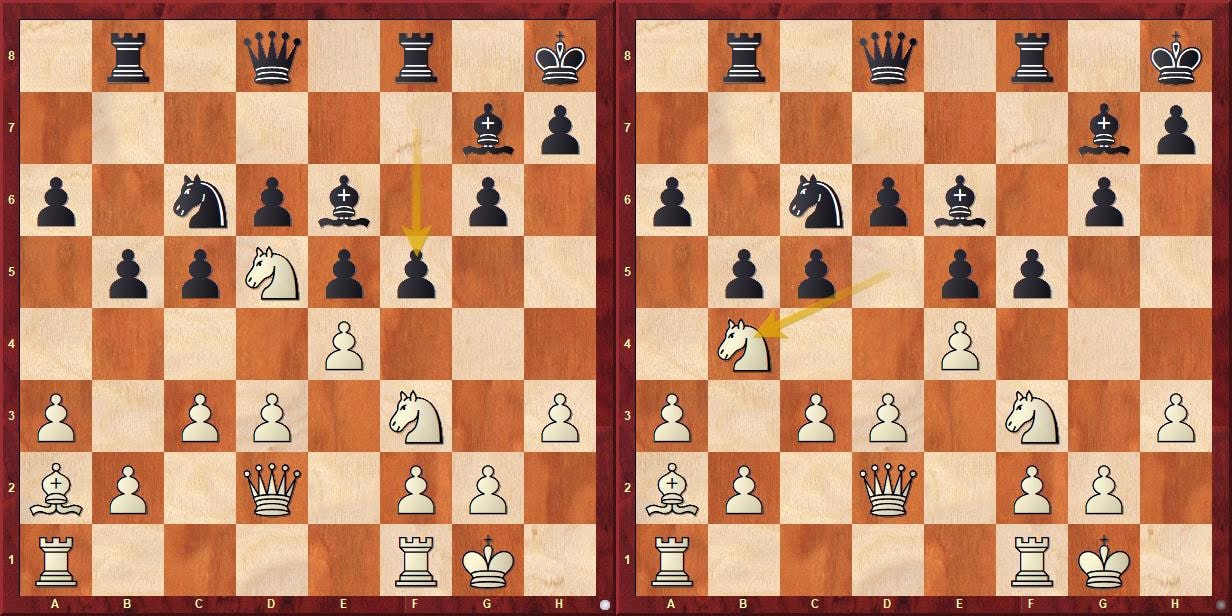
After 16…f5 Gukesh could have used a small combination 17.Nb4. How would you respond as Black in this position, and how would you assess your prospects?
Second task
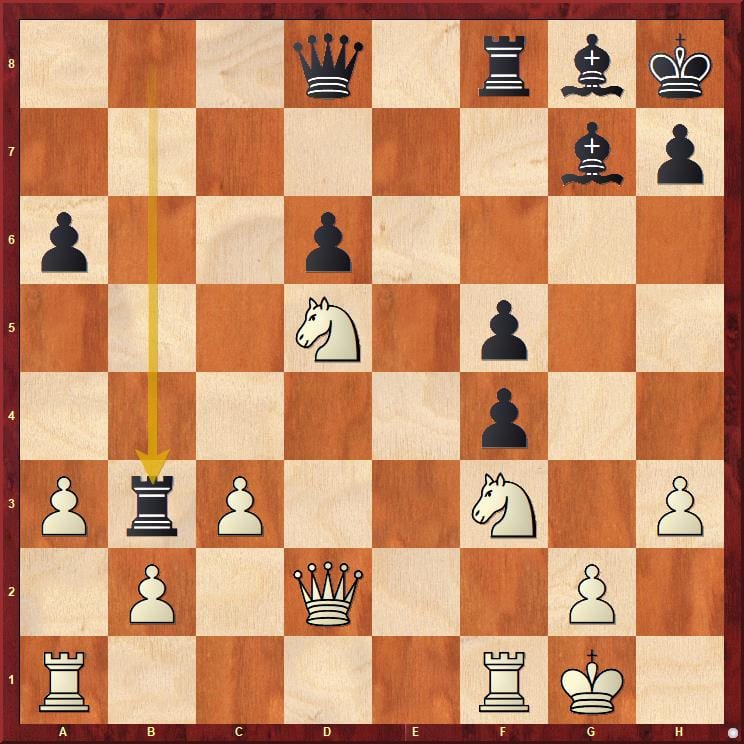
position from the game after 24...Rxb3
Such a situation is not seen on the chessboard every day. True, Black undoubtedly has a strong pair of so-called Horwitz bishops, but...
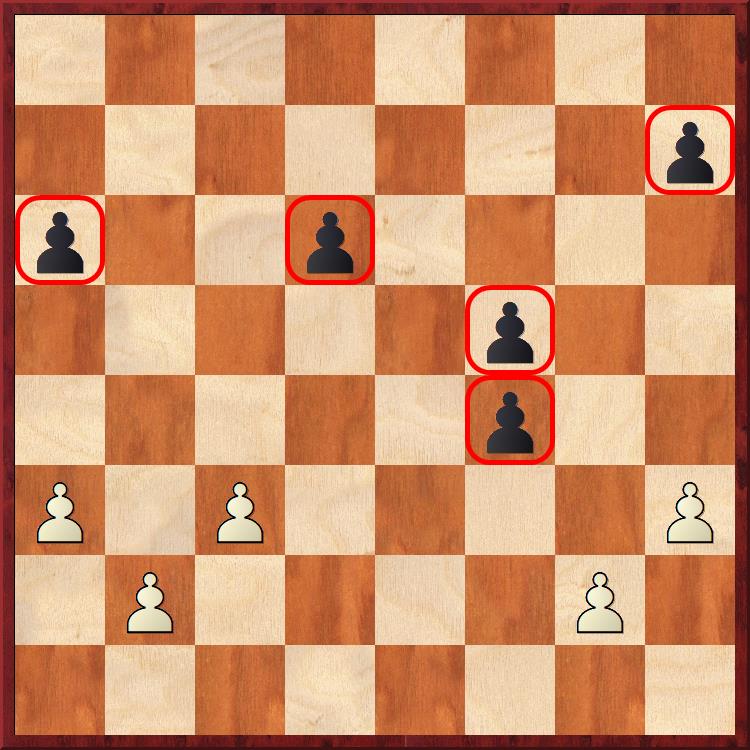
... I cannot help but recall and mention an old remark I found in one of Rubinstein's games. I do not know whether it was written by the author of the monograph himself Akiba Rubinstein Jurij Sergejevič Razuvajev or whether it originated even earlier, but it went something like this: „Black's pawns resemble semi-finished delicacies from the confectionery U Labužník. They are all doomed to be eaten!“ 🙂

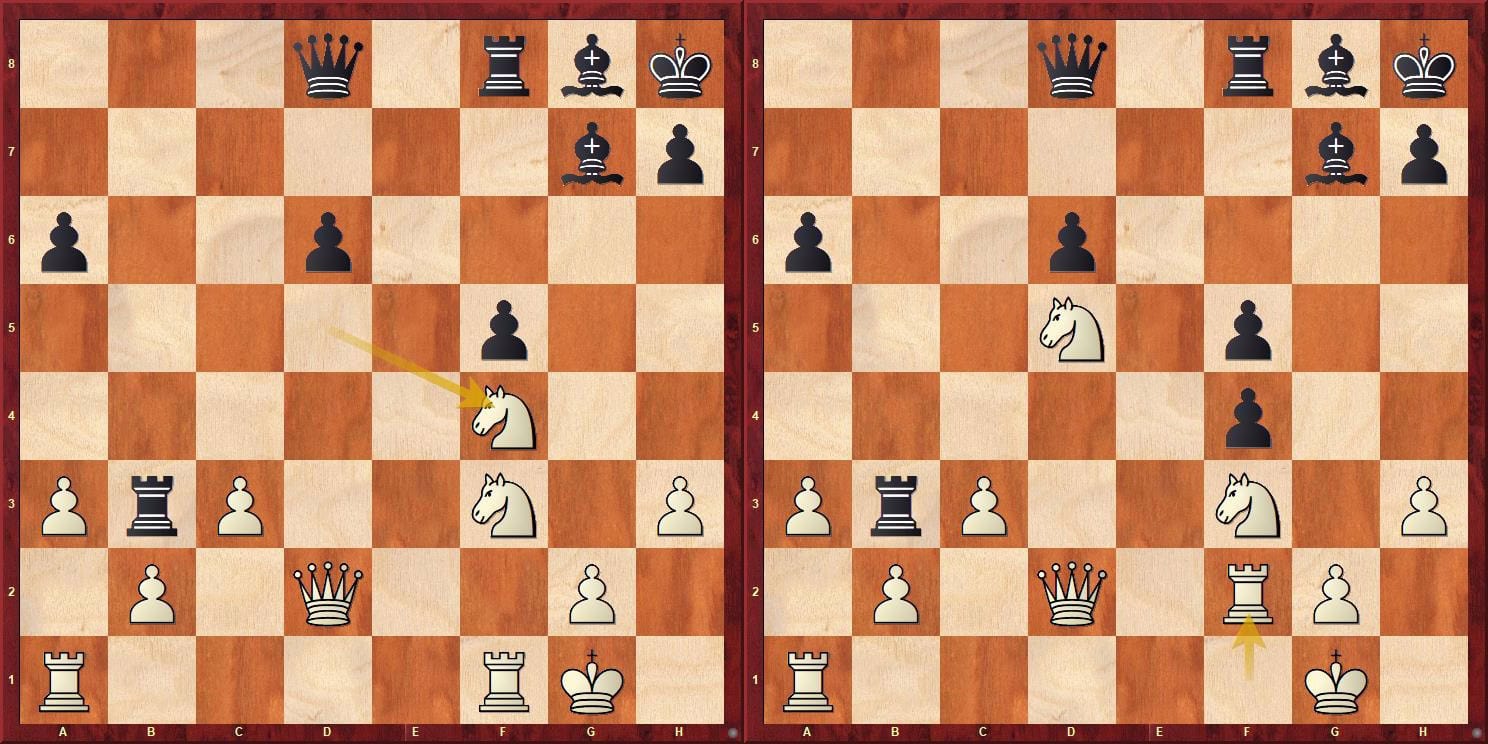
A question for strong players or for deeper reflection: After 24...Rxb3 would you rather respond 25.Nxf4 or, for example, with prophylactic protection of the b2 pawn by the move 25.Rf2? How would you evaluate the prospects of the sides after your suggested move?
Third task
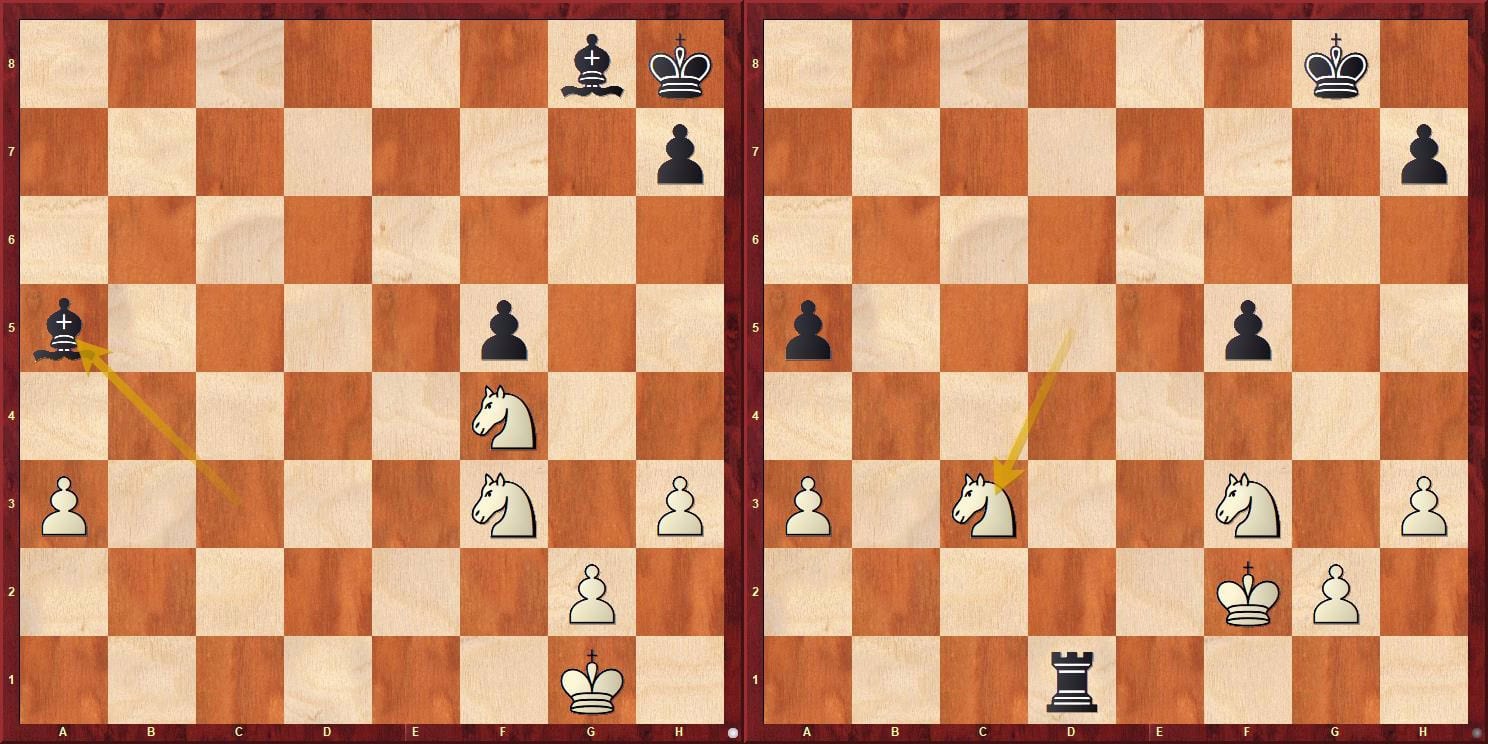
The last move is shown on both diagrams with an arrow. To achieve a draw, would you prefer, playing Black, the endgame on the left or the right diagram?
Fourth task
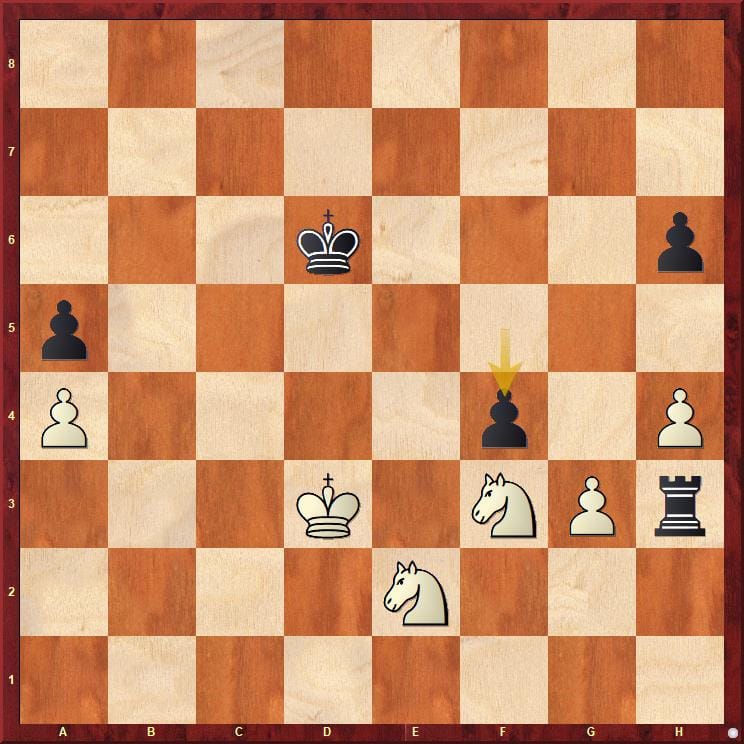
In the comments to the move 63...f4 I wrote: „It is hard to say what motives led Black to sharpen the game - transforming the endgame in an equal match situation. He played the game to win, considering, for example, that a draw always? Did he take into account the clock situation, where White had two minutes left and he himself had about a minute more? On the other hand, Black's plan is highly logical! The metamorphosis of the position will lead to the creation of a distant passed pawn on 'h', while the hypersonic rook can always swiftly transfer to attack on the other wing. Which of the possible continuations would you choose with White in the position of the diagram would you choose?
The fifth task... which I simply cannot resist 🙂
It was very close, and in the game, already under mutual time pressure, this position could have arisen:
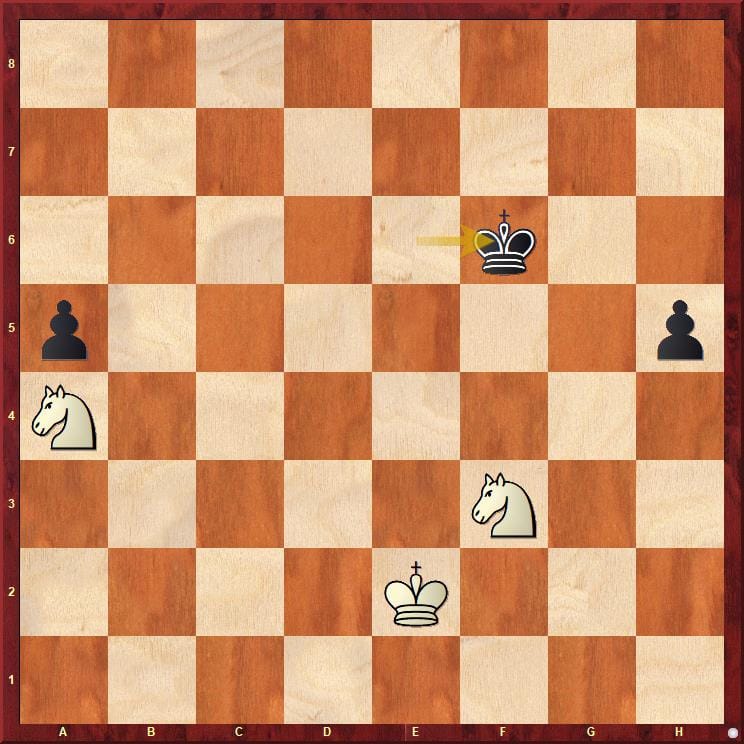
Here I allow myself to break down the task: How would the game end with mutually optimal play? Evaluate the position from a strictly theoretical point of view.
The sixth task... on the contrary, highly practical
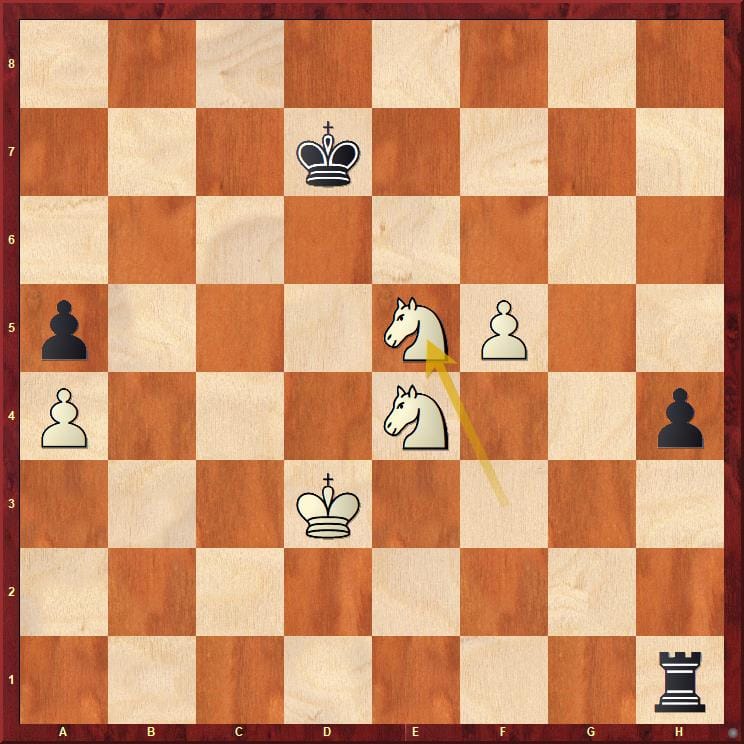
White played in the game 70.Ne5+. Where would you retreat the king and with what evaluation of the position?
The seventh task
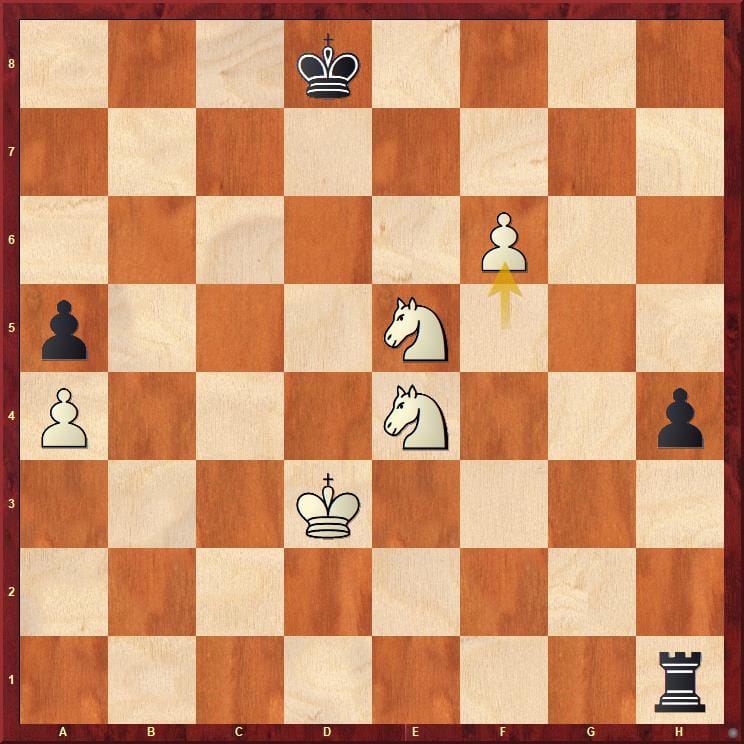
White continued with 71.f6. „Another critical moment! Both opponents are now playing on seconds! In case of a draw, the match will end 2-2... Black's task is extremely difficult. Only one move leads to a draw, which moreover looks somewhat silly at first glance…“
We, however, have unlimited time. So how should Black continue?
Task eight
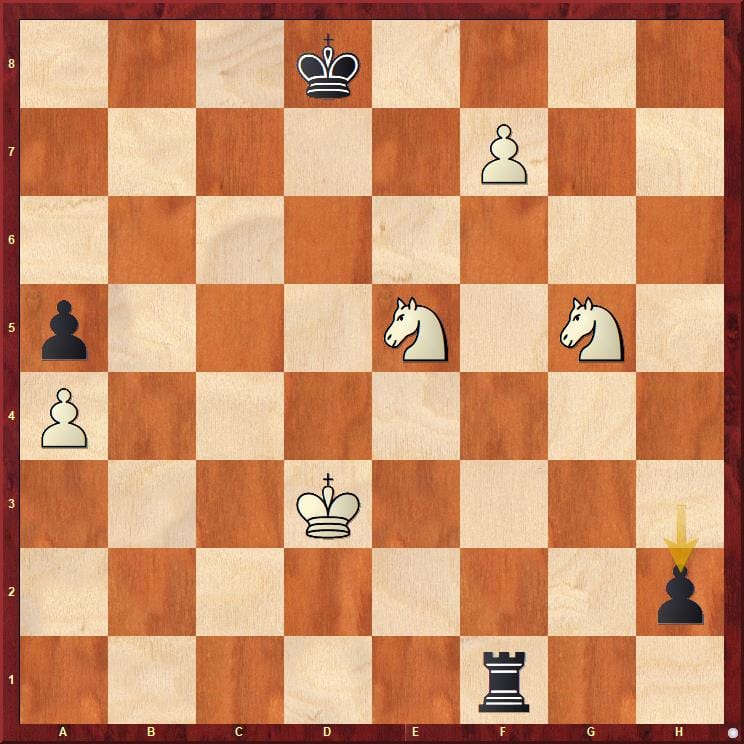
Blood runs cold! After 73...h2 White has only two options available:
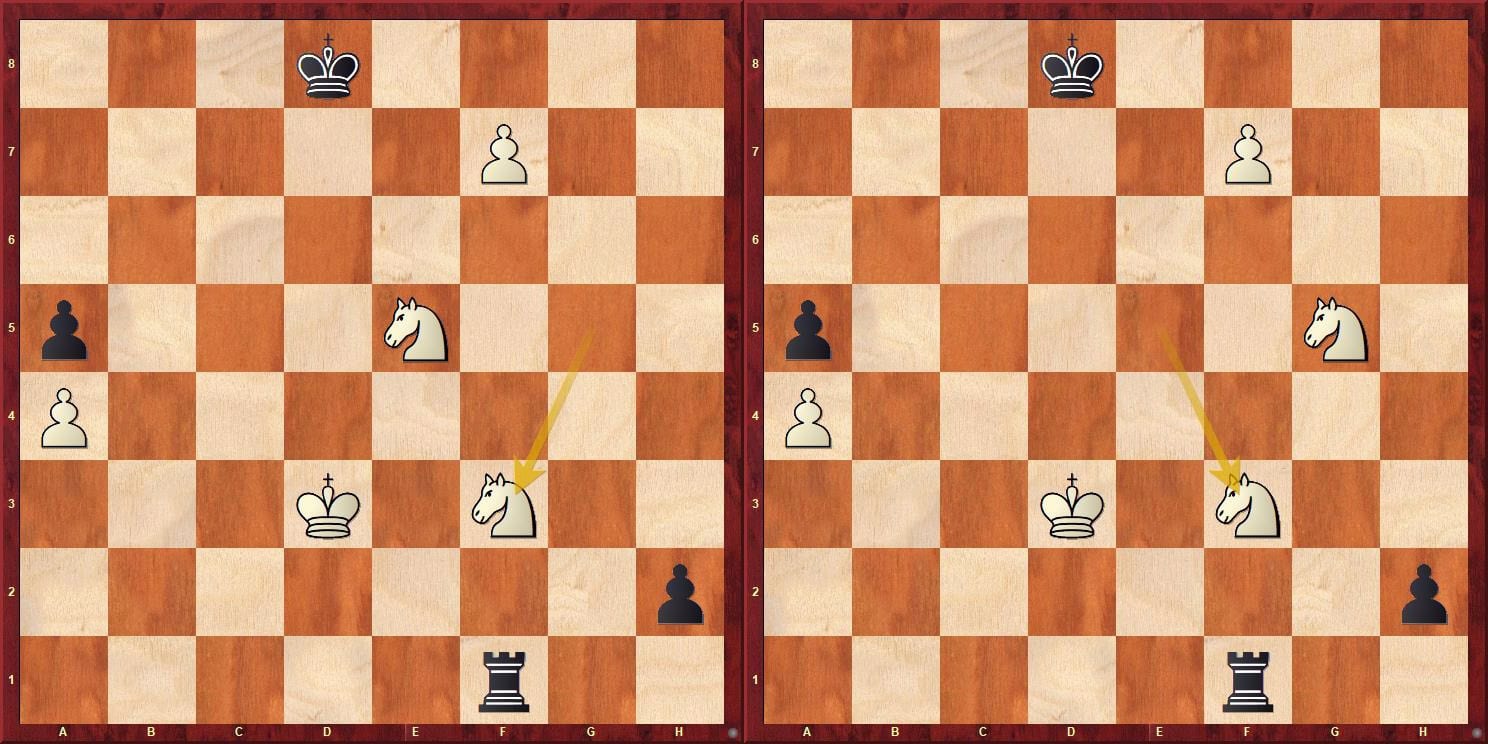
74.Ngf3 or 74.Nef3. In both cases queens can appear on the board, and the endgame, disregarding the laws of time and perhaps even causality, then transforms back into a middlegame with all its complexities! Which of the options to cover the ‚f‘ file would you choose after careful consideration?
While analysing this position, I could not help but recall an old, truly ancient, story told to me by one of the coaches. It concerns (probably) a national team training camp for children around 1995 and one inquisitive question from then nine- or ten-year-old David Navara. The reader will forgive a certain narrative licence and hopefully David will not be offended.
„So children, today we will discuss the topic of transition from the opening to the middlegame and from the middlegame to the endgame," the lecturer said. „And why, please, will we not deal with the transition from the endgame back to the middlegame?“ asked the supposedly young David. „Ha, ha, ha,“ the other children naturally found this very amusing. After all, what nonsense is that? Does the national team novice not know that we cannot get from the endgame back to the middlegame or even that he does not know the definition of the endgame? „Of course, we're playing some endgame, both sides will promote queens, and the game will return to the middlegame!“ David retorted. 🙂
I don't know how the lecturer managed to return to the planned lesson 🙂 , that is to calm the children and youth and also to answer the questioner satisfactorily. It is, of course, about statistics, tendency. At heart, little David was right... and here we have proof!
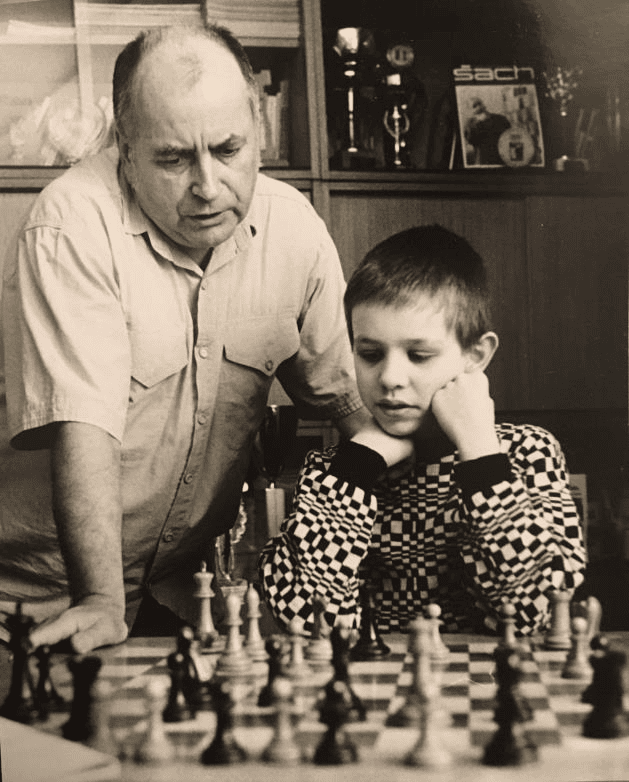
golden times...
Task nine
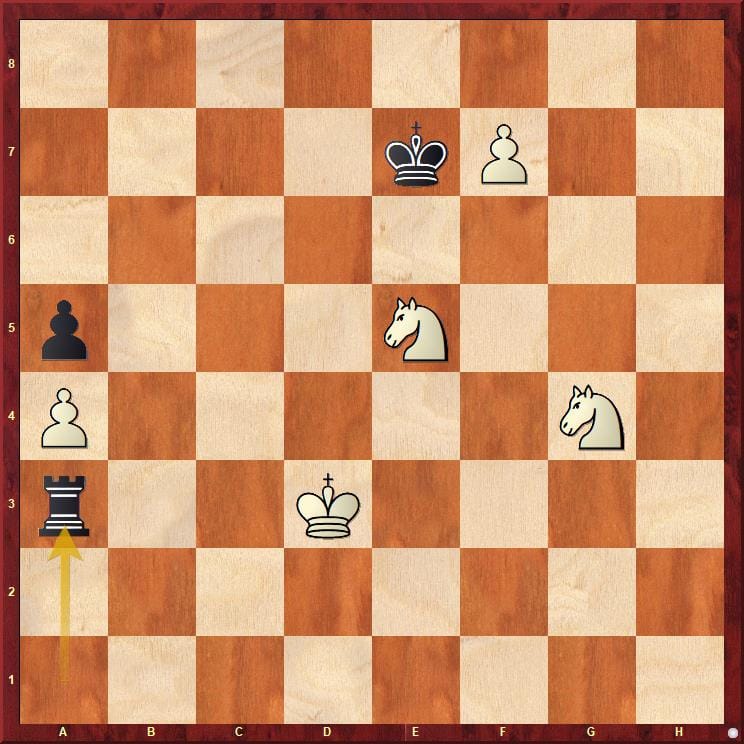
Wei Yi fought like a lion and we can perhaps say that with the move 76...Ra3+ he set the last trap! Where would you retreat the king?
Solution
In the viewer below, all solutions are presented of all the previous nine tests, yet I would like to pause especially on two of them – one theoretical and one practical –.
Solution the fifth test requires quite deep knowledge of theoretical, or according to Dvoretsky, so-called precise endgames… and something more!
Before us is a position that White wins! I will say straight away that the computer announces mate in 90 moves. How is this possible? After all, many of us learned as children that two knights cannot mate unless the weaker side's king commits suicide. The secret we will reveal by considering why knights actually do not deliver checkmate. Knights with their king (indeed even a mere K+N duo) are capable of driving the king to the corner of the board! The problem, however, is that before they force mate, stalemate appears on the board 🙂 . Well, therein lies the crux of the matter.
Forget about the pawn on h5, White will capture it in a few moves. That unfortunate pawn on a5 causes the N on a4 to move away at the critical moment! Stalemate does not occur, and the knight has time to hop wherever needed, that is, to (help) checkmate the black king. The problem, however, lies in whether in the meantime the black pawn will promote to a queen and intervene in the game. I will also inform less experienced players that, of course, this is nothing new...
„After all, let’s be objective, nowadays the game is played much stronger,“ declared the second of the Olympiad terminators Arjun Kumar Erigaisi about half a year ago in an interview, thus condemning real history to the dustbin of oblivion, as is common today...
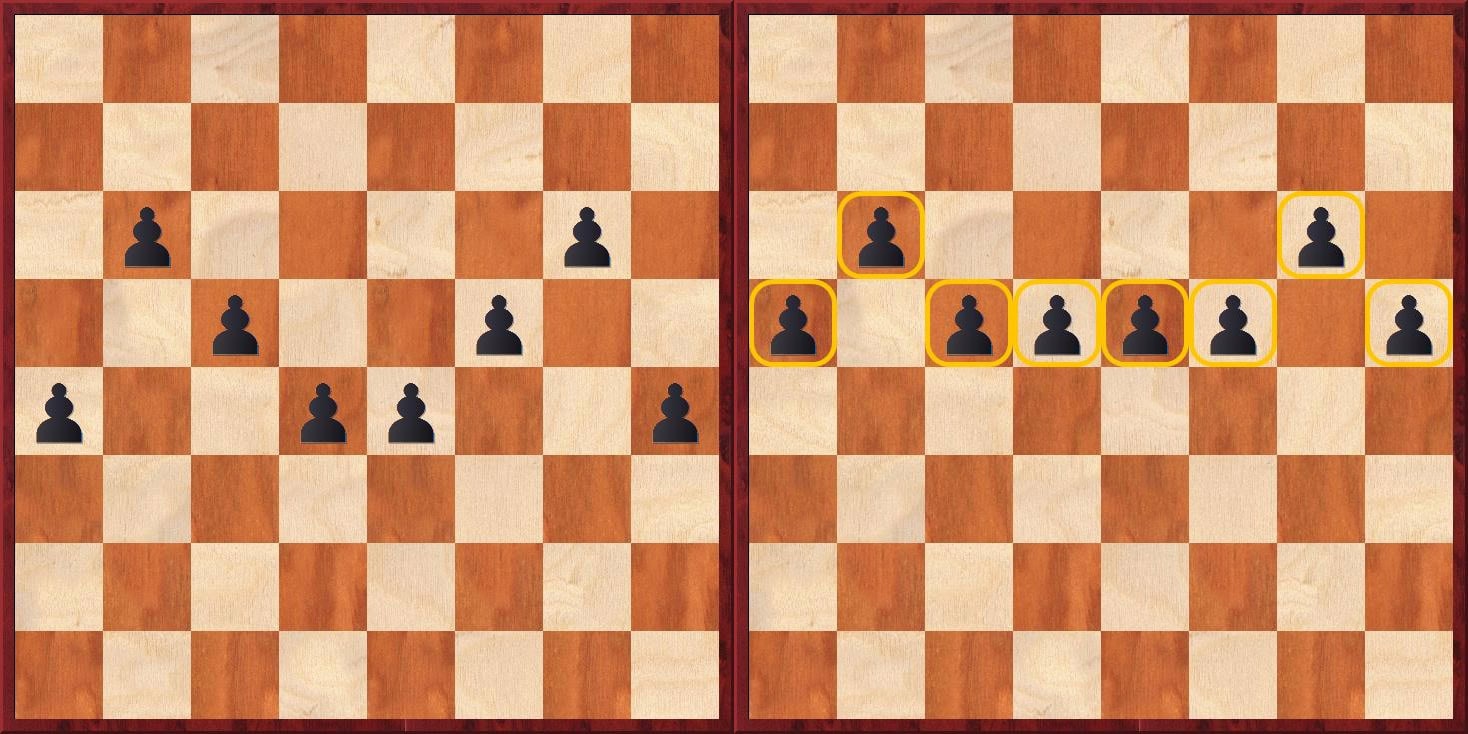
The working diagram on the left represents the so-called Troitsky line (wall). Alexei Alexeyevich Troitsky (1866-1942) discovered by remarkably precise analysis, how far the weaker side’s pawn can advance in a 2N vs. P endgame for White to win! Perhaps he really played much weaker, but he certainly knew how to analyse! A more detailed analysis and explanation of the Troitsky line can be found by the reader in the viewer.
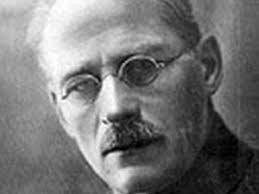
A. A. Troitsky. A brilliant composer, analyst, the first USSR chess composition master of sport. He introduced new elements into studies and brought them closer to practical chess.
Theory and practice, however, diverge partly due to the 50-move rule. At the time Troitsky published his analytical work, nothing like this existed, and therefore his line is only partially useful in today’s practice. Around the turn of the millennium, however, the German grandmaster and mathematician, an expert in various theoretical endgames, Karsten Müller created a more precise diagram, the so-called Müller line, also called the second Troitsky line, which respects the 50-move rule. Of course, I have also included in the viewer an example of the procedure by which the stronger side achieves a win. The reader will be able to assess how difficult the entire mating technique is, especially in the case when the opponent defends in the most precise possible way. (He is familiar with the rules of correct defence, that is, which corner of the board to be driven into in the first phase and which to avoid.)
I am a huge fan of the (miracle) Dommaraju Gukesh also because he might return chess to a normal state of the type classics remain classics. I was thrilled by his performance at the Olympiad. Nevertheless, I would really be curious how the game would end if both players continued to fight in the endgame position on the diagram… with 30 seconds per move!
Solution the sixth test
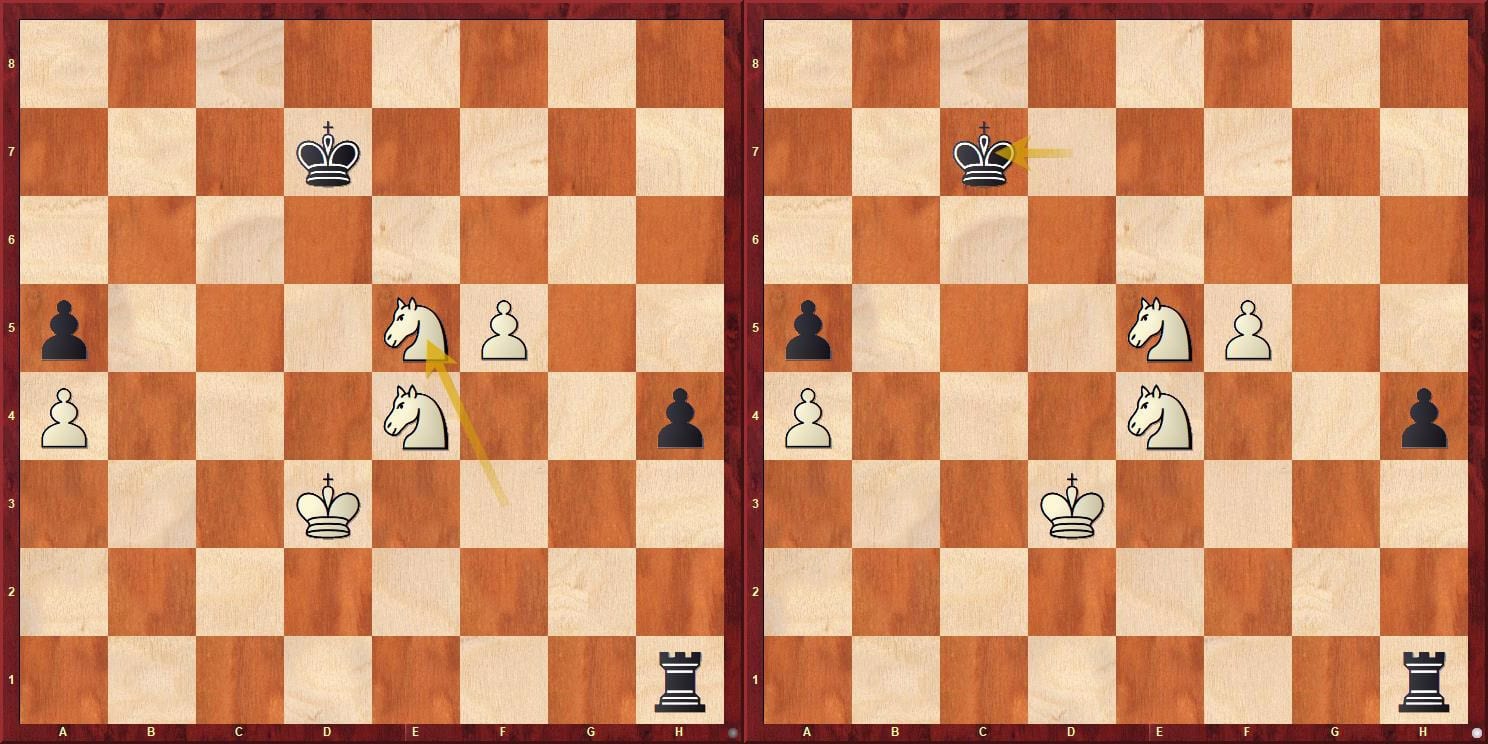
I was led to this purely practical task by Hikaru Nakamura in his video analysis. After 70.Ne5+ rests the simplest method of achieving a draw in a retreat that may seem paradoxical at first glance 70...Kc7!! In ordinary endgames such a retreat would not only look counterproductive but perhaps even foolish. After all, why should the king literally run away from a dangerous passed pawn? Its task, in endgames where the pieces are already fully valuable short-legged is not only control but also blockade! However, it is much more important here to prevent the knights from giving checks. By doing so, they simultaneously use their tempi to move to the necessary squares. From a practical point of view is the retreat to c7 is by far the simplest solution, even though the draw was maintained both in the game played with 70...Kd8, as well as with 70...Ke7.
Below we can finally watch the full record of this immensely rich game.
Very, very strong
Already during the game but especially after the Candidates Tournament ended I noticed that many elite grandmasters (whether they themselves were participants in the Toronto battle or not) failed to understand how „Gukesh actually managed to win! Nepomniachtchi's statement on his platform perhaps captures this best. That is: the youngest participant's play made no special impression on him, but actually… apart from one lost game where he made a blunder in time trouble, he was (unlike himself) not threatened in any game. What's more, in the remaining 13 games he was not even worse off! Such a lack of understanding is, in my opinion, typical when we observe the play of a true genius. The Chess Olympiad in Budapest became, in my view, just a continuation of the display of an incredibly strong level of play that many fail to appreciate because… they do not understand at all.
Let's now take a trip through more of Gukesh's games. Of course, it is not possible to analyse them all, but even so, we find a wealth of examples of ease of play, precise calculation and choice of plans. So let's proceed chronologically and pause at such moments!
The following video captures the end of the game Maghsoodloo vs. Gukesh. Rarely at the top level in a serious game can we see that one of the opponents noticed what he had done only after several moves. The cutest thing in the whole video recording is, however, Gukesh's amazement…
How easily the World Championship candidate dealt with the long-time number two by rating is shown by the footage and the usual brief analysis from Chessbase India.
Magnus spies
In the fifth round, India faced the dangerous and strong team of Azerbaijan. When I saw the lineup of this chess powerhouse with the super-grandmaster and former world number two by rating Shakhriyar Mamedyarov on board 4, I could not help but recall my childhood years and the strategy of team lineups practised by our captain. „We sacrifice the first board and thus gain more points in total,“ he used to say… 🙂
Well, it cannot exactly be said that the 19-year-old Aydin Suleymanli was sacrificed, on Azerbaijan's first board, but still his rating of 2,632 is nothing exceptional in today's advanced chess world.
Let's first watch the video of this game and only then will it become clear why I mentioned the name of the 16th world champion in the chapter title.
In a post-Olympiad interview, Gukesh pointed out the moment 10...Nh5?! 11.Nxe5...
But now the main question: what happened during the game?
A splendid short video! However, the idea to add the main theme from the film series The Pink Panther with Peter Sellers as Inspector Clouseau is simply a brilliant move! 🙂
Now, however, I would like to pose a question to the reader. After all, hundreds of games were being played simultaneously in the tournament hall. True, Gukesh is Gukesh, but still: Why does Magnus watch the game with particular curiosity? He even seems to be trying to glimpse the actual score sheet!
The problem, in my opinion, is this: There are not many chess players in the world with such a developed chess culture, insight and memory (so-called walking encyclopaedias) who, when walking through the hall after the opening, around moves 10–15, could recognise almost on every board which variation of which opening was exactly played. Carlsen was curious how exactly the Italian pianissimo opening had proceeded. He did not know the variation and could not reconstruct it in his head!
Concert in the final round
The twenty-nine-year-old Russian grandmaster now representing Slovenia excelled at the Olympiad. He was the only one to defeat the 16th world champion even with the black pieces. He scored 6 points out of 9, a performance of 2737, and returned to the 2700 club.
Nevertheless, when you replay Gukesh’s last Olympiad game, in which Vladimir Vasiljevič set up a solid London System, at times we get the feeling that chess is simple, but then on the contrary we do not understand why the London fortress actually collapsed so quickly. It literally imploded! Incidentally, I believe that even Fedosejev himself did not know this during or after the game.
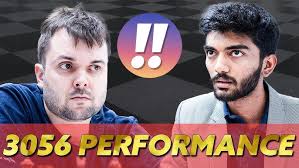
Here you can watch the first interview after the Olympiad. Final evaluation and a brief game analysis.
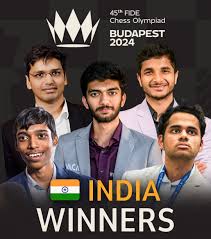
Anand is behind it all
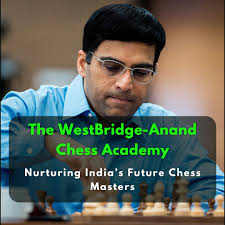
The decisive share in India’s overwhelming rise naturally belongs from the very beginning of the transformation to the 15th world chess champion Viswanathan Anand. The founding of the chess school The WestBridge Anand Chess Academy was just an integral part of this progress. At a time when in decadent Western countries compulsory mathematics final exams are gradually being abolished and for most children and youth even a few minutes of thinking is considered a burden of senseless overload, chess is now a compulsory subject in schools in some Indian states! However, the Olympiad in Hungary showed that this Western trend may not necessarily be irreversible yet.
From his position as FIDE Vice President and together with Executive Director Emil Sutovsky, Anand managed to bring major sponsors to chess. However, how lasting this phenomenon will be can only be assessed after the World Championship match concludes.
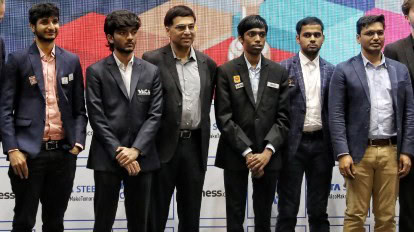
Vishy surely also enjoyed celebrating his double triumph!
The final ceremony from the perspective of the cradle of chess
One of the viewers of this video captured exactly what I also feel: „When I watched this video, I couldn't hold back tears. Absolutely raw emotions of the players, coaches and all the fans. A historic performance by both teams. How proud Vishy Anand must be during the trophy presentation – he sees the grown tree whose seeds he planted. Dear world, Indian chess has arrived. They are here to fully dominate in the coming years!“
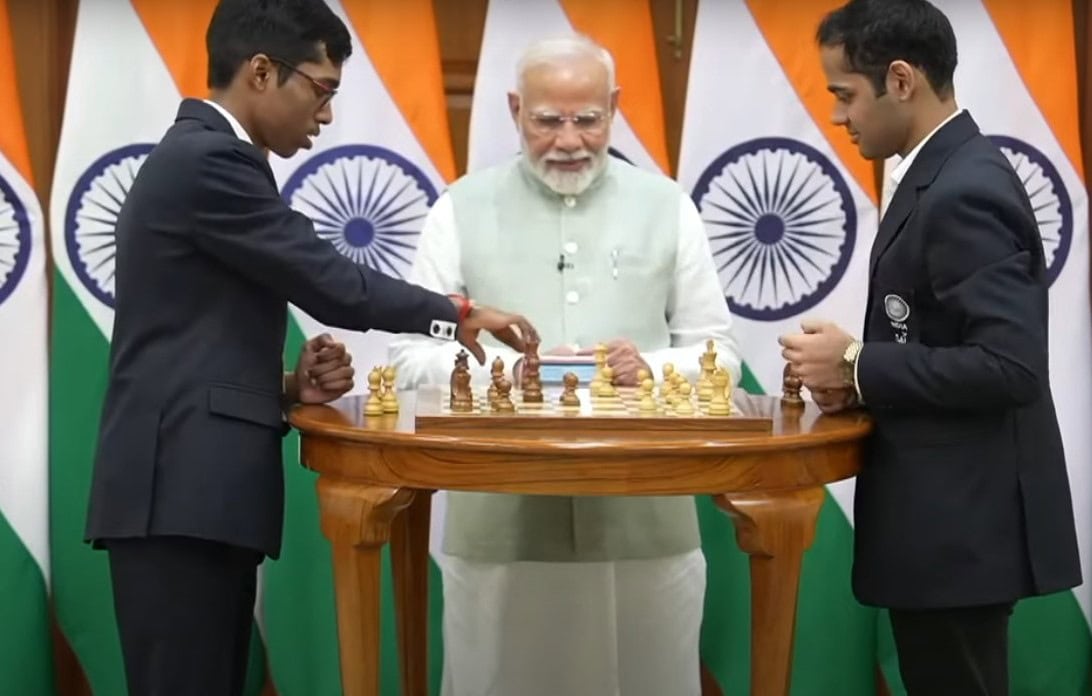
The Prime Minister watches a friendly game…
All four analysed games can be found below in the Chessbase viewer: