

The recently concluded tournament in Malmö, Sweden, literally gave many Carlsen fans food for thought! Their favourite not only finally played a classical tournament after a long time. He won it! The ovations were endless, especially since at one point it did not look good for the „strongest chess player of all time“ – the Chess GOAT. After four rounds played, he had only 50 %. Fans had to swallow the disappointment. But all's well that ends well! Magnus finished the seven-round tournament with three wins and then „crushed“ Erigaisi in the tiebreak. „The true king continues to reign and the youngsters?… you know what they can do!“ But how was it really? Let's take a look at this interesting and very strong tournament from „two perspectives.“.
One from the viewpoint of an enthusiastic fan, and the other from a critical supporter and observer! And why not go to two opposite extremes? At least we will not only learn from many very interesting moments and games but also have a good laugh...
Depending on the view of the current direction of chess, the reader can choose what adjective to actually add to the supertournament in the Swedish metropolis. Yes, a supertournament! Not only did two players from the world top five participate here, and half of the starting field were super grandmasters rated 2700+, but it was a category XIX tournament just like in Wijk aan Zee or Prague 2026.
The participants and their draw numbers were
| No. | Player | Country | Rating at start | Year of birth |
| 1 | Jorden van Foreest | Netherlands | 2735 | 1999 |
| 2 | Zhu Jiner | China | 2546 | 2002 |
| 3 | Andy Woodward | USA | 2635 | 2010 |
| 4 | Magnus Carlsen | Norway | 2840 | 1990 |
| 5 | Arjun Erigaisi | India | 2751 | 2003 |
| 6 | Nils Grandelius | Sweden | 2662 | 1993 |
| 7 | Nodirbek Abdusattorov | Uzbekistan | 2780 | 2004 |
| 8 | Yağız Kaan Erdoğmuş | Turkey | 2708 | 2011 |
Magnus probably could not have wished for a better draw! In such a short tournament – I believe that „proper“ single-round tournaments, from whose results conclusions could be drawn, should have at least 10 players – it is extremely advantageous to play the biggest rivals with the white pieces! And that is exactly what Caissa granted Magnus! With three 2700+ players, he got white, with the theoretically weaker opponents he then had a great chance to cope with the black pieces!
And how did it all end?
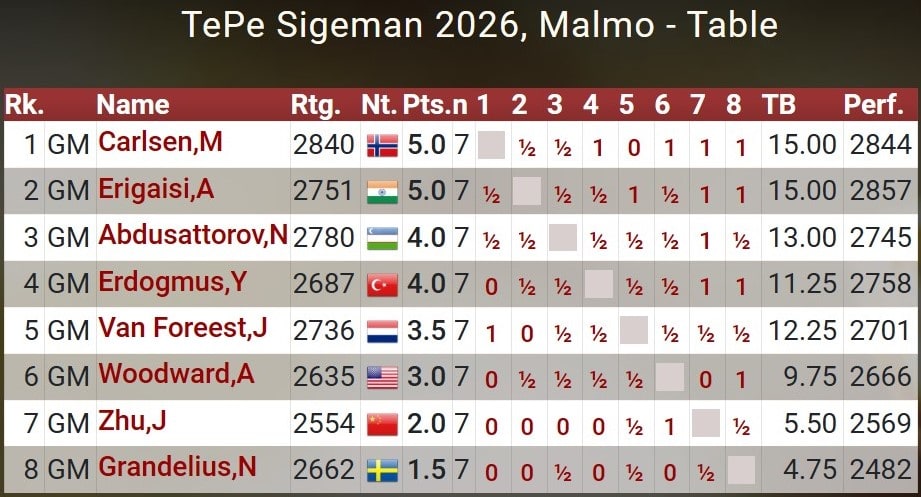
The tournament started on 1 May 2026, that is already on the day the May FIDE list became valid. Therefore, the organisers and Chess-Results worked with the May ratings, which is not reflected in this table.
While Carlsen thus drew the ideal pairing for such a short distance, the absolute worst was for Nodirbek Abdusattorov. So after a mandatory win in the first round against Zhu Jiner, he was unable to „squeeze“ anything out of anyone in the next five rounds. True, even the ex-world champion failed to do so in the Carlsen vs. Abdusattorov game, but... well, the tournament is simply too short!
How to know how to finish?
When in round 4 Carlsen „sensationally“ lost to the unpredictable Dutchman Jorden van Foreest, he had only two points to his name, but on the other hand the second half of the tournament and at the same time its conclusion suggested that he could boldly try to score 3× in the last three rounds. The draw was already made with the white pieces against Erigaisi and Abdusattorov, he defeated Grandelius in his best game (who „started 0 from 4“, but then „understood“ and drew the rest of the tournament), but lost in that sensational game.
And the assumption became reality! A crushing finish followed, and Magnus thus climbed to +3. He almost did not become the sole winner, because the leading player of the tournament Erigaisi lost his nerves in the last round (Arjun will probably always have problems with that) and just barely saved his game with the white pieces!
I am not a fan of tiebreaks in the form of blitz games, although I understand that spectators demand drama and entertainment (I hope I will not live to see the day when the winner is decided by bullets). However, the tiebreak was quite dramatic, so dear readers, I of course cannot deprive you of it, although you may have already seen it.
Even the heavens called again: GOAT!

„Fabulous! Fantastic! Magnus is back. GOAT!“ (Greatest Of All Time) „Magnus's fantastic finish: 3 points out of 3!“
The following superlatives amused me the most:
“I knew the GOAT still had it! 3 classical wins in a row. … the GOAT is the GOAT for a reason. It was never in doubt”
„I knew the GOAT still had it! Three classical wins in a row… the GOAT is the GOAT for a reason. There was never any doubt.“
or “Two things are guaranteed in life: death and Magnus winning chess tournaments.”
„Two things are certain in life: death and Magnus winning chess tournaments.“
Times of India
“”This was simply jaw-dropping stuff." therefore „This was simply something that drops your jaw.“
On Alexey Pugachev's Ukrainian Russian-language channel, one of the viewers wrote:
„Вытащил можно сказать безнадёжный турнир. Хотя, как говорится… всё гениальное просто, Магнус лучше считает.“
„You could say he saved a hopeless tournament. Although, as they say... all genius is simple, Magnus calculates better.“
Well, I just couldn't resist and replied to the viewer: „Предложу немного иную картину, противоположный крайний случай: Карлсен обыграл Чжу Цзиньэр (рейтинг 2554) (кстати, это та самая, которая заняла последнее место на турнире Challengers в Праге), а затем 15-летнего и 14-летнего мальчиков. Действительно, это достижение достойно записи в Книгу рекордов Гиннесса. Что-то вроде 2 x 6-0 Фишера... спустя 55 лет" 🙂
I offer a somewhat different picture, the opposite extreme: Carlsen defeated Zhu Jiner 2554 (who, by the way, finished last at the Challengers tournament in Prague) and then a 15-year-old and a 14-year-old boy. Truly a feat worthy of the Guinness Book of Records. Something like Fischer's 2 x 6-0... after 55 years 🙂 .

And the reality?
Round five: Carlsen,M (2840) vs. Zhu Jiner (2546) 1-0
I remind readers that she is a Chinese chess player who recently performed quite successfully at the Candidates tournament in Cyprus, where she shared 3rd and 4th place, but also finished last, with a margin, at the Prague Challengers tournament two months ago. I think this was – despite the game result – Magnus's truly worst game of the tournament!
Round six: Woodward,A (2653) vs. Carlsen,M (2840) 0-1
King's Indian Defence, on the other hand Magnus's second best game!
Round seven: Carlsen,M (2840) vs. Erdogmus,Y (2708) 1-0
The game transitioned into a theoretically balanced endgame. However, in the analysis, we will show that Carlsen did not so much win this endgame as Erdogmus rather lost it!
„So what?“ can be said not only by a devoted fan but also by a critical admirer! After all, he could not have scored more than 3 points in the last 3 rounds. And he produced a finish that we have not seen rarely in his career, but quite often.
However: Zhu Jiner has a rating almost 300 points lower! In the sixth and seventh rounds, Carlsen defeated… „schoolchildren“! Andy is fifteen years old, Yagiz is even just fourteen! So if we look at this from another angle, if we want to use a different prism, and analyse the game thoroughly: Is there really anything to admire?
First, the last game
Let us finally move on to the first example, which by coincidence left the deepest impression on me, but at the same time a certain indescribable aftertaste.
The last, seventh round of the tournament is being played, the game Carlsen vs. Erdogmus. Black has just made a checking move 40...Nd6.
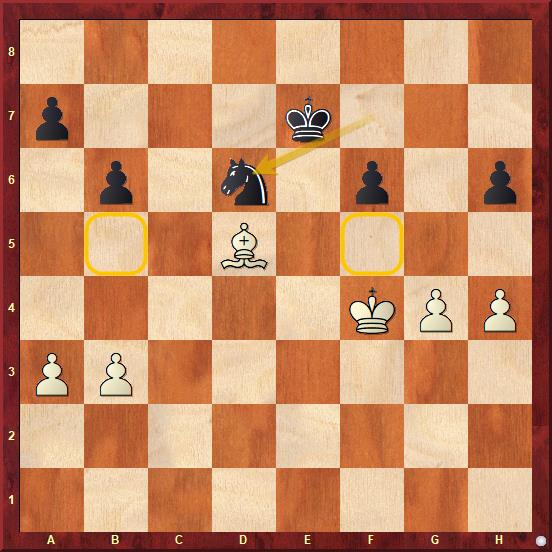
Magnus thought for about six and a half minutes and played 41.a4.
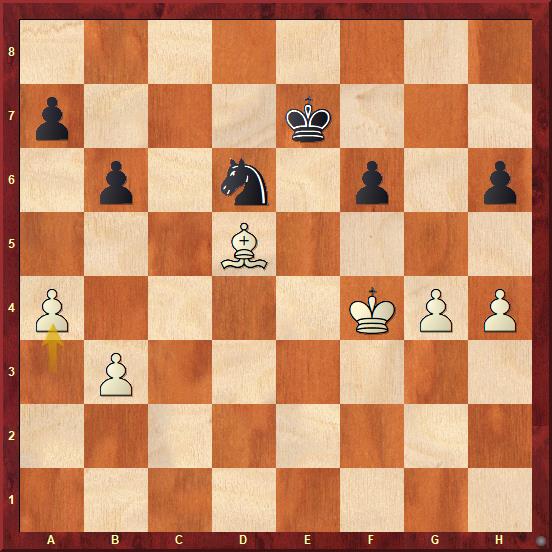
In the analysis I prepared on the night of 8 May – still full of impressions – I wrote this: „I really do not know whether to mark the critical position of the endgame here or one move earlier. It depends on the point of view. If after Carlsen's advance Black had responded in accordance with the correct strategy, we would certainly find ourselves in an alternative reality in which Arjun Erigaisi won the entire tournament, because this game would have ended quite soon in a draw.
In my opinion, Magnus must have been aware at this moment that the game was heading for a draw (he had known for a long time that the position was objectively equal). However, if he really wanted to test his opponent, I think he would have played a different first move after the time control.
Or was it all different? The old fox set a psychological trap with the forty-first move – that is, the first move after the control, when many paradoxically let out too much steam? In that case, he is not only a genius chess player but also a psychologist!
Although a few lines below we will learn how Black should have continued, I will still ask – and attack, dear readers, your positional literacy: How would you most likely continue with Black after 41.a4?
Two years ago, a two-part work with a long title was published on my pages „Bishop or Knight? Computers put the finishing touch on a series of well-known positions… and coaches got more wrinkles on their foreheads„. The diagram position would fit ideally into it!
Indeed, the endgame is played for two results (if White did not play 41.a4), but given the rule I established in the article – 3xNo –, and also the reduced number of pawns, it should not be a problem for an experienced chess player with enough time on the clock to hold it with Black.
How would Black most easily hold the endgame? He should activate a tool…
It is called thinking in patterns! I add that the name of this general or abstract way of thinking, which was probably introduced into books nearly 100 years ago by B. M. Blumenfeld, gradually became part of Soviet works and is still used today (M. Shereshevsky), quite quickly disappears for most young chess players. The way of thinking that uses this tool has been suppressed by long and many years of engine analyses at hand.
It is actually a phenomenon I have already mentioned. Hand on heart, dear readers, how many of us today remember 5 to 10 phone numbers of our closest ones by heart, as was the case one or two decades ago? And yet it is a very useful thing! Chips are still mostly not implanted under our skin and we can lose our mobile!
But let us return to the position. Black should have continued according to the principles of the correct strategy of fighting bishop against knight in endgames. After 41...a5!
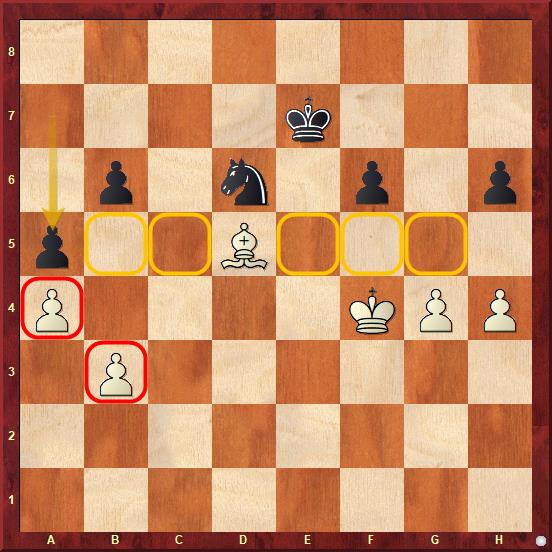
a draw stood on the board „like a log“. Why? Firstly, because Black is not worse… neither theoretically nor practically! He just blocked the queenside pawn on the colour of the bishop! If Erdogmus could not only think in patterns but also knew what a fortress means, then after a few moves we could reach, for example, this fortress position (I add immediately that there are more of them).
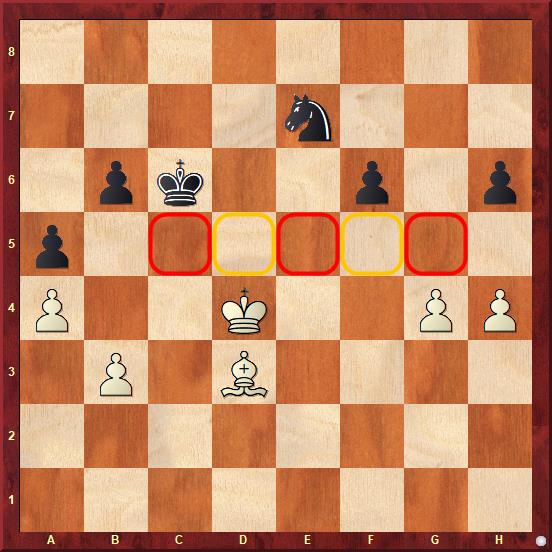
The fortress is of an active kind, but only slightly. Black will (for example) manoeuvre the king to d6 and c6. The only thing he must react to is, after Kb5, to cover the pawn with Kc7. Moreover, if the White king moves away from the f5 square, the knight can afford to go on a short forage.
Dear readers, does the fortress in the diagram seem harder to understand than, for example, this well-known position, which I have personally been testing on small children for many years?
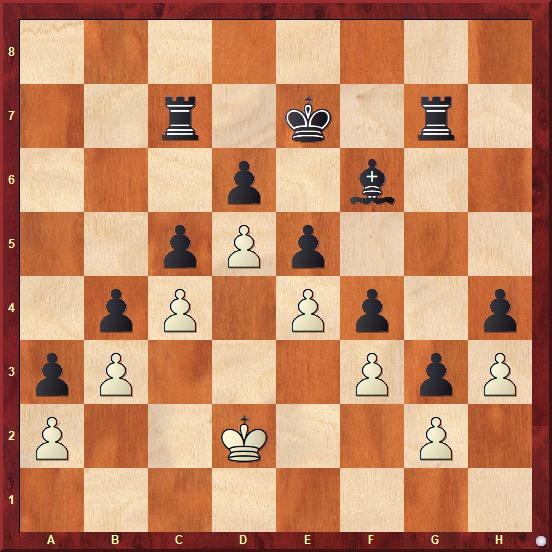
I am definitely not a specialist in training very young children, but in the old days I really „discovered“ a boy who understood the fortress before he even reached the age of eight! The test by playing out the ending – and thus finding out whether your little pupil understands the essence of the fortress – consists in occasionally offering him some material, here for example Rg7-g4, Rc7-c6, Rc7-a7-a4 and so on...
First, I present a shortened game record:
Here we can look again only at the (theoretically) critical moment of the game!
The analysis of the game and especially the endgame requires a skilled chess player – both theoretician and practitioner. I believe that on YouTube we will not find a better analysis than the one offered on Hikaru Nakamura's channel. This time it is a brilliant work!
And one more thing: Even Hikaru considers it necessary in the analysis to separate the practical view of the endgame – or Black's defence – from the theoretical one!
Finally, I provide the analysis in the viewer. One more thing must be added about the endgame itself: What happened in it can be commented on from two angles: the computer one, i.e. objective, or the didactic or psychological one. And the symbols will then correspond to that.
The best approach would probably be to separate the analyses and the evaluation symbols – mainly, of course, question marks – adding them according to the purpose of the analysis and what we actually want to achieve with it. Books and training should aim for a human approach, dry analysis a objective truth then serves advanced analysts...
A game with an unpleasant aftertaste
was not actually the one Carlsen lost to Van Foreest in the 88th move after a dramatic fight. (A game full of blunders; I would say we wouldn’t have enough fingers on both hands – and yet usually there is little to blame the players for… such is today’s chess.)
It was certainly a game Zhu Jiner vs. Carlsen from round 5 of the tournament. It is a battle I somehow do not have the strength to analyse, so I will offer readers only a video version – an abridged record, Nakamura’s English version and a shorter Russian-language video analysis.
King's Indian and the method of bearable risk
„Magnus and the King's Indian? Only at blitz or rapid at most!“ adds the knowledgeable reader. And he is right. We won’t learn the King's Indian from Magnus’s games! For that, other great players serve: Bronstein, Boleslavsky, Geller, Stein and of course Kasparov! His unforgettable „sacrifices of exchange and even queens“ in the 1990 match against Karpov forced even some staunch opponents of the King's Indian – such as Grünfeld players – to at least consider trying it (again)!
But this was truly a brilliant game! Round 6: Woodward,A (2653) vs. Carlsen,M (2840). Let us not suspect Carlsen of having prepared the game for a long time. But once he decided to play hard for a win and chose the King's Indian, he surely looked at how the fifteen-year-old American super-talent usually opens it!
Risk named modern Benoni
I dare not predict which opening Carlsen would choose if he had to face his most serious rivals Abdusattorov or Erigaisi with the black pieces. One thing I know almost for sure: he would not choose the modern Benoni, as he dared to do in the second round against the Swedish top-rated Nils Grandelius.
What is the problem? If engines have condemned the King's Indian Defence to the role of a „theoretical whipping boy“, and even the most loyal use it only in certain specific situations, with the Benoni it is even noticeably worse! It had a reputation as a „slightly dubious opening“ even before the computer era, but engines have literally executed it.
After the moves 1.d4 Nf6 2.c4 e6 3.Nc3 c5 4.d5 exd5 5.cxd5 d6 6.e4 g6
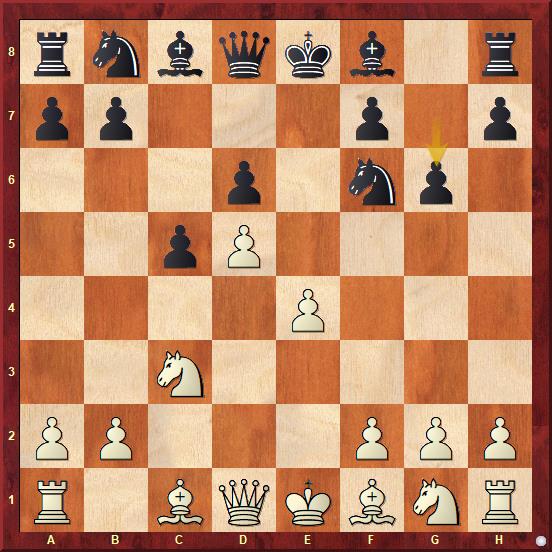
White chooses the Tajmanov Attack (the three-pawn attack)
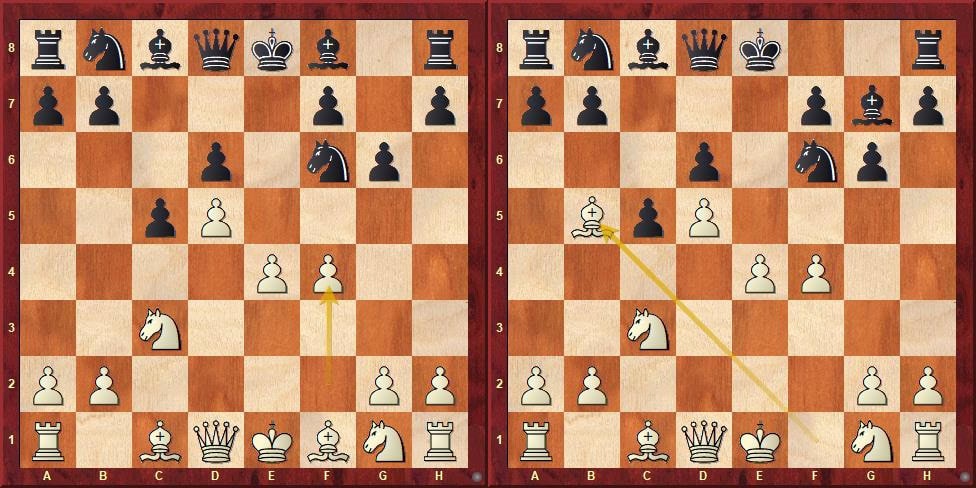
7.f4! and after 7...Bg7 8.Bb5+ (let us add that Mikenas's Attack 8.e5 also contains plenty of venom). Hikaru Nakamura in the video analysis below regrets that Grandelius continued as he did. And he is not alone in being really curious about what Magnus had prepared for this case.
In my comments on the game I wrote: Hikaru Nakamura correctly notes in his video (paraphrase): „I would really be curious where and what novelty Magnus prepared here.“
Without following the development of the Modern Benoni in the last, say, decade, I know that engines have analysed the defence to pieces and the situation before us... well, they do not evaluate it favourably for Black at all. This is also the reason why the defence stopped being used at a higher level in classical chess and met a similar fate as the King's Indian Defence – even worse. True, to „crack“ all the variations requires from White not only patience but also a good memory, quite a lot of time and occasional repetition. It is certainly not a bad idea to occasionally check whether some reinforcement has appeared. (For example, here I have taken a liking to 8...Nbd7 with a material sacrifice, associated with the tragically deceased Vugar Gashimov, while the main 8...Nfd7 I would not be forced to play by anyone.)
But in my opinion it is not excluded that Carlsen's team neither presented Magnus with anything new! A look into the databases of Grandelius's games probably suggested to them that simply „he will not play the Tajmanov“, and that for at least two or three reasons:
- stylistically, the dynamically charged and extremely sharp positions do not suit him at all (he is a completely opposite type of player);
- he does not know the variations of the Tajmanov Attack;
- and even if he knew something about them, he would still be afraid of getting lost in the variations (forgetting them), or he was precisely afraid of the opponent's preparation.
These are simply fundamental factors that reduce the probability of the Tajmanov Attack appearing on the board to almost zero!
To be clear, even quiet systems will bring White a positional advantage, but here we cannot speak of a refutation. That is why Benoni sometimes „works“ for example after the moves 1.d4 Nf6 2.c4 e6 3.Nf3 c5 4.d5 exd5 5.cxd5 d6 6.Nc3 g6 7.e4,
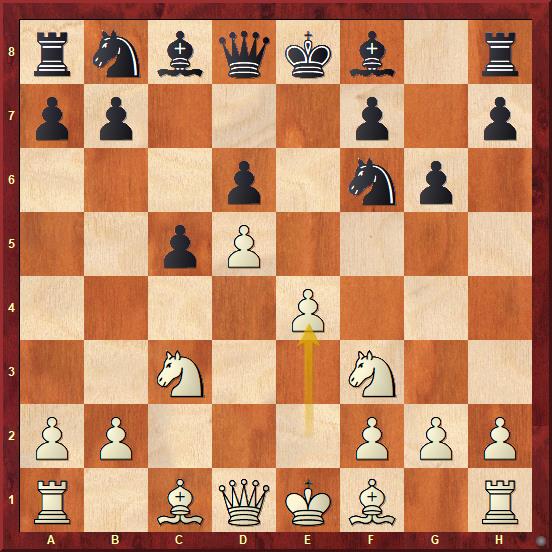
where one can already fight, so to speak, with an open face. And something similar actually happened in the game. So in my opinion no – or rather almost no – preparation, but psychology and reasoning, which must work out about 95–99% of the time.
Despite Grandelius's – let us say – somewhat lukewarm performance, a very nice game arose, which will probably be used most by trainers and self-taught players: fight for the centre from the wings, cooperation of the pieces.
The game directly radiates that Carlsen seems to feel the needs of the position with the tips of his fingers! He knows when it is time to take the offered hand of Madam Dynamism, senses the moment when White does not play precisely, and switches to the initiative. The pieces cooperate beautifully...
I warmly recommend visiting this Magnus concert!
Simply a game that tunes us directly to the string of the modern Benoni! First, of course, let us watch the shortened game record with Sagar's commentary! I might even dare to guide the readers a little: Please watch Magnus's face carefully at the moment when he expected White's 7th move (which was followed by 7.Ne2).
A truly brilliant analysis can then be found on Hikaru Nakamura's YouTube channel.
Blunted intuition and a game of chaos
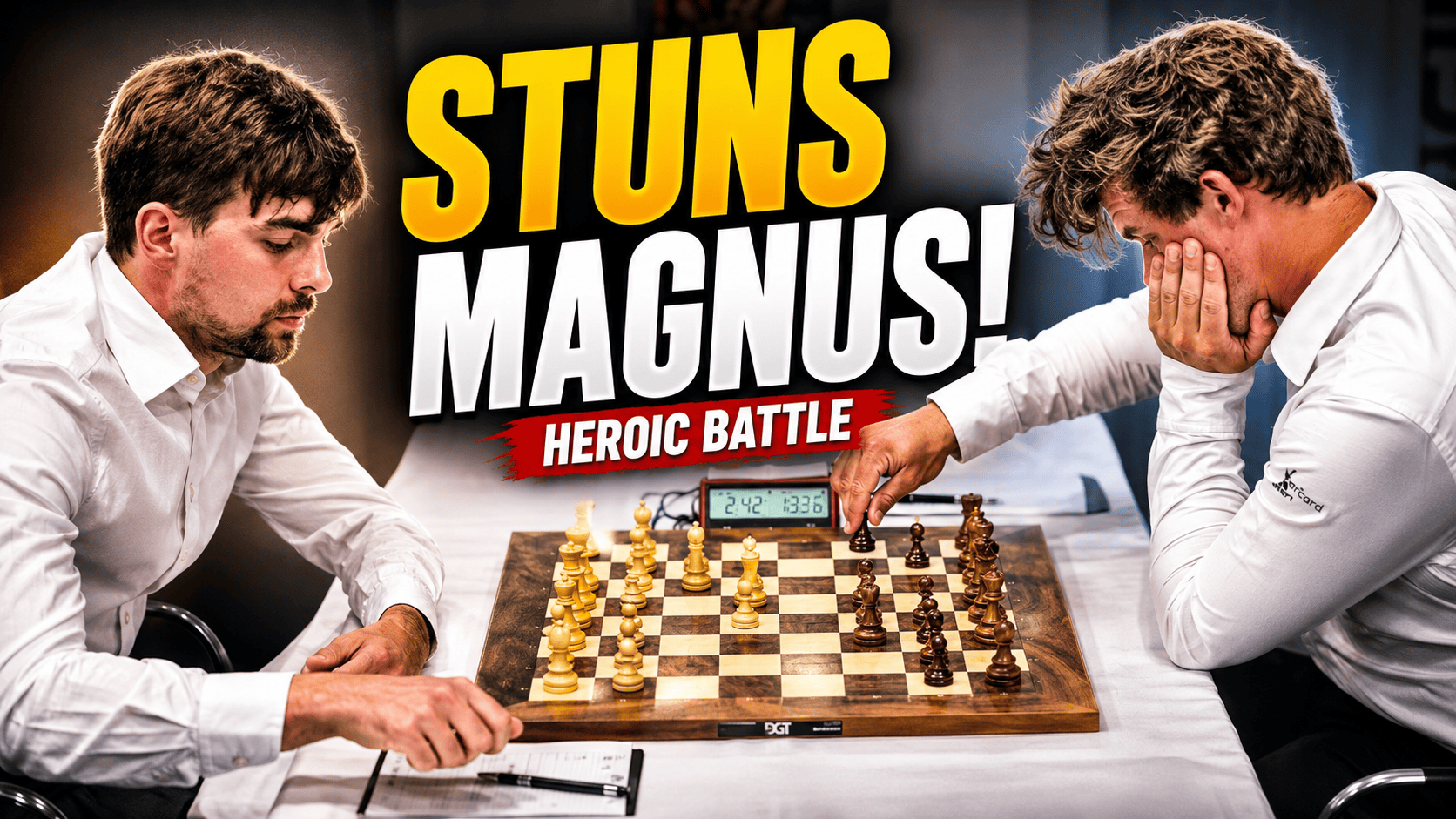
No matter what draw we get, we never avoid unpleasant opponents in a tournament. And when we add „unpleasant colours“ too, a surprise is guaranteed.
In the game of round 4 Van Foreest,J vs. Carlsen the ex-world champion had to solve a difficult problem already in the opening. If he wanted to play for a win – which certainly was the case, that is the fate of world champions and world chess celebrities – the Sicilian Defence was the most likely choice.
I believe Magnus approached his opponent with more respect than he did with Grandelius, but in a way he chose the same somewhat risky strategy. He played the sharp Najdorf Variation, where White, as is well known, has around twelve playable continuations on move 6. Well, the ex-world champion is not 20 or 25 years old to spend hours on what his team prepares for him as a summary of theoretical discussions. He has not followed theory for quite a few years – after all, he never enjoyed „cramming sharp variations“.
But how else to play for a win?
When I watched the game, I could hardly help but recall what Mikhail Moiseyevich Botvinnik once wrote about Capablanca. It was a fairly well-known analysis – or rather a work based on logical reasoning: facts, causes, proofs – in which the sixth world champion proves that Capa was the greatest natural talent of all time. I will not tire the readers with the analysis here, especially since I have already published it in a shortened form on the pages.
However, I remembered the sentence: „Интуиция Капабланки притупилась.“ „Capablanca's intuition has dulled.“ Botvinnik referred to Capablanca's age combined with complacency.
And that was exactly the impression I had when I watched a game with a dozen blunders in the endgame. True, the opponents were probably in permanent time trouble, but still: after all, endgames are Magnus's domain!
The game really contains so many mistakes especially towards the end that even experienced and strong players or analysts have trouble orienting themselves in the position, although – or perhaps precisely because – tablebases come into play at the end.
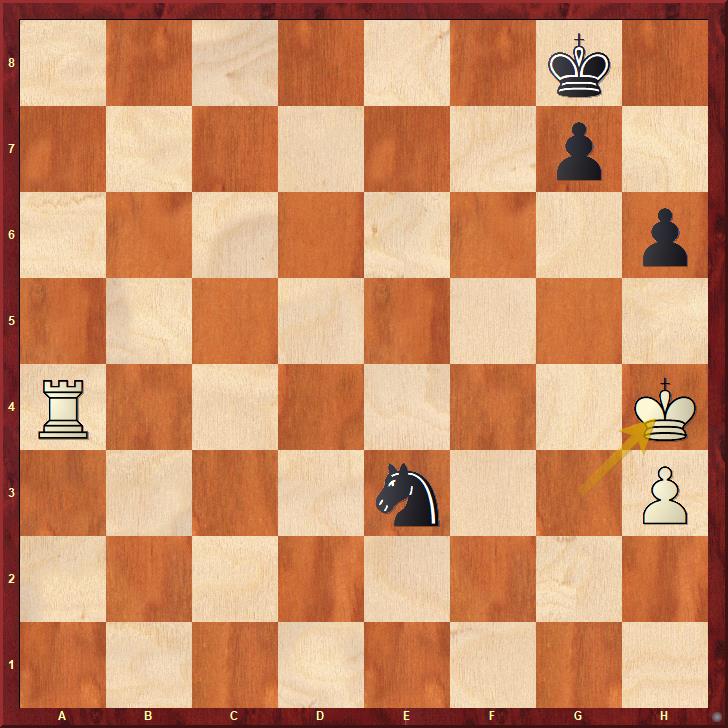
I will rather remind you that from this moment on we face a seven-piece endgame. These endgames have been „mathematically solved“ since 2012, or from a practical point of view rather since 2018. The reader who does not have the tablebases directly downloaded – and connected to their database or engines (about 18 TB) – can of course always export the position via FEN or simply enter it manually. For example, on the Syzygy tablebase website, according to my information, the Dutch mathematician and former chess engine developer Ronald de Man (Cfish) worked on it.
Now to the position itself: The following course must have not only terribly disappointed but also shocked the fans of the GOAT 🙂! Their darling – himself in love with endgames and indisputably currently their greatest expert – played it extraordinarily poorly! And the fact that he was also playing on seconds in the later stage, had a draw within reach, and the opponent... well, he was not exactly distinguished by particularly clever play either, does not change that.
„The position is a draw!“ This must be clear even to a district-level player. Many chess players – and they do not have to be experienced veterans – surely know that Black's primary task must be to tune the communication between the king and the knight – that is, both the short-legged pieces. Only if the knight moves too far away – choosing pastures on the other side of the board – could there be a danger that it will no longer return to the embrace of its leader. And that is exactly what is at stake now! Carlsen either did not realise this or... wanted to „prove something to someone again“?! So the position is a draw, even if one ventures onto that distant pasture.
Well, his intuition (partly) did not fail him, maybe he is even right, but for heaven's sake why?? „Because Magnus is simply Magnus!“ is probably the correct answer!
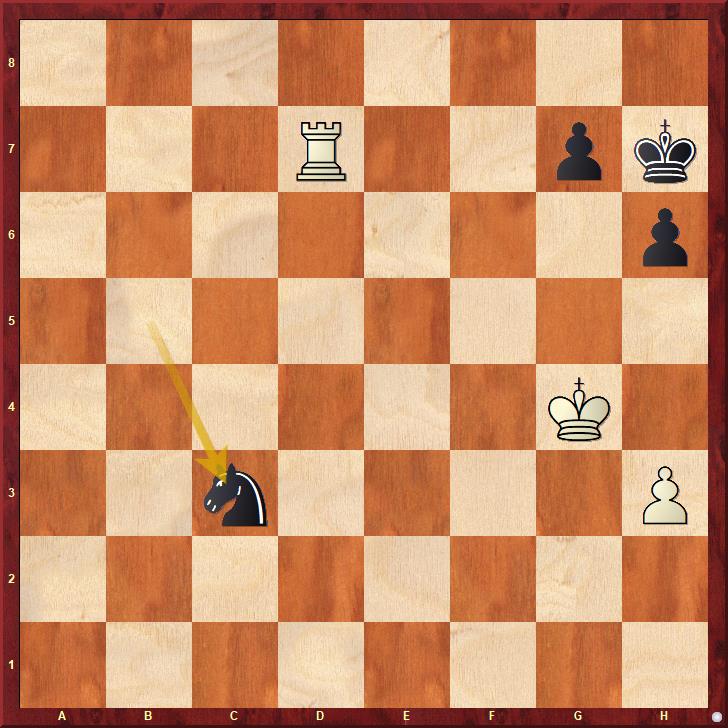
66...Nc3??+-. Just one of many serious blunders that fundamentally change the evaluation of the position.
Before we look at the whole game, I will limit myself to one simpler test that I prepared for my younger and less strong pupils. I add that even Nakamura mentions in his video that for a complete all mistakes simply cannot in the analysis to point out! Logically, such a „mishmash“ would arise that no spectator would be able to understand what was actually happening on the chessboard...
Many things can be expressed in words, but a picture often surpasses them. The reason for Magnus's blunder was this:
After opening the files, dear readers, you will face – admittedly – a not very difficult test. Its solution can then be found in the player below.
Van Foreest-Carlsen_rook vs knight A B-TASK
Van Foreest-Carlsen_rook vs knight A B-SOLUTION
Without the traditional Sagar abbreviated game notation, the experience would certainly not be complete!
Erdogmus's positional concert
Much has already been written and broadcast about the Turkish fourteen-year-old supertalent Yagiz Kaan Erdogmus, so further information is probably superfluous. After all, I have also devoted enough attention to him on my pages (results, sponsors, coach Shakhriyar Mamedyarov).
The April friendly match Erdogmus vs. Topalov seemed to me like a kind of charade. It was played not only for promotional reasons but probably mainly so that the young Turkish prodigy would be the first and youngest to cross the 2700 rating barrier.
Unlike many readers, but also involved people – commentators and „writers“ – I do remember what the now fifty-one-year-old Veselin Topalov said about five years ago (a paraphrase that AI cannot find 🙂): „I consider myself just a tourist,“ he declared probably before the Norway Chess 2022 tournament… Topalov has somewhat rusted. It's not just about age, but when you simply do nothing and don't follow chess… „A well-chosen opponent,“ Jan Nepomniachtchi reportedly commented laconicly on the match that ended 5–1...
Of course, I often look at games primarily through the lens of „what could be well used for my protégés“! And so I was truly thrilled by the game from round 3 Zhu,Jiner vs. Erdogmus.
I would primarily classify the multifunctional game, in which Erdogmus gave the Chinese player no chance, under the theme of counterattack in the centre as a reaction to a violent and premature attempt to attack on the kingside. However, there is much, much more to find in the game!
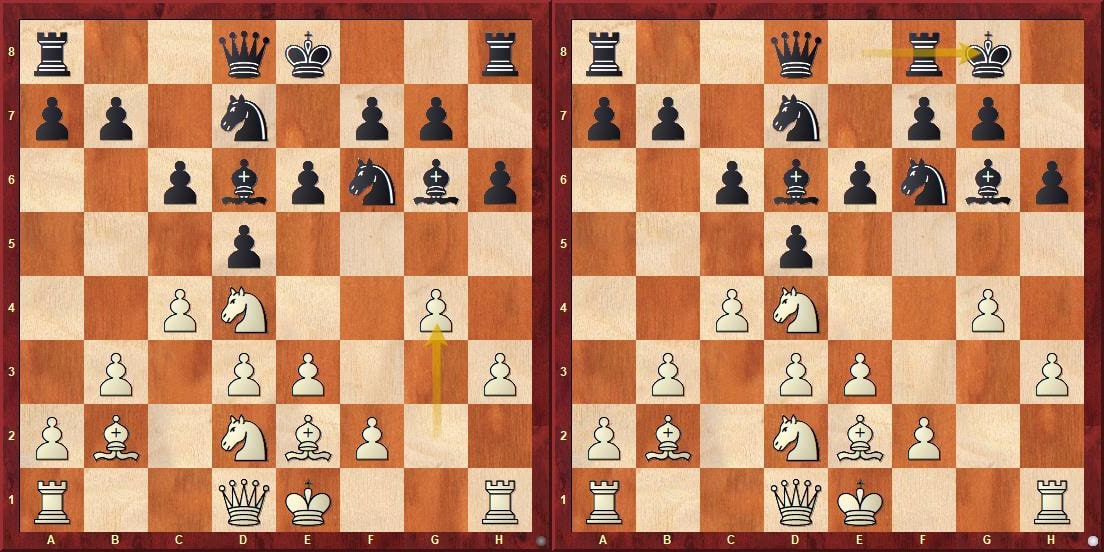
White has just played 11.g4?, to which Yagiz, even though only after nearly 25 minutes, replied 11…O-O!. White, however, was still dreaming of an attack! Who knows, maybe he even rejoiced that the fog had cleared and a target appeared before him, so he continued 12.Rg1.
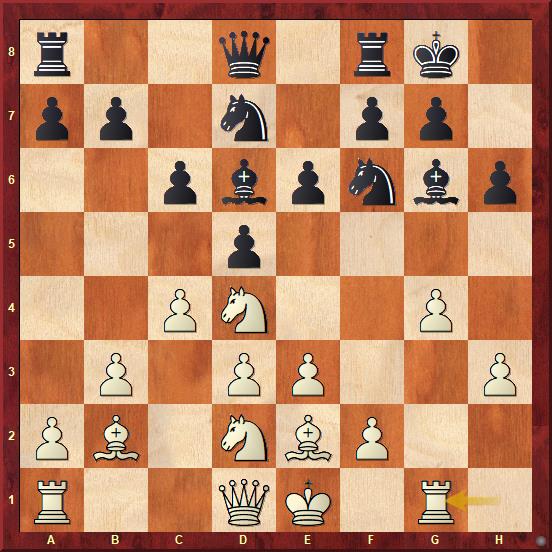
We simply cannot deny the classical upbringing that Erdogmus apparently receives in full measure and surely will continue to receive. What followed was 12…e5!∓
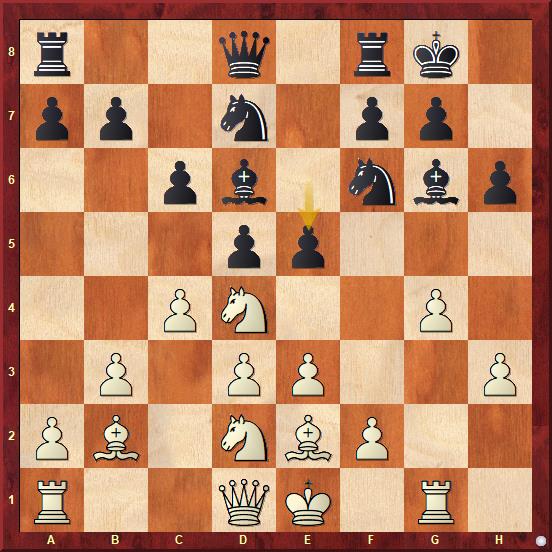
Let us recall Nimzowitsch (a paraphrase of a Rubinstein game from the book My System): „A flank action can never break a strongly centralised game! And Black's position is centralised!“ After 13.Nf5 Bxf5 14.gxf5 Qe7!
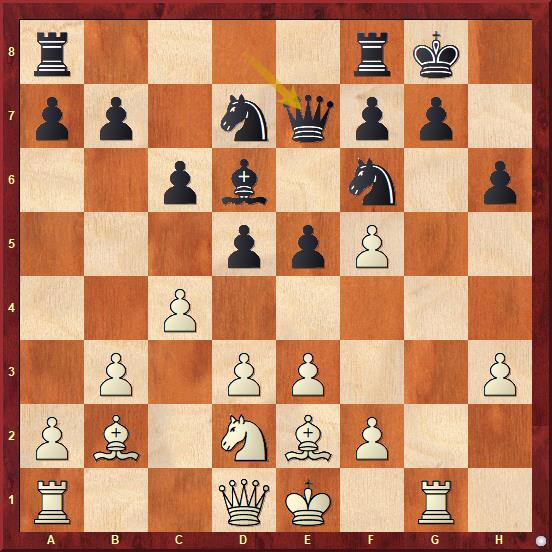
Black retained a huge positional advantage! White could only bring his attacking plan on the open g-file to a successful conclusion if we gave him some extra tempi (I mean about 3 to 5 moves 🙂).
Again, I recommend watching Nakamura's video, where he quite thoroughly explains the reasons for Black's great advantage, the battle of strong centralisation vs. attempts to act along the g-file, and other issues. Yes, Hikaru uses a different vocabulary than those who grew up on the chess literature of the former USSR or even the German chess school (Tarrasch) or other classics known to us today (Nimzowitsch), but the conclusions are obviously identical!
As a coach, I was also quite curious what Yagiz himself would say about the critical position (that is, from a didactic point of view)! Here I add a short post-game interview to watch. Just a note: let us keep in mind that Erdogmus is really only 14 years old!
The method of bearable risk, part two
or „the fight for the centre from the wings.“ I hesitated how to title the final chapter of the article about „a fairly normal tournament“ in Malmö, Sweden.
It would be impolite not to show at least one game of the second actual winner of the tournament Arjun Kumar Erigaisi. Moreover, I believe that in „normal times“, when the tournament winner was not decided by blitz games but by tiebreaks, a playoff, or both players were declared winners, one of the criteria for secondary evaluation – when Sonneborn-Berger is equal – should be the number of games played with the black pieces. (I add that this is not a novelty I just invented.)
Unlike Carlsen, Arjun had to face some rather unpleasant opponents with the black pieces: Magnus himself, Abdusattorov and Erdogmus. That is, all the other three 2700+ players!
In the game of round 6 Zhu,Jiner vs. Erigaisi Black had to solve the same problem as some other super grandmasters. The question was: „I want to win with black, which opening should I play?“ However, the answer was somewhat different, because this time it was expected that the Chinese player would choose 1.e4!
And just as I was pleased by Carlsen's choice of the King's Indian Defence in round 6, luck struck a second time! Arjun chose the Pirc-Ufimcev Defence! And not just any version. Against the still most dangerous setup with an early Be3+Qd2, he chose my once favourite black formation.
Just as I once „picked up“ from the Soviet grandmaster Gennady Zaitchik and partly from the then Danish master Carsten Høie.
1.e4 g6 2.d4 Bg7 3.Nc3 d6 4.Be3 Nf6 5.Nf3 0-0 6.Qd2 (Black played a different move order in the game)
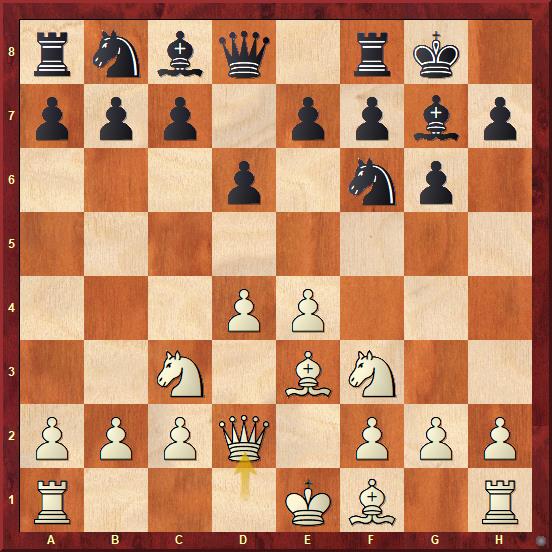
When it was definitively established sometime in the early 1980s that the knight sorties Nf6-g4 not only do not bother White but Black actually suffers, it naturally ceased to be considered necessary to take prophylactic measures like f3 or h3. Thus White in a way saved a tempo and suddenly problems were brewing.
Personally, after hundreds of hours of analysis, I reconciled myself to the fact that Black simply faces certain problems in this move order, and when Evgeny Ellinovich Sveshnikov started „poking“ into the situation (here, for example, instead of Nf3 White could have castled queenside or played f3), I slowly began to shift towards systems without an early Ng8-f6; I preferred 4...a6. In that case, it is already a „pure“ Ufimcev Defence.
What almost shocked me in the opening of the game? (Well, my fault for not following the development of the Pirc-Ufimcev Defence for some years.) In the position after 6…a6 7.Bd3 Nc6
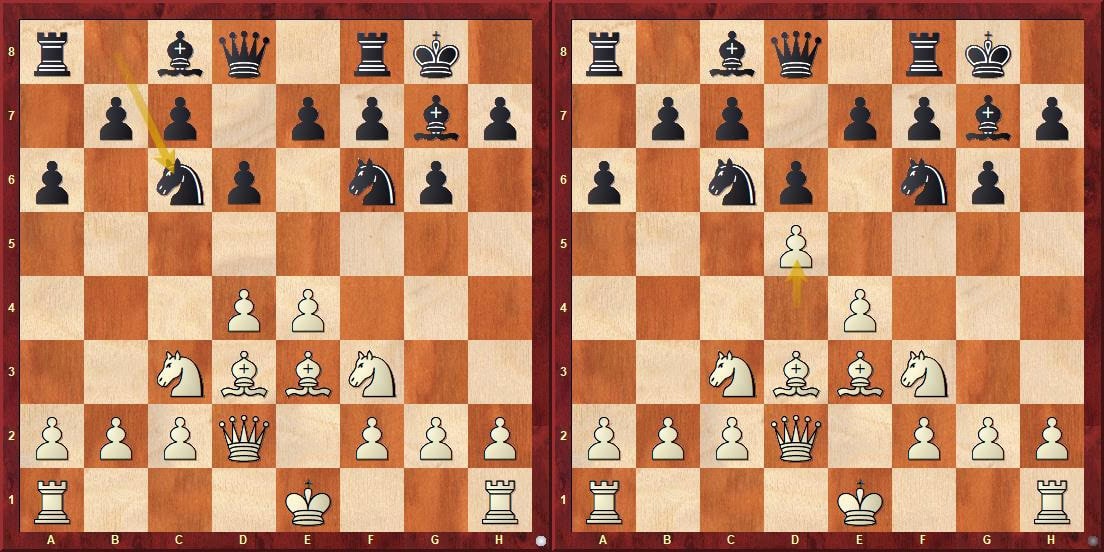
8.d5 Erigaisi responded after 29 seconds
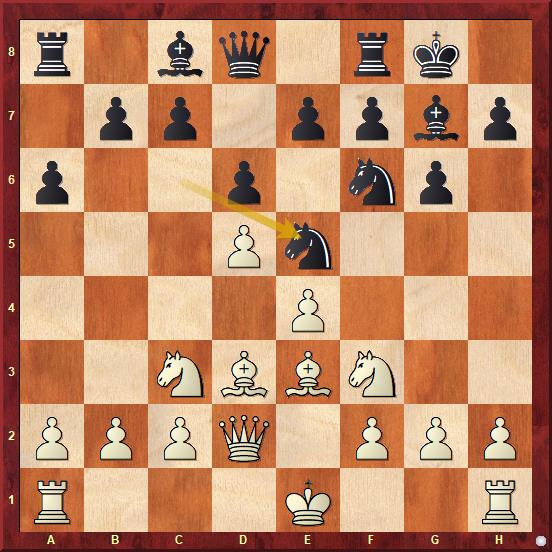
8…Ne5! At the time when I was playing the Ufimcev Defence in almost every game (as I have already written, theory began to discover serious dangers in these lines with an early Be3+Qd2 – without f3 – around the early 1980s), I considered the knight jump to the centre inferior. (Regardless of whether a7-a6 was played or not.)
The reason was that after exchanging knights, the „KI diagonal“ closes, and Black – to reopen it and also get rid of the doubled pawns – must play e7-e6. But then the d-file opens and White can quite easily simplify the position. My considerations usually did not go that far at the time, but to the advanced pupils I taught the Ufimcev Defence, I explained the whole issue roughly like this.
In short – we only retreated the knight to e5 if White could not exchange knights and thus „tame“ the heroic Ufimcev, but especially the King's Indian, bishop.
Well, as you can see, one learns all life! The database shows that knight retreats to b8, b4 and a7 are played, but the jump to the centre is not only acceptable but according to engines perhaps even the only correct move!
In a complicated and unknown position for White, mistakes had to occur… by White. So I dare to reminisce a second time, this time about how I devoured the strategy from Lipnický’s book „Questions of Contemporary Chess Theory“ (Kyiv 1956).
The chapter „Fight for the centre from the wings“ is introduced by Isaak Oskarovich with a diagram from the game Botvinnik vs. Smyslov (wch19/m2 Moscow 1954). Black had just captured a pawn with the move
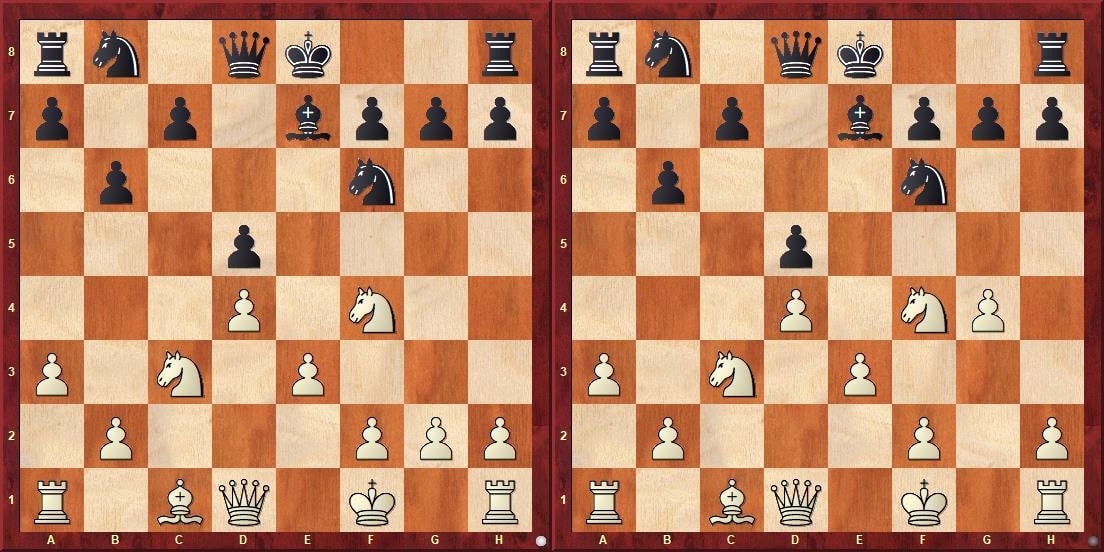
9…exd5, after which followed 10.g4! The fight for the centre from the wings also fulfils other positional demands. I have inserted the game with comments by the 13th World Champion Kasparov into the viewer alongside Erigaisi’s game.
Nevertheless, there is one caveat here too! They wouldn’t be engines if they didn’t dig into the position, invite Madam Dynamism to visit (Kf1 could be a good reason – a motive for submitting a request 🙂 ) and find a way to worthy counterplay! Of course, I have supplemented Kasparov’s notes at this point, but I also cannot resist using the diagram on the right to set a small test for truly advanced readers!
How would you best continue if you were Black?
Let's return to our game. Zhu Jiner made her first inaccuracy with the move 11.Bc4?!
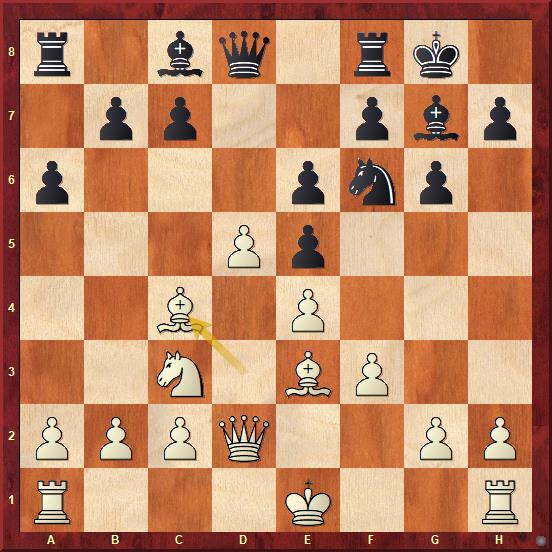
This was followed by a brilliant, methodical sequence perfectly suited for the mentioned textbook 11…b5! 12.Bb3 b4! 13.Na4 exd5 14.exd5
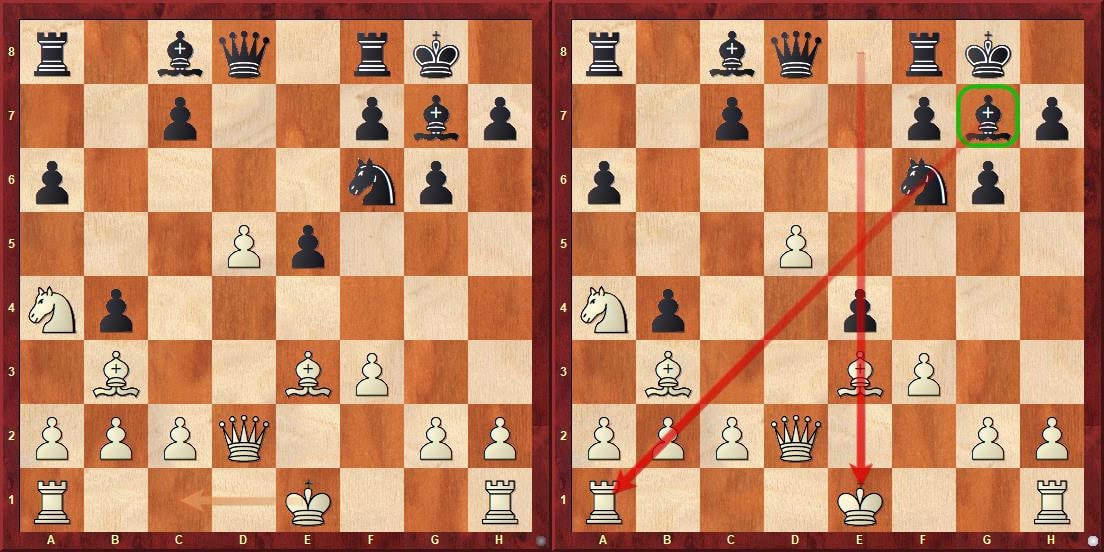
14…e4! not only with beautiful counterplay, but in practice certainly also quite an unpleasant initiative. Madam Dynamika has just found her element!

Arjun himself praised his opponent very, very highly in a brief post-game interview!
„After Magnus“ for the second time, or maybe the third?
So Magnus Carlsen has won another tournament for „us“ in Malmö. And yet I clearly remember the slim book After Magnus, published by Anish Giri in 2015. The very title posed the question of who would come after Carlsen – who would take over the reign of world chess. The cover featured players who were meant to represent the future. Among them was also the then almost boyish Wei Yi.
But eleven years have passed, and looking at the results of today’s tournaments, one might almost think the author could publish that book again. Just – hopefully – with somewhat different faces on the cover. And he would have to admit one thing, whether he likes it or not: although someone else holds the classical world champion title today, the aura of the strongest player on the planet still hovers around Carlsen. He still gives the impression of a chess player whom opponents fear perhaps even before the game begins. (I wouldn’t even dare guess what percentage of points this, let’s say, added value of his name brings him!)
Still, I have a feeling that this time something is really changing. The rising generation grew up in the era of neural networks, huge competition and nonstop online chess. And perhaps that is why they will not step back before Carlsen with the same respect as the previous generation. Maybe the time is finally approaching when the Norwegian monster will not only be admired but also regularly defeated.
And actually, I myself wrote several years ago that „clouds are gathering in the distance“. But no real storm came in the end. Carlsen remained Carlsen. However, maybe this time the distant sky has darkened a bit more than before.
Let’s wait and see…

The player below contains all the examples once again.