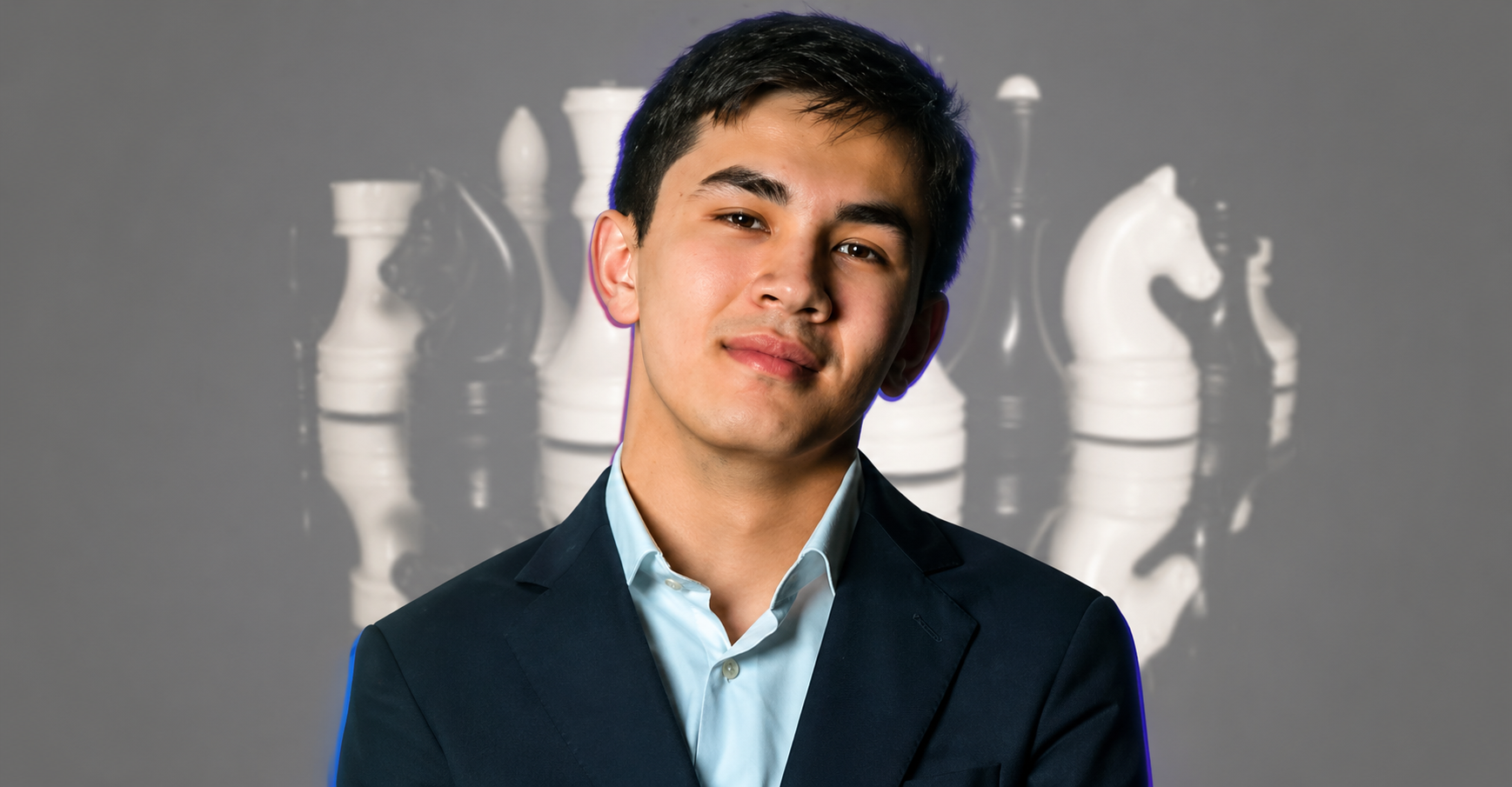


When I wrote the article „How the small centre is demolished! Sensational miniature by 17-year-old Javokhir Sindarov in the catacombs of the accelerated King's Indian“ two and a half years ago – in November 2023 – I knew the Uzbek youngster could grow into a super-grandmaster of the highest class in a few years. But I never imagined that on 14 April 2026 he would become the challenger for the World Championship title! And the unprecedented way he went through the tough tournament, becoming the certain winner a round before the end, shows that we witnessed a performance that will be recorded in chess history in a truly exceptional way. India has recently seen a decline in its male chess stars, confirmed also in the Candidates Tournament. However, joy came from the Women's Candidates Tournament, which after great drama was won by – I would say a born mathematician and fighter – Vaishali Rameshbabu.
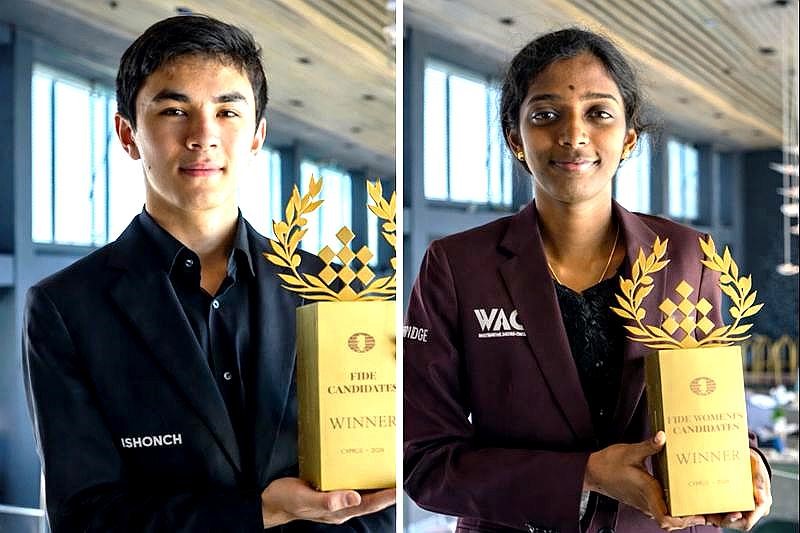
Sindarov not only dominated the tournament with a record score and a historically unprecedented lead over the rest of the field, but above all he delivered an almost flawless performance: he completed the entire tournament without a single defeat and was only threatened in one game.
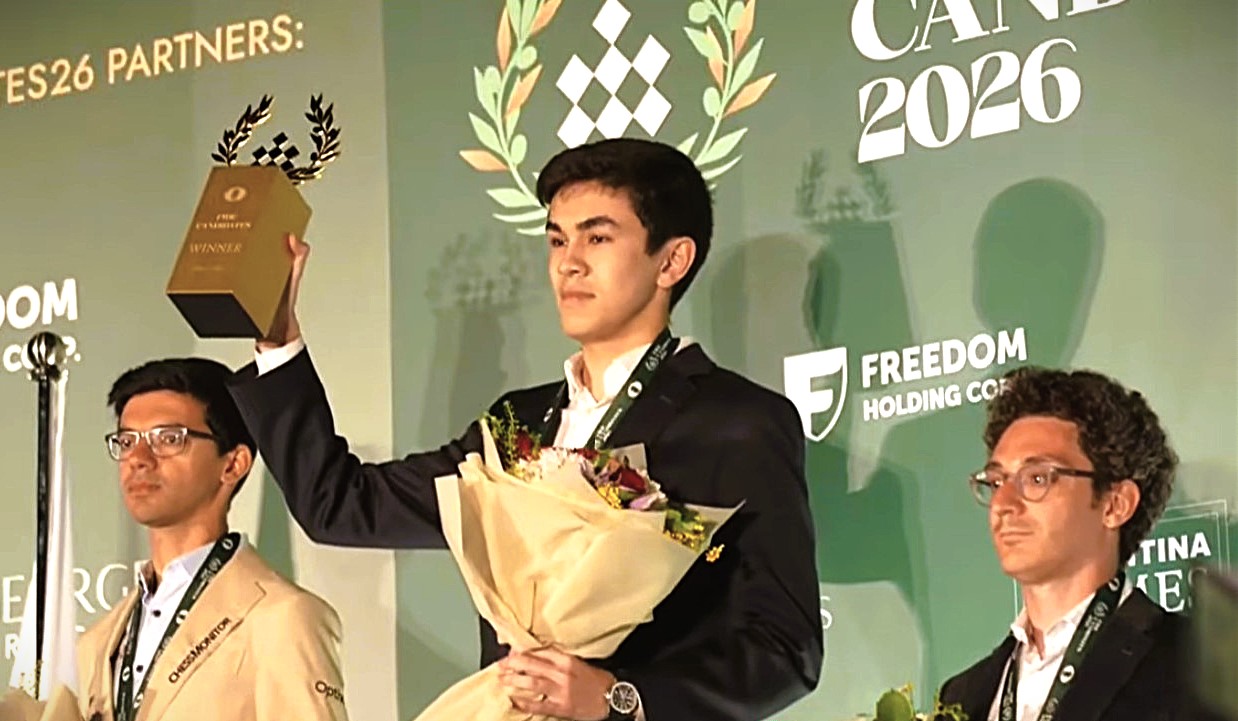
Javokhir Sindarov is not the youngest winner of the Candidates Tournament, but his best result in the modern era (since 2013) may be even more significant!
Combined with his perfect preparation, dynamic style, precise and fast calculation, and healthy self-confidence, this created a whole that can without exaggeration be described as one of the most dominant performances in the history of Candidates Tournaments.
Let's take a look:
Overview of Candidates Tournament winners (since 2013)
- 2013 Magnus Carlsen → 1 loss
- 2014 Viswanathan Anand → 1 loss
- 2016 Sergey Karjakin → 1 loss
- 2018 Fabiano Caruana → 1 loss
- 2020–21 Ian Nepomniachtchi → 1 loss
- 2022 Ian Nepomniachtchi → 0 losses
- 2024 Dommaraju Gukesh → 1 loss
- 2026 Javokhir Sindarov → 0 losses
Anyone who wants to look deeper into the statistical data just needs to click on the following files.
History_comparison_candidates_after_round_7
History_comparison_candidates_after_round_14
With a performance of 5.5 points out of 6 – and at the halfway point 6 out of 7 – Sindarov secured such a lead that in the second half of the tournament he only needed, as they say, to „play for maintenance“. However, such a strategy could have been thwarted by the black pieces in games against his biggest rivals Caruana and Giri.
But when he added another win in round 10 and climbed to a historic +6, not only did it seem decided, it really was.
And what a surprise it must have been when a congratulator's voice came from Javokhirov's mobile... President Mirziyoyev!
In our article, of course, we will give the greatest space to Sindarov's work, even though the number of beautiful moments (combinations, necessary blunders and other interesting moments) would probably be enough for several more instalments...
How did it all end?
Let us first calmly look at the final results of both tournaments:
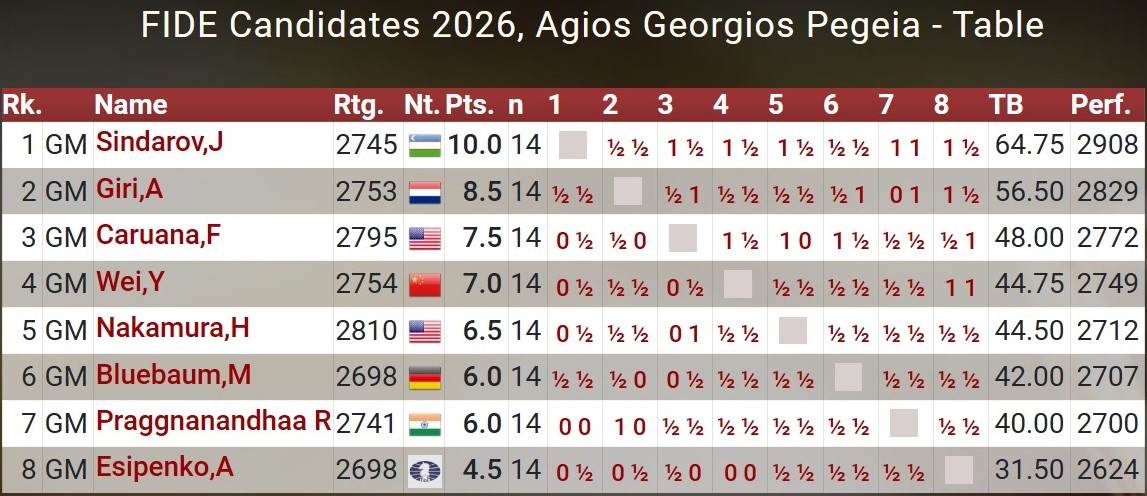
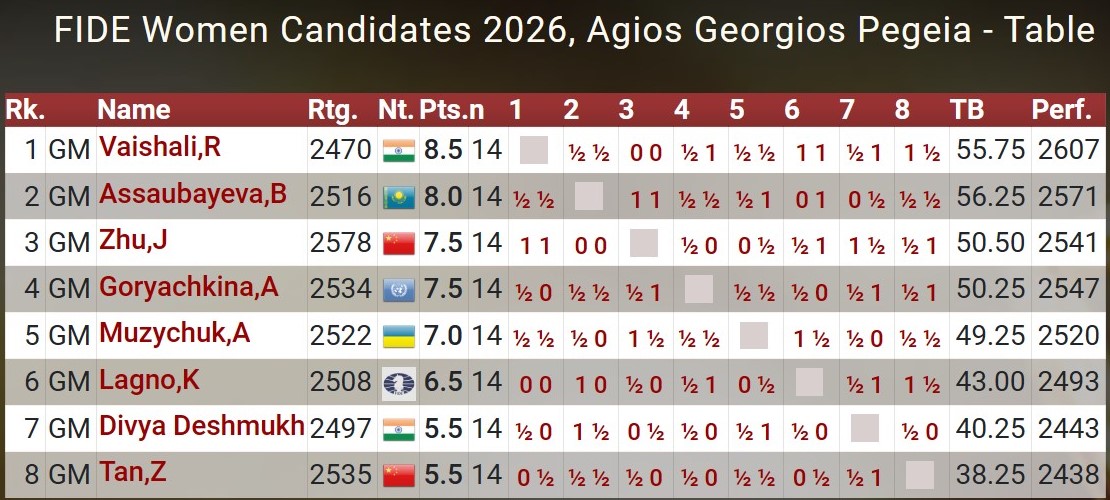
Drama until the last shot
Let's give priority to the ladies. While in the Candidates Tournament everything was clear after round 13 and practically even earlier, the Women's Candidates faced a final extraordinarily dramatic round. The mathematical model of possibilities was incomparably more complicated here and the situation looked like this:
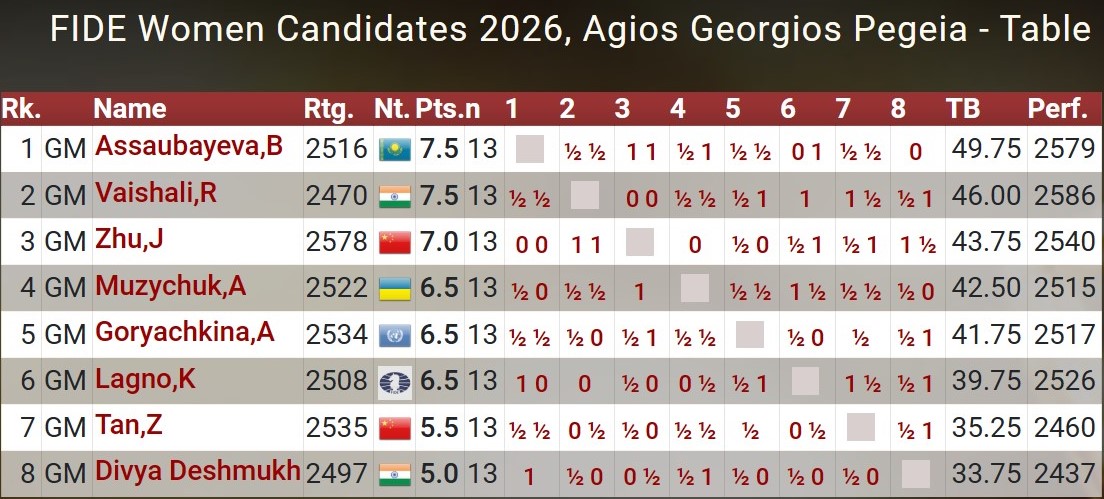
Because as many as six (sic!) female players could become the winner (in the event of equal points, naturally, a tiebreak was in play). What openings will probably be played in the key games? Vaishali vs. Lagno a Deshmukh vs. Assaubayeva?
So let's get to it!
How would you, dear readers, respond with Black against 1.e4 if you had to win (a loss or a draw is the same), but at the same time you knew that White was not much better off? Vaishali naturally had to keep an eye on her rival, but given her famous fighting spirit...
It was therefore no surprise that the Sicilian Defence appeared on the board, White opened it and later the Dragon arose in its traditional form. Specifically, the Rauzer Attack with 9.0-0-0 and the Konstantinopolsky system with 9...d5.
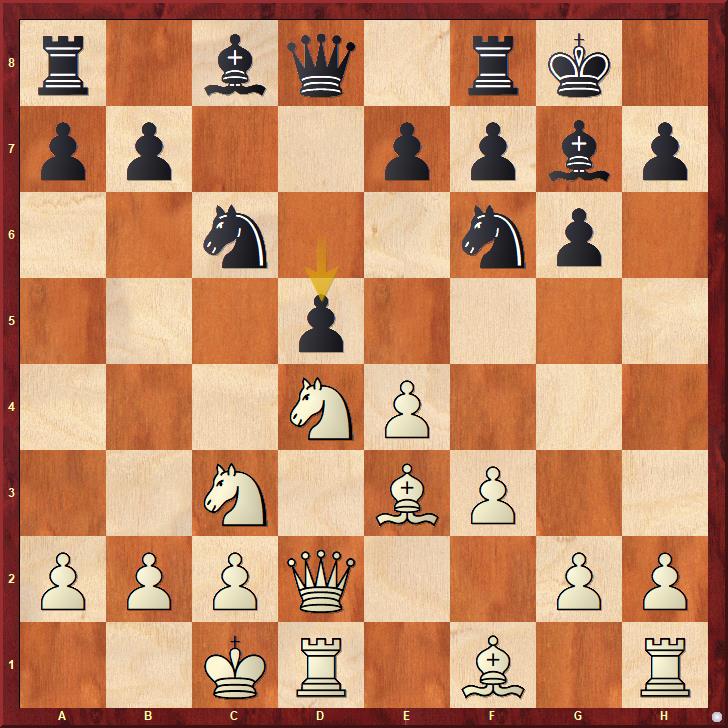
The continuation of Soviet grandmaster Alexander Markovich Konstantinopolsky (1910–1983). The Russian grandmaster had experience with this position, but in my databases I found only games in which she played White. Regardless of this fact, however, Vaishali's coaches and seconds could quite realistically expect both the Dragon variation and this position. (The winner herself stated in a post-game interview that the „surprise“ was not originally intended for her opponent. Well, to think that „variants hidden in drawers“ are only men’s prerogative would be very naive today!)
Followed by 10.Nxc6 bxc6 11.Bc4 (!).
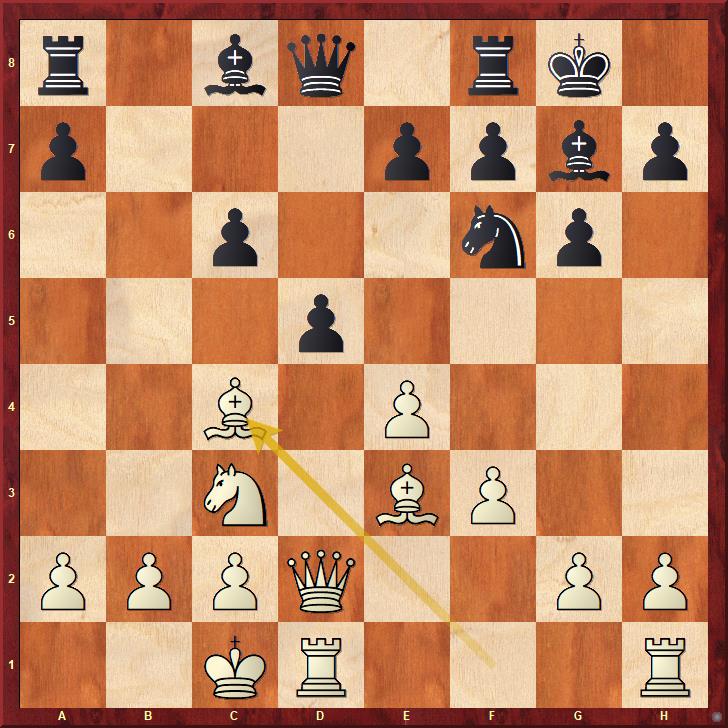
A perfect surprise! Black spent a full 32 minutes on the reply!
If we encounter a surprise of this calibre in the opening, choosing the right response is a true and genuine science. We must take into account not only the realities of the position but also specific factors including psychology...
I do not follow the development of the Konstantinopolsky variation very closely or regularly, so it took me a moment to dig out the appropriate information from memory: „Yes, I have seen this before and analysed it briefly a few years ago.“
However, this alternative, or if you will „combination“, made no particular impression on me. Anish Giri devotes only a short paragraph to the line in his book „The Dragon Sicilian“ (2022), while Eduard Gufeld and Oleg Stecko do not mention it at all in their monumental, but of course pre-computer, 2003 work.
Of course we will learn more in the game analysis, but I will ask anyway: How would you continue as Black?
In the second game Divya Deshmukh vs. Assaubayeva Bibisara White actually gave her equally young opponent no chance. In fact, only Divya could have won it. I cannot resist sharing a beautiful and at the same time relatively complex combination, which unfortunately remained behind the scenes!
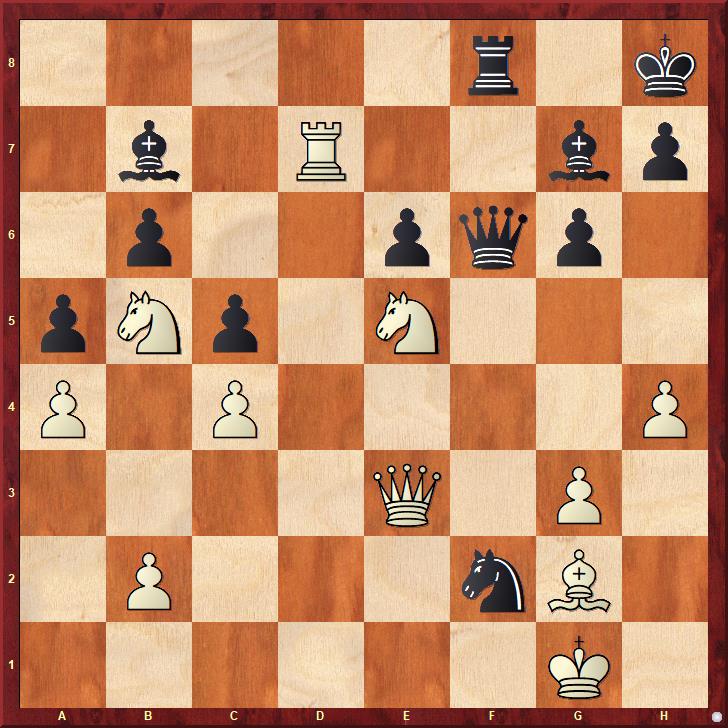
How would you continue in the diagram position and which variations would you calculate?
The first two examples from the final battles of the Candidates Tournament are available here for study. So not only admirers of the Dragon in its traditional form or readers who occasionally encounter Benoni pawn structures should pay attention to these examples. And of course, you can check the solution of your calculation.
Here is the shortened record of the decisive game:
Excellent analyses of both decisive games can be seen in the video by GM Sergei Makarychev. From his words, it appears that he analysed some games even during their course!
And here is a video from the press conference of the happy winner, which followed immediately after the end of the game.
Now let us move on to the main event – the Candidates Tournament!
First the final: the move that ended all doubts
58…Kc6=
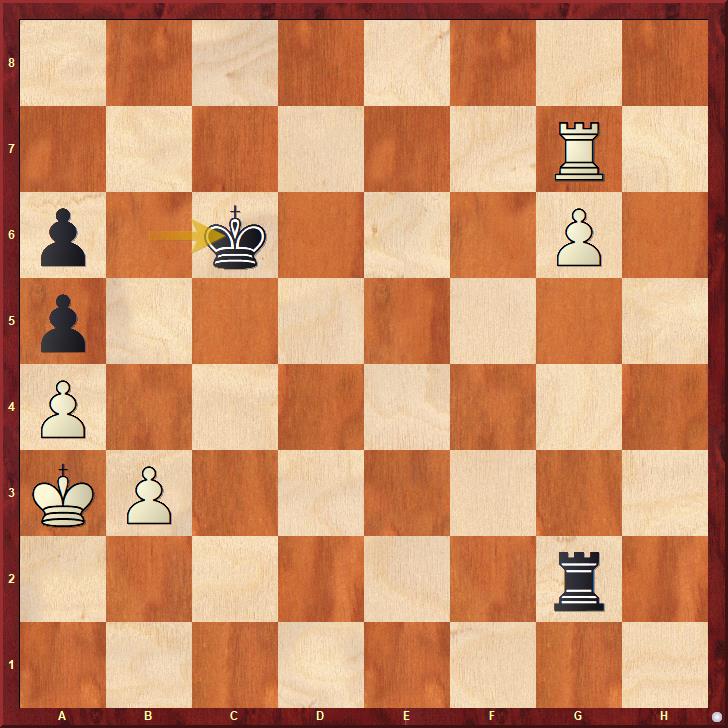
The last move in the 13th round game Giri vs. Sindarov. Threefold repetition and a draw! Only at this moment did Javokhir Sindarov become the official challenger to the World Champion. (Before the game of the penultimate round itself, the odds were „only“ 54 to 1 in his favour – a little mathematical exercise certainly won’t hurt anyone.) 🙂
And what preceded this final position? Simply put, the classical chess education of the new challenger!
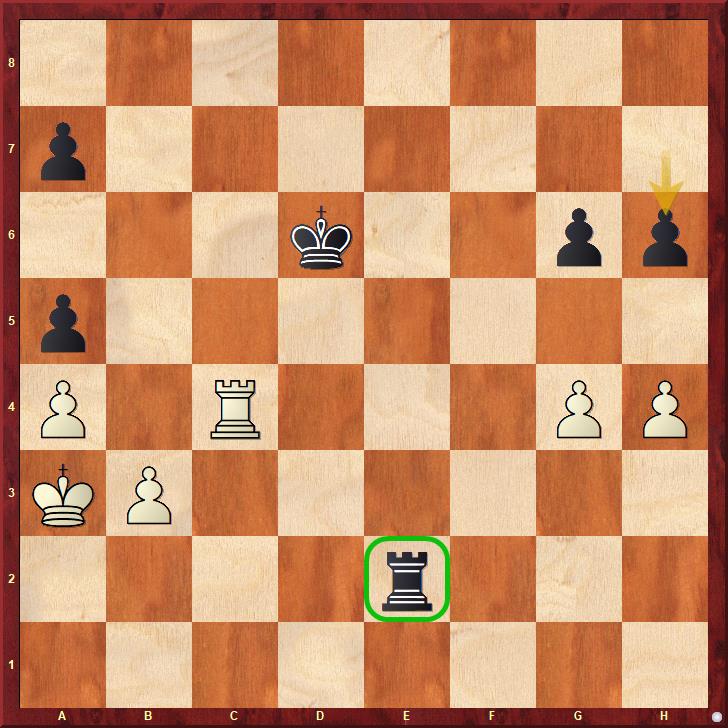
At this stage, Sindarov saw a clear path to a draw. Although he sacrifices a pawn, the active Tarrasch rook allows him to build a fortress.
Black obviously has several ways to handle the endgame and steer it to a draw, but further simplification with a transition to theoretical endgames probably seemed the easiest to him.
This is exactly where classical chess training (training based on patterns from the past) fully manifests itself, which was given to Uzbek players as well as some other young players from the former USSR… but not, at least in my opinion, fully to the Indians! However, this will undoubtedly be discussed many times during the year, not only in my article or articles.
Challenger thanks to Covid?
In an interesting interview that took place immediately after Javokhir became the challenger, he admits and at the same time explains… the importance of motivation!
He became a grandmaster at 13, but then he was overtaken by satisfaction and what I have long called the „plague of young talents“ began. (Of course, in a different scale, I believe every coach has noticed this.) Instead of ten-hour training sessions, which Gukesh or Praggnanandhaa managed, Sindarov was captivated by computer games and other interests. These were precisely what distanced him from hard work.
So here we have an explanation why we practically knew nothing about him at fourteen or fifteen years old. He himself says in the interview (paraphrase): „While Praggnanandhaa had a rating of 2,650, I was stuck at 2,550!“ (Both were born in the same year.)
Life is full of paradoxes, even those who are not exactly fans of matrix or simulation hypotheses must admit that: Sindarov has recently given us a video interview, which we can watch below, among other reasons, because… Covid-19 was launched and the long exhausting struggle with computer games was beginning to wear him down. And so he „returned to good old chess“!
And this time I believe this explanation because it seems logical to me… unlike the popular story of Hans Niemann, who supposedly became what he is today thanks to the pandemic, rising from a 2,400+ player at seventeen…
The iron nerves of the young challenger
In my opinion, a very important role in Javokhir's case – just as at the World Cup – was played by his amazingly strong nervous system. True, we could not „verify in practice“ how he would behave if he also experienced the bitterness of defeat (do you remember when he last lost a serious game?), but I would bet my life that he definitely would not have collapsed.
That certainty, sovereignty, faith and trust in his variations: these factors significantly contributed to the fact that he did not win the Candidates Tournament at 17 like Gukesh did two years ago, but with an unprecedented dominance in a start-to-finish style.
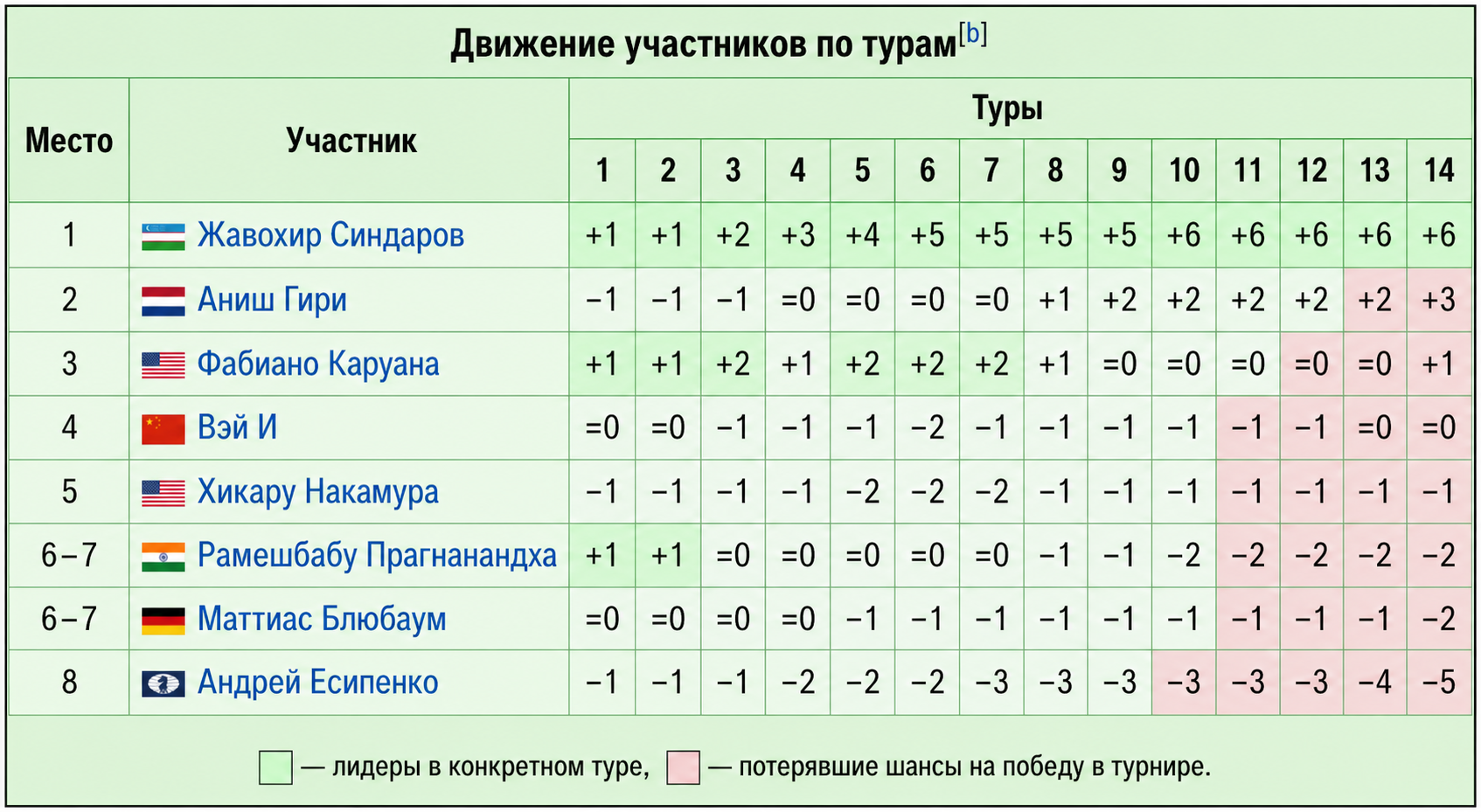
The progression table and statistical data can also say a lot. Sindarov's lead is simply astonishing. And let's add „bad luck“. Javokhir was not – except for the first-round game against Jesipenko – even theoretically (!) threatened in any game.
On the contrary, in the game against Blübaum, it was enough to make a few strong moves and a potential +7 would really have meant a cosmic lead: the comparison of the speed of sound with the speed of light suggests itself: thunder versus lightning!
Under normal circumstances, I would divide the article into groups, main chapters: tactics and calculation of variations (errors, tests), the most interesting moments of the tournaments, enrichment of opening theory (novelties and surprises) and of course must not be missing Javokhir's creations. However, articles are not expandable, I am not planning to write a book, so the theoretical window and many interesting moments will not fit into the contribution (I still had to divide it into two parts in the end). They simply have to be left aside. Should they wait? We shall see!
Most readers will probably be interested in Sindarov's journey through the tournament and the creation of…
The most beautiful tactical moments
Blunders or not, precise calculation and outright slips… this time I kind of mixed the chapter of examples together. Although I am – as readers know – a fan of the charismatic Indian star and Woman Grandmaster Divya Deshmukh, I was thrilled by the example in which she probably missed a win in the game against her compatriot and eventual winner.
So the 2nd round of the Candidates Tournament is being played Divya Deshmukh (2497) vs. Vaishali, R (2470). In the game – and the usual time trouble – Divya continued 37.Qg3.
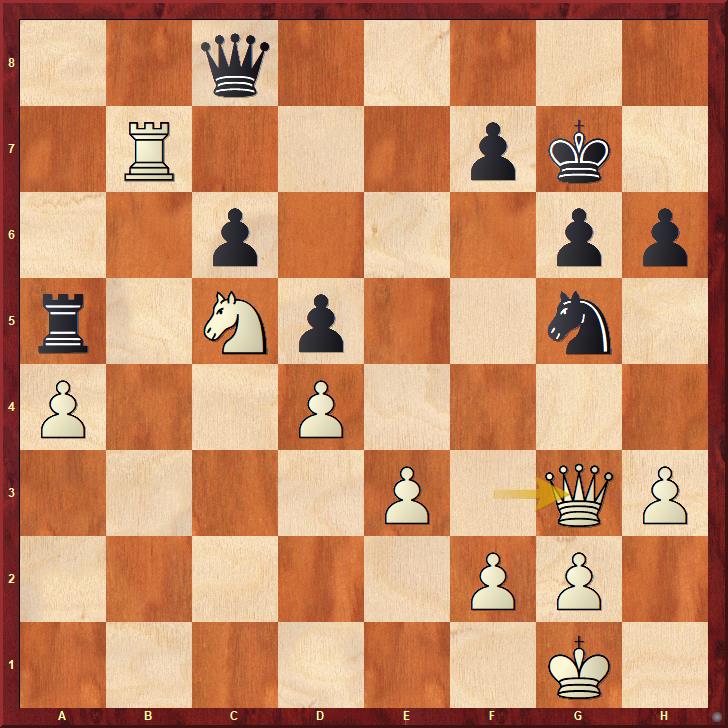
Imagine the following sequence in your mind: 37...Rxc5 38.Qe5+ Kh7 39.Rb8
Calculate the variation according to the principle of calculation and decide how Black should continue. However, give the entire variation, not just a single Black move.
„What’s with you and this calculation all the time?“
one of my pupils said to me many years ago. I have the habit of hammering into (not only) children’s heads – literally annoying them – the concept of calculating variations. What is it about? I call it the first pillar of correct calculation technique. In the theory of calculation I developed, the calculation is not represented by Kotov’s tree, but by a bridge. It rests on three pillars, the first of which I have just named the principle of calculating variations, or simply calculation.
Let us now look at what such a bridge with three pillars and chess players looks like.
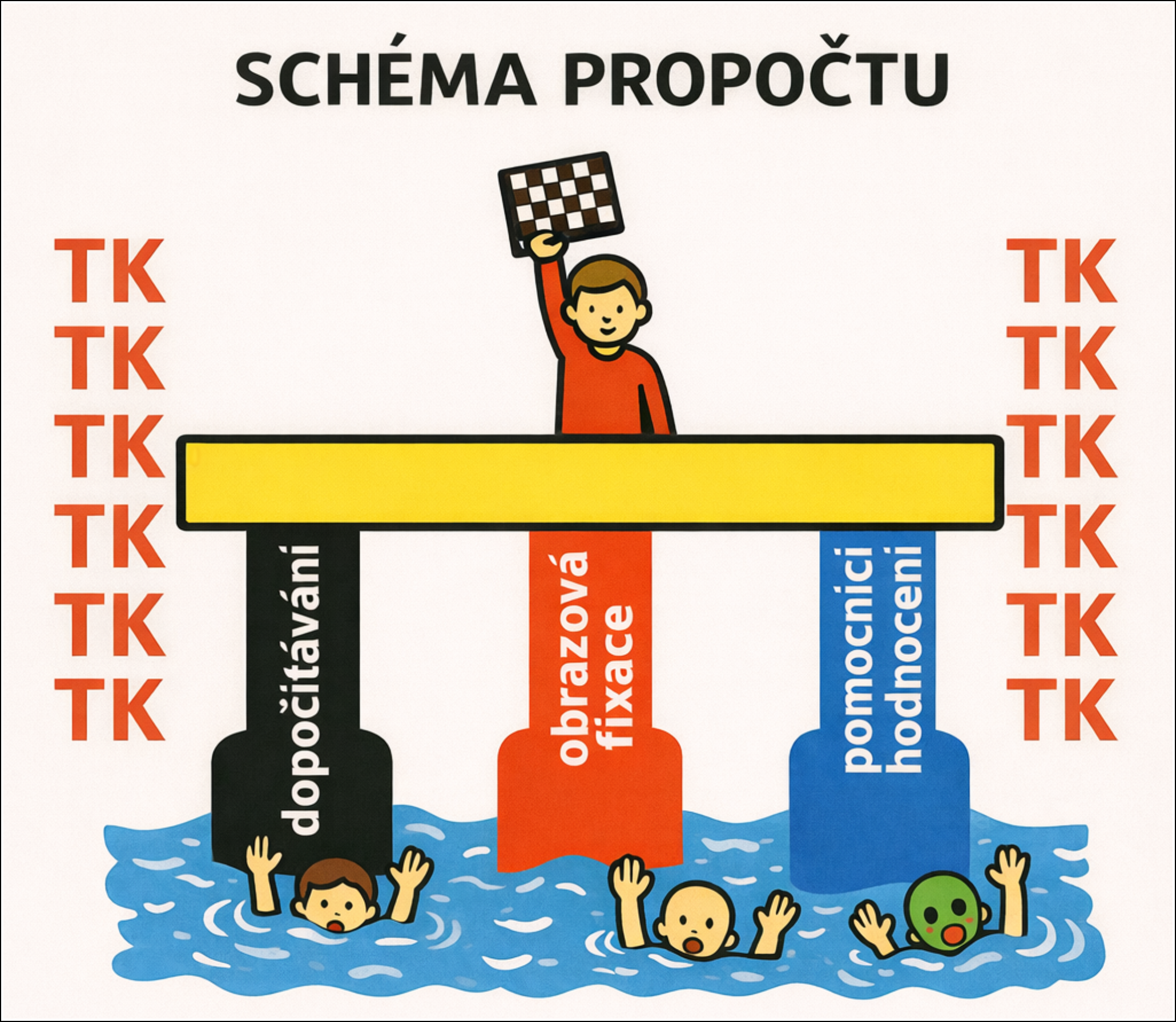
The principle of calculation says: „Do not end the calculation if the position contains checks, captures or strong threats!“
Drowning chess players, including the Halloween alien, are quite possibly those who failed to follow the basic principle of calculation (for them, simply one of the pillars did not hold and broke). In the solution below, we will see that White made the same mistakes when playing 37.Qg3.
The mysterious and ubiquitous „TK“ means nothing other than candidate moves. Not only more experienced chess players can recognise an internet or newspaper article written by AI almost immediately. However, chess players recognise this even faster! Allow me to instruct you, dear readers: As soon as you find the phrase „candidate moves“ (from the Russian ходы кандидаты) replaced by „candidature moves“ in the text, know that it was written either by a chess illiterate, some fool (there will be more about them in the article), or by AI. Thus, artificial intelligence reveals itself as surely as long English dashes, which only fools use (—), or missing declensions and mangled names. A true, genuine and double Fool then does not consider it necessary to read their published text, and therefore not to correct it.

a statue of the Fool by Czech sculptor and painter Michal Olšiak is located at the Old Court in Žďár
The most beautiful combination of the tournament
If I were sitting on the jury and had to decide which of the following two combinations should receive the main prize, I would hesitate. Well, judge for yourselves, dear readers. In the following diagrams, it is necessary to also use the principle of calculation, even though in surprising and hidden strikes usually another skill predominates. Mark Dvoretsky called it imagination, and it is popularly known as combinational intuition.
We will give preference to the women's tournament. In the game Tan Zhongyi (2535) vs. Lagno, K (2508) the Chinese player made the last blunder in a game full of mistakes. In the position of the left diagram, she just played 42.Qxd5??.
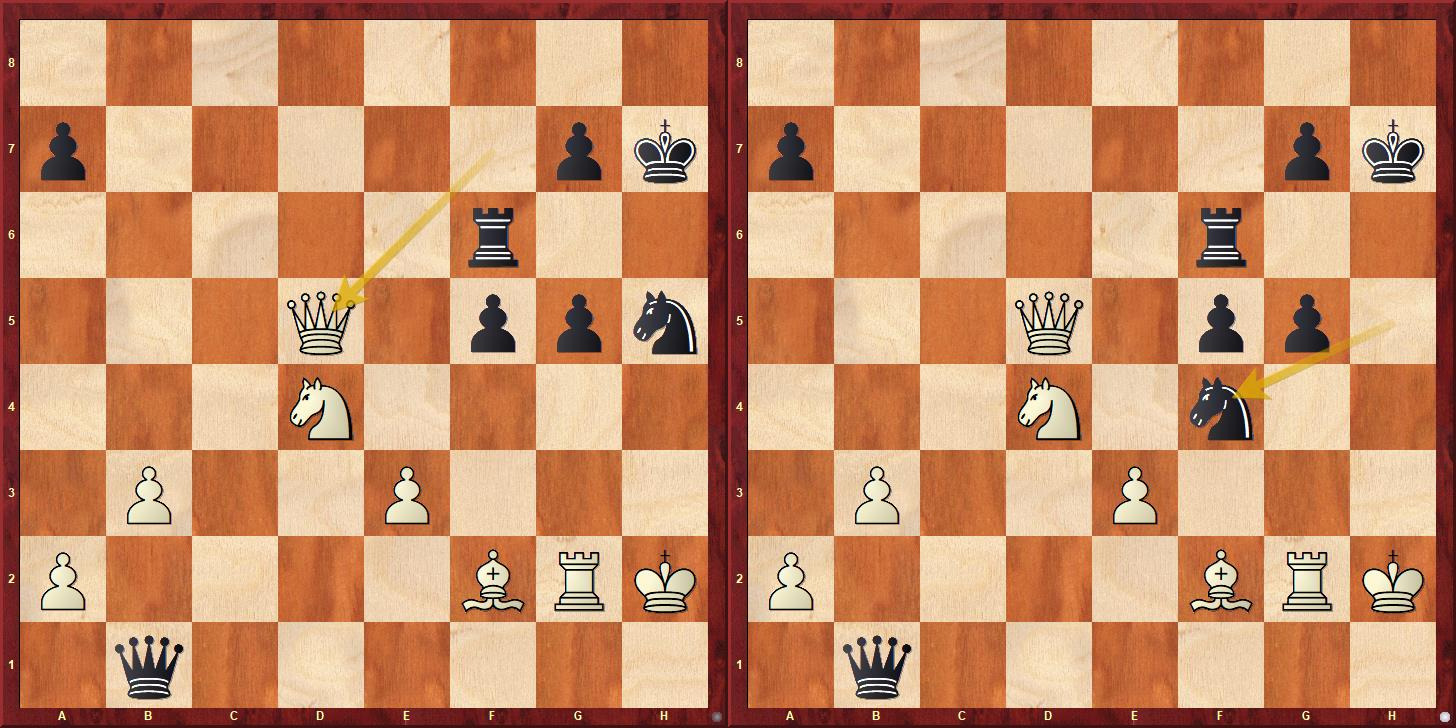
Black had no choice – yet I would of course be interested whether she saw the winning combination to the end already at this moment. What followed was a crushing 42…Nf4+!! The first combinational strike with the idea of uncovering the line – the ‚h‘ file. After 43.exf4 Rh6+ 44.Kg3 Qd3+ 45.Qf3
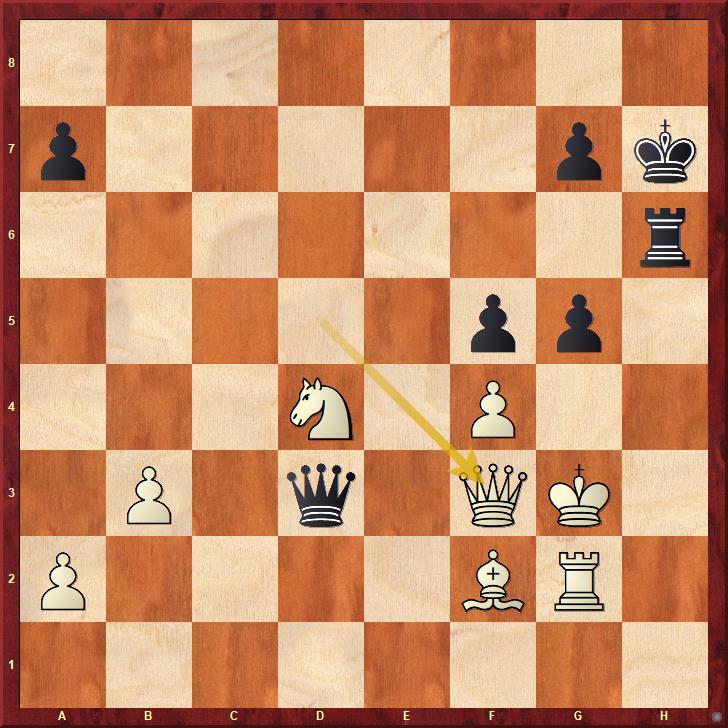
we face the position of the next diagram. Precisely because of the following „silent bomb“ I consider the end of the game a candidate for the prize of the most beautiful combination in this year's tournaments.
How would you continue as Black?
The true gem was then the end of the game Caruana,F (2795) vs. Giri,A (2753) played in round 9. Anish Giri outplayed his opponent and in the position after 42.Qd3, which is shown in the diagram
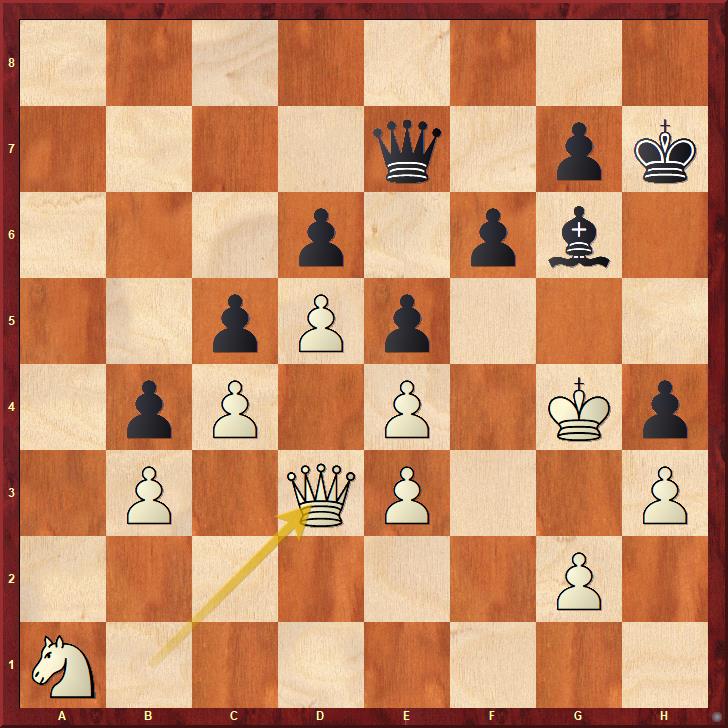
not only is winning outright, but according to engines even forces mate. Yet, the way the Dutch grandmaster handled the position… well, it is something unique. What followed was 42…f5+!!.
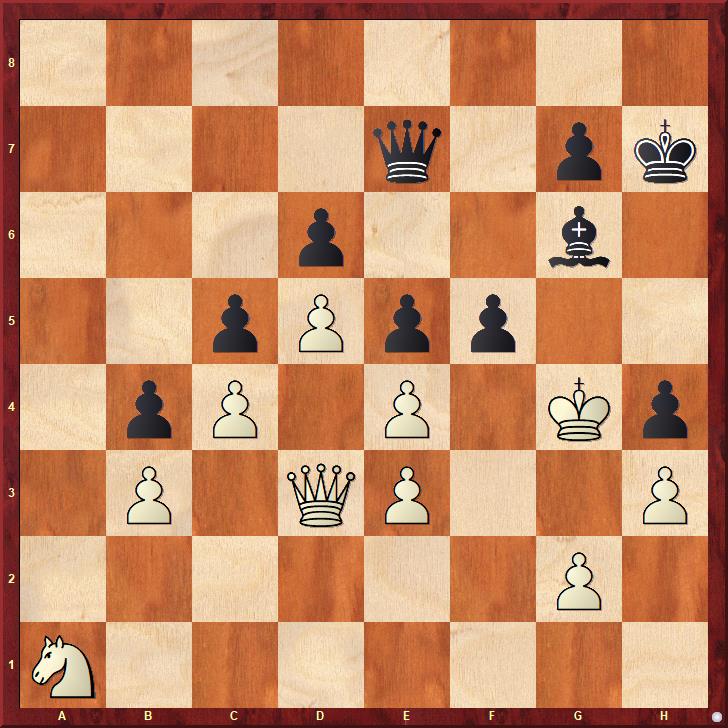
What did Giri have prepared after 43.exf5?
At the post-game press conference, Anish Giri explains how he discovered the entire combination, as well as many other interesting details.
In the CB player, we can then check the results of our solutions to the given tests.
Fashion is fashion!
If we compared this year's Candidates Tournament with previous ones, as well as with other top-level competitions, we would occasionally encounter strange and surprising changes. As for the result rate, I estimate it probably won't differ much from other Candidates tournaments. It is simply lower because players from the lower half of the table usually have „nothing to fight for“ towards the end. But when we look at the statistics of popular openings, there is suddenly something to think about!
For example: Have you noticed that in the men's tournament there was not a single Ruy Lopez? And the once so popular Italian Pianissimo appeared only once? And what about the popularity of the Russian Game? Especially with White completely ignoring the main lines!
In terms of opening popularity, the Candidates Tournament most resembled the historic Capablanca vs. Alekhine 1927 match – orthodox Queen's Gambit everywhere, and a crushing dominance of closed games.
Many fans, but also knowledgeable experts – or rather pseudo-experts – wondered why the Candidates Tournament is played without increment for the first 40 moves. Players receive a 30-second bonus only after the time control. (According to the statement of FIDE Secretary General Emil Sutovsky, the women chose a different time control.)
I do not want to defend FIDE, but hopefully the reason is also a certain „respect for history“! In my opinion, it is right that matches for the highest title are played without an initial bonus, even though it is clear that the traditional pace of 2.5 hours for 40 moves – which was played for decades – is probably becoming impractical today…
Sindarov's games: how victories are born
One could certainly follow and analyse all 14 of Javokhirov's Cyprus games. His dynamic playing style and all 6 wins – they are simply one gem after another.
In the second half of the tournament, we can once again observe… well, his trials of maturity. The defence in the games against Giri and especially Caruana are simply delights. And the reader must not be deprived of a single completely missed chance that could have catapulted him to an already truly incredible and incomparable +7. In the game of round 9, Blübaum vs. Sindarov, Javokhir only needed to find one move (see the end of the first part of the article)!
Most of these the reader will see (or be able to refresh) in the analyses or videos.
The paradox of the first round
So let us start nicely from the first round. There is a certain paradox in this: the challenger found himself in the only truly threatened position right in the first game!
In the battle Sindarov vs. Jesipenko let us first look at a very instructive position that arose – how else – from the orthodox Queen's Gambit. After 17.Qd8! the position of the first diagram arose.
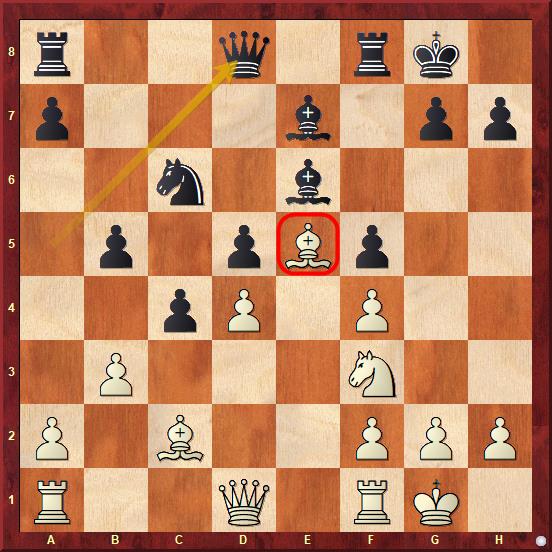
Before us is literally a textbook example on the topic of „good or bad outpost“ (the title can of course be adjusted by everyone to their liking). But what to say about the centralized bishop? Is it truly White's pride, or rather some kind of strange soloist, or even just a mere extra?
Explaining the whole problem is not at all simple. Before I guide you, dear readers, to a more well-founded conclusion, allow me to briefly express my own opinion: If Black, after doubling the opponent's heavy pieces on the open e-file, watches out for tactical motifs, the outpost on e5 can become more of a burden for him than some kind of 'movie hero'.
And the opinion of the most qualified – former world champion Vladimir Kramnik – can be found at about the 42nd minute of the following live video broadcast:
I add that Vladimir Borisovich commented on the games as usual without the engine turned on!
But let us continue to that critical situation which could have changed everything! In the position of the diagram below, the following move was just played 25.a4?.
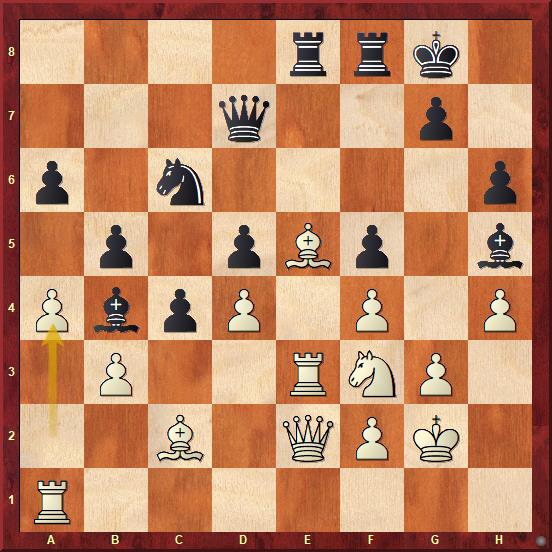
It is in a way a paradox, but Sindarov now – after move 25 – stood by far the worst of all his games in the Candidates tournament!
A thorough computer analysis shows that this in practice quite natural and tempting attempt at counterplay was actually a mistake, and White could have gotten into really serious trouble.
But it was the first round and everything was still ahead of us – not only for the players themselves but also for the spectators – so almost no one paid attention to this moment later. I myself found inaccuracies in the initial analysis, but I thought they did not exceed the scope of small advantages. However, as it turns out, this was not the case!
Only with the passage of time did I find a video on YouTube in which the author points out the game and its critical moments.
And he is of course also right in saying that if Andrey Evgenievich had not spoiled the position and had not lost the game but instead won it, we would probably have been watching a completely different tournament…
And who knows – perhaps such a game did take place somewhere in a parallel reality.
This moment could therefore belong in my article „What if...“, which I published on my website before the World Championship match between Ding Liren and Dommaraju Gukesh in November 2024.
However, the position is extremely complex, and Black also made a mistake. Indeed, I believe it is hardly within the powers of an „ordinary super-grandmaster of today“ to find 25...Bg4!!
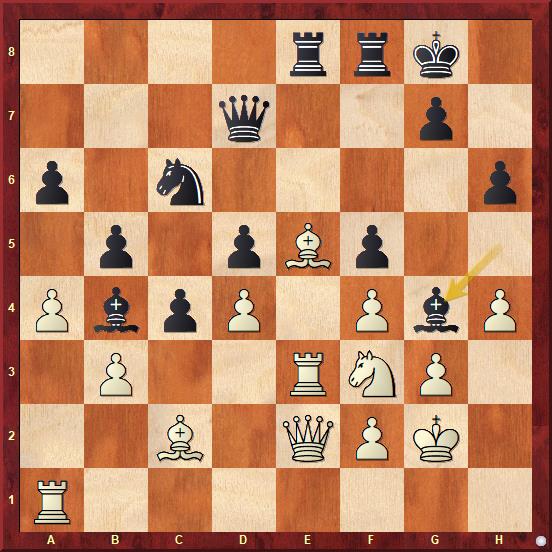
with the crushing threat 26...Rxe5! (if the bishop still stood on h5, White had the option Nxe5!).
If Jesipenko outplayed Sindarov in the first part of the game, then in the end it was quite the opposite. We will see this in the detailed analysis, on which I have spent many hours.
But let us first digress a little. Both young men almost seem to invite a small deviation from their own game!
On talent without illusions
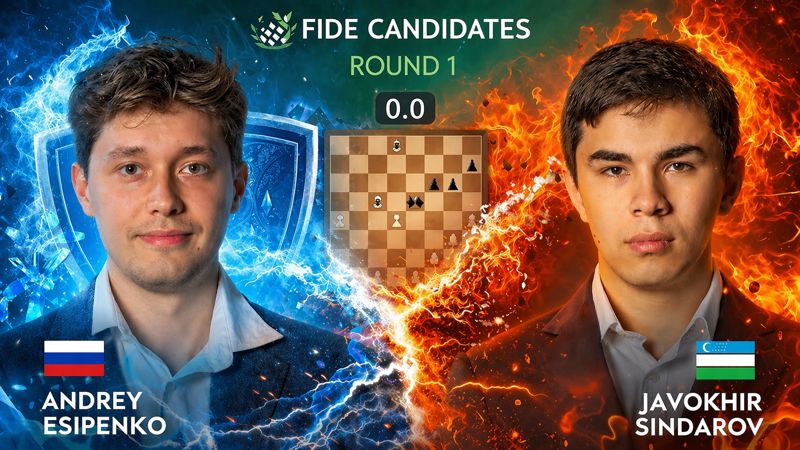
Talent – one of the most frequently used words nowadays not only in sport, art or politics. Yet psychologists and philosophers have been unable to agree on a single definition for certainly much longer than just a few decades. What exactly should the term talent include? Is it just a specific ability given at birth? Or should we also assign to talent diligence, the ability to think deeply about a problem, and perhaps even patience?
Why do I write about talent here? Because it seems appropriate at this point to compare the growth, fate and perhaps even the future of both young men. On one side, the twenty-year-old challenger today Javokhir Sindarov, on the other side the twenty-four-year-old Russian grandmaster Andrey Jesipenko.
As far as talent as understood by the public is concerned, Jesipenko is by no means behind Sindarov! Why do I dare to say this? Because I remember the young Andrey well!
I could hardly believe my eyes when I saw the title FM next to the barely sixteen-year-old Russian chess player in spring 2018, together with an incredible rating approaching 2,600!
Andrey Evgenyevich was not, however, endowed with unique talent only for chess. His appearance could just as well have destined him for an acting career or modelling.
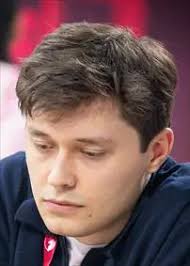
And here – I believe – lies the crux of the matter. Top-level chess demands the whole person! Children at first, and then many young people, are simply not willing to sacrifice the minimum training load, some 6–8 hours a day…
The problem of the current performance gap is therefore not (only) talent, but diligence!
Even today, Botvinnik's finding „what constitutes a chess player's strength“ remains valid for coaches, I hope: Talent, character, special preparation and physical fitness. (Botvinnik, among other things, proved by this scientific method that Capablanca was the greatest natural talent of all time.)
Mark Dvoretsky elaborated this approach in his books and converted it into a graphic form. The following combined charts are based on his work, I have only slightly modified them.
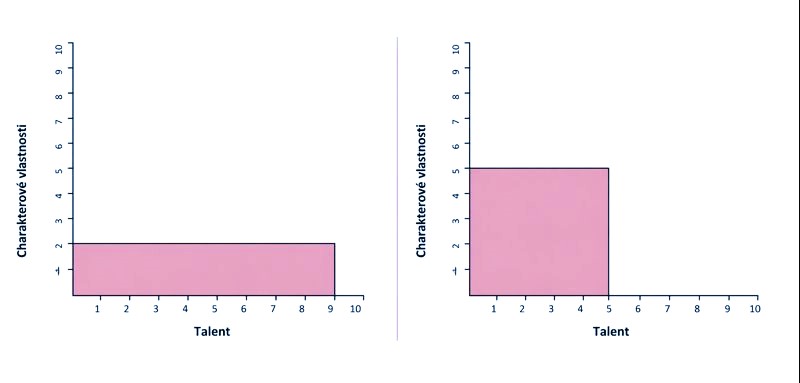
On the axis x only one of the necessary qualities of a top chess player described by Botvinnik – talent – is shown. For simplicity, we place on the axis y all the remaining necessary Botvinnik qualities, although from a didactic point of view the quality called diligence would stand out 🙂 ...
The actual practical strength of a chess player then does not arise, as we probably suspect, only on the axis x. It is equal to the area of the figure! Mark Izrailevich deliberately demonstrated here, in my opinion, that even absolute talent (or IQ, if you prefer) is not enough for a person to become a top chess player.
Almost every one of us chess players has met someone like that in their life. Such people, for example, often see tactical blows in a few seconds, but cannot force themselves to open a book – or nowadays rather watch a video.
Or put it another way, by example: The fact that three-year-old Misha Osipov solved combinations and studies on 13 November 2016 in the Russian TV show „Лучше всех!“, knew that he was playing Nimzowitsch's Indian Defence against a former world champion (something that even fourteen-year-old Czech children do not know today), does not mean he will become a grandmaster...
The decisive moment came already in the third round
The first round with three decisive results clearly indicated that there was definitely no timid probing by the players; it cannot be expected, even though in the second round we recorded four draws. And when in the third round the Indo-Uzbek derby took place Praggnanandhaa vs. Sindarov – that is, the leading players of the tournament met along with Caruana – it was clear that it would be a truly crucial clash.
In my analysis, I examine the game quite thoroughly, and therefore here in the text – apart from the final flourish – I will limit myself to just one moment. However, in my opinion, it is „again“ sufficiently expressive.
An orthodox Queen's Gambit was played 1.d4 d5 2.c4 e6 3.Nc3, after which Sindarov used the model of early prophylaxis 3...Be7, which was so beloved by the 9th and 12th world champions Tigran Petrosian and Anatoly Karpov.
Sindarov clearly dislikes playing classical Carlsbad structures, but systems with Bf4 are another matter! And so an unprecedented battle flared up. Sindarov decided on a real piece sacrifice for two pawns to hold the white king in the centre. Or rather – he did not let him escape to the safety of the kingside. The objective dynamic balance, however, was not broken even in the combined diagrams below.
After 29…h4 30.Nf1 the position arose as shown on the left diagram.
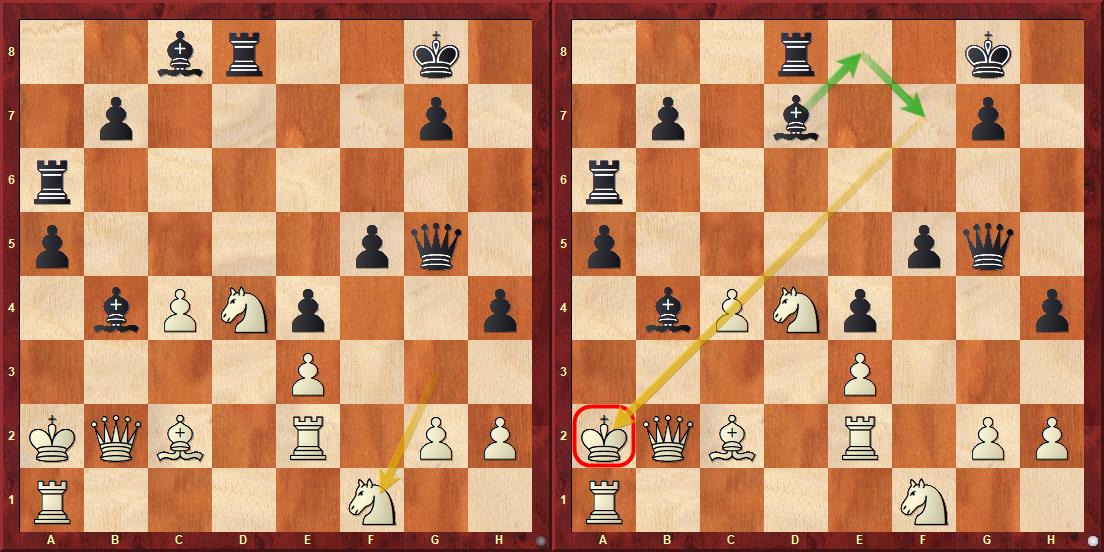
Javokhir continued after 26 seconds (!) 30…Bb7!. This is also a very interesting moment and it is not easy to decide where to start with the explanation.
- The classical chess education of Uzbek players is clearly evident in their play (unlike the Indians!), which also reflects in their thinking at the board. The subconscious should command: „It is necessary to complete the development of the pieces!“
- Sindarov, however, mentioned in the post-game interview a more concrete plan linked to the last move – the manoeuvre Be8–f7, by which the second bishop would also join the attack on the king.
It is clear that the calculation alone cannot cover everything here. A strong player relies heavily on it, but the character of the position also requires selective thinking, heuristic analysis and a practical approach. Other factors also come into play, such as the time on the clock – and with its shortage, the significance of the uncertain position of the white king increases: in time trouble it is generally harder to defend than to attack.
Praggnanandhaa therefore quite logically fell into time trouble and blundered badly. I will of course not deprive you, dear readers, of the final combination.
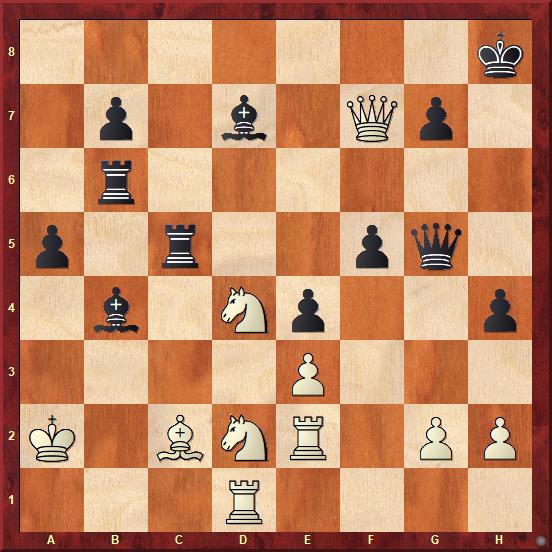
How did Black finish the game?
Here is the traditional shortened video record of the game by Sagar with Sindarov’s brief post-game commentary; below is a detailed analysis and the solution to the final combination.
Javokhir full of theory!
Before the tournament, almost everyone quite logically considered Fabiano Caruana the biggest favourite. And after three rounds it seemed that the predictions were coming true: at the top of the tournament with a score of +2 we saw two players. The fourth round then brought both leaders together and it can be said with some exaggeration that in the battle Sindarov vs. Caruana it was probably the first time their further tournament fate was decided.
We know Fabiano as a person who gives everything to chess, and his theoretical preparation is among the best in the world. Despite all this, this game showed that a young Uzbek came with the best equipment for the most important tournament of the year!
Caruana probably reproached himself after the game for choosing the sharper alternative in the form of the accepted Queen’s Gambit. But who could have guessed in round 4 where the novelties worked out by Sindarov and his team would lead?!
A sharp and dangerous position for Black with an uncertain king, significantly better preparation and knowledge of the variation by White: these are, in my opinion, the two main reasons for Caruana’s ugly loss in the crucial clash.
Let us say something more general about the position that eventually arose after the first moves. I mean without a multitude of concrete variations!
Black has just captured the knight with the move 12…gxf6. From the theoretical perspective, the continuation is apparently a novelty already
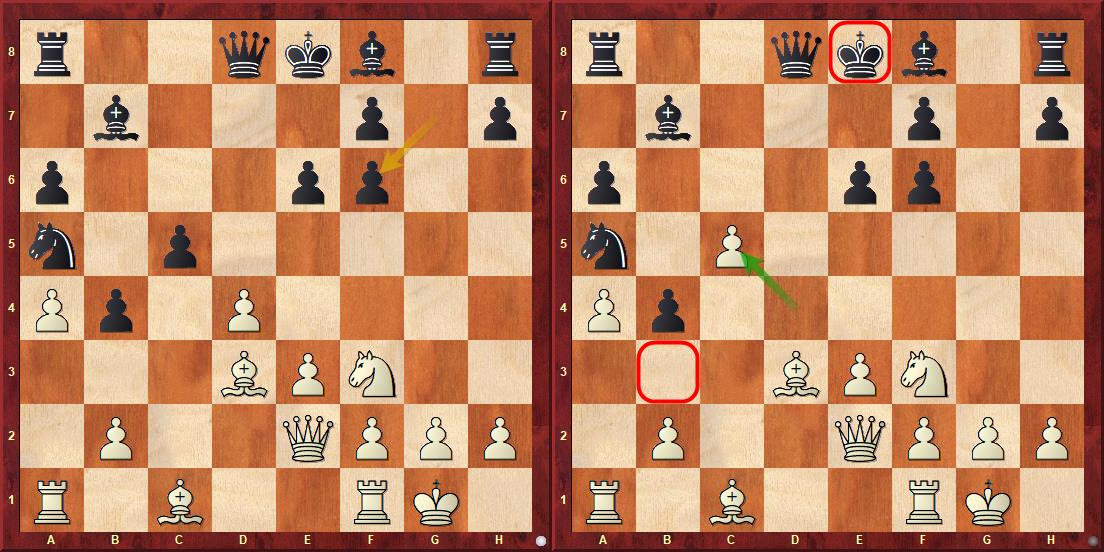
13.dxc5!, which is, however, tied to an actual strengthening only in the following move. We see that White ignores the possibilities connected with the knight sortie to b3. The sleeping Black pieces and His Majesty, who at first glance does not exactly look healthy, are a clear signal for a player perceiving dynamics that material may not play the leading role here! After 13…Nb3 followed the prepared
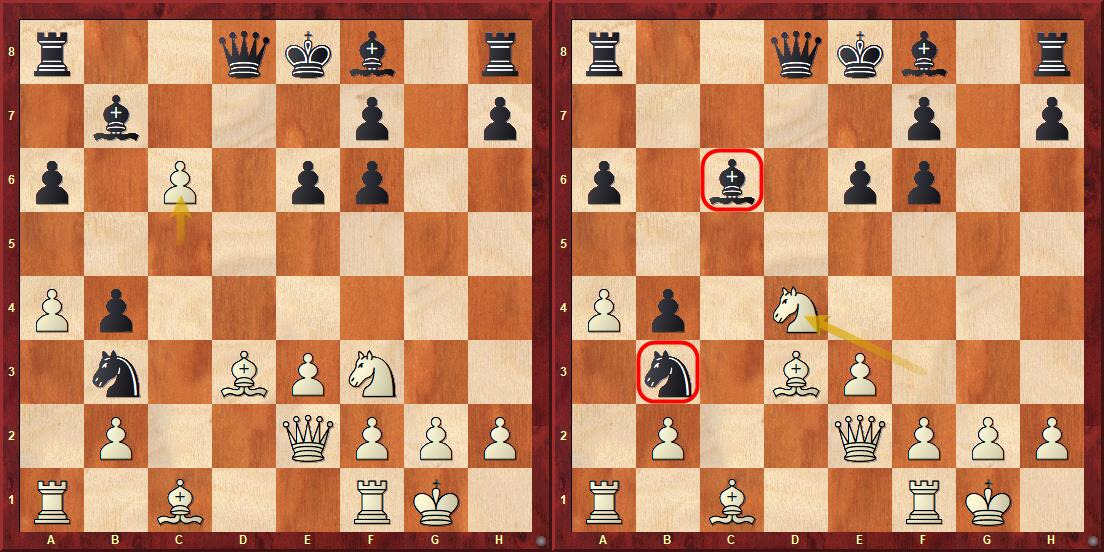
14.c6!! with the idea 14…Bxc6 15.Nd4! The point of the tactical strike – actually a small combination with the idea of entrapment! Now after 15…Nxd4 16.exd4 the desired opening of the centre occurs!
In a short video on lichess.org, Sindarov stated that he knew the entire variation exactly up to this point! This is also indicated by the time consumption, especially the first reflection after Black's reply.
More experienced players will naturally come to the logical conclusion that the position must simply be objectively balanced. And here lies the crux. „Вот, здесь собака зарыта!“ as the Russians say!
Because… the art nowadays is not to find a new move – engines often show zeros, especially on strong computers and engines that analyse unusually deeply – but to estimate how comfortably or uncomfortably the opponents will be able to play the position. Here we must then take into account psychology as such in general and to that add the „willing–unwilling“ factor“ a particular chess player.
During my long career, I have met more than just a few titled chess players who proudly claimed to be among the „pawn drillers“. And it is almost certain that not only some of them would quite like the black position. (It should be added here that in many variations White leaves the central pawn or even more material hanging, that's why.)

How not to prepare for a game
The heading – an introduction to the next game – obviously does not concern our hero, but his opponent in round 5. The naivety with which Hikaru Nakamura approached the game is striking for a super grandmaster of his level! In the game Nakamura vs. Sindarov the world number two by rating came up with the idea to play the Slav Gambit.
(I add that the choice of the Semi-Slav Defence – or rather the Slav triangle 1.d4 d5 2.c4 e6 3.Nc3 c6 – could not have been a surprise for Nakamura. Given the logical alternation of openings, I would rather consider Javokhir's choice highly probable.)
At the beginning of the game, everything went according to plan. Both sides „played out the gambit“ with the sacrifice of two pawns according to current knowledge. A truly unpleasant surprise awaited White only after the „novelty“ 12…0-0!
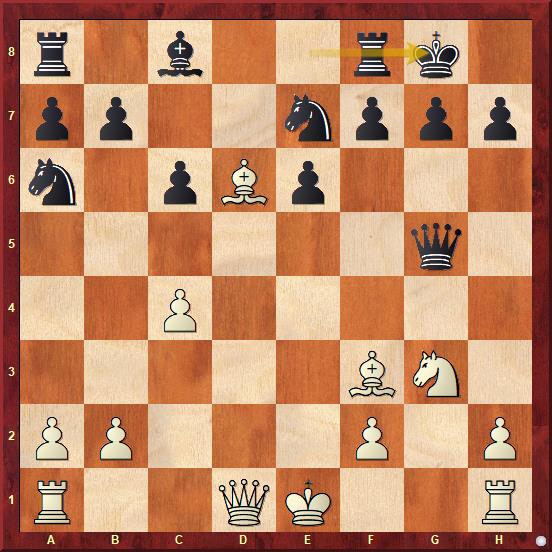
(The main line actually continues 12…e5…) In the post-game night analysis, I wrote this: „An incredible fact happened here! Nakamura plays the sharp variation of the Slav Gambit and after Black's natural 12th move simply does not know how to continue!“
In his video, which is available below, Hikaru explains that the alternative 12…0-0 was completely overlooked during preparation with the team – «it appeared only once and never at a higher level». What follows from this? For example, the question arises: was his team's preparation completely insufficient? Do they not have access to correspondence databases? Or do they not follow recommendations in the comments of other games?
It is therefore no wonder that after more than an hour of thinking White did not continue accurately! By this I do not mean the actual – this time real – novelty 13.h4, but the further course of the game. After long consideration, Nakamura chose 13.h4.
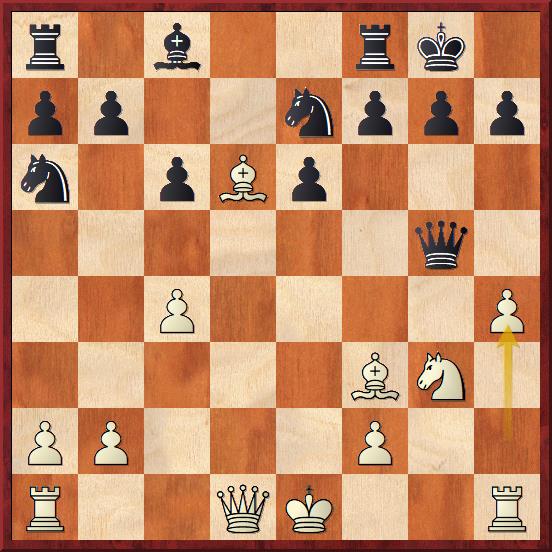
A very interesting comment here is by Sergei Shipov. In his summary of round 5, he suggests that to this, according to him, inaccurate move perhaps he would add i an exclamation mark, what if…
I spent long hours analysing the game. The engines worked hard – because if anyone still believes that nowadays analysis primarily relies on one’s own judgement, they are mistaken. And even if that were sometimes the case, it simply isn’t possible in Slav Gambit positions!
Let’s continue: 13…Qa5+ 14.b4.
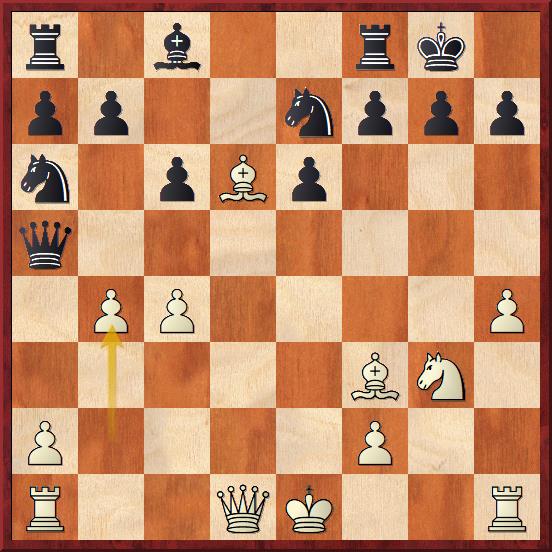
Sacrificing another pawn with the aim of hiding the king, but also opening further diagonals and trying to sow disharmony among Black’s pieces. Hikaru made this move instantly, which was meant to have psychological effects, and it is a recurring motif in the Slav Gambit.
After 14…Nxb4 15.0-0 Re8
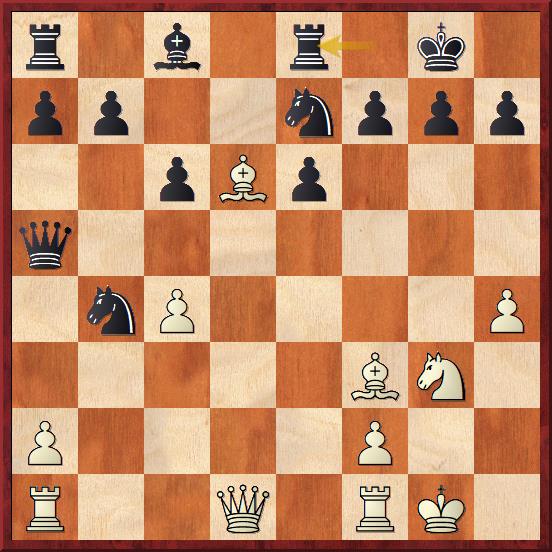
we reach the position of the next diagram. „What does Black want most of all?“ Such a question and its answer should lead Nakamura to the correct solution to the position’s problems! Grandmaster Sergej Shipov here suggests a brilliant prophylactic manoeuvre 16.Qe1!!.
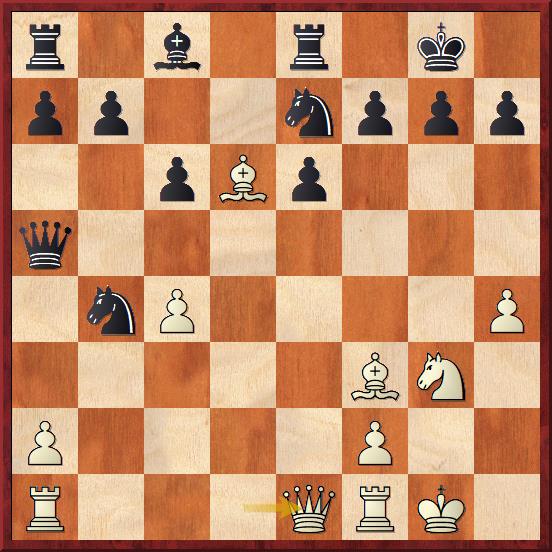
Prophylaxis in attack! Now the possibility of an early Ne7–f5 manoeuvre would disappear and Black would have problems completing development. It would show how well Javokhir understands the position, and also in what excellent form he really is, or how strong a grandmaster he actually is!
Well, let us think, dear readers, about the position and suggest how to solve the problems with the development of the remaining forces...
Engines at greater depths give White full compensation for the three sacrificed pawns in the diagram position, which forced me to examine it even more deeply. In the end it turns out that Nakamura’s solution does not even deserve a question mark! So not only the commentators and analysts were mistaken, but it seems Hikaru himself as well…
But before we look at the whole game, I just can’t resist. I cannot hide from you, dear readers, a beautiful calculation and combination which remained behind the scenes, but was pointed out in post-game analysis by Sindarov himself.
In the diagram position it was White to move 21.Rg1.
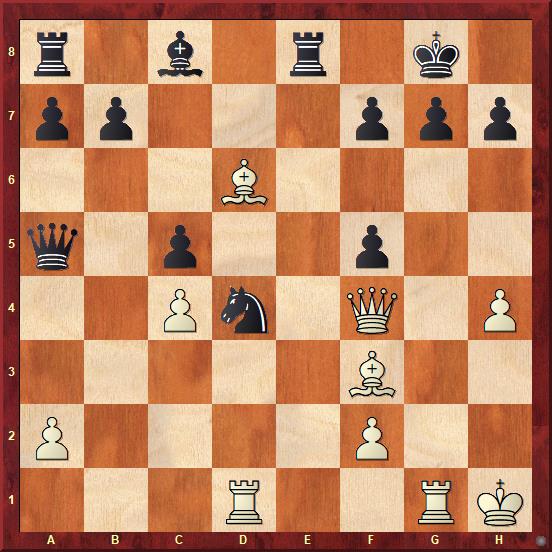
Javokhir explained, and proved in variations, why in the game he chose 21…g6 and not 21…Nxf3??.
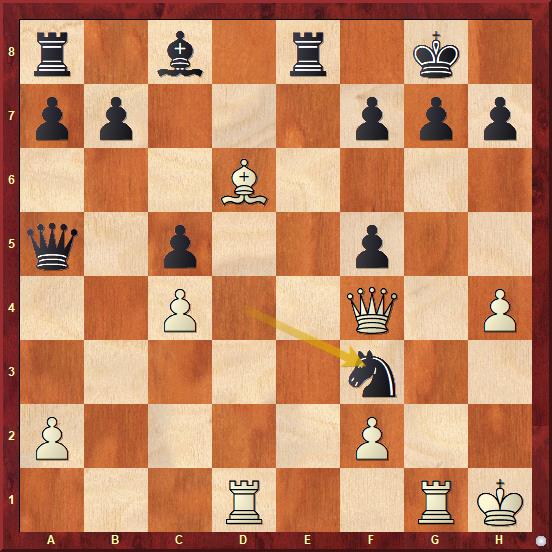
Because with a beautiful but rather complicated combination White would win a draw here! Master-level players should be able to calculate all the way to the forced draw, just like very strong solvers 🙂. Unlike Sindarov, we are not pressed for time on the clock!
Note: Experienced and strong players can certainly justifiably object here that in the game it was not necessary to calculate the complications after 21…Nxf3 at all! Thanks to the possibilities offered by selection, heuristic analysis methods and the applied principle of Occam’s razor, we can choose 21…g6 even without long consideration. That is true, certainly, but still… training is training. After all, we are on the pages of a chess school!
All information is of course available in the viewer below. But to get at least some idea, let us first look at a shorter analysis of a game.
It is incredible what can be read today on various websites. I will now quote again one from Czech sources. Advanced chess players will probably agree with me that the text below barely holds up even with basic analytical analysis.
„Sindarov confirmed that his results so far are not accidental. Against Nakamura, one of the most experienced players in the field, he showed a mature strategic performance. The key moment came after the opponent's expansion on the queenside, which he immediately punished with the black pieces by the move 14...Nxb4. The subsequent opening of the centre with 16...c5 set the tone for the whole game. Sindarov gradually took over the initiative and after a breakthrough on the kingside forced Nakamura to resign...“
If some talented roughly thirteen-year-old pupil brought me „this“ – for example as homework with the task to analyse the game and summarise its main moments (a summary) – I would really think he was joking.
The text – apart from the first banal sentence describing reality – completely misses the mark. It ignores the key moments of the game, confuses cause and effect, and above all does not capture the dynamics of the position at all.
Below you can see a shortened record of the game and then a detailed analysis by GM Sergei Shipov (around the 25th minute of the video).
A similar analysis and solution of the calculation test is available here:
An analysis of an immensely rich and instructive game that raised many questions and a storm of emotions – Nakamura's YouTube channel has more than 3 million users – would certainly not be complete without giving the floor to the players themselves.
Let us give priority to the winner:
And now let us look at Nakamura's analysis of the game!
Adoration of engines
Not only more advanced chess-reading players surely noticed that Nakamura himself calls the move 13.h4 a mistake.
However, as I found out after detailed, many-hour analyses – and subsequently confirmed by readers – this evaluation is not justified. How to explain this dichotomy? After all, Hikaru also analyses games with the engine turned on, and certainly owns a top computer.
Here one fundamental thing must be clarified!
Years ago I noticed a certain problem: Many, even very strong players and analysts, consider today's neural network engines almost infallible and at the same time believe that they will provide answers to all questions within minutes or even seconds (i.e. find the best continuation in a given position). But this is far from the truth!
There is a significant number of positions in which engines are able, after a long time – many minutes, hours, sometimes even days of analysis – to fundamentally revise their evaluation. Sometimes there is even a reversal of almost 180 degrees! The idea that it is enough to start the engine, wait ten seconds and get the optimal result is therefore as naive as thinking that a brief look through a telescope will reveal all the secrets of the universe.
Analogy – a valuable assistant!
As is often the case, we usually know very little about Chinese chess players, and the forecasts of the most qualified experts reflected that. Should we consider Wei Yi the favourite of the tournament? Or will he, on the contrary, fail?
His strengths and weaknesses are known and correspond – let’s say – with the Chinese chess school. Experts and, of course, especially the participants were surely most interested in what repertoire – if any and with what novelties – the Chinese prodigy would bring to Cyprus.
Few doubted that with Black he would not abandon his favourite Russian Game. But with White? In the end, it turned out that Wei Yi did not pack much new in his suitcase…
It is the 6th round, game Wei Yi vs. Sindarov. And Javokhir’s brilliant ride continues!
1.e4 e5 2.Nc3 – no surprise, the Vienna Game has long been a toy for the Chinese player – 2… Nc6 3.Bc4 Nf6 4.d3 Na5 5.a3 Nxc4 6.dxc4 Bc5
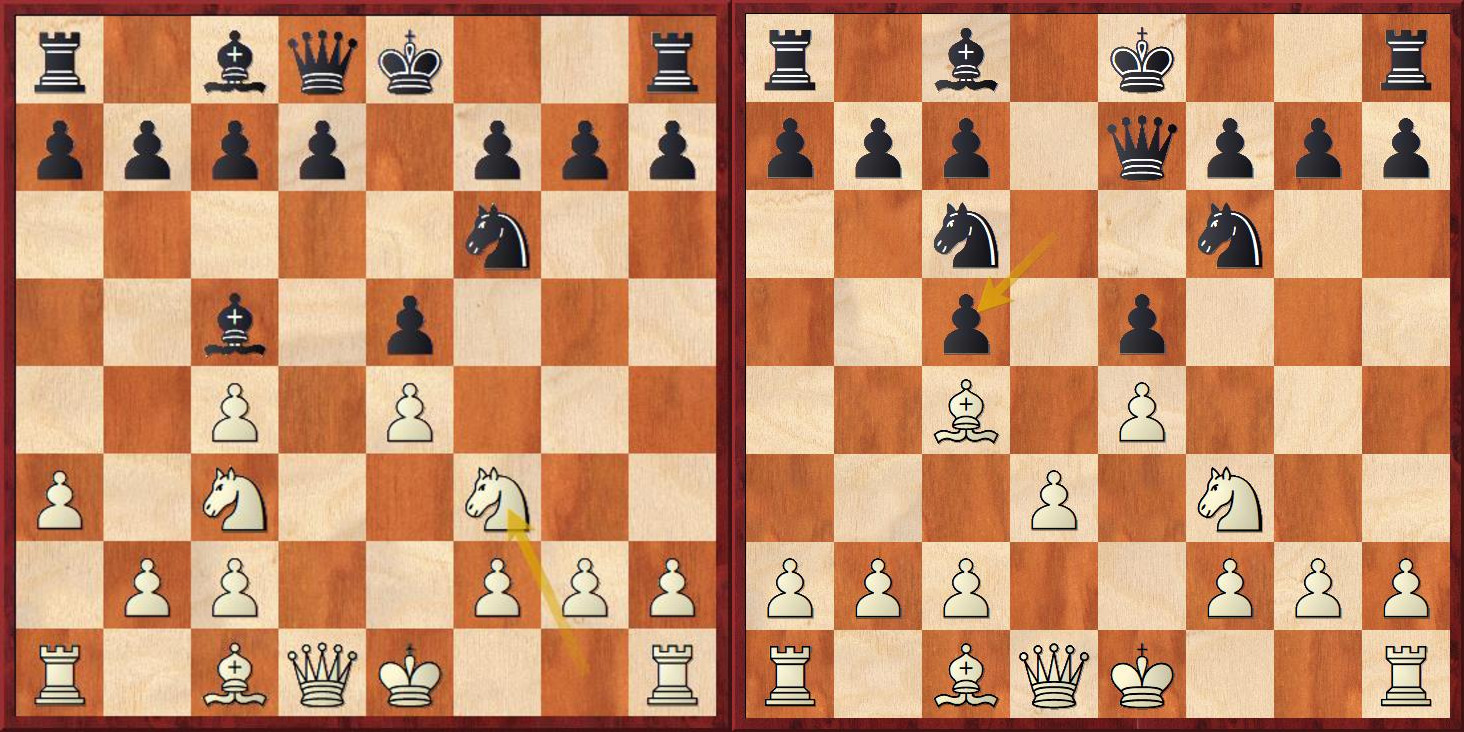
(see diagram on the left). Sindarov commented after the game that – although in a little-known position – he knew this pattern well because he had played it with White in the Italian Game (pianissimo with Nc3–a4 and Nxc5, see diagram on the right).
An analogous position with colours reversed arose in the game, naturally with the extra tempo on the side with the doubled pawn in the form of the move a3. As we shall see, the bishop’s ear has its significance, because Black must sooner or later pay attention to the b4 advance. I certainly do not intend to underestimate Wei Yi’s team accompanying him. Nevertheless, I would rather guess that the parallel with the Italian pianissimo – and thus the fact that Sindarov would find the position quite comfortable to play – never even occurred to him…
A year or two ago I studied this type of Italian pianissimo. I was then interested in:
- why White has become so fond of the manoeuvre Na4xc5,
- what objective consequences it leads to and how it fares statistically,
- how many strong players prefer the early prophylaxis a6 to preserve their king’s bishop.
It is indeed possible to find games in databases where this pawn structure appeared and which are suitable for study (well annotated). I have added the game from the 2022 Olympiad, originally annotated by GM Ivan Sokolov, to the viewer. The deployment of forces is really similar, as is the plan Sindarov executed in the game!
This time, for a first acquaintance with the game, let us prefer the English-language analysis by a Croatian author:
A much more detailed analysis – for stronger and more experienced players or for those interested in the opening itself – can then be watched in the video by Grandmaster Makarychev. (I remind you of the option to start automatic English dubbing.)
After the game, one of the most interesting and instructive press conferences took place in my opinion. Both opponents participated this time, and there is really a lot of fascinating information to be learned here. So, dear readers, if you are curious about how a super-grandmaster thinks during a game, I recommend watching this roughly twenty-minute video very carefully…
Giri’s secret is called… classical education
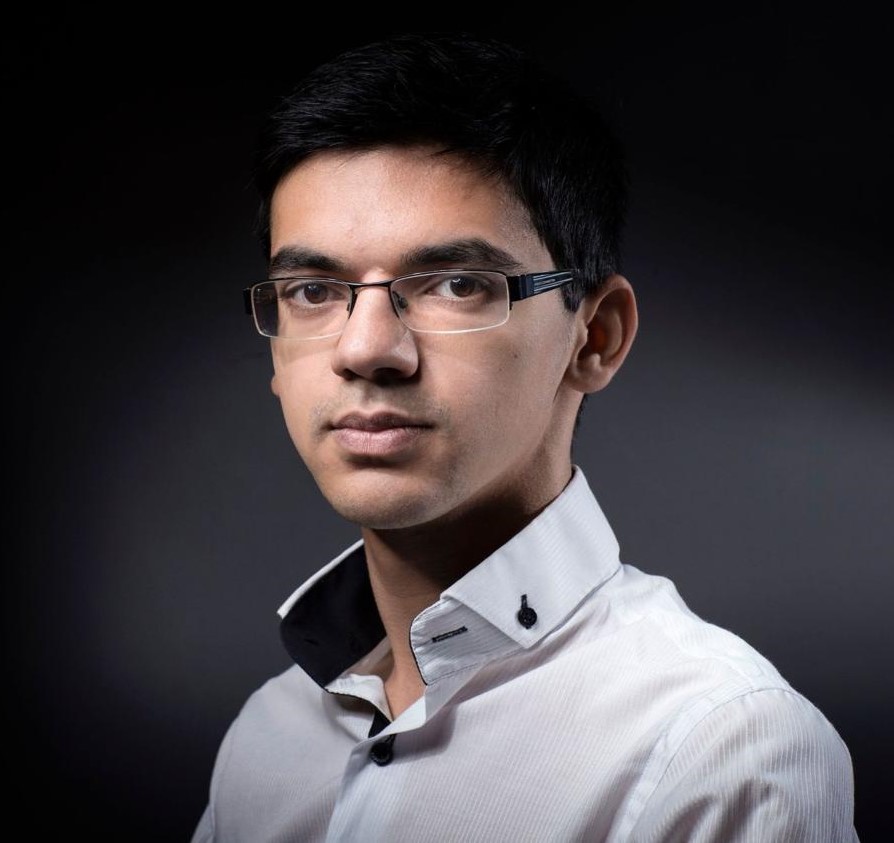
„If it weren’t for Sindarov, Giri would have won the Candidates Tournament!“ I would gladly sign such a statement, which I have heard a few times and seen written in commentaries. Anish matures like fine wine! (We live in an era when chess players mature already at thirty-one, while at forty they are considered past their prime! 🙂 )
But it is not only that Anish has enough intelligence to assess well what needs to be changed so that he does not often finish around 3rd place in tournaments – like Tigran Petrosian once did. For example, today he already not even in the Candidates Tournament can play with Black always only for a draw!
But why did I title the chapter on the Round 7 game exactly like this? Of all the participants in the tournament, only two players went through classical chess education in my opinion: Caruana and Giri. (The former was coached for about 2.5 years by Boris Anatolyevich Zlotnik. Studying his book „Наука, опыт, мастерство“ /Moscow 1990/ is, in my view, almost mandatory reading not only for professional trainers!)
They were lucky because the environment in which they grew up provided them with renowned trainers who themselves had gone through classical education!
„Nobody talks about him, yet everyone knows him!“ What is this about? About the necessity of classical chess education! The generation of the 1990s was the last to grow up on books.
(I clearly remember that in the decades before the 1990s it was somehow fashionable to call the youth „children of the informant“; but the Yugoslav informants, which we always eagerly awaited, were also „just“ a book!)
Strong cohorts from 1990 onwards could therefore rely on literature! They could still „sleep with books under their pillow“, see variations in black and white and, most importantly, return to them anytime. These players loved books!
And when the best trainers from the former USSR countries also looked after the most talented among them, then the book + trainer tandem led precisely to education, which today many older players and trainers call classical.
Indeed, Magnus would not be Magnus if, besides his brilliant intuition and sense for harmonious coordination of forces, he did not know thousands of patterns by heart. Where did he get this information? Primarily from books and trainers!
Anish Kumar Giri was born in Saint Petersburg on 28 June 1994 to a Russian mother and a Nepalese father. Wikipedia – as usual – „readily“ informs that the family moved to Japan in 2002 and that Anish won the Sapporo championship in 2004 🙂. .
However, the information that he regularly participated (and won) in pupil and junior competitions of the Russian Federation is mentioned only in passing!
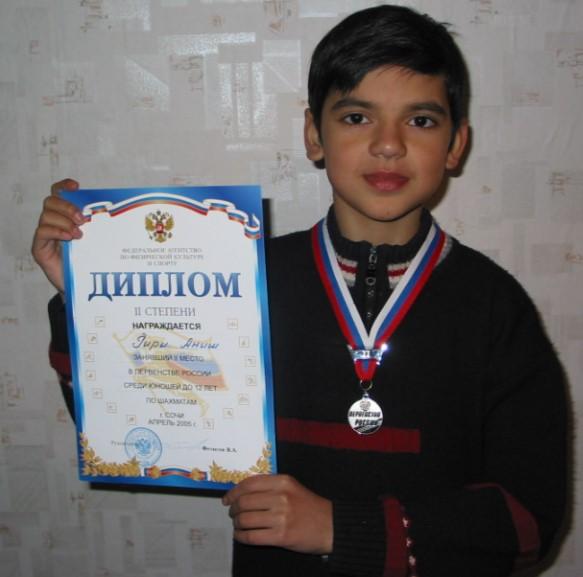
Giri was brought up under the guidance of St Petersburg coaches, which for me personally is the first clear proof of the lifelong influence of classical education. However, a very important figure in his development became Vladimir Chuchelov. A top coach (*1969) with Soviet roots. He himself was very systematically influenced by Abram Iosifovich Khasin (Honoured Coach of the USSR – 1968). Classical education represents something similar to genetic information!
I have never changed my opinion of Giri – as a chess player! To put it succinctly: „Giri's understanding of chess, his culture and technique of play, and knowledge of theoretical endgames are almost comparable to Carlsen himself! If Anish had Magnus's killer instinct, fighting spirit and physical condition, he could rule the world with a similarly firm hand as the 16th world champion!“
As proof of Giri's splendid technique of play, which is rarely seen nowadays, the conclusion of the round 7 game can serve Sindarov vs. Giri! I think many young grandmasters watched how he escaped from a threatened endgame with their mouths open!
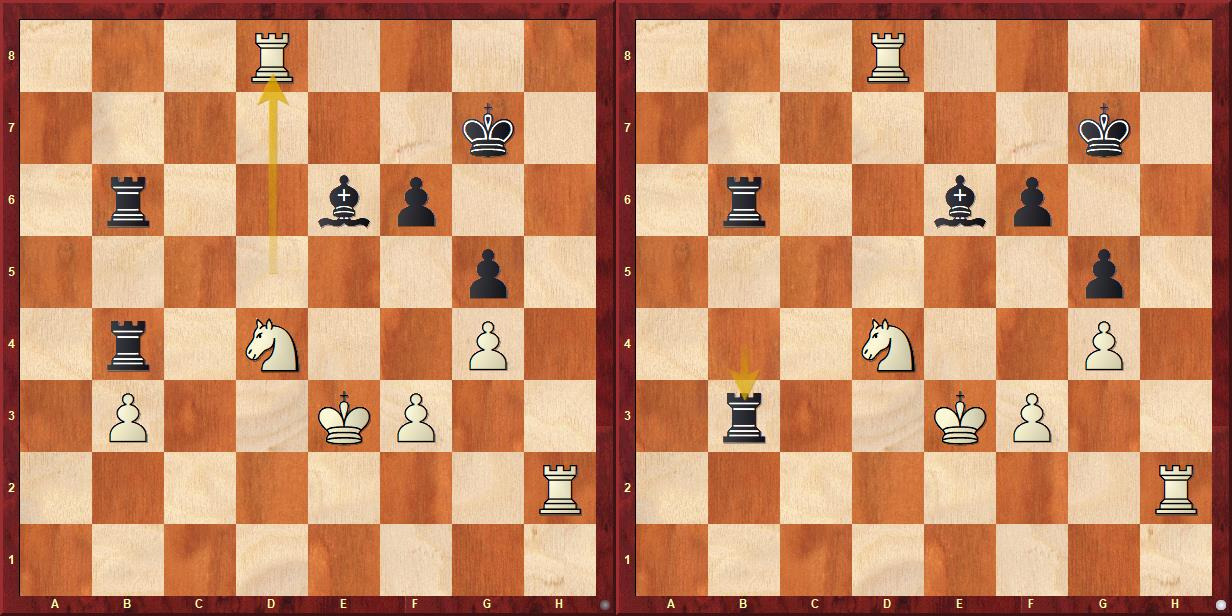
After the time control Sindarov played on the diagram on the left 42.Rd8, after which Black responded after 15 seconds (!) 42...Rxb3+!! and followed 43.Nxb3 Rxb3+; if Sindarov now chose 44.Rd3, after 44...Rxd3+ 45.Kxd3 a theoretically drawn endgame would arise!
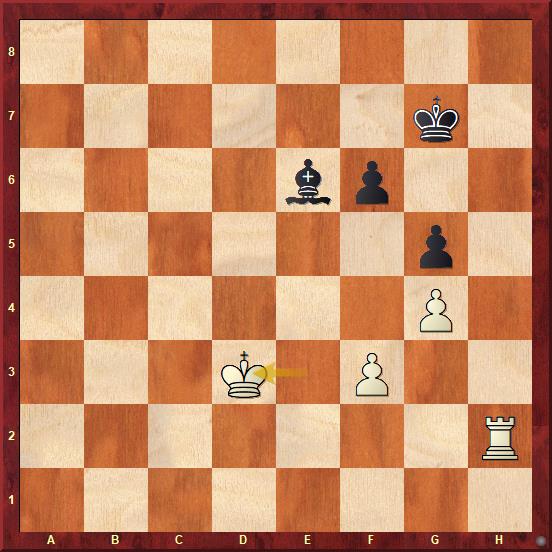
Black's ideally placed forces create a so-called active fortress! In the actual game an analogous position arose, so we will be able to easily verify that Carlsen's „I don't believe in fortresses“ does not work here 🙂 .
But why did I prefer the diagram from the variation rather than from the game? Because I cannot deprive the reader of what, could still have happened!
Study? Yes and no! Let's look: Sindarov, without deeper reflection, played 44.Kf2,
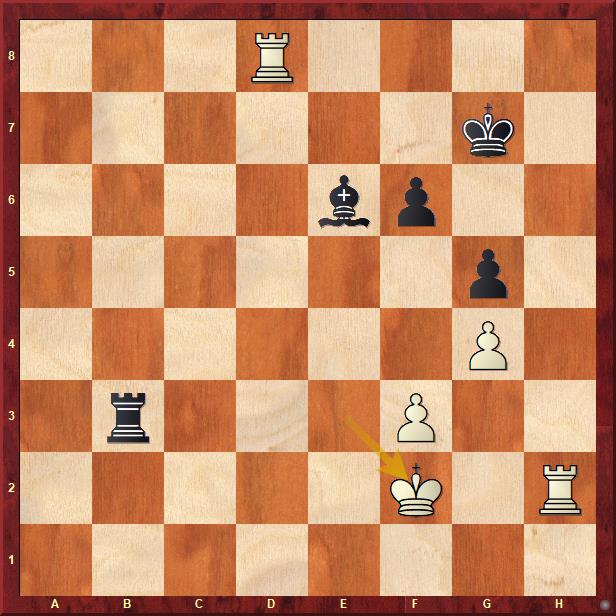
Giri thought for a moment and after the logical 44...Rb2+ the position of the „perfect fortress“ appeared on the board.
„In the past, chess players had Igor Zaitsev for this, today they have engines!“ In the diagram position Black could draw by study-like defence and not worry for another half hour.
Can you find a different and quicker way to draw instead of 44...Rb2+?
Readers will surely be interested in how the players themselves commented on the game:
At about 2:50 minutes into the video we can see a surprised Anish when he learned about the study-like draw...
After the first half of the tournament, the men's standings looked like this:
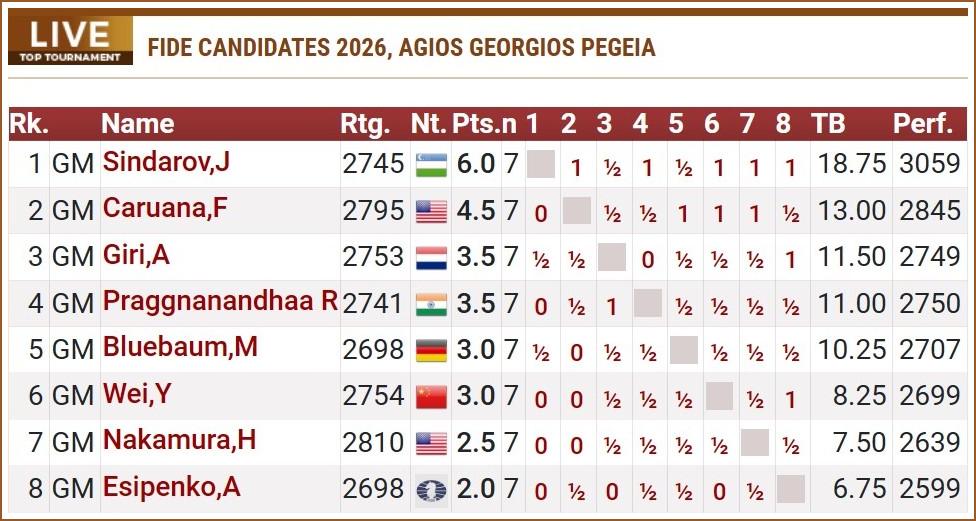
I soon realised that it is simply impossible to fit not only all the interesting and instructive games and moments of the tournaments into one article, but even Sindarov's work.
I know that even so, with my articles I somehow „row against the current.“ Today – in a superficial era with the half-switched-off brains of most people in the Western world – shorter and shorter video analyses are the most popular.
A few dozen readers also have Czech websites where – believe me, dear readers, without wishing to disparage them – either entire posts are written completely by AI (in the worst case, some fool doesn’t even read them before publishing), or the author simply cannot analyse games or fragments logically and fires off evaluation symbols as accurately as a cowboy after downing a half-litre of whisky in one go. The saying „haste makes waste“ is thus forgotten.
I enjoy my work, but in this respect I am also a perfectionist. And so I article finally divided the most important tournament of the year into two parts.
What can we look forward to?
In the second part of the article, among other things, we will also look at the remaining interesting games of Sindarov. So I present a small preview.
Probably the biggest mistake was made by Javokhir in the game of round 9 with the black pieces against Blübaum. White has just captured the knight with the move 24.bxa4
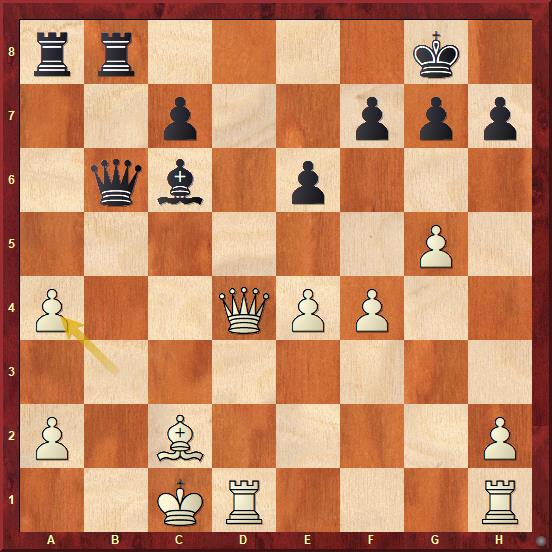
and not only an experienced chess player will sense that… well, White is not in a good mood. How and why would you continue if you were Black?
The second most important person after the winner himself in Cyprus was Sindarov’s coach Roman Vidoniak. In the continuation of the article, we will learn more about his career and working methods.
And I cannot resist addressing experienced coaches with the question: Do you think, dear colleagues, that it is possible over a period of about fifteen years to create a database of tests with 40,000 correct, verified and thus flawless examples in solving? Should they be related to various strategic and tactical themes and, of course, also to calculation technique…