

A battle to the last bullet and nerves stretched to breaking point – such were the final rounds of the Samarkand Grand Swiss. Steady nerves, coolness in critical moments and the ability to overcome fatigue decided the outcome. The tournament leaders were extremely evenly matched, with no clear favourite. The winners deserve recognition, but so do those who did not succeed – because if the cards were dealt again, the order on the podium would certainly be different. Selected examples are again arranged thematically, but we will focus on both the lucky and the unlucky. So we can start… right from the end…
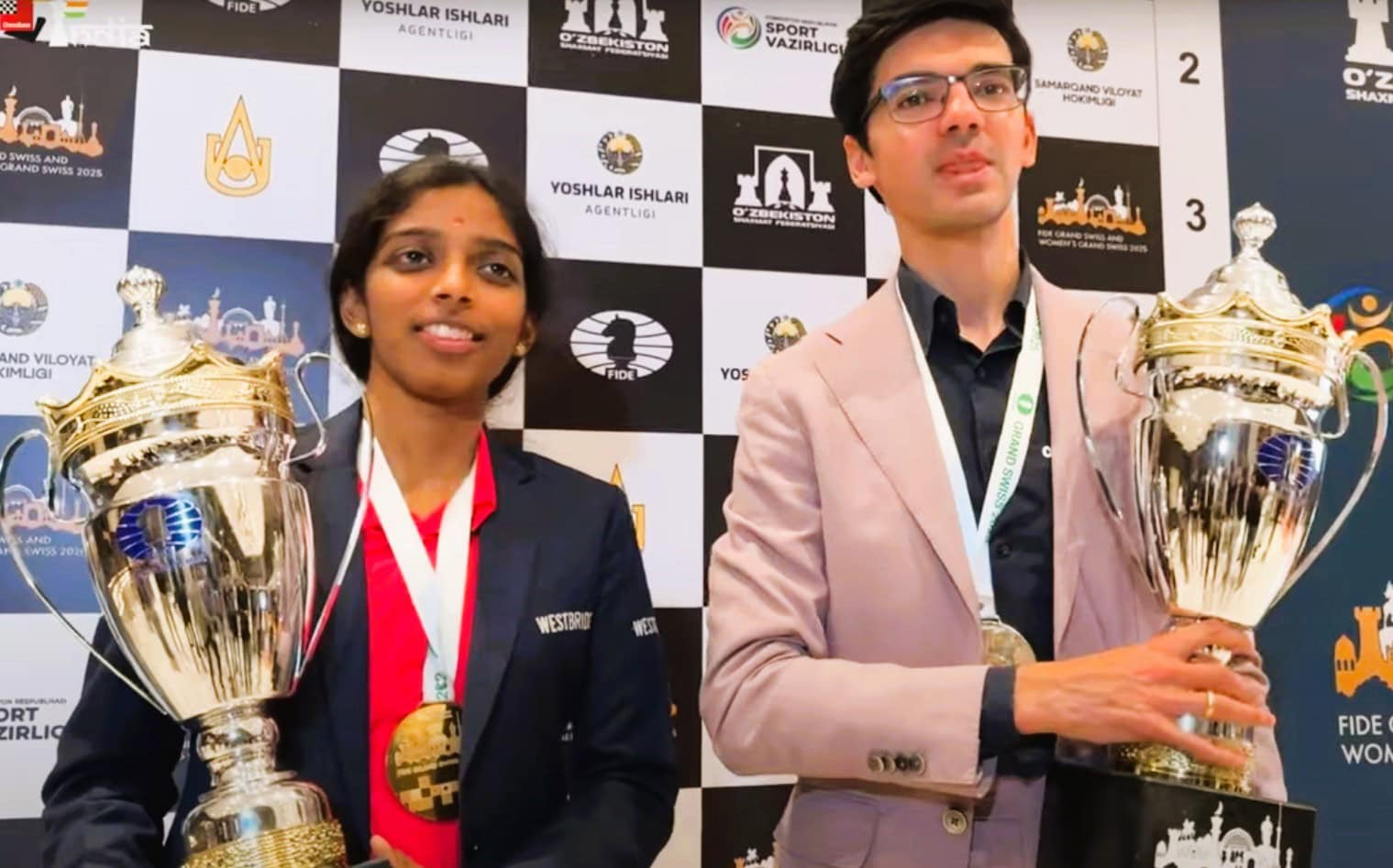
I do not think that in Samarkand the primary fight was for first places, and thus for the very pleasant 90,000 $ and 40,000 $. The first two players earned the right to participate in the Candidates Tournament!
How chess spoke for itself
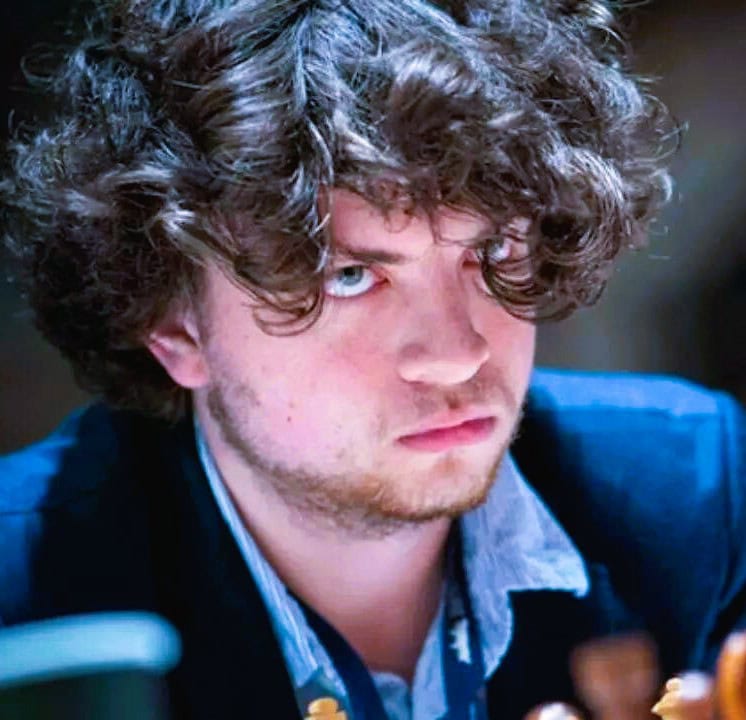
I have connected my life with chess and I do not like Hans Niemann. To this day, his completely atypical rapid rise during the Covid period remains a mystery to me (rating is not all-powerful, but for example 2,313 at the age of 15 is reasonably impressive even by Czech standards)…
To witness his „performances“ as the winner of the Grand Swiss or qualifying for the Candidates Tournament with the necessary American „big-mouthed“ statements… well, I would find that hard to bear. Anish Giri is undoubtedly also a controversial figure, but certainly a world-class stalwart and a great theoretician. So I watched the conclusion of the battles in the last round – as they say – almost with bated breath.
Let us start from the end and take a closer look at the only decisive game at the top of the tournament: it is 15 May 2025, Samarkand, round 11.
Before the last round, the top of the tournament table looked like this:
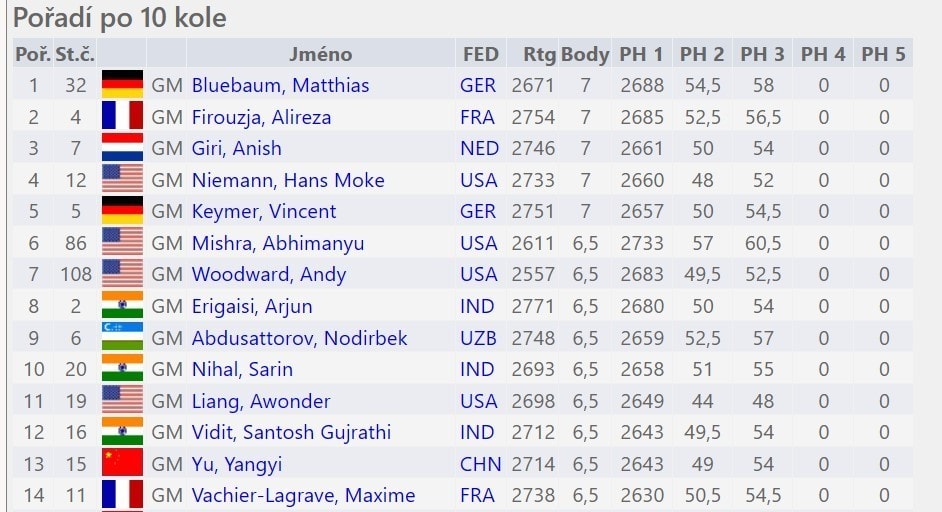
Some readers may pause at the column PH1. „What’s this novelty?“ they might ask. Before „Buchholz cut-1“ we actually see ELO ratings. In fact, this is not a recent change – FIDE has been using as the first tiebreak criterion since the 2019 Grand Swiss the average rating of opponents (excluding the lowest, so-called cut-1). Every tiebreak has its pros and cons. In practice, besides head-to-head, Buchholz and median Buchholz, so-called progress (sum of points in the cross-table), number of wins (interestingly, fewer losses have not yet been considered 🙂), and sometimes also rapid playoffs including armageddon, have been used. The average rating of opponents – in a sense analogous to tournament performance – naturally favours players with lower own ratings. Thanks to this – the rating difference in the head-to-head game – the winner of the women’s Grand Swiss was Rameshbabu Vaishali and not the runner-up Ekaterina Lagno!
A brilliant post-game analysis of the endgame, what do you think!? But I deliberately took my own analysis differently. Moreover, Giri did not play the game with absolute precision either. The analysis could be called: everything is connected with everything else!
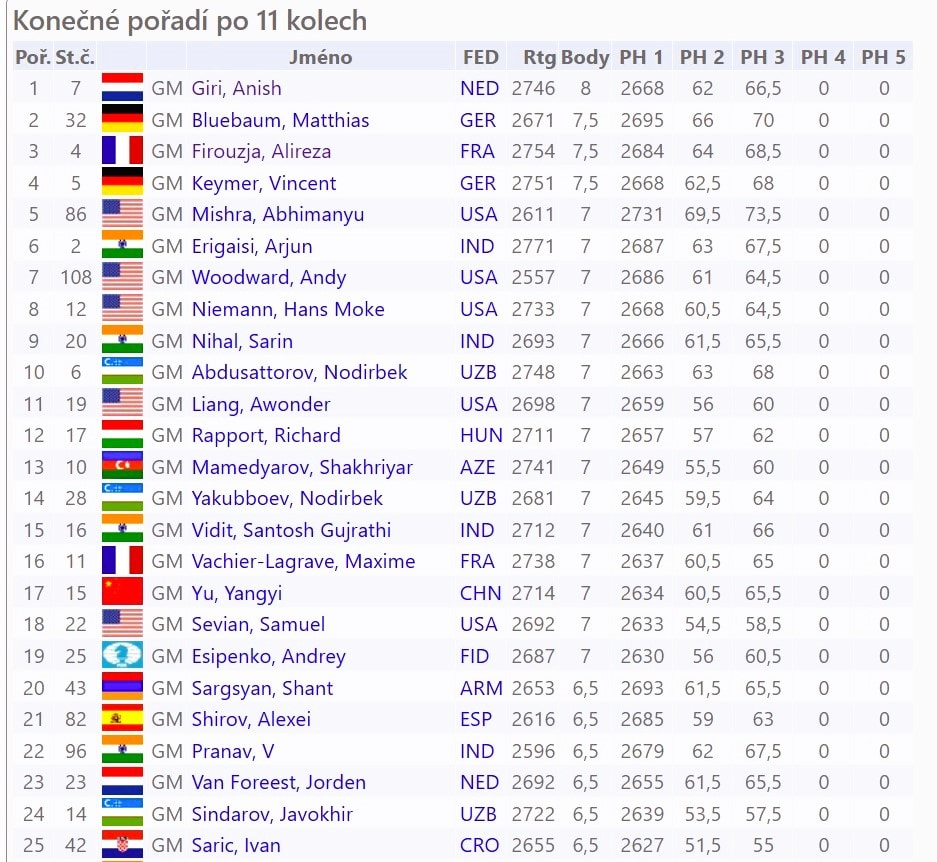
The final tournament results looked as follows (complete results are available in pdf format at the end of the article)
In the main triple role Vincent Keymer or blunders wherever you look
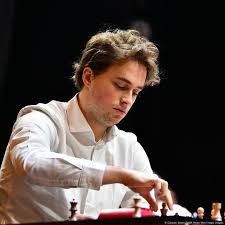
After a stagnation period of about 1.5 years, twenty-year-old Vincent Keymer has broken into the world elite. I would definitely like to see him in the 2026 Candidates Tournament. Well, nothing is lost yet. A few places are still unfilled – formally even five!
The Grand Swiss requires a different tournament tactic and strategy and favourites must take greater risks! Well, in such a case… those who believe in luck will more easily understand that winners and qualifiers are decided by… a wave butterfly wings.
In my opinion, the probability that even one of the two winners would advance in a second identical tournament is about as likely as sitting down at home to play the children's card game Prší and having the same cards dealt to all players twice in a row!
There were, of course, several critical moments – those flaps – but personally I would highlight three of them. So let's look at the decisive moments, in which, perhaps by coincidence, the German super-grandmaster always played the main role Vincent Keymer! Yes, mistakes differ like day and night… after all, that's why I chose them!
1/ The penultimate round of the tournament, the game Keymer vs. Blübaum. Black's position in the endgame is collapsing…
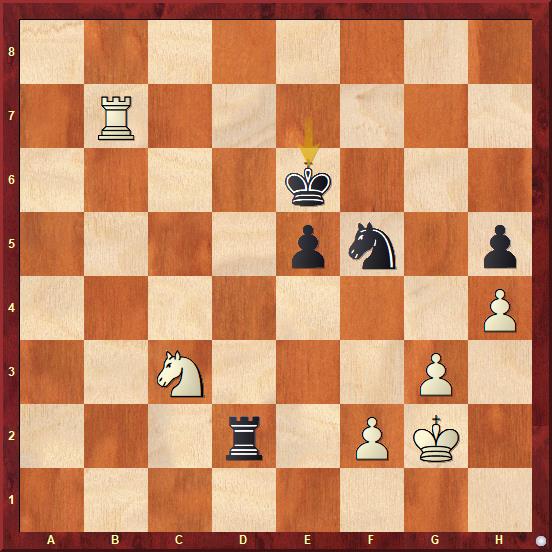
How would you continue if you were White?
After a few seconds of thought, with 26 minutes on the clock – clearly considering the rest of the game a formality – White plays 54.Rh7
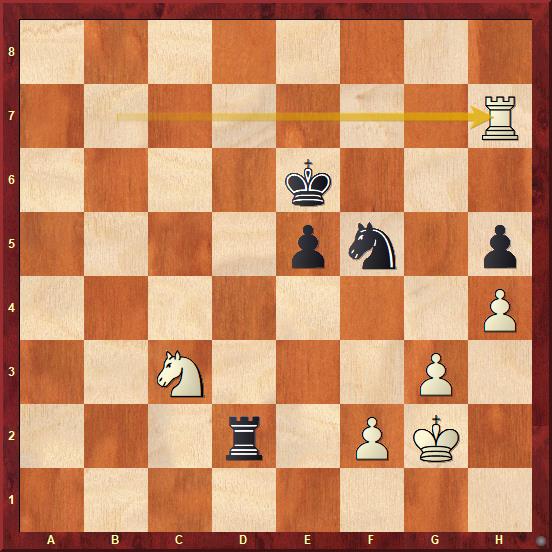
… the rest will be shown to us by a short video!
A technical calculation that will be challenging!
Two years ago, the great Swiss won at the Isle of Man, the Indian grandmaster Santos Vidit. After round 7 of the Samarkand event, he shared 3rd place and faced a difficult task: to hold Black against Keymer.
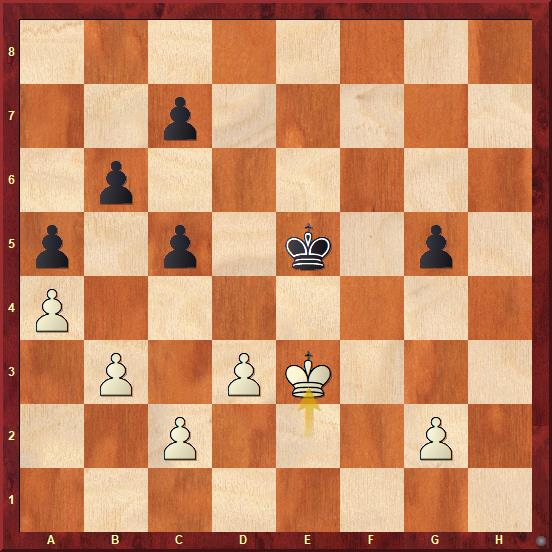
2/ White has just captured the pawn on e3. Black compensates for the worse pawn structure by a more active king position, and the position is balanced. However, Vidit, even after 25 minutes of thinking (sic!), could not find his way in the position; he made a serious blunder and lost the endgame!
How would you advise Black to continue?
Actually, whenever I see a pawn endgame played by top grandmasters, I recall Kasparov's words (loosely paraphrased): „In pawn endgames, we should be able to determine the outcome at the board!“ In other words – to calculate the variations to the end, analogous to solving an equation. It should be added that such a statement by the world champion at the time was met with… well, if not a wave of resistance, then at least some dissenting reactions. After all, at least professional trainers and chess historians should know that his last active appearance (Linares 2005) ended with a loss to Topalov… in a drawn pawn endgame! Caissa can be cruel!
Are you curious whether you handled the complex pawn endgame problems better than the super-grandmaster and 2024 Candidates Tournament participant? The full game record, including Keymer's analysis of the endgame, can be watched below – from about the 15th minute of the video. The number of variations Vincent managed to cover is remarkable, and the video is definitely worth watching!
What do you think of Keymer's analysis, dear readers? The only thing I cannot agree withis that the endgame is supposedly purely a matter of calculation and that no rules apply in pawn endgames! Yes, there is a lot of calculation involved, but… if Vidit could not calculate to exact conclusions, he should have followed strategic principles – actually essential human crutches! For example, has he ever heard of so-called free tempi?
In another way – although in a simplified form – the analysis is also presented to viewers by a very popular streamer on the Agadmator's Chess Channel.
3/ But that is not all! Vincent missed a huge chance even in the last round. In the game Erigaisi vs. Keymer both players had to play for a win given the situation in the standings. If we call the battle complicated, I believe that is still an understatement! Let's look at the key moment that cost Keymer – as we can see in the table – even a narrow victory in the entire tournament!
Combinational intuition
either we are born with it or not. Chess greats mostly claimed that to some extent, even combinational intuition (as Mark Dvoretsky called it more scientifically for example) can be improved by hard training. However, they also added: the heights reached by those who had and have „God-given intuition“ cannot be attained!
Arjun Erigaisi had already spiced up the battle earlier by sacrificing the exchange for a valuable king's protector. After Keymer's blockade of the centre 30…e4
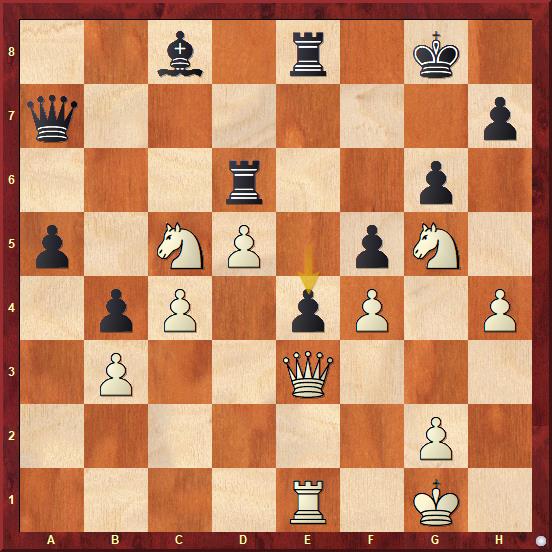
Vincent responded instantly with a pre-planned 31.Nf3??.
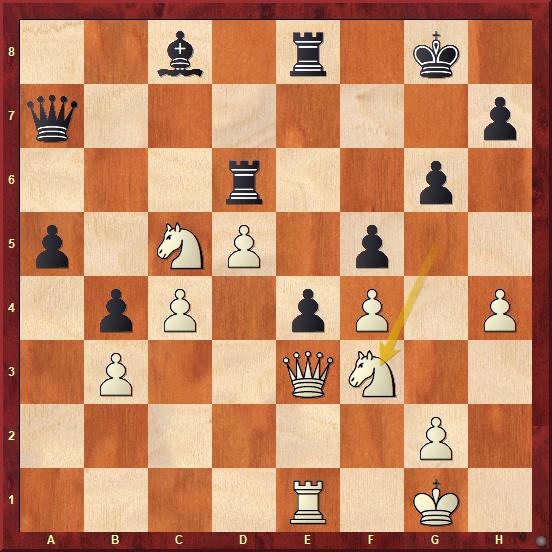
Can you find the winning continuation? Black failed to do so after more than 4 minutes of thinking!
Of course, I cannot omit the record of this dramatic game. The shocking combinational strike is shown by Sagar at about 6.52 minutes. However, Keymer could have scored even later! He definitively buried his chances only with the controlling 40th move.
A guaranteed crowd-puller
are always combinations and tactics in our beautiful game. That is why I did not hesitate for a second to reveal some gems from the Samarkand collection! 🙂
Game of round 1 of the women's tournament Omonova (2252) vs. Kiolbasa (2405). The Uzbek junior with starting number 52 (56 female players participated in the tournament) eliminated the favourite Polish international master… but how!
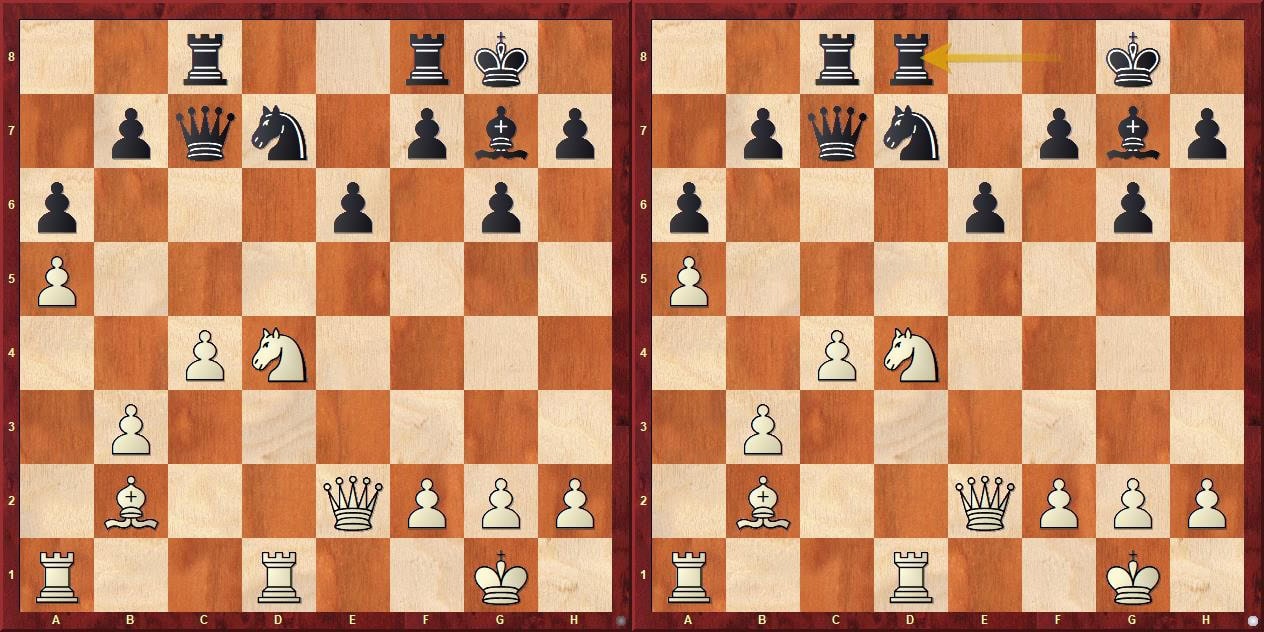
In an approximately equal position Black continued 18…Rfd8??. How did White take advantage of her opponent's completely insensitive handling of the king?
The second combination also occurred in the women's competition. In the game of round 3 Vaishali,R (2452) vs. Badelka,O (2375) the future tournament winner chose a standard and strong plan with the breakthrough g4. After 26.hxg4
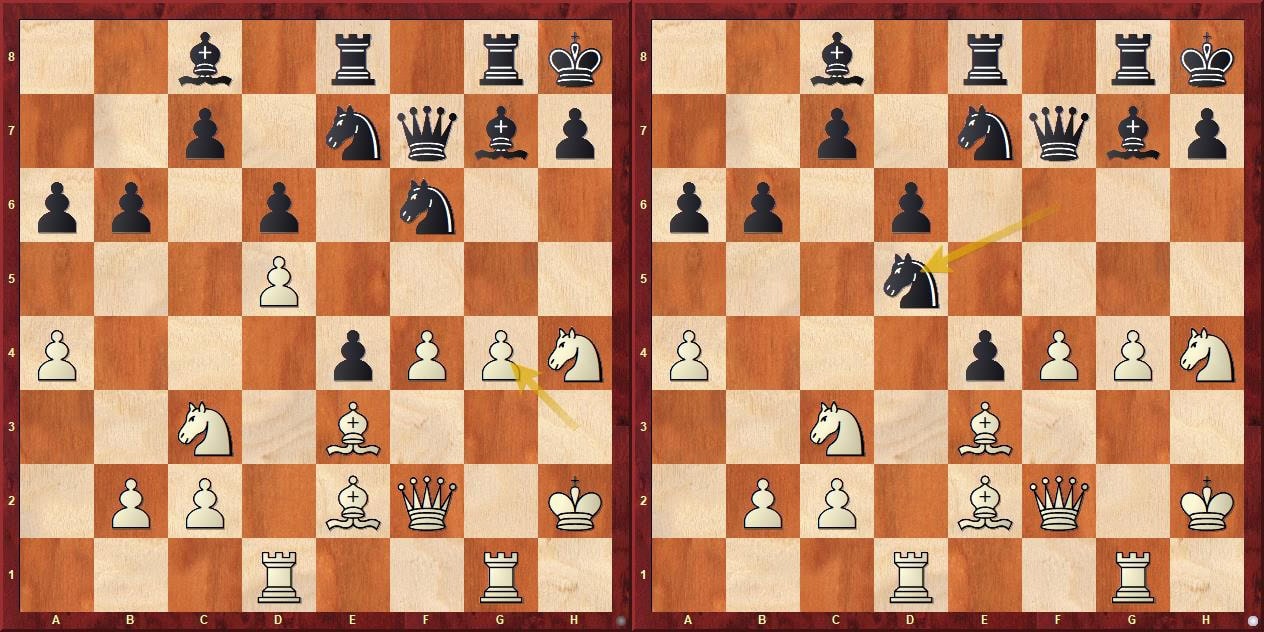
(position of the left diagram) she has the initiative in her hands, but the position is definitely not clear. The former Belarusian and Russian representative continued 26…Nfxd5. How did the game continue?
In the game of round 4 Amin Bassem (2636) vs. Divya Deshmukh (2478) Black played 32...f3.
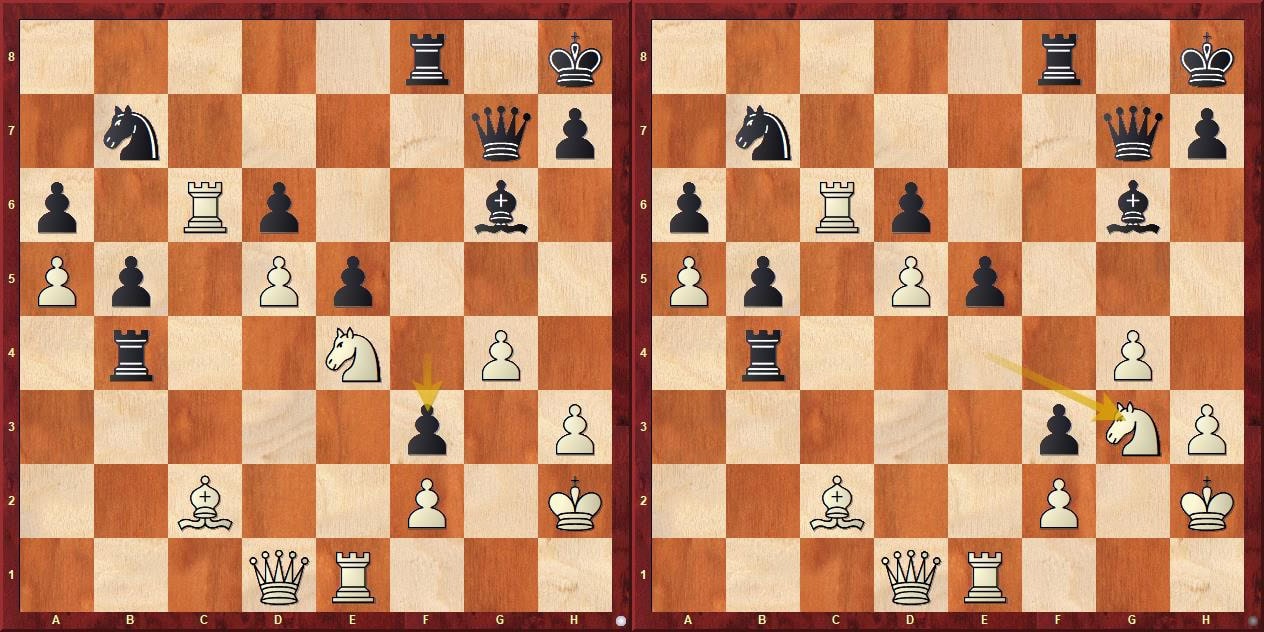
I almost suspect that this wedge driven into the position was at the same time a disguised trap! On the issue of so-called. residual (former) image – and the havoc it can wreak in calculation – I have already mentioned in some articles... The experienced Egyptian grandmaster (once a member of the 2,700+ club) probably continued exactly according to Divya's ideas 33.Ng3.
How would you punish the former super-grandmaster for his mistake?
Among combinational gems, there certainly must be something from the work of a legend! If, dear readers, you have not been successful in previous combinations and calculations as you wished, I bet you will find the solutions here. In the game Ivanchuk vs. Bacrot there followed only one move.
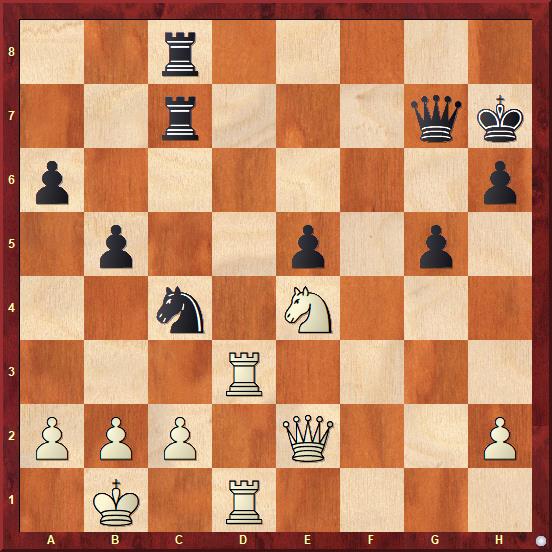
How did Vasily Mikhailovich (Big Chucky 🙂 ) continue?
The Erigaisi Phenomenon
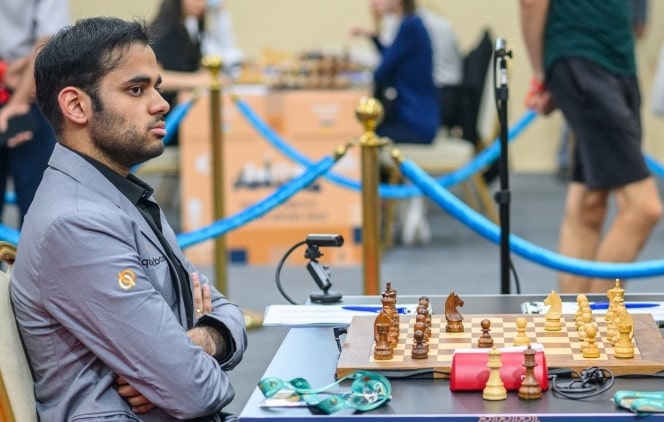
Arjun Erigaisi in a fairly typical opening position. It seems as if he radiates: „Perhaps only around move 15-20 can there be some surprise, for now I am prepared for all eventualities.“ 🙂
Generally, we see a very similar picture in almost every broadcast of Erigaisi's games. In the opening, he saves a lot of time thanks to his perfect preparation. The second thing is that he can pose new and new problems to his opponent. If the opponent overcomes them, another phase begins – often time trouble decides! Erigaisi can exert immense psychological pressure and, if I may judge, he is becoming a universal player. A versatile super-grandmaster.
And so I would say that the most significant weakness of his play is his own psychological makeup and nervousness in critical moments – greater than would be healthy.
As a witness, Arjun inevitably reminds me of the young Vassily Ivanchuk. I am not exaggerating when I write: neither of them ever had to train! And do you know why, dear readers? Because they have been and still are constantly engaged with their beloved game! 🙂
A very typical example of his play in Samarkand is the game against Samuel Sevian. In the game Erigaisi vs. Sevian arose after 37...f6 the position in the diagram.
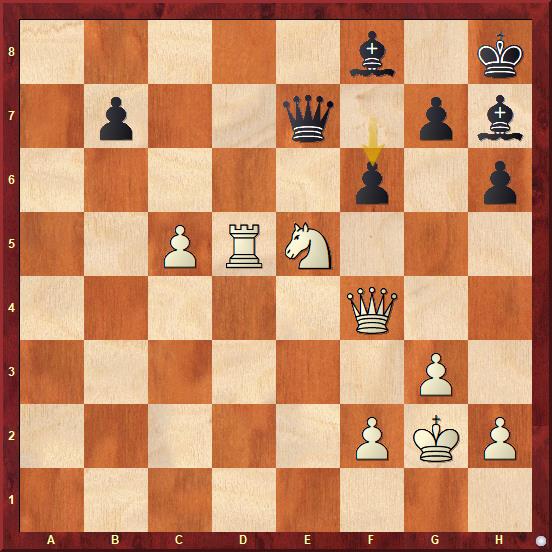
How would you continue if you were Arjun, and above all – which variations would you calculate?
Despite positional canons!
In the game of the last 11th round Vidit vs. Mishra arose after the moves 1.Nf3 Nf6 2.c4 g6 3.Nc3 d5 4.cxd5 Nxd5 5.h4 c5 6.h5 Nc6 7.hxg6 fxg6 position in the diagram!
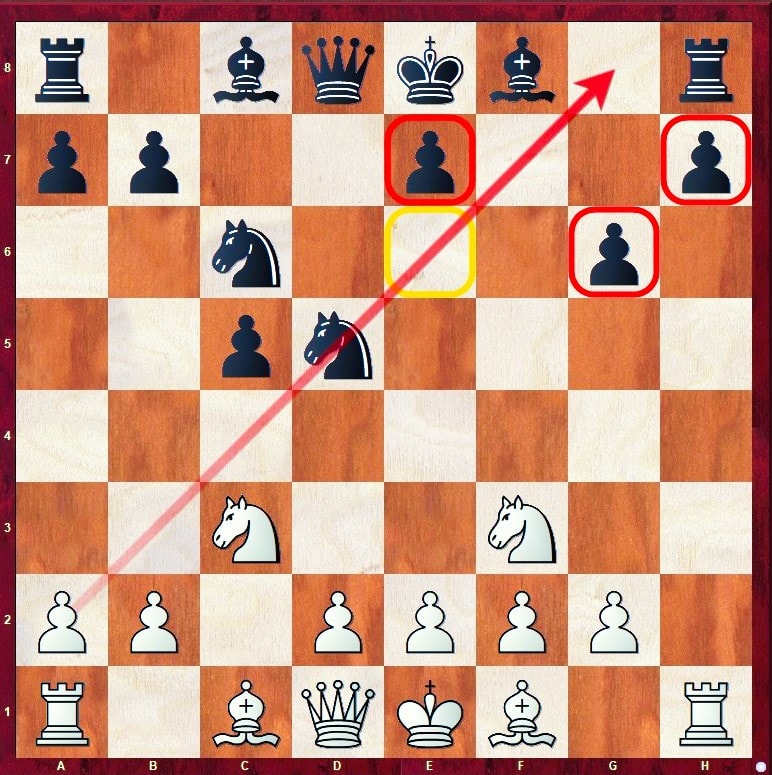
Not only experienced veterans who went through classical education (and thus long ago understood why already the Chelyabinsk or Löwenthal variation is not a violation of basic positional principles), but also the newer generation of players might be overwhelmed when looking at the diagram… if not outright faint, then at least tempted to start the construction of Black’s position immediately refuting it. The weakened a2-g8 diagonal, the weak e6 square, the isolated ‚e‘ pawn. „This could not have arisen anywhere else but inside the guts of a silicon friend! A literate chess player would never consciously play this!“ many, even erudite chess players, might declare. And yet! On the chessboard, we see a position of approximate equality – at least according to the opinion of the same silicon monsters!
How is this possible? What is the problem? How to defend such a positional crime?
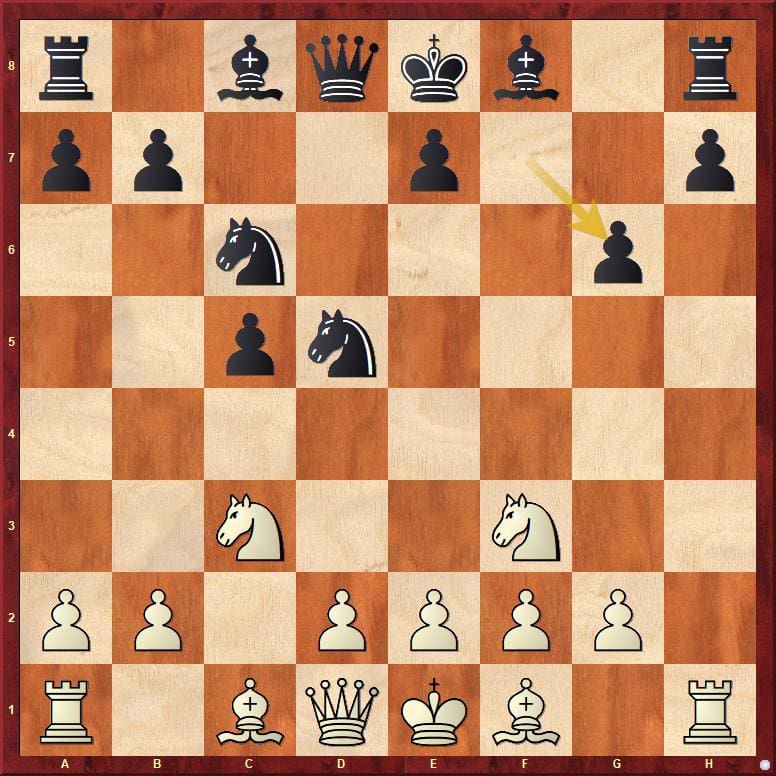
In fact, Black's play can be understood, and even explained in a classical way! White by the move h2-h4-h5xg6 gave to Black 2 to 3 development tempi.!
The approach, I offer for a better understanding of the fact that the position is approximately balanced is based on a fundamental didactic method of clarity. I have used it for a long time and call it the principle of maximalism. What is it about?
1/ Let's add (still) two development tempi to Black Bg7 and 0-0
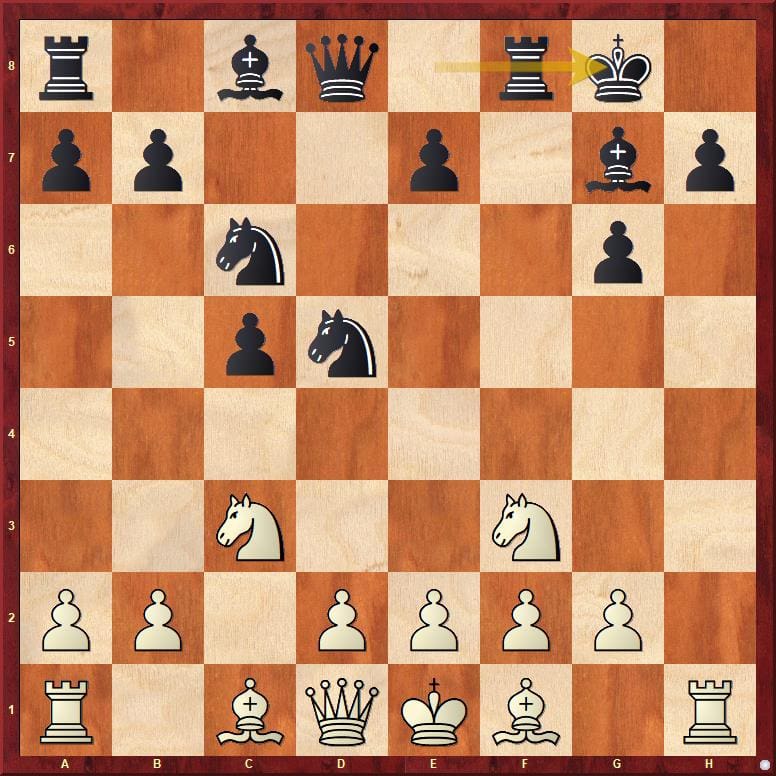
The advantage (although not overwhelmingly large) quite logically shifted to Black's side. Why? Simply and solely thanks to dynamic factors: the lead in development (time!) and White's king stuck in the centre. Because no weaknesses arose in White's camp, that position holds up, even though in practice few would want to defend it to explain briefly and simply, at the author's request to the viewers, how the situation with the strange queen development stands: !
2/ If we add (just) one tempo to Black Bg7
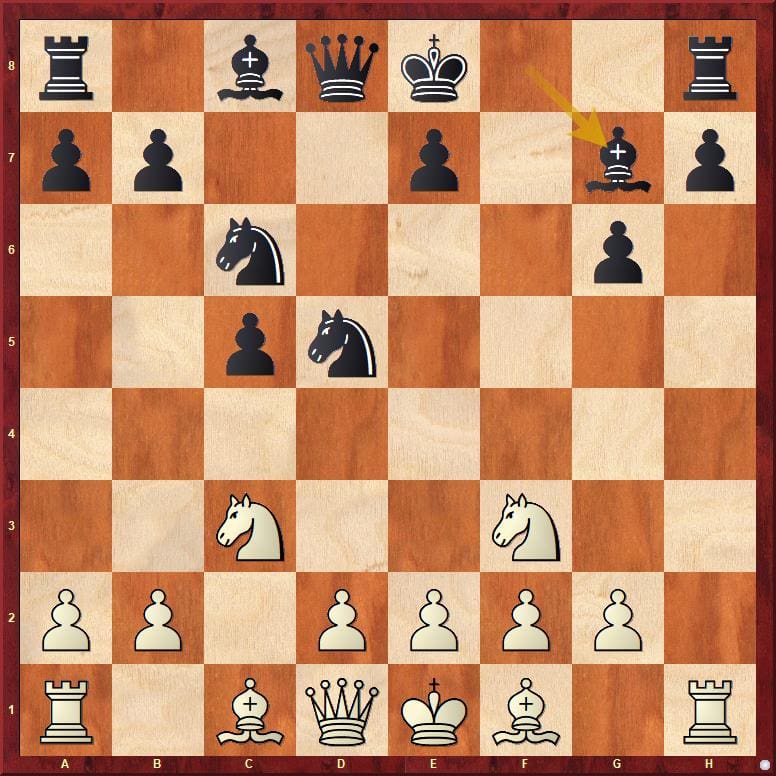
, the engine shows absolute equality with its favourite three zeros!
You might object: „Well, but White can calmly develop in the original position 8.d3 Bg7 9.Bd2.“
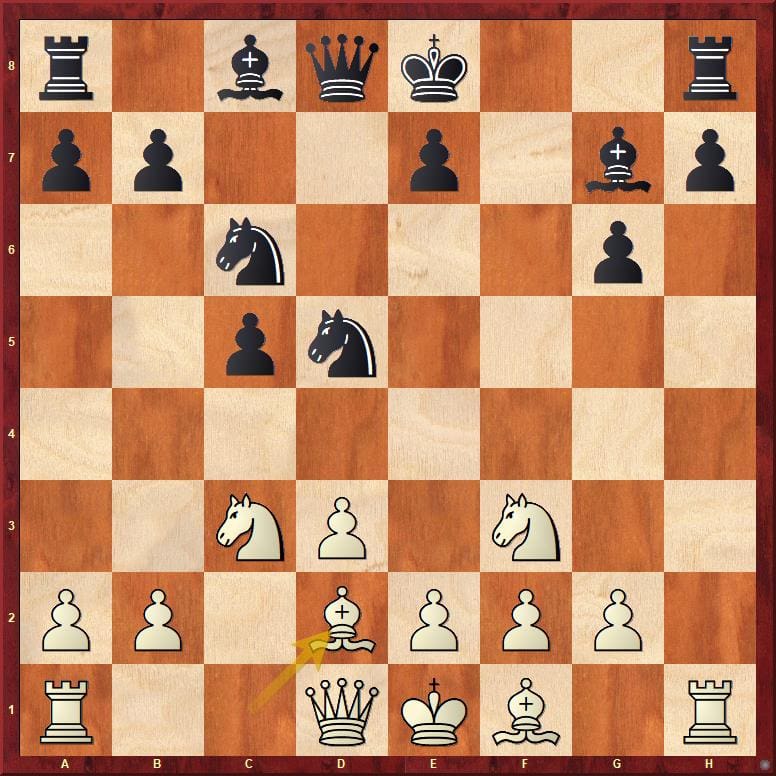
I believe that in such a case a little prophylaxis and centralisation would be welcome! After 9...Nd4! an original, lively position arises on the board. What follows from all this? Perhaps the fact that Black's positional (static) weaknesses can only matter if there is a direct refutation. Such aims, in my opinion, are promised in our basic position (after 7...fxg6) only by the strike.
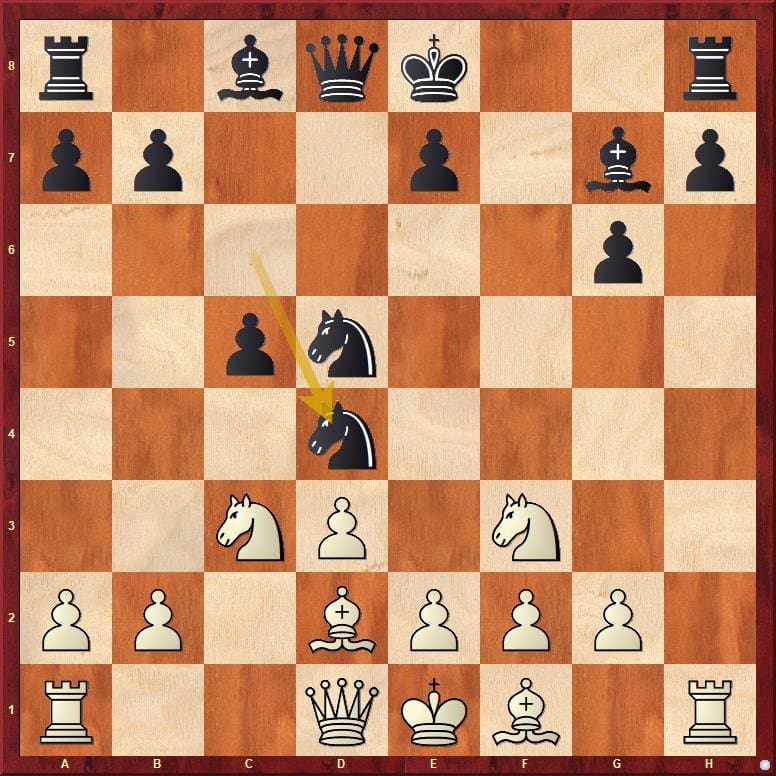
What follows from all this? Perhaps the fact that positional (static) weaknesses of Black can only be significant if there is a direct refutation. Such goals, in my opinion, in our basic position (after 7...fxg6) are promised perhaps only by a breakthrough . However, detailed and deep analyses show that Black simply holds the position. The battle of static and dynamic factors will normally have no winner. I offer an analysis of the options on move 8 in the game commentary! I will add that in the game Vidit chose. However, detailed and deep analyses show that Black simply holds the position. The battle of static and dynamic factors will normally have no winner. I offer an analysis of the possibilities on move 8 in the game analysis! I add that in the game Vidit chose When things don't go well.
When things go wrong
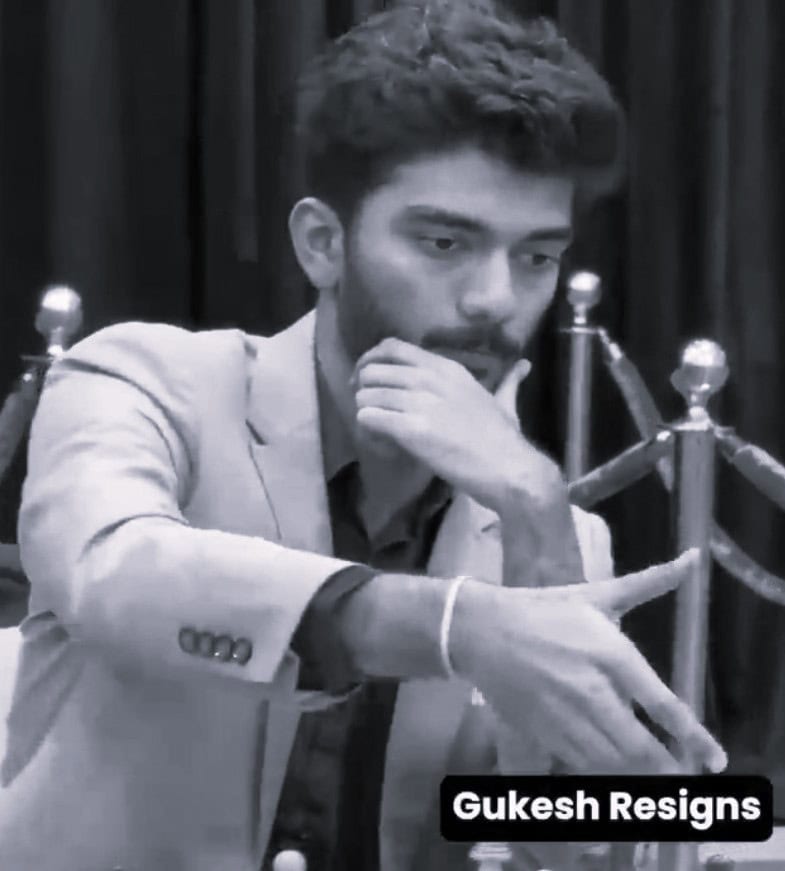
I believe that the most dreadful of Gukesh's three consecutive losses was the first one, against Mishra. I do not understand this game at all from Black's perspective, nor will I try to comprehend what variations and especially what evaluations passed through the world champion's mind…
More interesting is how many curious spectators came to watch the world champion's „slaughter“…
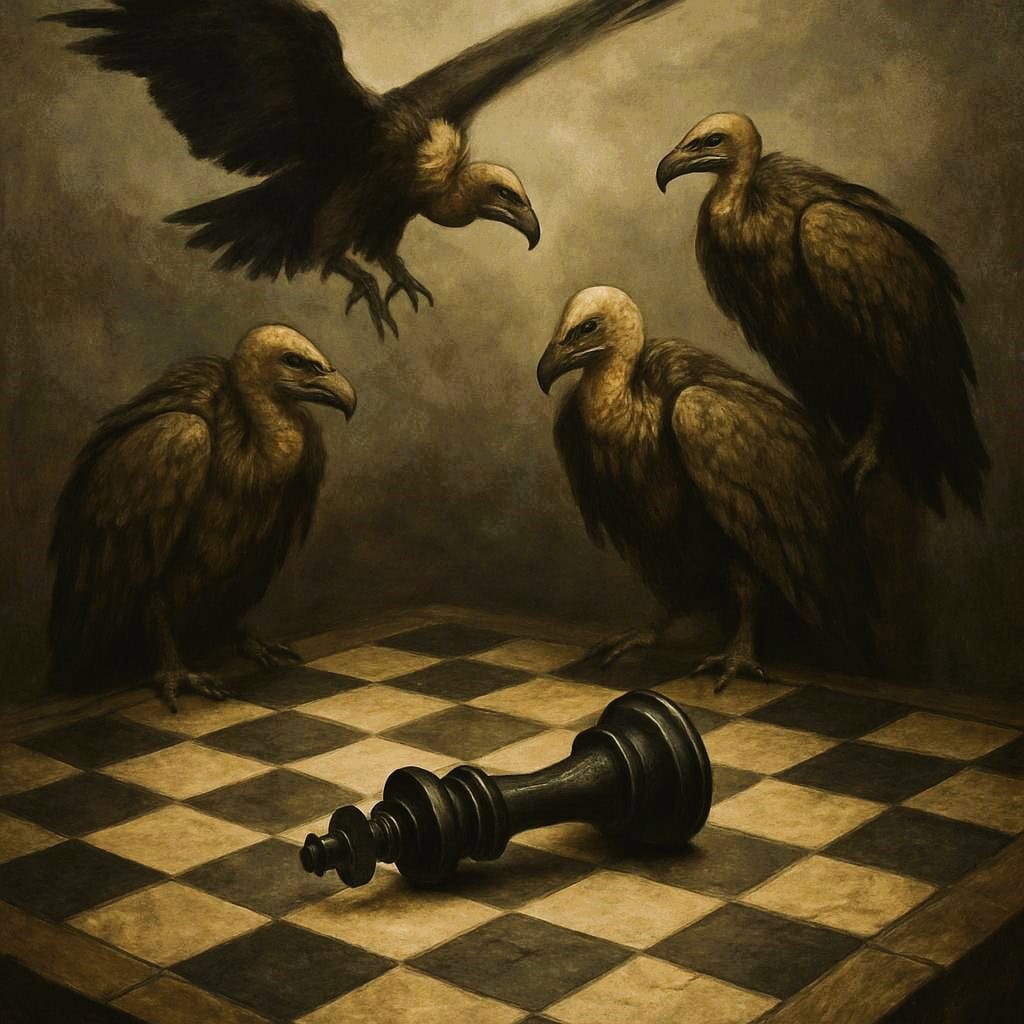
When we were young, my teammates, friends and colleagues had a fitting name for this extremely unpleasant situation (with a lost position on the board): "hopeless position" „Oh dear, the vultures are gathering!“ We even nicknamed one of the adult leaders of a rival club El Supo (a pun, in Spanish this also means „he knew it“!). I don't know how the gentleman – whom I will understandably not name – was able to, but whenever I or my colleagues resigned or were about to resign a game, it was as certain as death that he was somewhere nearby… 🙂
Thanks to his aggressive and inductive playing style, but mainly his modest and natural demeanour, Gukesh has long won my great sympathy. On one hand, colossal calculation skills, total maximalism, but at the same time a lack of classical education, and thus problems with strategy and the handling of endgames – I noticed all this already sometime during the Covid period.
Gukesh's performance in Samarkand revealed his weaknesses – as they say – in full nakedness. But this requires a separate article. My unfinished work titled „Gukesh's Donkey Ear“ (at that time I was noticing his fondness for the pawn advances a6+h6 mainly – but not only – in the Italian Game) needs significant expansion!
Briefly and clearly – I felt sorry for him, but then I noticed this short video!
I am writing this for the second time. The author of the series shows great sensitivity and amazing empathy! This video deserves recognition! And the same goes for all the fans who wish Gukesh a speedy return. Almost exactly a year ago he was breaking all records in Budapest... and it will happen again!
One female viewer wrote: „Such a much-needed hug. The boy knew he needed it. Gukesh immediately felt somewhat better, and I felt it too.“
„And he appeared in front of the building like an angel,“ I add.

The World Champion used the Caro-Kann Defence three times in the tournament – thus definitively adding it to his „serious“ repertoire (with a result of +2, -1), each time facing the now highly favoured overextension 3.e5.
I devoted many hours to analysing the following game. We actually see everything in it! The resulting middlegame positions and partly the endgames are so complex that at certain moments it is beyond human capability to correctly orient oneself – whether trying to calculate everything like the inducer Gukesh or using heuristic methods to select and choose candidate moves.
Gukesh's remaining Caro-Kanns from the first and last rounds of the tournament can be viewed in the videos below.
Winners and losers
The first part of the article, devoted then to the still ongoing tournament, focused on the leading player Parhama Maghsoodloo. I know what they say: every general is wise after the battle! I wished him success, but at the same time I remembered what he stated in an interview – at least five hours of preparation per game and listening to music. In my opinion, Parham has problems with physical stamina, which is a serious issue especially given his style of play. In the last five rounds he lost three times, which ultimately meant victory, but... only in the six-point group – that is between 26th and 50th place.
After all, the top seed did no better Praggnanandhaa, who won his last game in round 7!
Also climbing to 6 points was Gukesh, who stabilised after a crisis and won the last two games.
Daniil Dubov: it almost seems that Daniil Dmitrievich came to Samarkand to relax with 10 draws; seven draws up to move 35 – that speaks for itself!
Alexander Grischuk: probably mainly helping with preparation for his wife Katerina. At nearly 42 years old, it is hard to believe today that he could qualify for the Candidates Tournament.
Jan Nepomniachtchi: unable to get to +3, especially after losing in the last round to his compatriot Jesipenko.
Valiant Candidates against Male Supremacy
Two female players also took part in the open! An interesting fact is that both finished on -1, that is with 5 points: Aleksandra Gorjachkina a Divya Deshmukh. The order between them was decided in favour of the younger by the third tiebreak... 🙂
Divya actually continued her excellent performances. I will not demonstrate the draw with the black pieces against the world champion here. Unlike my favourite scribblers–ignoramuses, knowing from videos, reports and information what relations exist between the two young people, I do not think… well, that the game was worth studying 🙂 .
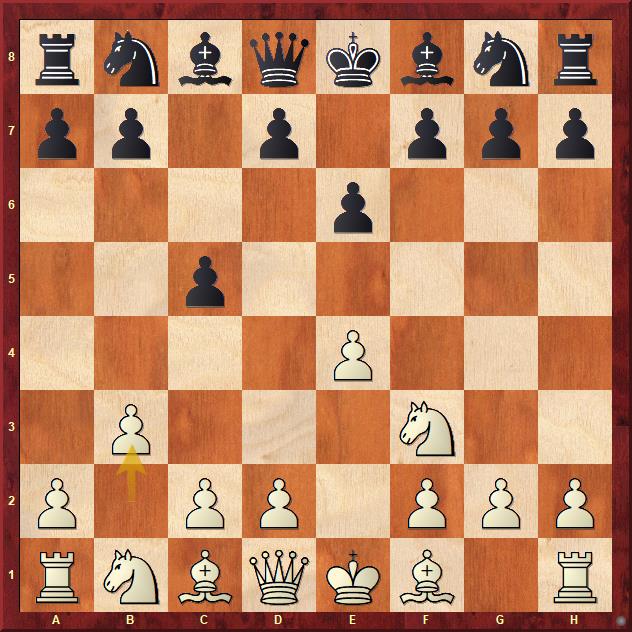
A really nice example with today a favourite system in the fight against the Sicilian with 2…e6, however, I cannot omit in the overview! In the game Deshmukh vs. Ivič White used the so-called Westerinen Attack 1.e4 c5 2.Nf3 e6 3.b3!?...
After 12…d6 the position of the diagram arose.
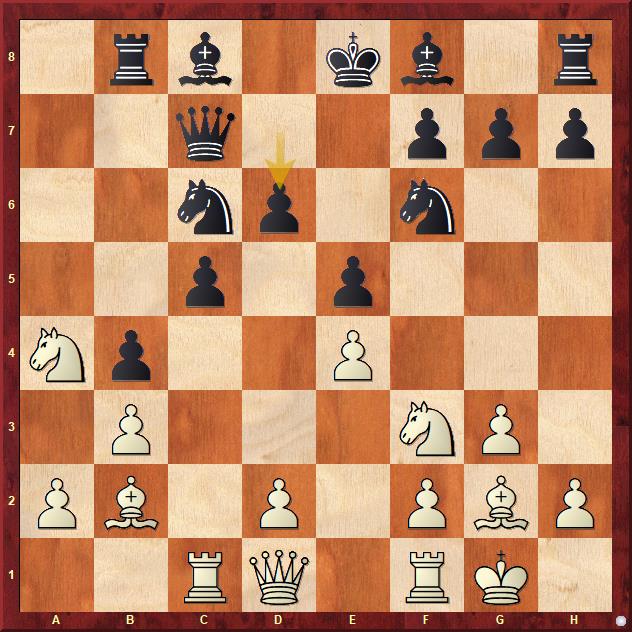
Can you find the strongest continuation in the position? White played it in 50 seconds, but our time limit is of course unlimited!
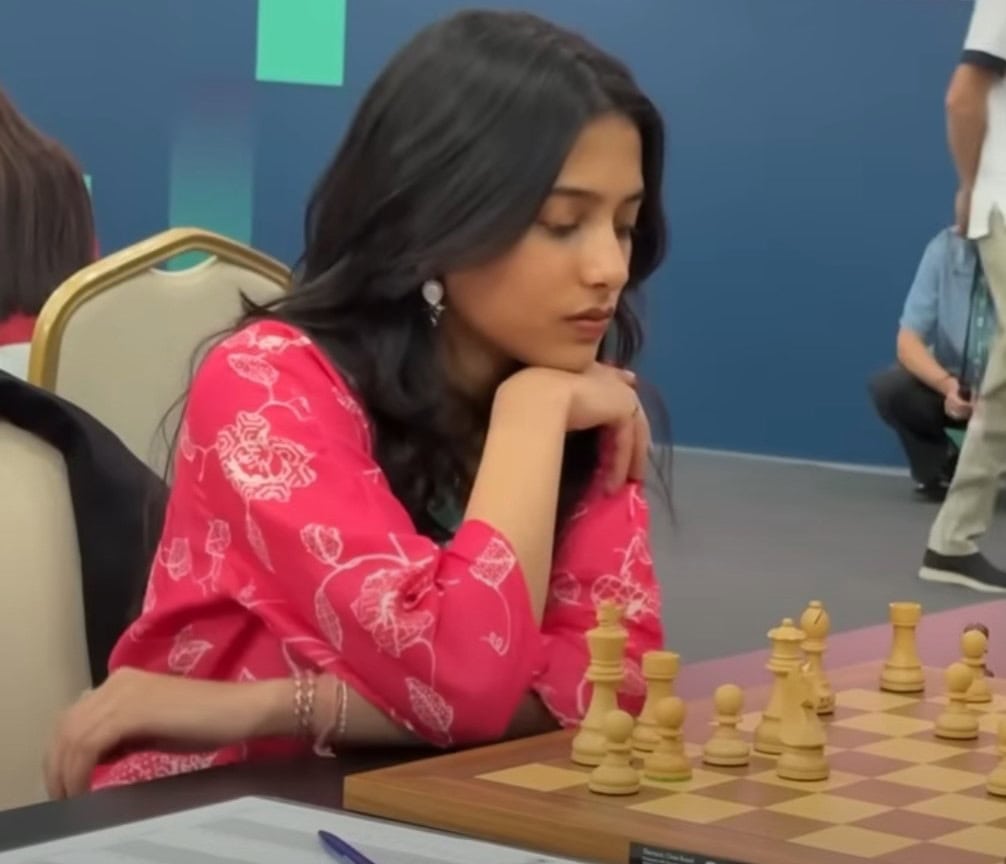
The charming Divya Deshmukh has already secured her participation in the Candidates tournament, so she could take part in the open. Her rating will soon surpass the grandmaster threshold of 2,500 and a performance of 2,613 certainly speaks for itself…
Brilliant didactician
The following video – an interview and game analyses with the tournament winner – was made a few days after its conclusion, on 17 September. Giri's general strategic thoughts impressed me the most, especially in the game against Oparin around the 22nd minute of the video! (However, the game is worth studying from the very beginning.)
Grand Swiss shook up the fate
Complete results of both tournaments are available by clicking on the files.
Overall results Samarkand 2025
At this moment, only three participants of the 2026 Candidates Tournament are known for certain:
Fabiano Caruana (best results of 2024 – FIDE Circuit 2024)
Anish Giri a Mathias Blübaum (winners of the Grand Swiss)
Probable participants further include:
Rameshbabu Praggnanandhaa (leading the FIDE Circuit 2025 by a huge margin)
Hikaru Nakamura (the highest rating in the period 8/2025 to 1/2026 counts – assuming, which is almost certain, that Magnus Carlsen will decline participation, and also having played a minimum number of games)
The remaining three spots will be filled by the winners of the World Cup (a knockout tournament) held in the Indian state of Goa from 30 October to 27 November 2025.
All samples from the Samarkand contest, that is both the first and second parts of the article, are available in the player below:

Giri's jokes on various platforms are well known. But how will the Dutch grandmaster with Russian roots perform in the Candidates Tournament? Will he earn the nickname again Drawish Giri? The 14 draws in Moscow at the 2016 Grand Swiss are surely still remembered by some readers. However, fewer chess players recall that in the „spread out“ 2020–2021 Grand Swiss he finished in third place… We'll wait and see!