How many times have you encountered an endgame of rook and bishop versus rook in tournament practice? Whether you were trying to win or defending a draw? Personally, never once, and if I recall correctly, not even in thousands and thousands of blitz games! My small survey among acquaintances also showed that most are no different. But why do I mention this? No, I do not intend to dissect the theoretical endgame in depth in this article, although it is impossible to avoid theoretical basics and principles, as well as practical examples. I would primarily like to ask the reader something else.
From 13th to 27th June – that is within 14 days – the likeable super-grandmaster Nodirbek Abdusattorov encountered this endgame 3 times in the span of 33 played games! Could this be coincidence? And if you still believe in it, then what do you think is the probability of such an event?

A correct probability calculation would be an extremely complicated task, and still without a guarantee of a truthful result. Nevertheless, I couldn’t resist and posed my question to artificial intelligence.

After initial typical misunderstandings, the AI reached the following conclusion:
„This is not coincidence – it is either intentional or a very significant anomaly.“
„Well yes, anomaly. Haven’t there been quite a few of them lately?“ I tell myself.
Of course, I will not convince some readers that reality is not reality but they will certainly agree with me. It is good to know the theoretical rook and bishop versus rook endgame, even though the Matrix probably won’t arrange for it to appear on your board 3 times in the following 33 games as well…
Nodirbek’s endgames
Let us now look at those three events one by one: Abdusattorov,N vs. Anand,V London rapid, 13th June 2025
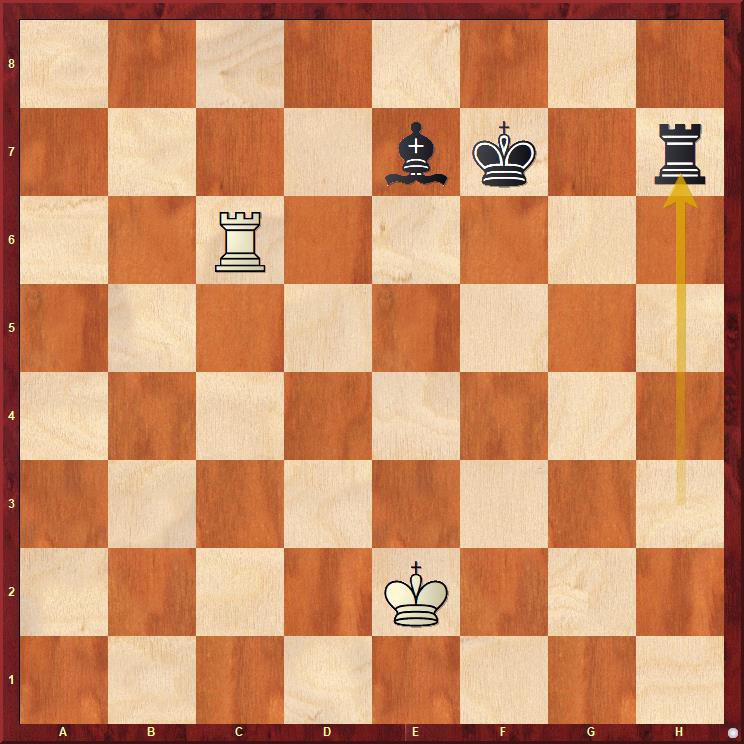
Jakubbojev,N vs. Abdusattorov,N Tashkent, 24 June 2025
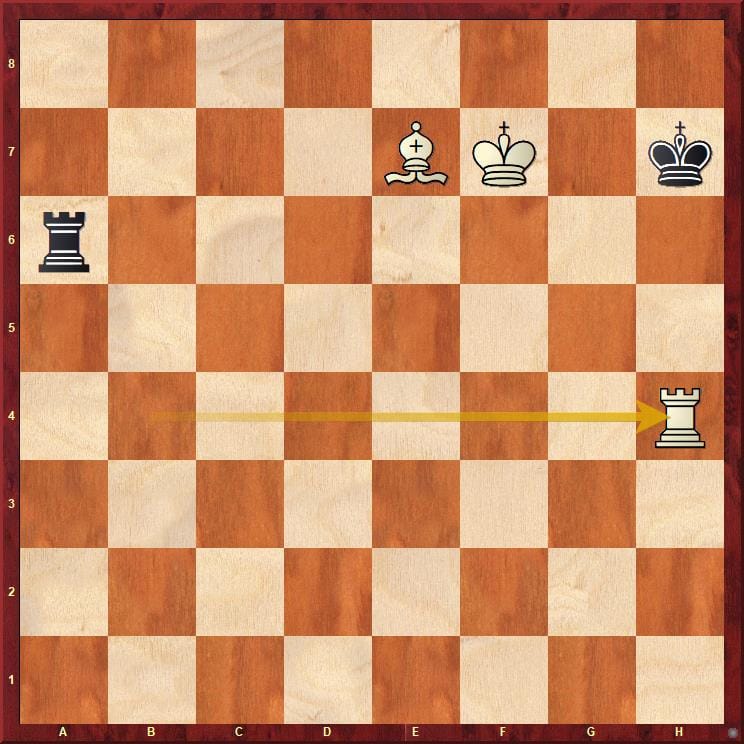
Abdusattorov,N vs. Praggnanandhaa,R Tashkent blitz 27 June 2025
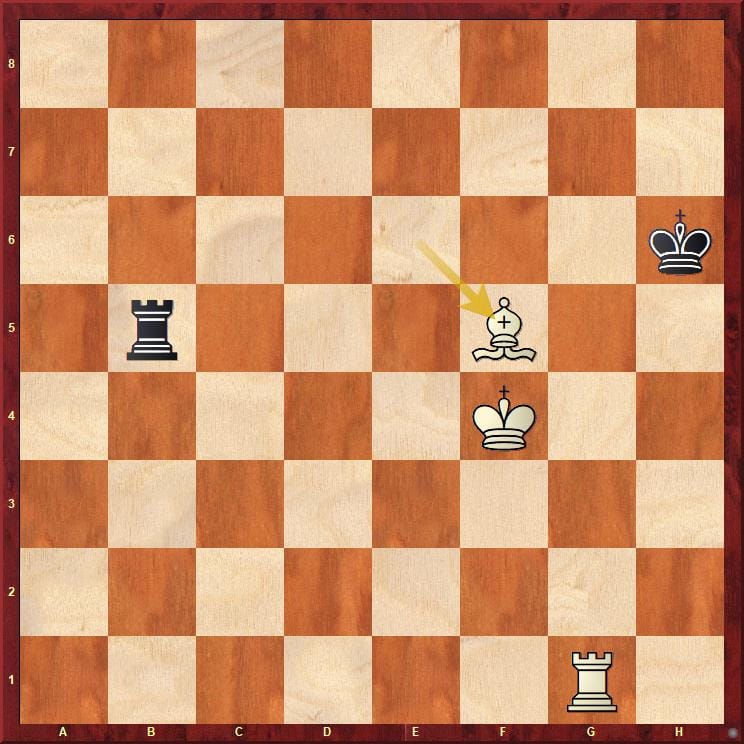
In the first game Abdusattorov – as we will see later – defended very accurately, mostly using the so-called. key squares method. I recommend the reader to watch his style of play carefully already. More advanced and experienced chess players, I think, will figure out themselves why I called this method, which various authors name differently, exactly like this. Or rather: why I adopted the terminology of the Soviet chess master and candidate of pedagogical sciences Yakov Gerasimovich Rokhlin from the mid-1980s.
I do not know how to explain that one of the strongest chess players in the world does not know how to claim a 50-move draw. Perhaps he is not alone, so I have included below a video of the end of the game. The former world champion and FIDE vice-president in one person must have had a great time… 🙂
From time to time it happens that even the best players lose an endgame R+B vs. R! In the second diagram, in the game Jakubbojev vs. Abdusattorov we see that Black not only has only one possible move, but his king is unpleasantly cramped on the edge of the board. This is the so-called Lolli position, which this Italian player analysed already in 1763 (sic). The position is theoretically drawn, but in practice it is extremely difficult to defend. While ordinary positions ‚reach a situation of the weaker side’s king being pressed only after perhaps 25 moves at most, here Black must often find the only moves (or choose from just two correct ones) for a very long time. And so it happened! Although this is the only serious game out of the three examples, Abdusattorov eventually erred and lost the endgame!
I offer the video analysis in two versions – English (the actual endgame starts at about 13:15) and Russian (14:35)
The loss of this game in round 6 on one hand actually meant that Nodirbek did not win the tournament in Tashkent in the end, but if the unfortunate 129...Rc2?? he did not play it, and there would not even have been a threefold repetition of the endgame!
The last game that led to it was actually played only in a blitz tiebreak. Nodirbek, in a way, avenged himself, but still missed out on first place in the tournament!
Observant readers – viewers surely noticed that the nerves of both young players were so tense that White even overlooked a one-move mate! Well, as if fate willed it: Black also had an unpleasantly entangled king on the file h.
Analyses of all three endgames can of course be found by the reader in the players below. However, for the analysis to make any sense, it is necessary to learn at least the essential basics of this theoretical endgame!
I divided the theoretical part into three chapters. In the first we will get acquainted especially with the basic and truly historical position of the Rook and Bishop versus Rook endgame.
In the second and third chapters we will then focus on the two main known defensive methods. I will say straight away that while the computer immediately tells us the result thanks to the tablebases, it can never to learn methods! It will not help in cases when we want to win the endgame, nor if we find ourselves in the role of the defending side! However, even a player with a rating around 2000 can, after a moment of thought, systematically strengthen the stronger side's position and coordinate all three pieces (for example, it soon becomes clear that the bishop must be used as a shield against checks from the opponent's rook), while unplanned defence leads straight to disaster!
How far did Philidor's genius reach?
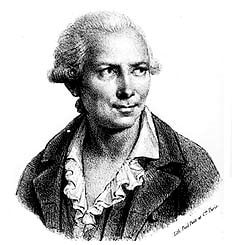
François-André Danican Philidor (7 Sept 1726 – 31 Aug 1795) perhaps also earned a significant place in history as a musical composer, but his contribution to the chess treasury is invaluable. I would even not hesitate to call him the chess da Vinci! We still rely on his discoveries and principles in all phases of the chess game today.
It was probably Philidor who was the first to seriously study the Rook and Bishop versus Rook endgame. In his work Analysis of the Game of Chess (1749) he presents this position.
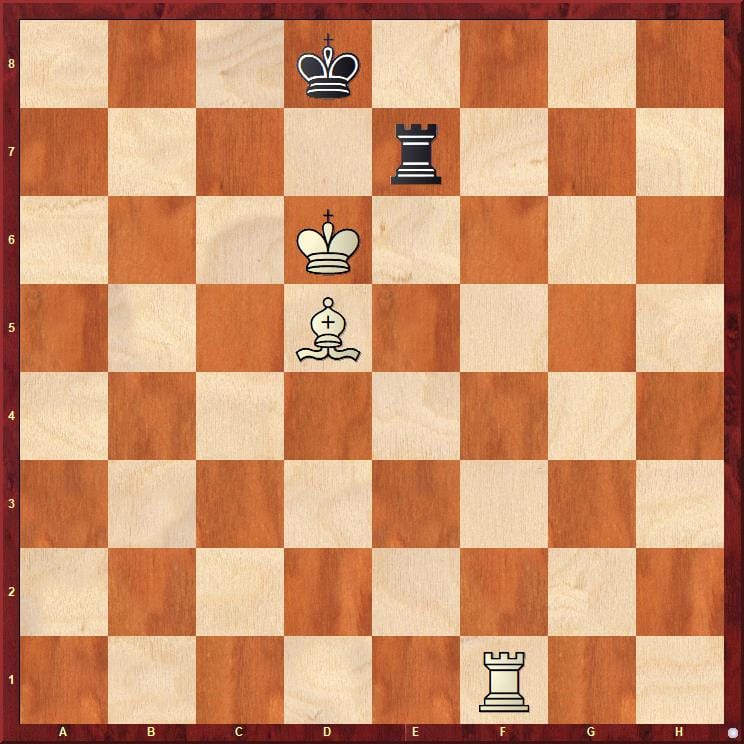
The position in the diagram still has extraordinary significance. White to move here wins (Black have draws), so the stronger side in the game ultimately tries to reach this or a similar position, while the defending player must avoid it! After 1.Rf8+ Re8 White wins most quickly 2.Rf7! (with the idea 3.Ra7)
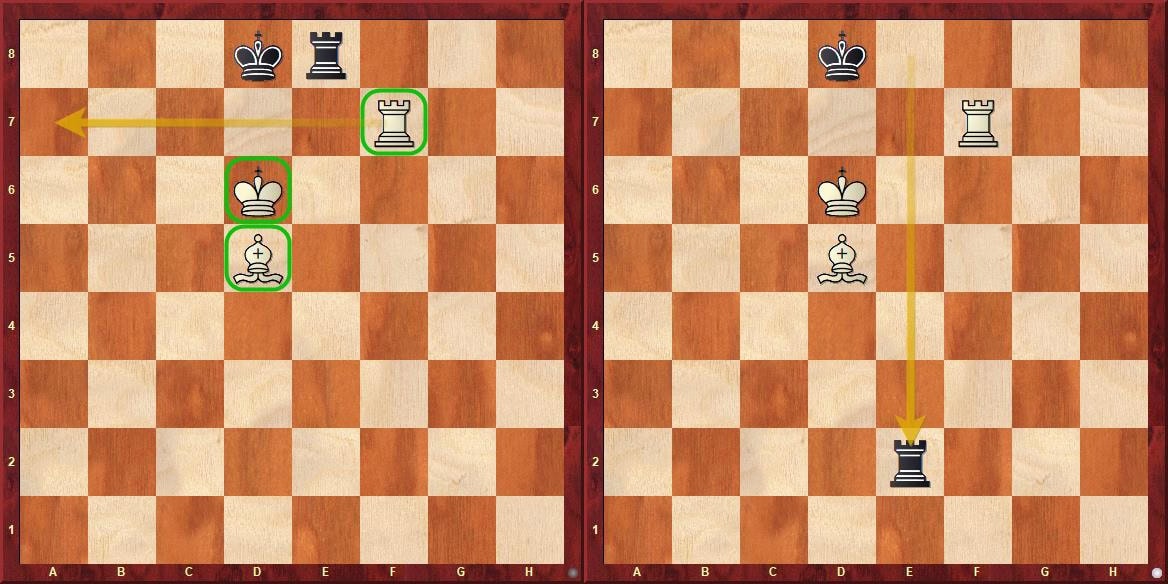
, after which Black's defence is most demanding 2…Re2! Let's be clear: if the weaker side knows Philidor's analysis but White does not here, it is extremely difficult in limited time to find the roughly 15-move win that relies on forced manoeuvres! Therefore, all competitive players should know Philidor's analysis, but what is more? They should return to it from time to time!
In the player below I have placed two examples of the winning procedure. Various authors contributed to them and I have also tried to supplement them with additional didactic comments.
I cannot resist the following remark: I would really like to see with my own eyes (now, in the first quarter or third of the 21st century) a 22 or 23-year-old young man who could create the entire analysis with his own head!
Readers who prefer videos can watch Philidor's analysis in Russian here.
Stála Ignorance of Philidor Caruana's technique?
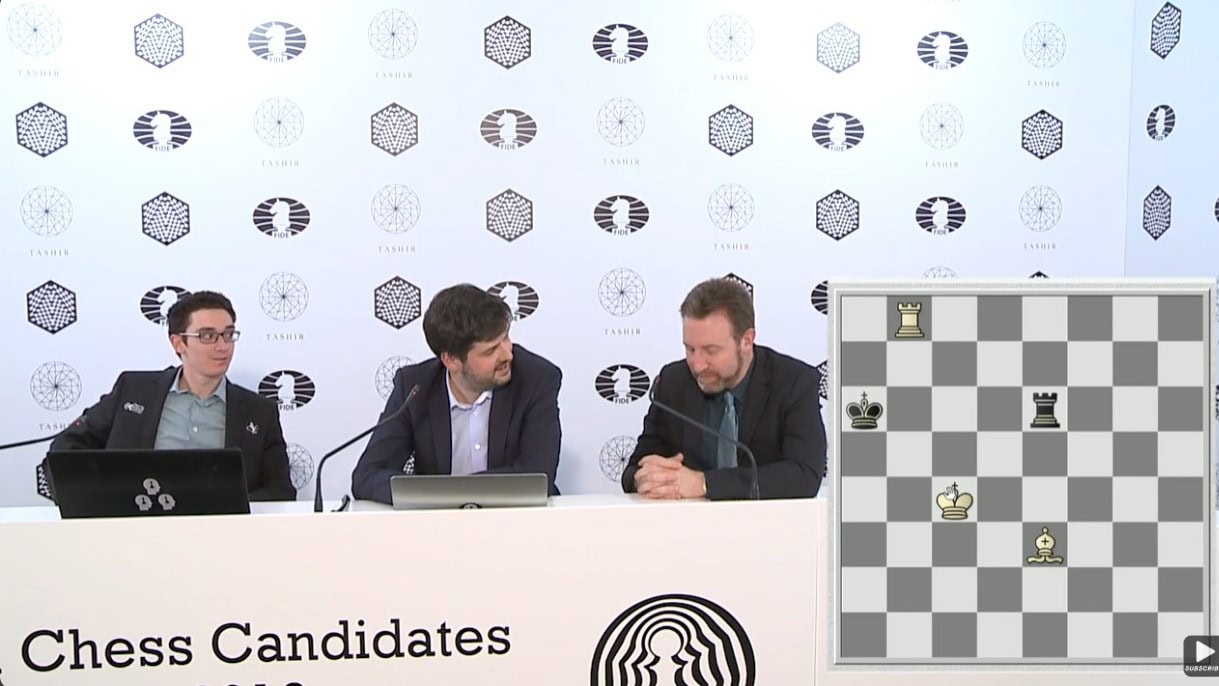
The R+BbR endgame including the Philidor position even appeared in the penultimate round of the 2016 World Championship Candidates Tournament between elite grandmasters Caruana and Svidler. Petr Svidler defended successfully for a long time, but still did not avoid serious mistakes! Fabiano then received a gift in the form of the Philidor position. Had he known the exact analysis of the quickest path to victory, the entire Candidates Tournament might have ended differently! However, Caruana was then pressured not only by the clock but also by the 50-move rule. In the end, a (comical or tragic, take your pick) situation arose where Black claimed a draw just a few moves before forced mate.
Let us first look at the video. It is a post-game press conference of both participants (around 15:30). Svidler does not lose his usual humour here. He obviously knows the Philidor position, but he said he was bothered that it does not occur on the 8th rank but on the a, file, so it is rotated by 90° 🙂. .
The entire course of the endgame including the preceding struggle that led to it can be replayed below by the reader; both with my notes and with comments by the then future GM Pavel Šimáček.
Methods of defence and theoretical disputes
The worst thing the weaker side can do in an endgame is to play without a plan and at best just try to avoid falling into the Philidor position. This is in fact almost a sure path to ruin. True, world chess of all eras has known and knows talents who – I believe – do not need to know any methods of defence. They simply feel, which progression to a given position belongs. Among such geniuses is certainly Magnus Carlsen (below we will be able to replay one example from his almost childhood years). I once saw the position defended by the brilliant Georgian player Baduur Jobava. He was sitting at the table somewhat to the side, looking into the distance and after the opponent’s move just glanced at the position and within at most a few seconds played...
After all, if we replay such endgames of extremely gifted players, we find that they defend exactly according to those two basic recipes most often cited by theory!
Another interesting dispute perhaps still takes place around the following question: „Can the stronger side force the enemy king to the edge of the board (meaning the last or first rank or the edge files) even if the opponent defends in the best possible way?“
For example, Luděk Pachman and the above mentioned Jakov Rochlin believed this was not possible. Luděk Pachman himself even included a diagram in his book to support his claim (I will say straight away that it did not convince me). Using modern methods – that is, with the help of tablebases – it is also difficult to prove or disprove this, because as we already know, the king entering the 8th rank does not automatically mean defeat and the system usually offers you more if not many ways to a draw.
My opinion, observed from numerous examples, is therefore that the stronger side's king on the edge of the board does indeed necessarily put pressure, but not for a long time.
A practical or logically thinking chess player will probably raise a serious objection quite quickly: „And what practical significance do these considerations or disputes actually have? After all, the weaker side's king can be on the edge of the board already at the moment our endgame arises, as we saw above for example in Abdusattorov's game!“
Cochrane's defensive method
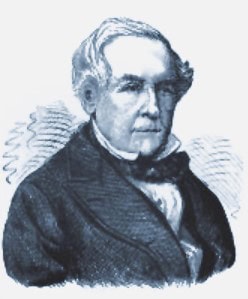
John Cochrane (1798 – 2 March 1878)
When this Scottish master's name is mentioned, knowledgeable players who do not disdain books will most likely recall the famous gambit in the Russian Game: 1.e4 e5 2.Nf3 Nf6 3.Nxe5 d6 4.Nxf7 Kxf7
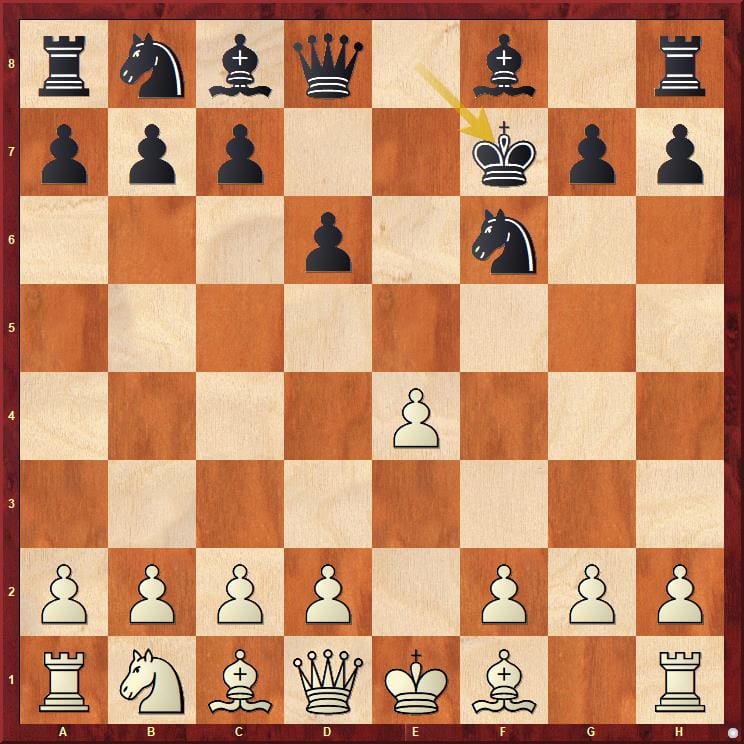
with which many surely have fun in blitz or bullet games.
In the game Dzhindzhichashvili,R vs. Torre,E In 1984, the Filipino grandmaster used Cochrane's method for defence.
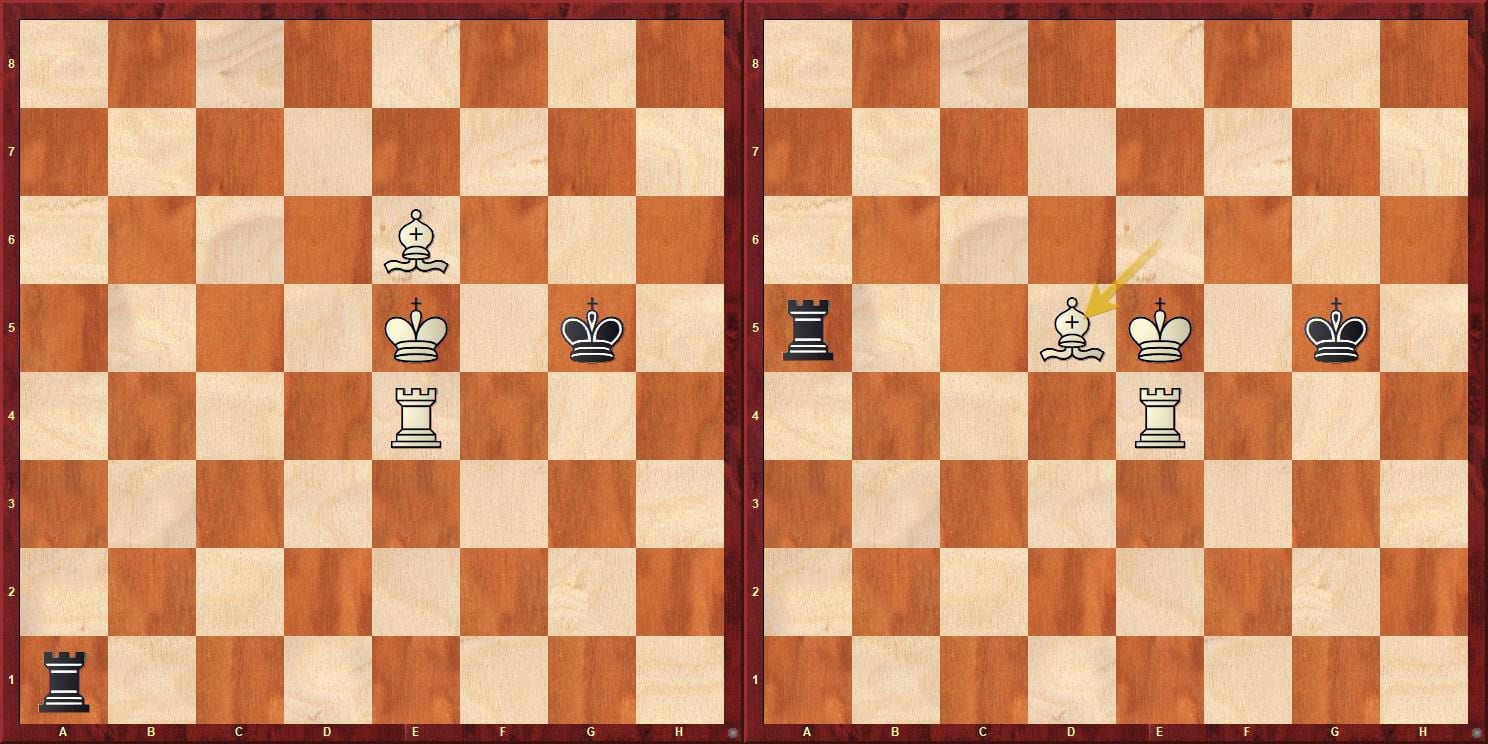
In the position of the left diagram, the following occurred 104...Ra5+ and logical 105.Bd5 only then does the actual defensive method come into play. This may initially seem strange or paradoxical to you, dear readers. What followed was 105...Kh5!
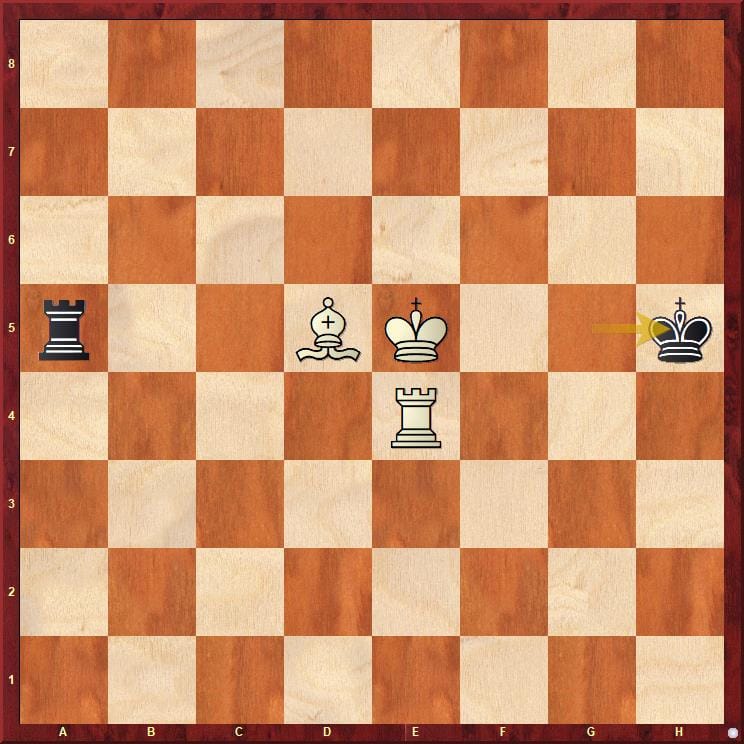
(I note that a whole range of other moves also draw here). Bold staring of the king eye to eye is in fact as we will see in a number of cases prophylaxis.
In the game Budnikov,A vs. Novik,M 1991 White played 98.Rg1+
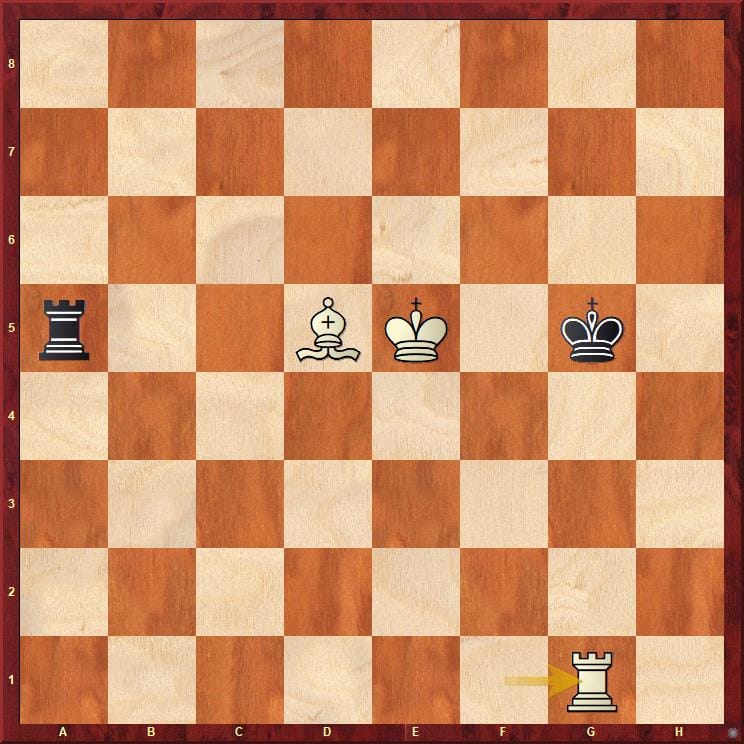
Allow me to set a small test:
1/ Where would you retreat the black king? 2/ Where would you not retreat the black king?
In the following video we can first review Philidor's analysis and at about 7:13 the author then introduces us to Cochran's method.
Rochlin's defence of key squares
Not only in my opinion, observed also in practice, is this method more reliable and less prone to possible mistakes. After all, in the practice of strong players we quite often encounter a combination of both methods, that is flexible switching from Cochran's defence to this one.
What is it about? Let's look at the diagrams.
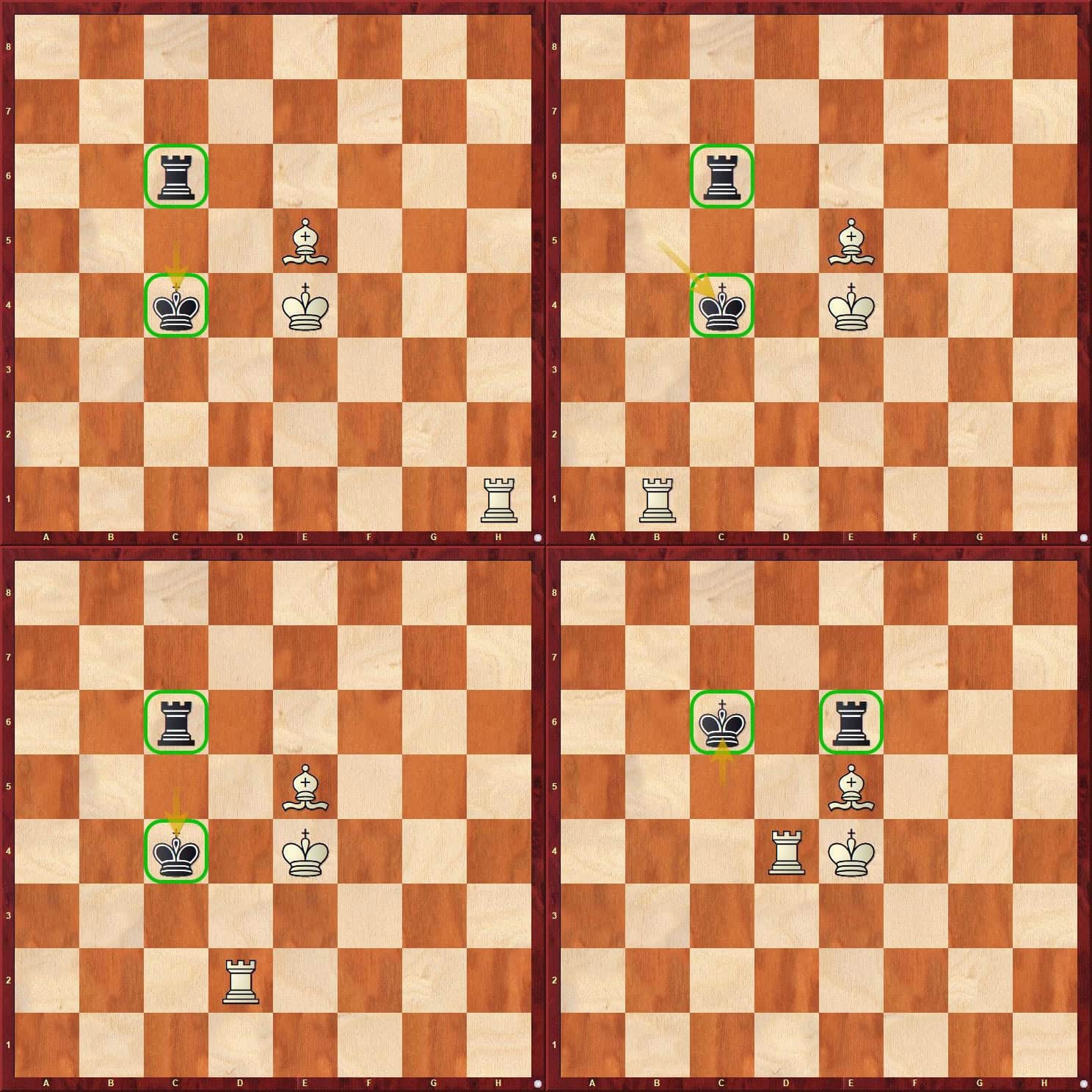
All 4 positions, of course, arose in one game. Black tries to keep his pieces close together, one square apart on the file or rank. We see that the weaker side does not even take into account the often unpleasant opposition situation. It is good to keep in mind: if we leave the key (or nodal) defensive squares with a rook or king, we must have calculated a short variation with a return to this ideal.
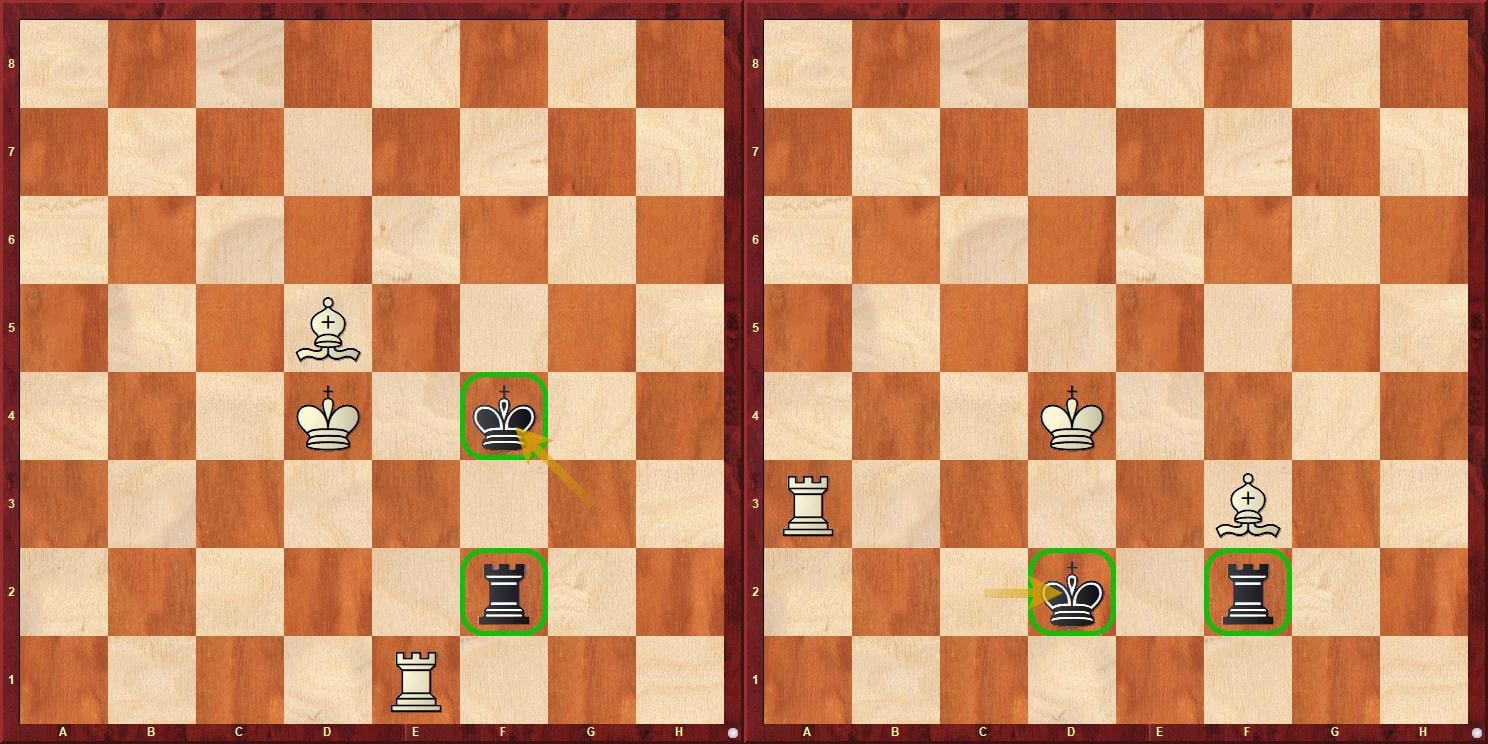
The positions of the next 2 diagrams illustrate the use of the key squares defence method when White, on the contrary, has a light-squared bishop. The diagrams also come from one game. While the left diagram shows a situation we already know, on the right White has already managed to drive the opponent back to the seventh rank. This situation always occurs when the stronger side plays elementary correctly. Incidentally, some authors refer to Rochlin's defensive method in their works as the defence method of the seventh or penultimate rank. In my opinion, this is not entirely didactically accurate. The method can (and should!) be used, for example, even in the centre of the board, that is, not infrequently at the beginning of the whole 50-move process.
The key squares defence method is inseparably linked with the following small tactics!
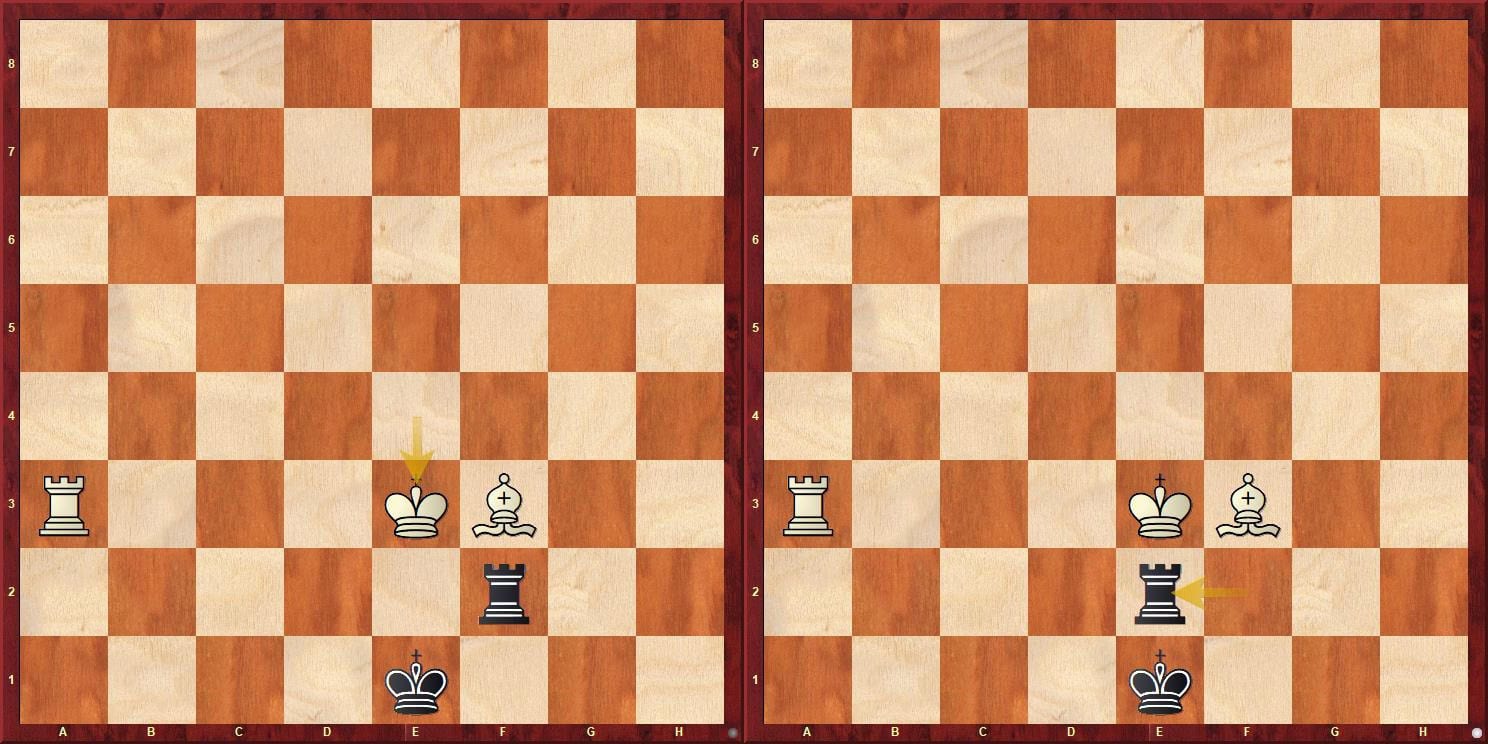
I believe that with precise play White forces the situation of the left diagram or, of course, a similar one. This often results in a draw only stalemate combination Be2+!
How better to start the practical part than with a demonstration by the most qualified, the 16th World Champion Magnus Carlsen. Let us first watch the video with the musical insert (which I recommend turning off). The endgame and thus the key squares defence method used by Magnus then appears in the video at 14:11 minutes.
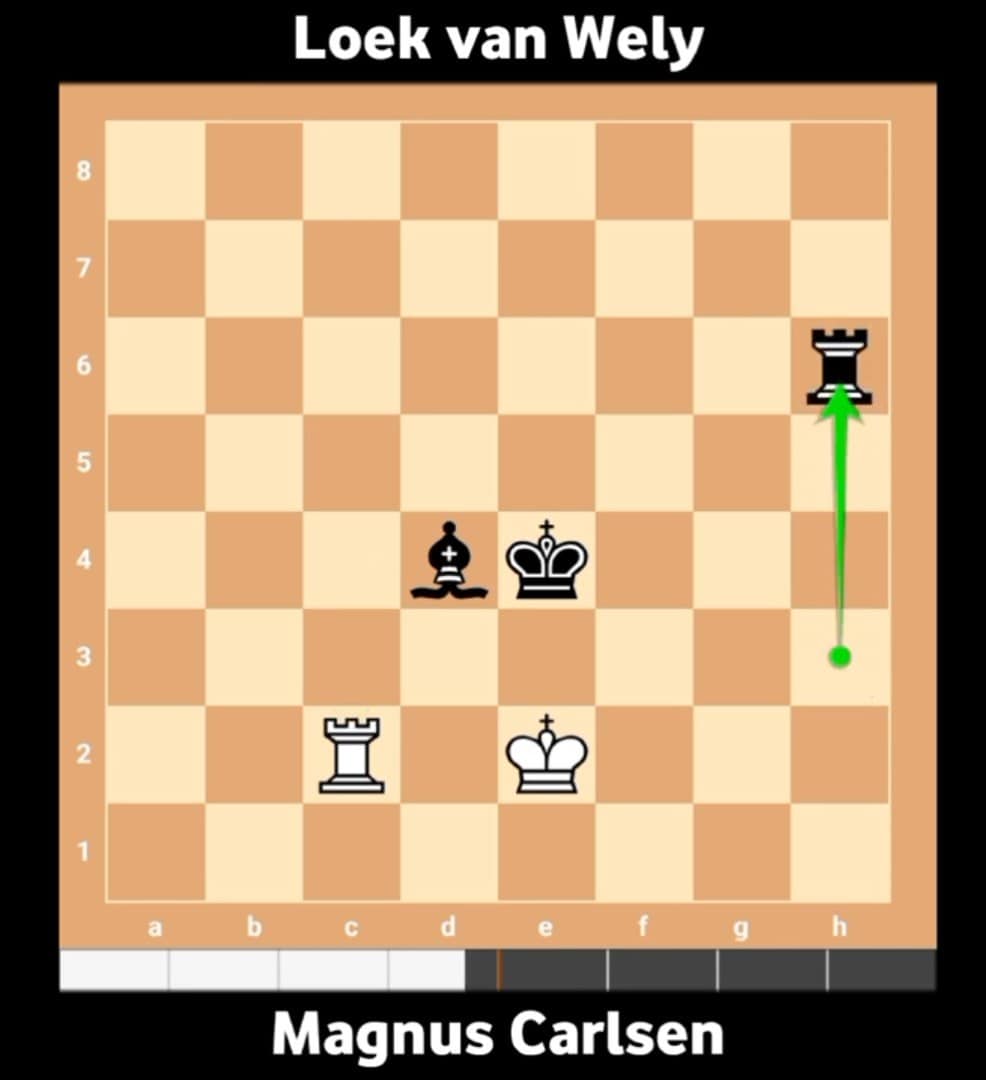
The brilliant defensive technique certainly deserves deeper study. In the player below, the reader can see again not only Carlsen's defence of the given endgame but also how it actually arose on the board.
In the player below, I have inserted both a kind of clone of the previous game and, at the same time, the reader will find several theoretical examples of Rochlin's key squares method.
Training videos
On the internet, one can find an enormous number of more or less quality videos dealing with defensive methods and, of course, often demonstrating the basic Philidor position. For readers who prefer this form of absorbing knowledge, I have selected three.
The first of them, I must say, is of good quality, is in Russian and comes from Oleg Solomacha. Second overview, this time in English, comes from GM Jesse Kraai. And finally the third video is a kind of long introduction to both the practice itself and the experience of the Czech chess player Jan Sikora. Despite many interesting points the author makes, I recommend taking his explanatory method with some reservation.
Analysis of Nodirbek's anomalous of these
Now that we have at least a basic knowledge of this endgame, we can proceed to a more detailed analysis of all three endgames which – I remind you – occurred in the practice of one of the strongest chess players in the world over the course of 14 days, a span of 33 games!
While in the first of these Nodirbek mostly defended using the Rochlin key squares method, the other two examples differ significantly. The black king is in both cases pinned to the ‚h‘ file‘!

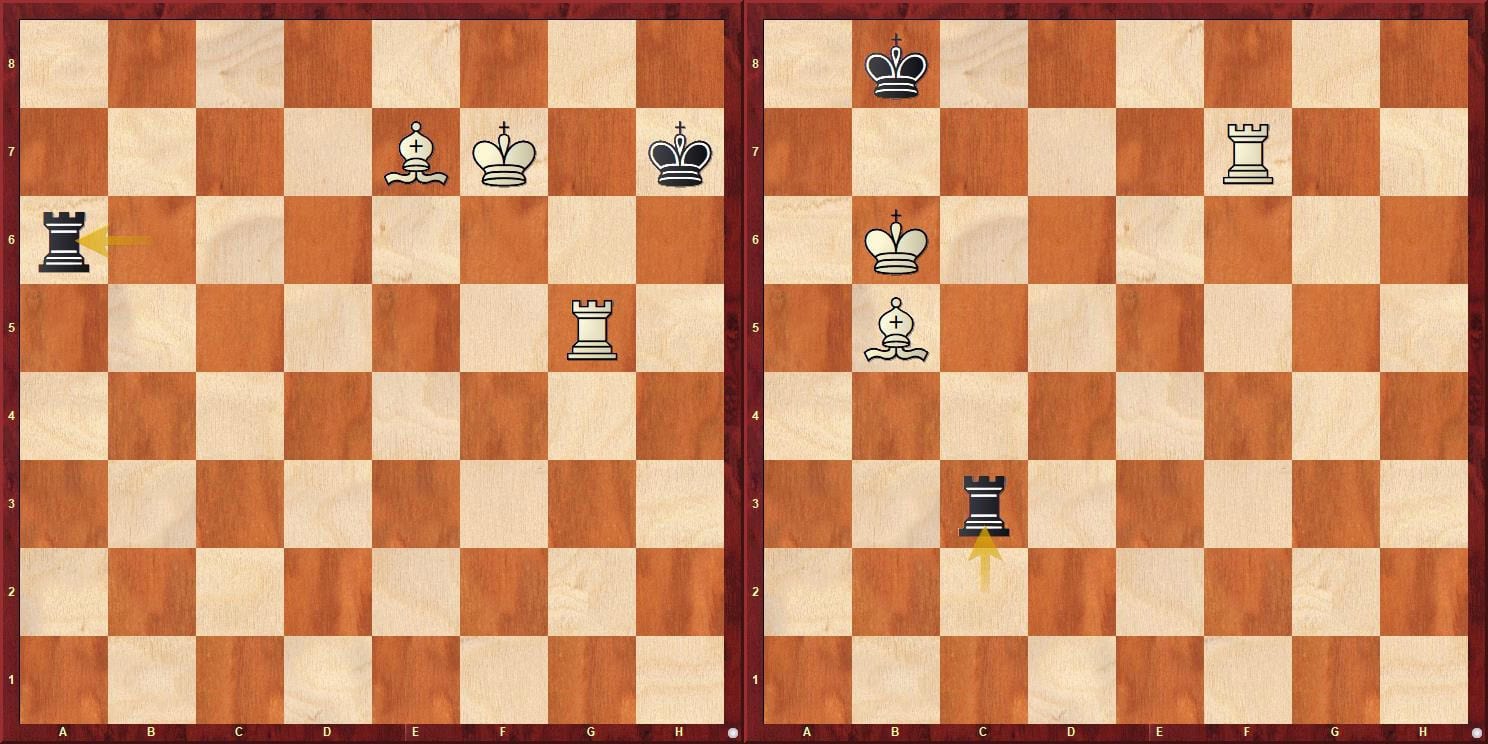
I remind you that the diagram on the left comes from the game Jakubbojev vs. Abdusattorov. The second diagram then shows a position analysed by the Italian chess player Giambattista Lolli from the year 1763!
Let us read what the authors Jurij Balashov and Eduard Prandstetter write in their book Chess Endings (1991): "With the kings placed on this file, a win cannot be forced, although defence is very difficult."
During the analysis, they add in an analogous position (paraphrase): "For the manoeuvres leading to a win, unlike in the Philidor position, White does not have enough space on the kingside."
In such cases, defence is therefore much more difficult. It is not about finding one or two non-obvious unique moves, but often a whole series. The probability of an error thus increases significantly, and with the lack of time on the clock, the vast majority of even very strong players eventually succumb.
Learning defensive methods in positions close to Philidor's, however still drawn, is of course possible, but even in shorter videos there simply isn't enough space or time for this.
Grandmaster Tomáš Polák is deeply right in his excellent reflection Grandmaster Tomáš Polák, when at the end of one of his works he writes – summarises:
Capablanca's simultaneous exhibition and the famous „Look in the Books!“
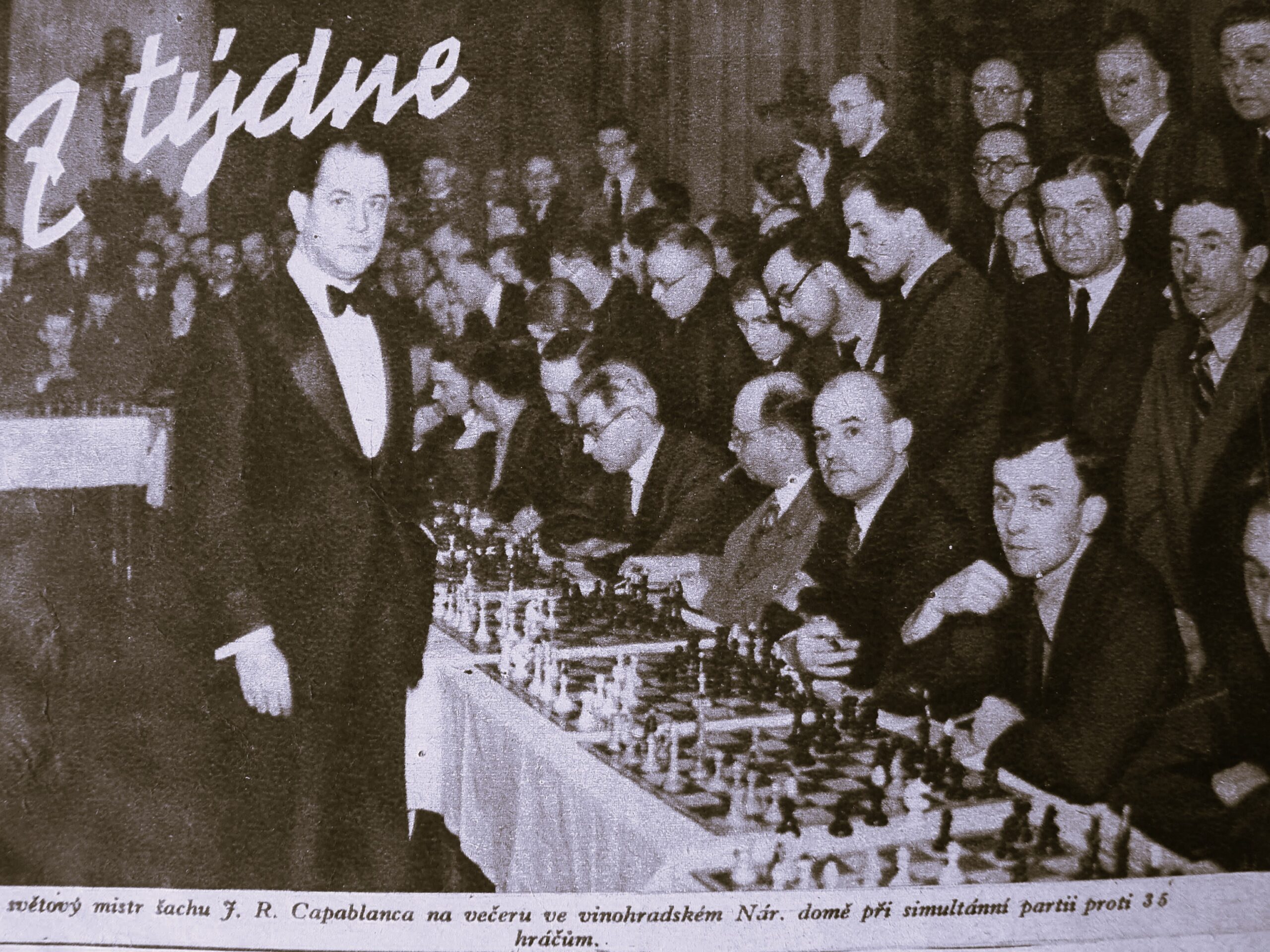
In 1935, former world champion Capablanca visited Czechoslovakia again. This time, together with the then young Salo Flohr, he played a simultaneous exhibition against 35 players. It was, among other things, a kind of generational duel. The twenty years younger and rapidly progressing Flohr (*21 Nov 1908) represented the young generation (those who remember know that if chess life had not been interrupted by World War II, a match Alekhine vs. Flohr might have happened), while 47-year-old Capa, on the other hand, representedexperience.
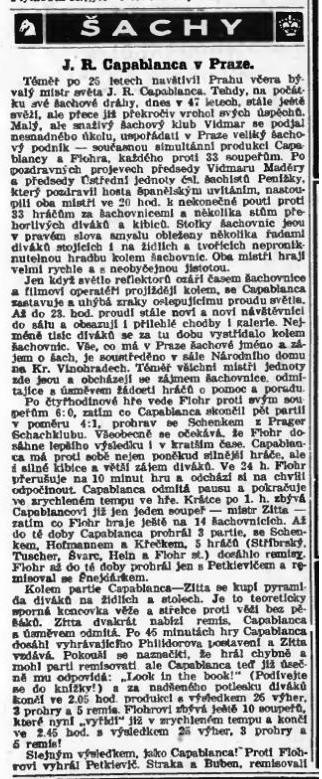
Details can be found in the scanned contemporary newspaper column below, which Mr Jan Kalendovský kindly sent me years ago (in response to my query).
Why do I mention this historical event? In the game Capablanca vs. Zíta after a long struggle, our endgame arose. Capablanca of course 🙂 He dominated with rook and bishop. According to contemporary reports, Zíta offered Capablanca a draw twice during the game, which Capablanca naturally declined. It was already late at night when the ex-world champion won the endgame.
Future Czech national team player František Zíta (in my opinion, it was most likely him; *1909; for example, just four years later he became a member of our national team that participated in the Chess Olympiad in Buenos Aires!) was eager to analyse the position. Capablanca probably agreed briefly at first, but then – presumably aware of the late hour – hurriedly left when Zíta wanted to show him something else. And then, as he was leaving, the famous phrase was uttered „Look in the Books!“ (Look in the books!)
Many times I have asked my more advanced pupils (and challenged their logical thinking 🙂 ): „What exactly did Capablanca mean? Look in the books! After all, it was already written in books much earlier that the position is a draw with perfect play!“
Of course, what Capa meant was succinctly this: You should rather learn the endgame, that is, study it from books. In my opinion, there can be no question of any insult or mere overlooked politeness.
While preparing this article, I just couldn’t resist and I asked artificial intelligence. After the usual initial praise 🙂 (perhaps dear readers you have had the same experience with AI – „Excellent question…“ 🙂 ) it cracked my query!
Question: In 1935, ex-world champion J. R. Capablanca played a simultaneous exhibition in Prague. In the game Capablanca vs. Zíta, this very endgame arose. However, Capablanca won the game. After the game, Zíta wanted to say something to Capablanca, but as he was leaving, Capablanca allegedly replied: „Look in the books.“ At first glance, his statement makes no sense. After all, it was already known at that time that the endgame is a draw! Can you explain why Capablanca said this sentence?
AI's answer: This is a wonderful historical detail – and yes, the seemingly illogical phrase „Look in the books,“ which Capablanca allegedly said to the Czech chess player Zíta after a simultaneous exhibition in 1935 in Prague, has a deeper meaning when placed in the context of Capablanca's personality and the state of chess theory at the time.
Context of the whole situation:
In the simultaneous game Capablanca vs. Zíta, an endgame of rook and bishop versus rook arose, which is – as we know today and did then – theoretically drawn.
However, Capablanca won the game because Zíta failed to maintain precise defence – which is very common in practice. After the game, Zíta apparently wanted to ask Capablanca something about the defence or the possibility of a draw. But Capablanca was already leaving and reportedly replied curtly: „Look in the books.“
How to understand this?
- It was not an excuse or nonsense.
By this phrase, Capablanca did not deny that the endgame is theoretically drawn. On the contrary – he was well aware of it, because he himself mastered endgames perfectly and in many cases won even drawn endgames due to opponents' mistakes.
Capablanca was a master of technique. He knew that drawn endgames can be won if the opponent does not play absolutely precisely.
- „Look in the books“ = it was known.
It is likely that Capablanca wanted to say something like: „The fact that it is a draw is known – you can find it in the books. But you still did not hold it.“
In other words – it was not his responsibility to explain the situation, because:
- The possibility of a draw was already mentioned in the books (e.g. Horwitz & Kling 1851).
- He just took advantage of the opponent's inaccuracy, which is not contrary to theory.
- Capablanca and his style:
Capablanca was known for his brevity, elegance, and a certain arrogant economy of expression. He liked simplicity and was often not very patient with discussions after simultaneous exhibitions. The phrase „Look in the books“ thus reflects his character – and perhaps a subtle sarcasm.
Summary:
- The phrase „Look in the books“ was meant to say: "It is known that the endgame is a draw – but you did not play it correctly."
- Capablanca did not deny the theory, but rather stated the fact that a faulty defence leads to a loss, even if the game should end in a draw.
- At that time it was already known that the endgame was drawn, but practical defence was difficult, especially in simultaneous exhibitions where the player has no time.
Both Mr Kalendovský and recently AI informed me that the record of the game has probably not survived. This is of course a pity, because along with the answer to my question, how it all happened and especially why Capa spoke English, they also sent several game scores not only from this simultaneous exhibition.
Finally, I present to readers, in my opinion, one of the best shorter works. It comes precisely from the Soviet master Jakov Gerasimovič Rochlin. The article was published in the magazine Šachmaty v SSSR 10/1984. It deals with the defence of positions by the method of key squares – the author uses the term „nodal squares“.
Rook+BishopxRook-Rochlin Šachmaty v SSSR 1984