

I have included the following contribution on the website most likely as a kind of lure, an advertisement both for a new system that appeared on the scene a few years ago in the fight against the third most popular opening against 1.e4, and as a taste of an extensive database that the reader can purchase from the author after studying or simply reading the article. And do you actually know how the Milner Barry gambit arises? Why and how it literally forced its way into the favour of even the world’s top grandmaster elites. Why it is given quite a lot of attention?
The new form of the gambit represents an excellent weapon in the fight against the French fortress. But first, let us look at two diagrams. Both represent the basic position of the Milner Barry gambit, but the gambit itself can be divided on old classic a new version!
The old form is seen in the first diagram and will certainly be familiar not only to experienced or stronger players but also to practical players or bookworms. Less well known is why, for what reason it was necessary to relegate it to the archive. The second diagram then shows the new Milner Barry gambit (sometimes called Hector’s), which has become in recent years a devastating weapon, a bomb, especially in blitz and rapid chess, but let us add immediately that not only there!
1.e4 e6 2.d4 d5 3.e5 c5 4.c3 Nc6 5.Nf3 Qb6 6.Bd3 cxd4 7.cxd4 Bd7 8.O-O Nxd4 9.Nxd4 Qxd4 10.Nc3
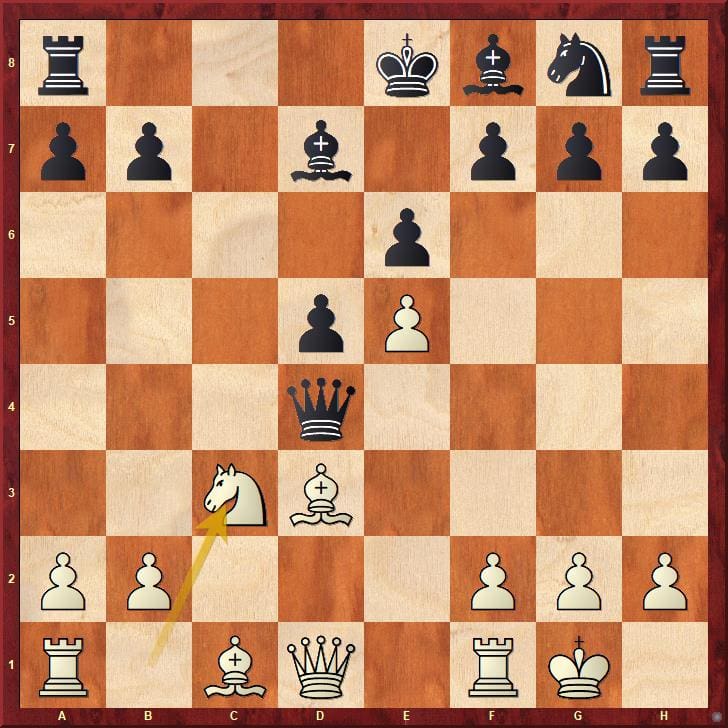
old version of the gambit
1.e4 e6 2.d4 d5 3.e5 c5 4.c3 Nc6 5.Nf3 Qb6 6.Bd3 cxd4 7.O–O! dxc3 8.Nxc3
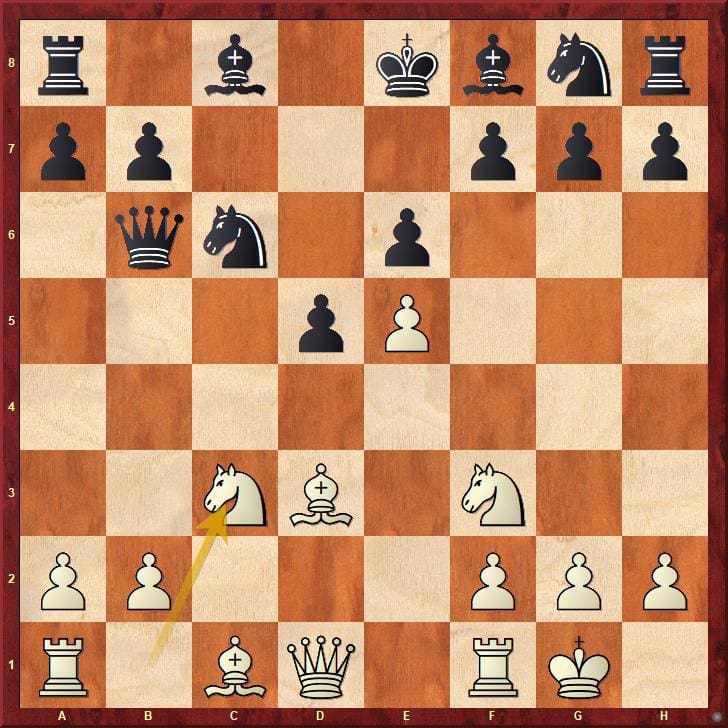
new form of the gambit
To understand – for now in a more general, by that I mean non-variant, terms – in what way the new gambit is better, we need to look at the diagrams more closely. On the one hand, it can be argued that in the original gambit the black queen stands exposed on d4 and clearly invites the loss of further developmental tempi. However, as we will see in concrete variations, in fact the queen does not stand well at all on b6 either, and in such a case we can use the same argument.
But what really speaks significantly in favour of the new one? On the chessboard no exchange occurred of any pieces, which naturally increases the potential of the entire gambit. The gambit in its new form also has no problem with the attacked pawn on e5 as in the old version (in the example we will see that Black in the old main line after 10...Qxe5 can even almost force the opponent to repeat moves, as long ago, in the pre-engine era, discovered by the Hungarian grandmaster Ivan Faragó).
The reader will surely be interested in the objective soundness of the new gambit. Let us know that currently even the strongest computers at enormous depths evaluate the position as approximately equal, in our human language our pupil therefore White has completely sufficient compensation.

for the sacrificed central pawn
Enough words about the original gambit, and it is time for some game samples. In the first, we travel to the past, the late 1980s, when even Evgeny Ellinovich Sveshnikov still believed in the old version of the gambit (in the book he published in 2005, he already marks the move 6.Bd3 as dubious, that is the symbol „?!“) and beautifully outplayed his opponent in a dynamic but also strategic (!) style.
The most serious threat to the old gambit, however, is the discovery of my former club colleague IM Milan Blecha. We present it in the second example.
The New Killer
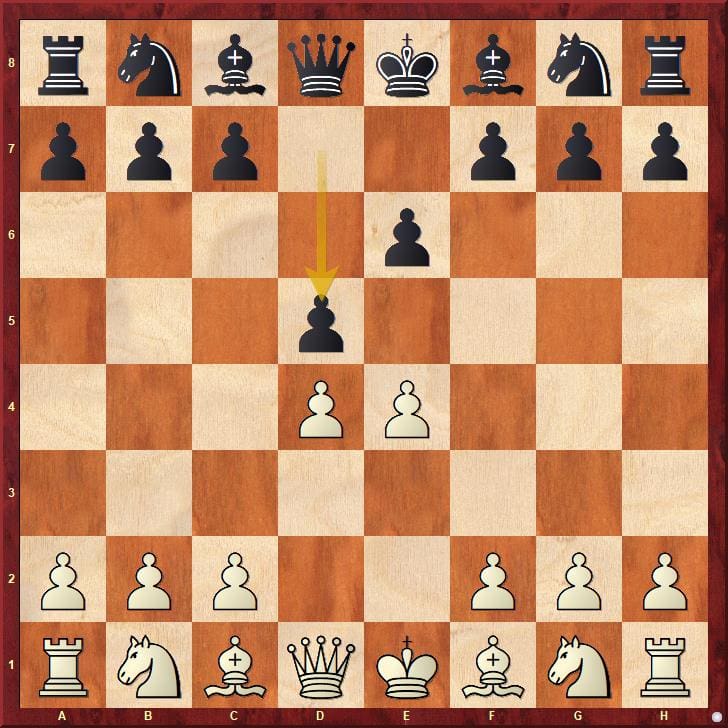

The next two games present a kind of miniature 🙂 ornaments or candles on the cake that the new version of the gambit has received. The first miniature was created right at the beginning of its career, the second then comes from one of my first pupils, a Czech international master. By that time, the new danger lurking against the French Defence was already known!
The Supergrandmasters' Weapon
The new Milner Barry gambit entered practice a few years ago with such vigour mainly because its baptism was attended by the absolute world elite. They reach for it in rapid and blitz games partly because White here has, all in all, a wide range of choices of different moves, and also several plans on how to develop their initiative. In the fight against the gambit against itself therefore the French Defence advocates cannot cram, memorise, as is the case with the old version!

If Black does not accept the gambit immediately, positions like or similar to the following can arise:
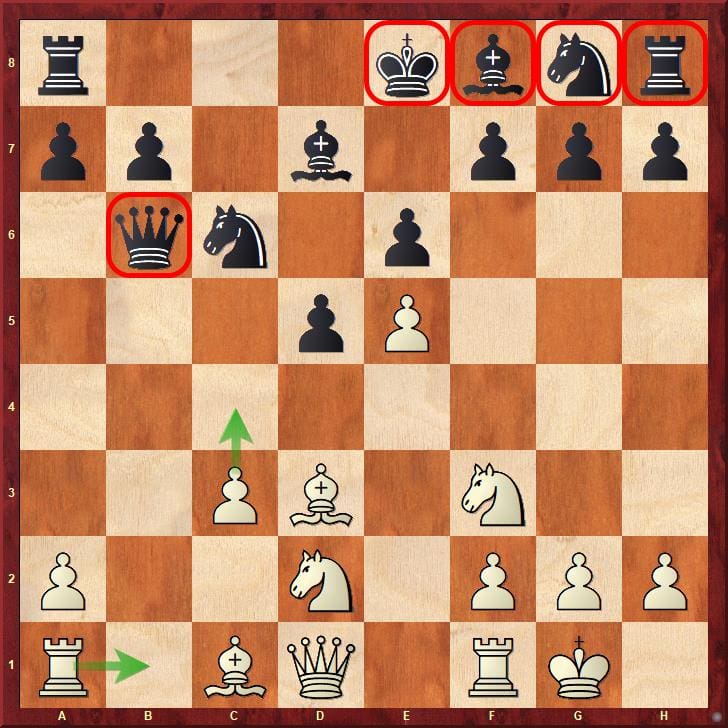
Part of White's plans, possessing two dynamic advantages (a lead in development and the Black king still surviving in the centre), is, I think, clearly marked on the diagram. The Black queen is ripe to hand over another development tempo to the opponent after Rb1, while the ‚c‘ pawn is taking on the role of a kind of hyperactive mole, which can dig up a neat garden fenced by the French pawn fortress beyond recognition…
The position on the diagram can arise after the moves: 1.e4 e6 2.d4 d5 3.e5 c5 4.c3 Nc6 5.Nf3 Qb6 6.Bd3 cxd4 7.0–0 Bd7 8.Nbd2 dxc3 9.bxc3.
To conclude the game tasting, let's look at two short execution games by world champions Magnus Carlsen and Vladimir Kramnik! After the game, they could really laugh from the heart…
What does the database contain?...
…over 40 games, detailedly (including verbal commentary) and didactically arranged. These include games from the leading world theoretician Grandmaster Gawain Jones. His contributions are therefore taken into account. The variation was analysed in more detail by him under the name Hector's Gambit, among others in the book „Coffenhouse Repertoire – 1.e4“ in 2021; his analyses are naturally checked, updated and some reassessed. Likewise, the views of the renowned opening monograph author Richard Palliser from the book „Grandmaster Gambits 1.e4“ from 2021 are considered. The material also does not forget situations where Black wants to avoid the gambit; that is, various sidesteps from the main lines.
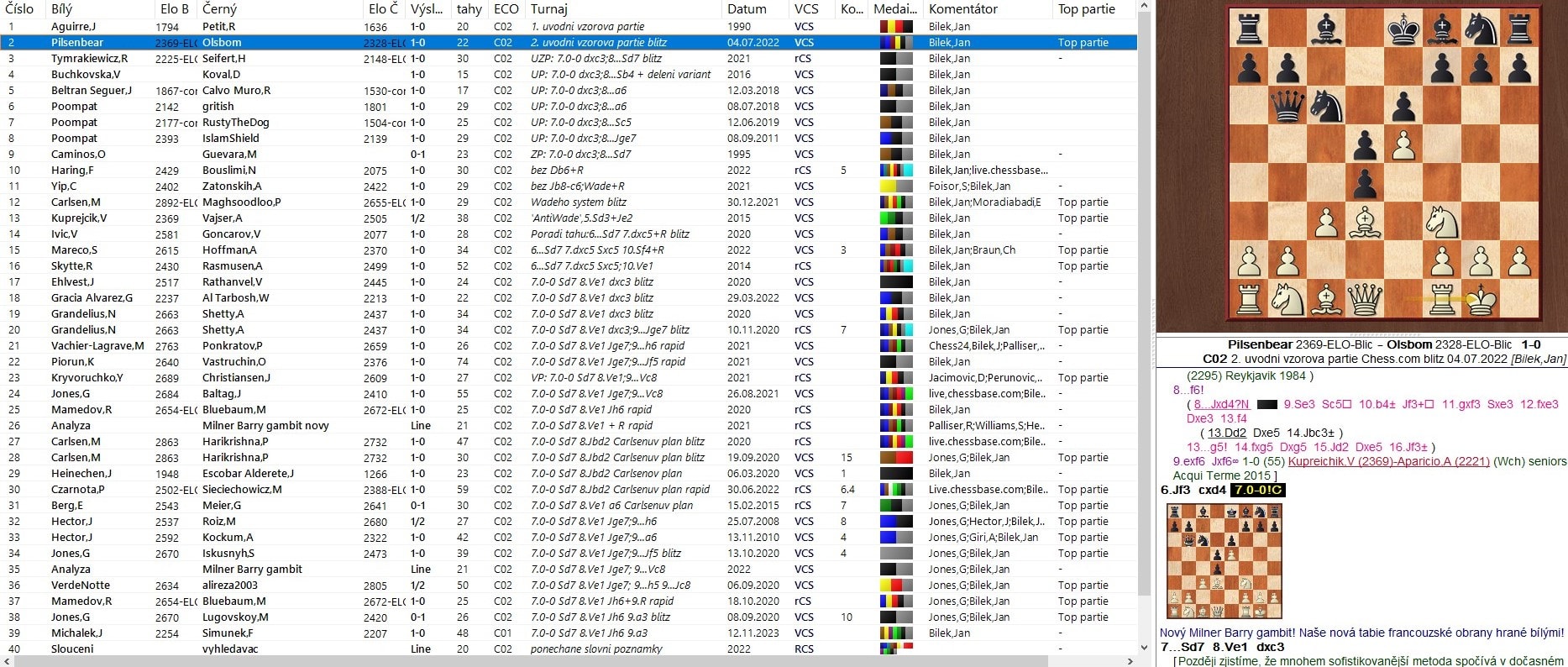
part of the list of study material displayed in CB
Introducing the author
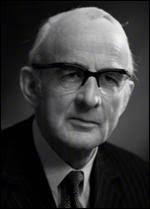
It would certainly be polite to introduce the author of the gambit. Sir Philip Stuart Milner-Barry (20 September 1906 – 25 March 1995) was a British chess player, chess author and theoretician who represented England during and after the Second World War. During the Second World War he worked in the codebreaking section for messages encrypted with the famous German Enigma code. Alongside the well-known Alan Turing, he was one of the heroes of its ultimate breaking!

Those interested in the complete database in cbv or pgn format, together with a verbal introduction in pdf format, can contact the author via the emails listed on the pages below. The price of the entire study material is 1,000 CZK.

All examples in the ChessBase player can then be found below: