

For almost a month, we were able to follow the gigantic clash of two hundred and eight participants in the knockout World Cup tournament in Indian Goa. The closer the end approached, the less — at least for me — it was clear in which discipline the competition was actually held. In chess? Yes. But in classical chess, the „real“ chess as history knows it? Hardly. And since for all three winners, Javokhir Sindarov, Wei Yi and Andrey Jesipenko, success means automatic qualification for the Candidates Tournament for the classical World Chess Championship title, it makes little sense why the qualifiers were decided in the vast majority of cases by rapid games 15+10 or 10+10, including the final time scrambles.
Complete results can be viewed here: https://worldcup2025.fide.com/tournament-bracket/
In the dramatic semifinal and final duels, the winner was ultimately the one who did not make the last blunder. The only nineteen-year-old Uzbek super-grandmaster Javokhir Sindarov won deservedly in my opinion! Readers can view his chess biography by clicking the link.
Biography of Javokhir Sindarov
Today's Uzbekistan, probably the most chess-loving country in the world, can inspire either envy or enthusiasm in us because of how incredibly popular chess is there. The videos below hardly require further comment. Let's start with the award ceremony, in which the organisers prepared a „small“ surprise for the champion.
Tens of thousands of people applaud and in the second video enthusiastically welcome the elite chess players — something we nowadays see perhaps only in India and Uzbekistan. Perhaps it is also because with the introduction of chess education in schools (even compulsory in Armenia) we are actually returning to a time when our beautiful game was extraordinarily popular throughout the USSR.
I add that I have already devoted an article to this amazing young man on the pages of Škola šachu on 9 November 2023. It bore the long title This is how the small centre is broken down! A sensational miniature by the 17-year-old Javokhir Sindarov in the catacombs of the accelerated King's Indian.
The chess world has been forming into two camps for some time now. On one side stands a clear minority who will not give up on classical chess — let’s call them the „Thinkers“. On the other side are those who, under various pretexts, would prefer to shorten thinking time further or even change the very rules of the game. For our purposes, we can call them by the chess jargon known as the „Movers“ or newly the „Progressivists“. The connections with societal development and the overall laziness of its western part are obvious, but there is no space here to discuss this in detail.
So let us rather look at what most likely decided the qualifier for the final, and also at the key moment of the final tiebreak itself.
Semifinal
The second tiebreak game of the semifinal is being played Wei Yi vs. Jesipenko. The Chinese grandmaster, who in the game twice found himself on the last second, just moved 56.Ne3.
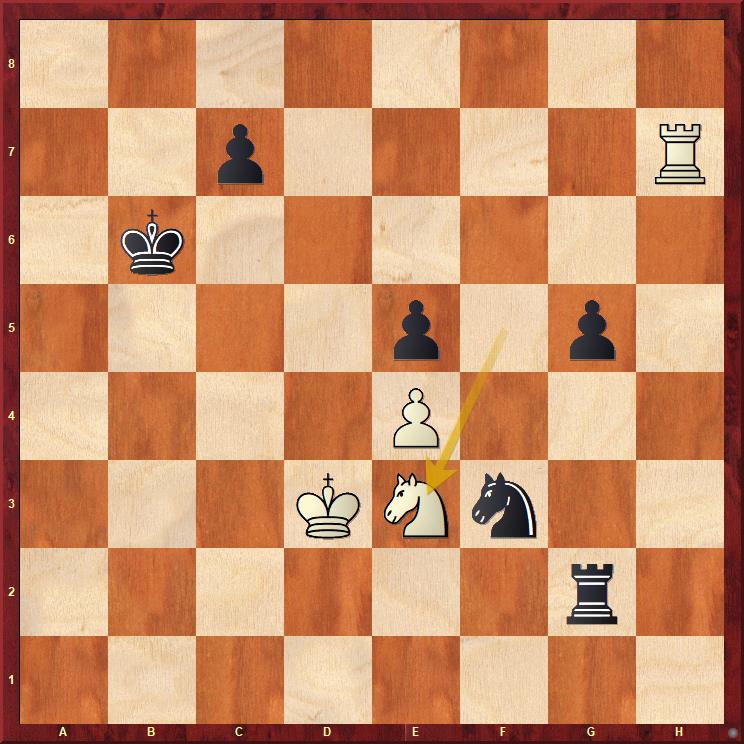
What followed was incredible 56...c6??
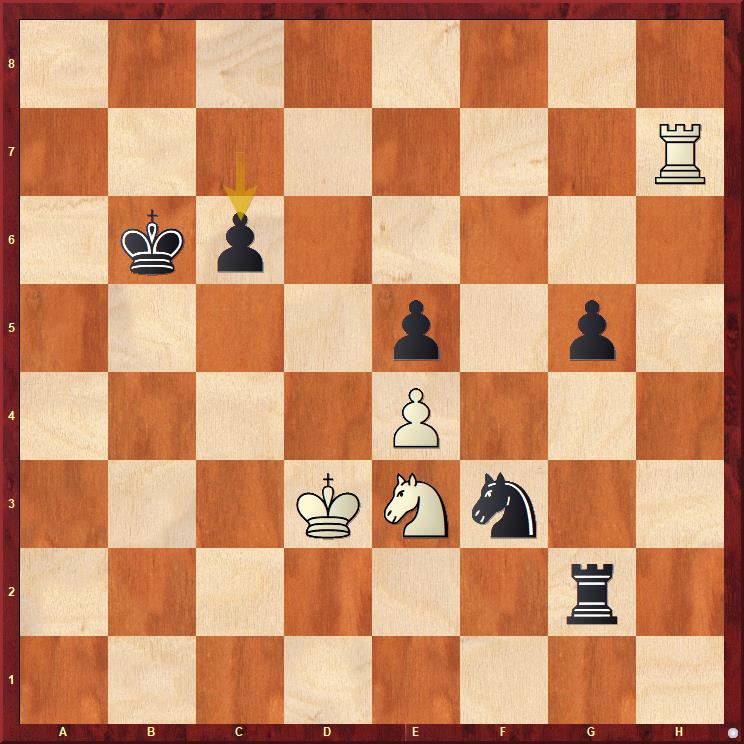
, after which Wei Yi captured the rook 57.Nxg2 and the game was over!
Perhaps the most interesting aspect of the entire clip below is both the calm with which White captured the rook and the psychology behind the terrible blunder.
Note that Jesipenko even twice prepared to grab his rook, only to immediately „forget“ about it. However, it must be added that this also revealed his strong character. Many would have literally collapsed after such a tragic blitz ending. Jesipenko, however, won two games in a row in the fight for third place and ultimately qualified for the Candidates Tournament.
The grand finale
had in common with classical chess only the first game. Wei Yi, playing Black, could in the position of the diagram
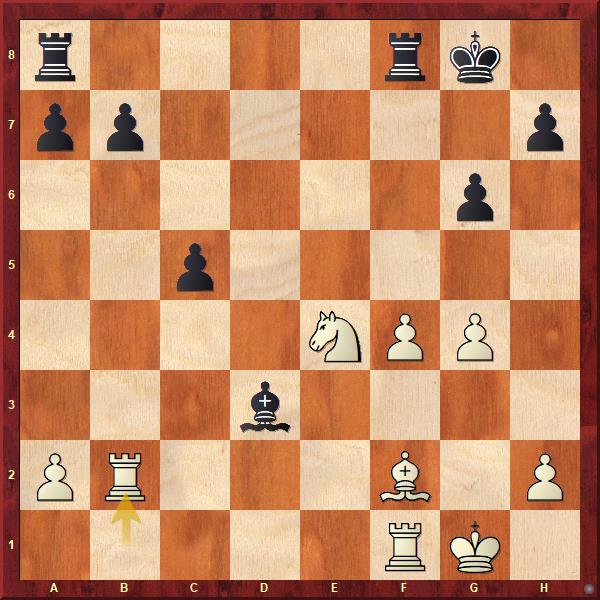
force after 24...Rxf4 25.Nxc5 Rxg4+ 26.Bg3 Bxf1 27.Kxf1 Rf8+ 28.Kg2 b6 the following endgame.
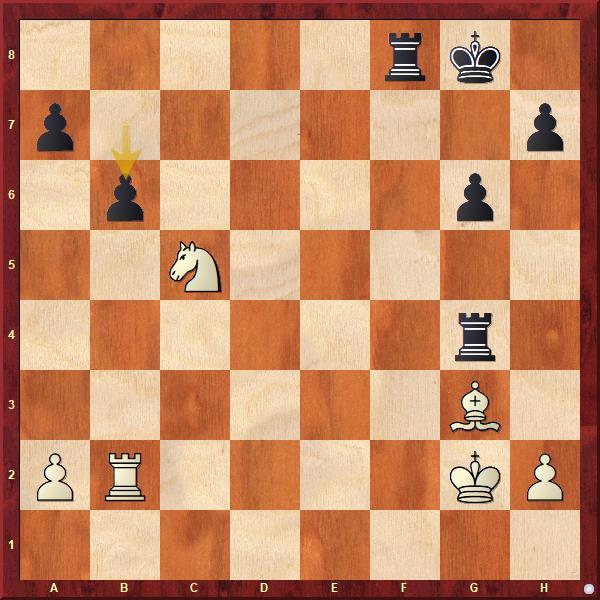
A rook with two pawns is known to generally represent greater strength in endgames than a bishop and knight duo. Stronger engines – that is, at greater depths – logically add a sign of balance, but in practice Sindarov might have had more difficulties than after Wei Yi's chosen transition to a rook and opposite-coloured bishops endgame (in the first diagram) after 24...Bxe4 25.Bxc5 Rfc8, admittedly with some initiative.
Wei Yi himself mentions this moment around 2:20 in the video.
In the next video, we can observe a diametrically opposite evaluation by the commentators, and finally also by the engine connected to the so-called evaluation bar of the virtual chessboard in the studio. (Time about 2 hours 1 minute of live broadcast.)
A truly interesting clash of opinions, which also beautifully demonstrates the „computer approach“ of young (not only Chinese) grandmasters as opposed to classical evaluation algorithms, for example, of a legend like Peter Leko!
Note: at the end of the article, I have added an interview with Peter Leko. His assessment and reflections on the tournament system, the age of the players, and the mental strain are truly interesting and personally very valuable to me, but the decision of the Chinese grandmaster – why he did not enter this endgame – was evidently not „understood“ even later by the former super-grandmaster...
And how would you assess the chances of the sides, dear readers?
In the second classical game, the Chinese grandmaster actually already bet on the tiebreak! Why did he choose this „Carlsen-like“ solution? Simply because on paper he was still the bigger favourite.
But in reality, Wei Yi's poor time management in tiebreaks gave Javokhir quite decent chances! With his second and friend in one person, they devised a suitable tactic: to play the rapid games as quickly as possible and drive the opponent into severe time trouble!
And this ultimately proved decisive, although some might consider the key moment to be when Wei Yi „on the flag“ declined the offered draw! Well, and it must be added that in the last game he again made two moves on the last second (I recorded this situation four times in total!), only to finally fail to find a path to a draw with a weak king!
Wei Yi vs. Sindarov tiebreak 2, 26 November 2025
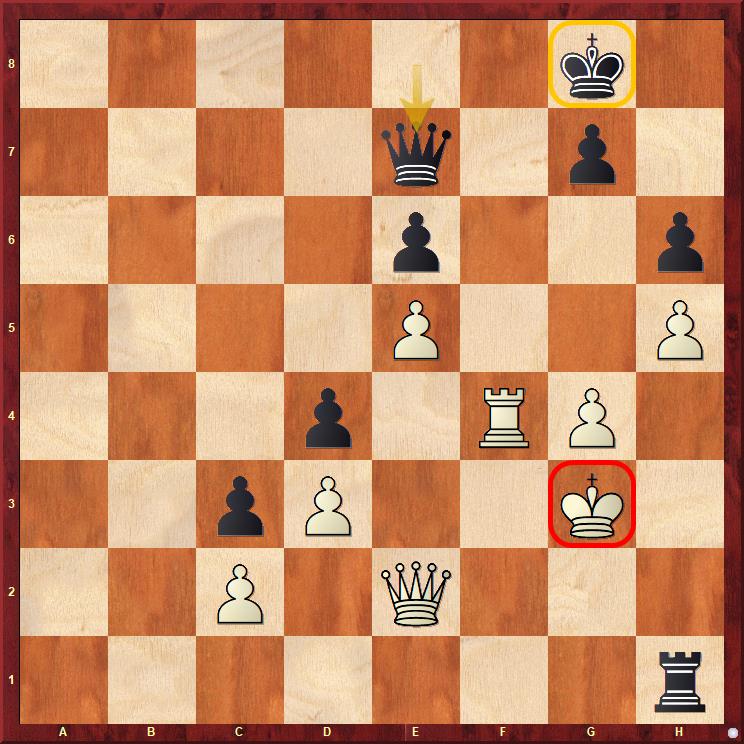
Black has just captured after exchanging the bishop on e7 and threatens a terrible 57...Qh4+. White has the only way to a draw! According to me, he would undoubtedly have found it if he had at least a few minutes on the clock, and not just a few last seconds.
Can you save the white position?
Instead, he made „on the seconds“ 57.Rxd4??
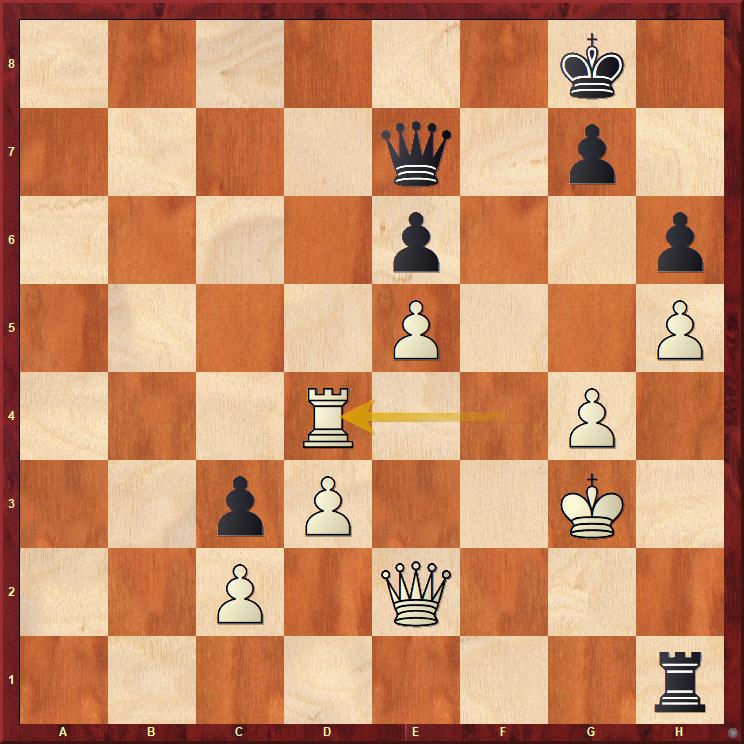
and Sindarov brought his attack to a winning conclusion. The forced manoeuvre (the solution is not unique) is not so difficult to find. Can you do it?
Now let's enjoy the decisive game in the traditional video recording by Sagar Shah on ChessBaseIndia!
The person who should be most pleased with the whole game is… Aron Nimzowitsch. Why? Sindarov proved him perfectly right in many places.
Let us also look at a shorter video analysis of this extensive game, which among other things relies on Nimzowitsch's strategic principles — the theory of the pawn chain and open files.
It doesn't work without tactics!
This time, too, I have prepared several moments full of tactics for the readers. Simpler combinations can be found on the most famous chess platforms anyway, so why not address more advanced players this time? Let's get started…
In the game Donchenko vs. Le Quang Liem White blundered badly with the move
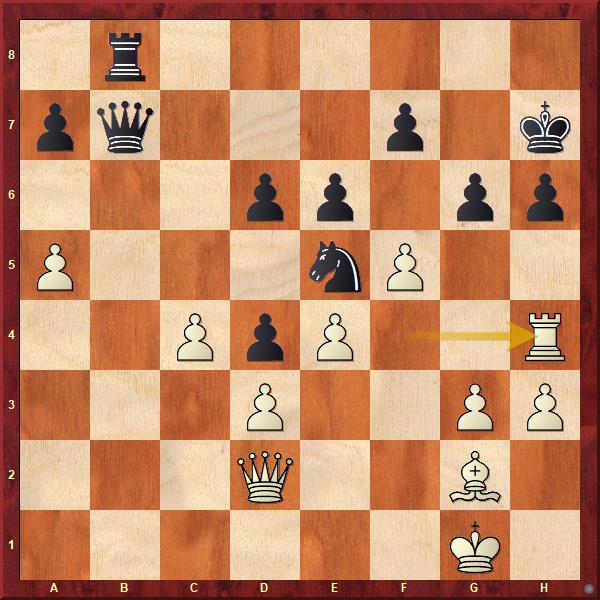
30.Rh4. How would you punish him? Can you calculate Black's winning continuation?
„You keep going to the well until the handle breaks,“ says a Czech proverb. In the previous article, I mentioned Daniil Dubov's „tiebreak tactics.“ How did it turn out? I'll borrow another saying: „The scythe hit a stone.“
In the position of the diagram Shankland vs. Dubov White reached a winning endgame and could therefore actually win „in any way.“.
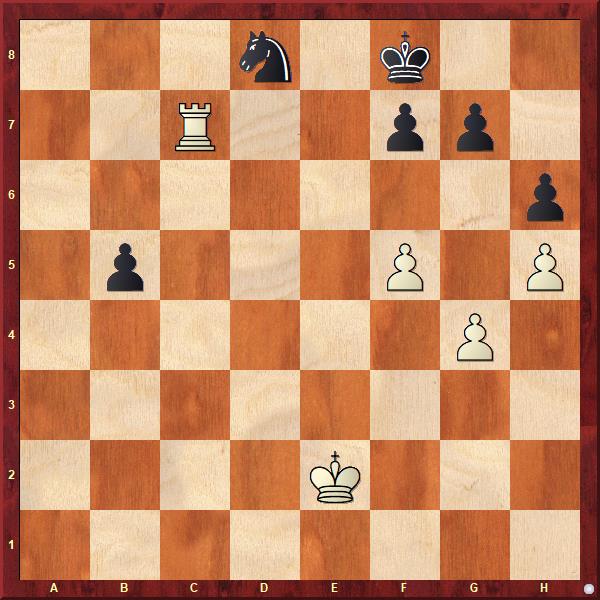
The way he finished the game is not only really beautiful and memorable but also reveals that Samuel Shankland as a coach knows the classics at least as well as Daniil Dmitrievich. What followed was 43.g5!!
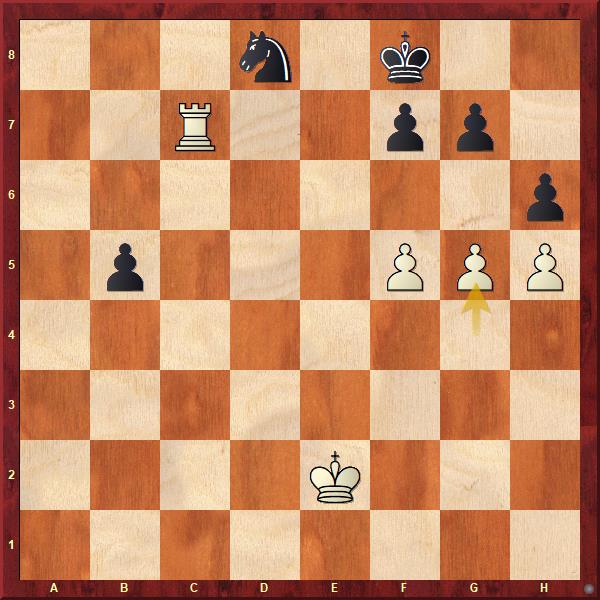
How would you continue after 43…hxg5?
The age difference between Levon Aronian and Arjun Erigaisi is almost exactly 21 years to the day. Both are among my favourites, so I was sorry that one of them would not advance to the quarterfinals. However, time cannot be stopped, and so Levon's forty-three years, in my opinion, took their toll. Let's pause for a moment at the second decisive game.
In the position of the diagram, Aronian with the move 33…Qf1?? blundered badly.
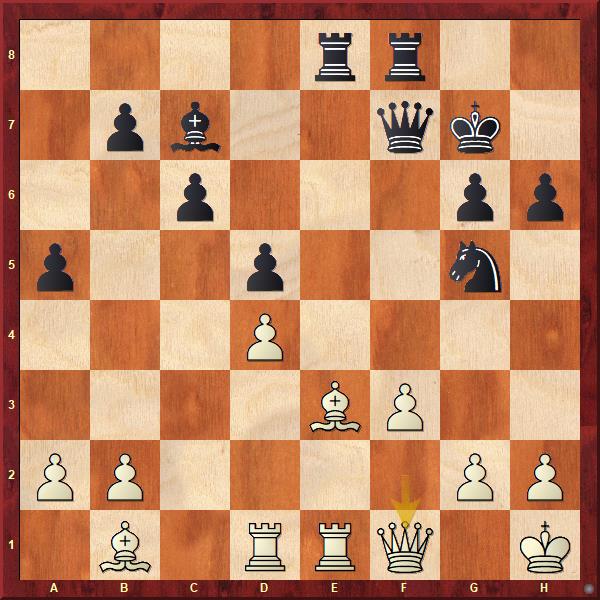
Erigaisi could have decided the game immediately decide it! Can you find how?
As if that were not enough, five moves later Aronian – admittedly already in a difficult position – made another serious blunder 38.Re1??.
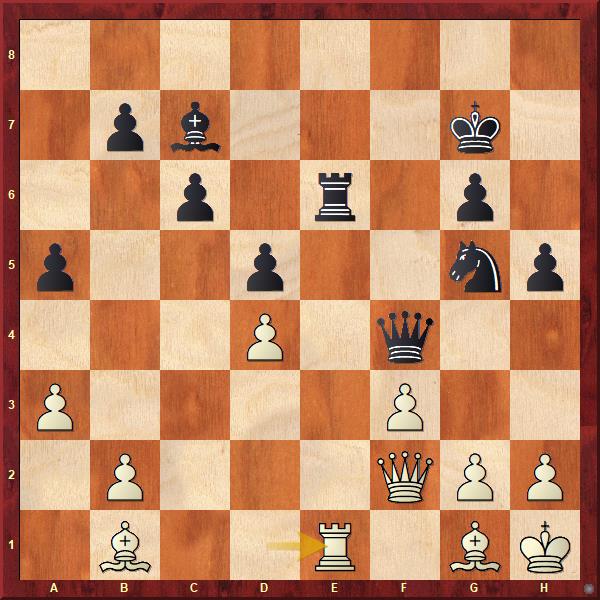
This time, however, the Indian top-rated player did not hesitate! What was Black's last move in the game?
A calculation giant with a poker face
Chinese grandmaster Wei Yi is truly an extraordinary figure in world chess. I noticed his calculation abilities more than ten years ago. The game Wei Yi vs. Bruzón Batista, with a probably intuitive piece sacrifice and Black's king journeying across half the board, then went viral worldwide and I myself did not hesitate to call it the game of the century.
I am probably not the only one who, during the first semifinal game Wei Yi vs. Jesipenko was reminded again.
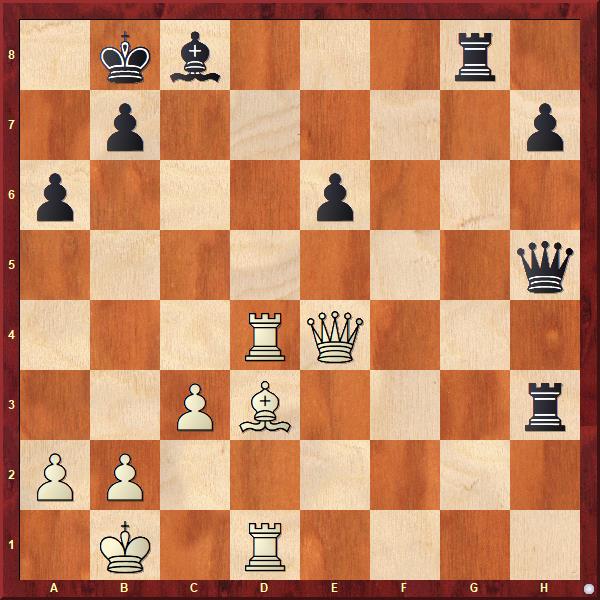
In the diagram position White continued with a brilliant strike 28.Bxa6!!.
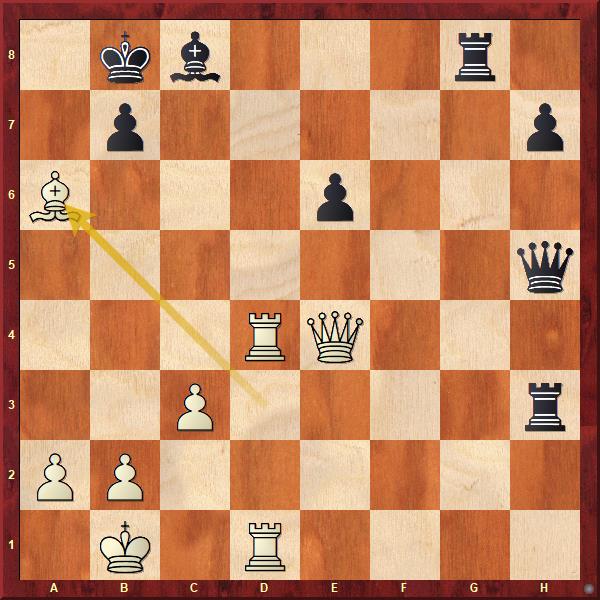
Although Black had a number of possible replies, he could not accept the combination. Allow me to ask two questions:
- how would White respond after 28...bxa6?
- how would you continue if you were Black?
A drawing combination with the idea of directly destroying the pawn cover. GM Daniel King in his video very rightly points out the motif of the combination by „highlighting“ all the Black heavy pieces. Yes, the motif of the combination is indeed the numerical superiority of White's attacking forces near the enemy king. The Black heavy pieces are somewhat distant from their king on one side, which might not end well for their leader, but let us also consider whether they themselves are capable of attacking the White monarch! Or at least preventing part of the White army from neglecting the protection of the first rank.
The conclusion of the game was truly a brilliant demonstration of Wei Yi's calculation abilities and I recommend esteemed readers not to miss it. Either in the viewer below or the entire game in the mentioned video analysis by Daniel King (he deals with the bishop sacrifice on a6 from about the 15th minute of the video)!
Wei Yi's impenetrable expression — literally a poker face — inspired his „colleagues“ some time ago to various jokes. I will now lighten the work on tactical tasks (hopefully enjoyable 🙂) a little by showing some „folk creativity“ that my friends and I heartily laughed at back then.
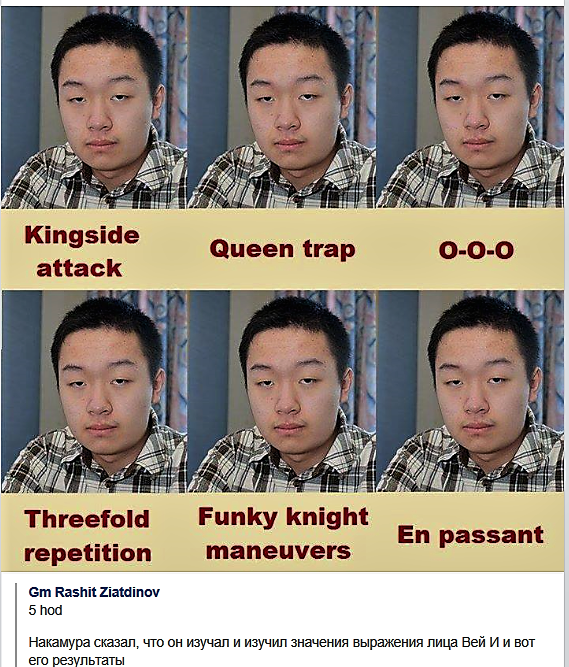
„Nakamura said, that he studied and understood the meanings of Wei Yi's facial expressions; here are his results.“
White in Black's role
This is not a fundamental novelty. For example, we know the King's Indian in attack or the English Opening played according to Dragon Variation patterns. The Colle System is basically nothing other than the Semi-Slav Defence of the Queen's Gambit — just, of course, with an extra tempo, because White is simply White. However, the arrival of „white donkey ears“ is something else entirely...
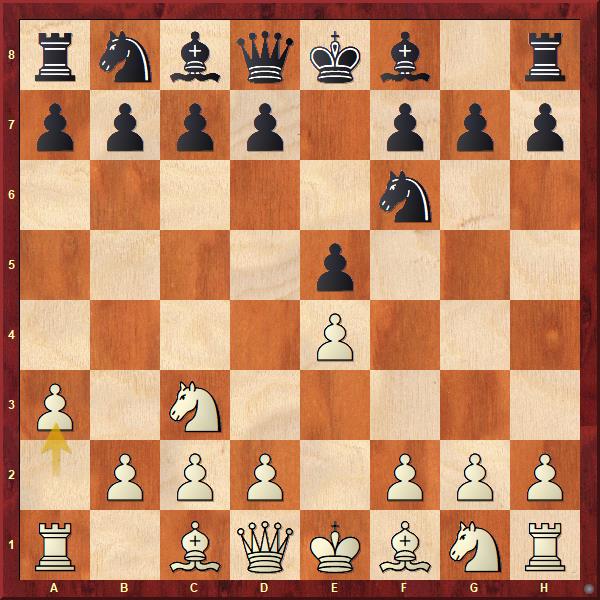
I admit that the choice of White's opening in the game Aronian vs. Wojtaszek in the first game of the fourth round really surprised me. And what did one of the best theoreticians and most creative players in the world prepare? The Vienna Game with an inconspicuous addition: „I have no objections to the Scotch from first hand!“
1.e4 e5 2.Nc3 Nf6 3.a3!?
The seasoned Polish super-grandmaster (let's not forget, his peak rating climbed as high as 2750 in 2017!) also chose after three minutes of thinking 3...d5, so that after 4.exd5 Nxd5
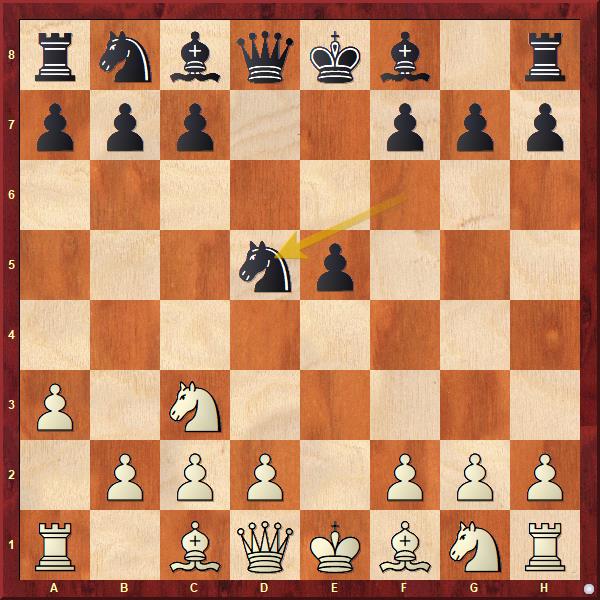
he looked into the face of the Scotch Game with reversed colours and the move a3 added! Levon's experiment was, in my opinion, truly brilliantly thought out; and I didn't even check whether and what experience his opponent has with the Scotch Game. What followed was 5.Qh5!.
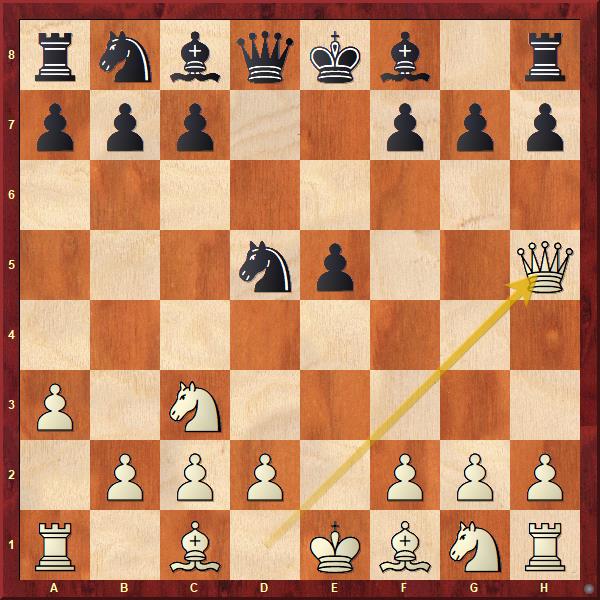
I am no longer surprised that many experienced commentators actually did not know what to say about the queen sortie. A stronger computer shows equality, but... you need to know more! If Aronian is actually defending against the Scotch Game with an extra pawn on a3 added, then logically we must ask at least two questions:
- Is it played after e4 e5 2.Nf3 Nc6 3.d4 exd4 4.Nxd4 and the advance 4…Qh4? If so, what is its reputation?
- Can the pawn on a3 be useful good things?
We must answer "yes" to both questions!
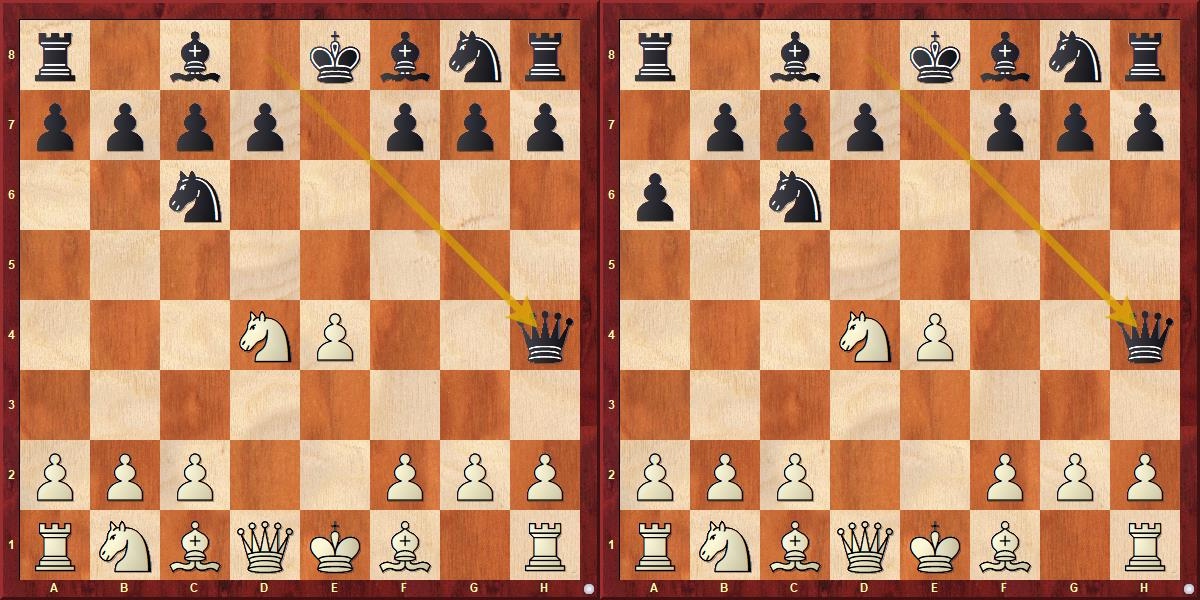
For didactic reasons, I reversed the colours in the right diagram. Aronian's advance Qh5 now corresponds to Qh4, and the pawn on a3 is „found“ on a6.
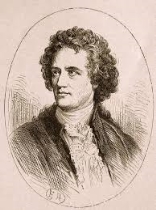
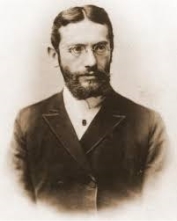
The advance 4…Qh4 in the Scotch Game is named after the first world champion Wilhelm Steinitz (in the left diagram). It was one of his provocative approaches, and for many years it irritated both the staunch supporters of the Romantic school and the real contenders pressing for his throne. Steinitz did not hesitate to use the advance, for example, in his game against Chigorin in their second match (Havana 1892).
The original Steinitz variation will most likely never be revived. Personally, I associated its „archiving“ with a surprisingly pre-computer game Azmaiparashvili vs. Hector San Sebastian 1991. After 5.Nc3 Bb4 6.Be2! Qxe4 7.Ndb5 (xb5!)
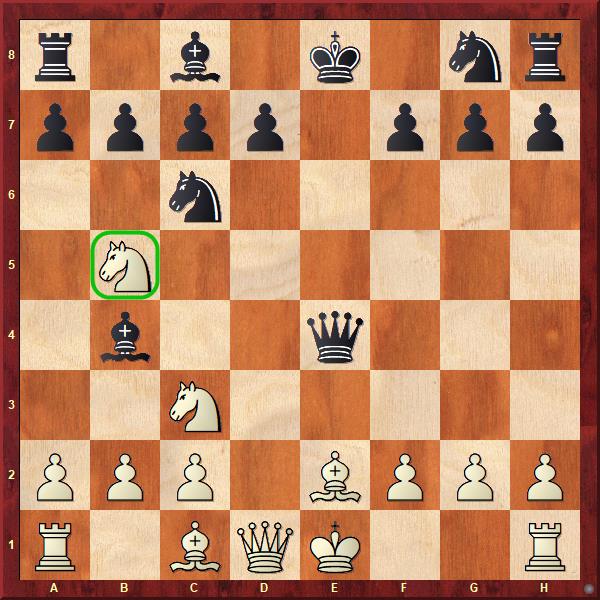
Although Black still managed to hold the black position several times in correspondence games as late as 2023, the statistics are merciless here! I might add that White also has other plans involving the use of the b5 square (which is important for our considerations), but Black defends much more successfully in those.
Let us now return to the diagram after Aronian's or rather Steinitz's advance 5.Qh5.
If Black cannot rely on advances on b4, the game is objectively balanced. However, it should be added that Black would have to be familiar with the theory and know how to continue in the next few moves — which the Polish grandmaster clearly was not. After the following natural move 5...Nc6 He spent nine minutes on the move, another five on the next, and even fifteen minutes on his tenth move. He resigned the game without serious resistance before the time control.
More can be found in the viewer.
Finally, let's listen to the evaluation of the World Cup by player, commentator and „vice world champion“ Péter Lékó.
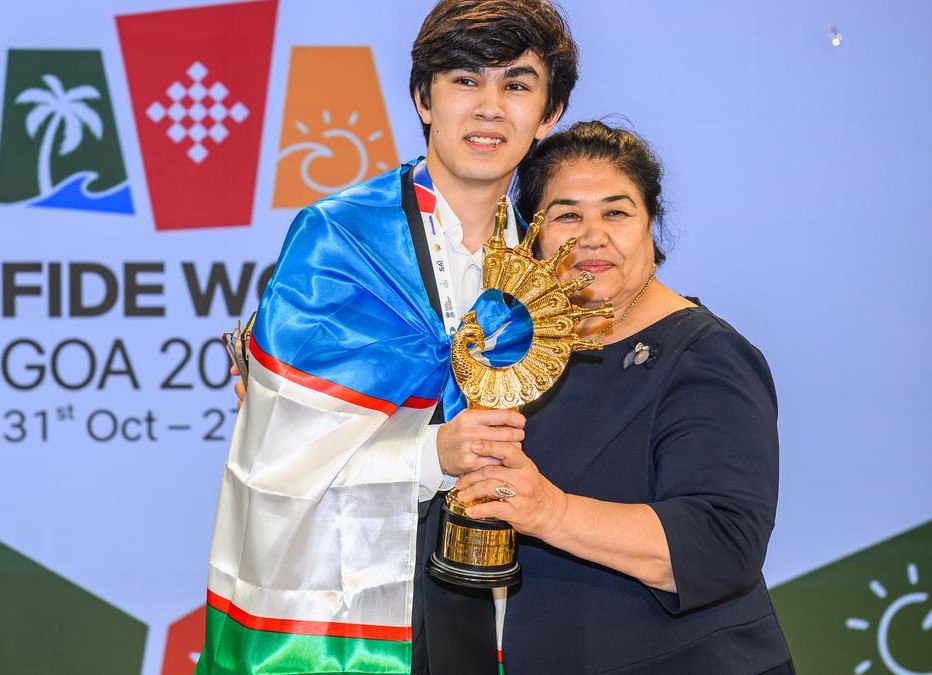
Javokhir Sindarov with his grandmother. It was his grandparents who introduced him to chess and always supported him. Will the youngest participant succeed again in the 2026 Candidates Tournament?