

There are countless titles one could invent for what happened this year at the Wijk aan Zee tournament, yet none can encompass everything we witnessed. I admit, in all my years of following elite tournaments, I have never seen anything quite like this. Where to start? The unbelievably low average age? The incomprehensible statistical data? The fact that almost every one of the 14 participants in both tournaments suffered several lapses? Or the record number of blunders outside of time trouble, including one-move blunders?
I often respect Occam's razor principle, that the most probable explanation is the simplest one. Alright, let's try: „Because of computers and engines, players have forgotten how to calculate variations!“ Or: „Tests of mind-influencing weapons were conducted at the venue.“ Or is there a more down-to-earth explanation? In that case, I offer: coincidence, fluctuation.
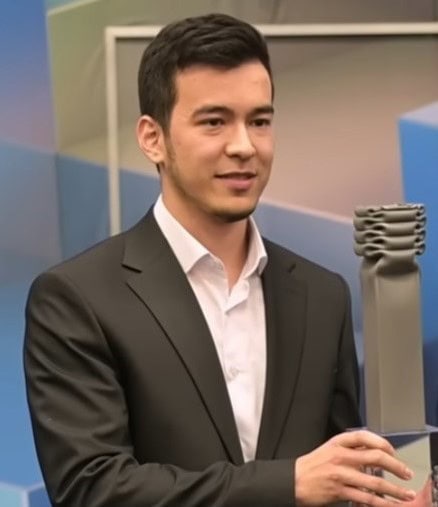
Still, we have two certainties. First: Nodirbek Abdusattorov won another tournament with a clear margin. Second: more interesting and exciting battles are hard to find.
Results
Besides one of the most extensive tournaments of recent times, the Masters tournament, spectators, readers and of course fans could also enjoy the Challengers tournament. To avoid „discussing emptiness,“ let's look straight at the final results.
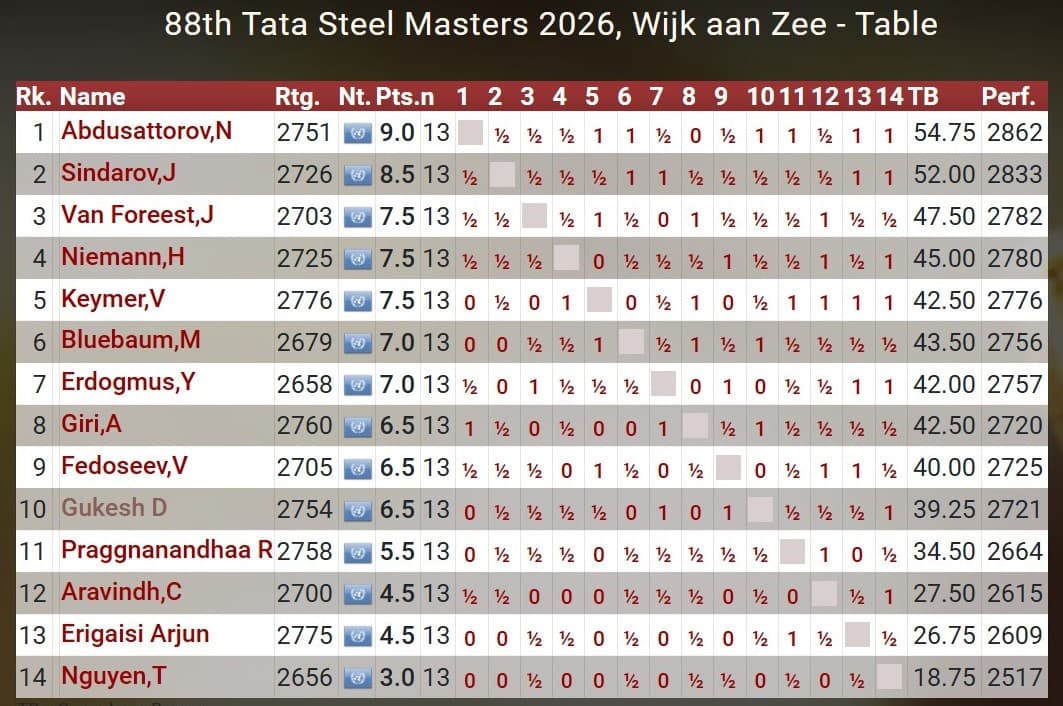
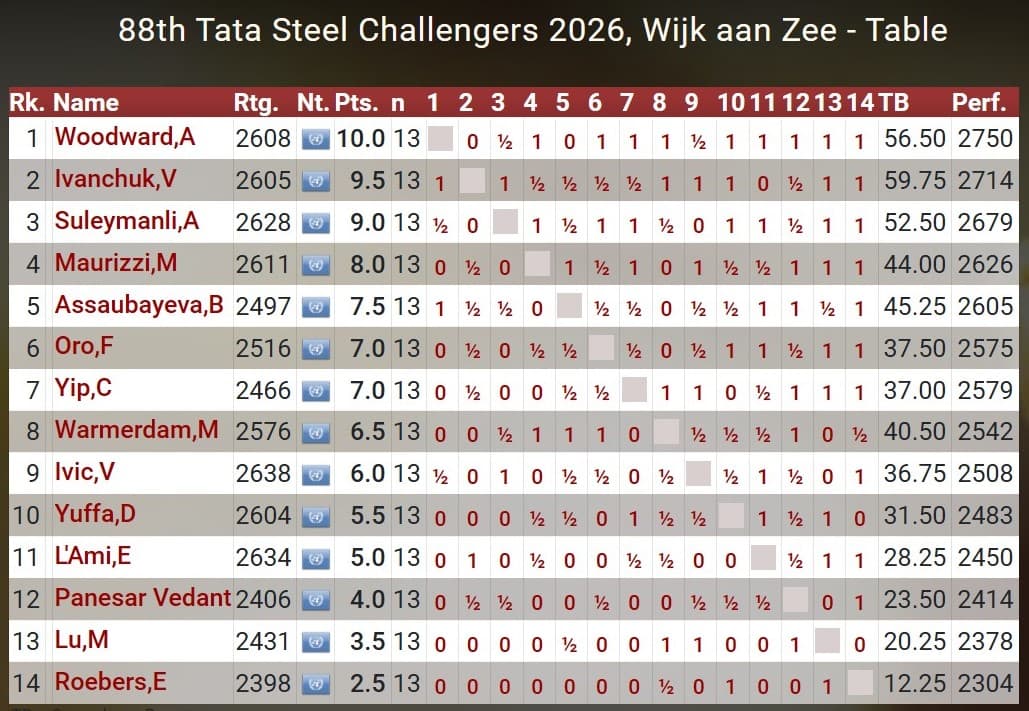
The average age of the Masters tournament is only 23,62 years, while the Challengers tournament is 24,57. Some may pause when they see the names Faustino Ora (12 years) or the winner Andy Woodward (15 years) in the second table, wondering why the average age in the „younger tournament“ was higher. Well yes, the average is „spoiled“ by Vasily Mikhailovich...
For comparison: excluding Vasily Ivanchuk, the average age of the Challengers tournament was about 22 years, the age at which Paul Morphy had already completed his only European tour (1858–1859), during which at twenty-one he defeated practically all the European chess stars of the time. But Morphy was one, and here we have a whole tournament...
Statistics or black wins... almost
„Annoying opening theory is ruining the classics! Players play 35 moves according to preparation, and if both are well prepared, the game inevitably ends in a thoroughly analysed draw. If this continues, we will see tables similar to draughts tournaments!“
Such „outbursts of imagination“ are heard more and more often. The latest, which one can only shake their head at, came in a recent interview from the fairly well-known patron Oleg Skvorcov. He even suggests „punishing“ players with zero points for a draw! Never mind that for five centuries our beautiful game managed with... mere logic. 🙂
The never-ending fight against classical time controls naturally has its most prominent supporter in Magnus Carlsen. But in reality, he does not want to play serious games, let alone matches, because among other things he is simply too lazy to prepare for several months.
Perhaps after the Wijk tournaments end, these voices will at least quiet down for a few months.
Let's look at some hard statistical data.
Masters tournament (91 games): number of decisive games 41, number of draws 50. Decisiveness = 45.1 % (for interest, last year it was 40.66 %). On average, in each round we saw a little more than three defeated kings.
White wins: 22; Black wins: 19.
To avoid overwhelming the reader with statistics, I will provide just one more figure. Why Black (almost) wins?
The group of the first and second winners of both tournaments, namely Abdusattorov, Sindarov, Woodward and Ivančuk, won the same number of games with White and Black. Match score Black versus White ended 13:13! That would have been almost unthinkable in earlier times.
What does this indicate? Why do colours and the advantage of the first move hardly matter, similar to children's categories of all kinds, when the „chess grind“ stops working? Because there is an unprecedented number of blunders in the games, including one-move or two-move mistakes.
Blunders of the first round
Let us move on to the examples and see what happened in the game Keymer vs. Giri.
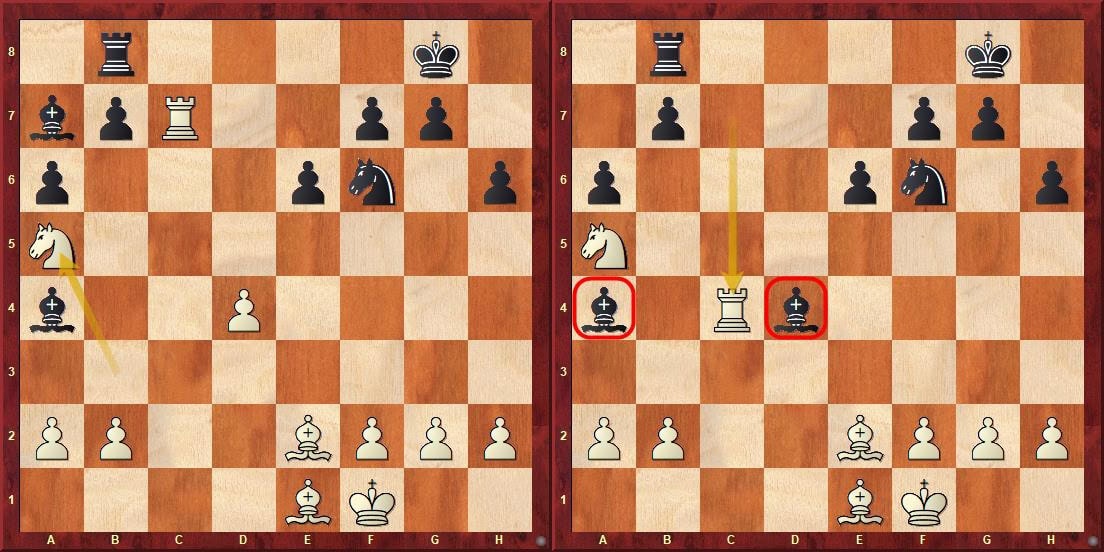
White has just played 22.Na5 and thanks to Anish's inaccuracy in the previous move (passive 21...Rb8) White holds a certain, though not large, advantage. After 41 seconds came 22...Bxd4??, after which Giri immediately resigned following a trivial double strike 23.Rc4 !
However, an earlier game had already finished Niemann vs. Fedosejev. The first miniature of the tournament was thus on the board! Since it was already the 88th edition, it turned out that this was not the shortest decisive game (the eight-move miniature Petrosian,T vs. Ree,H from 1971 is hardly ever beaten), but…
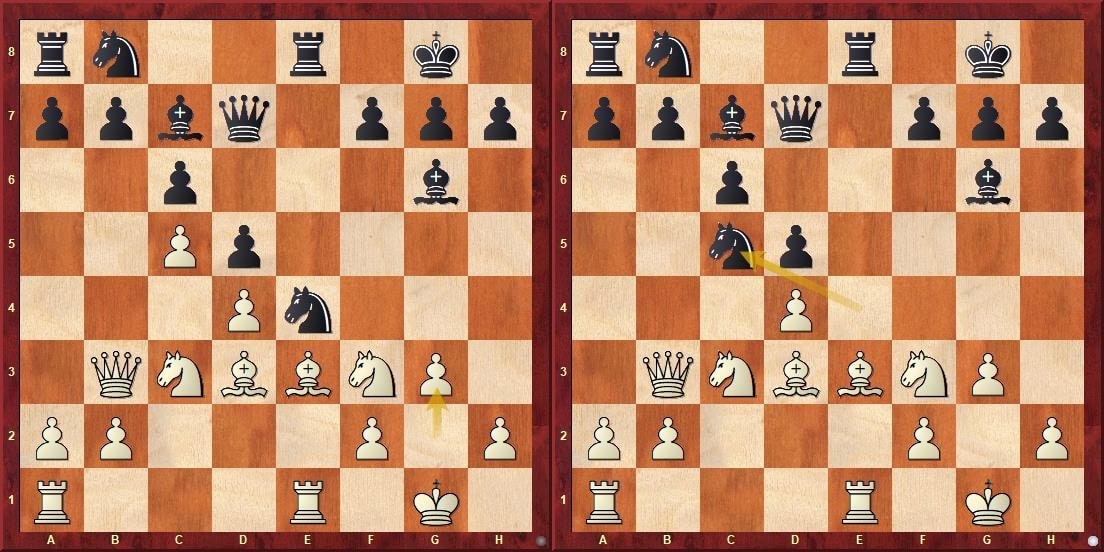
Niemann has just played 14.g3 and again threatens 15.Qxb7. Vladimir Fedosejev may have confused the variations, but more likely he made a typical blunder by not calculating the complications properly. After more than 8 minutes of thinking, he struck with 14...Nxc5??, so after 15.dxc5 Bxd3 16.Qxb7 he resigned! Only now did he see that after the planned 16...Na6 the spectacular 17.Ne5!!.
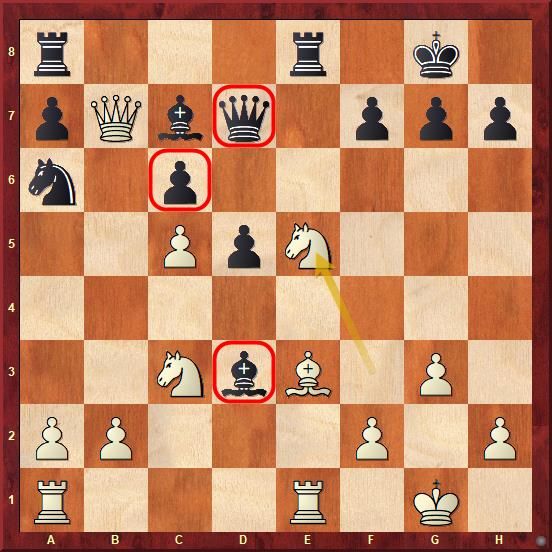
would follow. The whole tournament could have developed completely differently if the world champion had converted the brilliantly played game into a win after the spectacular positional queen sacrifice. In the game Sindarov vs. Gukesh the saying that mistakes come in pairs was confirmed once again.
White continued with 39.Rxa4? (capturing a pawn)
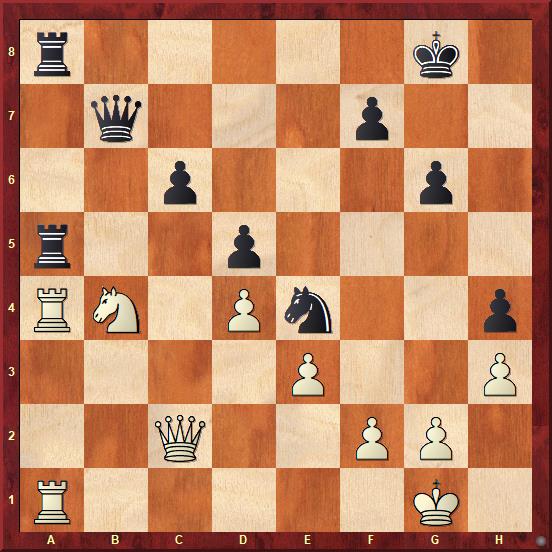
and the world champion, after a quick check of previously analysed manoeuvres, chose a dynamic positional queen sacrifice 39…Qxb4!!-+.
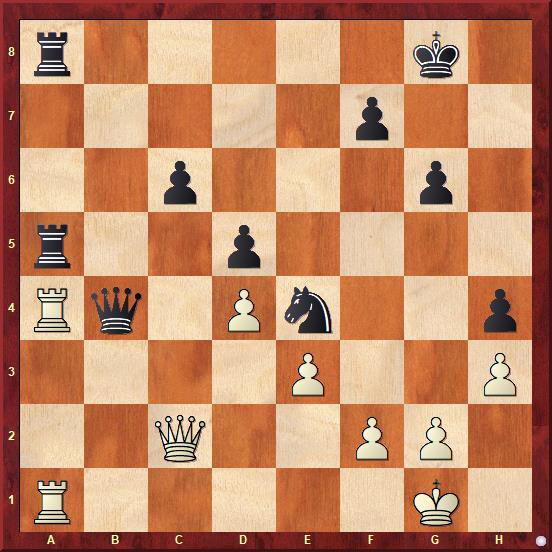
We will deal with a more detailed analysis in the viewer, and the games are of course also available in the videos.
Here I will point out a case of imperfection in today's engines! They rank a different move first even at quite large depths than 39…Qxb4 and only after a „proper prod“ do they admit that the queen sacrifice is the strongest solution! Excessive pruning in today's engines' calculation and programmers' race for speed are, in my opinion, not exactly the ideal path for development. Readers interested in engine problems will certainly verify this for themselves.
Gukesh did not realise his decisive advantage very convincingly and gradually was left with only a thirty-second increment. However, he finally lost the decisive advantage in the diagram position.
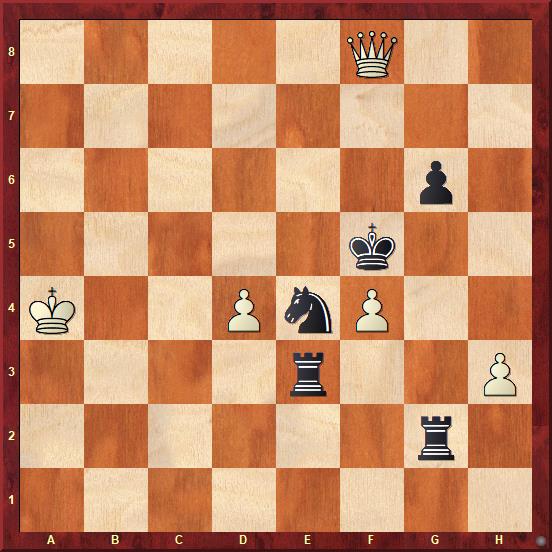
After 70.Qf8+ the last critical position of the game arose and at the same time our first test. Which of the two possible moves would you choose?
Below I offer a shortened record of the game itself and also a brief analysis by one of my favourite streamers, Alexey Pugachev, in Russian. Just to remind you again, English dubbing can be turned on on YouTube.
Lame tactics and strategy
The supply of gross blunders is inexhaustible, and so, although their thunderstorm weakened in later rounds, we saw at least two even in the second round.
Vladimir Fedoseev in the game against Vincent Keymer perfectly avenged the fiasco from the first round. In the diagram position, the current world number four by rating just played 16…b6.
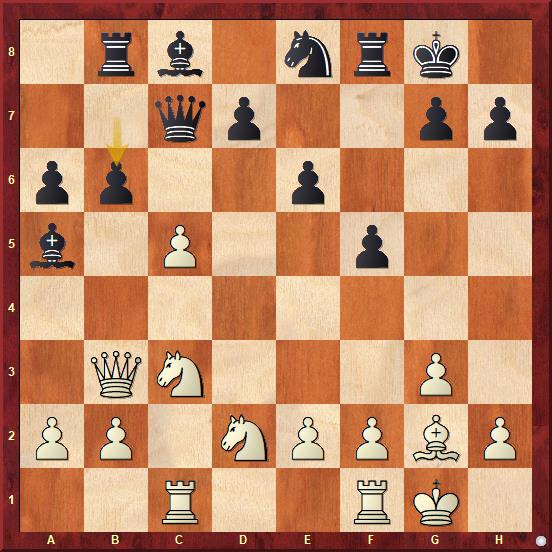
How would you continue if you were White?
Black played the rook endgame unbelievably poorly in the second round game Abdusattorov vs. Praggnanandhaa.
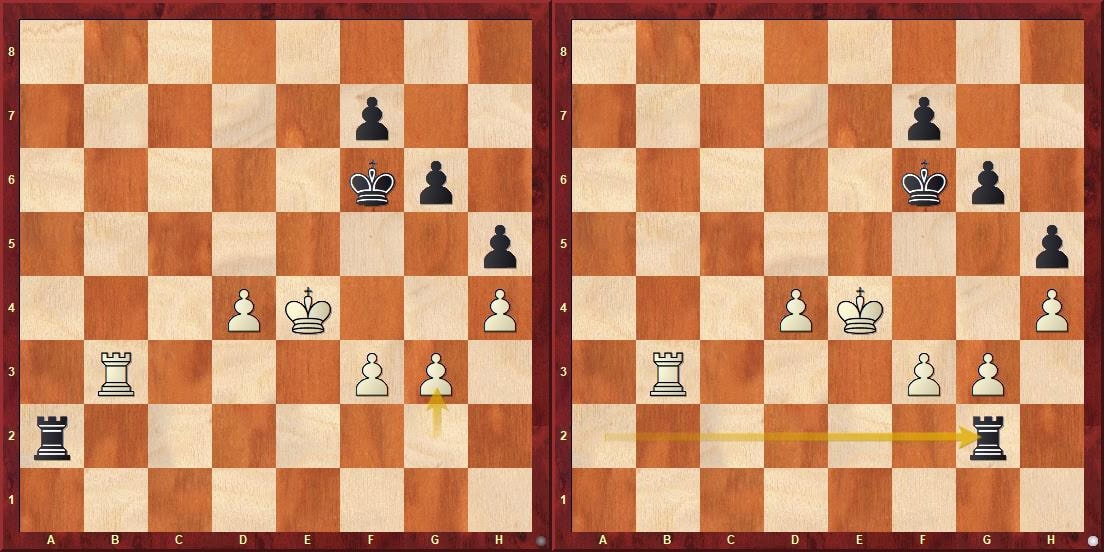
After 42.g3 Black had more than enough time to remember how to defend this type of endgame. Praggnanandha's approach 42…Rg2?? actually loses up to two defensive tempi! For such a mistake, which costs Black the game, we can have various justifications. However, given the time spent of just under two minutes and the fact that Pragg „still“ went through classical education, I would lean towards the opinion that he probably considered the position drawn „by any means.“.
In the position of the left diagram, we see that both Black pieces stand well. We have already dealt with these types of rook endgames on the pages in the article The Invincible Queen? from 26 April 2025, so we should know that „a queen is not a bishop“ 🙂 ! Of course, we will learn more in the player’s analysis and the video below.
Gukesh’s blunder of a career or like a rollercoaster
As can be seen from the table, the world champion started 2026 with a poor result. After winning the world championship title, his last successful appearance was actually last year’s Wijk, where he shared first place.
„Gukesh’s rollercoaster“ – that is also what I would call an article dedicated solely to his games. They are so extensive that they would be enough not only for a separate contribution but almost for a tournament bulletin.
Indeed, deep sympathy for this young man speaks from me thanks to his modest demeanour and maximalist approach to the game. However, when I also see the completely neglected study of classical patterns of the past and the many obvious holes that need patching, I regret that I was not born a little later and in another country… I would know what to do next. However, I am not sure whether the world champion himself knows this. And certainly not whether his coaches know the solution…
The key moment of the tournament, from the perspective of Nodirbek’s eventual clear victory and, conversely, the world champion’s collapse to 50%, was the battle of the two youngsters in round 6 Abdusattorov vs. Gukesh. At that moment, Gukesh had +1 on his scorecard, Nodirbek +2. It can be said that the world champion outplayed his opponent with Black, but the resourceful defence kept the position objectively balanced.
In the diagram position, White had just moved after about three and a half minutes of thinking 36.Qf5.
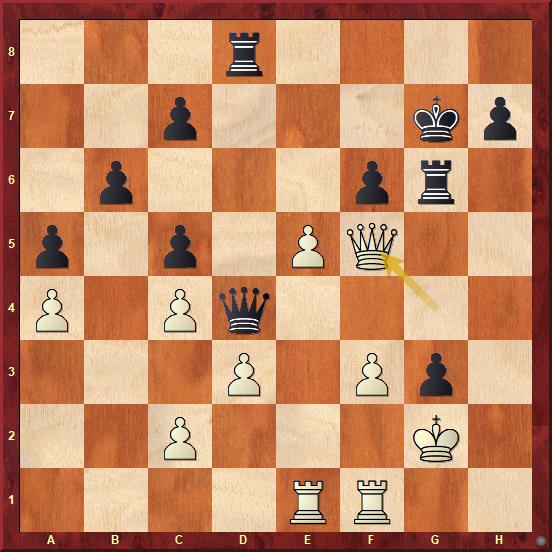
Gukesh, after roughly the same length of contemplation – not being in time trouble – experiences, after an incredible one-move blunder 36…Rg5??
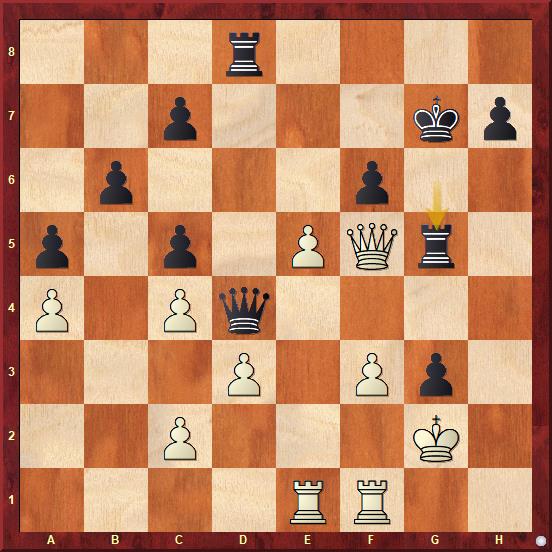
probably the worst moment of his chess career! What followed, of course, 37.Qxf6+.
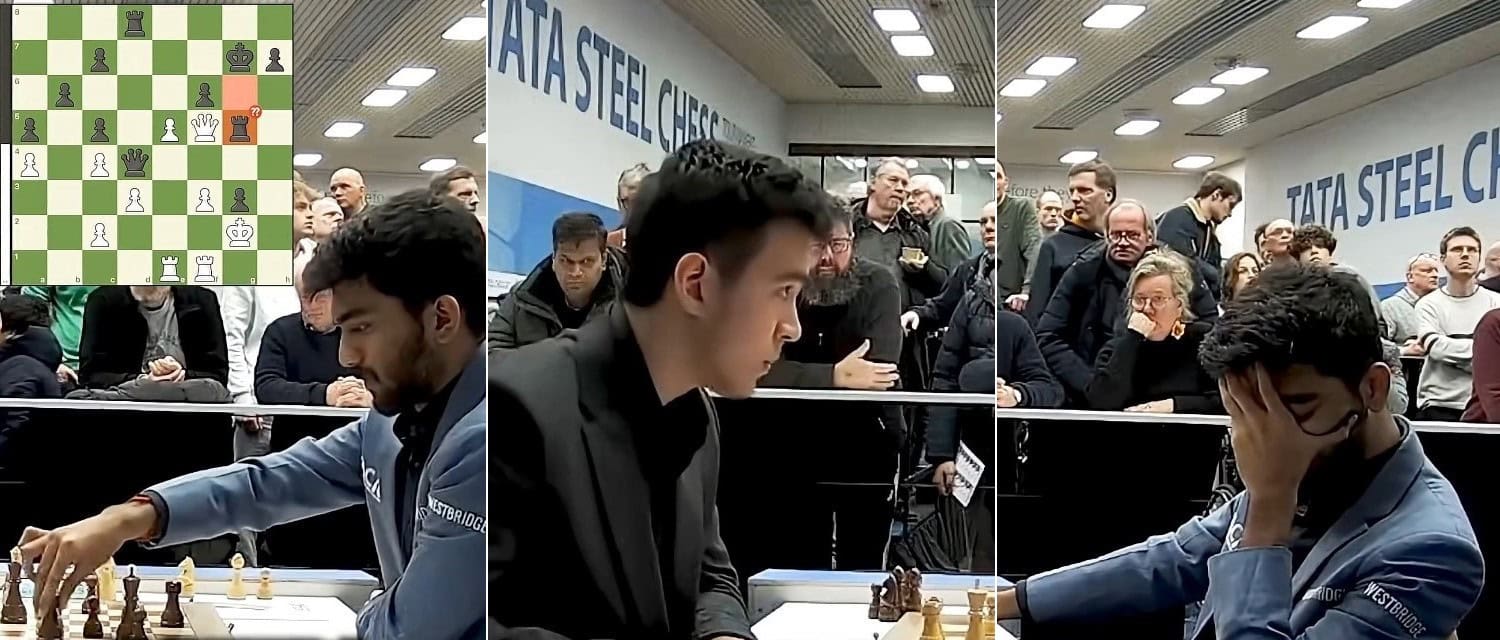
The decisive moment of the 88th Wijk aan Zee: The greatest blunder of a world champion's career, Nodirbek's astonished look and…
For Gukesh, a tragic moment that, dear readers, I simply cannot withhold from you.
The lapse can be explained, but at the same time cannot. The world champion himself, a few days later, answered directly to Fiona Steil-Antoni that he simply cannot explain his momentary collapse.
In general: such colossal blunders occur on the chessboard for reasons I explain in more detail in the viewer. In this particular game, in my opinion, it is also a price of maximalism. In short: Gukesh „calculated himself to death“ in the game, until the loss. The gigantic number of variations he finds and checks in games, the minimal rest – at least sometimes one should leave the board and return to see the position with fresh eyes – would probably have prevented the lapse.
After such a game, I was quite curious how Abdusattorov would evaluate it. Situations of this kind are valuable not only for psychologists but also for coaches. Well, yes, you probably guess correctly. Nodirbek reacted entirely appropriately. Nevertheless, in today's „big-mouthed times“ his modest and sober statement must be appreciated!
Caissa's chosen one or the damned?
The end of this year in the world championship match will show that, I could add!
„Sometimes you're down, sometimes you're up.“ The lyrics from the popular song by Voskovec and Werich from the 1930s fit the world champion's performances in Wijk perfectly.
In my opinion, he played his best game of the entire tournament, but at the same time managed to arrange the white pieces from a strategic point of view in the worst possible way, perhaps in two cases.
However, unlike many amateur critics (in a good sense), I do not forget! I still have before my eyes his unbeatable Olympic performance in Budapest 2024 and, of course, before that the Candidates Tournament, which he managed to win at the age of seventeen!
Let's take a look at both a brilliant game, and at „a “strategic thinking crash". I add that the world champion won all his games with Black (Black wins!), and – perhaps to add insult to injury – he could and should have added a fourth win in the game against Hans Niemann.
From his „slip“ in the endgame of the 12th round game Niemann vs. Gukesh we will start our three examples. Nothing, in my opinion, demonstrates the world champion's thinking algorithm better than a missed opportunity in this game.
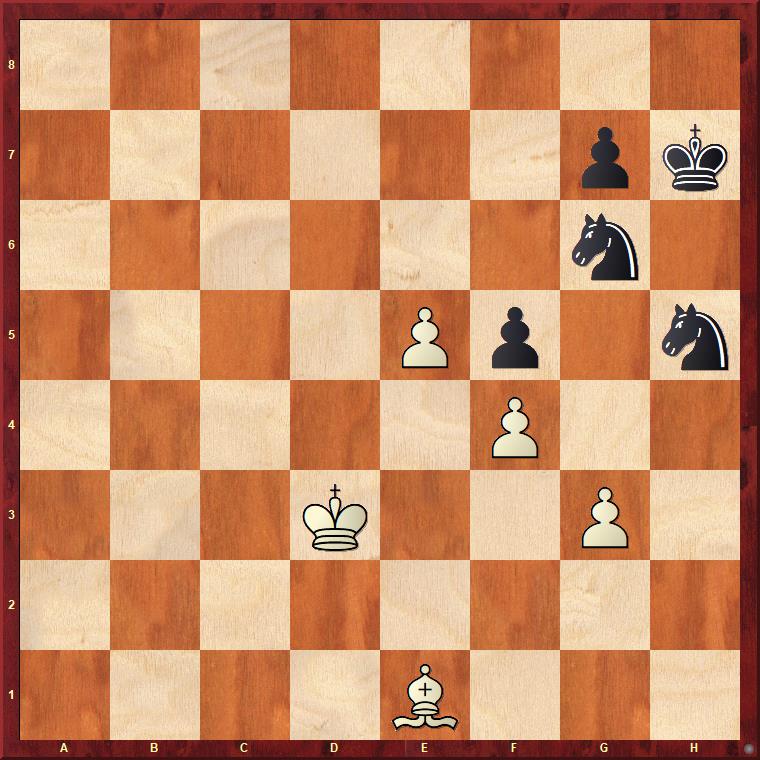
„Black is completely winning.“ This evaluation should be obvious to almost any player, say from the second strength class upwards, today roughly from 1700 ELO points. True, even a six-year-old child can count material on the board, but they may not yet know that White in the position only needs, with a slight simplification, to give up all their material for both Black pawns. Two knights usually do not mate 🙂. .
A somewhat more advanced or experienced chess player, though still not necessarily of master level in my opinion, would probably think like this: „There are two plans available in the position. The first is simple consolidation of the position: centralising the king, moving the knight to e7, g7–g6 and finally involving the problematic knight on h5 in the game via g7.“
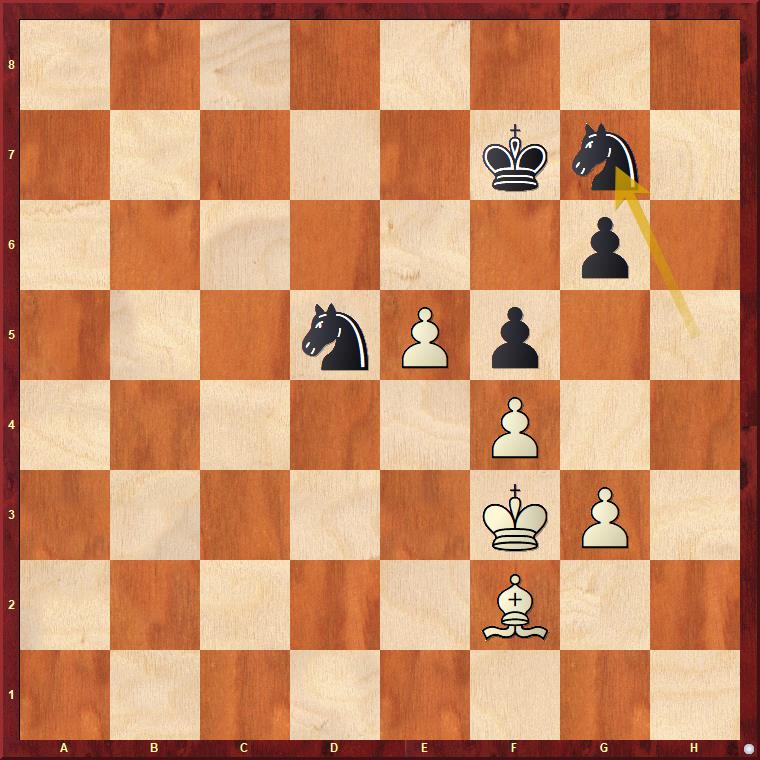
In the absence of counterplay – so-called timeless positions – it is possible to plan the individual stages of converting the advantage very far ahead. Before us is one of the possible versions of Black's plan realisation in passive defence or a waiting strategy. However, it is likely that Gukesh was more afraid of White's king marching forward. Such possibilities are also analysed in the viewer.
However, the chess player should think even further: „If I could calculate a 100% winning line by means of a sacrifice – the transformation Nxf4+ gxf4 Nxf4+ – I could go for it! But I see that I cannot have that certainty, and so I will choose a safe procedure number one!“
Not so the world champion! It is difficult to crack what considerations led him to enter a theoretically drawn endgame when he continued 41…Nxf4+?? 42.gxf4 Nxf4+ 43.Kd4=.
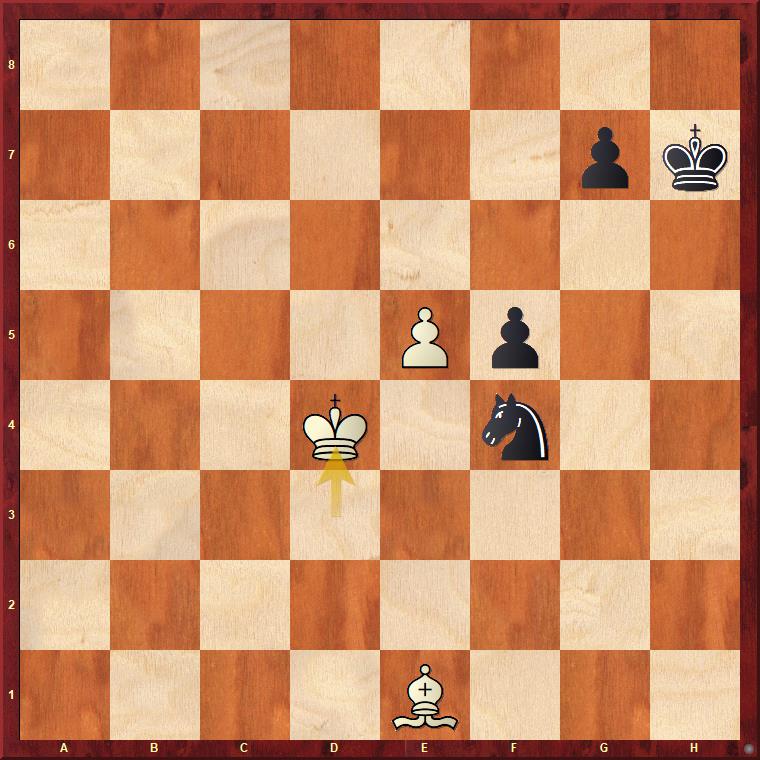
Gukesh's approach reveals much about his, let us say, peculiar way of thinking. By deduction, we find that at least one, but rather two, of the following theses must hold:
- world champion he cannot think in patterns, but only in variations,
- forced manoeuvre after a piece sacrifice he evaluated at its end incorrectly,
- Gukesh does not think logically.
There followed a dramatic conclusion to the game, in which both opponents blundered once more. A detailed analysis of the endgame is available in the viewer of Gukesh's examples below. The entire game can then be watched, for example, in the following record and in a fairly good analysis on the Agadmator channel.
„That young man plays like a God!“
an experienced expert might state, though unfamiliar with the conditions of our time on our planet 🙂, watches the game Fedosejev vs. Gukesh from round 8. „Well, after all, he is the world champion!“ replies a local fan of Gukesh.
What the world champion showed in the game left me with the impression of something unique!
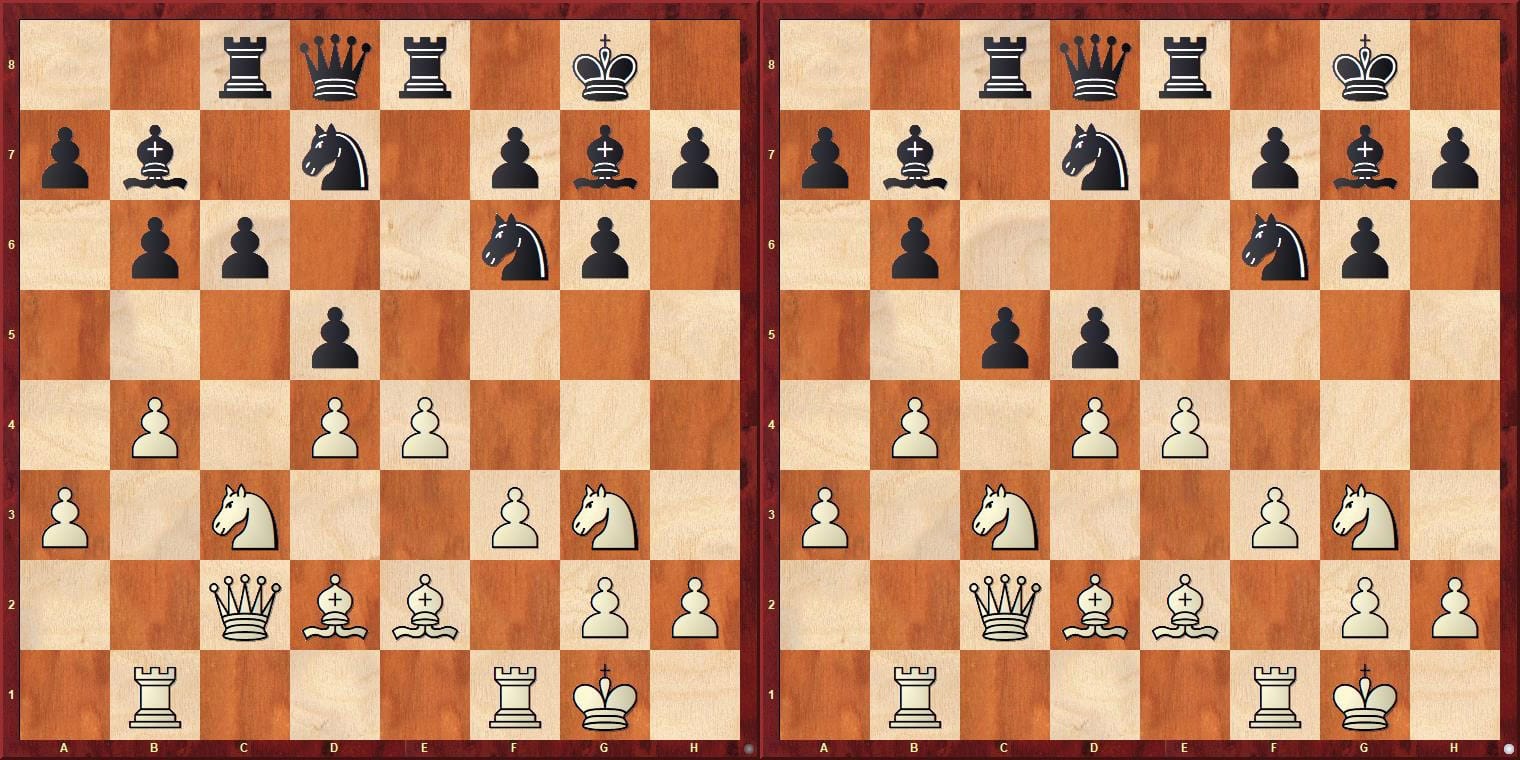
In the position of the left diagram, White continued 18.e4, only to face after the opponent's thirty-two minutes of thought 18...c5!!. This is a real dynamic piece sacrifice, but the complications go much deeper than might appear at a glance at the right diagram. So it is not only about 20.bxc5 bxc5 21.Rxb7? cxd4. Gukesh spent half an hour on deep calculation and especially on evaluating the positions after 21.e5 cxd4 21.exf6
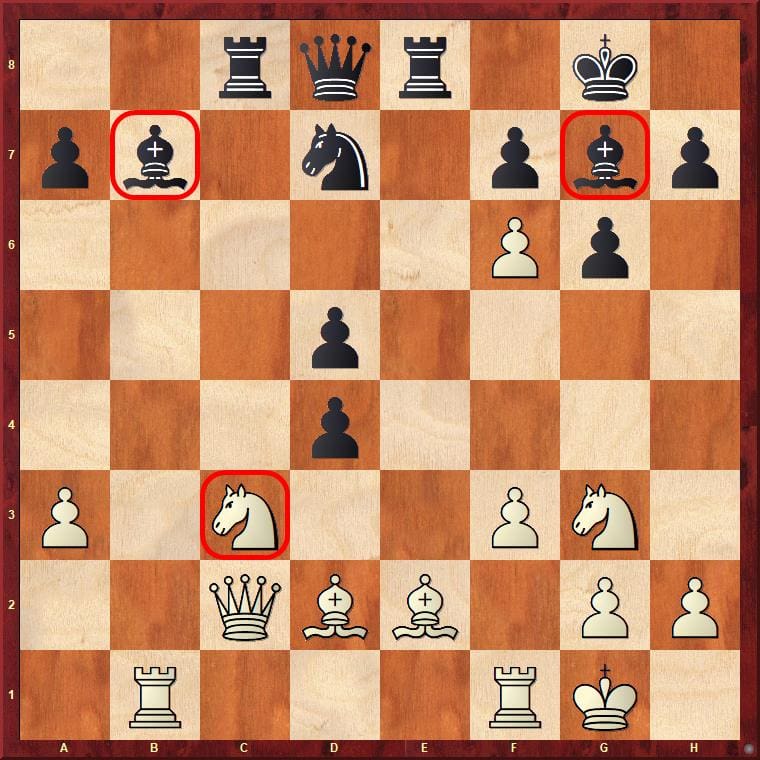
How would you continue as Black in the diagram position?
Here we can also watch Gukesh's brief post-game analysis in a traditional interview.
It could have been the combination of the year, if only…
„Enough of this Gukesh being exalted and defended!“ might say a reader who has read not only the previous lines. Indeed, we cannot add many other positive points to the world champion from Wijk.
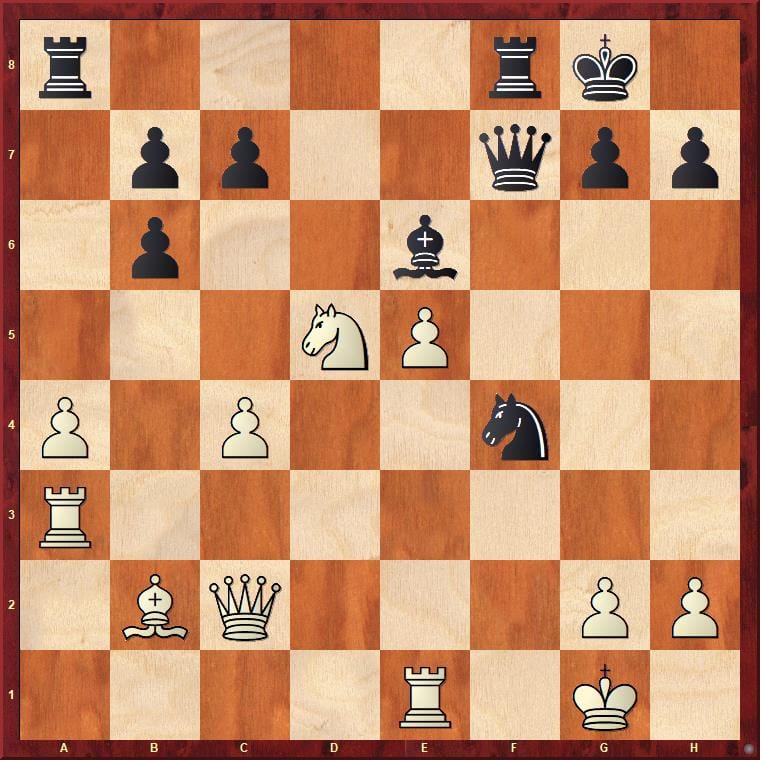
In the game Erdogmus vs. Gukesh Black could even have lost! On the board appeared a position that might have turned into the combination of the year! To avoid giving too much away to readers who have not seen this game, I add the diagrams with the task below. After 27...Ba6
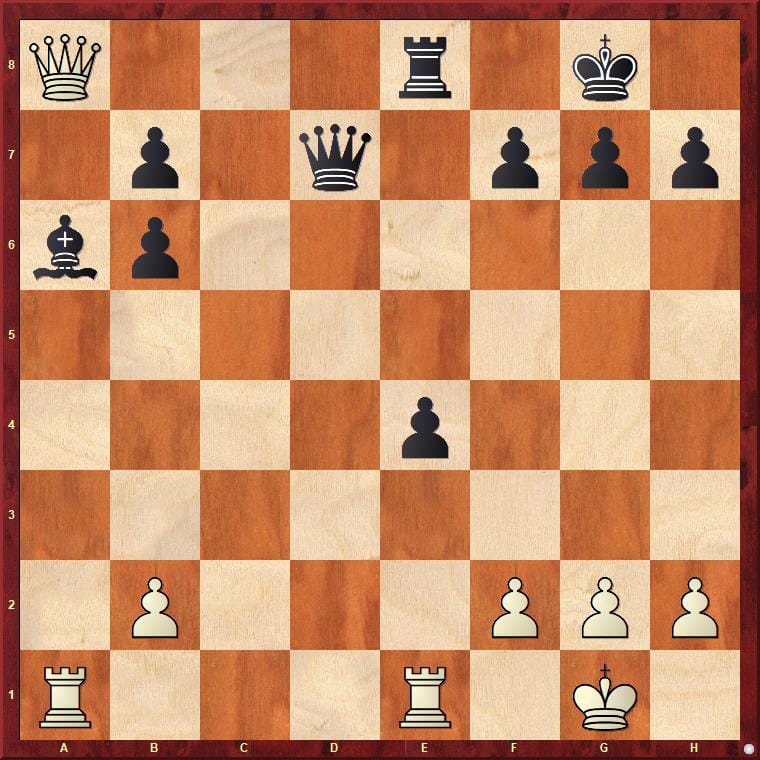
Black trapped the opponent's queen on the queenside. He calculated that after 28.Qa7 Qb5 he would exploit her absence from the battle to launch an attack against the enemy king. In the game, the fourteen-year-old Turkish supertalent ultimately found nothing better than to return the material after 28.Rxa6?? bxa6 29.Qxa6 surely well aware that things were bad and that he probably could not hold the position with one pawn less.
But White could have won! If he had strictly adhered to the principles of correct calculation of variations, namely that v in sharp positions played out we first consider and calculate checks, captures and strong threats, he would have found a spectacular winning combination. It could have become not only the highlight of the tournament but perhaps even the combination of the year!
Can you find the winning forced manoeuvre – the combination – in the diagram position? Its goal is mate or material gain.
„Indian summary“ and coach's recommendation
After the actual collapse of all four Indian musketeers in Wijk, I would recommend the following to three of them, except the world champion: „Stop accepting tournament invitations. Stay at home for several months and train. Work with your coaches to eliminate serious weaknesses in your play!“
Most of all, D’Artagnan himself, Dommaraju Gukesh, should work hard! However, since he defends his title at the end of the year, his training programme would need to be specially adjusted. Nevertheless, the time when he should „lock himself at home for half a year“ and work hard should come regardless of the result, starting in January 2027. Obtain many missing books or classical materials, supplement them with modern materials examining positional play and endgame problems, and work hard. Differently than before.
I know I am probably venturing into the realm of fantasy. But on the other hand: who ever disproved Lenin’s shortened but true phrase „learn, learn, learn“ ?
Nodirbek’s dominance and the path to the title
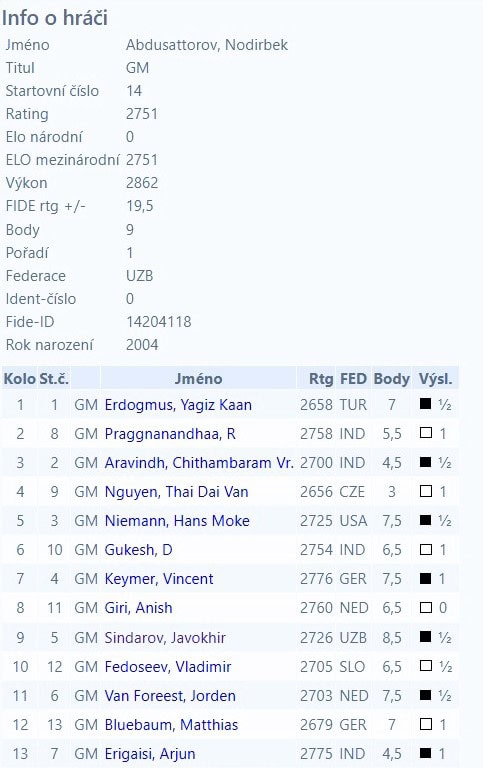

Nodirbek’s individual results again command respect!
Although this may not seem apparent from the final results, Nodirbek won this tournament comfortably – with a clear margin. The result was somewhat distorted by the last game of the silver medallist Javokhir Sindarov. He literally he won against the Czech grandmaster Nguyen Thai Van Dai, who had previously lost four games in a row. The game was supposed to end in a draw, although Javokhir could even have lost at one point before the time control! In that case, we would have seen a different table! One very similar to the London one (see the article „Like a wild horse“).
Not only from Wijk came quite logical voices about what a pity it is that Abdusattorov did not qualify for this year's Candidates Tournament. Unlike many commentators and experts, I would not dare to criticise FIDE here for an ill-considered or outright bad qualification system. It does not seem perfect to me, but I say: let's be grateful for it. Unlike many, I clearly remember the crazy projects of the previous FIDE president Kirsan Ilyumzhinov.
„The world champion will be the player who defeats the reigning champion in a match!“ That should be the primary principle. History knows cases of world champions refusing to play a match: Emanuel Lasker (1920), Robert Fischer (1975), and Magnus Carlsen (2022). Once death even intervened: Alexander Alekhine (1946).
Nodirbek actually experienced a clear decline in form in the middle of last year. But it is also true, as he himself notes, that both the Candidates and the World Cup are in a way lotteries...
Allow me a somewhat cheeky prediction: the most interesting match will take place in 2028. The world title will be contested by the twenty-two-year-old world champion Dommaraju Gukesh and the twenty-four-year-old Nodirbek Abdusattorov 🙂
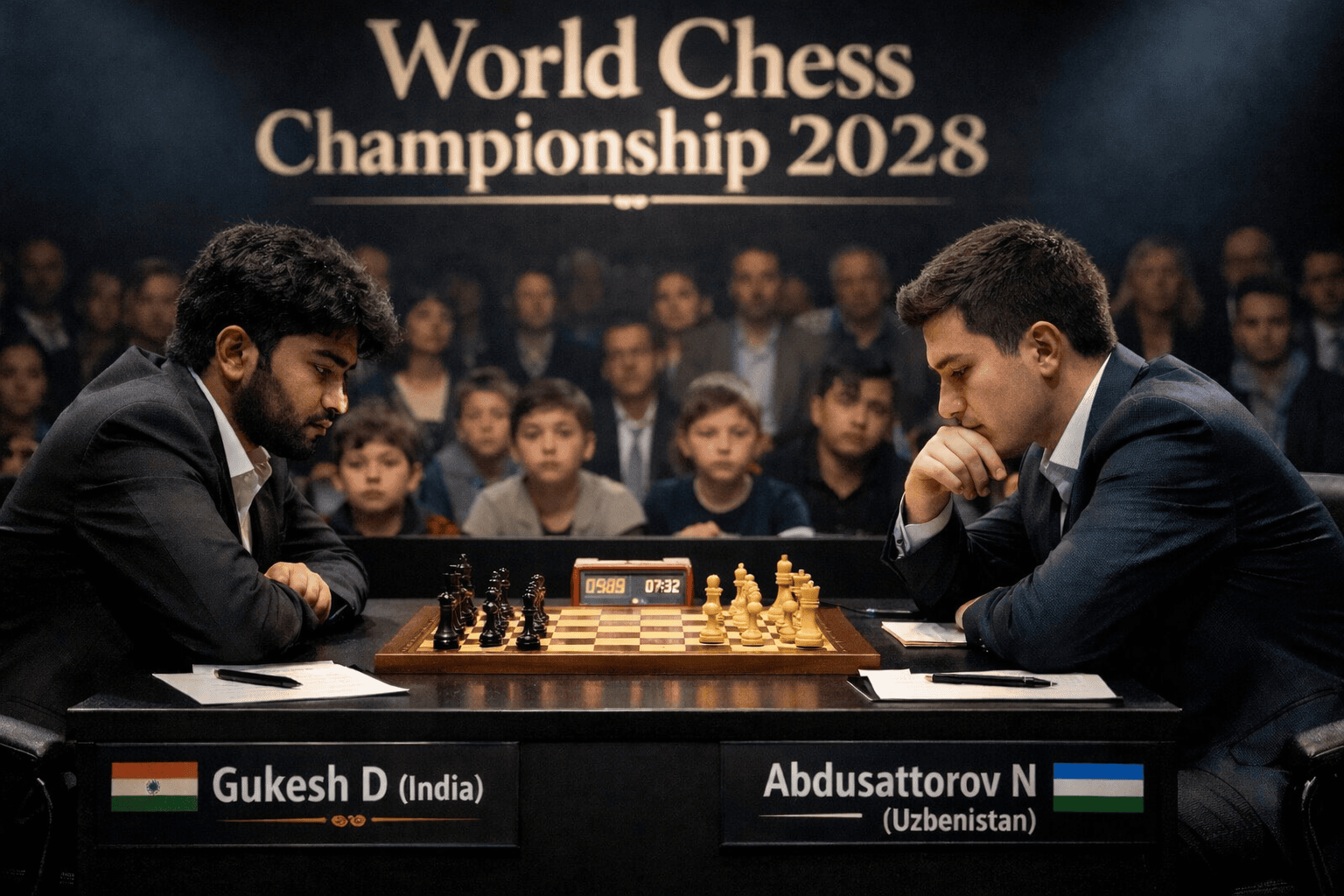
Will our reality head precisely in this direction?
Let us now look at some interesting moments from the work of this year's Wijk winner. (Analyses of games, examples and solutions are again provided at the end of the chapter in a single viewer.)
I especially enjoy watching Nodirbek's games against the „statics“. That is, players who, despite all their chess literacy and sometimes great practical strength... well, they have not been given the ability to perfectly sense the dynamic factors of the struggle and tend to get a bit lost in the calculation of variations. So I followed the game of round 7 with interest Keymer vs. Abdusattorov.
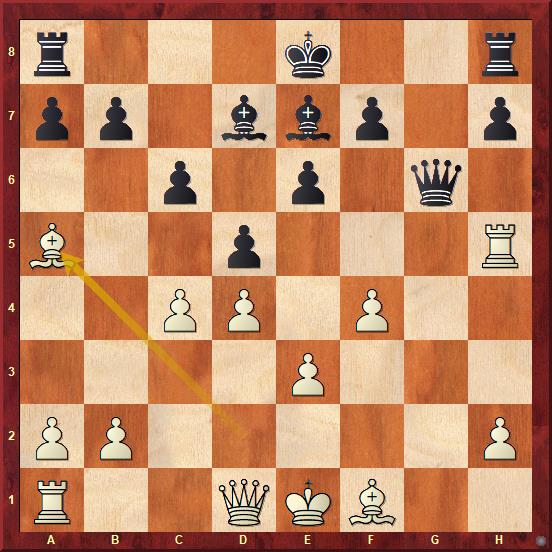
Keymer chose a sharp variation of the so-called anti-Meran in the game, but his last move 19.Na5 can be described as an inaccuracy.
How would you respond as Black? What variations or ideas were running through your mind?
Even Nodirbek had a weaker moment in round 8, when he lost to the then in-form Giri. Then followed 3 draws and his lead in the tournament began to waver. However, the last two rounds left no doubt who was the favourite in the tournament!
In the game of round 12 Abdusattorov vs. Bluebaum a sharp position with mutually vulnerable kings arose. As we will see in the viewer, the encounter contained several calculation delicacies. The German grandmaster blundered badly with the move 31...Qc7??,
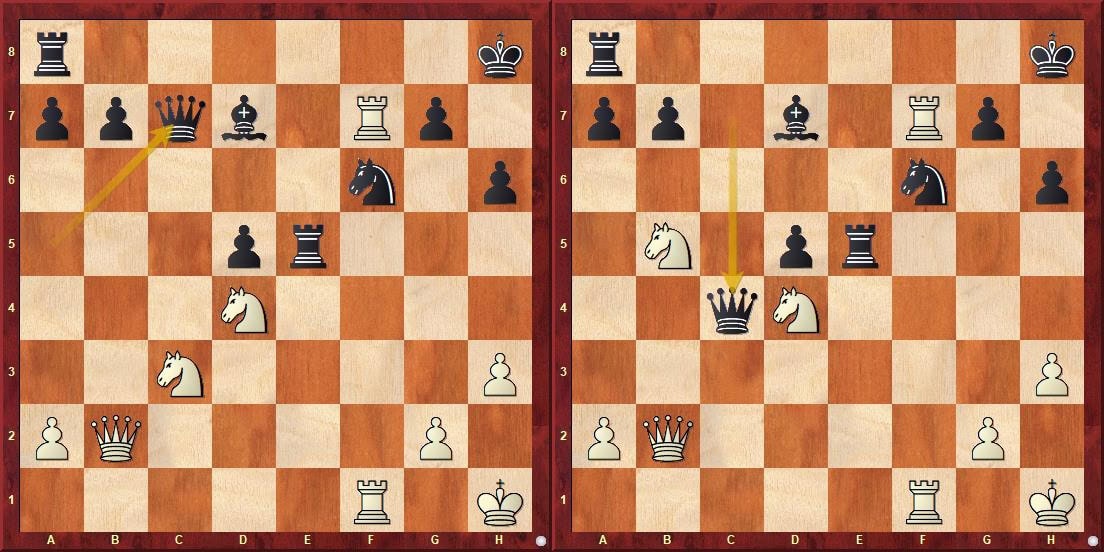
after which followed 32.Ncb5! Qc4. It is not exactly a walk in the park, but… can you find the winning continuation for White?
Let us enjoy a short post-game interview and analysis by Nodirbek.
Selected games from round 12 analysed by Grandmaster Sergei Makarychev!
"Captain Evans, please come on stage!"
Before the last round, unlike the London 2025 or Prague 2024 tournaments, the outcome was not yet clear. Especially since Abdusattorov was expecting with the white pieces Arjun Erigaisi! Even in his – again, like last year – rather poor form, we know that Erigaisi is capable of beating anyone. Paradoxically, from a certain perspective, he is the ideal opponent for the last round. All the more so as he has the white pieces.
And Erigaisi did not disappoint. I knew that during the broadcast as soon as the Evans Gambit appeared on the board!
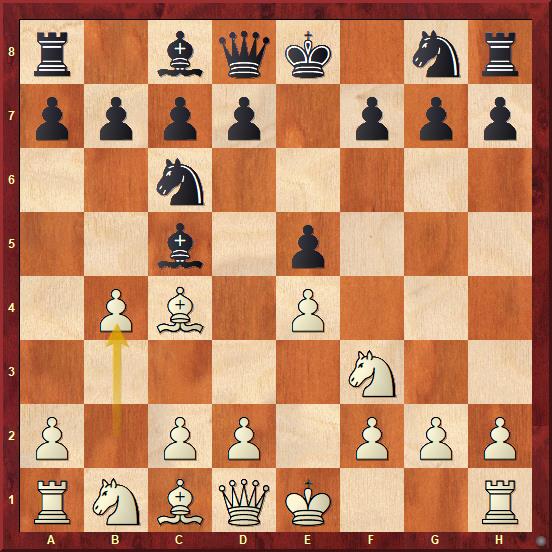
We learned that Nodirbek was preparing for all sorts of possibilities. In the interview, he even admitted that he had reviewed such a marginal line as the Dubov Gambit 1.e4 e5 2.Nf3 Nc6 3.Bc4 Bc5 4.c3 Nf6 5.d4 exd4 6.b4!? (Dubov vs. Karjakin 2020) 🙂
Yet despite all that, the surprise did not have such an impact. I always emphasised to my more advanced students (from the Candidate Master level upwards), „When preparing against an opponent, consider also the games they played with the opposite colour!“ I do not know for sure if Arjun did so. If he did, he would have known, so to speak with one click of the mouse, that even an unprepared Nodirbek can rely on his – admittedly older, but that does not matter here – preparation from the time when he himself played the Evans Gambit. We will of course learn more again in the game viewer.
Arjun did not play the game well at all. Immediately after the players left the theoretical phase, it was clear that he did not fully grasp the problems of the position. The differently coloured bishops together with the heavy pieces create, due to the huge number of weak squares, situations where in a single forced manoeuvre both kings can become very weak.
For my students, I created a test that requires a good visual memory. According to my understanding of calculation theory, it is about II. pillar fictitious bridge – so-called Visual fixation. Would you like to try it too, dear readers?
Imagine the following moves in your mind: 26...Nxd5 27.cxd5 Bxd5 28.e6 Bxe6 29.Rg3 g6. How would you continue now?
Below I offer two analyses of the game. The first is intended for more advanced players. Grandmaster Makarychev's analyses are mostly excellent, even though Sergei Yurievich creates them immediately after the round ends and sometimes even during it! (I remind you again of the possibility to start English AI dubbing or Czech subtitles.)
The second analysis I found on a hitherto unexplored channel. It will be appreciated both by less experienced players and by stronger players who do not devote much attention to history — the author also undertook a short historical excursus on the Evans Gambit…
And here we have a short post-game analysis (this time without a chessboard) of the then already certain tournament winner!
Below are detailed analyses of all three examples of Nodirbek Abdusattorov, including solutions to the posed questions.
Even Fischer wouldn't have managed this!
„Who are we talking about? Who dares to put anyone above Bobby?“ not only veterans but also those who still study chess history today might indignantly ask!
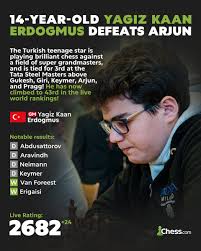
Only fourteen-year-old Turkish grandmaster started in the tournament Yagiz Kaan Erdogmus (*3 June 2011). This boy is receiving huge attention quite rightly! While due to his age he remained somewhat in the shadow of Ediz Gurel, who is three years older and, let's say, more media-attractive, today the situation is exactly the opposite!
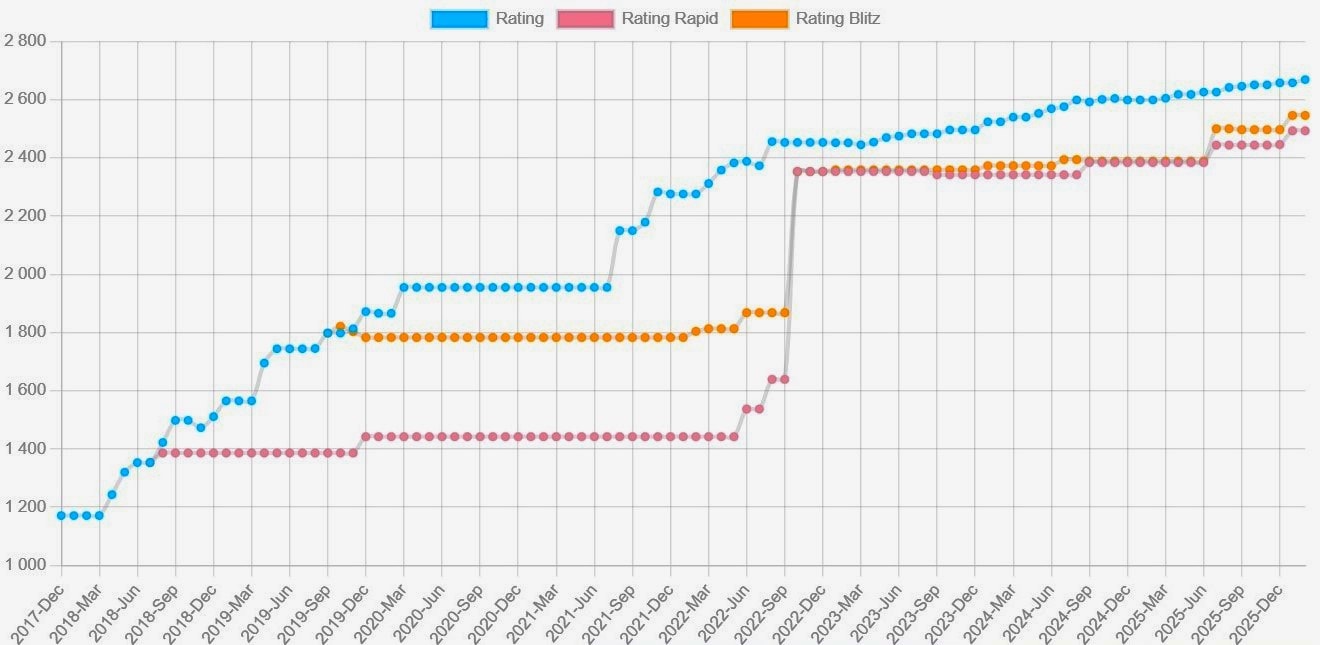
In a clear chart from rating.fide.com we see Yagiz's steady rise in performance. The current rating of 2,669 does not yet reflect the gain of about 18 more points he earned in Wijk aan Zee.
I believe readers will enjoy many more analyses of Erdogmus's games in the future – I just hope I will be able to analyse them – so let's at least look at one of his four wins. It is truly a brilliant performance!
To defeat with Black (Black takes it!) at 14 years old a world top five rated player and a former 2,800 club member in a serious game means something. And when you add how the way Black played the game, then a mere „I take my hat off to you!“ becomes completely insufficient 🙂. This is game of the fourteen-year-old genius with a capital „P“! Certainly one of the best in the tournament. It has everything: a novelty in the opening, a positional exchange sacrifice, how to handle the bishop pair, a demonstration of the power of distant passed pawns in the endgame, and excellent calculation of variations.
In the game of round 7 Erigaisi vs. Erdogmus the Keres Variation of the English Opening was played, a kind of reversed Alapin system in the Sicilian (Alapin from the second hand). 1.c4 e5 2.g3 Nf6 3.Bg2 c6.
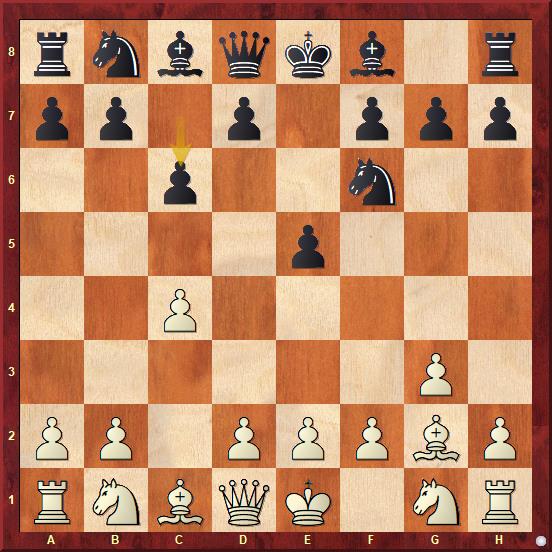
Perhaps this game will inspire some readers to take a closer look at the system and eventually start using it! For devotees of the Alapin system in the Sicilian, it might even be the preferred choice. White has at their disposal, similarly to this Sicilian system, either 4.d4 or 4.Nf3…
It does not often happen that Arjuna is „outprepared“ in a game. However, this time Erdogmus came up with a novelty after which White experienced the „problem of the first unprepared“ firsthand. And it was worth it! A sharp and completely unorthodox position arose.
After 12...d4 the position from the left diagram appeared in the game.
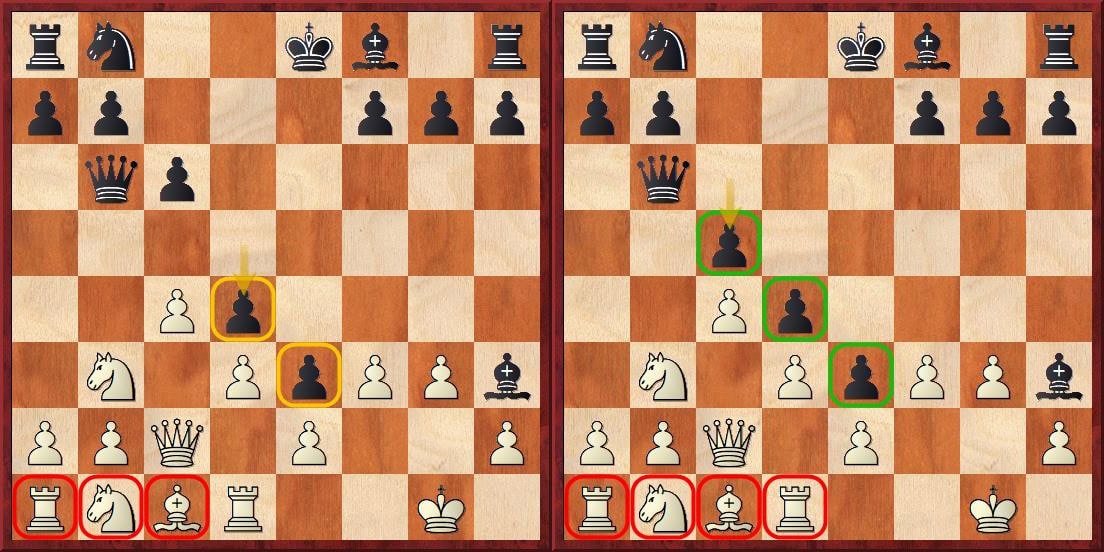
Black created a positional threat 13...c5, which would permanently paralyse White's entire queenside and lead to a decisive positional advantage.
Let us look again at the left diagram. I characterised the position on the board in the notes as follows: „The position can be described as unclear, according to engines as equal, but above all it promises a sharp clash between Madam Dynamics and Statics! Moreover, the next moves are more or less forced. What to say about the position itself? Can the bold pawns on e3 and d4, which paralyse the opponent's entire queenside, be considered daring strongmen – some kind of supermen – or rather exposed madmen who will lose their lives once White finds the kryptonite? In a way, this is primarily the problem of the well-known and traditional half-empty or half-full glass! Here, however, it does not depend on the nature of the person – pessimist vs. optimist – but on the future development of theory, that is, on precise analysis!“
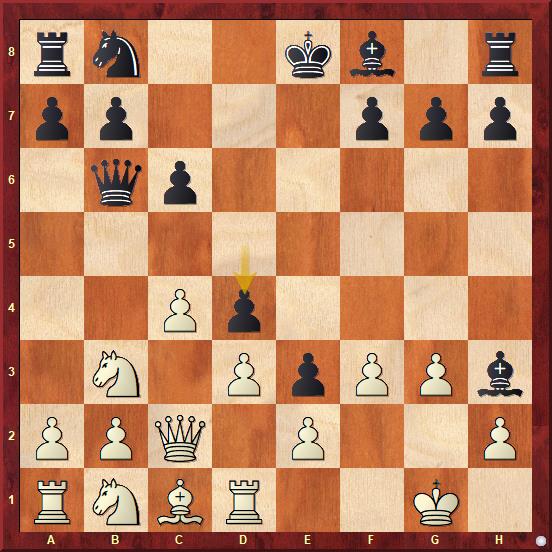
How would you continue in the position of the diagram?
Nakamura ecstatic
Not only for those readers who at least occasionally watch Hikaru Nakamura's streams, I recommend watching the following video. But first, let's explain what it is about.
After Yagiz's nice positional exchange sacrifice (I emphasise that the game deserves not only a detailed analysis but also a separate article), an endgame arose with a pair of bishops against a rook and knight. However, the objective dynamic balance gave a clear initiative to Black in the „live game“.
After 34...Kc6 the position of our first endgame diagram arose.
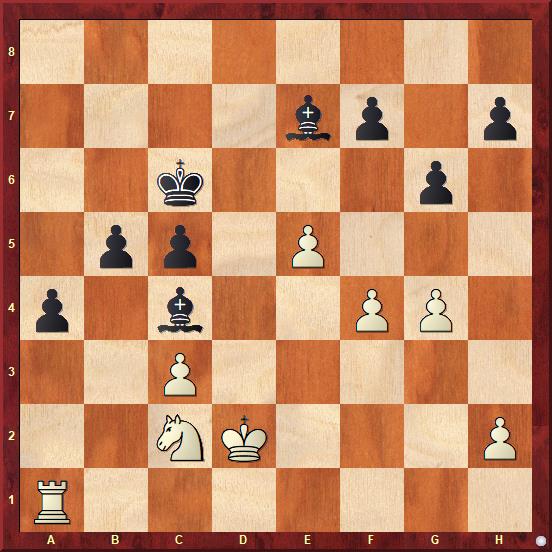
We see that Black has, for a minimal material concession (?, I agree with those who Petrosian-like say that White actually has no material advantage...) a powerful pair of bishops, an attack on the queenside with a pawn majority and mainly a distant passed pawn on a4. Erigaisi continued here logically 35.Ne3=, but (not only) Nakamura's engine ranks first a paradoxical 35.g5!
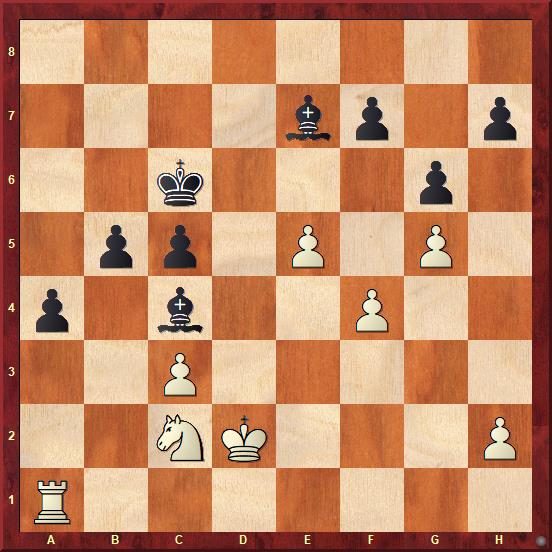
White here thus resigns active counterplay tied to the effort to create his own passed pawn f5+e6 (which happened in the game) in favour of... but actually of what??
I don't watch Nakamura's videos very often, but since the last game of the World Championship match in December 2024 when he was puzzled by Ding Liren's move a4, I have not seen such a astonished and at the same time enthusiastic Hikaru ! A sentence like: „I'll have a chip implanted.“ speaks volumes 🙂. .
And why enthusiastic? Because Erdogmus mentioned this plan in his post-game analysis!
I admit that personally the plan with g4-g5 does not seem so mysterious to me. True, it transforms the position and White is ready to sacrifice the exchange back with a transition to a knight versus bishop endgame with a blocked queenside. Moreover, the g5 advance leads to a blockade – limiting the mobility – of the kingside and restricting the scope of the dark-squared bishop. I deal more with the „problem of the blockade of the pawn majority“ in a fairly detailed analysis of the game, so here I will only give one diagram of the final position of the analysis. I think it illustrates well enough „what it is about“.
White has just played 39.c4=.
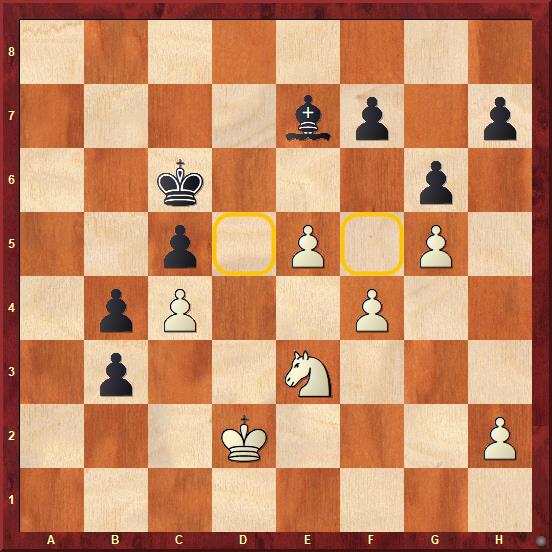
The resulting position can also be described as a fortress.
Below I offer a shortened record from the ChessBase India channel and a lively analysis with the winner in the studio.
In my opinion, Yagiz is one of those children who… do not train! „Heretical thought! Nonsense!“ But allow me to finish the sentence… they do not train, because they devote all their time to chess!
The same „problem“ was faced in the early 1980s by Vassily Ivanchuk, before him for example Bobby Fischer, and if we dig deeper into history, we see several other names. Yagiz is definitely not a sporty type. We will not see him playing football or any other sport with friends. But that is nothing unusual either.
Below is Erdogmus's brief biography, prepared by none other than the now indispensable AI assistant. I might add that the young Turkish prodigy is sponsored by a person many would envy. Turkish billionaire Evren Ucok has decided to invest his interest and money into a very specific plan. He wants to make Yagiz a world champion!
 Yagiz Kaan Erdogmus - biography
It should perhaps be added that a similar plan with super-grandmaster Shakhriyar Mamedyarov (to win the 2026 Candidates Tournament) did not succeed for the billionaire failed. However, if we dig a little deeper, the circle closes. For example, at the World Rapid and Blitz Championship we could see Yagiz and Shakhriyar together in videos. Mamedyarov thus became Yagiz's coach!

Challengers, or the battle to the last bullet
I usually only half-watch B tournaments. Firstly… well, a day has only 24 hours, so thorough analyses take all the time spent at the chessboard and computer, and secondly sometimes there is simply no one worth following.
This year's Challengers tournament in Wijk was an exception. My favourite player Andy Woodward, participated, about whom I have already written many praises in an article from November 2025 (chapter „Who is Andy Woodward“), but, I admit, I also followed the games of Vassily Ivanchuk!
Whom should we wish victory in the tournament and thus promotion to the next Masters tournament? I would probably be happy even if the veteran of the competition won.
Because the article is obviously not infinitely long, as I was warned by friends and acquaintances, people today simply do not read long texts and serial reading is not practised, I will try to satisfy readers with some of the most dramatic or interesting moments in the videos.
Andy Woodward ultimately won the tournament after a dramatic final round. Nine wins is something extraordinary, but on the other hand, in the generational clash of round 10 he lost to Vasily Mikhailovich.
The following game, in which he defeated the young French grandmaster Marc Maurizzi, is quite characteristic of the American's style.
Rehabilitation for New York
Perhaps, dear readers, you recall the tragic ending of the New York blitz game Ivanchuk vs. Naroditsky in December 2024. Vasily Mikhailovich would have retained quite good chances to advance to the top eight and could have fought for the blitz world championship title if he had won. However, he simply – literally physically – could not handle the mutual time trouble. First, he blundered in a winning position and then he ran out of time. He simply could not suppress all the tension and stress afterwards and burst into tears. A very sad sight of a genius who devoted his life to chess!
Well, now let us look at the incredible conclusion of the time trouble in the round 3 game Ivich vs. Ivanchuk.
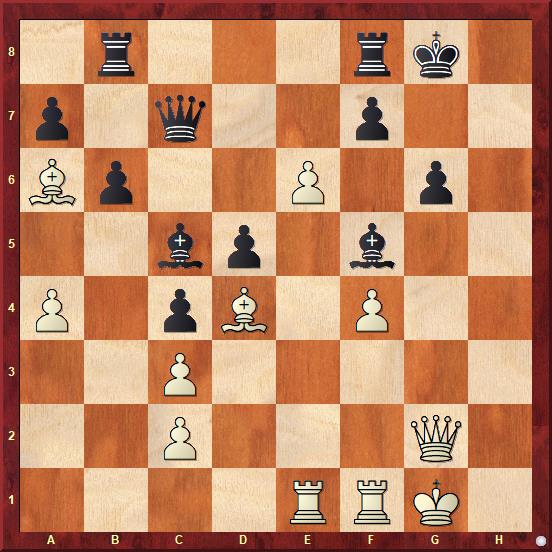
In the diagram position it was Black to move 39…Bc5. His position is somewhat more promising, but that does not interest us now. Both tournaments were played at a time control of 40 moves in two hours without increment, followed by a time control and then a finish with 30 minutes plus a 30-second increment per move.
At the moment when Vasily Mikhailovich played move 39, he had one second left on the clock! White still had some time in hand, so the tension in the hall during his thinking could probably be cut with a knife. Will Black manage to respond after Ivich's move? Can he make the control move in just one second??
The situation will be explained to us in the following post-game interview with Fiona Steel-Antoni by Vasily Mikhailovich himself!
Winner takes all!
The final word on the Challengers tournament must, however, be left to the well-deserved winner! How will Andy perform in the Masters 2027 tournament?
It worked out in the end
Here I add a video to watch with a brief summary including, among other things, Nodirbek's setbacks. Until this year, Wijk was somewhat of a „cursed Wijk“ for him 🙂. .
A different world – a different celebration
Can you imagine „this“ happening in any European country or Western civilisation??
This is simply a different world – in every respect, not just culturally or civilisation-wise.
Well, let’s conclude the long article about this year’s tournament in Wijk aan Zee with the final award ceremony; otherwise, it wouldn’t be the same.
All examples and games are again available in the CB player.
¨