


„What mysterious contradiction did the author put in the article's title? Has he also stopped caring about truthful article headlines and lies in them as if printing?“ a reader might ask. Or are even traditional classical tournaments affected by the vices of modern FIDE events? Not at all! I am only referring to blitz tiebreaks, which have become an essential part of them for some time now. This year's very strong tournament was completely dominated by the youth, and despite an incredible number of serious mistakes and outright blunders, it was one of the most interesting tournaments in recent years! The tension on the board in some games was palpable, and the number of theoretical novelties could not be counted on the fingers of one hand! Many were naturally curious about the new world champion. Well, since in chess one can freely discuss without risk, the opinions of experts and amateurs differed like day and night. In the first part, we will focus on so-called active serious mistakes, the spice of practical chess at all levels, which proliferate and multiply without problems even in the strongest tournaments...
The games of the last round will be completed, and if there is a tie for first place, the winner is decided by a 3+2 blitz. According to standard historical models, however, in such a case the Sonneborn-Berger tiebreak was used or the first place was simply shared. (A classic example is the 1979 Montreal tournament, where the then world champion Anatoly Karpov and Mikhail Tal shared first place). And so, just like last year left the current world champion from the tournament with silver in his pocket, when in the old-fashioned way Wijk would have won again! Blitz simply does not (yet?) work.
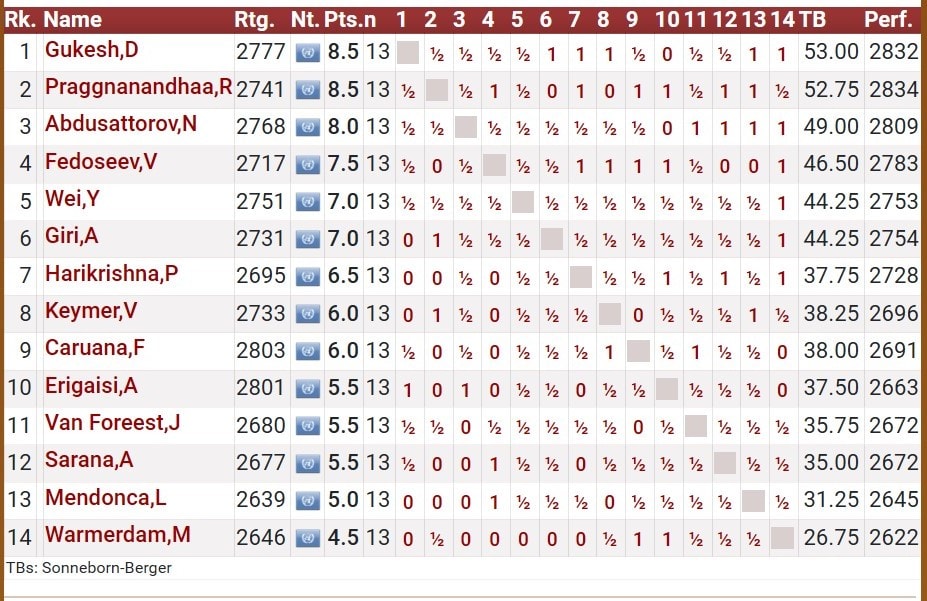
Final results of this year's main tournament.
Risk is reward? Not always!
Let's first look at the very end, the decisive blitz game that decided the official winner of this year's Wijk. (Just a reminder that last year four players reached the tiebreak and the lucky winner – though one hesitates to call him the champion – was eventually Wei Yi.) „Blitz games are not analysed!“ my coach Štefan Gross used to say fondly... he was not alone. Oh, where are those snows of yesteryear! The last and decisive blitz became probably the most analysed on all possible platforms, so we cannot pass it by either.
In a threatened position, with less than half a minute on the clock, Praggnanandhaa played 30.Nb5?
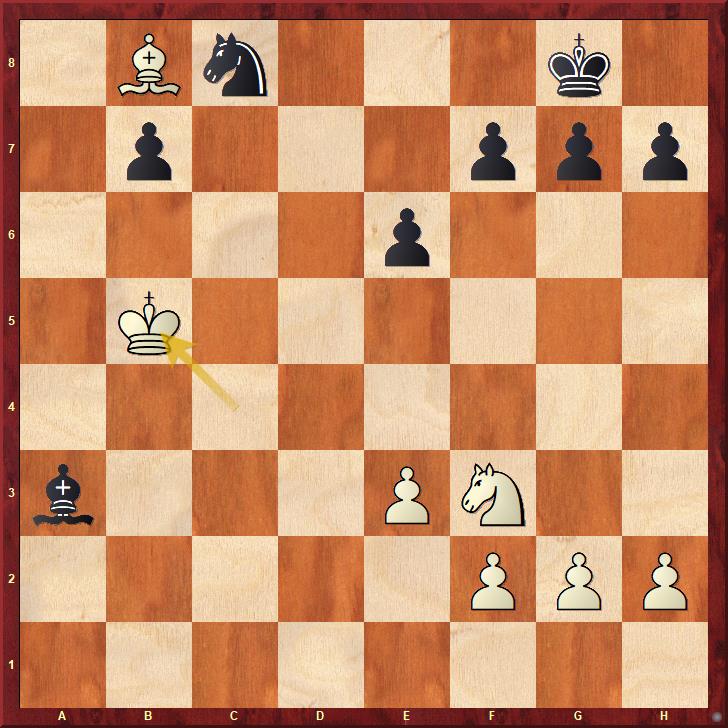
Can you find the continuation leading to a win?
With an extra minute on the clock, 24 seconds for White, and a distant passed pawn more in a minor-piece endgame, everything seemed so clear to me that while watching the live broadcast I picked up the phone, went away and made myself a coffee; and when I returned…
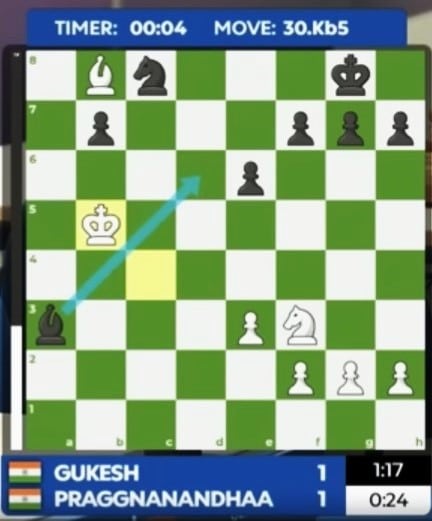
Display of blunders
Contemporary tournaments are indeed characterised by an unusual number of so-called active blunders regardless of whether the time control is classical. I have observed this trend for quite some time and no one will convince me that it is merely a subjective feeling influenced simply by the fact that engines nowadays can easily detect even more hidden – less obvious blunders or by the fact that games are more publicised. Well yes, many viewers enjoy this. Their subconscious, in my opinion, positively accepts this irrefutable fact! „Can a 2700-plus grandmaster really play like this?“ everyone wonders inwardly, and many even think: „I certainly wouldn’t make such a blunder in a serious game!“
Let us first look at the most glaring mistakes of this year’s edition. Would you be able to properly punish the supergrandmasters for the oversights they committed?
Let us start with the most glaring and at the same time perhaps the most terrible blunder in the entire Masters tournament. „Blunders come in pairs!“, could be the title of an entire book collecting similar tragedies.
In the game of round 4 Erigaisi vs. Fedosejev White had already gained a decisive advantage earlier, which due to a certain inaccuracy later produced only a greater advantage.
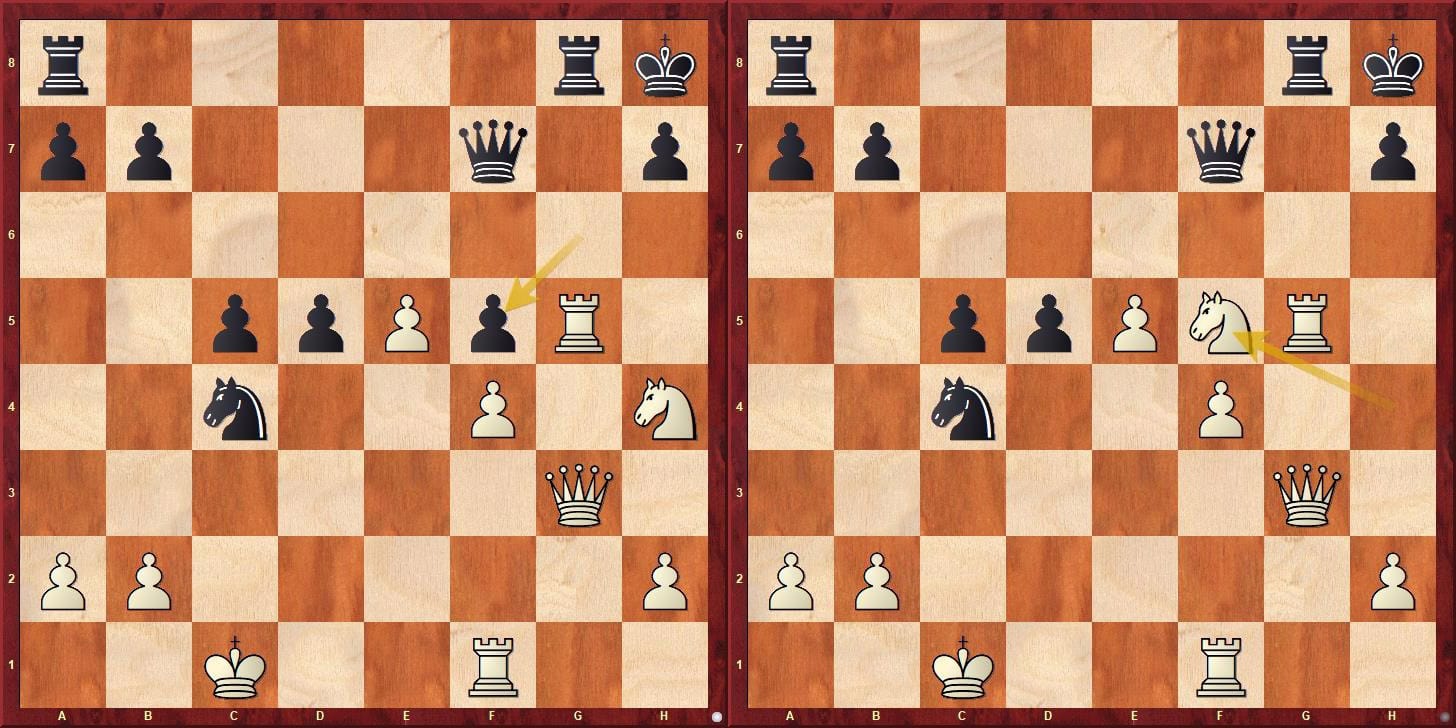
In the position of the left diagram Black captured the bishop on f5. After three minutes of thinking (sic) the brilliant young Indian, who has already surpassed the 2,800 mark, made a terrible mistake. Can you punish him for the tactical blunder 27.Nxf5?? ? How would you actually continue your game instead?
Arjun’s tragic moments occur at the 4th minute of Sagar’s video.
The second somewhat chilling blunder we could see in the game Erigaisi vs. Abdusattorov. White stood after 24.Qf2 (left diagram)
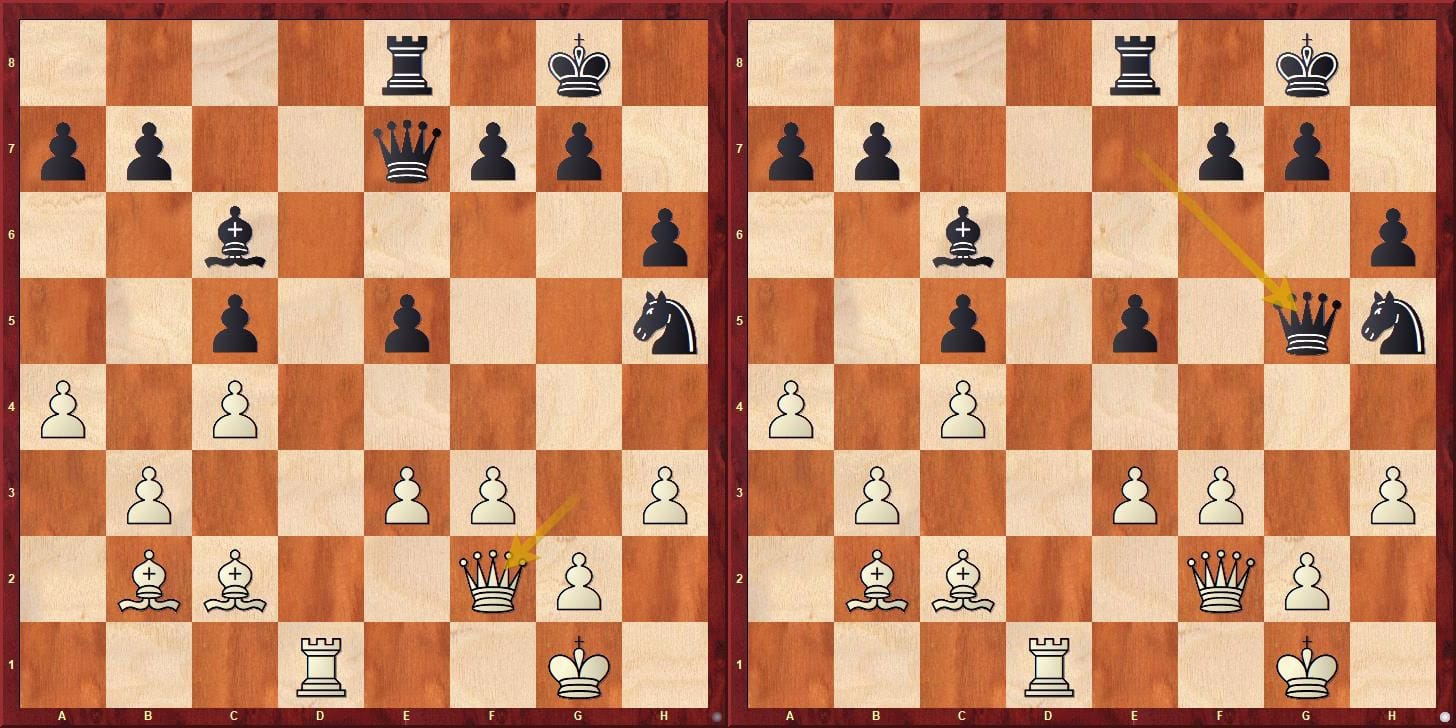
clearly better, but his advantage based on the strong pair of so-called Horwitz bishops can be described neither as decisive nor as significant. Perhaps to add to the tension in the penultimate round of the elite tournament, Abdusattorov makes a serious active blunder here! After a minute of thinking, with more than an hour of time remaining, he played 24...Qg5??. Such a serious blunder, or rather the punishment that followed, can be classified among the so-called invisible moves. However… dear readers, can you refute what at first glance might seem like a natural continuation? Task: White to move wins!
Arjun Erigaisi experienced one of his first really serious setbacks in this tournament. I will share my opinion on why this happened with the readers later. He partially compensated for the tragic -4 score with two wins in the last rounds (his victims included not only Nodirbek but also the world champion himself in the final round), yet even here he did not realise the decisive advantage precisely in the further course. Paradoxically, it was precisely his somewhat uncertain play that brought the game to the following position.
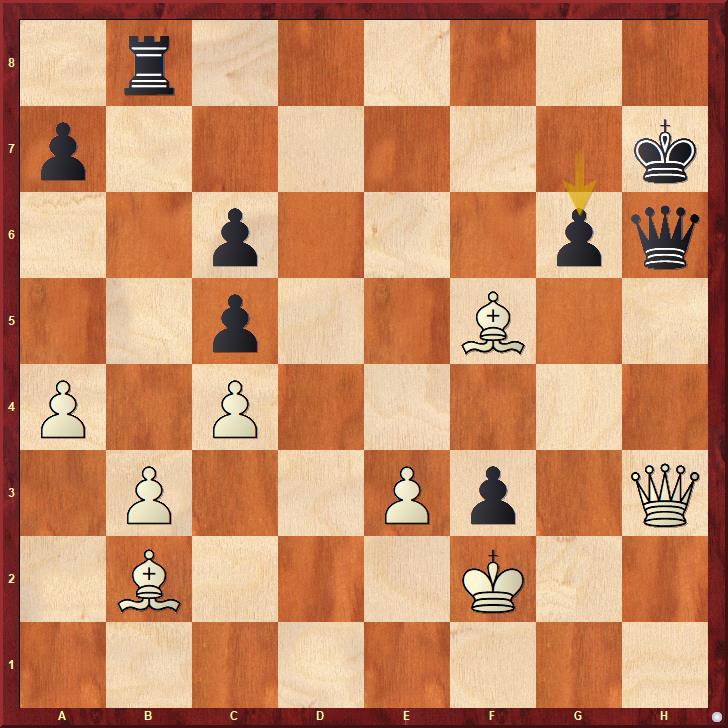
No, it was not another blunder. I would just like to share with the readers a spectacular combinational strike and brilliant calculation that crowned the end of the game. Can you calculate all the way to the win after the spectacular 42.Bxg6+! ?
The dreadful 12th round finally brought Praggnanandhaa, who scored for the third time in a row, to the top of the table. True, the opponent’s resistance was so feeble that I might call it the weakest individual performance in the tournament. So on the diagrams we see positions from the game Praggnanandhaa vs. Sarana.
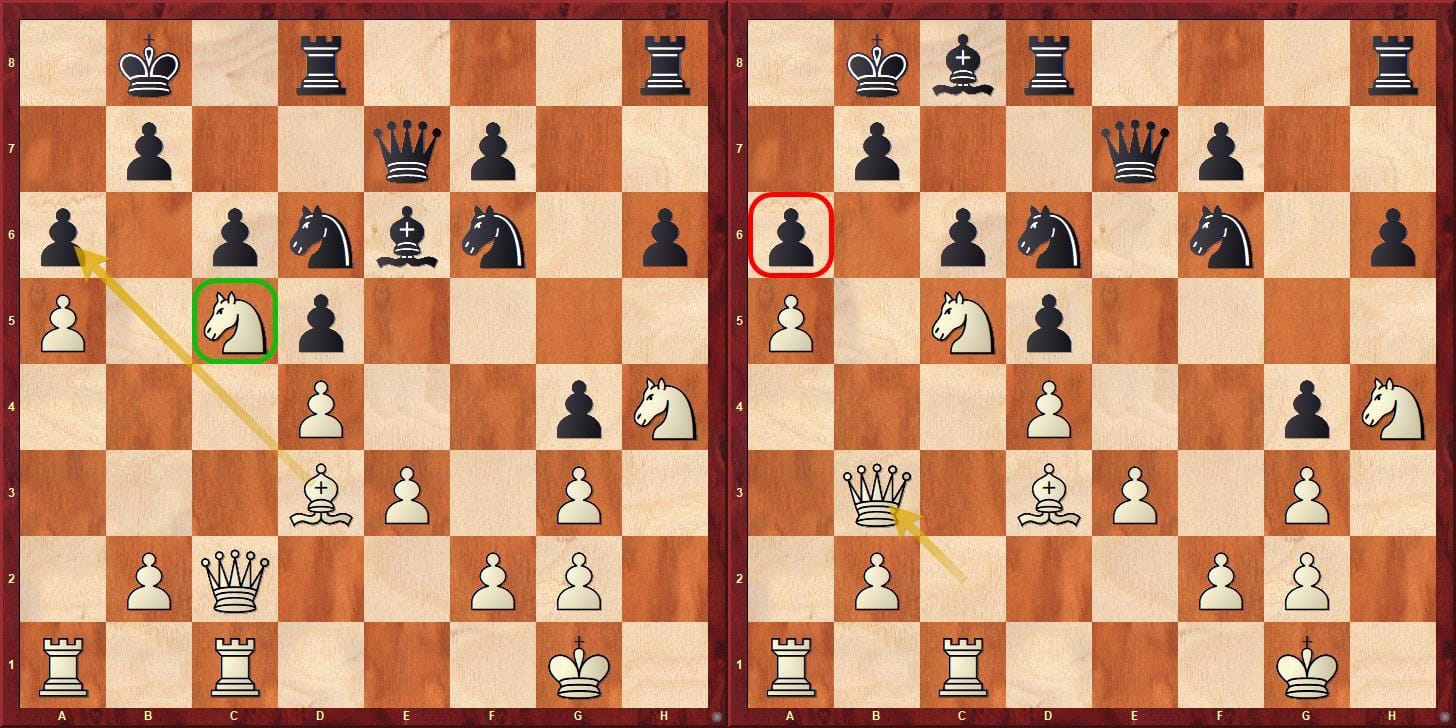
After 20.Rfc1 (left diagram) engines happily mark their three zeros, but I would like to see a strong chess player who would fall in love with the black position 🙂. The truth is that on closer inspection we understand the full defensive potential of the queenside, because White simply lacks a decisive breakthrough in the form of a future b4-b5. From this perspective, the engine’s evaluation, which sees very far ahead, is understandable. Nevertheless, I would almost bet that in practice White would reach somewhere around 75 to 80% winning chances in the continuation of this position. None of the above is important for the further development of the game except that Black obviously must defend very carefully. In chess jargon: to keep an eye on tactics!
The logical follow-up was 20...Rc8 21.Qb3 with the threat of the pawn a6. After 4 minutes of thinking, Alexej Sarana made a blunder that shows he did not see the real problems of the position at all. The follow-up was 21...Nb5??.
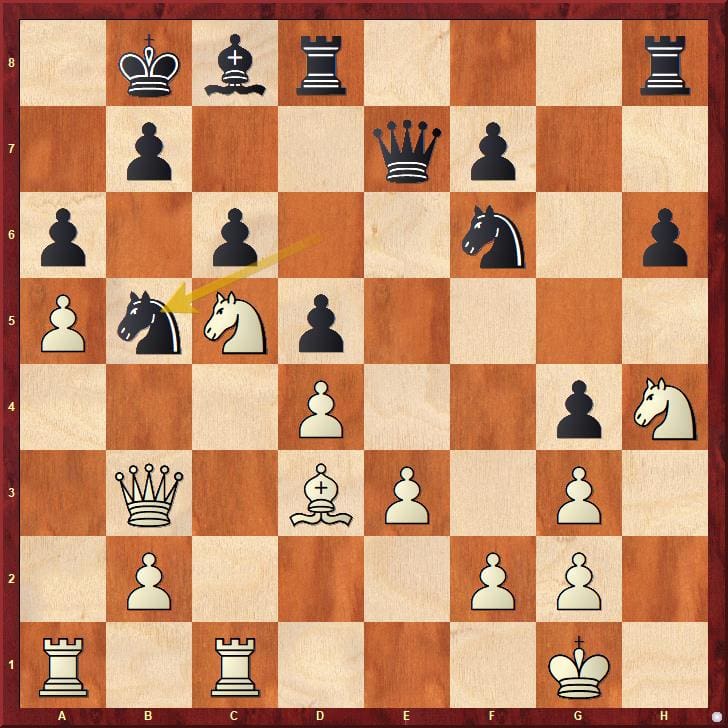
One would say„The following reply would once have been seen within seconds. At least a threatening danger and a sharp attack emerging! Not so for a former European champion and until recently a 2700+ super-grandmaster!“ After 7 and a half minutes of thinking, White managed to calculate into winning positions. How would you continue and which variations would you consider? And a little extra: By what procedure could Black have maintained that dynamic balance? In practice, a fully defensible position (see the right diagram above)?
Active gross mistakes, that is, those the sinner makes himself (not arising from overlooking and failing to cover a direct threat) often occur as consequences of overlooked traps. A beautiful trap was set by Black against his opponent in the game Warmerdam vs. Wei Yi in round 8.
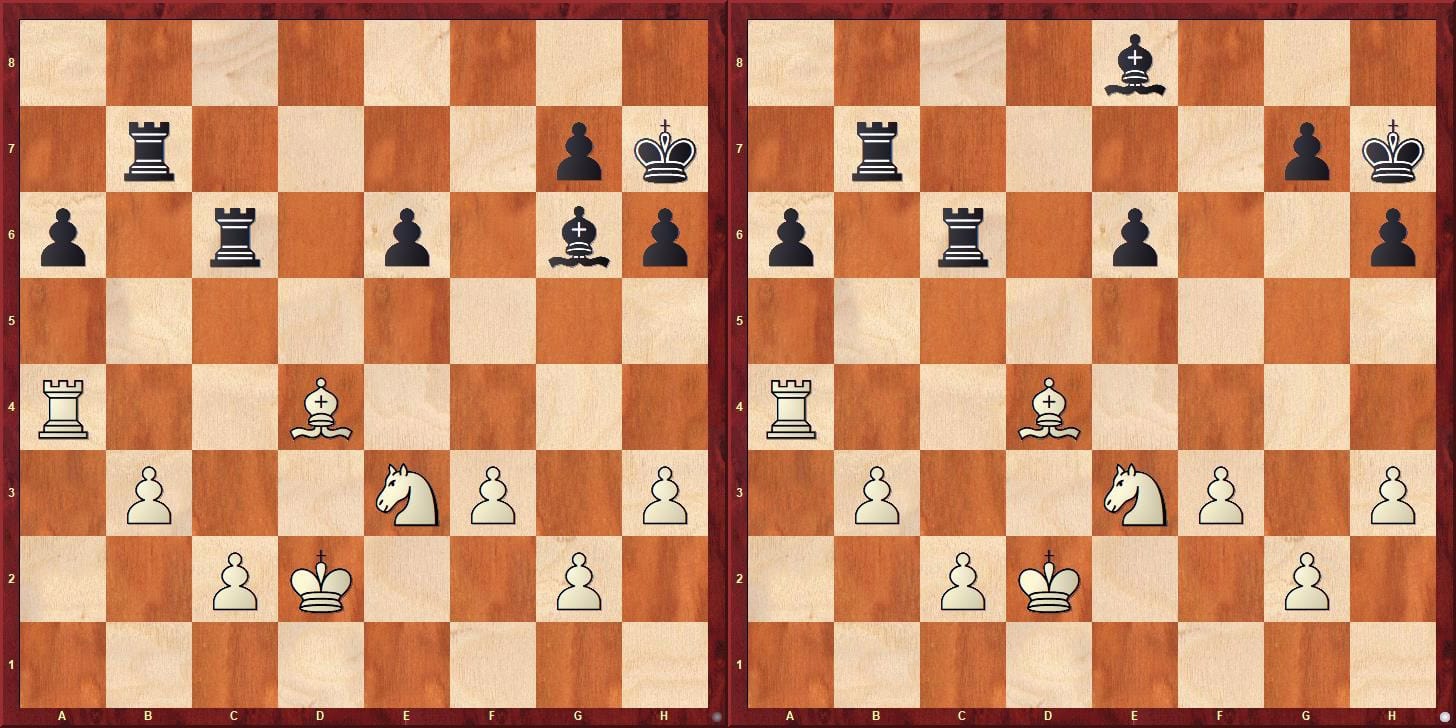
In the previous encounter, Black won the exchange for a pawn (left diagram), but the realisation of the small material advantage would certainly have been under normal circumstances tied to significant technical problems, theoretically probably even impossible. White's perfect pawn structure, on the other hand two isolated pawns, and ultimately possibly even opposite-coloured bishops in a potential deeper endgame, reduce Black's advantage to an absolute minimum.
„How is White most likely to continue?“ this is the question to ask oneself, that is to activate prophylactic thinking, as Mark Izrailevich Dvoretsky liked to write. Strongly suggested is Nc4 with the follow-up Ra2 (protecting the c2 pawn) freeing the knight for various tactical or strategic mischief on Na5 or Ne5. As we see in the second diagram, Wei Yi continued 49…Be8!!, setting a brilliant and well-disguised trap into which – hand on heart – it is almost impossible not to fall! After more than 4 minutes of thought, the 25-year-old Dutchman naturally played 50.Nc4??.
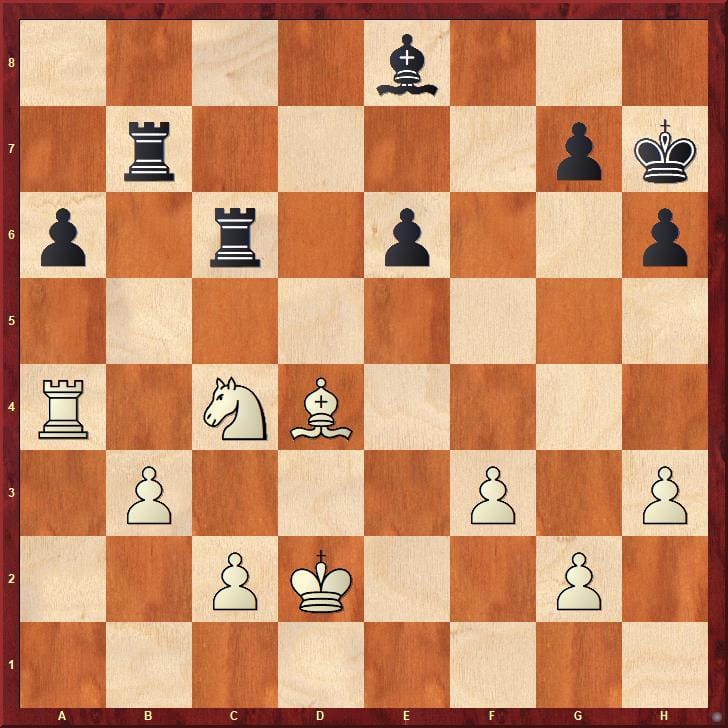
How did Black continue? I admit that the task really is not the easiest. On the other hand, its solution may bring you the pleasure of the intensity of Tarrasch's quote on my pages!
The critical moment can be followed at 8:46 in the video.
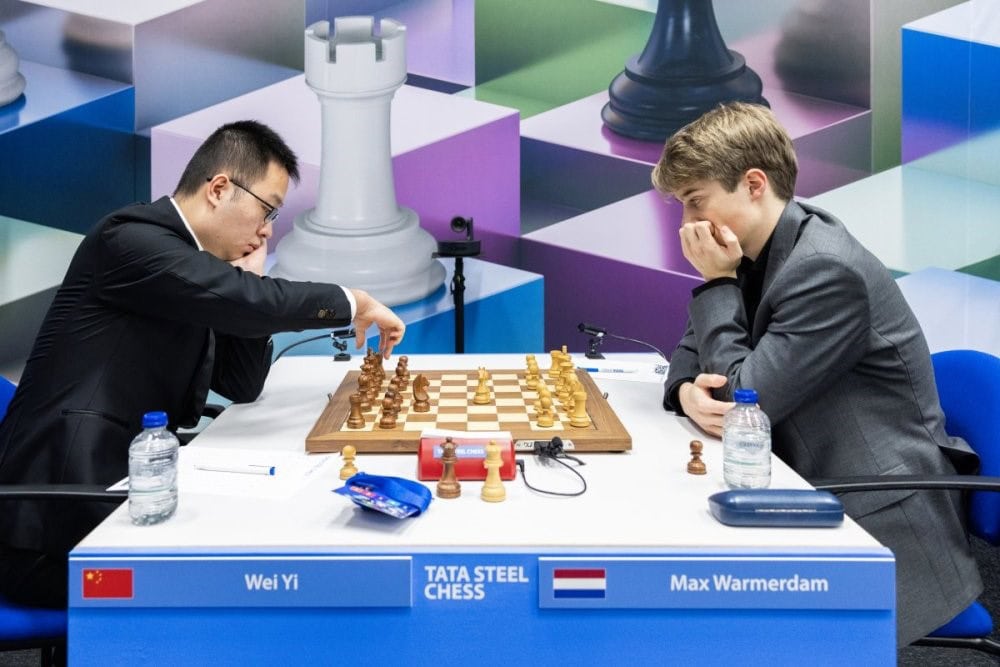
The young Dutchman really did not show well on home ground. A double oversight of tactical turns occurred right away in the game Warmerdam vs. Abdusattorov. After all, the following fragment is a real delicacy even for coaches. It contains also a sufficient amount of other topics such as tactical means of pinning, but also psychology. But let's not get ahead of ourselves!
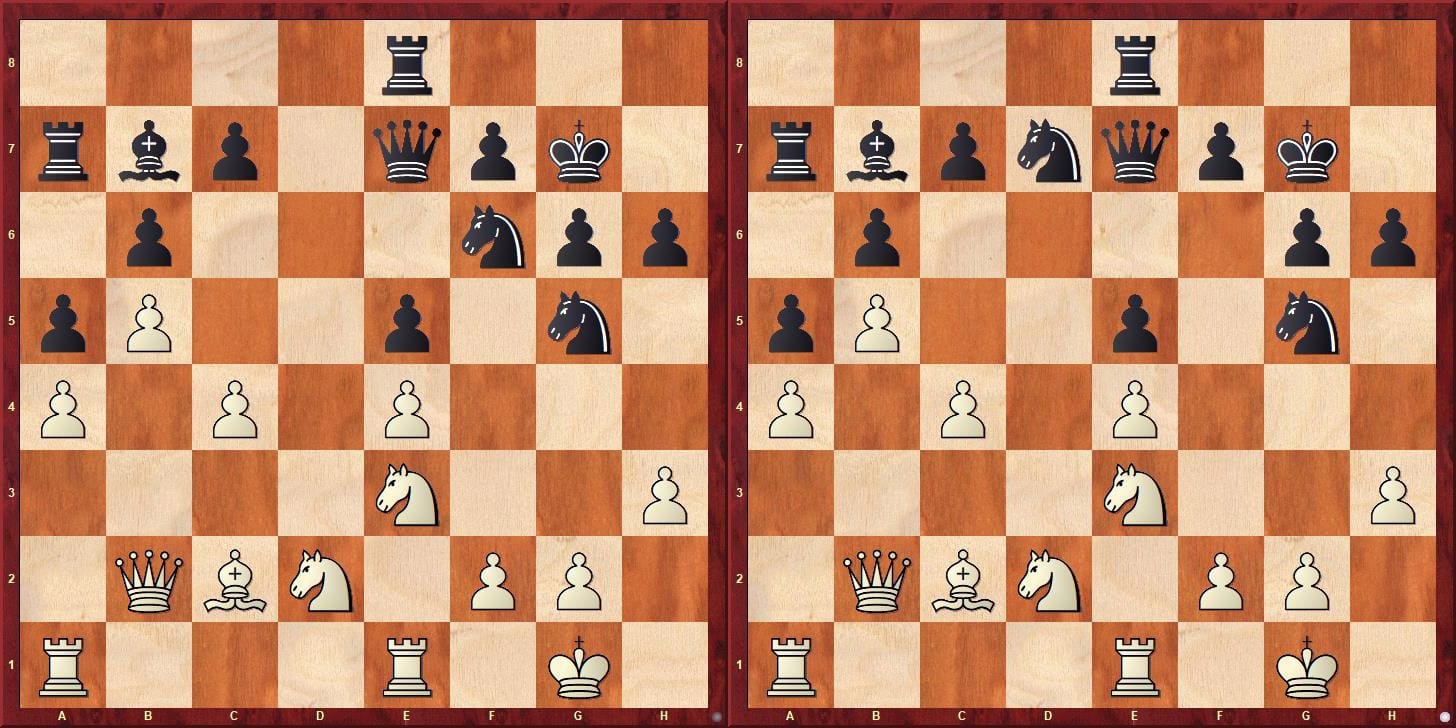
In the roughly balanced position of the left diagram, Nodirbek continued with a fully justifiable positional, yet also cunning, manoeuvre 34...Nd7!?; just like in the previous example with Wei Yi, he correctly assumed that the core of the trap the opponent would not solve. This was followed by 35.Nd5?
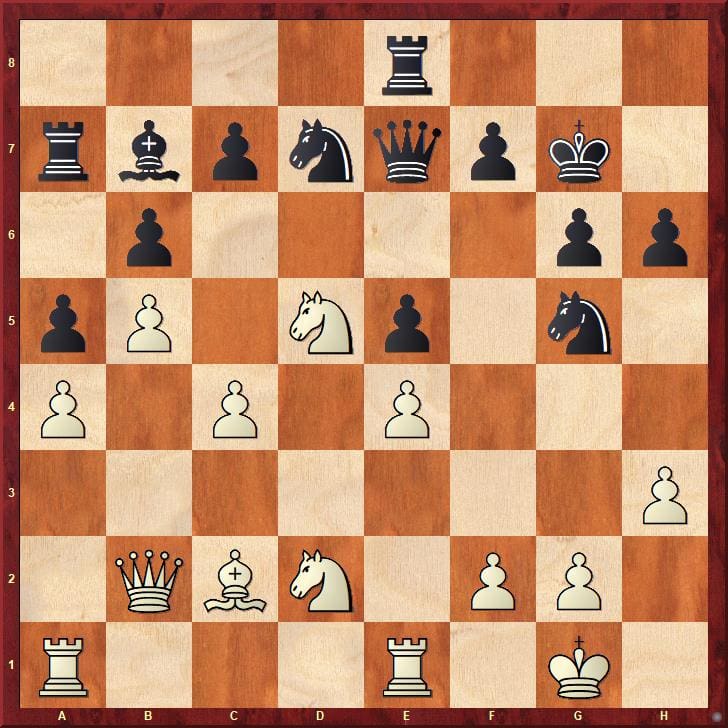
True, the white's move did not have such fatal consequences as in the previous fragment, but still: How did Black continue?
Let's move further in the game. After 42...Nf7
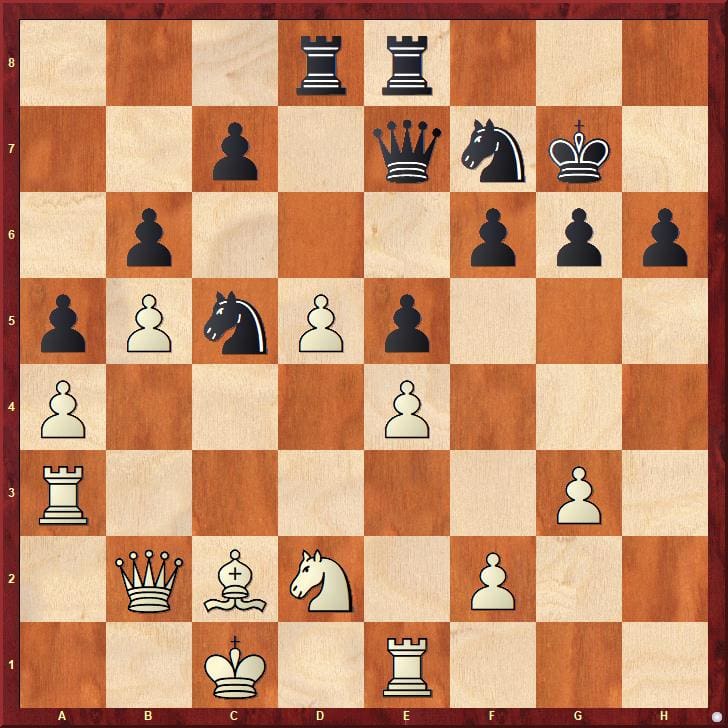
White almost blundered 43.f4?. How would you react? Give a short variation.
It is hard to blame the only twenty-year-old Nodirbek that after two tactical mistakes he probably stopped taking the opponent quite seriously…
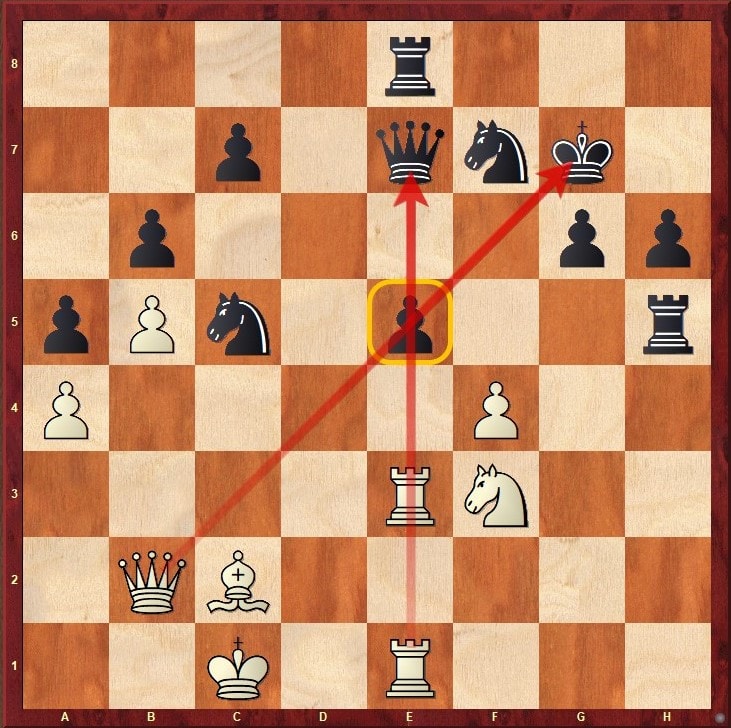
… But the position before us after 47.Re3! requires increased vigilance! The white pieces have indeed become dangerously active, and although Black objectively stands to win, at this moment he is tied hand and foot. Specialists and theoreticians call the cross-pin in the diagram a skew cross. Abdusattorov was unable to deal with the problem of the position and allowed White to achieve equality once again!
Although he eventually won the game… if at this moment he had recalled Nimzowitsch and his theory of blockade, he would hardly have missed the only correct solution. If more advanced or well-read readers want to test themselves here, they have the opportunity. Let us suggest to Black, by means of a short but non-forced manoeuvre, how he should have continued.
According to Nimzowitsch, the solution lay in the manoeuvre 47…Kh7! with the idea 48.fxe5 (if White captures on e5 with piece(s), he will at best achieve mass exchanges) 48…Ne6!
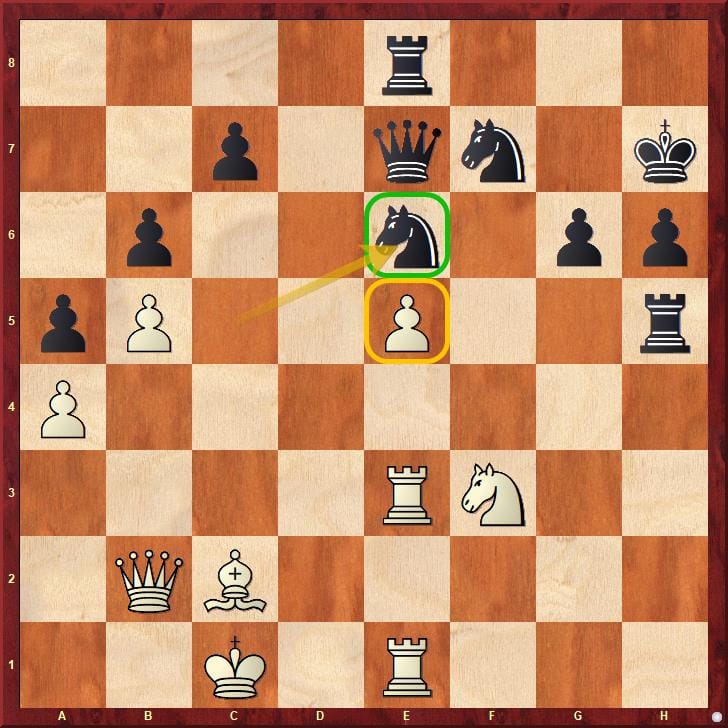
I will probably never forget my first impressions at the moment when, as a curious A club player first read in Nimzowitsch's bestseller the passage concerning the effectiveness and obligation of blockade (paraphrase): „A passed pawn is a dangerous criminal who must not only be controlled! It must be locked behind bars!“
The solutions to all tests and examples can be found in the players at the end of the article. However, this particular example of Nodirbek's work is so complex and instructive that it deserves special treatment! 🙂
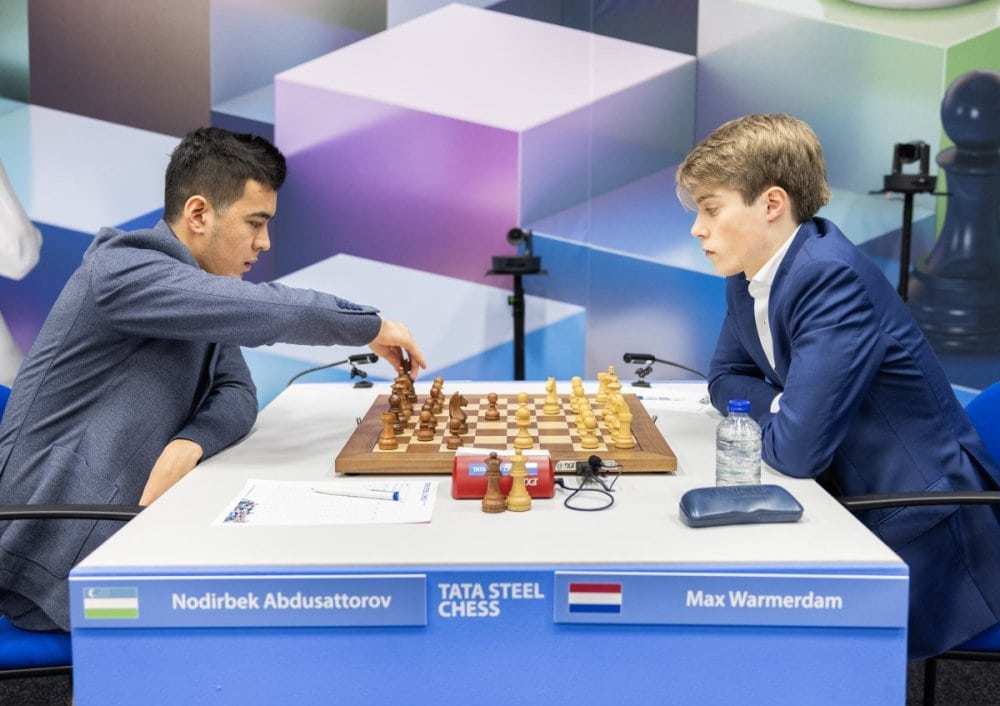
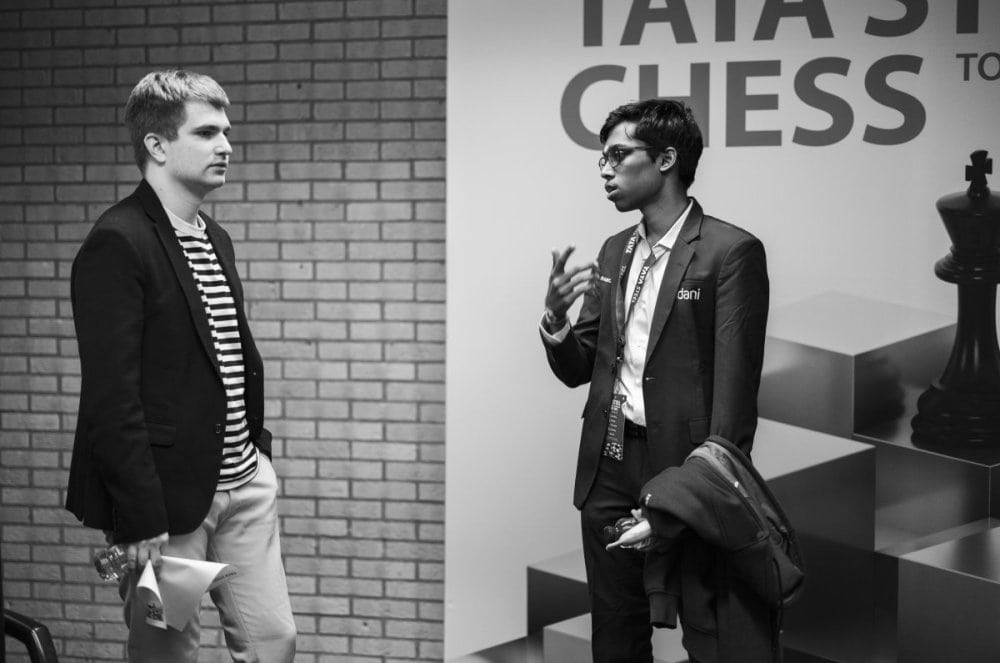
The beautiful photograph, like many others, comes from Jurriaan Hoefsmit from the official tournament website https://tatasteelchess.com/en/photo-album/photos
The final examples are dedicated to the new world champion. He too was not immune to lapses in Wijk, but I would not consider it appropriate to include fragments dominated entirely by time trouble in this section. In the game of round 7 Gukesh vs. Harikrishna Black, however, made a serious mistake with plenty of time on the clock.
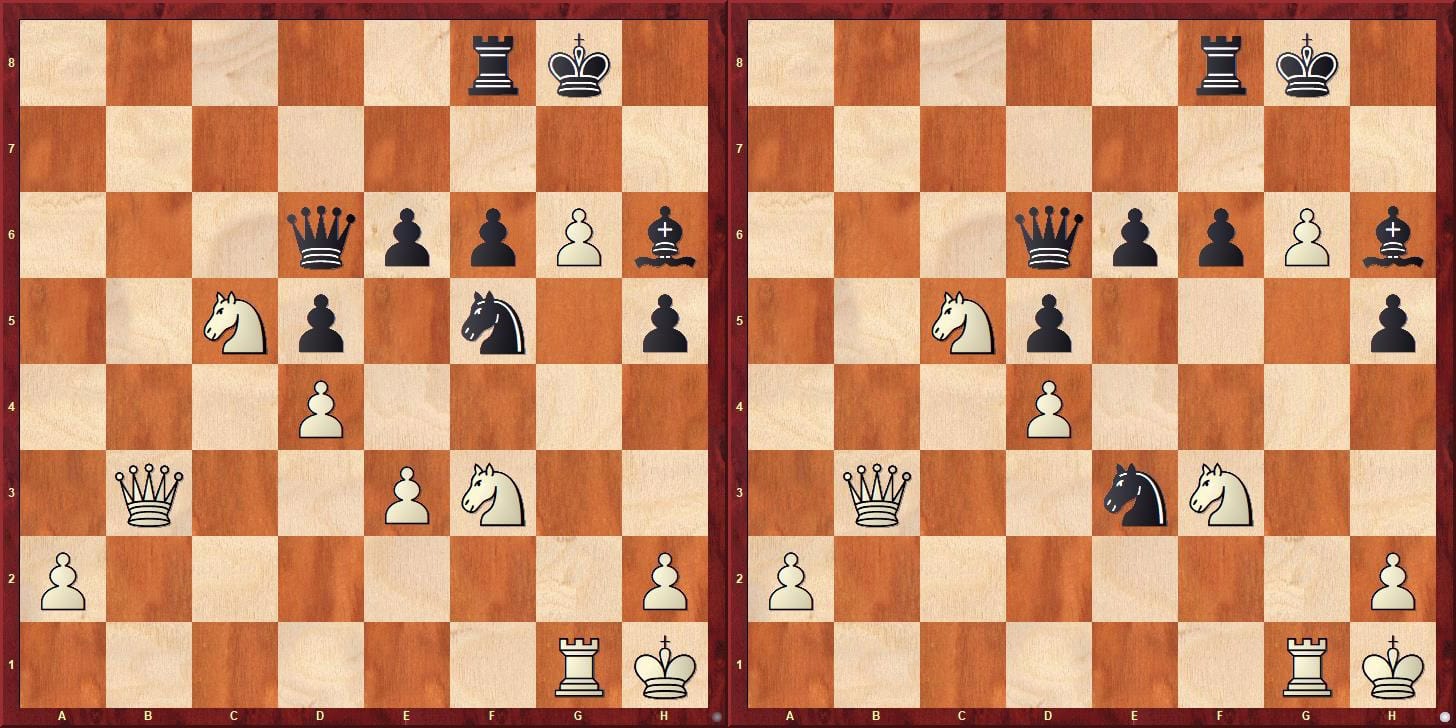
White has just recaptured after the exchange of rooks 29.Nxc5. From a practical point of view, the position on the board is unclear, contentious and sharp. The likeable Indian super-grandmaster certainly should have sacrificed some of his time reserve and tried to penetrate the core of the position. Can one take on e3? If yes, then with the knight or bishop? Instead, he trusted his previous considerations and played 29…Nxe3??. Can you calculate the winning line for White just as the world champion did?
The critical moment of Sagar's video – and thus the solution to this test – can be seen at 12 minutes 25 seconds.
Gross blunders, however, were not avoided even by Gukesh himself (his performance in Wijk is covered in a separate chapter). The greatest, fortunately mutual and unexploited by the world champion, occurred in round 12 in the game Van Foreest vs. Gukesh.
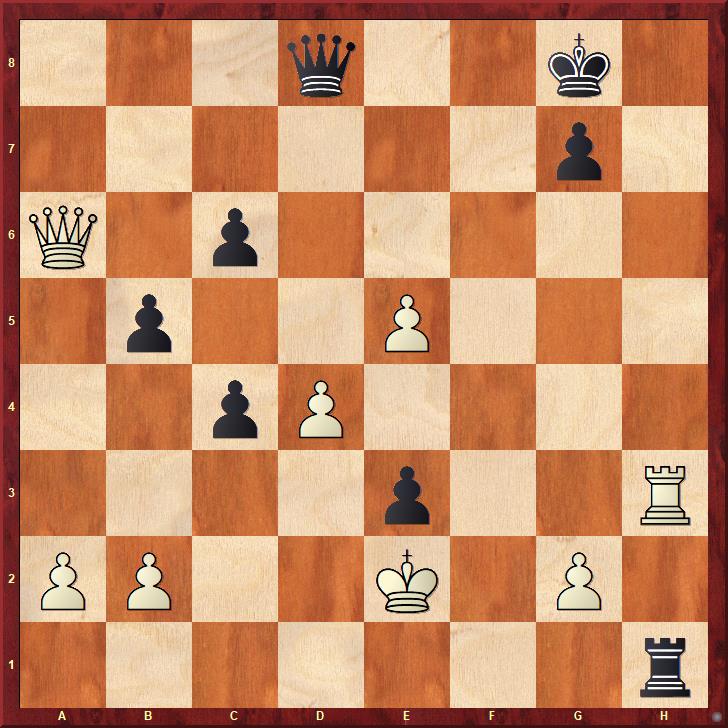
The diagram shows a position objectively winning for Black, with the opponents having already passed the time control. How would you continue after careful consideration if you were in Gukesh's place?
After more than 11 minutes of thinking, the world champion played...
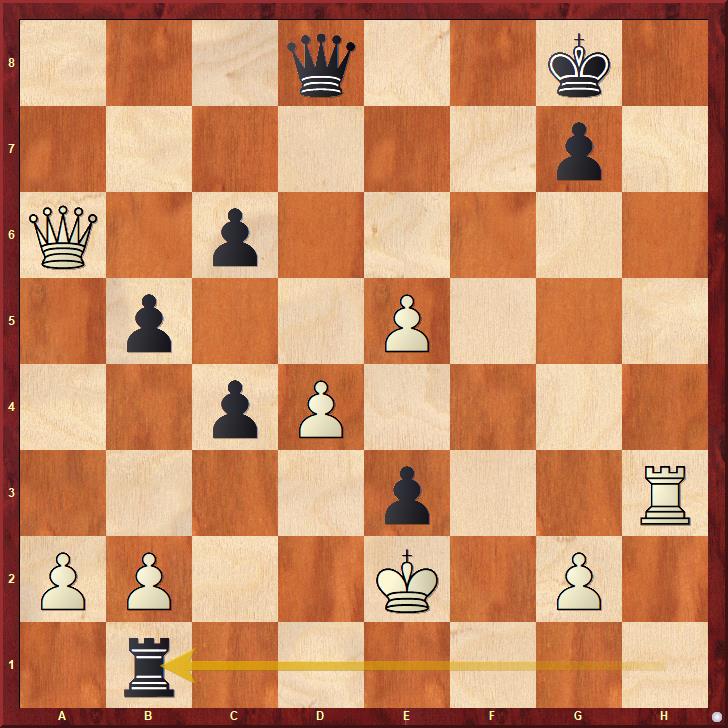
42…Rb1?? (only the transition to the queen endgame 42…Rxh3 43.gxh3 Qxd4 44.Qc8+ Kf7! 45.Qf5+ Ke7… was winning, as the analyses in the player show, the black king would eventually wriggle out of the annoying queen checks). The evening after the penultimate round I wrote: „On 1 February, truly things must have been happening on the Sun! This is already who knows how many blunders in just three games I analysed that evening. The world champion, after 11 minutes of thought, not only misses a win that he would have achieved by transitioning into the queen endgame (even though it initially looks drawn). He finds himself on the edge of the abyss!“
I add that, unlike the blunders in the games of Abdusattorov and Sarana, this fragment, indeed the whole game, is much, much more complicated. It is actually the kind of position in a game that without engines could be analysed for days! Incidentally, the complexity of the position is also evidenced by the fact that, for example, the evaluation scale visible in the shortened Sagar game record shows equality at this moment! Only after a while does it begin to rise timidly. What followed 43.Qxc6 Rxb2+ 44.Kf3!! Here lies the crux of the matter! Tu je pes zakopán! 44...Qf8+
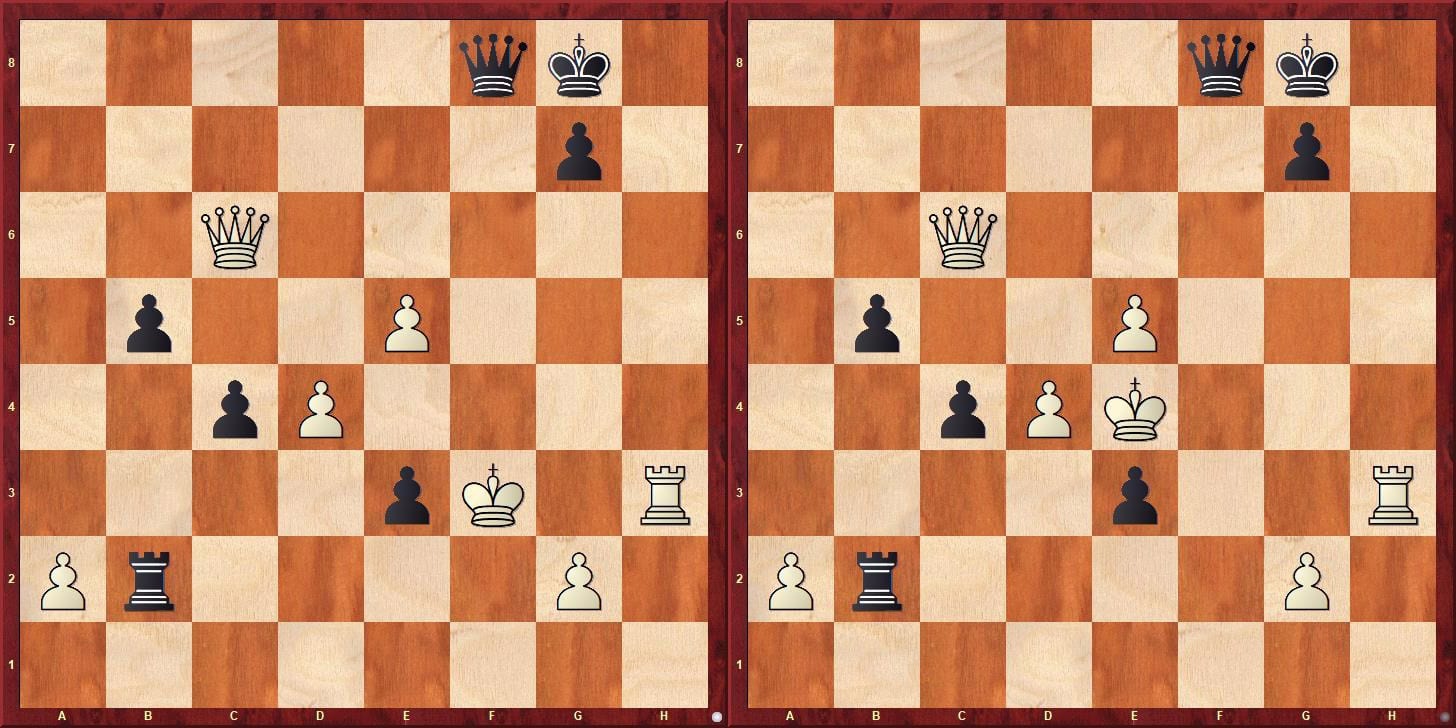
45.Ke4!. The world champion stated in a brief post-game interview that this very continuation had escaped him in his previous calculation! It might therefore seem that this is the cause of the blunder on move 42: „But if Black was playing for a win, how did he intend to continue after the drawing 45.Kg4?“ is then the logical question. After 45...Rf2 46.Qe6+ (the only move!) White reached a winning position. Fortunately, he too later blundered badly and the game ended in a perpetual check.
The full game record can be viewed in the traditional Sagar video.
A more detailed analysis of the critical penultimate round (well, things happened even in the last one 🙂 ) can then be seen in Sergej Makarychev's video (from about the 30th minute).
April in February, a sign of the times or mental insufficiency?
 I decided long ago that I simply will not comment on the work or rather the activity of the chess federation leadership both centrally and in our Plzeň region. This saves me a lot of nerves and head shaking. Through my involvement and habit of telling officials and coaching colleagues what I think of them, over decades I have lost tens if not hundreds of thousands of crowns. Through various slanders as a response, then tens of talented and passionate children. With irrefutable facts, i.e. work results, parents of children – chess laymen – often do not get it. As the saying goes: „If you stand out from the crowd, they will mow your head down!“
But today everything is different. At my age, slanders can no longer hurt me, so...
A few days ago, the February issue of the so-called Newsletter for members of the Czech Chess Federation appeared in my email inbox. (I will probably never find out why it is not called Zpravodaj in Czech or conversely more modern Information newsletter. After all, we must keep up with the times even more, respect its pulse... 🙂 )
But to the point: I didn't know whether to laugh or cry when I read the following report about the tournament in Wijk aan Zee. I took the liberty of highlighting a particularly juicy passage, while I will rather ignore the grammar used in the text itself.
Van won the Challengers in Wijk aan Zee!
From 18 January to 2 February 2025, another edition of one of the oldest chess festivals took place in Wijk aan Zee, Netherlands. The event was divided into two categories – Masters and Challengers. Both sections consisted of 14 world-class players, with the Czech Republic represented in the Challengers by Thai Dai Van Nguyen, who was among the favourites in his group.
Fans could also follow during the tournament duels between talented Indians such as Dommaraju Gukesh, Rameshbabu Praggnanandhaa and Arjun Erigaisi, or watch the form of local stars like Anish Giri, Erwin L’ami and others.
So now we have it definitively confirmed and approved that Dommaraju Gukesh, who
- won the Candidates Tournament at the age of 17 (April 2024),
- achieved a performance rating of 3056 on board 1 at the Chess Olympiad (September 2024),
- and most importantly became World Chess Champion two months ago,
is among... the talented Indians!
As if that were not enough, at the end of the Newsletter in the events section it is also stated: Camp for talented chess players (will take place from 28 June to 6 July 2025 in Domašov nad Bystřicí). What do you think, dear readers, will the organisers also accept the talented Gukesh?

The newsletter continues adorned with the following example from the tournament (which apparently the author liked the most):
Diagram to ponder from Tata Steel Chess 2025 – Challengers, Round 12
Yakubboev, Nodirbek (UZB) – Pijpers, Arthur (NED)
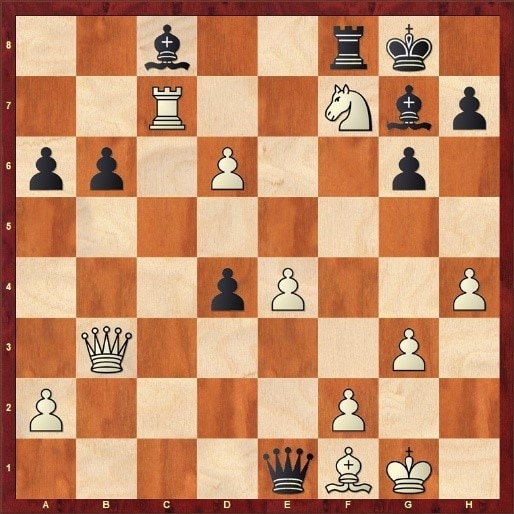
The author excelled also with a verbal task, over which every somewhat qualified chess player will probably also shake their head: Can you find the winning idea for White? Chess beginners may not know what the mysterious phrase winning idea, but winning method they will certainly find. The combination is actually noticeably easier than Lucena's smothered mate from 1497! 🙂
Readers can look forward to...
In the second part of the article, we will focus on the most interesting games of the tournament and quite a few theoretical novelties revealing the current trend at the highest performance levels. We will evaluate not only the world champion's performance but also that of some other participants. Few young chess players today know that even in sports psychology, terms such as syndrome burnout. In our beautiful game, this is closely related to another term not much mentioned today overplay! In the 1990s, however, there was quite a passionate discussion about overplaying and the ideal number of serious games played per year...
A small taste
It may be a paradox, but... One of the most beautiful moments of the tournament I had the chance to see only after the end of the Round 5 game Van Foreest vs. Abdusattorov. In a short interview with Fiona Steil-Antoni (perhaps the most likeable presenter I have ever seen in videos, spreading an aura of calm and ease) Nodirbek showed what he calculated during the game. Let's try to match him!
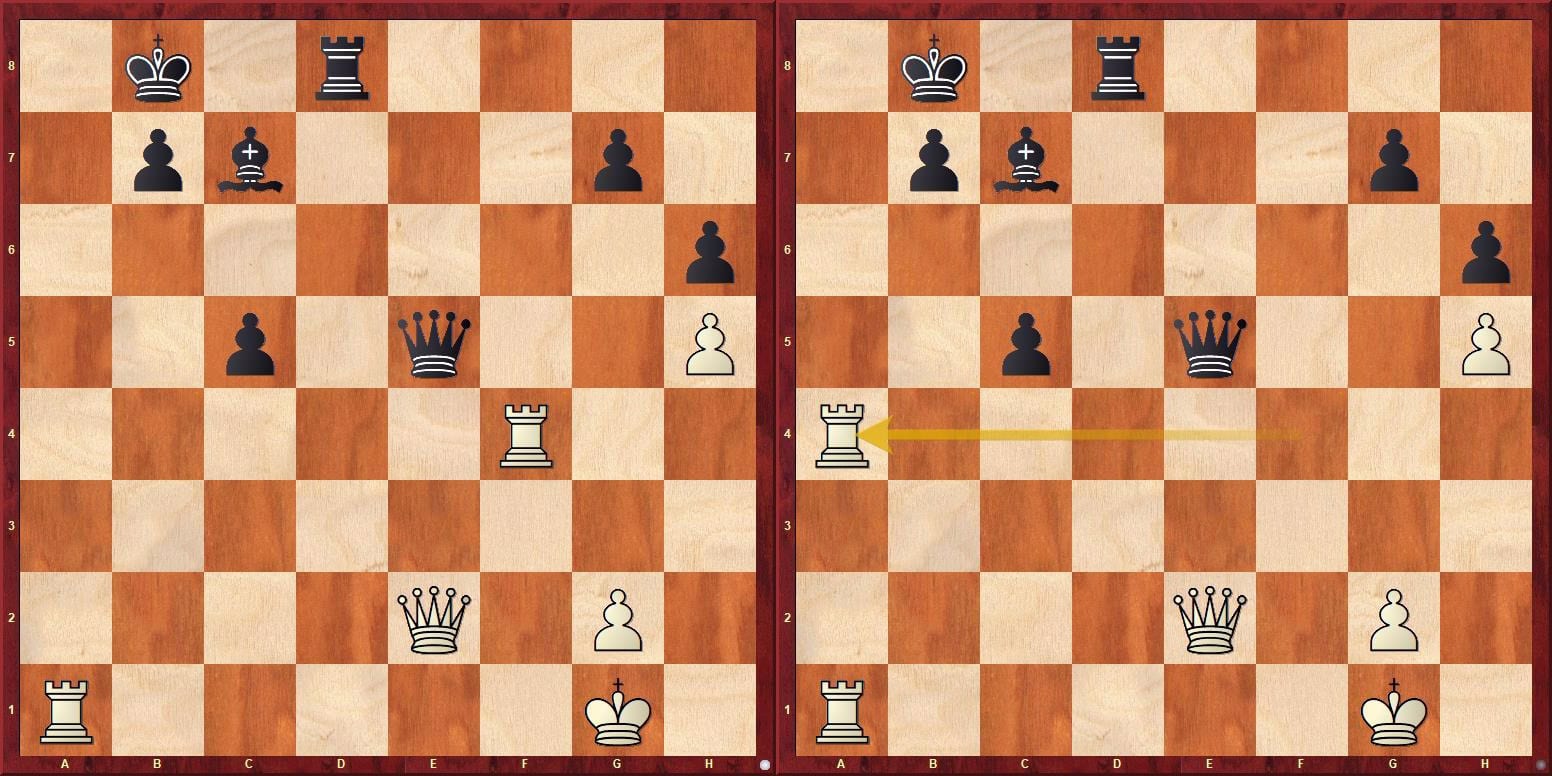
In the position of the diagrams White could in the game play 31.Rfa4 with the threat of mate on the 8th rank. Abdusattorov thus demonstrates a fantastic variation he saw during the game: 34...Qh2+ 35.Kf1 Qh1+ 36.Kf2 Rf8+ 37.Ke3 Re8+ 38.Kd3 c4+!
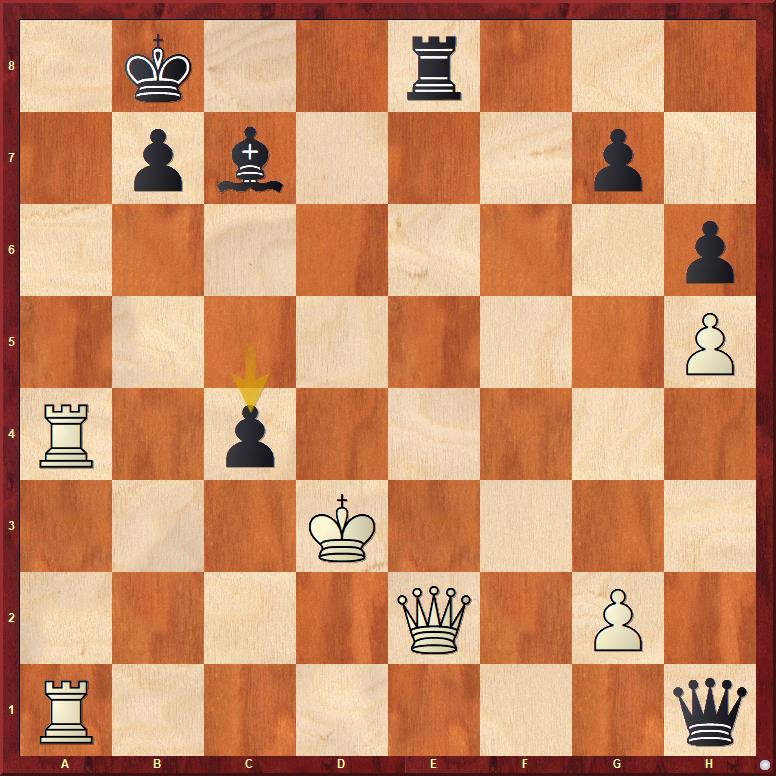
39.Kxc4 Qh4+ 40.g4 b5+! 41.Kxb5 Qg5+ 42.Kc6 Qf6+. Here, however, he ended the variation. But how would you continue after 43.Kb5?
It could have been the combination of the year, if only…
Not only for textbooks of tactics but also for the hall of fame could the magnificent combination by Black in the round 1 game Gukesh vs. Giri, what if…
The first encounter after winning the highest title represents an especially great psychological burden for new world champions! It is said that, for example, Anatoly Evgenievich, after being awarded the world champion title in 1975, lost his first game (however, I have not been able to verify this). Dommaraju really did not play well, and in the diagram position he was probably saved from defeat only by his opponent's extreme time trouble! He himself was also in time trouble.
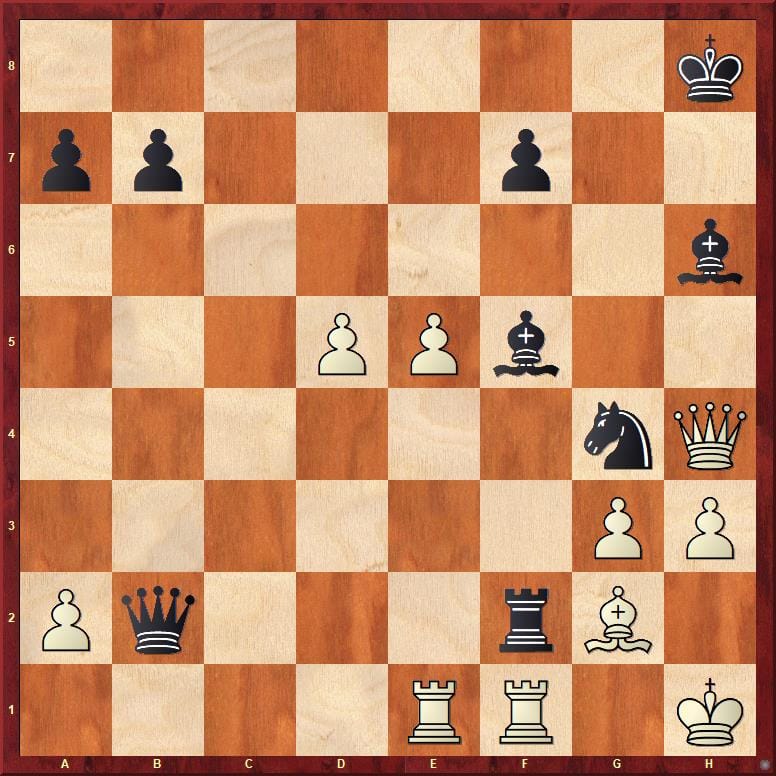
Nevertheless, in the diagram position Anish have found the only winning continuation. He failed two moves later (the combination can be divided into two parts). How would you continue with Black and on which variations would you rely? After all, unlike the two super grandmasters, we can spend hours on the position...