

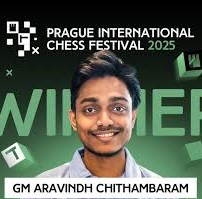
Everyone knows that Dumas' Three Musketeers were actually four, and thus as an analogy for the Indian heroes Gukesh, Praggnanandhaa and Erigaisi this analogy could not be used. Until recently! However, after the conclusion of the Masters tournament at this year's Prague festival, the situation is different. The fourth musketeer has apparently been found! The 25-year-old Chithambaram Aravindh, until recently not very well known to a wider circle of chess fans, won the tournament with such clarity and performance that there is no doubt. But that is not all. One of his brilliant sacrifices is probably among the most beautiful we have seen on the chessboard so far this year. And since we are talking about sacrifices, why not take a closer look at this beloved ornament of chess. Not only sacrifices and beauty keep a chess player alive! Associations and analogies are admittedly more subtle helpers behind the board, but no less important.
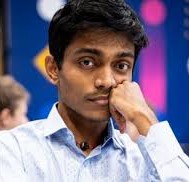
The world champion and last year's winner of the Masters tournament Nodirbek Abdusattorov did not travel to Prague this year, but the organisers still managed to secure a diverse and strong line-up led by the winner of the supertournament in Wijk aan Zee and the Chinese number one! Also noteworthy is the participation of the number one Turkish player, the only 16-year-old Ediz Gurel. To avoid listing the top world players and other grandmasters separately, let us immediately look at the final results.
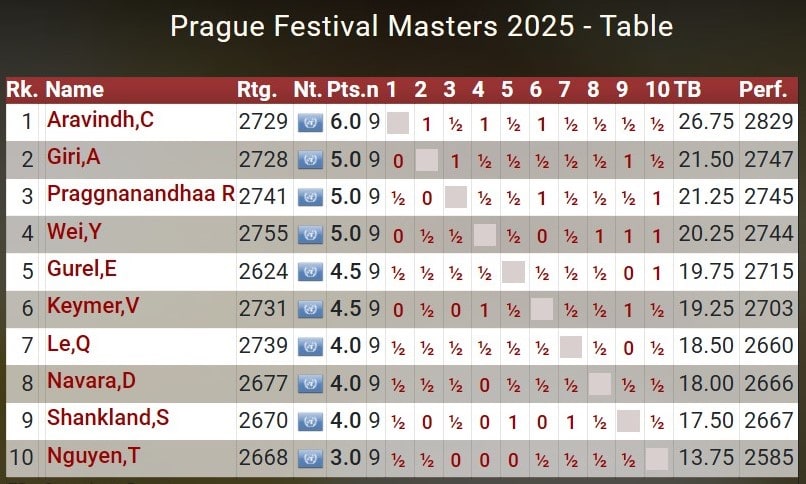
The actual ranking changed somewhat due to the primary tiebreak of mutual games or mini-matches. Readers will find it at the end of the article after expanding the Adobe Acrobat (pdf) files.
In this article, we will not primarily focus on examples or present too many various tests. We will concentrate first and foremost on the fourth musketeer and the game in which perhaps the most unexpected and spectacular move – manoeuvre – sacrifice of the year occurred. The game that led to it will then, of course, be thoroughly analysed.
The theory of sacrifice, methods of early prophylaxis, the use of association, analogy and extensive theoretical knowledge in the opening, which we may not even play ourselves: these will be the themes we will also touch upon in connection with the game.
Well, of course, we will not deprive the reader of other interesting, instructive and downright curious moments either.
Out of nowhere
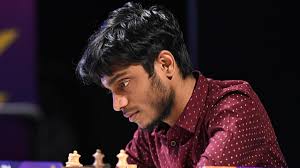 But who actually is Aravindh Chithambaram Veerappan? Another super-grandmaster of Tamil origin (like the world champion) was born on 11 September 1999 in Tamil Nadu, one of the south-eastern states of India. Although he attracted attention in his childhood with extraordinary results, undeniable talent and grandmaster norms, by a leap, similarly to, for example, Andrej Jesipenko or last year Ivan Zemljanskij, he hovered just above the 2600 rating threshold for a long time. However, a closer look clearly shows that the delay was influenced not only by Covid (similarly to Erigaisi), but also by very modest family circumstances. In Aravindh's childhood, the family was supported only by his mother.
I admit that while I followed Arjuna Erigaisi for quite a long time before he entered the absolute world elite, I quite a long time before he entered the absolute world elite, Aravindha only in 2023, and began to follow his games more intensively after his first tournament victory in Chennai in December 2024. only in 2023, and started to follow his games more intensively after his first tournament victory in Chennai in December 2024.
Many interesting facts, dear readers, will be revealed in the following video. Sagar Shah interviews Aravindh's coach, Grandmaster Ramachandran Ramesh.
But let us move on to that beautiful sacrifice, which in my opinion currently holds the top spot in the hit parade of the most beautiful and most surprising moves!
The most beautiful moves in history
Well, I can't resist, so… first a little recap. What kind of school would it be if it missed out and could not mix a cocktail of lessons, entertainment and beauty! The diagrams below demonstrate probably the most beautiful moves – the sacrifices of 2021 and 2022.
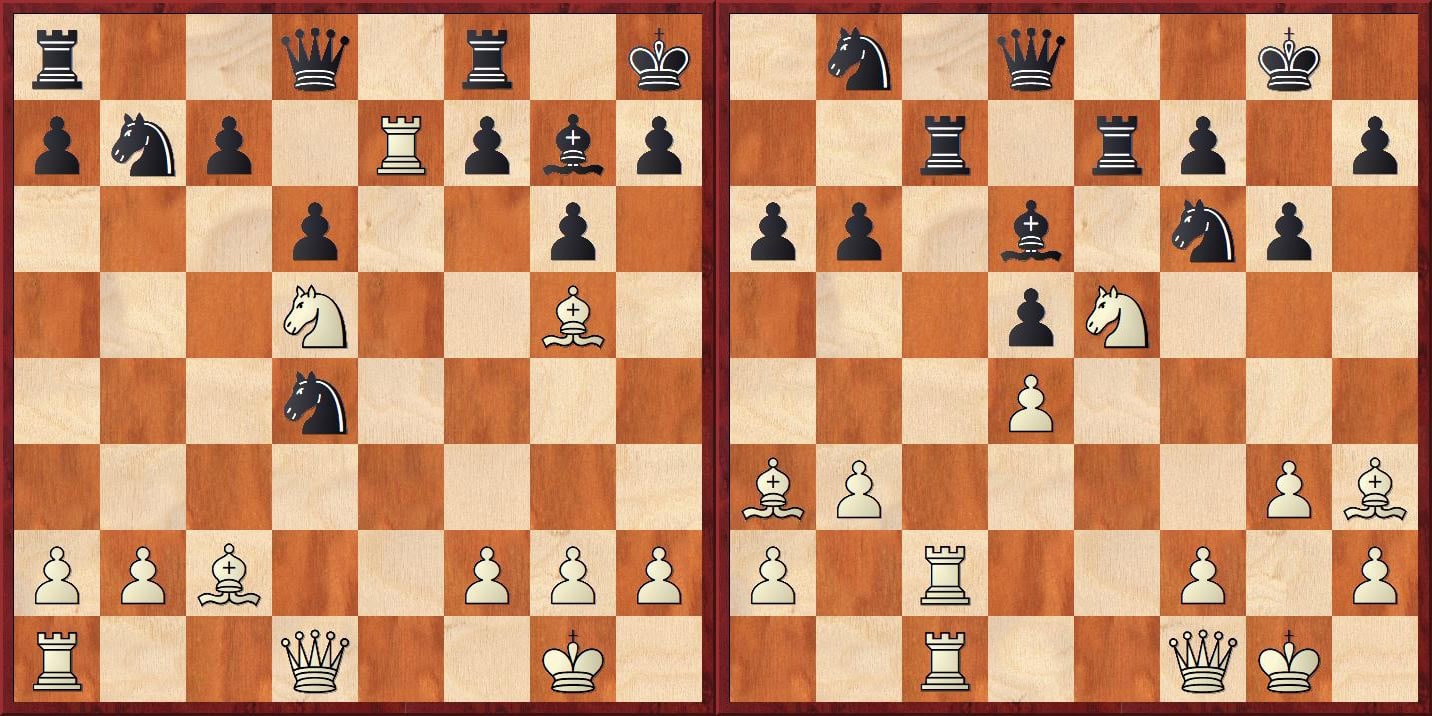
In both cases White delivered the decisive blows! While the diagram on the left from the game Nepomniachtchi vs. Radjabov (rapid 2021) found its admirers but is probably not so well known (although in my opinion more complex), the second literally went around the world! The game Ivanchuk vs. Van Foreest (rapid Israel 2022) White eventually lost, but the opening of the combination is considered one of the most beautiful in modern history! Will you be able to find these chess gems?
With a certain intention, dear readers, I now not only recommend comparing your possible solutions with reality, but also taking into account that both sacrifices can be described as combinations!
I cannot resist demonstrating here probably the most beautiful sequence of moves and a tournament practice combination, which ever appeared on the chessboard! It happened in the game Koskinen vs. Kasanen (Helsinki 1967). Younger readers probably will not know the fragment, but even those who have seen the combination will most likely watch it again… at least with the same pleasure as when we enjoy a beautiful film again after many years!
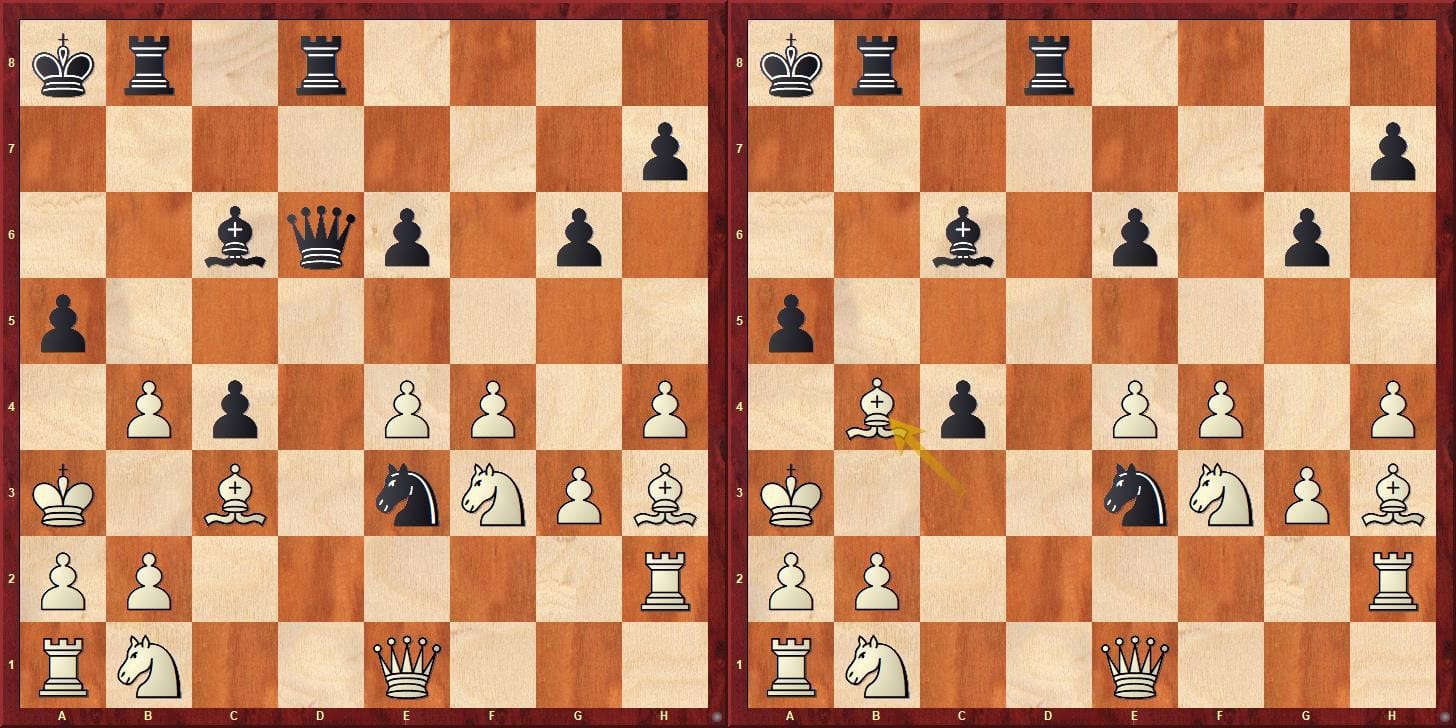
In the diagram position, a shocking move followed 1...Qxb4+!!. Beautiful, we will see that it is crushing, but... such a sacrifice alone could not claim to be the greatest diamond in the world! 2.Bxb4. Only after what followed 2...Rd2!!
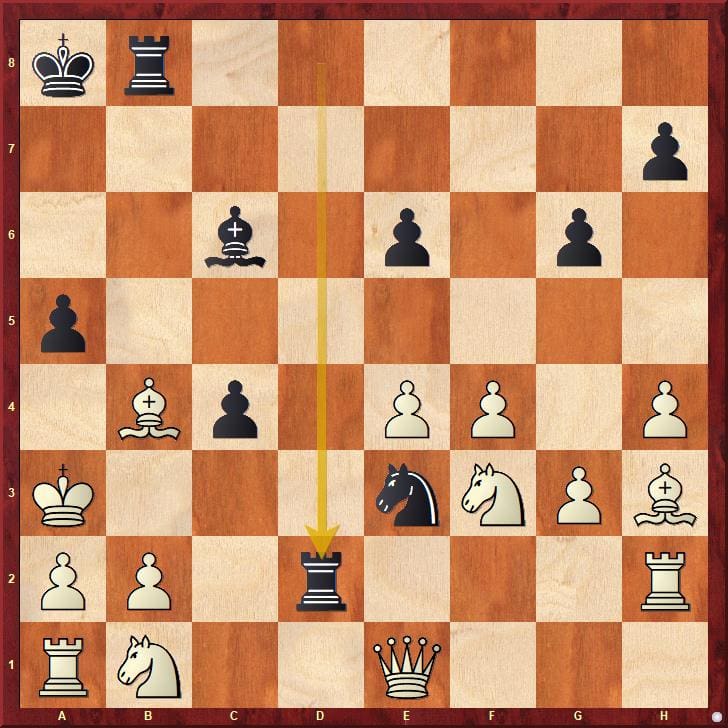
can we speak of a polished splendour! I will give the reader time to grasp the idea of the second sacrifice in the combination. I add that the beauty is of course created by that short sequence of forced manoeuvres. Alexander Kotov probably wrote here (paraphrase): Is it possible to have so much imagination and find a sequence of such moves? The black rook enters a square defended five times by White (and Black sacrificed the queen in the previous move)! Yet each of the five captures leads to a quick mate.“
We can enjoy the combination with commentary (in English) in the following short video.
The most surprising sacrifice of the year!
Now that we have whetted our appetite 🙂, we can finally look at what the fourth musketeer himself created! It is round 7 of the tournament, the game Giri vs. Aravindh.
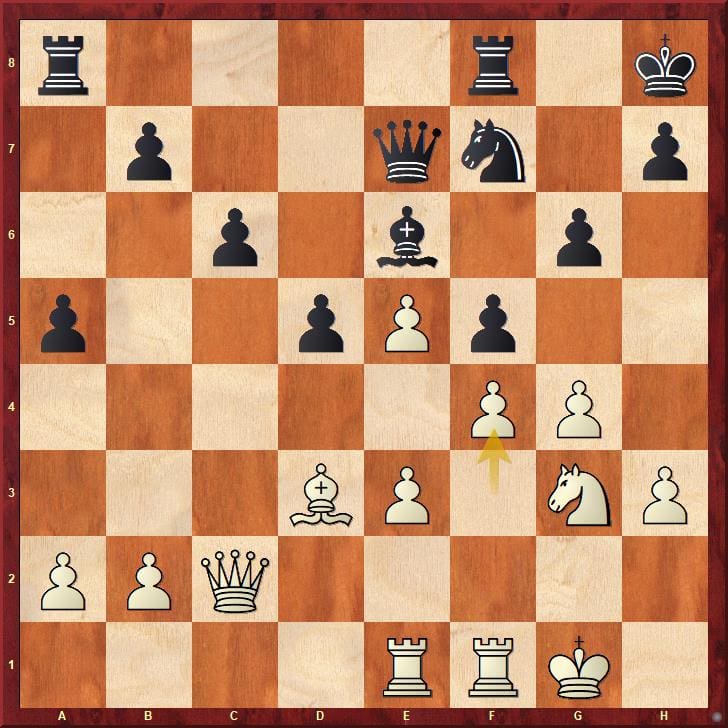
After 23...Qh4 White covered the knight with the move 24.Kg2.
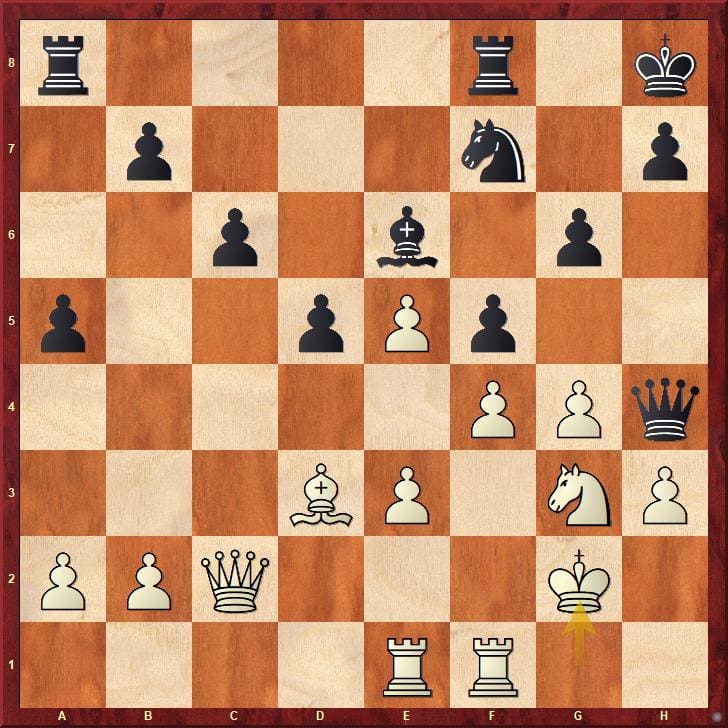
According to his own words, Aravindh already had a beautiful attacking reply prepared in advance 24...Ng5!!.
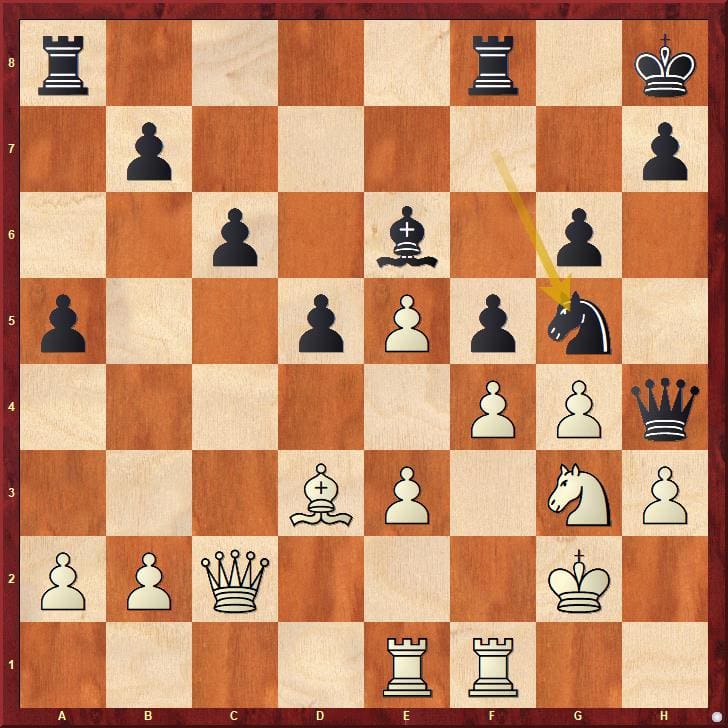
„What is this? There are no clearly forced lines to be seen, so there are too many; maximally attacking projects and excellent chances. Opening the ‚f‘ file, uncovering the e6-h3 diagonal. In some lines, with the black pawn on g4, follows Rf3...“ the reader might say.
More advanced players will certainly see another manoeuvre (after all, White does not have to accept the sacrifice immediately, but can respond 25.Rh1!), thanks to which the attack becomes irresistible. Namely the d5-d4 manoeuvre with freeing the d5 square for the bishop!
Let us now look at the post-game analysis section, in which Aravindh himself comments on the sacrifice and the conclusion! At the same time, we will get to know the fourth musketeer better!
Theory of sacrifice
I have presented readers here with a total of four examples of exceptionally spectacular sacrifices. However, one of them stands out significantly, although of course it depends on the parameter we choose for evaluation. We will focus on:
- calculation of variations – do the positions allow calculation of forced manoeuvres?
- evaluation of the position – is it necessary to evaluate the position at the end of the calculation?
Let us use the simplest definition of a combination from M. M. Botvinnik: „A combination is a forced manoeuvre with a sacrifice.“ In my articles I have repeatedly stated that the most complex tactical device, the combination, cannot really be defined as a true – real sacrifice if we are able to calculate the consequences of the sacrifice to mate or another clear objective. It is after all no heroism to decide on it, however hidden, complicated or beautiful it may be. We would then be in the role of a person who has foreseen a day into the future (corresponding to calculation), found out which numbers will be drawn in the lottery (knew what would happen), and hurried to bet on them!

an imaginary sacrifice – the combination clearly paid off 🙂
Thus, both the two beautiful sacrifices above and the fabulous 2...Rd2!! in the Koskinen vs. Kasanen game yielded to exact calculation and therefore cannot be called real sacrifices, but only imaginary! If we accept this terminology, we note that there are two kinds of sacrifice: imaginary (we see clearly into the future, with the smallest details) and on the other hand real sacrifices! A real sacrifice can theoretically be considered any gambit! Whether we sacrifice a pawn or a piece. Whether the gambit is sound or not, it is a true sacrifice. We are unable to foresee its consequences. Instead, the into evaluation of the position. takes a leading role. Calculation is more or less replaced by our experience, intuition, logic, analogy, association. And so the term Positional sacrifice was born!
Leonid Šamkovič, Soviet, later Israeli and American grandmaster wrote a concise book „Sacrifice in Chess“ at the dawn of the 1970s. There he summarised and classified various types of sacrifices in a clear form. It must be said – and he does not hide this in the book – that he drew on the work of the famous Rudolf Spielmann and his book „The Theory of Sacrifice“.
At the beginning of the work, Šamkovič presents a clear scheme showing how he himself views the issue of sacrifice in chess.
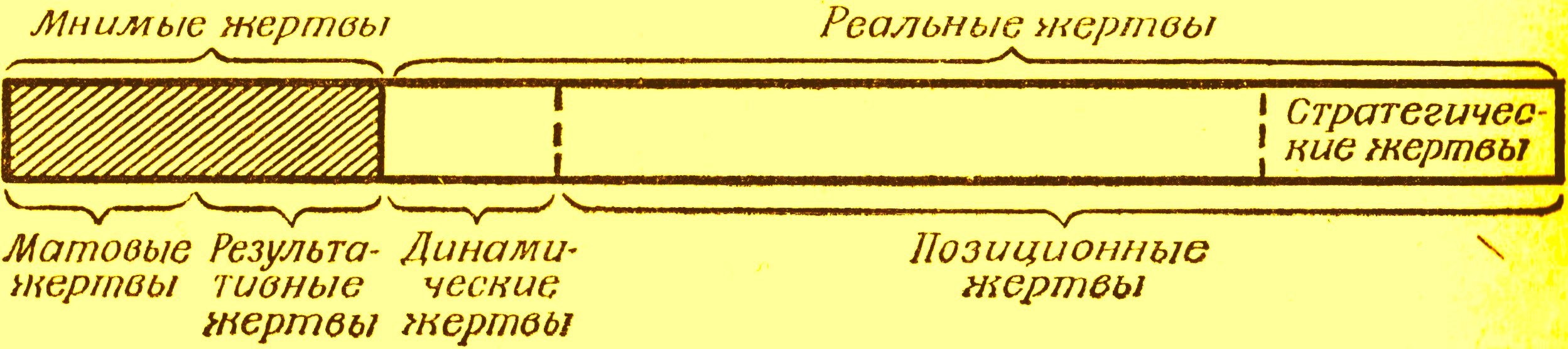
In 1978, after Šamkovič's emigration, a very similar book was published in USA English descriptive notation. Here the clear diagram of classification is missing (it is hard to say whether for technical or didactic, i.e. educational, reasons), so I cannot provide it to readers in the English version.
The left side of the drawing marks the imaginary sacrifices (Мнимые жертвы), that is combinations (which the author further divides into mating and forcing – according to the goal of the combination).
We are interested at this moment in the real – actual sacrifices (Реальные жертвы)! These are divided from left to right according to the parameters: importance of calculation on one side and evaluation of the position on the other. Simply put: the importance of the calculation itself decreases from left to right, but the importance evaluation of the position on the contrary increases! Aravindh’s sacrifice 24…Ng5 can be classified in this diagram among real dynamic sacrifices (Динамические жертвы)!
The role is of course also played by the component Time (not entirely precisely, indirectly and colloquially speaking to what extent it concerns the king). Strategic sacrifices (Стратегические жертвы) on the far right can then also be understood as intuitive sacrifices. Here the meaning calculation itself is very strongly suppressed in favour of evaluation…
Summary: If on the left axis the concrete calculation itself extends in the format ++ (or XXL if you like 🙂, why do we need to evaluate the position when we are mating, right?), from left to right its importance gradually decreases in favour of position evaluation.
„It was easy.“ What more to add? 🙂
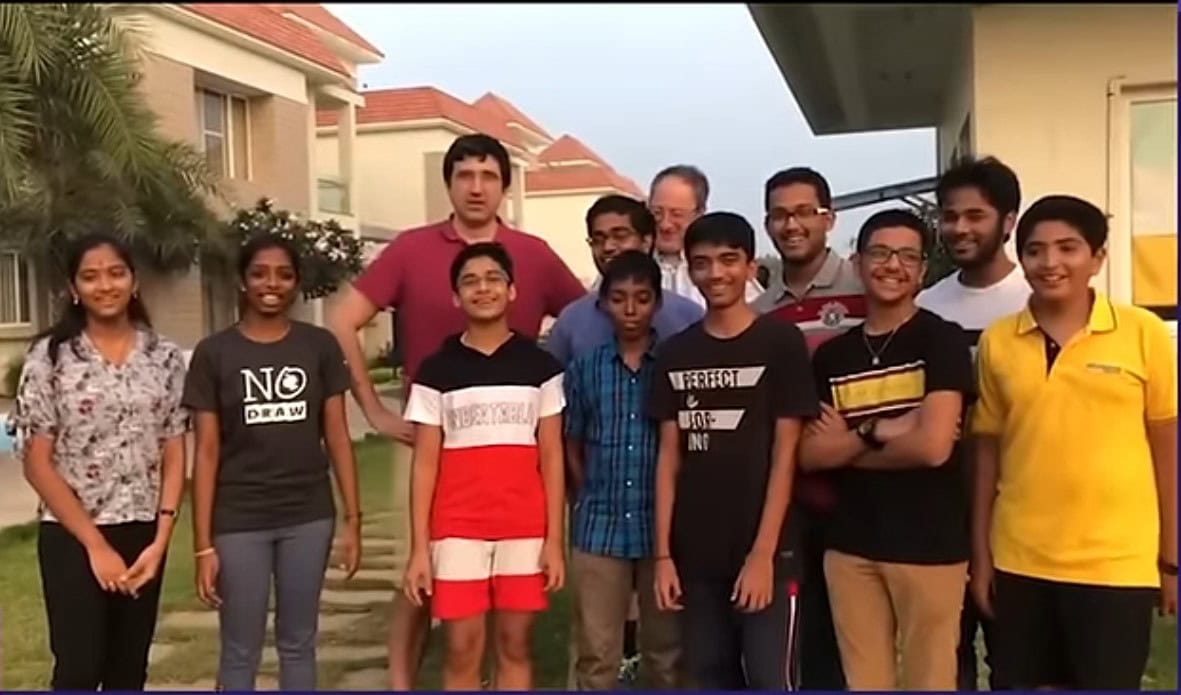
Do you recognise them? Can you find them in the photo? The three musketeers Gukesh (13 years), Praggnanandhu (14) and Erigaisi (17). The photo comes from a video, from January 2020. A group of Indian talents and coaches, former world champions Vladimir Kramnik and Boris Gelfand, wish Sergei Karjakin a happy birthday on his 30th birthday.
Preparation for games and early prophylaxis methods
Let us stay with the game Giri vs. Aravindh. After all, you can literally squeeze as many lessons from it as from ten others!
Preparation for the opponent literally turned into a science decades ago. A top player or coach must be not only a skilled theoretician but also a psychologist! For decades I have prepared my charges (including titled players) against opponents of various playing strengths. I can say that the very successful estimate which opening and variation will ultimately appear on the chessboard, and how the game will look, can in some cases approach as much as 80-90%!
If we have absolutely enough time for preparation, we can play with it for an unlimited length of time! The probability that we hit the mark, then rises sharply.
“The author is bluffing, that’s not possible,“ a reader might think or even protest ! However… I stand by my claim!
We can examine, take into account and literally mine such information that few would think of! For example, when I started preparing a young talented player against an experienced opponent, I pulled out the opponent’s other tournaments, roughly the same round, and tried to find a situation analogous to the one that just occurred in our case: the same or similar round, the opponent’s then adversary, the score… How did our future opponent behave then? Did he prepare? How did he fight against another talented youngster? What are his habits or even rituals?
For example: He chose the so-called. active preparation (that is, he tried to outwit the youngster – surprise him) or did he play his own game? Since a certain time, I stopped calling the latter passive preparation and replaced the term „Vachier’s“, according to the French super-grandmaster with an extremely narrow repertoire.
Preparation for a game is in a way a scientific discipline! Today I can at most smile bitterly at the creations, that artificial semi-intelligence offers for preparation in Chessbase 18 (and surely this trend will continue with direct connection to so-called artificial intelligence; well, the so-called. I just cannot resist). So I ask myself: „What do the games look like that both opponents prepare for, using CB's advice?“ Something like this?...

Preparation for games using so-called artificial intelligence 🙂
But let's return to our game. After the game Aravindh confided: It was clear that Giri would try to win with White in his typical way, style. However, the fourth musketeer did not let himself be lured into the trap of choosing sharp but semi-correct variations, like his comrade-in-arms Praggnanandhaa did in the last round of the tournament, but rather seemed to accept Giri's plan. More or less he had no objections to a draw, but at the same time he relied on the Dutch grandmaster, in an effort to squeeze him positionally (and Giri really knows how to do that with White!), somewhere during the game, as they say, to switch a string!
Alright, but which variation to choose specifically? Here comes the early prophylaxis method! Among Giri's favourite schemes is the exchanged orthodox Queen's Gambit with the Botvinnik plan. We dealt with this variation in the previous article in connection with the game Praggnanandhaa vs. Sarana (the royal musketeer came there with a valuable novelty). Giri often plays the variation 1.d4 d5 2.c4 e6 3.Nc3 Nf6 with pleasure 4.cxd5 exd5 5.Bg5. Let's look at two diagrams from his games.
In the next one, he chooses that Botvinnik plan of play in the centre, which of course logically follows the development of the light pieces on the kingside.
Giri,A (2752) vs. Xiong,J (2681) blitz Saint Louis 2023
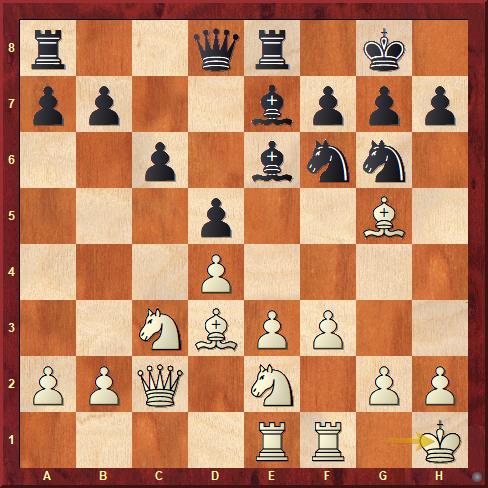
White has just played 13.Kh1
There is no doubt that Giri knows this scheme perfectly and it fully suits his style. Aravindh in the game eventually chose: 1.d4 d5 2.c4 e6 3.Nc3 Be7
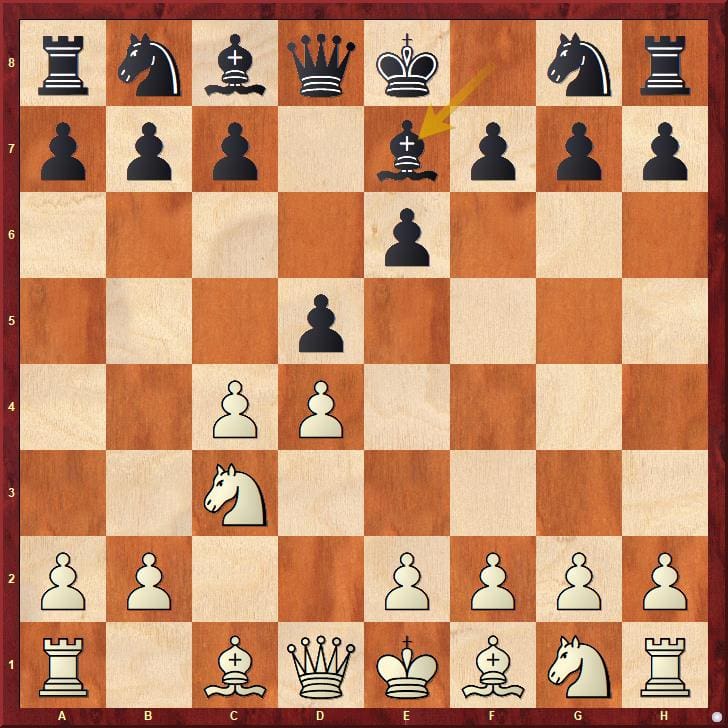
Here surely many readers will ask about the order of development of Black's kingside pieces. Prioritising the bishop's development carries a prophylactic charge (the method of early prophylaxis), but of course it is nothing new. The last time we had the chance to see it was, for example, in the World Champion's thrilling game against Jorden van Foreest in Wijk aan Zee.
Personally, I pondered the move order, read and studied explanatory notes... back in 1981. In the World Championship match Karpov vs. Korchnoi in Italian Meran, Anatoly Yevgenyevich regularly continued like this. It was followed by 4.cxd5 exd5.
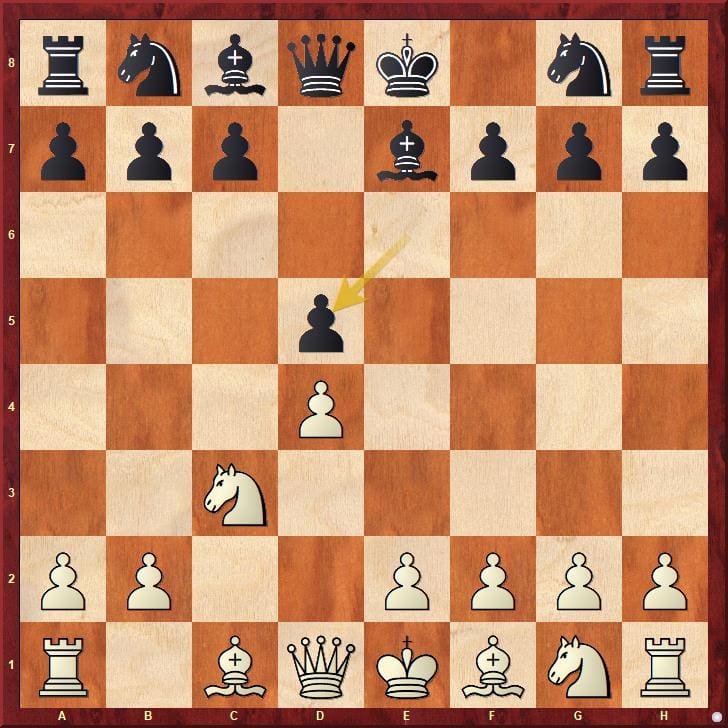
Of course, no miracle happens. But what is important? White is now not able to choose a setup with development as we see in the diagrams above! For that he lacks a suitable move! Giri therefore continued with the usual 5.Bf4 (the same consequences arise from 5.Nf3), but… that is another story, which is exactly what our game including the brilliant ending is about! I will only add that the plan Bd3+Nge2 with the bishop on f4 does not work effectively.
Associations, analogies and logic – welcome aids in position evaluation
Now I will dare to ask the reader a question: Could White try a more modest development of the king's bishop 3...Be7 (development) instead of 3...Nf6 (development and fight for the centre) after all? Does White have something more substantialin the position of the diagram instead of developing Nf3, Bf4 and e3? At first glance, yes! Of course, even the 12th world champion in 1981 did not reinvent the wheel! One of those who tried the viability of this approach 3...Be7 was in 1903 (sic) the strict examiner Siegbert Tarrasch!
Tarrasch,S vs. Alapin,S match, Marseille, 1903.
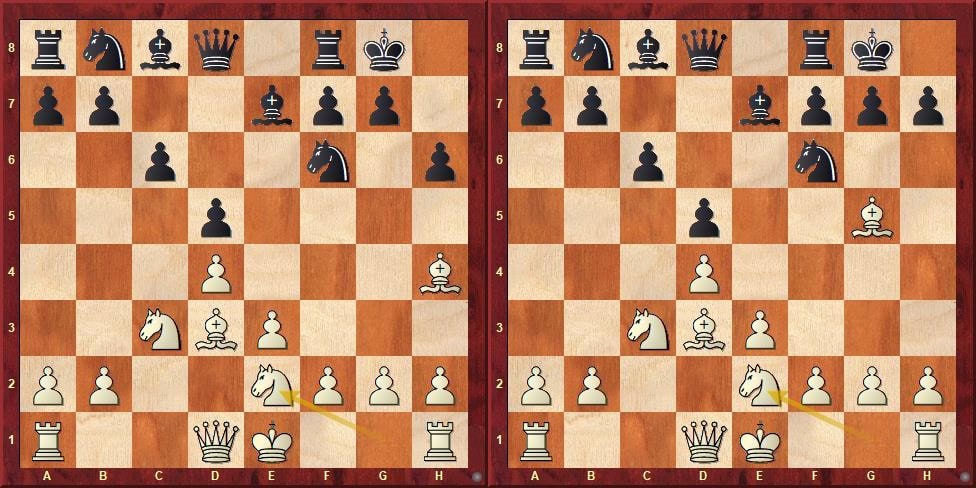
In an attempt to punish the opponent for insufficient control of the centre White continued with an apparently principled 4.e4 (let us leave it for now without comment, evaluation or possible symbol). After 4…dxe4 5.Nxe4 Nf6 the position in the diagram arose.
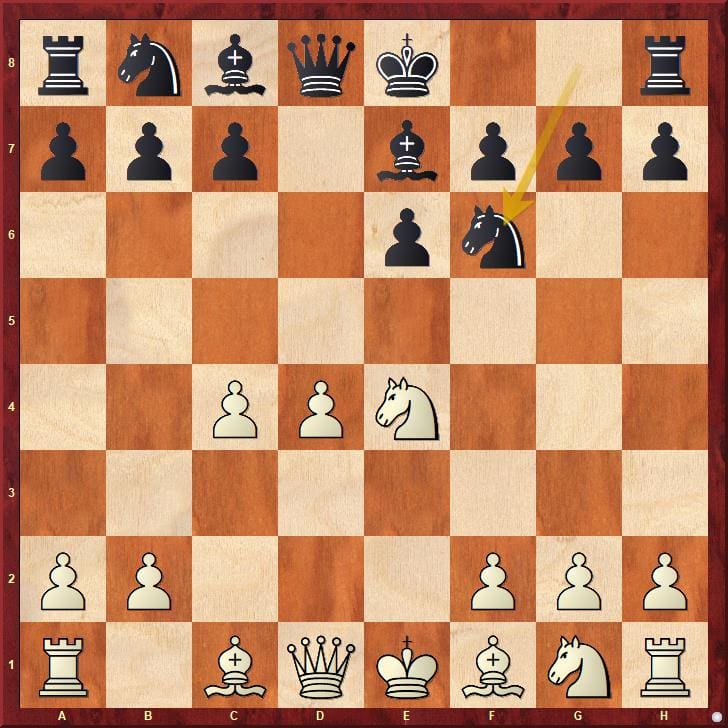
How would you evaluate the position? White certainly cannot be worse. The question, however, is whether Black can equalise without problems or if White has a chance to gain even a small advantage.
Below, dear readers, I will introduce you to one of the least effective ways to gain, so to speak, evaluative certainty. At home, of course, we can run a stronger or weaker engine that will respond within minutes or even seconds. We can also search the position in a database, consult platforms, or look into many other materials. But what to do in a game if we are thinking about the position or even considering a variation that will lead to the situation in the diagram above? Assistant and adviser who – if found – never disappoints, we can call an association or an analogy accompanied by logic! So let's get to it! Let's compare the following two situations:
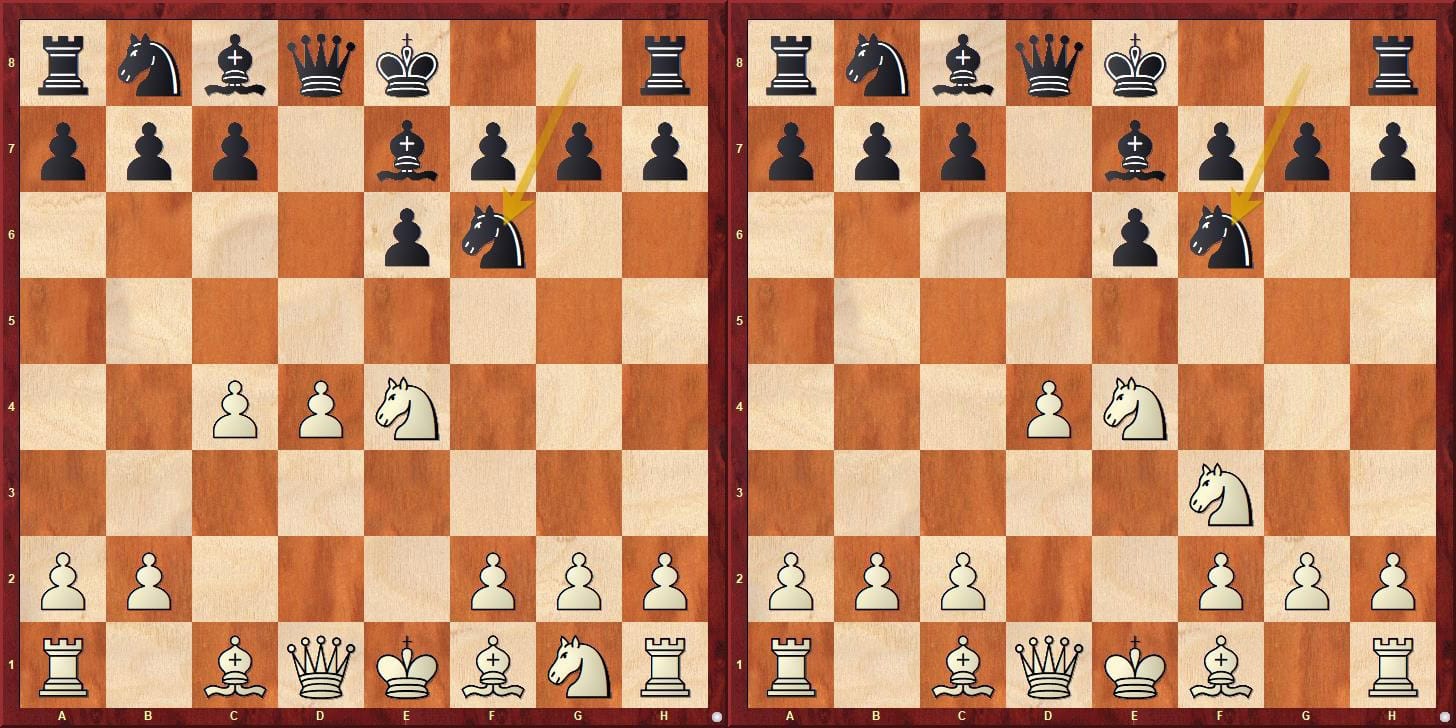
The position in the left diagram is familiar to us. The second situation arises from the Nimzowitsch-Rubinstein Exchange French. For example, in the game Kasparov,G vs. Pereiro,J (simultaneous exhibition, Cordoba 1992) the moves played were 1.e4 e6 2.d4 d5 3.Nd2 dxe4 4.Nxe4 Be7 5.Nf3 Nf6. To be able to activate the association-analogy function, we must of course have the necessary theoretical knowledge! Kasparov's position is evaluated by theory as favourable for White; not with an extremely large, but a pleasant long-term advantage.
So what distinguishes the two positions? Tarrasch played c4, Kasparov Nf3. Even beginners should know that the basic duty in the opening is rapid piece development. If the position in the right diagram after the correct (and let's add, mandatory) 5.Nf3 is favourable for White, after the weaker c2-c4 must be met by Black with at least a comfortable position! That is what logic dictates! And indeed, Black stood comfortably in the game Tarrasch vs. Alapin, equalising without problems. The fact that Tarrasch continued with the seemingly principled but in reality already mistaken 6.Ng3?, lagging in development and with a weakened a5-e1 diagonal, is another matter. We analyse both games in the viewer below
It is time to get acquainted with the entire game of the fourth royal musketeer!
And once again: immediately after the game, full of impressions, here the fourth musketeer quickly analyses the entire course.
A detailed analysis of the entire game including the games Tarrasch vs. Alapin and Kasparov vs. Pereiro is available in the viewer:
How does genius manifest itself?
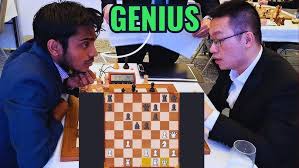
„Certainly not by a single brilliant game, sacrifice or victory in one or two tournaments,“ everyone would probably answer. Some time ago I listened to a brief evaluation of the Prague tournament on the Levitov Chess channel from my favourite 🙁 grandmaster Šimanov. As I expected, after his typical superficial analysis sacrifice of the year Ng5+d5-d4 the channel’s face declared (paraphrasing): „I believe that Aravindh will become one of those who reach the 2,750 mark, but will not stay there.“ I disagree! Unlike the respected grandmaster, I think this will rather not be the case.
We cannot look into the future, like that winner in the picture above 🙂, but fortunately there are also other tools, with which to at least estimate Aravindh’s chess future! It is not about a single game or one very successful tournament! Let us now see how our musketeer exercised with another world star - the Chinese number one and also an exceptionally talented Wei Yi!
Anyone interested in the game will surely enjoy a detailed analysis from one of the most watched English-language chess channels!
Chessbase live comments – laughable or tearful?
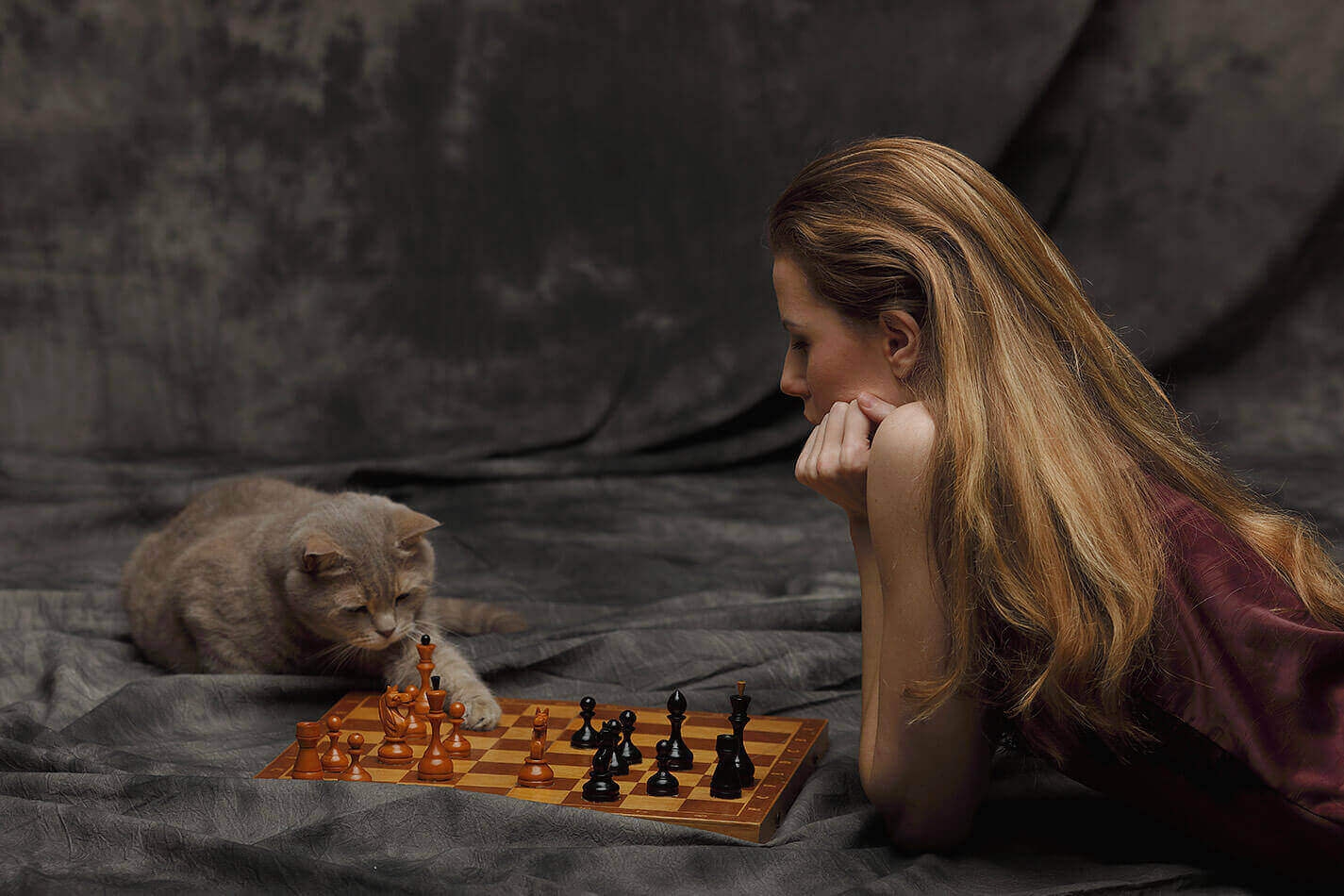
I ‚borrowed‘ the fitting image from the book Tiger’s Chaos Theory by the author Tiger Hillarp Persson.
Website live.chessbase.com offers, besides various services, some live broadcasts of games. The advantage, unlike many other platforms, is that a certain number of games from major events are „commentated“. Why did I put this word in quotation marks? Because some of them really provoke more than a smile… concern; whether the engine, so-called artificial intelligence, or even the authors know at least the basics of strategy. Moreover, the specific variations often contain holes bigger than those we see on district roads, but I would now like to focus on something else.
In round 6 of the Masters tournament, the two best Czech players face each other. The game Nguyen Thai Dai Van vs. Navara reached the following endgames after a tough fight.
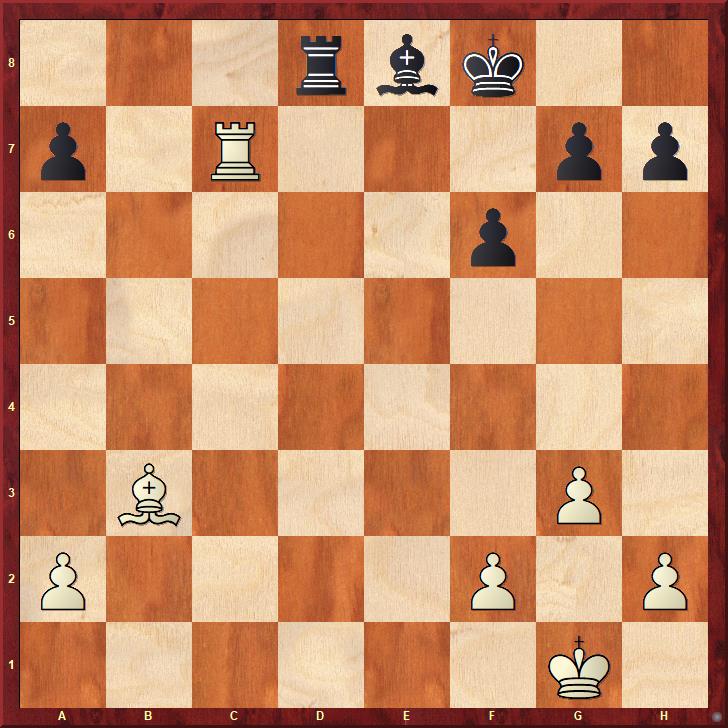
White retained some initiative, but the position is in absolute theoretical balance. In the handling of technical (practical, as Mark Dvoretsky called them) endgames, to which this position belongs, and especially subsequent theoretical (precise) ones, David Navara is among the absolute world elite! This is partly because, like Carlsen, he went through classical chess education in his youth, and I would bet he knows not only all the fundamental and monumental works ever written about endgames! In my opinion, he could only lose this position at blitz, and even then only on time 🙂. .
I add that in the diagram position Black holds the balance both after the played 31…Rd7, and also after 31…Ra8.
Now let us see how the absolutely correct and flawless course of the endgame is commented on live.chessbase.com. For better orientation in the text, I have inserted only a few diagrams, nothing more.
„Gentlemen, aren't you really, really ashamed of such work?“
Few readers will remember this: In the very early 90s (at a time when Microsoft and IBM were installing the MS DOS operating system instead of Windows on customers' computers), the first steps were taken not only in Chessbase, but there were also several engines called FRITZ. The depth of their calculation, as well as their notorious greed for material, was really laughable from today's perspective. In other words, apart from a brilliantly apt name, there was nothing to them! However, I believe that even FRITZ 3 would not play the endgame as terribly as today's commentator game. Sometimes I really wonder whether the involved staff deliberately insert similar anti-comments into games on purpose...
Of course, I mainly saved the resulting rook endgame into my database. David's defence is exemplary and therefore explained to his pupils in an unusually simple way!
However, not only for many professionals or strong players can the following example of the work of the gentlemen from CB. be quite a horror. Let us look at the diagrams below from the mutual game of two Indian musketeers. The 5th round game Praggnanandhaa vs. Aravindh reached a drawn rook endgame after a relatively calm development.
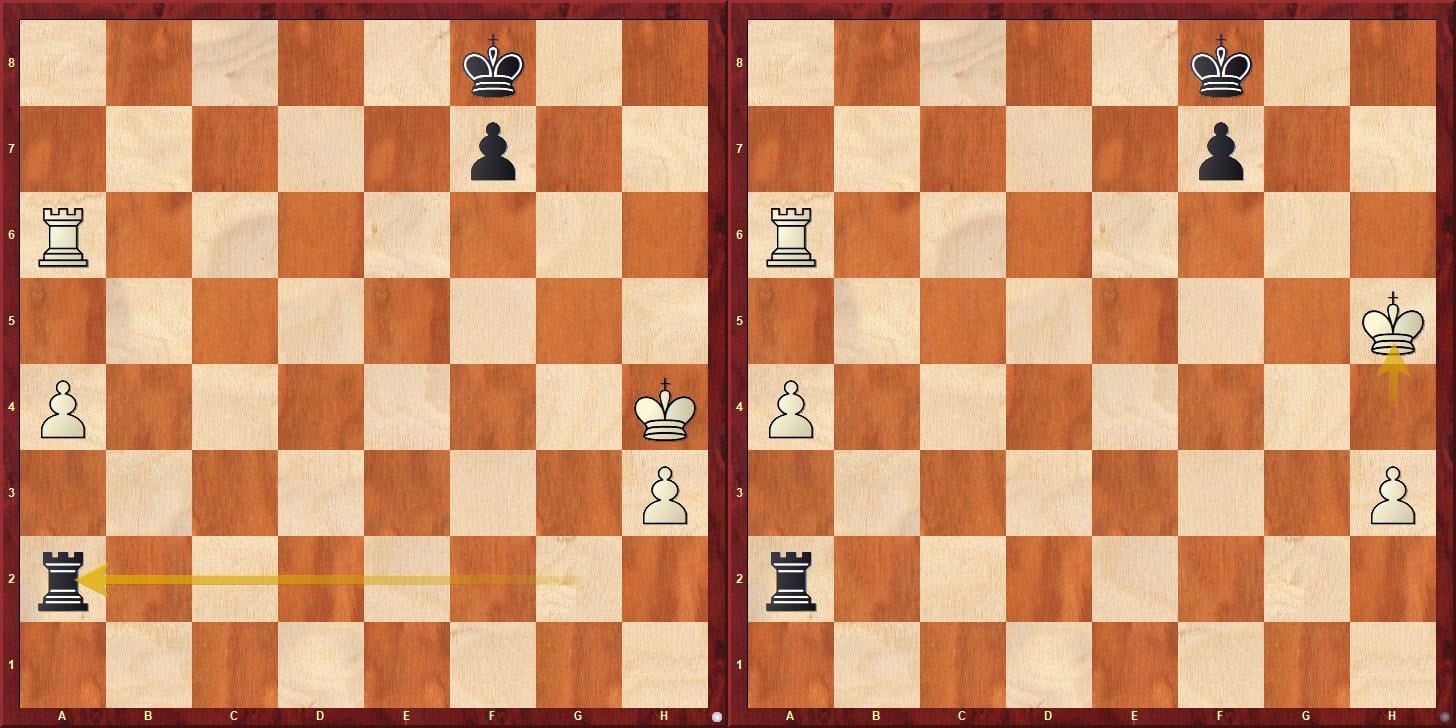
Aravindh just played 44...Ra2, after which White replied 45.a5. Live.chessbase.com insists that after 45.Kh5 (diagram on the right, i.e. the game continuation) White maintains a large advantage on his side!
Well, a mark here, a mark there! Some things might be understandable if... there were more than just 7 pieces left on the board! And what does that mean?! If we compare the situation to an equation, we can solve it! So we are facing a solvable mathematical problem! Interested parties have had online access to solving seven-piece endgames since 2018, if not earlier!
I took the trouble to look into the Syzygy tables (many have them built-in and runnable directly in the engines of their database). Black draws in thirteen (sic) different ways out of a total of sixteen possibilities available by the rules 🙂!
Rook endgame with a distant passed pawn on the „a“ file and Tarrasch A rook correctly placed behind a pawn is thematically related to the previous example. Below we can watch a video recording of the game. Aravindh defended the endgame flawlessly, just like David Navara in the previous example.
The second highlight of the tournament, or when two do the same thing, it is not the same
The situation in the tournament before the last round required that Praggnanandhaa he tried to outplay with Black Giri. After all, nothing else was expected from the (formal) winner of this year's Wijk aan Zee tournament! If he succeeded, he could fight for the tournament victory. I admit I was very pleased when my beloved King's Indian Defence appeared on the board. The Dutch grandmaster often plays the classical system here, and I am not aware of methods to complicate the game with Black nowadays without too much risk. What came out of all this? I think the title of this chapter describes it best!
Praggnanandhaa got lost in the complications, but the Dutch grandmaster managed not only to calculate one of the Indian musketeers, but also to win silver in the entire tournament with a very impressive course of play! His sacrifices, which unfortunately remained partly behind the scenes, would certainly deserve a special award… if it were not for Aravindh's sacrifice of the year. Let's take a look!
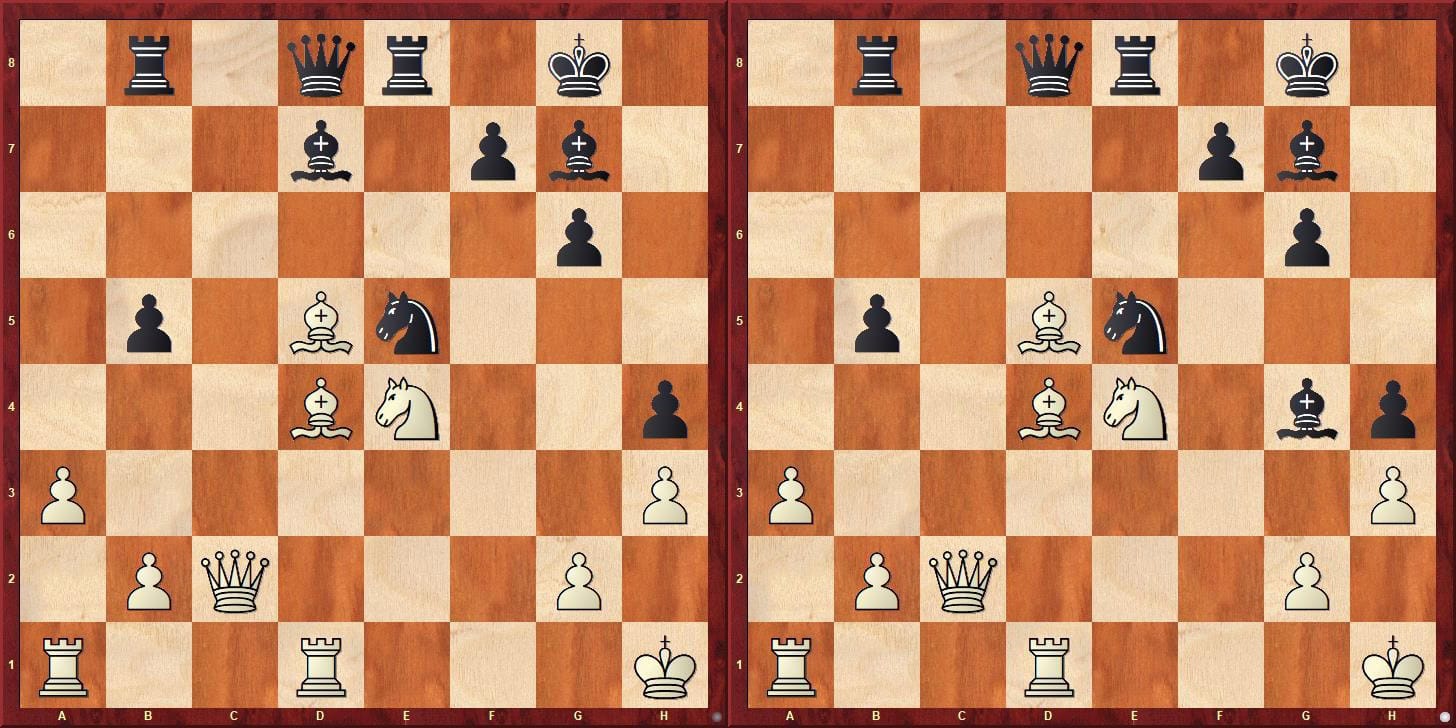
In the position of the left diagram, White achieved a decisive advantage after 27.Nxe4! Praggnanandhaa, however, calculated in advance the tactical blow 27…Bg4. True, the time consumption shows that at that moment he already recognised his mistake, but it was too late to correct it.
In the position of the right diagram, the following occurred 28.Bxf7+!!, after which Black, after almost 10 minutes of thinking, chose 28…Kxf7, so that after 29.hxg4 he could still prolong resistance by several moves, or until the time control. Alright, but how would White continue after 28...Nxf7? On move 29? That is where my first question is headed!
If you, dear readers, have properly absorbed the brief excursion into sacrifice theory, then surely you will have no problem determining, where Giri's tactical fireworks should be placed! So I dare to pose a second question: In your opinion, is move 29 a combination or a genuine sacrifice? Was Anish Giri able to calculate to a clear conclusion?
Let us first look at the traditional game notation and then the more detailed video analysis.
Well, Pragg is not among the dynamic players like Gukesh, Erigaisi or Aravindh; if we stick to the analogy of Dumas' novels, he is not the daring and often life-and-death borderline guardsman Abdusattorov 🙂. His genius and chess strength lie elsewhere. I have mentioned this more than once in my articles. Nevertheless, he certainly had more chances in the game than might appear from the broadcast and analysis above. So, dear readers, if you feel like examining the variation chosen by Praggnanandhaa more thoroughly, here is your opportunity. (I recommend downloading the game from the viewer again and adjusting it according to your habits in CB or another programme.)
Aravindh's objectives
At the end of the article, I have included an interview that Sagar Shah conducted with the winner of the Prague super tournament.
What do you think, dear readers, will the fourth musketeer manage to break through or surpass the 2800 barrier? Will we even see him in the upcoming Candidates tournaments? Or is it rather true the frankly unsupportive Alexander Shimanov and Aravindh's star will quickly fade? „Something in between?“ We'll see!
Complete results of the Prague Masters and Challengers tournaments can be viewed here:
Prague 2025 final results Masters
Prague 2025 final results Challengers
Below are all the examples mentioned in the article available in the CB player... plus a little something extra.