

How can we distinguish a quality coach from an average, below-average or even downright poor one? You might say it's no great art. A coach simply grow into explains, demonstrates, analyses. However, if you care about improving performance (whether your own, your partner's or your child's) and are therefore searching for a quality coach without experience and without wanting to throw money away, it is certainly good to know how such a quality coach works...
The author had been intending for some time to write a kind of guide on how to recognise pure gold from cat's gold or silver from alpaca, even with a final test that would (this time conversely) present the candidate to the coach. However, Slovak grandmaster and at the same time one of the best Slovak coaches Ján Markoš made his work much easier. His article ‚Test: Do you have a good coach?‘, which you can find on the page http://sachovetreningy.sk/test-mate-dobreho-trenera/ contains almost everything, and the author would almost sign under it without hesitation. Nevertheless, Mr Markoš forgets here at least one very essential quality that a quality coach - a professional - should operate with (chemistry, that is, that you and the coach hit it off, which we consider obvious and put unconditionally in first place). What could it be? Well, of course...work results! After all, how does the work of a chess coach differ, for example, from the role of a manager, athlete or even an artist? We therefore recommend looking at start of the intended cooperation asking the coach candidate the question: „Which chess players have you actually trained from the ground up? What successes have they achieved?“ If the coach-candidate starts babbling, dodging or changing the subject, or even gives you false information, avoid such a fraudster like the plague.
The work of a professional coach includes not only excellent knowledge of history (see below), but also mandatory following of current super tournaments. „What is happening at the very top among roughly forty players of the 2,700 Club? What playing philosophy predominates today? Inductive or deductive thinking? Which world chess player is a pure sportsman, a pragmatist, and who really seeks the best moves and beauty? Who can be considered a researcher? How do super grandmasters manage their time?“...
There are many questions, and if we dig deeper into the problem, more and more will arise. The work of a fully professional coach is a never-ending process! Together with proper written (!) preparations (dear readers, find out about this too) it is hard mental work. In my opinion, a coach must devote eight or more hours a day to it.
Years ago, a long-time chess acquaintance of mine, with whom we have enthusiastically admired Caisse for many decades, told me about one of his coaches. Since adult trainees can of course choose what they want to focus on during paid lessons, my peer wanted to change his opening repertoire. So they started analysing various systems, transpositions and subtleties of the opening with a chess professional, a grandmaster and coach. 1.Nf3. Imagine his surprise when at one of the next training sessions the coach said the honest coach something like this: „So we started with 1.d4, today we will continue…“ „Sorry, coach, but we are dealing with 1.Nf3!“ Can you imagine what the preparation of such a coach?
Training of children and youth
is different. Here, I suppose no one will ever explain to me how, say, eight to ten-year-old children with a rating of, say, up to 1,900, can understand closed games. For what purpose do coaching know-it-alls prescribe, for example, various double-houses!
Here I can share an old, just post-revolutionary story. (The reader may forgive the author some narrative licence.) It concerns training of young aspirants of our beautiful game:
The theme of the then approximately two-hour group training was common and trivial for coaches: piece development and the importance of the centre. In the theoretical part, the coach naturally showed the children classic games by Morphy, Chigorin and the like. However, this part of the training was prolonged, so there was no time left for practical exercise of the newly acquired knowledge we develop pieces, everyone wants to play The coach therefore came up with and proposed to the children the following: „We won’t have time to play today, but instead I will show you one of my games from abroad that I played over the weekend.“ („Hmmm,“ thought the parents who came at the end of the training to watch or simply pick up their child, „so he plays abroad too“!)
The coach had Black in the game and the opening looked approximately as follows: 1.e4 e6 2.d4 d5 3.Nc3 Bb4 (the children are happy, both sides develop pieces as they have just learned) 4.e5 b6 5.Qg4 (so far everything is fine).
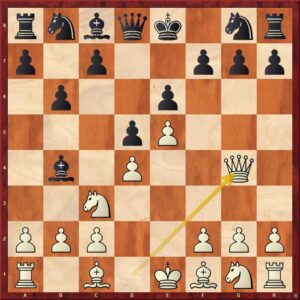
However, what followed 5...Bf8!!
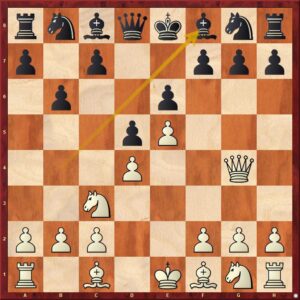
„See children? Sometimes a developed piece has to return to its original square...“... I admit I had no strength for more. What processes were probably flashing through their minds on the way home, during dinner and before falling asleep, flickering in the children's little heads??

Many years ago, I wrote a whole series of articles on the problem of choosing openings for children. Today I would change many things, but the obligation to go through the experience of open games, that is the fastest development of pieces, is still a necessity. A coach of such children must therefore be up to date. It will be difficult to teach pupils various gambits if in his own practice he has never in the first move touched the „e“ pawn with the intention of moving it two squares forward!
How not to be fooled by would-be coaches
Knowledge of history is also an absolutely essential part of a coach's skills. This is especially lacking among younger wannabe coaches, who may well rattle off their entire repertoire of openings, but quite possibly have never opened a book older than their own birth year in their lives. To be a strict parent, I would pose a somewhat tougher question to a new potential coach: „Could you name the birth dates of all seventeen world champions?“
Allow me to give one example, on which you can also test the level of your coach (or prospective coach). A small test has the advantage that it requires not only knowledge of history but also many other positional skills.
In the game Carlsen,M (2882)-So,W (2776), Saint Luis 2019 (1-0 43), the following position arose after White's 19th move:
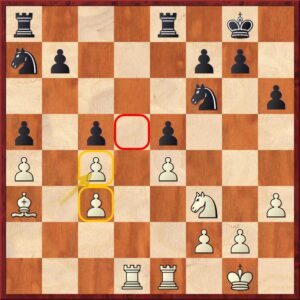
The last move saw the then world champion capture the bishop on c4 19.bxc4. I believe that anyone who has ever held, for example, the book by I. O. Lipnický Questions of Contemporary Chess Theory, opened the chapter on the centre and encountered Botvinnik's model games (Botvinnik,M vs. Kan,I Leningrad 1939 and Botvinnik,M vs. Čechover,V Leningrad 1938, see diagrams below), in which he develops the position of this pawn structure, will forever stop speaking of the isolated double pawns c3+c4 as a weakness or weaknesses.
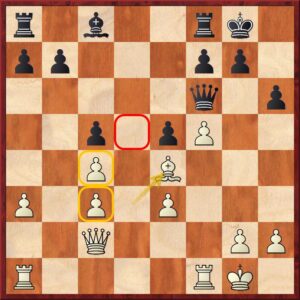
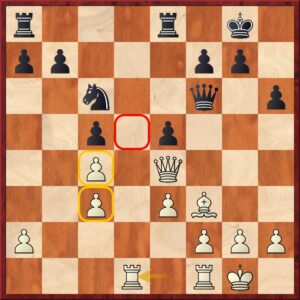
Just like Mikhail Moiseyevich in his famous games, here too Magnus Carlsen demonstrated their advantages so naturally and perfectly that you feel like playing a similar position yourself.
The first prerequisite is the temporary inviolability of the queenside pawns, immediately followed by – the reader probably guesses correctly – the hugely important role of the c3 pawn, thanks to which the d4 square (and also b4) is not weak, unlike the analogous xd5. Well, and on top of everything, let's add the open ‚b‘ file with possibilities to attack the undefended pawn chain (A. Nimzowitsch's term = mandatory history) of the b7 pawn or later b6.
When I was watching the broadcast of this game, it was clear to me that the Filipino-American grandmaster was not playing his the position, while, as I have written more than once, Carlsen - this reincarnation of the great Capablanca - does not know how to do anything better! However, let us add that the position before us still has not crossed the boundary of at least approximate equality. But for that, Black would have to find the correct counterplay plan.
Later, the then world champion pleased me even more, because it turned out that he truly knows the classics! During an appearance on a Russian TV channel, the world champion mentioned that as far as the pawn structure in the game is concerned, his victory over Wesley was a tribute to Mikhail Botvinnik.
Better to see than to read
An unforgettable example of how not to train is also the otherwise, in my opinion, quite successful, evidently nostalgic American film from 1993 ‚Searching for Bobby Fischer‘. Let's replay a short video clip from this work:
So this is apparently how chess is or was trained in the USA! The main character was supposed to represent the real American chess player Joshua Waitzkin and become a kind of successor to Robert Fischer, but in the ‚greatest democracy in the world‘ apparently few understood that besides Fischer's qualities necessary for huge success, it is also necessary to have his IQ! (And by the way, it is not true that Fischer hated everything, after all, he loved money above all…)
The coach, portrayed in the film by what I consider the excellent Ben Kingsley, would have to have his coaching licence revoked in the real world!
I cannot resist a certain jab: the film was made in 1993. If Hollywood directors were to consider a remake today, I would not rule out a possible plot with the main child protagonist changed to a female chess player. Girls do have a somewhat smoother path upwards in chess – let’s say – and this is already happening in other sports in reality.
Facts, facts, facts
Dear enthusiasts of improvement, who decide to look for a coach (as I have already written, whether for yourself or someone else): Do not be fooled by the coach’s confident manner, his dropping of the first names of famous grandmasters or renowned coaches (giving the impression he knows real personalities), or stories about everywhere he has been sent by the chess federation. Many chess players, enchanted by coaching work, are – as is common nowadays in all areas of life – not only capable of masterfully clinging to a source of income, unscrupulously exploiting their federation position for their business benefit (conflict of interest), but even slandering their colleagues, twisting facts to turn them into mere interpretations. Trust only verified facts! (After all, this is more relevant today in all spheres of life than ever before, perhaps with the exception of the Nazi regime in Germany!) Finally, you have a huge advantage in that you can part ways with such sly characters after a few training sessions. The situation is much worse for parents – laypeople – and their children.
Be interested above all, as it is often said, in hard data!
In my opinion, a coach should provide you on request with an overview of his easily verifiable work results, that is, the successes of pupils who have passed through his school, roughly as the author below does almost every year in the appendices.
Overview of pupils' achievements as of 1.9.2023