

Professional CV
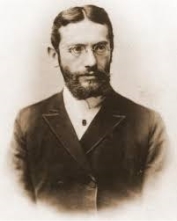
Jan Bílek *1959
The first fully professional chess coach, theoretician and analyst v in the Czech Republic since the early 1990s. The most successful coach of children, youth and juniors in in the Czech Republic z terms of the results of his pupils, whom he has coached from their first stepsů of their chess careers. (Bwithout the consent of the previous coach he fundamentally does not take over dany pupils under his care, tthis behaviour he considers to be a kind unethicalhim enterpriseáher). He trained hundreds regional champions and medallists of the Bohemian Championship, dozens of medallists of official Czechoslovak and later Czech Republic championships, several dozen masters of CSFR and CR, approximately the same number of young rrepresentatives of World and European championships. V under his care about 25 years of professional activity nearly a thousand children and youth of various talents, interest in chess, intelligence, diligence and character.
He has also trained (a later he cooperated or consulted ) FIDE masters, meinternational masters and grandmasters. He trains and conducts consultations with several dozen adult chess players.
He has been actively playing chess since 1972. His ‚childá‘ careeréra was launched v in 1973 with a draw v in a simultaneous game against then the world’s second or third highest-rated player Mikhail Tal. Zhe finished he then 7. in . place at the Czechoslovak junior championshipsof Czechoslovakia v in 1978 v Bojnice.
Later he preferred team competitions, when almost 10 years inedl on the 1st board young Pilsen team WChE Pilsen in various league competitions Czechoslovakia. Here he also managed in the eighties to achieve a technical norm for the title of mastera of sport. Due tomainly z family reasons, he could not participate in tournaments abroad at the end of the 1980s. zahraničí.
At the beginning of the 1990s, he decided on a career as a professional coach, theorista and analyst, namely at the expense of active participation in tournaments, whereby this choice was in a way forced by deteriorating health condition.
In agreement with one of the most respectedch coachesů in the world, the late Mark Izrailevich Dvoretsky holds the view that it is not possible to fully and properly devote oneself to coaching work and at the same time participate in demanding tournaments and competitions or for example engage in organisational duties. (JIt is mainly about theso-called coachsemi-professional poloprofesionály, who only earn extra income from training their pupils nand livelihood.)
He is an advocate of the line of training pupils according to the historical development of chess (Réti: first we must learn to combine, so that later we can also play positionally!), he does not recognise ‚modern‘ training methods, whether in the general sense (permissive upbringing of children, anti-authoritarian upbringing, inclusive education, identifying with Western models of schooling) or chess training (waiting for the opponent’s mistake, focusing onlyzon a minimum of one’s own mistakesěmade...). He prefersa creative and maximalist approach when searching for the optimal solution to a position on the chessboard a hdeep understandingnof the game.
He published for a long time a series of specialised articles concerning especially the selection of opening repertoire for less experienced chess players, which appeared in the magazineopisu ŠachInfo regularly in the years 2004-2006. The author of many coaching materials, for example onthe pages of the now defunct website www.chesslady.com. V currently on his own internaleweb pages www.skolasachu.com he has published a large number of chess works, some comparable in scope or even surpassing theoreticalé book chessé publications. (On these pages it will be possible in the future to find also many other works by the author of various kinds.)
As a chess theoretician, he created several new ideasofstrategic concepts and tools. He is convinced of the correctness of general teaching principles according to the exampleand convinced of the correctness of general teaching principles according to the patternů Nimzowitsch's; for example legacyovu, Botvinnikovu, Kotovovu, Zakovu, Kasparovovu, Chebanenkovu, Dvoreckého, Aagaard's... He read and studied hundreds of among others. coaching works, mostly from the former USSR He is convincedýa supporter of the Russiané, respectively Sovieté chessé school.
He created and generalised some tools for evaluating positions on the chessboard, such as is for example the method bof a safe square for the queen in positions with an open centre (without pawns), thenprinciple of correct evaluation of positions with opposite-coloured bishops in the middlegame. His speciality is the description and development of methods for calculating variations (the principle of selecting candidate moves and the so-called method of completing variations) – the combination or conversely the distancing of theoretical and practicalapproaches v to calculating variations, and finally also the comparison of opinions of various authors on the issue of the technique of calculating variations. In this field he conducteda number of psychological experiments, trying to build on the work of Botvinnik, Krogius a and Zlotnik.