

What is the strength of Carlsen's play?
Of course, even a slightly more experienced reader will recognise and understand that there are many reasons for his superiority. Starting with knowledge of thousands and thousands of theoretical endgame positions (where most players have no idea how the position stands, the world champion only needs a glance at the board), continuing with perfect psychological preparation and thus also the choice of openings, emphasis on centralisation and the fight for the centre, physical fitness worthy of a top athlete, mental stability and immense will to win, fighting spirit, but above all a truly divine talent in the form of so-called. general intuition! This manifests itself mostly in simplified positions usually without dynamic content, logically most of all in technical endgames.
Let me add for less experienced chess players that endgames can be divided according to various parameters, not only by the pieces remaining on the board. Here I mean these two groups: 1/ theoretical endgames (so-called precise according to Dvoretsky), which are known and given in the literature, and 2/ technical (imprecise) endgames, in which we must, when playing them out, involve our skill in every respect. The basic task is then the effort to convert at the right moment the endgame a technical into to a theoretical one...and these positions, diagrams, that is to know as many as possible!
Here I will give a quite typical example from a game of the world champion against perhaps the most diligent theoretician in the world and at the same time possibly the most creative super grandmaster of today, Levon Aronian.
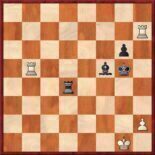
In the diagram position the world champion played 36.Rb2, after which followed 36...Rg4+
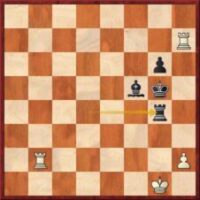
Test 1: what do you think, is the position a draw with best play from both sides or can White win it?
Test 2: how would you continue with White?
Test 3: would you agree with Black's decision to simplify the position and exchange rooks? 36...Rg4
Now let's look at how you did in the tests, as well as at Aronian's serious blunder that very likely cost him the game!
Magnus Carlsen was raised in the West, so we can hardly expect modesty from him, unlike his predecessor on the throne, and in his younger years he sometimes spoke about other genius chess players in a – to put it mildly – not very polite manner.
He said, for example (paraphrasing): „As far as intuition goes, I am stronger than the young Kasparov. I understand positions better.“ Now I may shock dear readers, since above I wrote about inappropriateness, even rudeness in some articles. Carlsen was PARTIALLY right!
Classification of chess players
Anyone who has ever held a truly old book in their hands could read that chess players can be divided into two groups. According to the style of play, the division looked, according to the view of the 19th and early 20th centuries, like this: there are combinational players and, on the other hand, positional players. However, this is a very rough and not very precise classification!
Now I will skip decades, perhaps so as not to bore the reader. Mark Izrailievich Dvoretsky in his works proposed a division into two groups: 1/ players who prefer strict logic (inductive thinking, that is from the specific to the general, from calculation to evaluation); 2/ the exact opposite is the group of intuitive chess players (deductive thinking, that is from the general to the specific). It is easy to recognise which group a player belongs to. You are playing a game or see a new position. What comes to your mind first (of course after obtaining all the input information about who is to move and the material balance)? Do you throw yourself into a whirl of calculating variations? Then you are an inductive chess player, we might say a ‚mathematician‘. Or do you first start to notice, for example, the placement of individual pieces, their relationships, the position of the kings, pawn structure and so on? Then you belong to the group of deductive chess players, that is intuitives!
Which group is yours? Test yourself
Dear readers, do you want to find out or be sure whether you have already placed yourself in the 'correct' category? Or verify the correctness of the theory? Then look at the diagram below. In a materially balanced position, Black is to move. It is very important to note (remember) the very first thoughts – considerations that came to your mind when looking at the diagram!
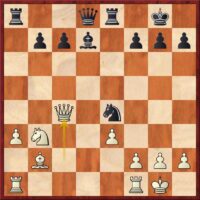
However, Dvoretsky already indicates in his works that even this division is not ideal, and if memory serves, he later referred to the ‚phenomenon of Mikhail Tal‘. These reflections in his works reminded me somewhat of Albert Einstein with his almost hatred of quantum physics. Towards the end of his life he did admit that ‚God may play dice‘, so there is something in incomprehensible phenomena, but at the same time he added that quantum theory, if it is even viable, is far from complete…
Kasparov solved the problem, although not completely
According to me, Dvoretsky’s successor in the question of chess players’ styles expressed himself more succinctly. (I warn, however, that his division, as he himself writes, concerns exclusively very strong world players.) Kasparov proposed the following division:
1/ logically thinking chess players who compensate for a lack of intuition with many other strong qualities.
2/ chess players with exceptionally developed so-called general intuition
3/ chess players with intuition that works in sharp, dynamically charged positions. (In chess jargon, this is combinational instinct, extraordinarily developed imagination)
‚The Tal Phenomenon‘ The 13th world champion solved this so quickly and still managed to defend his correctness! Mikhail Nechemievich, perhaps surprisingly to some, did not belong explicitly, fully, to the group of calculators, that is logicians, but had an exceptionally developed intuition that worked in the sharpest situations. Kasparov’s evidence relies on Tal’s rather weak results against explicit calculators (group 1), such as Viktor Lvovich Korchnoi or Lev Abramovich Polugaevsky.
Magnus Carlsen must be clearly classified among chess players with general intuition. In the same group we would find Karpov, Petrosian, Smyslov, Rubinstein, and of course Capablanca…
Note: If we stay with analogies from physics, just as quantum theory still cannot explain the double-slit experiment, I myself came across an example from Tal’s practice in the literature! His story about the post-game analysis with Botvinnik. However, my contribution is not inflated and I fear that even so, today there will be many lazy readers – chess players who will skim the article and their gaze will most likely linger only on the examples and diagrams with the task…
In what is the world champion vulnerable?
Firstly, even today there is, in my opinion, a considerable group of chess players who can, colloquially speaking, outcalculate Carlsen, and this is also the reason why he very often avoids sharp positions, especially with an insecure own king. Secondly, the current world champion’s intuition falters somewhat precisely in positions where one must rely on its specific part.
Evidence? The nineteen-year-old Alireza Firouzja! Perhaps dear readers know what the world champion declared before the Candidates Tournament, which was again won by Jan Nepomniachtchi. Carlsen supposedly lacks motivation and will only play the match if Firouzja wins the Candidates! On one hand, a compliment to the world champion: he wants to face a younger player who quite often outcalculates him precisely in sharp piece-play positions, when there is confusion on the board and the like. On the other hand, Carlsen perhaps very well realised how severely this would psychologically damage the 19-year-old boy; he would not be able to bear such a ‚compliment‘ mentally. And it happened!
Moreover, if it were not for the psychological fragility of Jan Alexandrovich, their match for the chess crown, played at the end of 2021, might also have ended differently, not to mention the 6-6 result three years earlier against the ‚logical‘ calculator Fabiano Caruana.
I do not expect that dear readers will agree with me in everything. At the end of the analyses, I allow myself to add examples in which the world champion ‚failed the dynamic equation‘.
Let us go back along the timeline. The last tournament: online rapid, Miami, Florida, the Carlsen-Duda match.
After a lacklustre first rapid game, Carlsen wanted to win the second, despite some risk. In my opinion, this – although a rapid game, but let us get used to it – suitably complements the above statements. (The game can be excellently used for training purposes. Themes: Strategy of attack on the king in the centre and Counterattack in the centre.)
At the end of the article, let us look at further examples of Carlsen’s certain ‚dynamic or calculation failure‘ in positions that are not so demanding that neither player is able to orient themselves correctly in the position. The examples do not include situations when the world champion was already in time trouble, but avoiding games played at accelerated time controls is no longer possible today…