

The first unpleasant surprise of the Olympiad in Samarkand came even before it started. Looking at the Indian team line-up, I discovered that the reigning world champion Gukesh was placed only on the 4th board. This article is therefore not yet an analysis of the Olympiad battles or an evaluation of their results. It is an immediate reaction to a historically unusual decision and a reflection on what it means for the value of the world champion title when rating takes precedence over the chess crown.
Gukesh's position in the Indian line-up is not just a tactical detail. It is a historically unprecedented message about what we today consider the highest chess authority.
A decision beyond the line-up
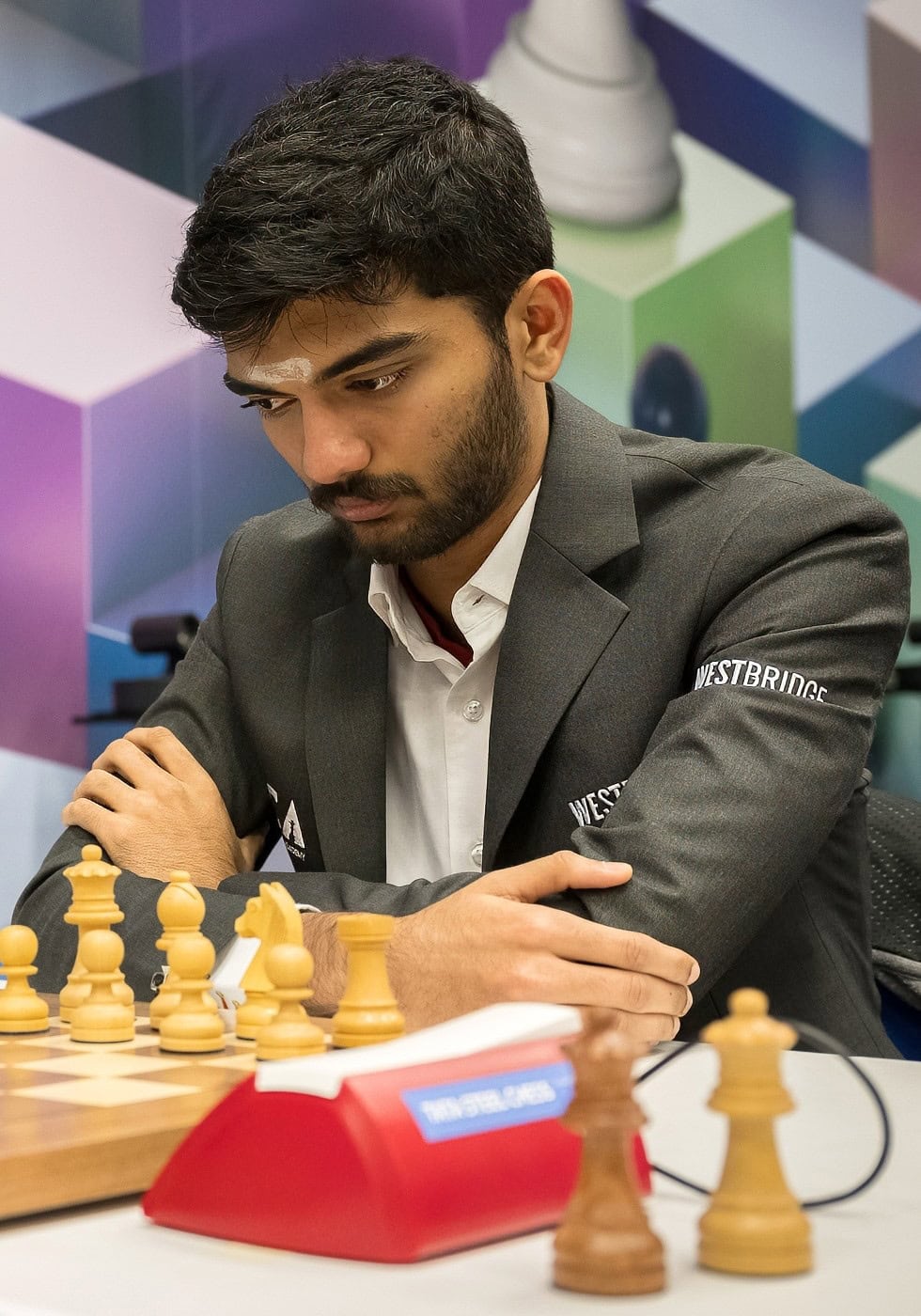
India enters the Olympiad in Samarkand as the defending gold medallists. However, their reigning world champion Gukesh does not play on the first board! According to the announced order, Praggnanandhaa (2761), Erigaisi (2759) and Nihal Sarin (2718) play ahead of him; Gukesh with a rating of 2703 is only fourth and Vidit Gujrathi (2697) fifth. This is neither an emergency substitute option nor an administrative error. It is a conscious choice by the player, captain and team.
The sporting logic of such a step can be understood. The order corresponds to the September ratings, Gukesh is going through a difficult period and the line-up may want to distribute strength so that the world champion brings points on a lower board. There was also a consideration that the fourth board reduces the likelihood of his direct Olympiad clash with challenger Javokhir Sindarov before the upcoming title match. These can all be reasonable arguments for an individual tournament.
But the Olympiad board is not just a serial number in the table. The first board of a team is also a place of responsibility, visibility and symbolic primacy. And the world champion is not just one of five employees temporarily arranged according to the latest Elo list.. He is the holder of a title that has its own history, its own qualification path and its own way of passing on: the crown does not pass to the highest-rated player every month, but to the winner of the world championship match.
That is why the Indian decision is historic. In the complete rosters of chess Olympiads, we do not find any reigning undisputed or classical world champion who played for his country on a lower board than the first before Gukesh. And this is not even about the second board: the world champion was moved straight to the fourth.
What exactly is historically documented
The statement must be defined honestly. In Olympiads, Gukesh's case is unique. Checking available records of official senior team competitions also did not reveal an older case where a reigning classical world champion played for his country below the first board. However, the absolute statement „never in any team competition“ cannot be used without reservation: club leagues have fixed rosters, different regulations and their historical archives are incomplete.
At Olympiads, reigning champions Alekhine, Euwe, Botvinnik, Tal, Petrosian, Spassky, Karpov, Kasparov, Kramnik, Carlsen and Ding Liren always played on the first board. Other champions did not participate in Olympiads during their reign at all – for example Lasker, Capablanca, Fischer or Anand. Smyslov's short reign did not fit between two Olympiads, but at the 1957 European Team Championship he led the Soviet Union on the first board. Absence was possible; a lower team board for the reigning king was not.
| Case | Rating / sporting circumstances | Result of the order |
|---|---|---|
| Vladimir Kramnik, Olympiad 2006 | Kramnik 2729; Svidler 2743, Morozevich 2730 | Kramnik on 1st board |
| Ding Liren, Olympiad 2024 | Ding 2736; Wei Yi 2762 | Ding on board 1 |
| Alexander Chalifman, Olympiad 2000 | Chalifman 2658; Morozevič 2734 | Chalifman on board 1 |
| Ruslan Ponomarjov, Olympiad 2002 | Also in the team the higher-rated Ivančuk | Ponomarjov on board 1 |
| Rustam Kasimdzhanov, Olympiad 2004 | Reigning FIDE World Champion | Kasimdzhanov on board 1 |
| Gukesh, Olympiad 2026 | Fourth rating in the Indian line-up | Gukesh on board 4 |
The comparison shows that the first board was not in the past a mechanical reward for the highest Elo. This even applied to FIDE World Champions from the split title era, whose legitimacy was often questioned.
„If a World Champion himself accepts the fourth board, he tells the public that the Elo rating is a higher authority than the chess crown.“
Helsinki 1952: the closest case, but the opposite message
The closest historical parallel is Helsinki 1952. The Soviet Union participated in the Olympiad for the first time then and reigning World Champion Mikhail Botvinnik was not included in the team. The traditional story says that the teammates voted for Keres on the first board, offered Botvinnik the second and he refused. A more recent investigation by Douglas Griffin in Soviet archives, however, points out that there is no record of a formal vote or an actual offer of the second board. The surviving records rather suggest that the leadership considered Botvinnik's form at the time insufficient and demanded practically a guarantee of individual gold from the first board player; Paul Keres was chosen, Mikhail Moiseyevich was left out.
The Soviet line-up then played in order Keres 6½/12 (!), Smyslov 10½/13, Bronstein 8/10, Geller 10½/14; reserves Boleslavsky 7/8 and Kotov 2/3. The USSR won the competition. Two years later Botvinnik returned to the first board and the Soviet Union won by a margin of seven points!
Helsinki is therefore not a precedent for a World Champion on a lower board. It is a precedent for the decision that he either carries the first board or does not play. One can disagree with the harshness at the time, with the political pressure and the obsession with gold. The symbolic hierarchy, however, was absolutely clear: the title and the first board belonged together so much that Compromise was out of the question.
Samarkand sends exactly the opposite signal. This time the world champion plays – and voluntarily ranks behind three compatriots.
Buenos Aires 1978: the world champion was absent, not demoted
Karpov's absence in Buenos Aires 1978 also shows an important difference between skipping the Olympiad and dropping in the order. His dramatic title defence against Korchnoi in Baguio ended only on 17 October (local time sometimes given as 18 October); the Olympiad started on 25 October. Anatoly Yevgenyevich therefore naturally did not participate. The Soviet Union played without the world champion – not with the world champion on the second or fourth board – and for the first time in its Olympiad history did not win gold.
| Final standings | Points | USSR line-up and scores |
|---|---|---|
| 1. Hungary | 37 | Spassky 7/11 |
| 2. USSR | 36 | Petrosian 6/9 |
| 3. USA | 35 | Polugaevsky 8/11 |
| Gulko 2/5; Romanishin 6½/10; Vaganian 6½/10 |
Viktor Korchnoi, whose match with Karpov ended just days before the Olympiad began, led Switzerland in Buenos Aires and scored 9/11. The Soviet silver episode was recalled in contemporary press as „Argentine silver – серебро аргентинской пробы“.
The history of chess Olympiads, their connection with the highest title and other curiosities are presented in a video by my favourite author from the Beautiful Chess channel:
Gukesh has already deserved the first board twice
What is even more remarkable about the decision is that Gukesh is not a debutant who suddenly acquired the status of world champion before proving his team value. At the 2022 Chennai Olympiad he led the second Indian team, scored 9 points out of 11 and won individual gold on the first board with a rating performance of 2867 (all at the age of sixteen!). In Budapest 2024 he again played on the first board, this time scoring 9/10 (+8 =2) with an unbeatable performance – a performance rating of 3056. He won another individual gold and helped India to a historic team triumph.
In December 2024, he defeated Ding Liren 7½:6½, becoming the eighteenth and at eighteen years old the youngest undisputed world champion. So the player on the fourth board is not someone whose Olympic performance would be unknown. A two-time gold medallist and the current holder of the highest title is stepping down.
The result of the Samarkand Olympiad will not change this significance. If India wins, it will prove that the chosen tactic worked; it will not prove that the gesture had no symbolic value. If they do not win, it will not in itself be proof that the fourth board was a sporting mistake. The question that this decision opens is not a matter of a few half-points. It is a question of the hierarchy of chess values.
The strongest defence: the team is more than the individual
Supporters of the Indian order can offer an impressive moral interpretation: the young world champion set aside his ego, accepted the role needed for the team, and showed that no one has a right to the first board just by virtue of their title. Such an explanation is not ridiculous. Gukesh's willingness to serve the collective may be humanly sympathetic and the captain has a duty to field the team as he considers best.
But this is precisely where two legitimate responsibilities clash. Gukesh is not only protecting his own prestige. As world champion, he temporarily manages an institution older than the rating system, the world federation, and the current Olympiad format. Personal modesty can therefore have impersonal consequences. The king may give up comfort; he cannot pretend that the crown is merely his private accessory.
It is also not true that respect for the title necessarily denies sporting reality. Kramnik in Turin 2006 led Russia with a rating of 2729, although Svidler had 2743 and Morozevich 2730. Ding in Budapest 2024 remained China’s first board with 2736, although Wei Yi had 2762. Even more striking was Khalifman in 2000: as FIDE world champion he led Russia with 2658 ahead of Morozevich with 2734. These line-ups did not say that rating did not exist. They said that the title means something extra.
Khalifman’s club exception in the German Bundesliga does not refute this conclusion. In the 1999/2000 season he was on the fixed roster of SG Porz as number three behind Christopher Lutz and Loek van Wely. However, league rosters are made before the season and this one was assembled at a time when Khalifman had not yet unexpectedly won the FIDE title in Las Vegas. Moreover, it was not a national representation but a club with a predetermined order.
Verdict: rating gained a voice, the crown lost it

My conclusion is therefore critical. I consider Gukesh’s decision a mistake - not primarily because it necessarily weakens India, but because it weakens the significance of the office that Gukesh holds. The world title is not an honorary plaque attached to the rating list. It is an independent institution. Its purpose lies precisely in the fact that the current form and the ongoing Elo ranking do not decide every month who is the chess king. The crown is decided by the challenger cycle and the match.
If we place the reigning world champion on the fourth board because he currently has the fourth rating in the team, we accept a different constitution of chess: the true ruler is the ranking and the title is just a ceremonial decoration. This is particularly serious at a time when the highest-rated player Magnus Carlsen has voluntarily withdrawn from title matches and the public increasingly asks whether the world champion is also the „best player“. The institution of the title will survive this question only if we respect its own logic, not if we subordinate it to the Elo list at the first unfavourable rating constellation.
Gukesh may or may not excel on the fourth board in Samarkand. India may or may not defend the gold. Neither, however, erases the picture that has already entered history: the reigning world champion sits behind three teammates because the numbers from the last period were preferred over the crown. It is a historic exception – and in my opinion also another, this time a voluntary humiliation of world primacy.
Is the chess crown on the way to the scrapyard?

This year marks 140 years since the Steinitz–Zukertort match, from which we count the history of the official world championship. However, the chess crown did not gain its privileged position in a single day. It had to be gradually fought for before it became the most precious jewel of the chess world – a symbol standing above current form, rating or individual tournament successes.
That is why the sight of the reigning world champion on the fourth board arouses such resistance in me. It is as if we are being told that the crown no longer has any special weight and its bearer is to be placed wherever the rating directs him. The title yields to the number, tradition to the table and the chess king to the order arranged according to Elo.
The chess crown could then suffer a definitive symbolic humiliation at the very same Olympiad. In Samarkand, a new FIDE president will be elected and one of the candidates is Jan Henric Büttner – co-founder and main promoter of so-called Freestyle Chess. If he were to win the election, I would consider it the last drop.
I fear a world in which the traditional World Championship will no longer be the untouchable centrepiece of the royal game, but merely one product among several others. From the most precious crown, the last valuable ornaments might gradually disappear until someone thinks that the old and impractical piece of history is actually a hindrance – and that it would be best to send it straight to the scrapyard.
I hope this is only an overly dark premonition. However, the sight of the World Champion settled on the fourth board certainly does not reassure me.
The events at the Olympiad, the twists, beautiful games and failures will soon come to the fore, while team line-ups will be of interest at most to historians in a few weeks. Fresh experiences will quite logically redraw the map of public and expert interest!
Well, what kind of article would it be without at least one example, right?!
In the first round, the World Champion demonstrated a perfect ending to the game. His strategy for leading the attack should appear not only in videos but later especially in books – in chapters about how to handle a pair of bishops.
In the game Gukesh vs. Alriyami arose after the moves 28.e6 Nd6 the position shown in the first diagram. Neither opponent had time to spare; moreover, Black was already beginning to get into unpleasant time trouble.
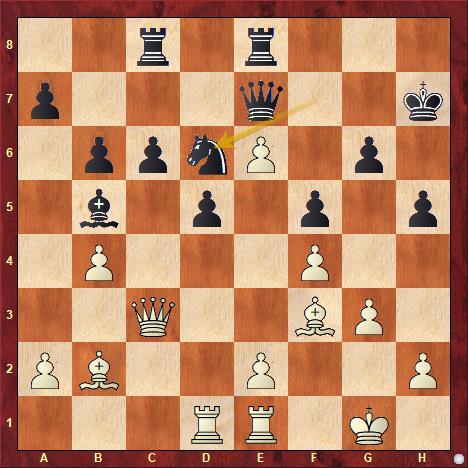
After about 40 seconds followed a beautiful and crushing 29.e4!!
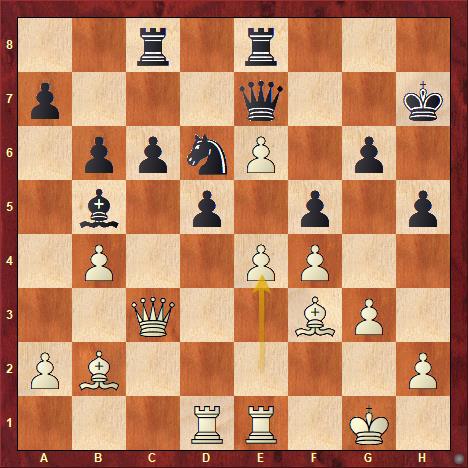
Clearing the diagonals for the pair of bishops! This is the method I call in my training and works! Bishops need open diagonals just like tanks need free passage through a city. (The opponent should, on the contrary, build barricades in their way.)
White faced a fundamental and complicated problem here. The chosen move is the only one that maintains the decisive advantage, while – moreover – all other continuations led at best to objective equality.
Dear readers, can you calculate the necessary variations?
Example for download RU and EN in pgn: Gukesh-Alriyami_RU Gukesh-Alriyami_EN